Category: We Remember

  • Navy Chief Petty Officer Albert Hayden comes home

    Navy Chief Petty Officer Albert Hayden comes home

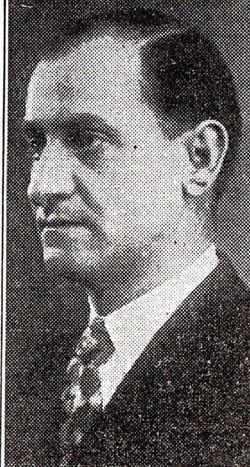
    Navy Chief Petty Officer Albert Hayden

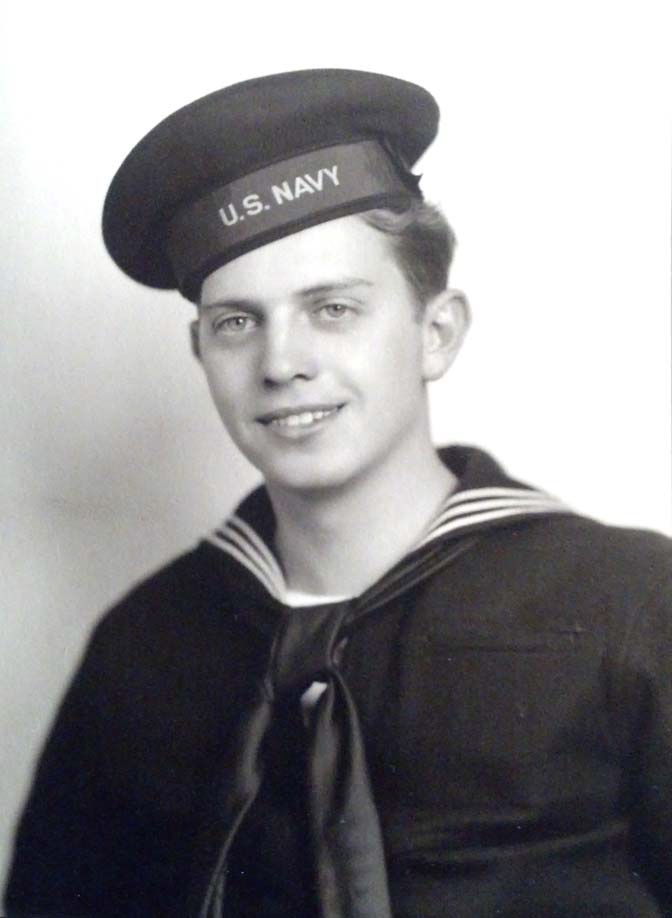
    Back in January, Hondo told us that the remains of Navy Chief Petty Officer Albert Hayden, from the crew of the USS OKLAHOMA who was lost on December 7th, 1941 during the attack on Pearl Harbor, were identified by the DPAA. Now we get the news that he will finally come home next week;

    Navy Chief Petty Officer Albert E. Hayden, 44, of Mechanicsville, Maryland, will be buried May 18 in Morganza, Maryland. On Dec. 7, 1941, Hayden was assigned to the USS Oklahoma, which was moored at Ford Island, Pearl Harbor, when the ship was attacked by Japanese aircraft. The USS Oklahoma sustained multiple torpedo hits, which caused it to quickly capsize. The attack on the ship resulted in 429 casualties, including Hayden.

    From December 1941 to June 1944, Navy personnel recovered the remains of the deceased crew, which were subsequently interred in the Halawa and Nu’uanu Cemeteries.

    In September 1947, tasked with recovering and identifying fallen U.S. personnel in the Pacific Theater, members of the American Graves Registration Service (AGRS) disinterred the remains of U.S. casualties from the two cemeteries and transferred them to the Central Identification Laboratory at Schofield Barracks. The laboratory staff was only able to confirm the identifications of 35 men from the USS Oklahoma at that time. The AGRS subsequently buried the unidentified remains in 46 plots at the National Memorial Cemetery of the Pacific (NMCP), known as the Punchbowl, in Honolulu. In October 1949, a military board classified those who could not be identified as non-recoverable, including Hayden.

    In April 2015, the Deputy Secretary of Defense issued a policy memorandum directing the disinterment of unknowns associated with the USS Oklahoma. On June 15, 2015, DPAA personnel began exhuming the remains from the NMCP for analysis.

    Survivors of Hayden’s family will be on hand for his final rest. His father, James died in 1917 and his mother, Emma, passed in 1955.

    Thanks to OC for the tip.
  • Happy birthday, Richard Overton

    Happy birthday, Richard Overton

    richard-overton-veteran

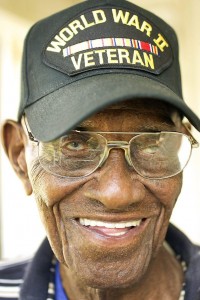
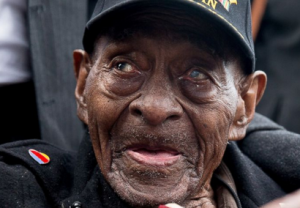
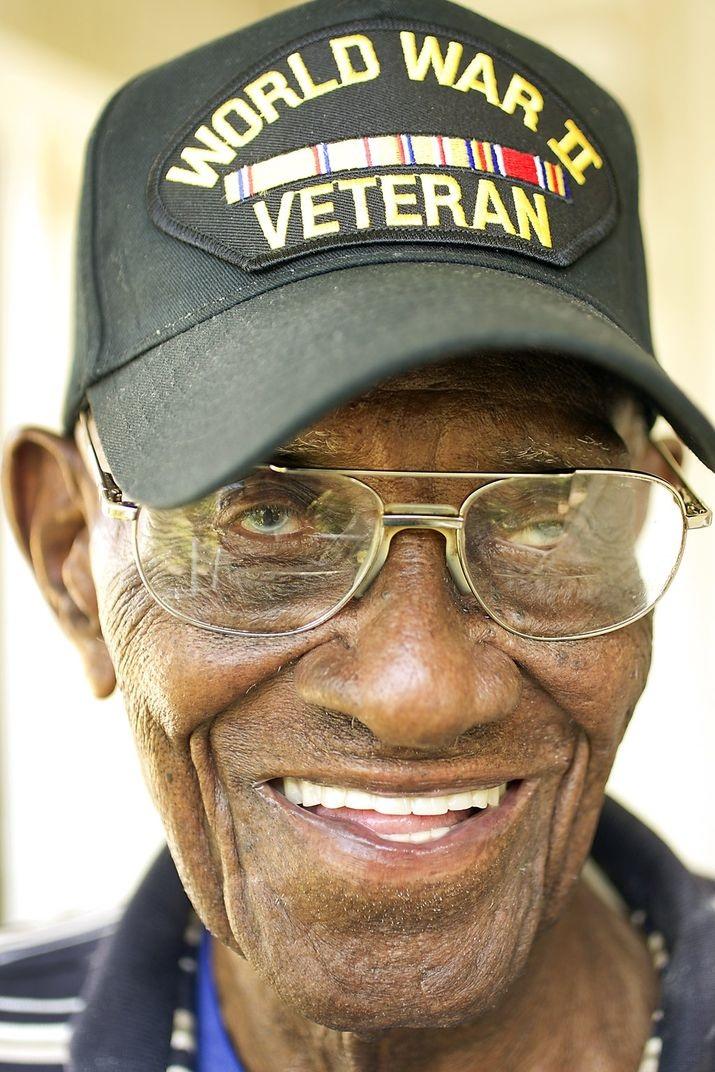
    Today, Richard Overton, the oldest living World War II US veteran, Richard Overton turned 110 years old. He was born May 11, 1906 and enlisted in the Army when he was 36 years old. From NBC News;

    “I feel good. A little old, but I’m getting around like everybody else,” Overton told NBC News on Wednesday by phone from the same Austin house he’s lived in since he returned from the war. He paid $4,000 for it.
    “”I feel good. A little old, but I’m getting around like everybody else.””

    His tips for longevity are far from traditional: He chain-smokes cigars, insists on a splash of whiskey in his morning coffee, and enjoys a steady diet of fried catfish and butter pecan ice cream, he told TODAY two years ago.

    Overton joined his all-black military unit in 1942, when Franklin Delano Roosevelt was president, and became a skilled sharpshooter. In the years since the war, he’s outlived two wives….

    We first wrote about Mister Overton three years ago. WHo would have guessed that he’d still be with us? Here’s to many more.

  • David J. Wishon Jr. comes home

    David J. Wishon Jr. comes home

    David J. Wishon Jr

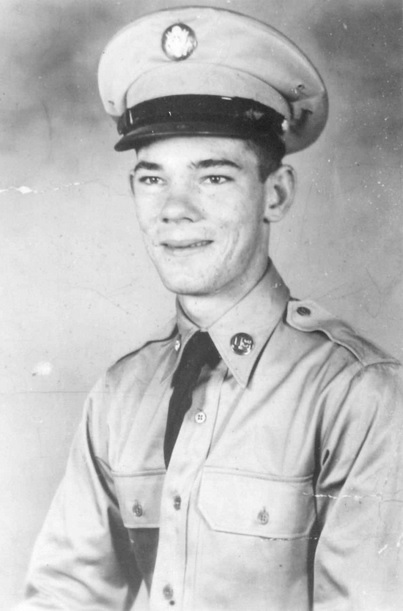
    Chief Tango sends us a link to the Washington Post which tells the story of Army Corporal David J. Wishon Jr, an 18-year-old medic who was swept up in the Chinese attack on US troops known as the battle at Chosin Reservoir. He was assigned to the 3rd Infantry Regiment of the 7th Infantry Division when the hordes of Chinese soldiers swept cross the border between China and Korea and surrounded thousands of US soldiers.

    An estimated 1,500 U.S. servicemen were killed or injured at the Chosin Reservoir out of a force of about 2,500, said Matthew J. Seelinger, chief historian of the Army History Museum. The medical unit to which Wishon belonged was wiped out.

    Wishon was classified as missing on Dec. 1, 1950. Three years later, lacking any further information about him, a military review board declared Wishon dead. But the nation had not forgotten him.

    In the early 1990s, North Korea returned 208 boxes of “commingled” human remains to the United States. A separate joint U.S.-North Korea recovery effort added more remains. From that material, at least 600 American servicemen have been identified.

    His remains were laid to rest in Section 60 of Arlington Cemetery yesterday by the 3rd Regiment’s Old Guard and the flag that draped his coffin was presented to his sister Celia Gray, who was interviewed by the Baltimore Sun;

    “Oh, what a story how they found my brother’s bones, not dust, as I thought,” she wrote in remarks for his funeral. “[They] showed me how they put his remaining bones together, piece by piece, nine bones in all so far. They may find more, plus small fragments, tooth enamel, bone dust and sediment. The Army took my two sisters’ DNA and was able to match it to my brother, Buddy. … What a story!”

    […]

    “Sixty-six years and I’m getting him back,” she said Wednesday night at her Essex home.

  • Frank Levingston, US’ oldest WWII vet passes at 110

    Frank Levingston, US’ oldest WWII vet passes at 110

    Frank Levingston

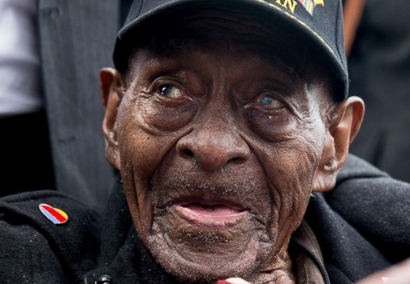
    UpNorth sends us the sad news that Frank Levingston, believed to be the oldest World War II veteran has passed at the tender age of 110. According to ABC News, he enlisted in October, 1942;

    “He felt the obligation to give to the country whatever he possibly could, and he was very excited about it,” Jee Levingston, Frank’s nephew, told ABC News today. “He gave it his very best.”

    Levingston told ABC News that his uncle was born on Nov. 13, 1905, in Cotton Valley, Louisiana, and that both of Frank’s parents died when Frank was very young.

    “He was the backbone of this family,” Levingston said. “He never married, had no children, but he took great pride in taking care of his sister’s and brother’s children.

    According to Wiki;

    He served as a private during the war in the Allied invasion of Italy which lasted from September 1943 to January 1944. After receiving an honorable discharge in 1945, he became a union worker specializing in cement finishing. Levingston never married. On August 16, 2015, he became the oldest recognized living military veteran in United States, following the death of Emma Didlake.

  • Semper Fi

    Grab a tissue.

    Background story can be found here.

    Well done, Marine. Damn well done.

  • John Anderson comes home

    John Anderson comes home

    John Anderson2

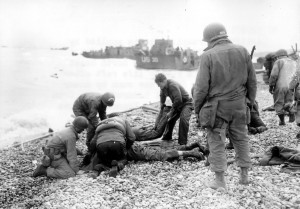
    By the time D-Day had rolled around, John Anderson’s LCT-30 (Landing Craft Tank) had participated in the amphibious invasions of North Africa, Sicily and Salerno, so he was an old hand at these amphibious landings. But in the early hours on June 6th, 1944, he was below decks checking on the engine and the sand traps as the boat neared “Omaha Beach” with their load of troops and equipment when a German artillery shell hit the boat amidships and Anderson was killed immediately. Most of the crew was wounded in the attack or when they abandoned the boat and were forced onto the beach.

    In the background of this photo, you can see the disabled LCT-30;

    LCT 30

    Family were led to believe that Anderson’s body had washed out to sea, but researchers found records that indicated that he was in an “unknown” grave in France. the family urged the Department of Defense’s DPAA to identify the remains they thought were his. According to Fox6, those remains were exhumed last Fall and positively identified;

    The remains were then exhumed last fall and brought to a military forensics lab in Nebraska where they were positively identified as Anderson.

    “It’s a great relief because the journey has been such a long one,” said Anderson’s nephew, Don Franklin.

    The family plans to lay Anderson to rest next to his parents at a cemetery in Willmar. They kept a space for him, hoping one day he would return.

    At the link above, there’s a link to a .pdf that gives John’s entire biography and his training and preparation for his participation in the Second World War.

  • Battle of Normandy Memorial Museum in Bayeux meets TAH

    Battle of Normandy Memorial Museum in Bayeux meets TAH

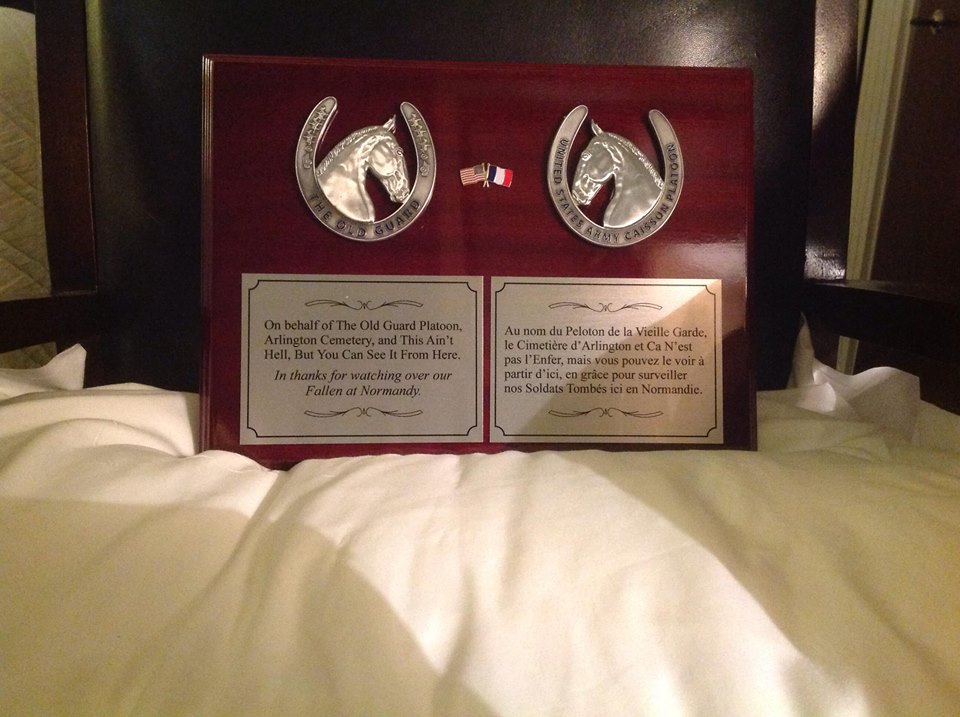
    Plaque

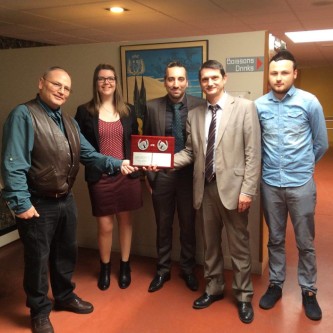
    One of our members, Toasty Coastie, is in Normandy, France this week celebrating her wedding anniversary. She made up a plaque from the coins that you guys bought last month for the Caisson Platoon of the Old Guard and presented it to Battle of Normandy Memorial Museum in Bayeux, France.

    Plaque presentation

    She sends this message to the readers at TAH;

    On behalf of Monsieur Philippe Paris, Victoria Mazzocchi, Evan Bazire, and Thibauol Rupp of the Battle of Normandy Memorial Museum of Bayeux France, we thank you.

    More news will follow in June. The Museum’s Facebook page is at this link.

  • USS IOWA; 27 years ago today

    USS IOWA; 27 years ago today

    IOWA

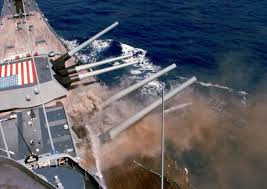
    Mick reminds us that it was 27 years ago today that the Number 2, 16-inch gun turret exploded on the World War II-era battleship, the USS IOWA killing 47 sailors off the coast of Puerto Rico. Two investigations into the cause were conducted. The first blamed a suicidal sailor, Clayton Hartwig, for intentionally causing the explosion because of a failed homosexual relationship. Upon further examination, the Navy determined that Hartwig wasn’t a homosexual. A subsequent investigation by Sandia National Laboratories determined that the crew had over-rammed powder bags into the breach of the gun, but the Navy disagreed with Sandia’s determination and merely closed the case as unsolved.

    Survivors of the blast gathered in Norfolk;

    Sailors who served that horrific day 27 years ago came together Tuesday to remember their fallen comrades in a ceremony at Norfolk Naval Station. They’re grayer and paunchier. Some struggle through nightmares and survivor’s guilt. Some struggle to attend the annual ceremony at all.

    April 19 is the one date that some of those who served on the Iowa then are able to talk about what happened that day and in the subsequent months as Navy investigators turned the tragedy into a controversial and, ultimately untrue, story of sabotage. They feel they’re a family, one bonded by more than just grief, but also a need to bolster themselves and remember their friends….