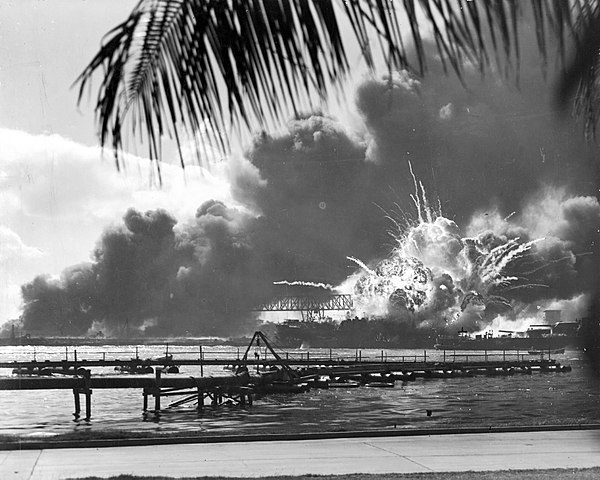
Last September, DPAA announced that it had accounted for Mus2c Francis E. Dick, crewmember of the USS Oklahoma who had been lost at Pearl Harbor.
Per DPAA, Mus2c Dick will be buried later this week – on Wednesday, 13 February 2019, to be precise – in Vancouver, Washington (state). Regrettably, DPAA does not seem to have posted the location for his funeral.
If any TAH readers have the precise location for the funeral, please post it in comments below. And if any readers are in that area and have the time, here’s an opportunity to give someone lost at Pearl Harbor a proper final send-off.
A report from Reason reveals not a single New Jersey resident has surrendered their “high capacity” magazines to state police since the implementation of the magazine ban.
Breitbart News reported that New Jersey’s “high capacity” magazine ban took effect December 11, 2018, making the mere possession of such a magazine a fourth degree felony.
At first, the New Jersey State Police refused to rule out door-to-door enforcement of the ban, then made clear that they had no plans to go house-to-house.
Don’ NEED no steeken magazine.
On December 15, 2018, former NYC police commissioner Bernard Kerik blasted the magazine ban because it also applies to off-duty police officers, too. In other words, off-duty officers cannot legally use magazines holding more than 10 rounds while off the clock.
Like New York, Maryland, and others, people are ignoring these unconstitutional, unenforceable laws.Read the rest of the article at: Breitbart News
Tip of the old chapeau to Poetrooper for the link. Thanks, buddy. Keep ’em coming.
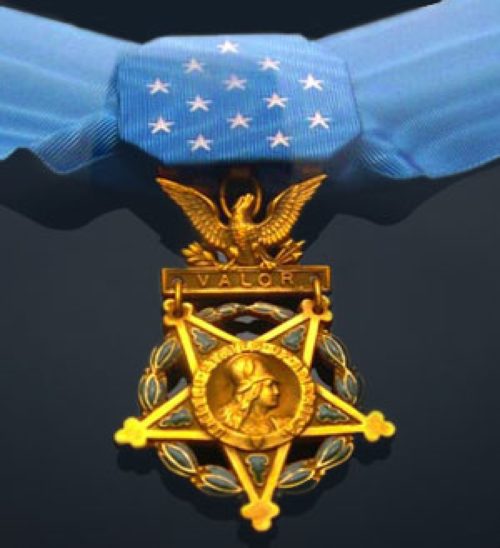
Wesley Lee Fox (September 30, 1931 – November 24, 2017) was a United States Marine Corps Colonel with 43 years of service. Fox received the Medal of Honor for his heroic actions during the Vietnam War, and is considered to be one of the Marine Corps’ legendary heroes. During his career, he held every enlisted rank except sergeant major and every officer rank except the general officer ranks. After retiring from the Marines Corps, he wrote a book about his career — Marine Rifleman: Forty-Three Years in the Corps; and, he served for 8 years as Deputy Commandant for the Virginia Tech Corps of Cadets.
Citation
For conspicuous gallantry and intrepidity at the risk of his life above and beyond the call of duty while serving as commanding officer of Company A, in action against the enemy in the northern A Shau Valley. Capt. (then 1st Lt.) Fox’s company came under intense fire from a large well concealed enemy force. Capt. Fox maneuvered to a position from which he could assess the situation and confer with his platoon leaders. As they departed to execute the plan he had devised, the enemy attacked and Capt. Fox was wounded along with all of the other members of the command group, except the executive officer. Capt. Fox continued to direct the activity of his company. Advancing through heavy enemy fire, he personally neutralized 1 enemy position and calmly ordered an assault against the hostile emplacements. He then moved through the hazardous area coordinating aircraft support with the activities of his men. When his executive officer was mortally wounded, Capt. Fox reorganized the company and directed the fire of his men as they hurled grenades against the enemy and drove the hostile forces into retreat. Wounded again in the final assault, Capt. Fox refused medical attention, established a defensive posture, and supervised the preparation of casualties for medical evacuation. His indomitable courage, inspiring initiative, and unwavering devotion to duty in the face of grave personal danger inspired his marines to such aggressive action that they overcame all enemy resistance and destroyed a large bunker complex. Capt. Fox’s heroic actions reflect great credit upon himself and the Marine Corps, and uphold the highest traditions of the U.S. Naval Service.
His awards include, besides the CMOH:
Bronze Star w/ Combat “V”
Purple Heart w/ three Gold Stars
Meritorious Service Medal
Joint Service Commendation Medal
Navy and Marine Corps Commendation Medal w/ Combat “V”
Combat Action Ribbon w/ one Gold Star
Navy Presidential Unit Citation
Army Presidential Unit Citation
Navy Unit Commendation
Navy Meritorious Unit Commendation w/ four Bronze Stars
Marine Corps Good Conduct Medal w/ four Bronze Stars
National Defense Service Medal w/ two Bronze Stars
Korean Service Medal w/ three Bronze Stars
Vietnam Service Medal w/ one Silver Star and one ?Bronze Star
Navy Sea Service Deployment Ribbon w/ three Bronze Stars
Navy Arctic Service Ribbon
Republic of Vietnam Gallantry Cross w/ two Silver Stars
Armed Forces Honor Medal, 1st class (Vietnam)
Republic of Korea Presidential Unit Citation
Republic of Vietnam Meritorious Unit Citation (Gallantry Cross) w/ Palm and Frame
United Nations Korea Medal
Republic of Vietnam Campaign Medal w/ 1960- Device
Republic of Korea War Service Medal
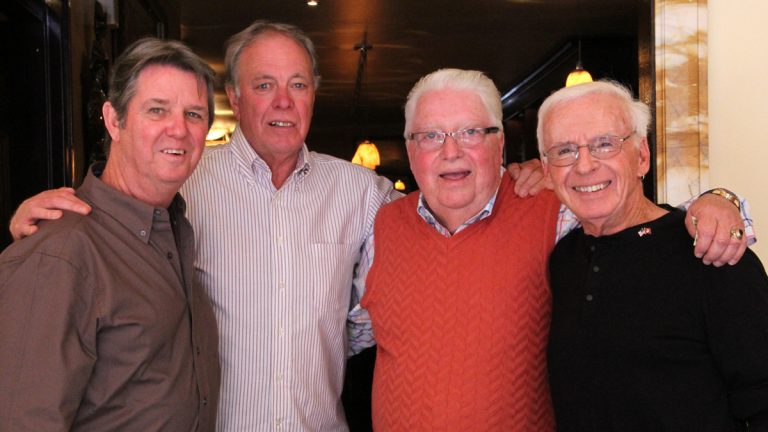
Friends who grew up in the same New York neighborhood and became part of ‘The World’s Greatest Beer Run’ while serving in Vietnam .
If you find a few minutes to watch this video you may begin to understand why many of us believe Beer is so much more than just a breakfast drink.
Something of a local neighborhood legend, the story has often been met with eager but disbelieving nods of approval. To set the record straight earlier this month, Donohue, now 73, self-published “The Greatest Beer Run Ever: A True Story of Friendship Stronger Than War,” a book about his beer-hocking trek across Vietnam. Here’s how he got from a bar in New York to a warzone with beers in hand.
Jonn posted about this a while back but didn’t have the video.
Staff Sergeant Morris was my roommate for a brief time when we were both assigned to the 82d Airborne Division upon returning from Vietnam. Charley was waiting for quarters to come available so he could move his wife and son down from Virginia, while I was a bachelor and along with Charley, one of two E-6’s living in the barracks, a privilege fraught with unwanted responsibilities such as helping the Charge of Quarters in breaking up late night fights in the platoon bays far too frequently.
Charley and I weren’t buddies, likely because he was a decade older, married, and a far more experienced infantry NCO than me, the brigade CBR NCO, a mere technical staff wienie to a hard-charging grunt like him, so he maintained his distance. We were only together a few weeks until his quarters cleared. We all knew he had been selected for the MoH but Charley absolutely would not talk about it, freezing out any person, even superiors, who asked about his experiences, with a steely stare and a mumbled excuse about having something else to do. However, at night he frequently re-fought his battles in his sleep, groaning, yelling, punching and kicking his blankets, shouting orders to his squad, all without ever waking. I soon learned not to wake him because it seemed to upset him that I was witnessing his nightmares. He may have seen it as weakness; remember, PTSD had yet to be recognized at that time although many of us who fought in Vietnam certainly felt its effects.
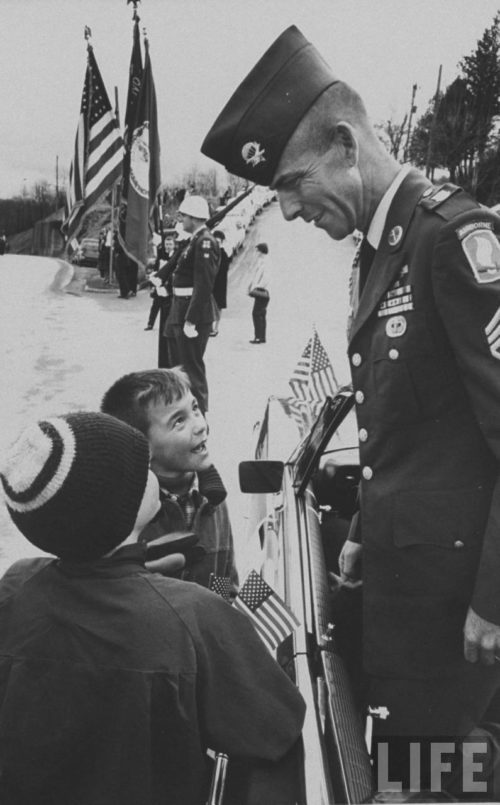
“Yes kids, this is what a real hero looks like!”
Charley went on to become a Command Sergeant Major and I’ll bet he was a tough but good one. He died too young as the good ones often do. He didn’t start out to be a career soldier as I learned from a recently discovered hometown website, the Galax Scrapbook, but rather was drafted in 1952 and after training at Fort Leonard Wood was sent to Korea where he apparently earned a Purple Heart. Discharged in 1954, Charley returned to Virginia and worked in the hometown glass plant for seven years before returning to the Army in 1961, only to exit again after his three year enlistment ended. That second civilian hiatus lasted but three months after which Charley made the Army his career, retiring in 1981.
Searching for information on CSM Morris to include with Ed’s Valor Friday piece, I was surprised to learn Charley also was awarded the Distinguished Service Cross. The Galax website has a picture of LBJ pinning it on him in Vietnam in 1966. I was also unaware of his many wounds or how many troopers’ lives he saved until I found some first person accounts on an old 173rd Airborne unit website, pages 7-10. It is a much more revealing portrayal of this man’s heroism than the dry formal language of the military citation. Read it and tell me this wasn’t one bad-ass paratrooper. Hell, if I’d known that when he was my roomie, I would likely have been spit-shining his jump boots and polishing his brass. I truly had no idea.
At the Galax Scrapbook website there’s also a picture of LBJ awarding SSGT Morris his Medal of Honor. But of all the pictures of Charley at his Galax homecoming parade following the award, the LIFE magazine photo above is my favorite with that caption, “Yes kids, this is what a real hero looks like!” How very true.
Rest in a well-earned peace, Sergeant Major. It is a high honor to have known you, however briefly.
For conspicuous gallantry and intrepidity at the risk of his life above and beyond the call of duty. Seeing indications of the enemy’s presence in the area, S/Sgt. Morris deployed his squad and continued forward alone to make a reconnaissance. He unknowingly crawled within 20 meters of an enemy machinegun, whereupon the gunner fired, wounding him in the chest. S/Sgt. Morris instantly returned the fire and killed the gunner. Continuing to crawl within a few feet of the gun, he hurled a grenade and killed the remainder of the enemy crew. Although in pain and bleeding profusely, S/Sgt. Morris continued his reconnaissance. Returning to the platoon area, he reported the results of his reconnaissance to the platoon leader. As he spoke, the platoon came under heavy fire. Refusing medical attention for himself, he deployed his men in better firing positions confronting the entrenched enemy to his front. Then for 8 hours the platoon engaged the numerically superior enemy force. Withdrawal was impossible without abandoning many wounded and dead. Finding the platoon medic dead, S/Sgt. Morris administered first aid to himself and was returning to treat the wounded members of his squad with the medic’s first aid kit when he was again wounded. Knocked down and stunned, he regained consciousness and continued to treat the wounded, reposition his men, and inspire and encourage their efforts. Wounded again when an enemy grenade shattered his left hand, nonetheless he personally took up the fight and armed and threw several grenades which killed a number of enemy soldiers. Seeing that an enemy machinegun had maneuvered behind his platoon and was delivering the fire upon his men, S/Sgt. Morris and another man crawled toward the gun to knock it out. His comrade was killed and S/Sgt. Morris sustained another wound, but, firing his rifle with 1 hand, he silenced the enemy machinegun. Returning to the platoon, he courageously exposed himself to the devastating enemy fire to drag the wounded to a protected area, and with utter disregard for his personal safety and the pain he suffered, he continued to lead and direct the efforts of his men until relief arrived. Upon termination of the battle, important documents were found among the enemy dead revealing a planned ambush of a Republic of Vietnam battalion. Use of this information prevented the ambush and saved many lives. S/Sgt. Morris’ gallantry was instrumental in the successful defeat of the enemy, saved many lives, and was in the highest traditions of the U.S. Army.
Airman First Class William “Pits” Pitsenbarger was awarded the Medal of Honor posthumously after he sacrificed himself to save numerous wounded soldiers. (Air Force)
You may remember one alleged LTC by the name of Margaret deSanti, whose claims of this and that seemed out of bounds to reasonable people, and decidedly far-fetched to others of us.
You can revive your memories of deSanti at the link below to her 2014 claims that she was a nurse on medevac helos in the Nam, and “repelled” out of helicopters, when there is zero record of her service. https://www.azuse.cloud/?p=57300
That was put up on TAH in 2014. There is no record of her service, period. There is, as noted in the original article, only one person received the Silver Star since WWII, and that was Leigh Ann Hester. It is easy enough to check on such things. Yet, Ms. deSanti claims that she received that award.
Ms. deSanti, who cannot even produce a correct salute, has literally spit in the faces of the women who did serve before she tried to add herself to their honored group.
I’ve gathered together a bit of information about various things that happened during World War II, such as women who were in nursing schools being recruited to serve in the US Cadet Nurse Corps, to replace nurses who joined the Army and were deployed to the various theaters. You can find that history at the site below in some of the stories that these ladies left behind.
This year is the 75th Anniversary of the U.S. Cadet Nurse Corps. Some of them did go on to serve in the Army Nurse Corps once they finished their nursing degrees. Their stories are at this link: https://uscadetnurse.org/weremember
Some of them are rather poignant, as they were written by children and/or grandchildren after the Nurse Corps member passed on.
The U.S. Cadet Nurse Corps’ 75th Anniversary is going on now, in 2018.
“They saved lives at home, so others could save lives abroad.”
The website is a compilation of information about the U.S. Cadet Nurse Corps—the nation’s first integrated uniformed U.S. service corps—which fulfilled an urgent need for nurses during World War II. At that time many nurses were called overseas to military service, and other women were attracted to the defense industry, while understaffed civilian hospitals in the United States were on the verge of collapse.
Nursing and Medicine During World War II
There are many links at the ceufast.com page, including links to WWI history of nursing.
The following article includes references to the struggles of black women to be accepted as nurses during WWII. Some 500 black women served in various theaters during that War.
Let’s lift a glass to all of these women who filled in for their departing counterparts and served at home, and for the those who joined the Navy and Army Nurse Corps and were sent overseas, some of whom did not make it back home, and for all those who followed in their footsteps in Korea, Vietnam, Desert Storm, OIF/OEF, and whatever has followed since then.
 Standard Capacity Magazine
 Don’ NEED no steeken magazine.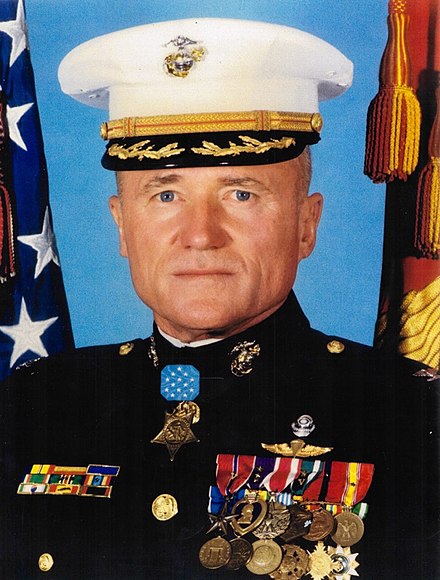
 “Yes kids, this is what a real hero looks like!”