Category: We Remember

  • CIA honors Nathan Ross Chapman 13 years later

    CIA honors Nathan Ross Chapman 13 years later

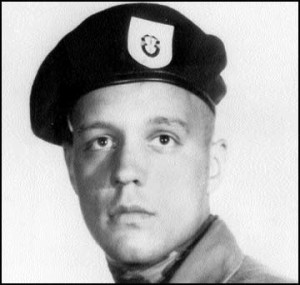
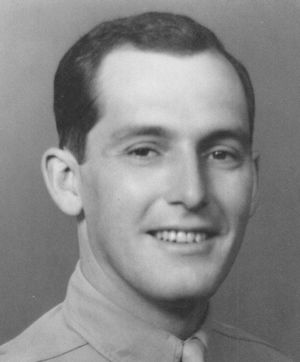
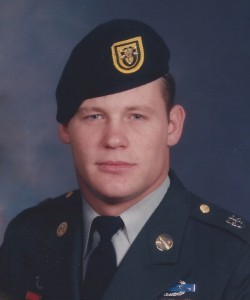
    Nathan Ross Chapman

    Our buddy, Thomas Gibbons-Neff, writes at the Washington Post about Sergeant First Class Nathan Ross Chapman, the first casualty of the war against terror and how the Central Intelligence Agency has finally paid their respects to the Special Forces commo sergeant 13 years after his death.

    Chapman’s death was a watershed event for a country that didn’t know it was headed into a seemingly endless war, where the news of those lost would turn into a kind of white noise for many Americans. The first of its kind in Afghanistan, his death drew national attention, including a televised funeral.

    Much of Chapman’s story and that of the secret agency team he was assigned to has never been told, and the agency continues to say nothing about him.

    At a ceremony at CIA headquarters on May 18, 2015, the agency unveiled an engraved marble star to mark his death in the line of service, but like many others in the wall’s accompanying Book of Honor, his name was left absent. The addition of that star for service in 2002 prompted The Post to examine the background to the honor, and why it had taken so long to be conferred.

    It’s a rather long article, so instead of me C&Ping it, you should click over and read it.
  • Hector A. Cafferata Jr. passes

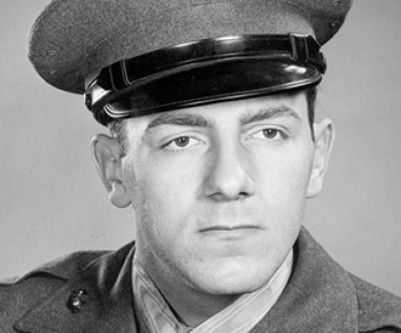
    Hector A. Cafferata

    Devtun sends us the news that Hector A. Cafferata Jr. has passed at the tender age of 86 years. He played semi-pro football until he enlisted in the Marine Corps in 1948

    Mr Cafferata earned a Medal of Honor during the Korean War when he was a private at the Battle of the Chosin Reservoir with Company F, 7th Marines, 1st Marine Division;

    When all the other members of his fire team became casualties, creating a gap in the lines, during the initial phase of a vicious attack launched by a fanatical enemy of regimental strength against his company’s hill position, Pvt. Cafferata waged a lone battle with grenades and rifle fire as the attack gained momentum and the enemy threatened penetration through the gap and endangered the integrity of the entire defensive perimeter. Making a target of himself under the devastating fire from automatic weapons, rifles, grenades, and mortars, he maneuvered up and down the line and delivered accurate and effective fire against the onrushing force, killing 15, wounding many more, and forcing the others to withdraw so that reinforcements could move up and consolidate the position. Again fighting desperately against a renewed onslaught later that same morning when a hostile grenade landed in a shallow entrenchment occupied by wounded marines, Pvt. Cafferata rushed into the gully under heavy fire, seized the deadly missile in his right hand and hurled it free of his comrades before it detonated, severing part of 1 finger and seriously wounding him in the right hand and arm. Courageously ignoring the intense pain, he staunchly fought on until he was struck by a sniper’s bullet and forced to submit to evacuation for medical treatment Stouthearted and indomitable, Pvt. Cafferata, by his fortitude, great personal valor, and dauntless perseverance in the face of almost certain death, saved the lives of several of his fellow marines and contributed essentially to the success achieved by his company in maintaining its defensive position against tremendous odds.

  • Airmen’s remains recovered from “The Hump”

    Airmen’s remains recovered from “The Hump”

    DPAA

    MustangCryppie sends us a link to Sky News which reports that the Defense POW/MIA Accounting Agency (DPAA) sent a team to hunt for the remains of American pilots who were lost flying supplies to the Chinese who were fighting the Japanese. They were flying over the highest mountains in the world in northeastern India, known colloquially to the pilots as “The Hump”.

    Aranchal Pradesh, India (October 18, 2015) – Members from the Defense POW/MIA Accounting Agency (DPAA), excavate during the search and recovery efforts to retrieve eight US Army Air Corps members that went down with the aircraft in 1942. DPAA conducts global search, recovery and laboratory operations to identify unaccounted-for Americans from past conflicts in order to support the Department of Defense's personnel accounting efforts. (DoD photo by SSgt Erik Cardenas/U.S. Air Force)
    Aranchal Pradesh, India (October 18, 2015) – Members from the Defense POW/MIA Accounting Agency (DPAA), excavate during the search and recovery efforts to retrieve eight US Army Air Corps members that went down with the aircraft in 1942. DPAA conducts global search, recovery and laboratory operations to identify unaccounted-for Americans from past conflicts in order to support the Department of Defense’s personnel accounting efforts. (DoD photo by SSgt Erik Cardenas/U.S. Air Force)

    “They had to hike in for three days to get to the site,” said US Marine Corps captain Greg Lynch.

    He said once there, they spent eight hours a day carrying out detailed searches on a steep slope, often roped together.

    They painstakingly sifted through soil around the plane’s wreckage to try to find the airmen’s remains, but the risk of landslides stopped them searching the whole site.

    They found what they believe to be the remains of one or two of the missing airmen.

    Gary Stark, from the DPAA’s India desk, said the remains could fit inside a ziplock sandwich bag, but to the families that does not matter.

  • Sergeant Alan Boyer comes home

    Sergeant Alan Boyer comes home

    Alan Boyer

    One of our Facebook friends sends us the news that Sergeant Alan Boyer is finally home. He went missing in the jungles of Laos on March 28, 1968 when he was 22 years old and according to The Missoulian, his sister, Judi, who was 19 at the time he went missing, says his remains have been identified by DPAA.

    On March 28, 1968, Boyer, a sergeant, was on a reconnaissance mission in the jungles of Laos 15 miles from the Vietnamese border. He was with fellow Green Berets rifleman Charles Huston of Ohio, intelligence Sgt. George Brown of Florida, and seven South Vietnamese soldiers.

    It was a rugged and dangerous sector that housed the North Vietnamese control center on the Ho Chi Minh Trail, and the soldiers encountered an unknown enemy force. A helicopter that came to rescue them couldn’t land in the dense canopy. According to a report on pownetwork.org, six of the South Vietnamese scrambled to safety up a rope ladder and the seventh was climbing aboard when the ground fire intensified, forcing the chopper to leave the area.

    Boyer began to climb the ladder but it broke, either in the foliage or in the ground fire. He tumbled to the ground, but the other two Americans appeared unhurt. A six-hour ground search four days later turned up no sign of them. Meanwhile, Charles and Dorothy Boyer were notified back home in Illinois that their son was missing in action.

    A Laotian activist bought Boyer’s remains from a “remains trader” there and turned them over to the DPAA which, in turn, identified the remains with DNA.

    Boyer’s mother became an advocate for POW/MIA families when her son went missing according to RRSTAR until her death in 2013. Alan Boyer has been awarded a posthumous Silver Star and he’ll be laid to rest in Arlington National Cemetery on June 22nd.

  • Corporal Robert Graham comes home

    Corporal Robert Graham comes home

    Robert Graham

    One of our ninjas sends us a link to the news that Corporal Robert Graham has finally returned home from his tour of the Korean War. Hondo told us that his remains had been identified in September 2015, and he finally completed his journey home to San Francisco last night;

    [Nicole Venturelli, Robert’s niece] said her father kept a box of letters from his brother that he hid from her. She discovered it only after James Graham died. Venturelli said they included descriptions of the “relentless” Chinese forces, the “Siberian winter” with temperatures of 40 below zero, and finally a message in 1951 that his unit was heading out on on a secret mission.

    That mission ended disastrously in the battle of Hoengsong, where Chinese troops routed U.S. and other United Nations forces. According to an Army report, Graham’s unit came under heavy attack and withdrew south to Wonju, where Graham was declared missing in action on Feb. 13, 1951.

    Two years later, U.S. prisoners of war repatriated in an exchange with North Korea said Graham had been captured by enemy forces and held at the Suan POW camp, where he died of malnutrition on or about May 31, 1951. He was just 20 years old.

    The Mercury News reports;

    A memorial service for Graham will take place 11 a.m. Friday at Duggan’s Serra Mortuary, 500 Westlake Ave. in Daly City. He will then be buried with full military honors at Holy Cross Cemetery, 1500 Mission Road in Colma. The public is invited to attend.

    So, if you’re in the area, stop by and tell the good corporal that we send our regards.

  • Joe Medicine Crow passes

    Joe Medicine Crow passes

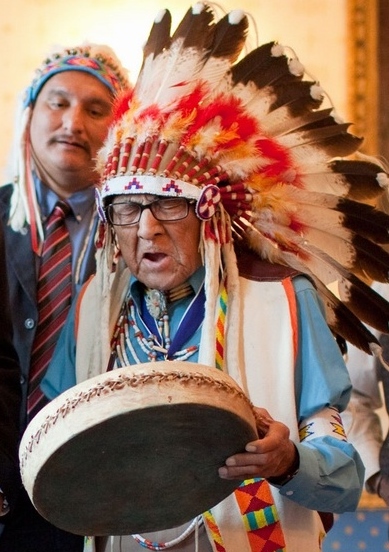
    Joe_Medicine_Crow

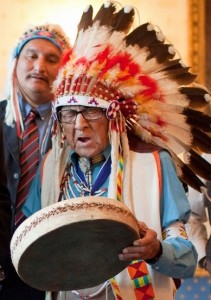
    Chief Tango sends us inks to the story of Joe Medicine Crow, known as JoeCrow to his friends, who passed away on April 3rd at the tender age of 102 years young. He was the historian of the Crow Nation as well as a sailor and an infantryman in World War II and the last Crow Nation War Chief. From the Washington Post;

    The National Park Service described Mr. Medicine Crow, who was 11 when his grandfather Whiteman Runs Him died, as “the last living person with a direct oral history from a participant of the Battle of Little Bighorn in 1876,” where Custer was killed and his forces overwhelmingly defeated.

    Years later, Mr. Medicine Crow would observe that the Indians had “won the battle and lost a way of life.”

    He earned his “war chief” creds in World War II according to the Billings Gazette;

    Born Oct. 7, 1913, Medicine Crow was the official Crow Tribe historian. He was a Crow war chief, having completed the required four war deeds while serving in the Army during World War II.

    Those deeds included leading a war party, touching the first fallen enemy and stealing his weapon, and entering an enemy camp and stealing horses.

    “I never got a scratch,” he recalled about 60 years later.

    Wiki tells the story of one encounter that he had with a German soldier;

    He touched a living enemy soldier and disarmed an enemy when he turned a corner and found himself face to face with a young German soldier:

    “The collision knocked the German’s weapon to the ground. Mr. Crow lowered his own weapon and the two fought hand-to-hand. In the end Mr. Crow got the best of the German, grabbing him by the neck and choking him. He was going to kill the German soldier on the spot when the man screamed out ‘momma.’ Mr. Crow then let him go.”

    He also led a successful war party and stole fifty horses from a battalion of German SS-officers, singing a traditional Crow honor song as he rode off. He is the last member of the Crow tribe to become a war chief.[3] Of his story, documentarian Ken Burns said, “The story of Joseph Medicine Crow is something I’ve wanted to tell for 20 years.” Medicine Crow was interviewed and appeared in the 2007 Ken Burns PBS series The War, describing his World War II service.

  • Eddie Marcy, Tuskegee Airman passes

    Eddie Marcy, Tuskegee Airman passes

    Eddie-Marcy

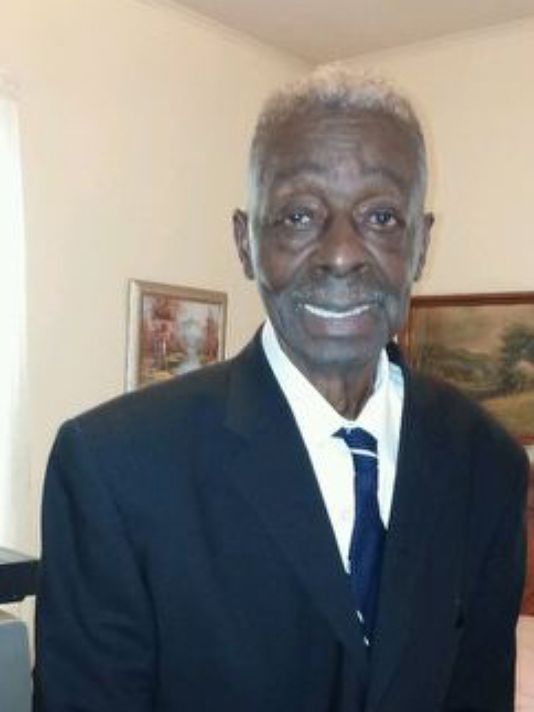
    One of our ninjas send us the sad news that Tuskegee Airman, Eddie Marcy has passed at the tender age of 96.

    On Friday, as his children gathered to mourn him, one thing that struck them was that their dad, an honest, humble man — whose first real job was as a coal miner in Virginia — didn’t reveal that he was a Tuskegee Airman until eight or nine years ago.

    “He didn’t talk about it,” his son, Dwain Fennoy, said Friday. “He would just say he was in Italy. I was very much surprised.”

    “I was astonished,” said his daughter, Jevita Terry of Rocky Mount, N.C. “It was just a feeling of great joy and pride.”

    She surmised that her dad “didn’t think his job was more important than anyone else who served. He was proud of what he did. He was proud of who he was. But he didn’t see it as anything so great or greater than anyone else who served his country. One thing he wasn’t, and that was haughty. He was a proud man, but never haughty.”

    Marcey wasn’t a pilot, which is why he didn’t show up on my roster, but he was a fueler. After the war, Eddie went on to a 30-year career with Chrysler – the career he discussed more with his children than his war time experiences. The historian for the Airmen verified to me that Eddie worked with them.

    Reading about folks’ memories of Eddie, I think he and I would have got along real well.

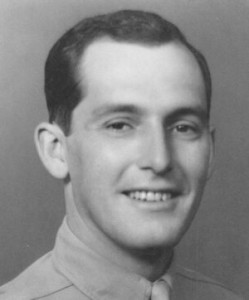
  • Marine Raider Sergeant John Charlton Holladay comes home

    Marine Raider Sergeant John Charlton Holladay comes home

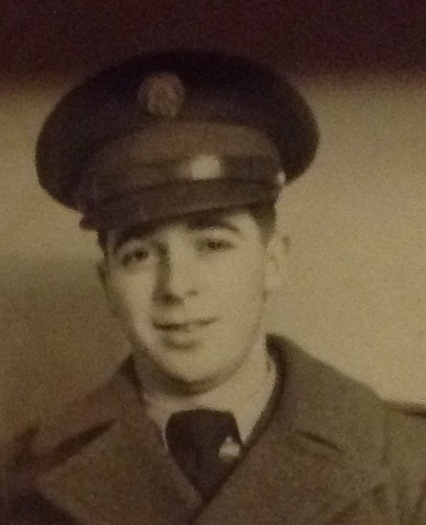
    John Charlton Holladay

    James sends us a link to the news that Marine Raider Sergeant John Charlton Holladay has returned home to South Carolina this morning. His service is scheduled for April 4th at National Cemetery in Florence, SC. John was killed more than 70 years ago on New Georgia Island in the Soloman Islands by a Japanese sniper on July 20, 1943. His remains were found last February and identified in July. He was interred at Paxville Baptist Church Cemetery yesterday according to South Carolina Now.

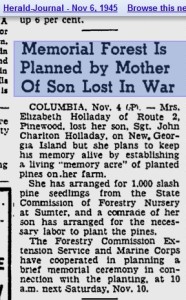
    His mother planted a memorial forest in his name in 1945;

    JOHN CHARLTON HOLLADAY newspaper

    The circumstances of the battle in which he was involved at the time of his death is at Find A Grave.