Category: We Remember

  • John Saini comes home

    John Saini comes home

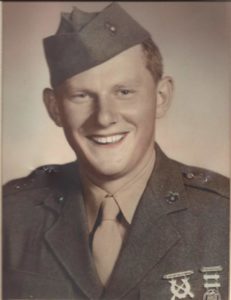
    John Saini

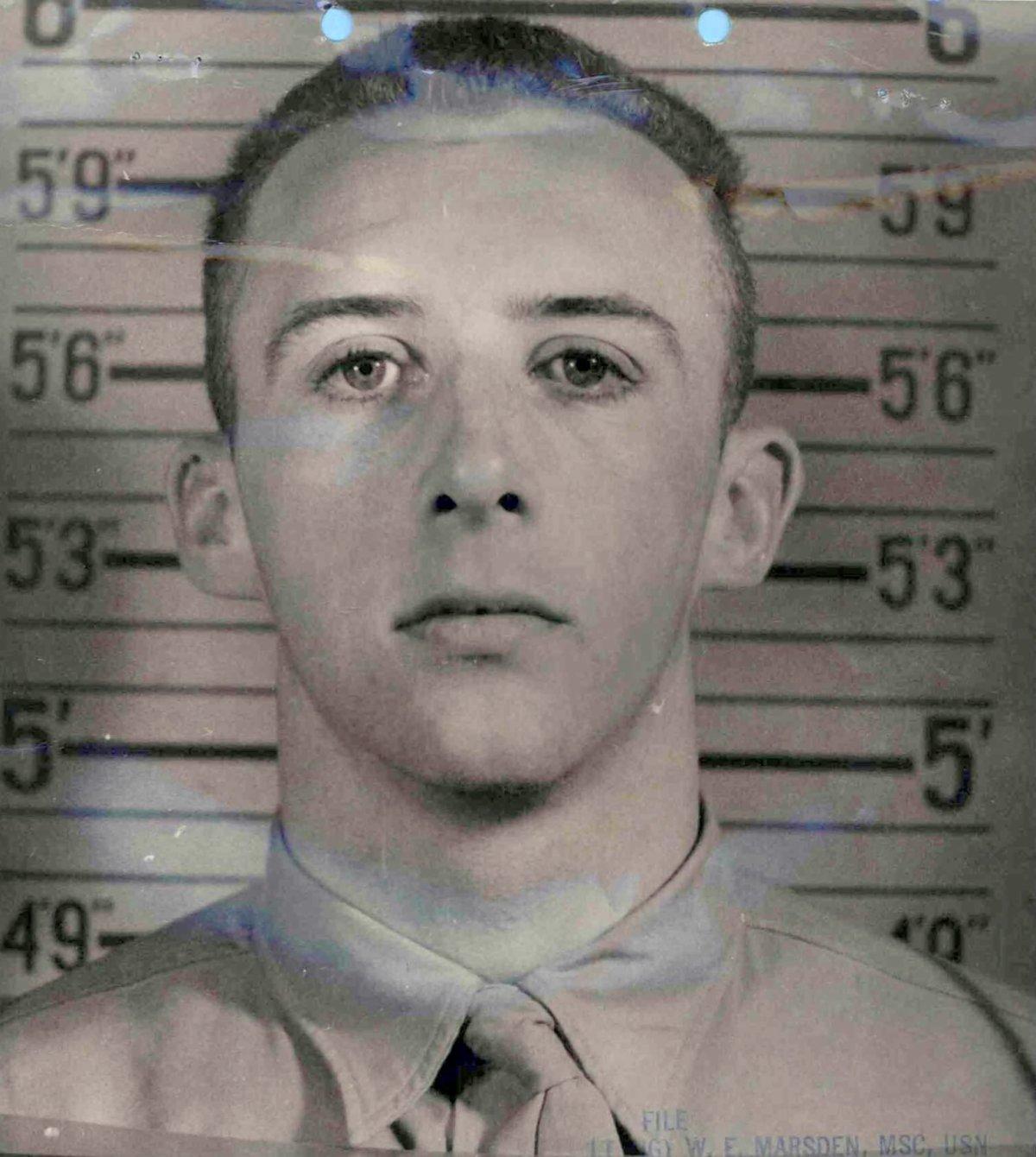
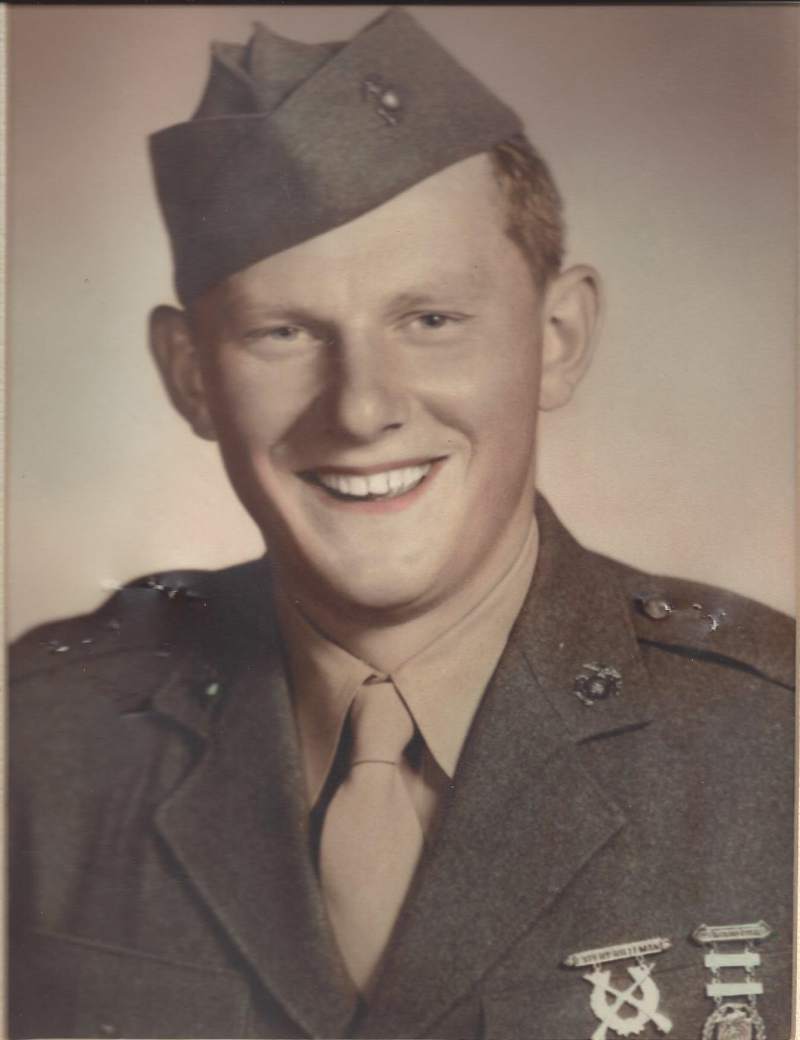
    One of our ninjas sends the story of Private First Class John Saini, another Marine who fell on Tarawa in the Pacific in November, 1943. Hondo told us last month that his remains had been identified, he made it home Friday according to the San Francisco Gate.

    “It’s a relief to have my uncle finally home,” said his nephew, also named John Saini, after being presented with the remains at a brief ceremony at San Francisco International Airport attended by 17 members of the Saini family of Healdsburg. “This is a day my grandparents wanted but never lived to see.”

    The private was a 20-year-old soldier and a recent graduate of Healdsburg High School when U.S. forces stormed the Tarawa Atoll, about 2,500 miles southwest of Hawaii, in November 1943. He was one of more than 1,000 U.S. troops killed as the Americans drove the Japanese from the islands. After the battle was over, however, the military couldn’t find his grave.

    There the matter stood until last year, when a team of volunteer searchers from History Flight, a Florida charity that attempts to find the unmarked graves of American warriors, heard a bark from an aging Labrador retriever named Buster, a cadaver dog, during their search of the Tarawa battle zone.

    […]

    Mark Noah is founder of History Flight, which has identified the remains of 100 servicemen in Europe and Asia over the past 13 years. He said the group strives to “give the identity and the dignity back” to the families.

    “Every time you do it, it’s like putting a little piece of America back in America,” Noah said.

    From the San Francisco Examiner;
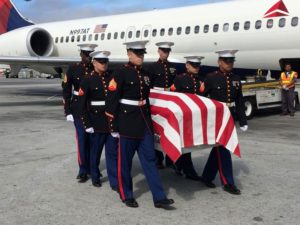
    John Saini2

    On Friday, his uncle’s body was flown into San Francisco and led north to Healdsburg by a procession of California Highway Patrol officers from Sonoma County on motorcycles. At one point along the highway, Saini recalled, an elderly man stood on an overpass, saluting the fallen soldier.

    “I can’t believe how incredible humanity can be when something like this happened,” Saini said. “It’s been a wonderful experience for our family and our little hometown has come together like you can’t believe.”

    His body was taken to Eggen and Lance Chapel in Santa Rosa for the night. Saini will be buried during a 10:30 a.m. ceremony Saturday at Oak Mound Cemetery in Healdsburg.
  • Serina Vine passes

    Serina Vine passes

    Serina Vine

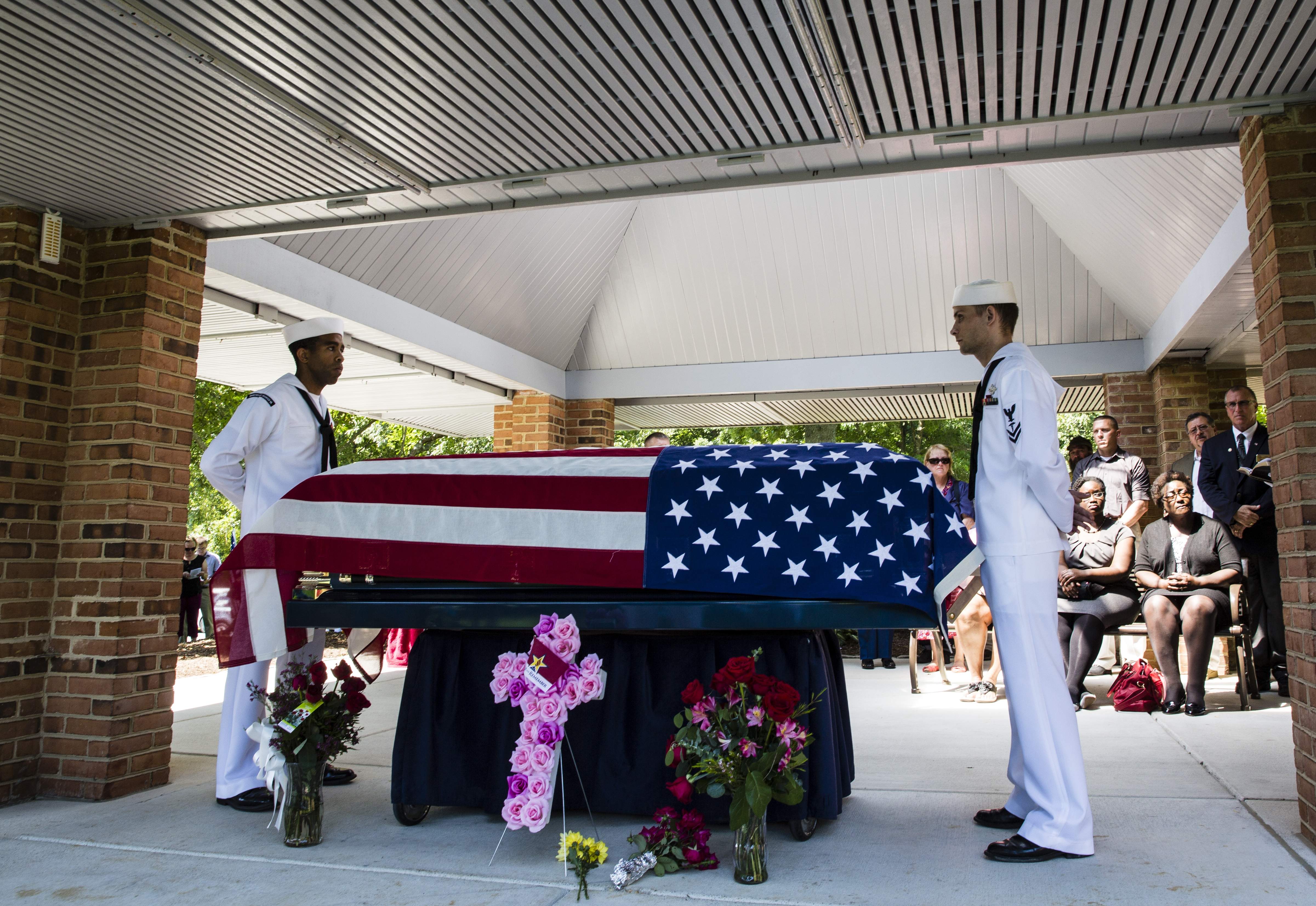
    Hack Stone sends us a link from the Washington Post that tells the story of Serina Vine, a 91-year-old World War II Navy veteran. When her time in the Navy ended in 1946, she graduated from college at the University of California at Berkeley in 1954, then her life was a big blank until it picks up in 1995 when she found living on the streets of DC and warehoused at the Department of Veterans Affairs’ Community Living Center in Washington suffering from dementia.

    William Jones, a retired Marine who works at Quantico, discovered that there would be only four people attending her funeral when she passed recently so he called Major Jaspen Boothe, who had been homeless herself after Hurricane Katrina. Boothe took to social media and notified folks of the funeral and more than 200 showed up the other day;

    [W]hen Boothe arrived at the cemetery, cars were backed up about a half a mile. She thought that there must be multiple events happening at that time. But no, they were all there for Vine.

    “It was like a pinnacle moment to show how veterans come together for veterans,” Boothe said. “We are connected through our service and through our sacrifice. Look around now, she has 200 or so family members. As long as you’re a veteran you have friends and family everywhere and you’re never alone.”

    From ABCNews;

    Martin Fuller of the U.S. Department of Veterans Affairs painted a similar picture. “I’ve never seen anything like it,” said Fuller. “I felt like I had to go because I didn’t think anyone was going to show up. The information just went viral.”

    Fuller met Vine in the VA Community Living Center, where he appointed her a legal custodian. He says that because her discharge and service papers were missing, little more is known about where she served and what her responsibilities were.

    Still, she was laid to rest with full military honors, including a 21-gun salute, at the Quantico National Cemetery.

  • Private John F. Prince comes home

    Private John F. Prince comes home

    John F Prince

    HMC Ret sends a link to the news that Private John F. Prince is on his way home after he fell on Betio Island in November 1943. Hondo told us in April that his remains were identified, now he’s scheduled to be with his family on June 17th in Calverton, New York. From the New York Daily News;

    “It brings tears to my eyes all the time,” Prince’s Floral Park niece Patricia Donigian, 60, told the Daily News Friday. “It’s an awesome feeling, like a missing piece of the puzzle of your life is no longer missing. It’s like, wow.”

    A graduate of Jamaica High School, Prince was just 19 when his division made an amphibious landing in November 1943 to overthrow a Japanese airstrip on Betio 2,400 miles southwest of Hawaii.

    […]

    Family and friends will travel from as far away as Nebraska to remember the young man who made the ultimate sacrifice, Donigian said.

    A friend now in his 90s, who knew Prince when they were growing up in Bellerose, Queens, will be there, she said.

  • Purple Hearts Reunited; race to return WWI Purple Hearts

    Purple Hearts Reunited; race to return WWI Purple Hearts

    Lady Columbia Wound Certificate

    Our buddy, Zach Fike, the founder of Purple Hearts Reunited is in the news again. The Associated Press reports that the Vermont-based organization has set a goal to return 100 artifacts in his possession to the families of the rightful owners before the 100th anniversary of this country’s entry into the Great War on April 6th next year;

    Georgia, Vt., resident Zachariah Fike, of the Vermont-based Purple Hearts Reunited, began the project after noticing he had in his collection of memorabilia a total of exactly 100 Purple Hearts or equivalent lithographs awarded for injuries or deaths from the Great War.

    […]

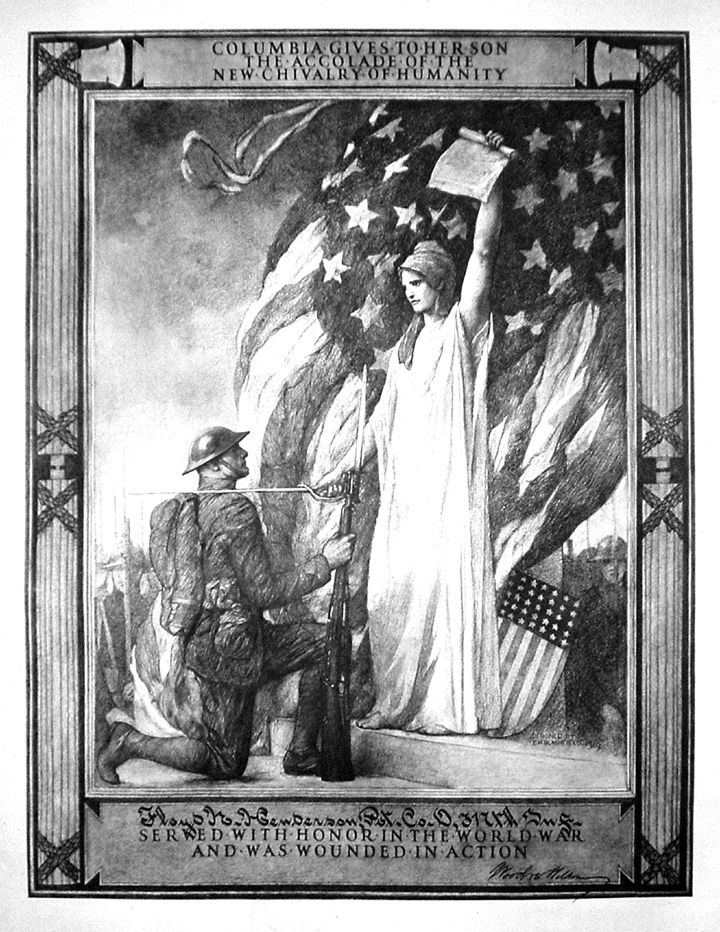
    The lithographs, known as a Lady Columbia Wound Certificate and showing a toga-wearing woman knighting an infantry soldier on bended knee, were what World War I military members wounded or killed while serving were awarded before the Purple Heart came into being in 1932. World War I service members who already had a lithograph became eligible for a Purple Heart at that time.

    The Purple Hearts and the certificates include the name of the service member to whom they were awarded. Fike is working with researchers to try to find the descendants of the service members.

  • Melvin Rector passes

    Melvin Rector passes

    Melvin Rector

    Lars sends us the news that Melvin Rector has passed on. He was one of the millions of Americans who spent their youth battling the evil in Europe in the early 1940s. Melvin was a radio operator and gunner with the 96th Bomb Group in 1945 on a B-17 Flying Fortress bomber, flying eight combat missions over Germany during the spring of the war’s final year. He had always regretted that he’d never returned to England after his war. However this year, he had an opportunity to go back with the National World War II Museum in New Orleans’ travel program and he took it.

    On May 6, Rector stepped foot on British soil for the first time in 71 years. The group first visited RAF Uxbridge in the London borough of Hillingdon.

    Rector toured Battle of Britain Bunker, an underground command center where fighter airplane operations were directed during D-Day. After climbing back into the sunlight, he told [his guardian, Susan Jowers that] he felt dizzy. She grabbed one of his arms, and a stranger grabbed the other.

    There, just outside the bunker where Winston Churchill famously said, “Never in the field of human conflict was so much owed by so many to so few,”

    Rector died quietly.

    “He walked out of that bunker like his tour was done,” Jowers said.

    Apparently, his hosts, the British, were appreciative of his service in their defense;

    Before repatriating his remains to the United States, a small service for the fallen hero was planned in Britain. It did not remain a small service.

    “They just wanted something very simple. And when I found a little bit of background out about Melvin, there was no way we were going to just give him a very simple service,” Neil Sherry, the British funeral director in charge of Rector’s service, told ITV London News. “I wanted it to be as special as possible.”

    Though Jowers expected no more than four people, word of Rector’s war record reached the American and British armed forces. The U.S. Embassy donated a flag to drape over his coffin, and the room filled with servicemen and women and London historians who had never met Rector but wanted to pay their respects to their spiritual brother in arms.

    Active duty service members recognized Melvin’s sacrifice, having served their country in his shadow;

    Speaking to the congregation, one U.S. serviceman said, “I do know of his sacrifice and his family’s sacrifice, so you do him and his family a great honor by being here today.”

    Melvin’s final farewell is scheduled for June 9th in Barefoot Bay, Florida.

  • Private  John P. Sersha comes home

    Private John P. Sersha comes home

    John Sersha

    Back in April, Hondo told us that Private John P. Sersha’s earthly remains had been identified. Sersha had been a member of F Co, 325th Glider Infantry regiment of the 82dh Airborne Division and he was killed September 27, 1944 during the battle known as Market-Garden in Holland’s Kiekberg forest. The battle was made popular in the movie “A Bridge Too Far”. From the Fayetteville Observer;

    It wasn’t until [Dick Lohry, Sersha’s nephew] was in high school that he learned Sersha was part of a three-man bazooka team serving in a glider infantry regiment. Sersha served with F Company, 2nd Battalion, 325th Glider Infantry Regiment.

    He was among the replacements who joined the 82nd Airborne after the Invasion of Normandy, and landed on the front lines of the battle in Holland on Sept. 23, 1944.

    He was supposed to arrive days earlier, Lohry said. But bad weather delayed the flight in the wooden gliders.

    When the troops did arrive, the fighting was heavy, the terrain full of steep hills and valleys.

    Lohry can’t imagine what it must have been like for his uncle, seeing combat for the first time.

    From the Timberjay;

    Unbeknownst to the Sersha family, the remains had been found in 1948 but were deemed “non-recoverable,” which meant the army couldn’t definitively identify them, and they would not return remains to a family unless there was a positive identification, Lohry said.

    “The military did do a good job of trying to identify remains after the war,” Lohry said. “They had suspicions that these remains were John’s, and that information was in the X-file. But they never informed our family.”

    With the information dug up by Keay, along with DNA samples submitted by Sersha relatives, and other research compiled by family members, the family asked to have the remains of X-7429 disinterred. In addition, there were independent dental analyses that concluded dental charts for X-7429 and Sersha were consistent. Under DPAA’s new disinterment process, historians were able to review the case and recommend further scientific analysis. On Dec. 16, 2015, the grave was exhumed and the remains were transferred to DPAA for analysis at Offutt Air Base in Nebraska.

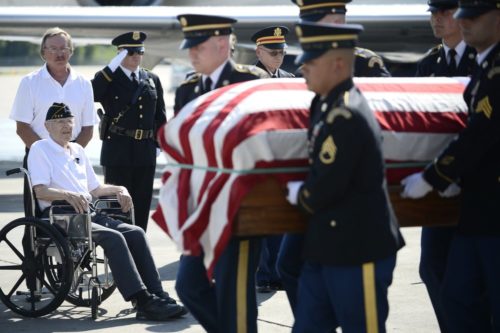
    John Sersha2

    That’s John’s 97-year-old brother, Paul, in the wheelchair who was there for the return of John’s remains. There will be a Memorial Service tomorrow and the funeral is scheduled for Sunday in Virginia, Minnesota.

    Thanks to an anonymous 1SG out there for the links. He wanted us to get the story before he left for an NTC rotation.

  • 1st Lt. Donald W. Bruch comes home

    1st Lt. Donald W. Bruch comes home

    1st-Lt.-Donald-W.-Bruch

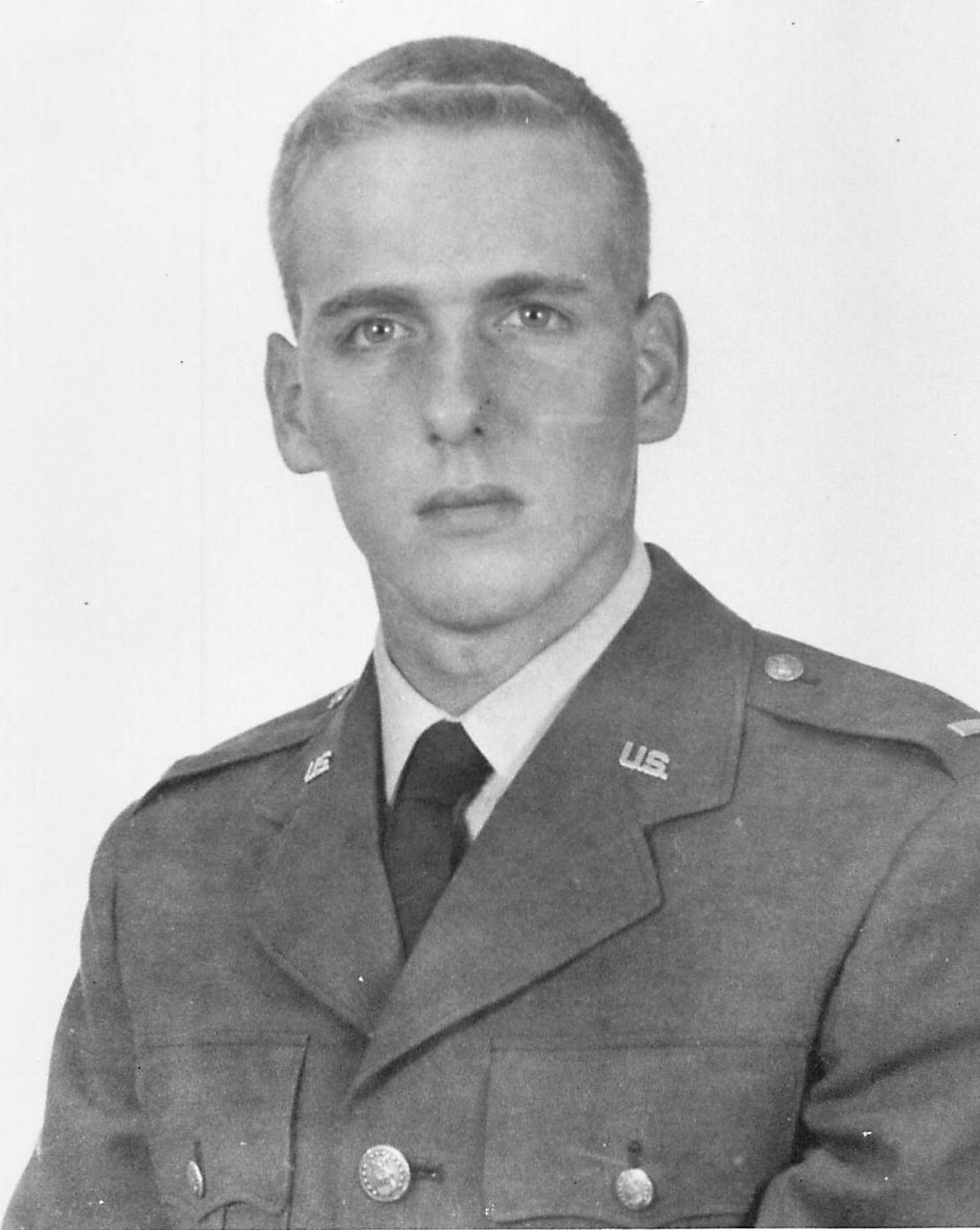
    Bobo sends us a link to AR Gunners which reports that U.S. Air Force 1st Lt. Donald W. Bruch, Jr. a 24-year-old who was lost north of Hanoi on April 29, 1966, will finally come home to East Petersburg, Pennsylvania on May 29th. From POW Network;

    On April 29, 1966, 1Lt. Donald W. Bruch Jr., was the pilot of an F105D sent on a combat mission over North Vietnam. As his aircraft was about 12 miles northeast of the city of Hanoi, it was struck by antiaircraft fire while making an attack on the target. Lt. Bruch was instructed to climb and as he did the aircraft went out of control, entered a steep dive, and crashed. No parachutes were seen and no beepers were heard. Donald Bruch was not recovered.

    Public records available from the U.S. Air Force indicate only that 1Lt. Bruch was killed on April 29, 1966 on a combat mission. The Defense Intelligence Agency further refines the classification of Killed/Body Not Recovering by adding an enemy knowledge qualifier of Category, concluding that the enemy definitely knows his fate.

  • Don’t Fear the Commie

    (With appropriate apologies to Donald Roesner and Blue Öyster Cult.  Regular TAH readers should recognize the inspiration for what follows.)


    He said, good times now have come
    Threat from Karl Marx now is gone
    No one should fear the Commie
    Not in the wind, the sun or the rain . . . never be like they were
    Come on people . . . don’t fear the Commie
    Come talk to the hand . . . don’t fear the Commie
    They’re no longer a threat . . . don’t fear the Commie
    Baby that’s the plan . . .

    Da da da da da
    Da da da da da

    Dissidence is done
    Once was here but now is gone
    The kulaks and “enemies”
    Are in the gulag for eternity . . . kulaks and “enemies”
    40,000 men and women everyday . . . like kulaks and “enemies”
    40,000 men and women everyday . . . redefine “happiness”
    Another 40,000 coming everyday . . . you can be like they are
    Come on people . . . don’t fear the Commie
    Come talk to the hand . . . don’t fear the Commie
    They’re no longer a threat . . . don’t fear the Commie
    Baby that’s the plan . . .

    Da da da da da
    Da da da da da

    Ignore those chains around your heels
    Come with us to the killing fields
    Or to Hotel Lubyanka
    Where you check in but you never check out
    Your door kicked open when they appear
    Dissenting voices shall “disappear”
    The curtains part and then they appear . . . saying don’t be afraid
    There will be no pain . . . still they showed their fear
    They forced them to their knees . . . as they started to cry
    “Useful idiots” said goodbye . . . now would become like they are
    Cocked pistols in their hands . . . one bullet enters the brain
    Come on people . . . don’t fear the Commie


    “Those who cannot remember the past are condemned to repeat it.”
    — George Santayana


    Author’s Note: the “one bullet enters the brain” line above is not a reference to suicide. A single pistol shot to the back of the head of a restrained prisoner (some accounts indicate the prisoner was forced to kneel) was the method of execution used by the NKVD at the Ostashkov prisoner of war camp during the Katyn massacre and, reputedly, elsewhere. The KGB also reputedly used the method.

    Any sane person who is not a moron fears any and all authoritarian regimes.  Historically, Communism taking power has uniformly resulted in one thing:  the establishment of an authoritarian regime that has little or no respect for human rights – or for personal freedom.