Category: Historical

  • The Army you want and the Army you need

    The Army you want and the Army you need

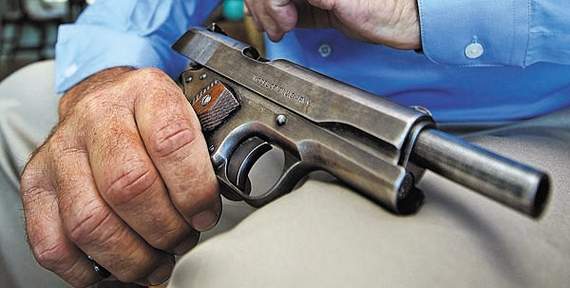
    I made a couple of gun purchases this summer that were my first dip into the realm of historical arms. An M1903A3 rifle made by Remington Arms and an M1911A1 pistol made by Remington Rand. They were both manufactured during World War II. Being the sort of person that I am, I checked into the history of the manufacturing of those particular weapons.

    Springfield Armory (in Massachusetts) was the main manufacturer of the assault rifle of the day – the M1 Garand. From 1937, when the Army bought the rifle, until the war ended in 1945, they made 4.5 million of the rifles.

    16.1 million Americans served in the military during the war, about 12 million served outside of the US. 4.5 million Garands weren’t enough to arm them all so Remington Arms (Ilion, New York) and Smith Corona (the typewriter company in Syracuse, NY) helped out by making the World War I era assault rifle – the 1903 – to augment arming troops. Many of the Marines who initially went to fight the Japanese in Pacific were armed with 1903s. Remington and Smith Corona changed the design of the rifle using a sighting system similar to the Garand to facilitate cross-training between the two battle rifles.

    The main difference between the two rifles was that the Garand was an eight-shot semi-automatic rifle while the 1903 was a bolt-action with a five shot magazine. Big difference in a firefight. But you go to war with the Army you have, not always the Army that you want.

    The military had the same problem with their .45 automatic caliber pistols, the M1911A1. They had to ramp up production of the handgun and Colt, the main manufacturer, couldn’t handle the demand, so the military signed contracts with other folks; Remington Rand (900,000 M1911s produced), Colt (400,000), Ithaca Gun Company (400,000), Union Switch & Signal (50,000), and Singer (500). Remington Rand made typewriters before the war, Singer, of course, made sewing machines. Union Switch & Signal made railroad signaling equipment. All five companies were mainly in the northeastern part of the country – in the good old days, that’s where all of the manufacturing took place. Well, until the Leftists chased all of the manufacturers south with their taxes and over-regulation.

    A little more history of my Remington Rand; a gentleman brought it home from the Korean War (remember when you could do that?) and it was stolen from his home in the early 60s. The thief ground off the serial number. Law enforcement eventually caught up with the thief and returned the gun to him with a new ATF-assigned serial number etched into it (we checked out his story with the ATF before we took possession of it). I guess the days of the ATF going through that kind of trouble to return a stolen weapon to a legal gun owner are probably gone, just like the manufacturing capability we had in this country before World War II.

    I just wonder if we had an emergency the size of World War Two again if we have the capability to respond as a nation in the way that folks did back then. The capability and the willingness to respond on that scale.
  • Chosin Few; 64 years later

    Chosin Few; 64 years later

    Stars & Stripes reminds us that the battle for Chosin Reservoir began in Korea 64 years ago today with their reprinting of an article from the Daily Interlake in Montana which interviews local survivor, Capt. Richard Wayne Bolton, 82, of Happy Valley;

    “They waited until dark to attack,” Bolton said. “When they came, they blew bugles and whistles and shouted. The Chinese came in waves and they came, and they came, and then in the daylight they completely disappeared to wait for dark to attack again.”

    “I thought the whole division was going to die,” he continued. “The Chinese came to annihilate the 1st Marine Division and I thought every one of us was going to die.”

    The Battle of the Chosin Reservoir is one of the epic battles in the history of the U.S. Marine Corps. The Marines who survived are accorded a special level of deference. One of the most famous quotes to come out of the battle is that of Marine Maj. Gen. Oliver P. Smith who said, “Retreat, hell! We’re not retreating, we’re just advancing in a different direction.”

    The surrounded, outnumbered Marines not only managed to break free of the Chinese, they inflicted heavy casualties as they went.

    “Mao said they won the battle but they lost 45,000 men in the fight. The Chinese 9th Army was combat-ineffective,” Bolton stated. “But the 1st Marine Division was still in action.”

    Green Bay’s NBC26 interviews another survivor, Jim Jolly, from Waupaca;

    We’ve discussed the documentary “Chosin” in the past, but for those who might have missed it, the film is an excellent tribute to those who fought in the battle. The folks from the Chosin Project interview veterans who were there and they tell the story in a unique way. The last time I checked, “Chosin” is on Netflix.

  • Cubans Vs. Cubans in the Congo

    Cubans Vs. Cubans in the Congo

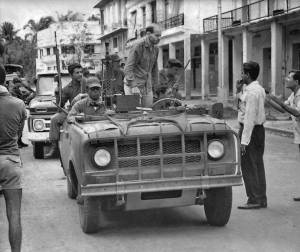
    tamayojeep

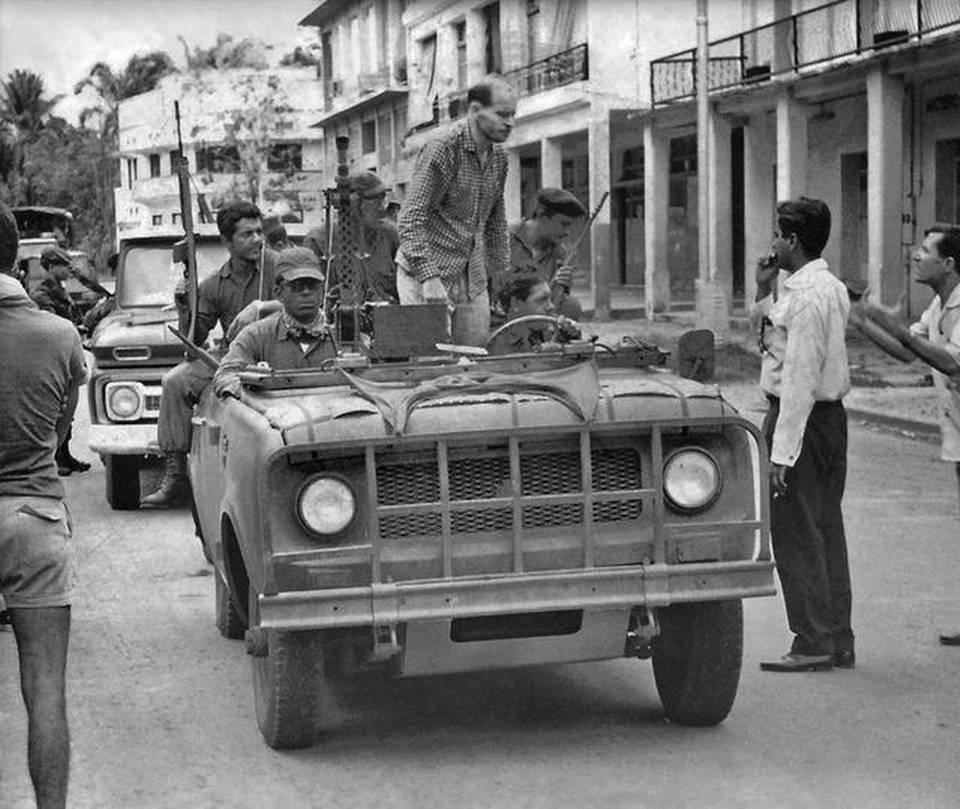
    Someone dropped off a link to the Miami Herald on our Facebook page about a story that I’ve never heard – it’s about a battle between CIA-sanctioned Cuban ex-patriots and Castro’s Cubans who battled it out in the Congo in the early 60s;

    The CIA sent about 120 Cuban exiles to fight communist-backed guerrillas during the political violence that wracked the country now known as the Democratic Republic of the Congo from 1962-67, says Frank R. Villafaña, author of Cold War in the Congo, virtually the only history of the role of Cubans in the conflict. Fidel Castro supplied about 200 soldiers to the other side.

    The rival Cuban forces discovered one another’s presence during a CIA bombing raid on guerrilla positions when ground troops and pilots began cursing one another in Spanish. Later they would fight face to face, when CIA-backed Cubans in patrol boats attacked Castro’s troops along Lake Tanganyika’s shores.

    “That was the story that got me interested,” said Villafaña. “When I heard it, I thought it was just typical Cuban exaggeration, but it’s all true. I don’t know why the CIA has kept it so secret. All the documents were supposed to be declassified after 30 years, and here we are 50 years and it’s still all secret.”

    The secrecy extends beyond official documents to cloud even the eyewitness accounts of some of the Cuban CIA operatives, now all in their late 70s and beyond. Tamayo, the burly man with the machine gun, is amiable as he shares his recollections of the rescue operation . But, asked about his employer, he turns adamant.

    “I don’t know nothing about the CIA,” Tamayo insists.

    It’s pretty long story that you should read at the Herald along with the photos.

  • Remembering Ivy Mike

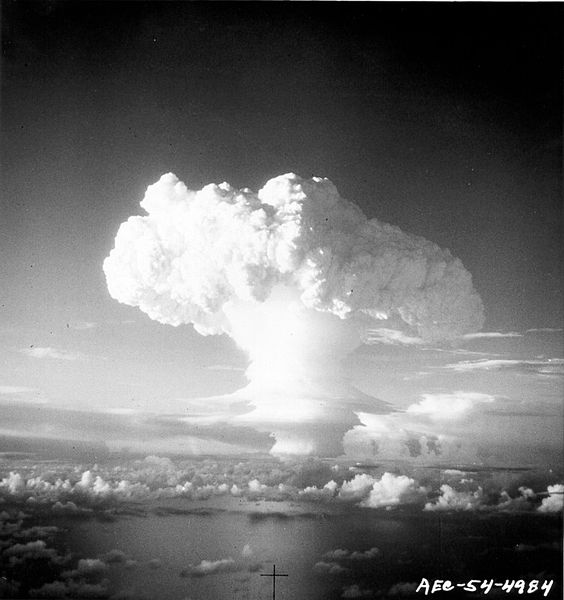
    Sixty-two years and two weeks ago, the world saw the demonstration of something completely new. It was a thing both awe-inspiring and terrifying.


    On 1 November 1952 – at 0714:59.4 (+/- 0.2 sec) Marshall Islands Time Zone, or 1414:59.4 (+/- 0.2 sec) the previous day on the US East Coast – the world’s first staged (Ulam-Teller design) thermonuclear device was detonated.  The nuclear test series during which that test occurred was called Operation Ivy; it occurred at Enewetak Atoll, Marshall Islands.  The test itself was called Ivy Mike; it occurred on Elugelab Island.

    The test was successful.  And it ushered in the height of the Cold War nuclear competition between the US and USSR that – one that nearly culminated in disaster during the Cuban Missile Crisis.

    The event is today largely forgotten.  It shouldn’t be.  The destructive power of the Ivy Mike device – which at approximately 10.4 megatons was the third- fourth-most-powerful US nuclear device ever detonated, and still ranks today as one of the largest man-made explosions in history – is something we should remember.

    A few facts about the test:

    • The Ivy Mike test had an explosive yield equivalent to approximately 10.4 megatons – that is, 10,400,000 tons of TNT.  For comparison, the nuclear weapon that destroyed Hiroshima had an estimated yield of between 13 and 18 kilotons – or between 575 and 800 times smaller.
    • The Ivy Mike fireball was estimated to be approximately three and 1/4 miles in diameter. (Some sources estimate the fireball’s maximum extent at slightly more than 4 miles in diameter.)  In comparison, the fireball created the Hiroshima weapon was somewhat less than 1/4 mile in diameter.
    • The nearby island of Engebi – three miles away from ground zero for Ivy Mike, and well outside the fireball – was denuded of plant and animal life by the blast.  Only the stumps of vegetation remained.
    • Ground zero for the Ivy Mike test was a building on the island of Elugelab in Eniwetak Atoll. After the test, the island of Elugelab . . . no longer existed.  The entire island (roughly oval, about 1/2 by 1/3 mile) had been vaporized and/or pulverized, then sucked into the explosion’s fireball.  Remaining in its place was a crater over a mile in diameter and over 160 feet deep. Here are before and after aerial photographs:

    Before:


    After ( large arrow indicates crater):


    • On the island of Rigili, 14 miles to the south-southeast, vegetation directly in the line-of-sight of the detonation was scorched and wilted on the side facing the explosion.
    • A B-36 orbiting the test site 15 miles away at 40,000 feet altitude heated 93 degrees F virtually instantaneously when the device was detonated.
    • The mushroom cloud created by the Mike device crested at 27 miles altitude. Its stem was 20 miles across at its maximum; the cloud’s cap at maximum extent was 100 miles in diameter.

    While the device tested at Ivy Mike was not a deliverable warhead (it used liquid deuterium vice materials stable at room temperature), two years later a device of roughly the same power that was stable at room temperature had been developed.  By early 1955, the US had weaponized devices in the same yield range.  The USSR followed not long afterwards, exploding their first staged thermonuclear device on November 22, 1955.

    Militarily, at the time there was at least a modest argument in favor of weapons of this immensely destructive scale.  Delivery systems of the early/mid 1950s were by today’s standards quite crude in terms of accuracy; getting a weapon within even a kilometer or two of a strategic target was not guaranteed.  So weapons that would destroy a strategic target even if they “missed” by a mile or more at least arguably made some amount of military sense.

    Unfortunately, those strategic targets were often in or near cities – or were often the cities themselves.  We should thus thank God weapons of this type were never used.  Had they ever been employed, the death toll could literally have been in the tens or hundreds of millions had a significant number been employed.  Even a single such weapon used on a large city could have killed literally millions.

    Still, as terrible as they could have been . . . they were also truly awe-inspiring things.  And we would do well to remember them – if for no other reason to remind ourselves just how bad total war could be.


    Sources:  primarily Dark Sun, by Richard Rhodes, plus various secondary Internet sources.  If you’re interested in the history of both the US and Soviet thermonuclear programs, Rhodes’ book is a must.  Fascinating – and highly recommended.

  • Visiting relics of the past

    Over Veterans day I decided to take my six year old son out to seem some static displays around base. It was one of those traditional things that my family on my parents side did for me when I was a kid.

    We stopped by the Cemetery on post first in order for hem to start understanding what Veterans day is and how we should be grateful for those who have gone into harms way on our behalf. I may have to wait until he his older or a different approach. It did not help that he ran through the grassy area and got water in his shoes. He started to get cold so we moved on to the next site on post that had some static Tank and other military vehicles. We saw tanks from different decades and wars. Lasted longer then I thought he would. Lastly we went to the Air Force side and ran into a few hidden historical gems.

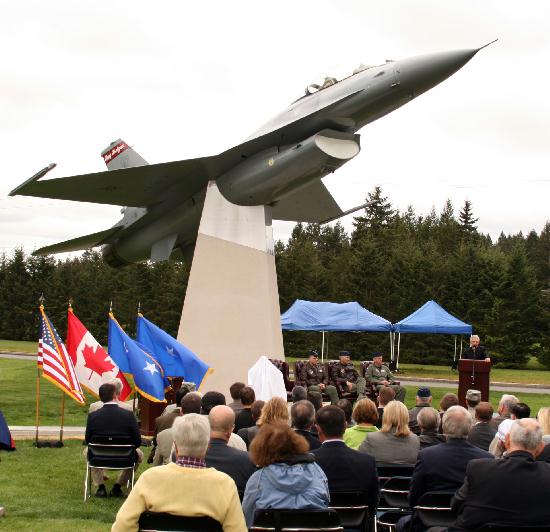
    The first one was a F-16(A?) Falcon on display at the National Guard Headquarters. The interesting fact was that this F-16 Falcon had taken part in the Air Patrols immediately following the September 11th attacks. Unless someone took the time look at it, they would never know. The other gems were at a static aircraft display with over 15 aircraft. Two of them were rare finds as it turns out. They were the Douglas B-18 Bolo and the DouglasB-23 Dragon. Both were pre-world war two aircraft and were not used on the war and not very well known at all. But I think that make it more special because it was something new to see in how this history of aviation progressed from the biplane to the monoplane. More so because it seems that number of known examples of these aircraft in the world is in the single digits. I was able to show my son two such aircraft in one day.

    So in short I was able to show some history and learn some myself. But given all the things that one can do on Veterans day, it always interesting to find out how much history at each post.

    Also on a separate note, what has worked for you in explaining Veterans day to Children of single digits?

  • The Senior Military Service Sends Its Regards . . .

    . . . to the youngest of the original three US military services on the occasion of its 239th birthday.  Specifically:  Happy Birthday, United States Marine Corps.


    The USMC was first established on Friday, 10 November1775. On that date, the Second Continental Congress resolved

    That two battalions of Marines be raised consisting of one Colonel, two lieutenant-colonels, two majors and other officers, as usual in other regiments; that they consist of an equal number of privates as with other battalions, that particular care be taken that no persons be appointed to offices, or enlisted into said battalions, but such as are good seamen, or so acquainted with maritime affairs as to be able to serve for and during the present war with Great Britain and the Colonies; unless dismissed by Congress; that they be distinguished by the names of the First and Second Battalions of Marines.

    Tun Tavern, in Philadelphia, PA, is often regarded as the “birthplace” of the USMC; the first Marines reputedly enlisted there. However, the truth of that claim is unclear; some accounts say that the first recruiting took place not in Tun Tavern but in a tavern called the Conestoga Waggon – owned by none other than the family of the first Commandant of Marines, Samuel Nicholas.

    Like the US Navy, the USMC was disestablished after the American Revolution. It was reestablished on 11 July 1798.

    Initially, 11 July was regarded as the USMC’s birthday. However, in 1921 Major Edwin North McClellan – then OIC of the USMC History Section – convinced the Commandant of the Marine Corps, Maj Gen John Lejune, to declare the original date of 10 November as the USMC’s birthday. It has been so celebrated since. The first USMC Ball was held four years later, in 1925.

    Born in a bar? That figures – and explains much. (smile)

    All kidding aside: you Marines may be a bit “off” from our perspective, but you’re certainly damn good at what you do. We love ya like brothers and sisters.

    Again:  best birthday wishes to the finest Marines in the world.

  • Dachau’s “Arbeit Macht Frei” gate stolen

    Dachau’s “Arbeit Macht Frei” gate stolen

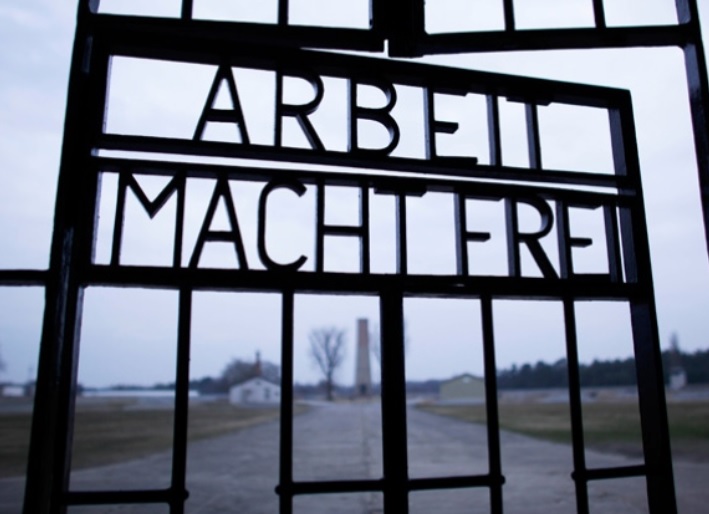
    Arbeit mach frei gate

    The Associated Press reports that the gate welcoming folks with the “Work will make you free” greeting at Dachau has been stolen for some stupid reason;

    Security officials noticed early Sunday morning that the gate measuring 190 by 95 centimeters (75 by 37 inches) — set into a larger iron gate — was missing, police said in a statement. Whoever stole it during the night would have had to climb over another gate to reach it, they added.

    Police said they found nothing in the immediate vicinity of the camp and appealed for anyone who noticed any suspicious people or vehicles to come forward.

    Dachau, near Munich, was the first concentration camp set up by the Nazis in 1933. More than 200,000 people from across Europe were held there and over 40,000 prisoners died before it was liberated by U.S. forces on April 29, 1945. The camp is now a memorial.

    I went there with my family in the mid-80s and we passed through that gate. The AP also says that a similar gate at Auschwitz was stolen a few years back;

    In December 2009, the infamous “Arbeit macht frei” sign that spanned the main gate of the Auschwitz death camp, built by the Nazis in occupied Poland, was stolen. Police found it three days later cut into pieces in a forest on the other side of Poland.

    A Swedish man who had a neo-Nazi past was found guilty of instigating that theft and jailed in his homeland. Five Poles also were convicted of involvement and imprisoned.

  • A headless Ranger at Fort Edwards?

    A headless Ranger at Fort Edwards?

    RogersRangers_s

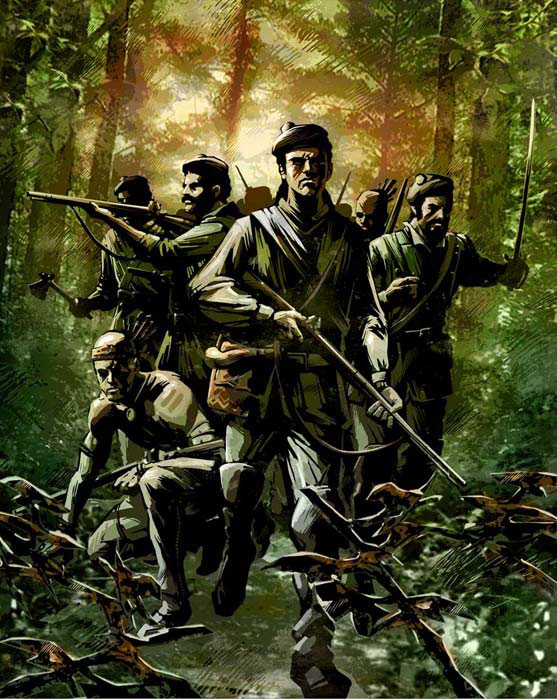
    Pinto Nag sends us a link to MSN that talks about a headless body of a possible member of the famed Rogers’ Rangers that was exhumed at Rogers Island in the Hudson River, in New York State;

    In 2006, a local couple who served as caretakers for the then-privately owned property uncovered seven human skeletons buried at the site, including one that was missing its skull. State archaeologist later determined the burials were likely part of cemetery dating back to the French and Indian War (1754-63), when Fort Edward was Britain’s largest fortification in North America. The skeletons were reburied where they were found, and no excavations have been conducted at the site since.

    Of course, modern-day Rangers trace their lineage to Robert Rogers’ Ranger company, a small force of frontiersmen who were primarily used for reconnaissance and special operations of the day. Historians say that some of the Rangers of Fort Edwards were at the battle at Concord Bridge. Strangely enough, when Rogers himself offered his services to George Washington, the general rejected his offer suspecting that Rogers might be a spy. Rogers, enraged by the rejection, joined the British Army and formed the King’s Rangers.