A guest post from Martinjmpr;
The “big” wars get all the press. Books, movies, television programs and other elements of pop culture devote their attention to the major military operations of the day. The mundane, minor, brush-fire conflicts are barely mentioned at the time and quickly forgotten afterwards.
It was 20 years ago today that the US intervention in Haiti officially began. The mission was to restore the democratically elected president of Haiti, Jean Bertrand Aristide, to the seat of power he’d been kicked out of a couple of years before in a military coup (a secondary justification was to stem the flow of refugees fleeing from Haiti to American shores.)
The original plan was a Panama/Grenada-style air-and sea-borne military invasion, with paratroopers from the 82nd descending on the capital city of Port-au-Prince to seize the airfield, heliborne SOF units to capture key facilities deep inside the country, and a follow-on force of Marines to arrive by sea at the country’s two main ports, Port-au-Prince in the West and Cap Haitien in the North. It would have been swift, brutal and decisive.
But that’s not the way it went down. Just a day before the operation was set to begin, a team of three high ranking US representatives – former President Jimmy Carter, former senator Sam Nunn, and retired General Colin Powell, flew to Haiti to urge the dictator, General Cedras, to step down and go into exile. The carrier battle group was anchored in the Carribbean off the Haitian coast, and the paratroopers were literally in the air on their way to the drop zone, when the word came that an agreement had been reached, and the “forced entry” operation turned into a “soft invasion.”
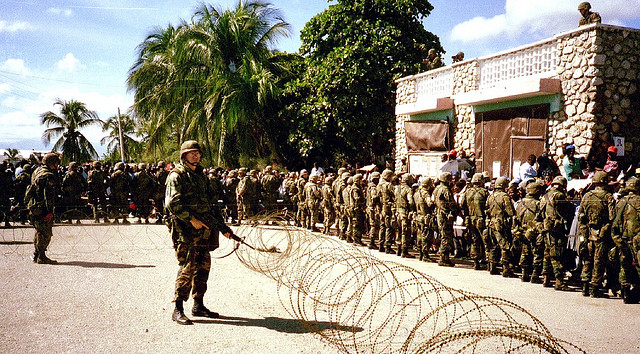
US forces occupied most of the country, with the bulk of US forces in the areas of the two biggest cities, Port au Prince and Cap Haitien. The remainder of the country was “occupied” by SOF units, primarily the 3rd Special Forces Group (ABN) out of Fort Bragg, under the command of Col. Boyatt.
There was one US KIA, SFC Greg Cardott, A/3/3rd SFG who was shot and killed in Gonaives on 12 JAN 1995 by a disgruntled former member of the Haitian Armed Forces (FAD’H) The shooter was immediately shot and killed by Cardott’s partner.
OUD “Officially” ended in mid-1995 when the UN took over as UNMIH. UNMIH stayed there until 1996.
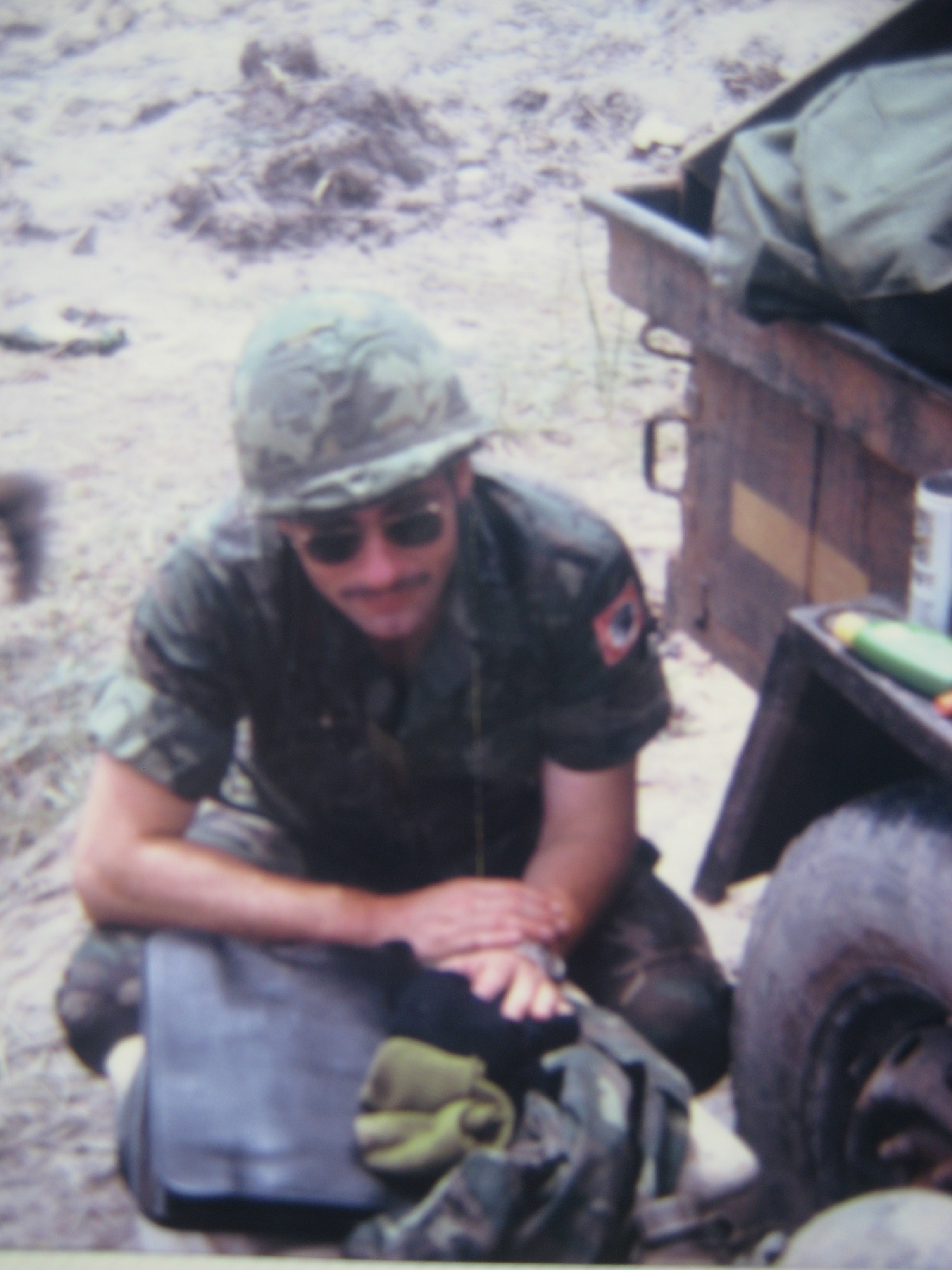
On a purely personal note, OUD will always loom large in my conscience because it was my first “real” operation (that is, the first time I was given ammunition without having to sign for it!) I was assigned to Military Intelligence Detachment of the 3rd battalion, 3rd SFG, and detached to the the CJSOTF(Combined/Joint Special Operations Task Force) at Guantanamo Bay. I remember vividly, sitting at a picnic table overlooking the runway on the Leeward side of Gitmo, loading ammo into my magazines as the C-130s containing the Rangers landed one by one, and then just sat on the runway with their engines running, just waiting for the orders to take off. I deployed to Port au Prince on about the 25th or 26th of September, and a few weeks later when the 3rd Battalion was “stood up” in Haiti, I spent the rest of my time at FOB 33 (3/3 SFG) in Gonaives. I was there until February of 1995.
DoD never considered Haiti to be a “war.” Except for those of us who were there, Haiti has been largely forgotten by most Americans, and probably by most Haitians as well. Sadly, Haiti remains the same corrupt, broken country as it was when we got there, and OUD is just a minor footnote in American military history, a messy little operation in a hopeless little country.