Category: Historical

  • Four Civil War Vets Honored

    After the Civil War, many former soldiers moved west to begin new lives. The reasons why were varied.

    Some sought adventure. Others were no longer particularly welcome at home – Southerners who’d fought for the Union, for example. Others stayed in the Army and were posted in the West, settling there after getting out.

    Pueblo, Colorado, was the destination of quite a number of such individuals. A single cemetery there – Roselawn Cemetery – contains the graves of 355 Civil War veterans.

    Four of those Civil War soldiers recently made the news. One had died in 1899; another, in 1900; a third, in 1901. The last of the four died in 1921.

    They died, in Pueblo, without known next of kin.  They were buried at Roselawn Cemetery.

    Their graves were presumably originally marked in some way.  But over time, as can sometimes happen in older cemeteries with no family to tend them . . . their graves’ whereabouts became lost.

    Enter two organizations: the Concerned Citizens of Roselawn Cemetery and the Buffalo Soldiers of the American West.

    In conducting research for a presentation on Roselawn’s history, the Concerned Citizens of Roselawn Cemetery noted an issue.  While cemetery records showed that 355 Civil War veterans were buried there, they could only find 351 of them.

    Using cemetery records, they located the missing gravesites.  Identifying which was which took additional work, but through consulting archived records and obituaries they were eventually able to identify the graves of each of the four individuals.

    Each of the four was a Southerner who’d fought for the Union. One was an officer, 1LT Louis Young; the other three – CPL Thomas Walker, PVT James W. Williams, and PVT George Washington – were freed slaves who’d later fought for the Union. The four hailed from Virginia, Mississippi, and Tennessee.

    One of the two organizations – it’s not clear which – arranged for proper burial markers for these men. Those markers were emplaced; and earlier this month, members of the Buffalo Soldiers of the American West participated in a formal ceremony unveiling the new markers.

    Rest well, elder brothers-in-arms. We’re sorry it took so long, but your resting places now are properly marked.

    And to all who participated in preserving these men’s history:  kudos – and thanks.

  • A Well-Lived and Honorable Life

    I’ll go out on a limb and say we’ve all known a certifiable badass or two along the way.  That is, someone who – when push came to shove – kept their cool and performed an incredible, dangerous feat at the risk of their own life.

    Those kind of people seems to be relatively common in the military, actually.  How much of that is due to more opportunity; how much to training; how much to pre-screening to weed out the weak; how much to the military’s culture attracting, then developing them?  Dunno.

    Below is a link to one such individual’s story.  It’s a story that’s not received a lot of notice until very recently – and even today, it doesn’t seem that well known.

    In any case, I find this man’s story . . . unusual.  And compelling.  And amazing.

    And much like another individual featured here not long ago, the man at the story’s center never sought publicity for what he’d done.

    You can read the story here.  It’s from a source I don’t normally visit, so I missed it when it first appeared a few months ago.

    But before you read, you might want to grab a tissue or two.  You just might need them.

    I salute you, Ba Van Nguyen – both for what you did in 1975, and for how you lived your life afterwards.

    Yours was “a life well-lived” indeed.

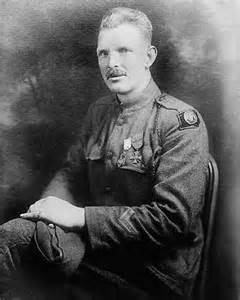
  • Alvin York; 97 years ago today

    Alvin York; 97 years ago today

    Alvin York

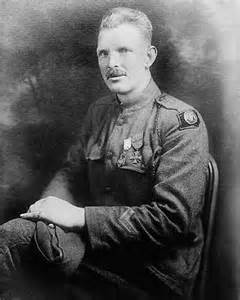
    On October 8th, 1918, Alvin York, the hillbilly from Pall Mall, Tennessee, taught the Kaiser’s troops the importance of marksmanship over the volume of fire when he killed more than twenty Germans and captured 132 others, destroying 32 machinegun emplacements nearly single-handedly with his M1917 Enfield rifle and his M1911 Colt semi-automatic pistol in the Muese-Argonne. That day he earned the Distinguished Service Cross which was upgraded to the Medal of Honor a few months later and presented by “Black Jack” Pershing. The French Republic awarded him the Croix de Guerre and the Legion of Honor. Italy awarded him its Croce di Guerra al Merito and Montenegro.

    The citation for his Medal of Honor was pretty brief and unexceptional;

    After his platoon had suffered heavy casualties and 3 other noncommissioned officers had become casualties, Cpl. York assumed command. Fearlessly leading 7 men, he charged with great daring a machinegun nest which was pouring deadly and incessant fire upon his platoon. In this heroic feat the machinegun nest was taken, together with 4 officers and 128 men and several guns.

    He was such a popular figure, whenever I had visitors while I was stationed at Fort Bragg, sixty years after the war and 15 years after his death, they were most excited when they encountered his uniform in the 82d museum.

  • About Those “I Escaped from the VC/NVA” Claims

    One of the common – and immensely frustrating – claims by military fakes is falsely claiming to have been held as a POW in Vietnam or elsewhere in Southeast Asia.  It’s also one of the easier false military claims to disprove quickly.  DPAA maintains a public list of POWs who returned from captivity during or at the end of the Vietnam War.

    However, many individuals making a “Vietnam POW” aren’t content to merely claim they were a POW.  Many have to claim to have been in a “tiger cage” temporarily, or to have later somehow escaped from enemy custody – or both.  Hell, Jonn posted an article about one such fake claim earlier today.

    Well, it turns out this kind of claim is also laughably easy to disprove. Turns out that DPAA maintains a second list – specifically, a list of those who successfully escaped enemy captivity during the Vietnam War.

    This latter claim (to have escaped from being held as a POW in Southeast Asia during the Vietnam Conflict) is not only laughably easy to verify or disprove, it’s also is one that’s virtually guaranteed to be bullsh!t.  Here’s why:  Only a total of 37 individuals were captured in SEA and later escaped and returned alive to US control.

    That’s right – thirty-freaking-seven.  Total.

    I haven’t counted.  But I’m pretty sure Jonn’s busted more than that many here at TAH alone for falsely claiming to have been “Vietnam POWs” who “escaped from Charlie”.

    The point?  Such individuals are incredibly rare.  They amount to a bit over 5% of all Vietnam POWs who returned alive – and according to DPAA, there were only a total 721 total POWs that returned alive, including civilians held captive.  (37 who escaped plus 684 who were released during or after the war).  Since approximately 3.1 million people served in the military in SEA during the war and only 32 of the escapees were military personnel, that means you’re literally talking about one Vietnam vet in about 97,000.

    Rare?  You betcha.  Especially since a number of those bona fide escapees are no longer alive.

    A few other interesting points about the successful escapees.

    1. Five of these individuals were civilians.
    2. Two were women (both were civilians).  They were both captured and escaped during the somewhat chaotic partial collapse of South Vietnam during March, 1975.
    3. Among the 32 military personnel who were taken prisoner in SEA and who later successfully escaped captivity, 19 were Army; 10 were Marines; 2 were Navy; and 1 was Air Force.
    4. With two exceptions, all successful escapees appear to have been taken prisoner and held in South Vietnam. The two exceptions were the two Navy personnel who later escaped; they were captured and held in Laos.
    5. No Navy SEALs were taken POW in Vietnam and later escaped.
    6. The vast majority (27, or 75%) of escapees escaped within a month of being captured. Only 4 were held longer than 2 months.  Only two escaped after being held longer than 6 months:  SFC Isaac Camacho, 5th Special Forces Group, US Army – captured on 24 November 1963 and escaped/returned to US custody almost 19 months later, on 13 July 1965; and 1LT James Nicholas Rowe, captured on 29 October 1963 and escaped/returned to US custody over 5 years later, on 31 December 1968.
    7. Three of the individuals who escaped captivity were both captured and escaped captivity the same day; another three were captured one day and escaped the next. If someone’s claiming they aren’t on the POW list because “they weren’t held long enough”, that’s bullsh!t.  There is NO “minimum time required” before DoD considers someone a POW.

    Still, we keep seeing this kind of bogus claim.  So, in the interest of being a ready reference, here is the complete list of those individuals who DPAA recognizes as being successful escapees from enemy captivity during the Vietnam War.


    Branch of Service  Location of Incident  Name  Rank Date Captured  Date of Return
    USA S. Vietnam AIKEN, Larry Delarnard E4 1969/05/13 1969/07/10
    USA S. Vietnam ANDERSON, Roger Dale E2 1968/01/03 1968/01/12
    USA S. Vietnam BABCOCK, William H. Jr. O2* 1968/01/31 1968/01/31*
    USA S. Vietnam BRASWELL, Donald Robert E4 1967/08/23 1967/08/24
    USA S. Vietnam BREWER, Lee E5 1968/01/07 1968/01/08
    USA S. Vietnam CAMACHO, Issac E7 1963/11/24 1965/07/13
    USN Laos DENGLER, Dieter O2 1966/02/01 1966/07/20
    USA S. Vietnam DIERLING, Edward A. E5 1968/02/01 1968/02/23
    CIVILIAN S. Vietnam DODD, Joe Lee Civ 1965/10/10 1965/10/25
    USMC S. Vietnam DODSON, James E5 1966/05/06 1966/06/20
    USMC S. Vietnam ECKES, Walter W. E3 1966/05/10 1966/06/20
    USA S. Vietnam FANN, Jerry L. E3 1967/03/21 1967/03/21
    USA S. Vietnam GRAENING, Bruce A. E3 1967/03/09 1967/03/18
    USA S. Vietnam GUFFEY, Jerry E4 1969/03/04 1969/03/04
    USMC S. Vietnam HAMILTON, Walter D. E2 1965/10/18 1965/10/29
    USA S. Vietnam HATCH, Paul G. E3 1969/08/24 1969/08/25
    USA S. Vietnam HAYHURST, Robert A. E5 1968/02/01 1968/02/23
    USA S. Vietnam HOLT, Dewey Thomas E4 1967/08/23 1967/08/24
    CIVILIAN S. Vietnam HUDSON, Henry M, Civ 1965/12/20 1965/12/21
    USMC S. Vietnam IODICE, Frank C. E4 1968/05/30 1968/06/01
    CIVILIAN S. Vietnam JONES, Edwin D. Civ 1965/12/20 1965/12/21
    USA S. Vietnam KING, Everett Melbourne Jr. E4 1968/02/01 1968/02/08
    USN Laos KLUSMANN, Charles F. O3 1964/06/06 1964/08/31
    USA S. Vietnam MARTIN, Donald Eugene E5 1968/03/02 1968/04/14
    USMC S. Vietnam NELSON, Steven N. E3 1968/01/07 1968/01/21
    USMC S. Vietnam NORTH, Joseph Jr. E2 1965/10/18 1965/10/29
    USAF S. Vietnam PAGE, Jasper N. E6 1965/10/30 1965/11/04
    USMC S. Vietnam POTTER, Albert J. E5 1968/05/30 1968/06/01
    USMC S. Vietnam RISNER, Richard F. O4 1968/08/20 1968/08/22
    USMC S. Vietnam ROHA, Michael R. E1 1968/01/07 1968/01/21
    USA S. Vietnam ROWE, James Nicholas O2 1963/10/29 1968/12/31
    CIVILIAN S. Vietnam SMITH, Linda Civ 1975/03/10 1975/03/27
    CIVILIAN S. Vietnam SMITH, Michelle L. Civ 1975/03/10 1975/03/27
    USMC S. Vietnam TALLAFERRO, William P. E4 1968/02/06 1968/02/13
    USA S. Vietnam TAYLOR, William B. E5 1968/03/20 1968/05/06
    USA S. Vietnam VANPUTTEN, Thomas E4 1968/02/11 1969/04/17
    USA S. Vietnam WRIGHT, Buddy E5 1968/09/22 1968/10/06

    Note:  for unknown reasons, the DPAA list does not give a rank or date of escape for Babcock.  However, the Military Times Hall of Valor database lists his rank when captured as 1LT, and indicates he escaped from enemy custody/was rescued the same day.  Other Internet sources also give Babcock’s  rank as 1LT at time of capture; those sources further indicate he was captured and escaped/was rescued the same day.  I have thus entered this data in the table above.


    That’s the entire DoD-recognized escapee list.  It may be verified directly from DPAA by following this link.  All other Vietnam War POWs who returned alive did so after being released during or after the end of the war.

    If someone’s making a “Vietnam POW” claim and isn’t on that list, well, personally I’d not believe a word they said.  And I’d probably also leave the area immediately – before I lost my temper and did something stupid.


    (A link to this article has been added to the “Military Records” button on the TAH site banner.)

  • Alice, George, and History

    Long ago, an election was stolen.

    It was stolen in a place that was effectively a one-party state at the time. Oh, yes, there was technically political opposition. But as a practical matter, the ruling party called the shots; its candidates always won. Elections were largely a formality, held for show.

    But elections were held nonetheless. The standard tricks of the trade were used to affect their outcome: votes recorded that were not cast, dead people voting, bought votes, fraudulent totals – you name it.

    However, sometimes the ruling party would squabble within itself, with no clearly “pre-anointed” victor. In those cases, the results might be close. And things could get . . . interesting.

    In one such case, the results were close indeed. After a hard fight, one of the two indeed won. Then the election was stolen. And the results were so obviously fraudulent as to be nauseating.

    In one location, dead people were documented to have voted. People who never voted during the election – and who were out of town on election day and thus unable to vote at all – were nevertheless counted as having voted in person.

    The totals in favor of one candidate were nauseatingly one-sided – so much so, that it’s impossible to believe them: 408-110; 5,554 -1,179; 965-61 (or 966-61; sources differ); 711-158; 723-198; 2,908-166; and 4,195-38 (later “amended” to 4,620-40 – or an election “turnout” of 99.6% of registered voters in that locality).

    All told, it’s estimated that tens of thousands of outright fraudulent votes were cast. They were overwhelmingly cast for one candidate. And when that wasn’t enough, days after the election one key result was “corrected”; enough names were added – alphabetically and in the same handwriting – to official poll lists as having voted for a single candidate to change the election’s results.  Barely.

    In short, the election was blatantly stolen. And though challenged, the challenge was unsuccessful. The beneficiary of the theft ended up keeping the stolen office – a high national office, at that.

    Now, you might wonder why I’m writing this and posting it to a military blog. Well, the above is indeed true. But it’s not a story about fraudulent elections in some Third-World dictatorship or Communist nation during the Cold War – nations that were known to hold elections merely for show.

    I’m also not talking about the 2008 Minnesota Senate Election that was stolen to put Al “Comic Relief” Franken in the Senate.

    Rather, it’s the story of what happened in South Texas during the 1948 Democratic Senate Primary Run-Off election. That election was patently fraudulent – and blatently stolen.

    That’s the election that sent LBJ to the Senate, saving his political career and setting him on the path to the White House.

    Without that stolen election, LBJ isn’t Vice-President on the morning of November 22, 1963. And without LBJ as president, IMO Vietnam as a major land war either never happens at all or plays out far differently than it did. LBJ was terrified of being identified as being “soft” on Communism, and identified as having “lost” a nation to the Communist cause. IMO that’s the main reason he engineered our involvement there – and kept “upping the ante” when things didn’t go as planned.


    If you’ve never read Robert A. Caro’s Means of Ascent, I’d strongly recommend you do so while you’re on this side of the dirt – regardless of your feelings about LBJ. In Chapters 13-16, Caro documents precisely how people working on LBJ’s behalf stole that election, and how they kept it stolen afterwards. And he makes a persuasive case that not only did LBJ know precisely what was going on, but also approved of it wholeheartedly.

    Elections have consequences. Sometimes they’re not felt for decades.


    Author’s Note: None of the ballot boxes produced in court during Federal Special Master Hearings investigating allegations of fraud during the 1948 Texas Senatorial Run-Off Election in late September 1948 were marked as was the one in the above photo. The ballot box depicted in the photo above was thus quite obviously not among those produced in court during that Federal Special Master investigation.

    The box in the photo is believed to have been from Precinct 13 in Alice, TX, in Jim Wells County. That precinct was the one to which the 200 votes (some accounts say 201 or 202) that changed the election’s outcome were added days after-the-fact.

    The individuals in the photo are known associates and political allies of George B. Parr, political Jefe of the local area. One of them is his cousin, Givens Parr.

    Precinct 13 in Jim Wells County is known to have had two ballot boxes. Both were ordered brought to court during the Special Master investigation.

    One box from Precinct 13 was indeed opened in court during the Special Master hearings.  The second ballot box from Precinct 13 in Jim Wells County was either among those that remained unopened when the investigation was ordered halted – or was not present in court that day.

    The ballot box in the photo above has never been located.

    LBJ himself is known to have possessed a copy of the above photo. On at least one occasion during his Presidency, showed his copy of that photo to a journalist during an interview(1967).

    Draw whatever conclusions from the above you desire.
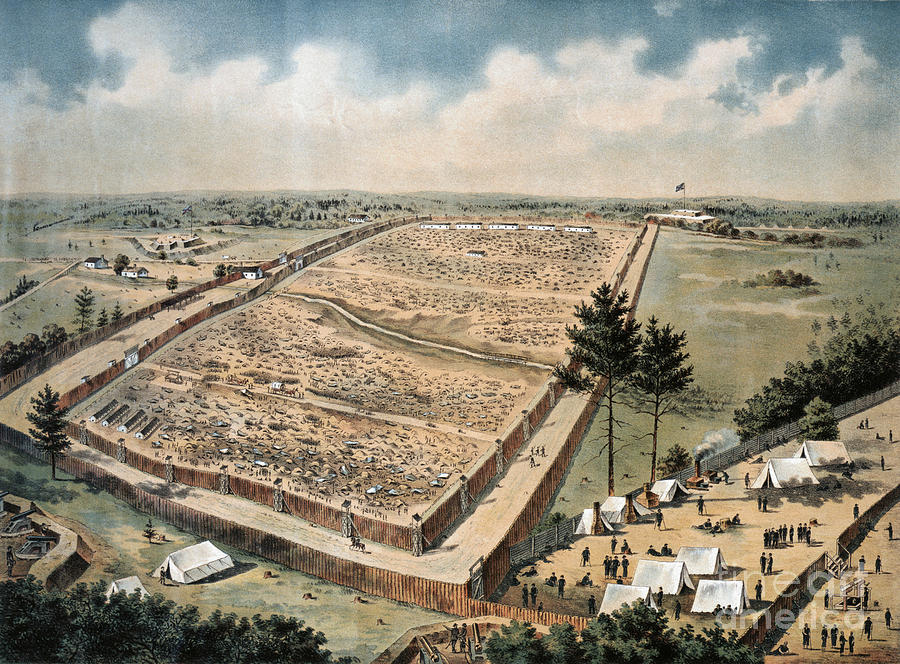
  • Andersonville memorial service

    Andersonville memorial service

    2-andersonville-prison-granger

    Atlanta Magazine reports that on the 18th and 19th of September, at the site of the Civil War-era Andersonville POW camp near Atlanta, folks will be holding a memorial for the 13,000 who gave up their lives to disease, hunger and battle wounds;

    On Saturday, September 19, Andersonville National Cemetery will host a ceremony for those who made the ultimate sacrifice at the prison. The service will include a keynote speech by Sergeant Major of the Army Daniel Dailey; remarks by Georgia poet laureate Judson Mitcham and guest historian Dr. Lesley Gordon of University of Akron; honor guard from the Army, Navy, and Marines; and to stand in for the burial, a ceremonial casket filled with 13,000 paper stars decorated by children and community members.

    The National Park Service has a schedule of events for the week.

  • The Latest ISIS Barbarity


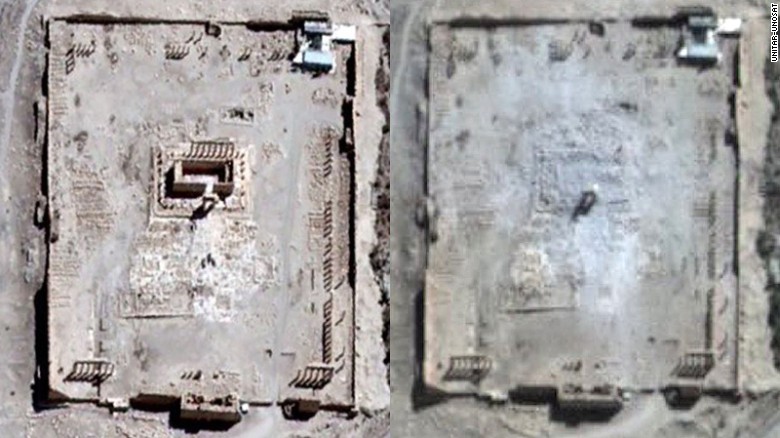
    Before and after pictures of the Temple of Bel, Palmyra, Syria

    Remember the Buddhas of Bamiyan? You know, that World Heritage Site containing ancient statues of Buddah in central Afghanistan that was destroyed by the Taliban in 2001 because they found the statues “offensive” to Islam?

    Anyone wanna guess what ISIS recently did? Yep – the same thing.

    This time it was the Temple of Bel in Palmyra, Syria that was deemed “offensive” to Islam and destroyed. Last month, the temple building and some of its close colonnade were blown to bits by ISIS/ISIL/whatever that goat-fornicating band of barbaric Islamic extremists is calling themselves today.

    Other ancient sites at Palmyra were also damaged or destroyed. This includes the destruction of the Temple of Baalshamin, which like the Buddhas of Bamiyan had been designated a World Heritage Site.

    These are hardly the only sites of historical or archaeological importance destroyed by ISIS/ISIL/whatever. The Wikipedia article on the subject gives a reasonably good rundown.

    CNN has an article giving specifics concerning these barbaric bastards’ latest crimes. If you care about history, it’s sickening.

  • Rest In Peace, Forgotten Angel

    Rest In Peace, Forgotten Angel

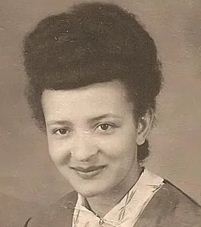
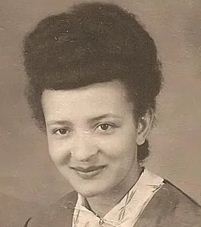
    In 1921 a child was born in the Belgian Congo. The child was a girl; her name was Augusta Chiwy.  She was the daughter of a Belgian veterinarian and his wife, who was native Congolese.

    At age 9, Chiwy moved to Belgium with her family – to Bastogne, her father’s hometown. In 1940, she turned 19. She went to the town of Leuven, and studied nursing.

    She was living in Belgium on 16 December 1944. She returned to Bastogne to be with her family during the Chiristmas holidays.

    Some would say that wasn’t the best choice she could have made given later circumstances. However, a number of US GIs would disagree.

    We all know what happened at Bastogne during the Battle of the Bulge. However, what’s not as well known is what happened in one of their medical stations – specifically, that of the 20th Armored Infantry Battalion, 10th Armored Division.

    That aid station was commanded by John Prior. It was critically short of medical personnel.

    Ms. Chiwy had been attending wounded civilian and military personnel with her uncle, a Belgian doctor. However, on 21 December she and a friend, Renée Lemaire, volunteered to serve at the 20th Armored Infantry’s aid station. She treated numerous wounded, and reportedly wore the US Army’s uniform and assisted in retrieving wounded from the field.

    Because of her race, some US soldiers were reluctant to allow Chiwy to provide them treatment. Indeed, Army regulations of the time actually forbid treatment of white soldiers by black nurses. (Yeah, that’s pretty stupid – but 1944 was a different, more prejudiced time.) The aid station commander put a stop to that nonsense; he told any troops who objected that Chiwy was a volunteer, and that their choices were “You either let her treat you or you die.”

    On 24 December, a German 500lb bomb hit the aid station. Chiwey and her friend were both working there at the time.

    Lemaire was killed; so were 30 wounded troops. Lemaire became widely known afterwards as the “Angel of Bastogne”.

    Chiwy was working with Lemaire in the same building, but was blown through a wall by the force of the explosion vice being killed. She was not seriously hurt. She returned to duty and continued to serve in the Battalion’s aid station until the Siege of Bastogne was lifted.

    It’s estimated that Chiwy’s care was instrumental in saving the lives of more than 100 US soldiers.

    Later, Chiwy continued her career in nursing. She worked at a hospital specializing in spinal injuries. She married a Belgian soldier. They had two children.

    Chiwy was reluctant to speak of her wartime experiences. She was thought by many who knew of her wartime service to have died in Bastogne. While researching a related project, British historian Martin King heard of her.

    He located her in a nursing home IVO Brussels. After extensive cross-checking with Prior’s wartime diaries, King confirmed that she was indeed the same lady who’d served with him at Bastogne.

    In 2011, the Army presented Chiwy the Department of the Army Civilian Award for Humanitarian Service. Earlier that year, she had been knighted by Belgium’s King Albert II.

    Augusta Chiwy died on 23 August 2015, aged 94. She was laid to rest this past Saturday. I’m guessing she was indeed in heaven well before the Devil knew she was dead.

    Rest in peace, angel. You certainly deserve that.


    Sources:

    http://www.nytimes.com/2015/08/26/world/europe/augusta-chiwy-forgotten-wartime-nurse-dies-at-94.html

    http://www.stripes.com/news/army-honors-wwii-nurse-for-aiding-u-s-troops-during-battle-of-the-bulge-1.163301

    http://www.newser.com/article/04abf43f14ea45e3bff7bdcc2342392b/belgium-lays-to-rest-heroic-nurse-who-saved-countless-american-lives-in-battle-of-the-bulge.html

    https://en.wikipedia.org/wiki/Augusta_Chiwy

    http://www.syracuse.com/kirst/index.ssf/2015/08/augusta_chiwy_dies_legendary_nurse_helped_syracuse_doctor_tend_wounded_at_the_bu.html

    A documentary film about Chiwy based on King’s research and efforts to find her can be viewed on YouTube.