Category: Historical

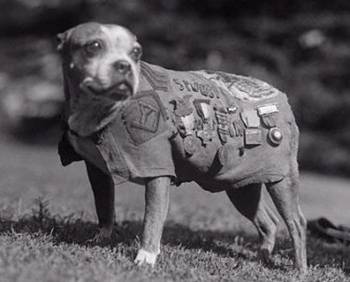
  • Sergeant Stubby on National Dog Day

    Sergeant Stubby on National Dog Day

    Folks on Facebook remind me that today is National Dog Day so I’ll revive this post from 2012 on Sergeant Stubby;

    So, this is from an email from my Dad. It sounded a little weird, but I Googled SGT Stubby and he was a real dog, according to the Smithsonian Institute. It may be an old story, but it’s news to me.

    It looks like he was a stray that attached himself to a soldier, Private J. Robert Conroy, in the 102nd Infantry, 26th Yankee Division while the unit was on Yale Field in New Haven, Connecticut in 1917. Conroy smuggled him to France with the unit when they went to war. Conroy taught Stubby to salute the commanding officers, which saved him from being exiled from the unit.

    Stubby excelled at finding wounded troops on the battlefield. After he himself was gassed and nearly died, Stubby could warn the troops of gas attacks. He also warned them of incoming artillery.

    According to the Smithsonian;

    Stubby was awarded many medals for his heroism, including a medal from the Humane Society which was presented by General John Pershing, the Commanding General of the United States Armies. He was awarded a membership in the American Legion and the Y.M.C.A.

    When Private Conroy left the Army and went to law school, Stubby accompanied him. The dog died in 1926.

  • Domo Arigato, Mori-sama

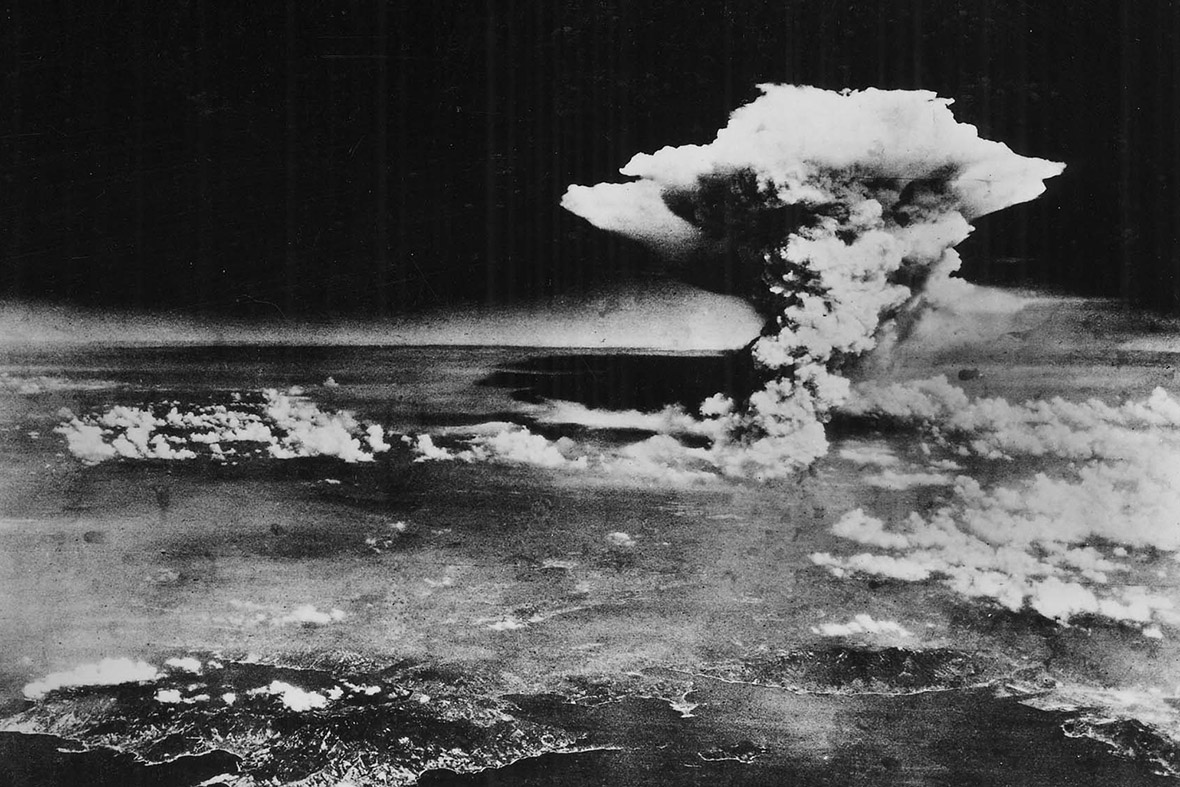
    On 6 August 1945, the US dropped the “Little Boy” nuclear bomb on Hirsoshima.  Within days, 140,000 Japanese had died at Hiroshima.

    So had 12 Americans.

    The 12 Americans who died at Hiroshima were POWs. They were all US airmen who had been captured after their aircraft had been shot down.

    They were being held POW in Hirsoshima on the day of the bombing. They’d all arrived there within the previous two weeks.

    Most of the US POWs killed at Hiroshima died immediately.  A few – the number seems to be 2 – initially survived, but died within days of the bombing from radiation sickness.

    The fact that US POWs died at Hiroshima wasn’t publicly acknowledged until the 1970s. Even today it’s not a widely known fact.

    That’s unfortunate. But one individual – an individual who you might not expect – has ensured those POWs end will be properly remembered.

    . . .    

    Shigeaki Mori is a hibakusha – a survivor of the nuclear bombings of Japan. He was a resident of Hiroshima on 6 August 1945. At the time, he was an 8-year-old schoolboy.

    Originally Mori attended a school across the street from the Chugoku Military Police HQ in Hiroshima. The Chugoku Military Police HQ was where the US POWs were held captive; it was approximately 820m from ground zero.

    Less than a week before the bombing, Mori was transferred to another school about 1.5 miles away from ground zero. That chance occurrence almost certainly saved his life.  All US POWs that were not killed outright during the Hiroshima bombing died within a week of radiation sickness.

    When the bomb detonated, Mori was crossing a bridge.  He was blown from the bridge into the water.  He was exposed to radiation then, and afterwards.

    However, unlike many in Hiroshima Mori was not fatally injured.  Mori survived, and grew to adulthood.

    He became a historian.

    During the 1970s, Mori learned that 12 US POWs had died in the Hiroshima bombing. As a hibakusha, one might expect Mori to have muttered something like, “Serves them right” – and gone on with his life.

    He did not. Mori also learned something else: none of those US POWs had been formally recognized as Hiroshima dead.

    Japan maintains a register of those who were killed at Hiroshima and Nagasaki, or who later succumbed to delayed effects from the bombings. This register is managed and maintained by the Mayor of Hiroshima.

    Much like the US Vietnam War Memorial, additional names are added as additional individuals are confirmed to have died in the bombing – and as people continue to die from effects related to the bombings. These names are added to the register on the anniversary of the bombing following either documentation of their death during the bombing or their later death from the bombing’s aftereffcts.  As of 6 August 2011, the register contained 275,230 names.

    Initially, all names on the register were Japanese; the POWs who died at Hiroshima were not listed there.  That was the case in the 1970s.

    Mori decided that the 12 Americans who had died at Hiroshima due to the bombing deserved the same recognition. Over a period of many years, Mori worked to make that a reality.

    The process was a slow one. Today, the registration of persons as Hiroshima dead requires documentation – as well as a request from the family of the deceased. Mori thus had to locate and contact the surviving family of each of the 12 US POWs killed at Hiroshima, then convince them to request their deceased relative be listed on the register.

    In 1998, Mori obtained permission and erected a small copper memorial plaque at the remains of the building at which the US POWs had been housed. In 2002, he completed the registration process for 2 of the US POWs killed at Hiroshima; their names were formally entered in the register of Hiroshima dead.

    By 2009, Mori had completed the registration process for all 12 US POWs killed at Hiroshima. Their names and photographs are now on file at the Hall of Remembrance, located at the Hiroshima National Peace Memorial Hall for the Atomic Bomb Victims.

    This year, Mori achieved another of his aims. At his invitation, Susan Archinski – a niece of Airman 3d Class Normand Brissette, who had been shot down and taken prisoner 10 days before the bombing, and who died at Hiroshima on 6 August 1945 – came to Japan.  This August, she and Mori visited Hiroshima.  I’m certain they each said a prayer for the souls of those US POWs killed at Hiroshima, and for the others who died that day as well.

    . . .

    Any member of the military comes to terms with the possibility of death, and accepts that possibility.  However, each member of the military fears being lost and forgotten. Thanks to Shigeaki Mori – a survivor of the Hiroshima bombing – the 12 US POWs who also died at Hiroshima will never be forgotten.

    Rest in peace, men.

    And though thoroughly inadequate:  Domo arigato, Mori-sama.

    . . .


    Author’s Notes

    1.   The following US POWs died at Hiroshima on 6 August 1945 or died of radiation sickness within days afterwards.

    Captured crew of USAAF B-24 Lonesome Lady:

    • Co-pilot, 2LT Durden W. Looper, 22, of Arkansas
    • Bombardier, 2LT James M. Ryan, 20, of New York
    • Radioman, SGT Hugh H. Atkinson, 26, of Washington State
    • Nose turret, CPL John A. Long, Jr., 27, of Pennsylvania
    • Engineer, SGT Buford J. Ellison, 22, of Texas
    • Ball turret, SSG Ralph J. Neal, 23, of Kentucky

    Captured crew of USAAF B-24 Taloa:

    • Pilot, 1LT Joseph E. Dubinsky, 27, of Pennsylvania
    • Gunner, SSG Julius Molnar, 20, of Michigan
    • Gunner, SSG Charles O. Baumgartner, 30, of Ohio

    Captured crew of USN SB2C Helldiver from the USS Ticonderoga:

    • Pilot, LT Raymond L. Porter, 24, of Pennsylvania
    • Gunner, PO3 Normand R. Brissette, 19, of Massachusetts

    Captured crew of USN F6F Hellcat from the USS Randolph:

    • ENS John J. Hantschel, 23, of Wisconsin

    2.  In 2008, Mori located wreckage from the US B-24 Taloa that had escaped Japanese wartime confiscation as scrap metal.  With assistance from the Asahi Shimbun Mori located and arranged to send portions of that wreckage to a surviving family member of SSG Charles O. Baumgartner, and to a close living friend of SSG Julius Molnar, as tangible keepsakes.   Both of these individuals died at Hiroshima.

    As of last report, Mori was still searching for relatives of the remaining Taloa crew members.

    3.  In addition to the 12 US POW’s killed at Hiroshima, one US soldier was being held POW at Nagasaki on 9 August 1945.  He survived the bombing.

    This individual was Joe Kieyoomia, a member of the 200th Coastal Artillery Unit, US Army – and a Navajo.  It is believed that the concrete walls of his cell provided enough protection to spare him serious injury from both the Nagasaki bomb’s blast and radiation.

    Kieyoomia had been taken prisoner in the Philippines in 1942. Before the Nagasaki bombing, he had survived the Bataan Death March; 3 1/2 years of captivity as a POW, including torture (the Japanese initially thought he was a Japanese-American vice Navajo); survived additional torture when he could not help the Japanese break the Navajo Code Talker codes.  He then survived both the Nagasaki bombing and being abandoned for 3 days afterwards.

    Kieyoomia died in 1997 – at age 77.  He was the only US POW who was also a recognized hibakusha.


    Sources:

    http://www.stripes.com/news/special-reports/world-war-ii-the-final-chapter/wwii-victory-in-japan/after-fight-to-recognize-hiroshima-s-american-victims-historian-meets-one-of-their-relatives-1.360327

    http://www.stripes.com/news/three-u-s-pows-added-to-roster-of-hiroshima-deaths-1.93398

    http://www.stripes.com/news/hiroshima-historian-returns-fragments-of-shot-down-bomber-to-loved-ones-in-u-s-1.85323

    http://www.stripes.com/news/historian-tells-of-americans-pows-killed-at-hiroshima-1.38375

    http://ajw.asahi.com/article/behind_news/social_affairs/AJ201205160089

    https://en.wikipedia.org/wiki/Joe_Kieyoomia

  • 75th National Airborne Day

    75th National Airborne Day

    COB6

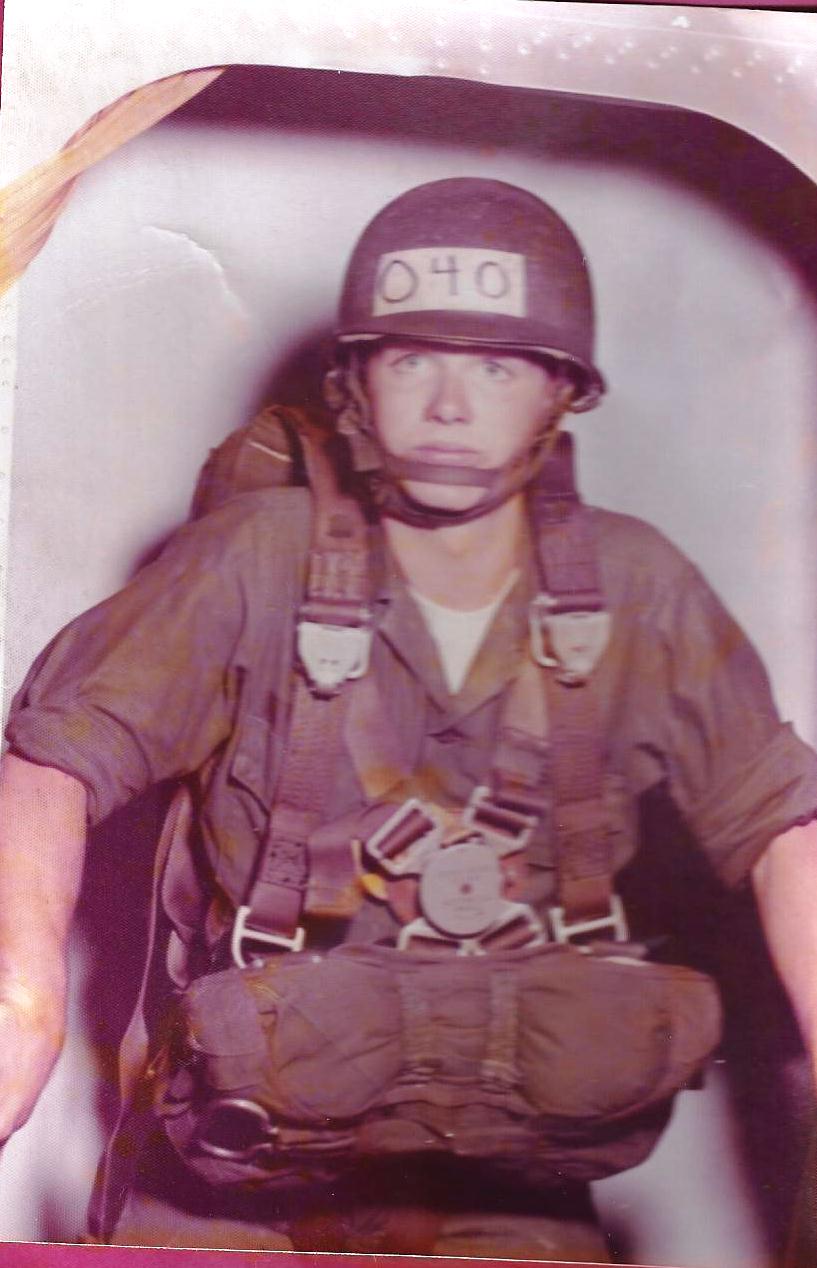
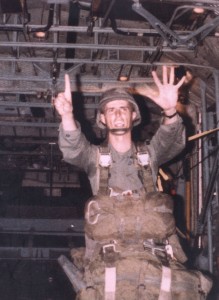
    That’s COB6 giving you the six minute warning above.

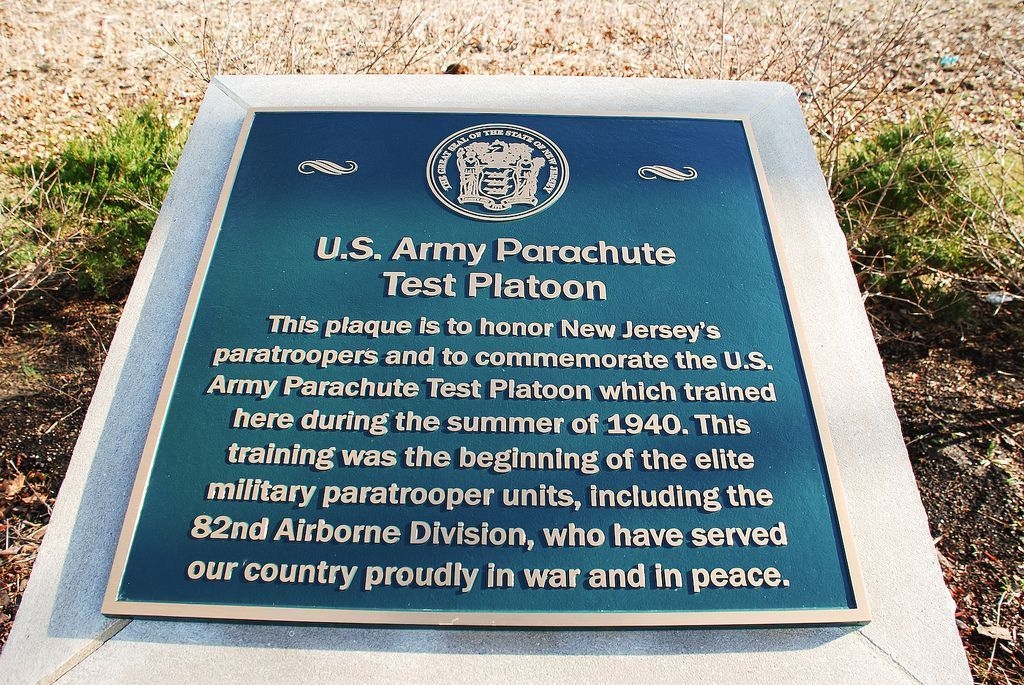
    National Airborne Day is set on the day of the first parachute jump conducted by the Army’s Parachute Test Platoon on August 16th, 1940.

    On the morning of 16 August 1940 the jump began. After the C-33 leveled off at 1500 feet and flew over the jump field, Lt. Ryder was in the door ready to jump. Warrant Officer Wilson knelt in the door waiting to pass the Go Point. When this was reached, he slapped Lt. Ryder on the leg and the first jump was made. Now Number One moved into position. Slap! “Go! Jump!”

    Still no movement.

    It was too late now to jump on this pass. Mr. Wilson motioned Number One to go back to his seat. As the plane circled Mr. Wilson talked to Number One. Number One wanted another chance. Okay, this time we’ll do it. Back into the jumping position and once again, slap!

    Sadly, no movement. Number One returned to his seat.

    Private William N. “Red” King moved into the jumping position in the door. Slap! Out into American military immortality leaped Red King… the first enlisted man of the test platoon to jump out of an airplane. Number One was transferred to another post and anonymity. Now there were forty-seven. Was Number One a coward? I don’t think many experienced jumpers would say so. There are things some men cannot do at a given time. Possibly another time would have been fine. He wanted to. He intended to. He just could not… at least that morning.

    The first US airborne operation was in support of Operation Torch, November 1942, in North Africa when 531 members of the 2nd Battalion 509th Parachute Infantry Regiment flew 1600 miles in 39 C-47s, of which only ten aircraft dropped their pacs, the rest landed because of navigation difficulties and low fuel.

    Fourteen years ago, 3rd Battalion, 75th Rangers secured an airfield in Kandahar in support of Operation Enduring Freedom on October 19, 2001. On March 23rd, 2003, A Company, 3/75th conducted an airborne operation to secure an airfield in Northern Iraq a few days before the 173rd Airborne Brigade parachuted into Northern Iraq when the Turks wouldn’t allow the 4th Infantry Division to off-load and invade Iraq from their borders.

    In years past, the 82d Airborne Division Association, mostly the DC Chapter, had to lobby to get recognition for National Airborne Day from the Senate every year, until 2009 when the Senate made it permanent.

    We used to get a Presidential Proclamation every year, but for some reason, we haven’t had any since 2008.

    Jump School

  • Seventy Years Ago . . . .

    . . . shortly after noon, Japanese Standard Time, the Emperor of Japan by radio announced Japan’s acceptance of Allied demands for an unconditional surrender.

    The official acceptance ceremony for the Japanese surrender – which formally ended World War II – occurred 18 days later, on 2 September 1945.

    While today doesn’t mark the formal end of World War II, it does mark the substantive end of most hostilities. So it’s IMO worth remembering.

    Thanks Dad, Uncle Stan, Uncle Joe, Uncle Bill, and Uncle Norb. Though only one of you is still here in body, I’m reasonably sure you’re all here today in spirit.

  • Operacja Samum*

    During mid-1990, a group of US personnel were conducting intelligence gathering overseas. They were observing troop movements of interest to the US. They were also operating without official cover.

    I won’t speculate on how common that was, and I don’t know. But obviously such things happened from time to time during the Cold War and its aftermath.

    Reports differ as to the agencies involved. Details are unclear; many have not yet been made public. However, the best information indicates that six US personnel were involved; they were from the CIA and DIA.

    Unfortunately, the events in real world soon intervened. You see, it seems that these individuals were in Kuwait, clandestinely observing troop movements along the Kuwaiti border.

    On 2 August 1990.

    Yeah. “Oh, sh!t,” is right.

    The US operatives went into hiding. For some time they lay low. I’m sure their APF was extreme the whole time.

    In case anyone’s forgotten: this was during the time when Saddam Hussein (may he enjoy the “up close and personal” attention of Shaytan for all of eternity) was taking Western citizens hostage, then using them for propaganda purposes and as human shields. There was a realistic threat of that happening to these individuals if they were caught.

    And has Hussein’s intelligence services discovered their true reason for being in Kuwait, well . . . .

    As you might expect, the US Intel Community was rather chagrined by this turn of events. They began seeking assistance in extracting these personnel from Iraq.

    Unfortunately, every nation they approached was either unwilling or unable to help. Save one.

    In late August, the CIA contacted the Polish intelligence services. Poland agreed to help.

    At the time, Poland had a large commercial presence in Iraq. Specifically, Polish engineering firms were then doing much construction work throughout Iraq – as contractors to the Iraqi government. For a number of reasons, the government of Poland determined it was in their national interest to assist the US in this matter.

    The fact that the US was apparently willing to support a renegotiation of Poland’s foreign debt – reputedly by 50%, or over $16 billion – probably was among those reasons. (smile) And for what it’s worth: such a reduction was in fact negotiated in April, 1991.

    The Poles reportedly insisted that their intel officers run the operations in-country. After some wrangling, the US agreed. The operation was then placed under the command of Gromoslaw Czempinski – who, ironically, previously been involved in or led numerous intelligence operations against US and other western nations.

    Polish operatives arranged a linkup with the US operatives in hiding in Baghdad and/or Kuwait. They moved to a Polish construction camp near Baghdad. They stayed there for a number of weeks.

    In the interim, Hussein had imposed travel restrictions on most foreigners. Military checkpoints were also established on major highways. However, because of their government contracts, “employees” of Polish firms working in Iraq generally could travel – and could leave the country.

    This provided the necessary opportunity.

    False passports and exit visas were obtained. Transportation to the Iraq-Turkish border was arranged.

    The US operatives were each given passports from a Slavic nation; it’s unclear which. However, there was a problem: none of the US operatives spoke a Slavic language. Though the Polish technician in charge of the exfiltration tried, he could not teach them how to properly pronounce their own cover names.

    This was a real concern. During the 1980s, many Iraqis had been educated in Poland. There was a reasonable chance that they might run into one during their exfiltration – one who spoke Polish well enough to detect the ruse.

    The work-around was that the US operatives would use a common stereotype:  that of the “drunken Slav”. The US personnel being exfiltrated would not speak to any Iraqi. The Poles with them would blame their poor pronunciation (if any was overheard) on their being drunk.

    The exfiltration was planned to be via auto convoy. It was to be led by the technician who’d tried and failed to teach the US operatives to pronounce their Slavic cover names.

    After some hesitation, the go was finally given for exfiltration. The CIA reputedly nearly caused a last-minute abort – they didn’t want the Polish intel officer in charge to accompany the exfiltration, and sent a cable to that effect.

    This was a showstopper, as the Polish civilians involved (not all Poles involved were Polish intel operatives) balked at going if he was not to be on the convoy. So Czempinski ignored US objections and in fact accompanied the group.

    One of the Polish intel officers had obtained 4 bottles of Scotch, which he brought with him. In northern Iraq, he brought them out and had the US operatives drink the stuff. That way they’d actually be drunk if and when they reached any checkpoints with a Polish-speaking Iraqi. (Reputedly the US agents were so wired at that point that the liquor had little discernible effect, other than to make them smell like drunks.)

    North of Mosul, what was feared might happen . . . in fact happened.  An Iraqi officer approached one of the cars in the convoy.  He glanced at a few of the passports, then said – in flawless Polish – “How lucky I am to see my best friends.”

    Whether by inspiration or design, the Polish technician leading the convoy had the perfect response.  He immediately approached the Iraqi officer, gave him three kisses on the cheeks and a hearty bear hug – an in the process, moving him away from the car. They spoke for a bit; he complimented the Iraqi officer on his excellent Polish.

    He then offered the Iraqi the remaining passports, telling him: “Ah, you must check these.”

    I’m certain about then six anuses clenched so tightly shut that it would have taken a sledgehammer to force a needle into them.

    The Iraqi’s reply? “No problem. You are friends; you can go.”

    The 6 US operatives were taken to the border with Turkey, where they departed Iraq.  It’s unclear precisely where they crossed the border.

    They also were not the only westerners that Poland helped escape.  Poland reportedly afterwards assisted an additional 15 non-US Western citizens in leaving Iraq prior to the outbreak of hostilities in January 1991.

    I do hope that full details of this operation are made public while I’m still on this side of the dirt. I’d love to hear them.

    Oh, and one more thing: Wielkie dzieki, przyjaciele. Wielkie dzieki.


    * Author’s Note: “Operacja Samum” is the name given to a  Polish 1999 film made concerning the operation described here.  I’ve not seen the film.  It’s available on YouTube here, but it’s in Polish and unfortunately does not appear to have subtitles.  It also reputedly takes some artistic liberties regarding what actually occurred.

    “Samum” is Polish for simoom – a type of dangerous windstorm prevalent in the Middle East.  As one might guess, “Operacja” translates as “Operation”.

    Though the name “Operacja Samum” was used in the film for the operation, the actual name used for the operation itself has not been made public.


    Sources:

    http://community.seattletimes.nwsource.com/archive/?date=19950117&slug=2099750

    https://en.wikipedia.org/wiki/Operation_Simoom

    http://www.themoscowtimes.com/news/article/drinking-a-way-out-of-hostile-iraq/343947.html

    Unfortunately, John Pomfret’s original Washington Post article concerning the operation (which revealed its existence to the public) is behind a paywall. While I believe the first article linked above to be a substantially complete reprint, I am not certain of that fact, and I haven’t yet had the opportunity to read the original.

    I have never seen any official files concerning the operation.  (I damn well wouldn’t be writing this article if I had.)  Until a few days ago, I had never heard of the events noted above.
  • Seventy Years

    Seventy years ago – on 6 August 1945 at roughly 08:15:45 AM Japanese Standard Time, which converts to 7:15:45 PM Eastern Daylight Time the previous day – the Japanese city of Hiroshima ceased to exist.  On 9 August 1945, the Japanese city of Nagasaki followed suit.

    Less than a week afterwards, the Emperor of Japan publicly announced his acceptance of Allied surrender terms.

    I’ve written about the US nuclear missions against Japan previously.  I have no reason to change what I said then.  Read the original article if you like; it can be found here.

    But I’ll again say this much: if you’re so inclined, perhaps take a moment to say a prayer for the souls of those who died that day at Hiroshima, and for those who died three days later at Nagasaki.  And while you’re at it, maybe add a second prayer – that we never again have the need to use such weapons.

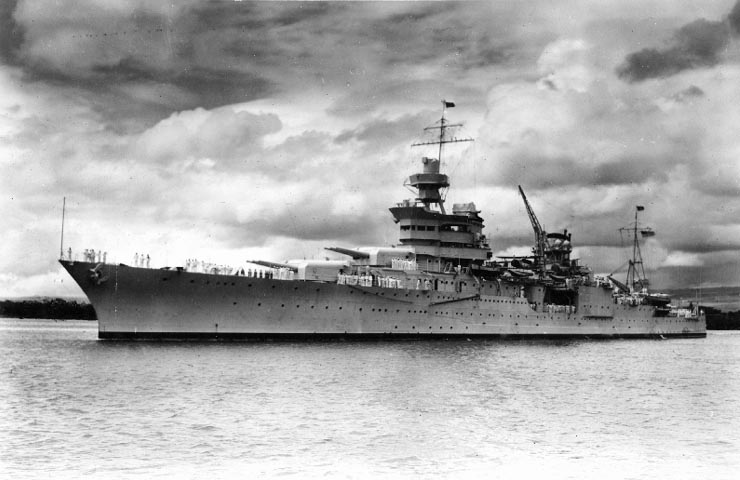
  • July 30, 1945; the sinking of the USS Indianapolis

    July 30, 1945; the sinking of the USS Indianapolis

    USS_Indianapolis_CA-35

    Chief Tango reminds us that Thursday will mark the 70th anniversary of the sinking of the heavy cruiser USS Indianapolis. The ship was unescorted when around midnight a Japanese submarine sank the ship with a torpedo. What followed was the stuff of horror movies. A crew of about 1200 was reduced to about 900 by the sinking of the ship, but by the time they were rescued, only 321 survived their time in the water and three of those died after their rescue.

    From Smithsonian Magazine;

    As the sun rose on July 30, the survivors bobbed in the water. Life rafts were scarce. The living searched for the dead floating in the water and appropriated their lifejackets for survivors who had none. Hoping to keep some semblance of order, survivors began forming groups—some small, some over 300—in the open water. Soon enough they would be staving off exposure, thirst—and sharks.

    […]

    The sharks fed [on the survivors] for days, with no sign of rescue for the men. Navy intelligence had intercepted a message from the Japanese submarine that had torpedoed the Indianapolis describing how it had sunk an American battleship along the Indianapolis’ route, but the message was disregarded as a trick to lure American rescue boats into an ambush.

    After 11:00 a.m. on their fourth day in the water, a Navy plane flying overhead spotted the Indianapolis survivors and radioed for help. Within hours, another seaplane, manned by Lieutenant Adrian Marks, returned to the scene and dropped rafts and survival supplies. When Marks saw men being attacked by sharks, he disobeyed orders and landed in the infested waters, and then began taxiing his plane to help the wounded and stragglers, who were at the greatest risk. A little after midnight, the USS Doyle arrived on the scene and helped to pull the last survivors from the water.

    Additionally, the destroyers Helm, Madison, and Ralph Talbot were ordered to the rescue scene from Ulithi, along with destroyer escorts Dufilho, Bassett, and Ringness of the Philippine Sea Frontier. They continued their search for survivors until 8 August.

    The commander of the ship, Captain Charles B. McVay III, survived the ordeal to be court martialed and convicted of “hazarding his ship by failing to zigzag”. But Mochitsura Hashimoto, commander of I-58, the sub that sank the Indianapolis, testified that zigzagging would have made no difference. McVay was the only Navy ship commander who was convicted of losing his ship during the Second World War. In October 2000, Congress passed a resolution exonerating Captain McVay and President Bill Clinton signed on to it. The Secretary of Navy ordered McVay’s record cleared of wrong doing in July 2001.

    31 of the survivors are still with us and they had a reunion this last weekend in Indianapolis.

  • And In the (Historical) “WTF?” and “YGBSM!” Departments . . . .

    Remember how Jimmy the Clueless treated the military just “oh so well”? (Yes, that was sarcasm.  This article includes much of that.)

    The recent mention of Operation EAGLE CLAW here got me curious, so I did a bit of digging.  I discovered something I never knew.  And as the old Southern expression goes:   “Y’all ain’t gonna believe this sh!t!”

    Take a look at this list. It does not include an entry for Operation EAGLE CLAW – AKA the Iranian Hostage Rescue Mission.

    Now, take a look at this list – specifically, at the 7th entry on the list’s 2nd page. I suspect you’ll be as shocked as I was.

    Yes, you’re reading that correctly. Military personnel who actually flew into Iran on that mission DID NOT receive the Armed Forces Expeditionary Medal (AFEM). Instead, they received . . . the Humanitarian Service Medal (HSM).

    I wish I was kidding.

    I’m not slamming the HSM; humanitarian assistance missions are legit, and they can be dangerous as hell too.  We recently lost some Marines on a humanitarian mission in Nepal.

    But it just seems to me that going in harm’s way to rescue American citizens and military personnel held hostage as the result of an act of war by a foreign government is fundamentally different than any kind of humanitarian relief operation. IMO serving in such an operation should receive a different kind of recognition.

    But it didn’t; don’t ask me why.  Only thing I can figure out is that either the Pentagon or the POTUS must have felt attempting to rescue US prisoners held by Iran after they invaded sovereign US territory (the US Embassy in Tehran) was essentially no different than helping resettle the criminals Castro palmed off on us during the Mariel Boat Lift.  Or maybe they were afraid of p!ssing off the Iranians even more if they offered appropriate recognition with an AFEM.  (Either way, my money’s on the POTUS – but I could be wrong.)

    In a bit of historic irony, US military support for resettlement of those Mariel Boat Lift “refugees” is the next operation on the list of officially recognized HSM operations. It started 2 days after Operation EAGLE CLAW.

    If this little bit of historical “appropriate recognition” doesn’t fall into the WTF? And YGBSM! categories, I’ll just be damned if I know what does.

    Thanks once again “oh so much”, Mr. Peanut.