Category: Historical

  • Congressional Gold Medal for “Ghost Army”

    Congressional Gold Medal for “Ghost Army”

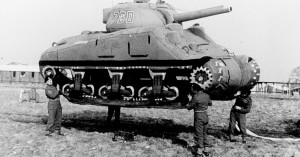
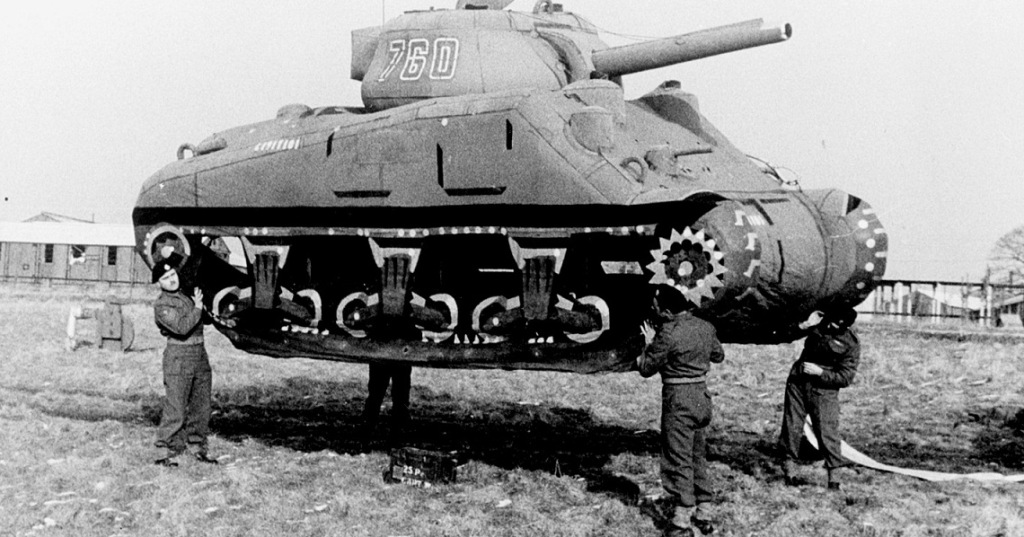
    Dummy_M4Sherman_44

    David sends us a link to Fox News. I’m sure you remember the stories about the false units that were placed under the command of General Patton across the English Channel from Calais, France to distract the Germans from the Normandy Invasion. Well, Congress has decided that those units (The Ghost Army) deserve some praise from Congress in the form of the Congressional Gold Medal;

    Two lawmakers say the Ghost Army’s battlefield exploits in the months after D-Day deserve recognition at long last.

    “It is finally time that the American people recognize their ingenuity and selflessness which saved countless American and Allied lives,” Rep. Peter King (R-N.Y.) said. “They deserve their due.”

    King and Rep. Annie Kuster (D-N.H.) are sponsoring the “The Ghost Army Gold Medal Act” and the bill has already picked up 30 co-sponsors, The Washington Times reported Saturday.

    A companion bill will be introduced soon in the Senate.

    From The Ghost Army website;

    The Ghost Army carried out 21 battlefield deceptions from June 1944 to March 1945. They often operated on or near the front lines in order to divert enemy attention away from actual units. Three of them were killed and dozens wounded, but they are credited with saving thousands of American lives.

  • Battle of Norfolk; 25 years ago today

    Battle of Norfolk; 25 years ago today

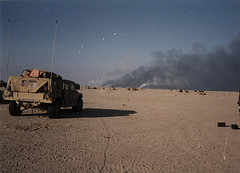
    The Battle of Norfolk was the cousin of the Battle of 73 Easting. Objective Norfolk was just the other side of that invisible line in the sand. Wiki says of that battle;

    No less than 14 divisions participated in this particular battle. In reality this makes it quite possibly the largest battle of the entire war, however, the Battle of Medina Ridge involved the largest American and Iraqi divisions. Another factor was the media seemingly overlooked the details of the coalition ground campaign for some unknown reason. It would also be over a decade after the conflict before quality references would become available on most of the battles that took place during the 1st Gulf War.

    Task Force 1-41 passed through elements of the 2d ACR at about 30 minutes after midnight in total darkness after a day-long march to get to the battle. The horizon in front of 2/2 Cav was dotted with burning armored vehicles, hundreds of Iraqi prisoners sat in tiny groups waving white flags so they wouldn’t get shot by the advancing armored vehicles. We could make out them and their flags through our thermal optics. As soon as we passed through the Cav’s vehicles, it became a 360-degree battle. Bravo Company’s commander became disoriented and led a platoon diagonally across the battlefield where they were mistaken for Iraqi armor by M1 gunners who immediately destroyed three of the Bradleys. Remarkably, only six of that 35-member platoon were killed.

    The rest of Task Force 1-41 watched the sun come up six miles from where they had passed through 2/2 Cav’s line.

    The two attacking brigades of the U.S. 1st Infantry Division, including the 3rd Brigade of the 2nd Armored Division, were positioned along the 75 Easting, 2,000 meters east of 73 Easting. The Brigades clashed with the Iraqi Tawakalna Division of the Republican Guard, including the 37th Brigade of the 12th Iraqi Armored Division. The 12th Iraqi Armored Division would be destroyed during this engagement. A total of 80 Iraqi armored vehicles would be destroyed in the process.

    With air support from the 2nd Battalion, 1st Aviation’s attack helicopters and fire support from both the 4-3 FA Battalion and the 210th Field Artillery Brigade preventing Iraqi artillery from interfering, the U.S. 1st Infantry Division conducted a passage of the 2nd ACR’s lines. In the following three hours the U.S. 1st Infantry Division methodically crossed the 6.2 miles (10.0 km) of Objective Norfolk, destroying Iraqi tanks, trucks, and infantry through thick fog. The 3rd Brigade of the 2nd Armored Division destroyed 60 Iraqi tanks and 35 AFVs along the IPSA pipeline. In the thick of the fog of war, U.S. units became mixed with Iraqi units dispersed throughout the desert. This confusion led to some friendly fire incidents.

    By dawn, the U.S. 1st Infantry Division controlled Objective Norfolk and the Tawakalna Mechanized Infantry Division had ceased to exist as a fighting force. A total of eleven Iraqi divisions were destroyed. American casualties were six soldiers killed (all but one by friendly fire) and 25 wounded.

    We reconsolidated after a sleepless night and set out for Kuwait from there. Eventually, we began running out of fuel and the whole Brigade lagered up the night of the 27th and waited for the fuelers – and we got our first real sleep since we’d crossed into Iraq three days before only because our fuel tanks were nearly empty. I laid on top of our TOW missile launcher while I waited for the troops to get their own sleeping gear situated and woke up with the sun in my face the next morning with a few hours left before the ceasefire so we mounted up and moved out.

    As the ceasefire deadline approached, we engaged with remnants of the Iraqi Army left behind by their leadership (which had fled back to Iraq on the nearby Highway One – the Highway of Death) and at 0800 local time, we turned left and stopped firing.

    Task Force 1-41 was awarded a Valorous Unit Citation which read;

    For extraordinary heroism in action against an armed enemy. Task Force 1-41 was the first coalition force to breach the Saudi Arabian border on 15 February 1991 and conduct ground combat operations in Iraq engaging in direct and indirect fire fights with the enemy on 17 February 1991. The Task Force was part of the VII Corps main attack beginning 24 February 1991 as it conducted a forward passage through 1st Infantry Division elements and began a mission to clear a zone which again resulted in enemy contact. On 26 February, following a 60 kilometer road march, the Task Force immediately engaged in ground combat with armored and dismounted enemy of brigade size. For six hours it was involved in continuous combat with a tenacious and determined enemy occupying extremely well prepared and heavily fortified bunkers. Task Force infantry elements dismounted and engaged the enemy in numerous short range fire fights while methodically clearing the extensive bunker complex. By morning the Task Force had systematically reduced the entrenched enemy positions in zone. Continuing as part of the VII Corps attack the Task Force travelled 85 kilometers in less than 24 hours while engaging at short range multiple, dug in enemy tanks in ambush positions. The Task Force reached its final objective 28 February 1991 with a push which continued the destruction of enemy armored vehicles. During the entire ground campaign, involving their attack through Iraq into Kuwait, Task Force 1-41 travelled over 200 Kilometers in 72 hours and destroyed 65 armored vehicles and 10 artillery pieces, while capturing over 300 enemy prisoners.

  • Twenty-five years ago tonight

    Twenty-five years ago tonight

    This is republished from five years ago;

    February 17, 1991

    Twenty years ago, Task Force 1-41 Infantry attached to the Third Brigade of the 1st Infantry Division (from the Third Brigade of the 2d Armored Division (Forward)), was the only US unit in Iraq. We were fifteen clicks from the Saudi border, screening for the sweep east of Schwartzkopf’s “Hail Mary” strategy. For two days we had been watched by Iraqis and had a little contact. with some reconnaissance elements. However on February 17th, my gunner spotted 5 T-55s about 1500 meters in front of our defilade position and I called for indirect fire. The first response came from an Apache unit. The pilot ignored his instruments and fired the wrong grid coordinate, directly to my west, striking two vehicles in our own Scout platoon anchoring our far west flank.

    COB6 was the platoon leader of the platoon between my platoon and the Scout elements. Despite the orders of our company commander (a phrase that I use in several other stories involving COB6 and our commander), COB6 pulled his vehicle off the line and rushed to the burning vehicles (An M3 and and an M113 from the GSR unit). COB6 and his crew pulled the broken bodies from the vehicles with burning ammunition exploding around him and shielded the injured Scouts with his own body. Two of those scouts were dead, but three others owe their lives to COB6 and his crew.

    Needless to say we stopped calling for Apaches and after slamming two TOWs into a berm about a hundred meters in front of us, we used artillery fire. My first ever call for indirect fire in total darkness. The following morning, M1s found the T-55s 5000 meters north of the spot my gunner had spotted them.

    These are the names of the members of 1/41 we lost throughout the war;

    Tony R. Applegate
    David R. Crumby
    Manuel M. Davila
    Anthony W. Kidd
    David W. Kramer
    Jeffery T. Middleton
    James C. Murray, Jr.
    Robert D. Talley

    Talley and Middleton were killed that night.

    We had the highest casualty rate of any other infantry unit in the war, I say it’s because both sides were shooting at us.

    And, oh, yeah, my granddaughter celebrates her 25th birthday today, too.

  • Military Service and “Real Jobs”

    A comment made here recently brought this little bit of history to mind.

    After retiring from the USMC, John Glenn entered politics. He ran as a candidate for the US Senate in 1974 from his native Ohio as a Democrat.

    His opponent in the Democratic primary was Howard Metzenbaum – a successful businessman and the incumbent Senator against whom Glenn was running.  (Metzenbaum had been appointed to fill the Senate vacancy created when Senator William Saxbe resigned to become US Attorney General earlier in 1974.)

    Metzenbaum was not a military veteran. During the primary campaign, he made the statement to the effect that Glenn – because he’d been career military – had “never worked for a living”.

    The following was Glenn’s response, delivered on 4 May 1974 during Glenn’s public remarks at the Cleveland City Club in Cleveland, OH.

    “Howard, I can’t believe you said I have never held a job.

    “I served twenty-three years in the United States Marine Corps. I served through two wars. I flew 149 missions. My plane was hit by anti-aircraft fire on twelve different occasions. I was in the space program. It wasn’t my checkbook; it was my life on the line. It was not a nine-to-five job where I took time off to take the daily cash receipts to the bank.

    “I ask you to go with me, as I went the other day, to a Veterans Hospital and look those men, with their mangled bodies, in the eye and tell them they didn’t hold a job. You go with me to any gold-star mother and you look her in the eye and tell her that her son did not hold a job.

    “You go with me to the space program, and go as I have gone to the widows and orphans of Ed White and Gus Grissom and Roger Chaffee, and you look those kids in the eye and tell them that their Dad didn’t hold a job.

    “You go with me on Memorial Day coming up and you stand in Arlington National Cemetery, where I have more friends than I’d like to remember, and you watch those waving flags. You stand there, and you think about this nation, and you tell me that those people didn’t have a job.

    “I’ll tell you, Howard Metzenbaum, you should be on your knees every day of your life thanking God that there were some men – some men – who held a job. And they required a dedication to purpose and a love of country and a dedication to duty that was more important than life itself. And their self-sacrifice is what made this country possible.

    “I have held a job, Howard!”

    Glenn won the primary handily.  He was elected to the Senate in the general election that year.

    For what it’s worth:  in my view, Glenn got it exactly right.  The military is called “the profession of arms” because it is exactly that:  a profession, on par with any other professional occupation.

    It may be different from most, but yes:  it’s a “real job”.

    Sources:

    https://library.osu.edu/documents/ohio-congressional-archives/documents/Gold%20Star%20Mother%20speech.pdf

    https://en.wikipedia.org/wiki/Howard_Metzenbaum

    (Edited to add:  I’d forgotten that at least partial video of Glenn’s speech exists.  If you’re interested, you can view it here.)
  • One Hundred Twelve Years Ago Today . . .

    . . . the Russo-Japanese War began. The first hostilities occurred roughly 3 hours prior to the Russian Empire receiving Japan’s declaration of war, when the Japanese attacked the Russian naval base at Port Arthur. (At the time, an attack prior to a declaration of war was not contrary to international conventions or law.)

    The war confirmed Japan as the ascendant power in eastern Asia, and also showed that they were militarily competitive with European nations in terms of strategy, tactics, training, and equipment. The war also demonstrated many aspects of early 20th Century warfare – trench warfare and massive casualties due to automatic weapons and artillery among them.

    The war was ended by the Treaty of Portsmouth, brokered by US President Theodore Roosevelt. For this, Roosevelt received the 1906 Nobel Peace Prize.

    The long-term effects of the war were substantial. The financial strain imposed by rearmament (Russia lost most of two of its three fleets in the war, and afterwards was in naval terms on a par with Austria-Hungary vice the other major naval powers) played havoc with the late Russian Empire’s finances.  This may have contributed indirectly to the abysmal performance of Russia’s armed forces (and government in general) during World War I.

    For Japan, their successes may well have encouraged their later Imperial policies in eastern Asia, thus contributing indirectly to their eventual entry into World War II.  (Japan fought on the allied side in World War I, but appear to have done so as a matter of convenience and to have used this participation as a convenient excuse to appropriate former German Pacific territories.) Further, the tactically indecisive but strategically successful attack on Port Arthur may have been the intellectual inspiration for the later Japanese attack on Pearl Harbor.

    The Wikipedia article on the Russo-Japanese War isn’t bad. If you’d like a brief but reasonable overview of this long-ago and largely forgotten – but important – war, it’s worth a read.

  • A Smile to Begin the Work Week

    Military humor and songs are, shall we say, often a “mite rough” as our English friends might put it.  That’s true today, and was also true during World War II.

    Even though the 1930s and 1940s were a “more genteel” time, some of the songs of World War II could get pretty crude – even by today’s standards.

    But sometimes those crude tunes (some of which were written simply to ridicule the enemy) turned out to be more accurate than the authors could have hoped.  Video clips below are possibly NSFW and are definitely not safe around prudes, clergy, or small children.

    It turns out that historical documentation long thought to have been lost proves those folks were right after all!

    Of course, during the war Adolph became aware of the tune.  Word has it that he was not amused. (smile)

  • 26th Anniversary of Operation Just Cause

    26th Anniversary of Operation Just Cause

    just-cause

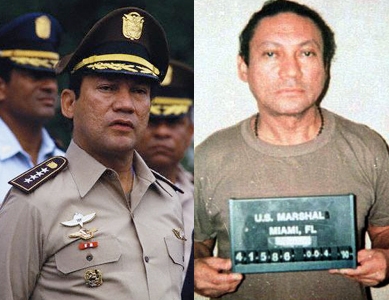
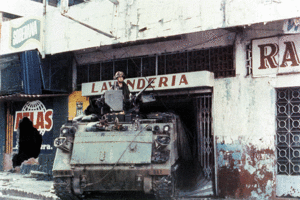
    Yup, it’s been 26 years since we started operations to remove Manuel Noriega from Panama. Earlier this year, Noriega begged forgiveness from Panamanians for his military dictatorship. He was sentenced by an American court to 60 years in prison, a US judge allowed him to be extradited to France, who three years later turned him over to the Panamanians.

    But there was a cost;

    ARMY

    Staff Sgt. Larry Barnard 3/75th Rangers Hallstead, Pa.
    Pfc. Roy D. Brown Jr. 3/75th Rangers Buena Park, Calif.
    Pvt. Vance T. Coats 82nd Airborne Division Great Falls, Mont.
    Spec. Jerry S. Daves 82nd Airborne. Division Hope Mills,N.C.
    Sgt. Michael A. Deblois 82nd Airborne Division Dubach, La.
    Pfc. Martin D. Denson 82nd Airborne Division Abilene,Texas
    Pfc. William D. Gibbs 7th Infantry Division. Marina, Calif.
    Spec. Phillip S. Lear 2/75th Rangers Westminster, S.C.
    Spec. Alejandro Manriquelozano* 82nd Airborne Division Lauderhill, Fla.
    Pfc. James W. Markwell 1/75th Rangers Cincinnati, Ohio
    Cpl. Ivan M. Perez 5th Infantry Division Pawtucket, R.I.
    Pfc. John M. Price 2/75th Rangers Conover, Wis.
    Pfc. Scott L. Roth 89th Military Police Brigade Killeen, Texas
    Pvt. Kenneth D. Scott 5th Infantry Division Princeton, W.Va.
    1st Lt. John R. Hunter 160th Aviation Victor, Montana
    CWO2 Wilson B. Owens 160th Aviation Myrtle Beach,S.C.
    CWO2 Andrew P. Porter 7th Infantry Division Saint Clair, Mich.
    Pvt. James A. Taber Jr. 82nd Airborne Division Montrose, Colo.

    NAVY

    Lt. jg John Connors Special Warfare Group Arlington, Maine
    BM1 Chris Tilghman Special Warfare Group Kailua, Hawaii ENC
    Donald McFaul Special Warfare Group Deschutes,Ore.
    TM2 Issac G. Rodriguez III Special Warfare Group Missouri City,Texas

    MARINE CORPS

    Cpl. Garreth C. Isaak 2nd Marine Division home town unknown.

  • 74th Anniversary of Pearl Harbor attack

    74th Anniversary of Pearl Harbor attack

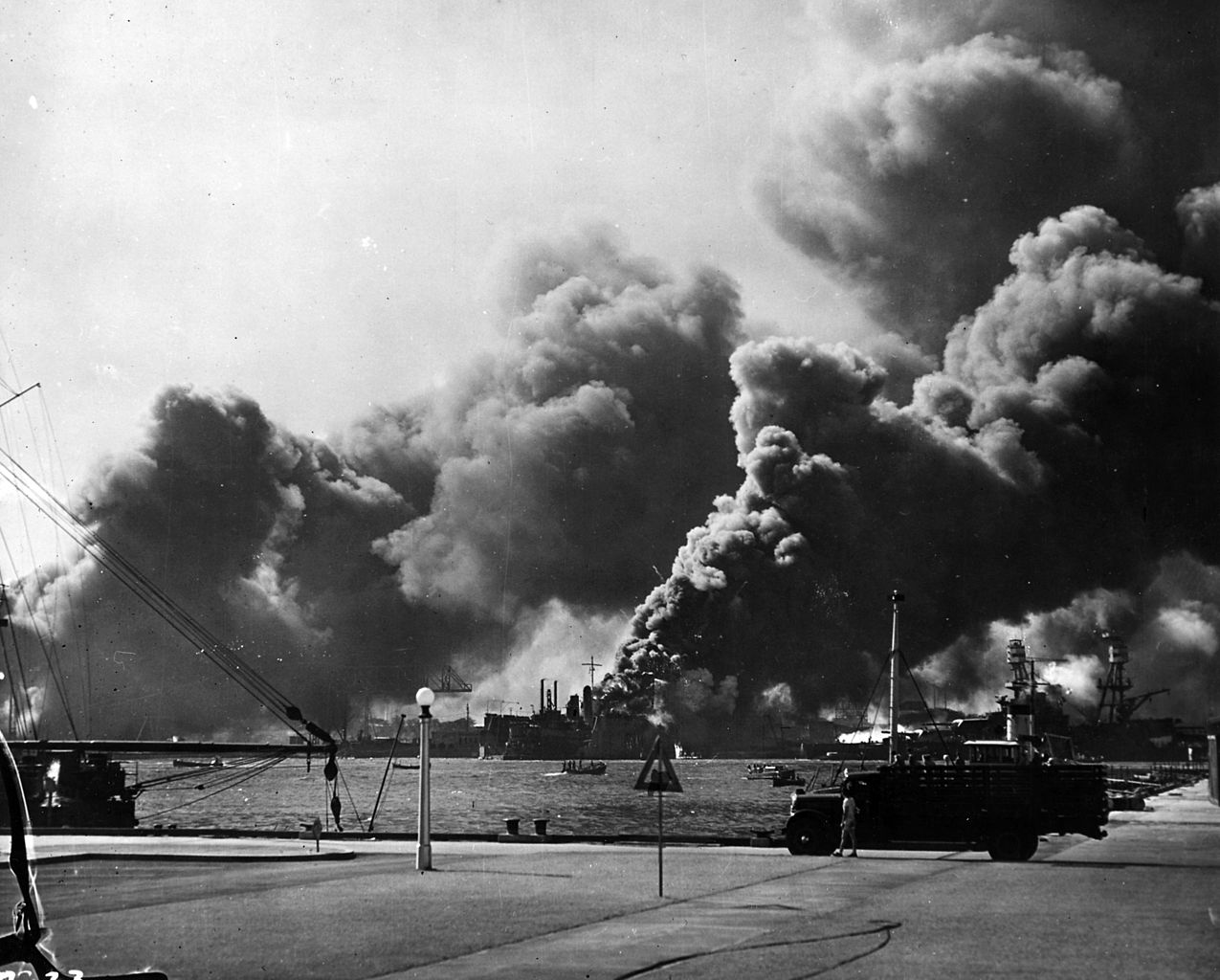
    Pearl Harbor burning

    Seventy-four years ago today we were “suddenly and deliberately attacked by naval and air forces of the Empire of Japan” leading to our ultimate involvement in the war which the rest of the world had been fighting for more than two years. Wiki records our casualties on that day;

    All eight U.S. Navy battleships were damaged, with four being sunk. All but one were later raised, and six of the eight battleships returned to service and fought in the war. The Japanese also sank or damaged three cruisers, three destroyers, an anti-aircraft training ship, and one minelayer. 188 U.S. aircraft were destroyed; 2,402 Americans were killed and 1,282 wounded. Important base installations such as the power station, shipyard, maintenance, and fuel and torpedo storage facilities, as well as the submarine piers and headquarters building (also home of the intelligence section) were not attacked. Japanese losses were light: 29 aircraft and five midget submarines lost, and 65 servicemen killed or wounded. One Japanese sailor was captured.

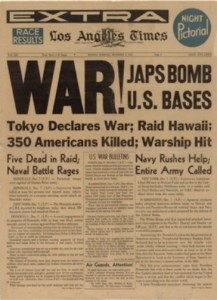
    LA Times Pearl Harbor

    Here is a link to President Roosevelt’s request to Congress for a declaration of war the following day.