Author: Hondo

  • Weekend Open Thread

    On the road again (a short-notice trip to check on some friends and other family interests in an area affected by one of the recent hurricanes). Hopefully this will be a brief trip time-wise.

    So today’s WOT article is a short one. This is it. (smile)

    Enjoy the WOT, everyone – and the weekend too.

    —–

    PS: And just to p!ss off our SJW/howler monkey “friends” – have a great traditional Columbus Day, everyone. Today is the 526th Anniversary of Columbus’ initial landfall in the Americas. (smile)

  • Dox Boy An “Unpaid Intern”? Think Again.

    That “fine individual” who doxxed several GOP Senators recently is in the news again. Yeah, I’m talking about Lil’ Pencil Neck himself – Jackson Cosko.

    Original reporting indicated that Cosko was an “unpaid intern” working for Rep. Sheila Jackson Lee (D-TX). Indeed, it seems Rep. Lee herself has referred to Cosko as an unpaid intern working in her office.

    Well, Rep. Lee can say whatever she wants. But it appears that the truth is somewhat different.

    Per this article from The Daily Wire, Cosko was far from being an unpaid intern. Instead, prior to being “fired” by Rep. Lee he was what is termed a “fellow” – e.g., he was being paid by an “outside institution” to work in her office.

    Further, the same Daily Wire article indicates that Cosko’s responsibilities while working for Lee were far different that that of a typical copier operator/coffee and snack gofer intern. Specifically, per correspondence from Lee’s office Cosko “was routinely trusted to advise Lee and communicate with other members of Congress, specifically those co-sponsoring Lee’s bills.”

    But that’s no big deal. All Members of Congress routinely let unpaid interns do that on their behalf, right? (I hope the sarcasm here is obvious.)

    The obvious question: what is the name of that “outside institution” which was paying Cosko – and who was providing the money to pay him?

    For some reason, an old advertising jingle with modified lyrics just came to mind; it seems somewhat apropos.

    This baloney has a first name
    Starts G-E-O-R-G
    I’m sure it has a second name
    What could that name be?

    I could hazard a guess, but I’ll pass for now. But my guess is probably the same as many of yours – and it wouldn’t surprise me one bit if that turns out to be the case.

    Stay tuned. This could get really interesting.

  • Another Seven are Accounted For

    DPAA has identified and accounted for the following formerly-missing US personnel.

    From World War II

    CPhM James T. Cheshire, US Navy, assigned to the crew of the USS Oklahoma, was lost at Pearl Harbor, HI, on 7 December 1941. He was accounted for on 28 September 2018.

    S1c Herbert J. Poindexter, US Navy, assigned to the crew of the USS Oklahoma, was lost at Pearl Harbor, HI, on 7 December 1941. He was accounted for on 1 October 2018.

    2nd Lt. James R. Lord, Jr., US Army, assigned to 66th Fighter Squadron, 57th Fighter Group, 12th Tactical Air Command, 12th Air Force, US Army Air Forces, was lost in France on 10 August 1944. He was accounted for on 2 October 2018.

    PFC Marvin E. Dickson, US Army, assigned to Headquarters Company, 1st Battalion, 110th Infantry Regiment, 28th Infantry Division, was lost in Germany on 13 November 1944. He was accounted for on 27 September 2018.

    1st Lt. Allen R. Turner, Jr., US Army, assigned to 1330 Army Air Force Base Unit, Air Transport Command, US Army Air Forces, was lost in India on 17 July 1945. He was accounted for on 2 October 2018.

    PFC Joseph I. Natvik, Jr., US Army, assigned to 1330 Army Air Force Base Unit, Air Transport Command, US Army Air Forces, was lost in India on 17 July 1945. He was accounted for on 26 September 2018.

    From Korea

    SFC James L. Boyce, US Army, assigned to K Company, 3rd Battalion, 21st Infantry Regiment, 24th Infantry Division, was lost in South Korea on 11 July 1950. He was accounted for on 2 October 2018.

    From Southeast Asia

    None

    Welcome back, elder brothers-in-arms. Our apologies that your return took so long.

    Rest easy. You’re home now.

    . . .

    Over 72,000 US personnel remain unaccounted for from World War II; over 7,600 US personnel remain unaccounted for from the Korean War; over 1,500 remain unaccounted for in Southeast Asia (SEA); 126 remain unaccounted for from the Cold War; 5 remain unaccounted for from the Gulf Wars; and 1 individual remains unaccounted for from Operation Eldorado Canyon. Comparison of DNA from recovered remains against DNA from some (but not all) blood relatives can assist in making a positive ID for unidentified remains that have already been recovered, or which may be recovered in the future.

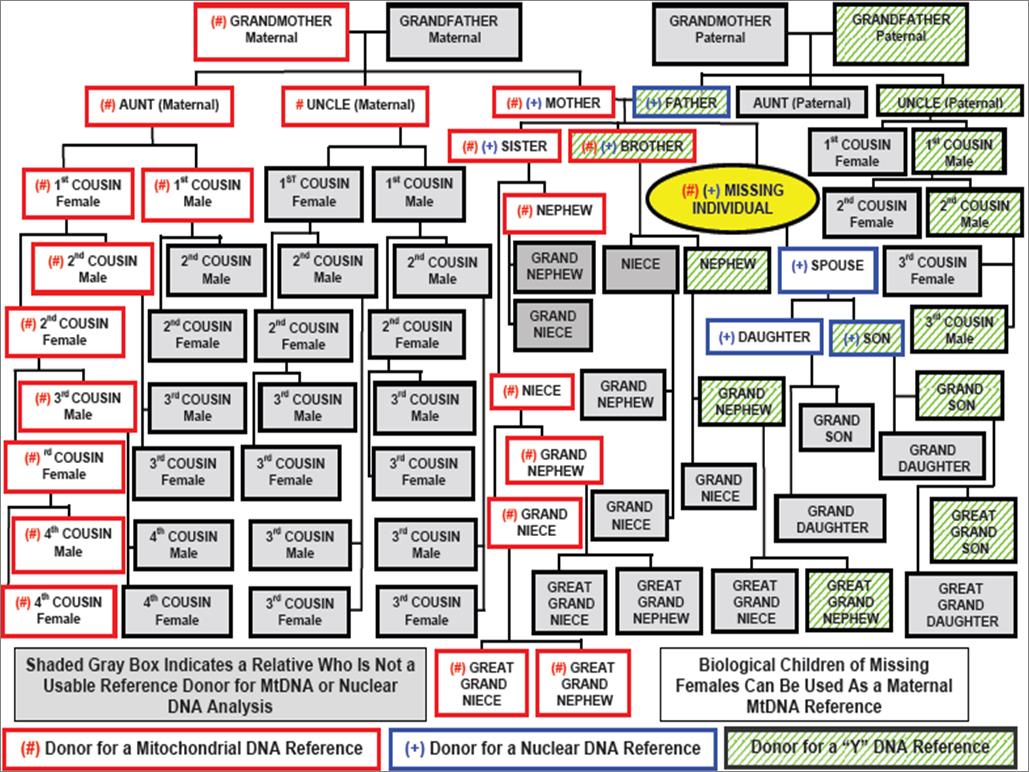
    On their web site’s “Contact Us” page, DPAA now has FAQs. The answer to one of those FAQs describes who can and cannot submit DNA samples useful in identifying recovered remains. The chart giving the answer can be viewed here. The text associated with the chart is short and can be viewed in DPAA’s FAQs.

    If your family lost someone in one of these conflicts and you qualify to submit a DNA sample, please arrange to submit one. By doing that you just might help identify the remains of a US service member who’s been repatriated but not yet been identified – as well as a relative of yours, however distant. Or you may help to identify remains to be recovered in the future.

    Everybody deserves a proper burial. That’s especially true for those who gave their all while serving this nation.

  • Weekend Open Thread

    Just finishing up a 2+ week “double up-and-back” road trip to help out a relative. So today’s WOT article will be a short one.

    It’s MLB playoff time. The Cubs and the Rockies played one helluva great wild-card game this week; the Yankees and the Athletics also played, albeit their game was more one-sided. So given the timing this article from a couple of years ago just seems apropos.

    Fair warning: if you read it, I’d recommend having a tissue handy. Or maybe several.

    Yeah, the article’s from ESPN. But even a blind squirrel finds a nut sometimes.

    Enjoy the WOT, and have a great weekend.

    —–

    Postscript: FWIW, the author of the linked article, Tom Friend, has written a book covering the subject in more detail. It was released this week; it might be worth checking out.

  • Another Six Return

    DPAA has identified and accounted for the following formerly-missing US personnel.

    From World War II

    F1c Claude O. Gowey, US Navy, assigned to the crew of the USS Oklahoma, was lost at Pearl Harbor, HI, on 7 December 1941. He was accounted for on 21 September 2018.

    SK2c Gerald L. Clayton, US Navy, assigned to the crew of the USS Oklahoma, was lost at Pearl Harbor, HI, on 7 December 1941. He was accounted for on 26 September 2018.

    Mus2c Francis E. Dick, US Navy, assigned to Aviation, Construction, Ordinance, Repair, Navy Fourteen, Standard Landing Craft Unit 4, was lost at Pearl Harbor, HI, on 7 December 1941. He was accounted for on 26 September 2018.

    S2c Deward W. Duncan, Jr., US Naval Reserve, assigned to Aviation, Construction, Ordinance, Repair, Navy Fourteen, Standard Landing Craft Unit 4, was lost on Tarawa on 12 January 1944. He was accounted for on 26 September 2018.

    PFC Lewis E. Price, US Army, assigned to Company E, 2nd Battalion, 109th Infantry Regiment, 28th Infantry Division, was lost in Germany on 6 November 1944. He was accounted for on 24 September 2018.

    From Korea

    PVT John W. Martin, US Army, assigned to Medical Company, 32nd Infantry Regiment, 7th Infantry Division, was lost in North Korea on 2 December 1950. He was accounted for on 25 September 2018.

    From Southeast Asia

    None

    Welcome back, elder brothers-in-arms. Our apologies that your return took so long.

    Rest easy. You’re home now.

    . . .

    Over 72,000 US personnel remain unaccounted for from World War II; over 7,600 US personnel remain unaccounted for from the Korean War; over 1,500 remain unaccounted for in Southeast Asia (SEA); 126 remain unaccounted for from the Cold War; 5 remain unaccounted for from the Gulf Wars; and 1 individual remains unaccounted for from Operation Eldorado Canyon. Comparison of DNA from recovered remains against DNA from some (but not all) blood relatives can assist in making a positive ID for unidentified remains that have already been recovered, or which may be recovered in the future.

    On their web site’s “Contact Us” page, DPAA now has FAQs. The answer to one of those FAQs describes who can and cannot submit DNA samples useful in identifying recovered remains. The chart giving the answer can be viewed here. The text associated with the chart is short and can be viewed in DPAA’s FAQs.

    If your family lost someone in one of these conflicts and you qualify to submit a DNA sample, please arrange to submit one. By doing that you just might help identify the remains of a US service member who’s been repatriated but not yet been identified – as well as a relative of yours, however distant. Or you may help to identify remains to be recovered in the future.

    Everybody deserves a proper burial. That’s especially true for those who gave their all while serving this nation.

  • Weekend Open Thread

    Most TAH readers know a bit (or more than a bit) about the Lockheed U-2. I’d guess some may even have worked on projects or operations involving that airccraft.

    But without a bizarre-sounding suggestion from one of the technicians during the early days of the project, the aircraft may have been doomed to failure. Once upon a time, “feminine sanitary supplies” may indeed have saved the U-2 project from failure.

    Seriously.

    . . .

    The earliest U-2s suffered from an oil-loss problem with potentially catastrophic consequences.

    The first U-2’s cockpit defogging systems used compressed air from the aircraft’s engine, bled off after the compressor stages, as its source. The original engine was designed for operation at much lower altitudes; at the U-2s very high altitudes, lubricating oil seeped around seals and formed a fine mist in that compressed air.

    This resulted in oil loss while flying – very severe oil loss, enough to threaten the aircraft with total oil loss on a long mission. And although most of that lost oil was burned in the engine, because some air was bled off from the compressor for the defogging system it also resulted in a significant amount of oil deposited on the aircraft’s windscreen. That (oil mist in the cockpit air with depositing of oil film on the windscreen) resulted in both fire and visual hazards.

    Either problem by itself? Not good. Both together? “Double-plus ungood.” (smile)

    Accounts vary somewhat on what happened next. The late Ben Rich – Kelly Johnson’s successor at Lockheed’s famous Skunk Works, which designed and built the U-2 – was at the time responsible for the air intake system on the U-2. His account, found in his book Skunk Works, states that one of the Lockheed technicians suggested to him that that they “pack Kotex around the damn thing and absorb the mess before it hits the windshield” (or words to that effect). Rich in turn pitched the idea to Kelly Johnson; Johnson’s response was reportedly words to the effect of, “What the hell, give it a try.” And it worked.

    Air&Space Magazine (Jan 1999) has a somewhat different variation of the story. They say that a metal box was installed in the defogger line and filled with sanitary napkins to absorb the oil mist. They also say that the pressures involved during flight deformed that metal box. (See page 2 of the linked story.)

    I don’t know which account is closer to the truth. My guess is that there’s an element of truth to both. The box in the defogger line makes sense and would likely have been a relatively quick and easy retrofit, but I’d also guess the solution’s origin was much as Rich described. Either way, I’d guess it was a crusty old Lockheed technician – possibly one who was a World War II or Korean War vet who’d worked in aviation maintenance and/or fabrication then and since – who originally came up with the idea.

    For a while, the U-2 program reportedly used large quantities of “female sanitary napkins” (Rich’s account says they were periodically delivered in large quantities to the Skunk Works plant). The solution, while not permanent, worked well enough to allow the program to continue.

    The problem was apparently solved permanently by adoption of a different engine sometime in 1956. The newer engine was optimized to operate at very high altitudes, and as a result didn’t create oil mist in extreme quantities.

    So, there ya have it. Without the use of “feminine sanitary supplies”, the U-2 program could easily have been a failure. Their use saved the program – or at least greatly contributed to its success.

    Truth sometimes is stranger than fiction. (smile)

    . . .

    OK, enough oddball Cold War history for today. Enjoy the WOT, everyone.

  • Nine More Return

    DPAA has identified and accounted for the following formerly-missing US personnel.

    From World War II

    EM3c Merle A. Smith, US Navy, assigned to the crew of the USS Oklahoma, was lost at Pearl Harbor, HI, on 7 December 1941. He was accounted for on 20 September 2018.

    S1c Millard Burk, US Navy, assigned to the crew of the USS Oklahoma, was lost at Pearl Harbor, HI, on 7 December 1941. He was accounted for on 20 September 2018.

    S1c Robert W. Headington, US Navy, assigned to the crew of the USS Oklahoma, was lost at Pearl Harbor, HI, on 7 December 1941. He was accounted for on 14 September 2018.

    S2c David B. Edmonston, US Navy, assigned to the crew of the USS Oklahoma, was lost at Pearl Harbor, HI, on 7 December 1941. He was accounted for on 20 September 2018.

    SSgt. Karl R. Loesche, US Army, assigned to 3rd Pursuit Squadron, 24th Pursuit Group, US Army Air Forces, was lost in the Philippines on 16 November 1942. He was accounted for on 13 September 2018.

    From Korea

    PVT Charles G. Kaniatobe, US Army, assigned to A Company, 1st Battalion, 21st Infantry Regiment, 24th Infantry Division, was lost in South Korea on 10 July 1950. He was accounted for on 17 September 2018.

    MSG Charles H. McDaniel, US Army, assigned to Medical Company, 8th Cavalry Regiment, was lost in North Korea on 2 November 1950. He was accounted for on 13 September 2018.

    PFC William H. Jones, US Army, assigned to E Company, 2nd Battalion, 24th Infantry Regiment, 25th Infantry Division, was lost in North Korea on 26 November 1950. He was accounted for on 13 September 2018.

    CPL Edward M. Jones, US Army Reserve, assigned to D Company, 1st Battalion 38th Infantry Regiment, 2nd Infantry Division, was lost in North Korea on 12 February 1951. He was accounted for on 19 September 2018.

    From Southeast Asia

    None

    Welcome back, elder brothers-in-arms. Our apologies that your return took so long.

    Rest easy. You’re home now.

    . . .

    Over 72,000 US personnel remain unaccounted for from World War II; over 7,600 US personnel remain unaccounted for from the Korean War; over 1,500 remain unaccounted for in Southeast Asia (SEA); 126 remain unaccounted for from the Cold War; 5 remain unaccounted for from the Gulf Wars; and 1 individual remains unaccounted for from Operation Eldorado Canyon. Comparison of DNA from recovered remains against DNA from some (but not all) blood relatives can assist in making a positive ID for unidentified remains that have already been recovered, or which may be recovered in the future.

    On their web site’s “Contact Us” page, DPAA now has FAQs. The answer to one of those FAQs describes who can and cannot submit DNA samples useful in identifying recovered remains. The chart giving the answer can be viewed here. The text associated with the chart is short and can be viewed in DPAA’s FAQs.

    If your family lost someone in one of these conflicts and you qualify to submit a DNA sample, please arrange to submit one. By doing that you just might help identify the remains of a US service member who’s been repatriated but not yet been identified – as well as a relative of yours, however distant. Or you may help to identify remains to be recovered in the future.

    Everybody deserves a proper burial. That’s especially true for those who gave their all while serving this nation.

  • Weekend Open Thread

    Quick question: who was the first American to break the “sound barrier”? Chuck Yeager, right?

    Most people would say that. Might want to guess again.

    Persuasive evidence – apparently suppressed for roughly 50 years – indicates that an American quite likely if not almost certainly had broken the mythical “sound barrier” prior to Chuck Yeager doing so on 14 October 1947. Twice.

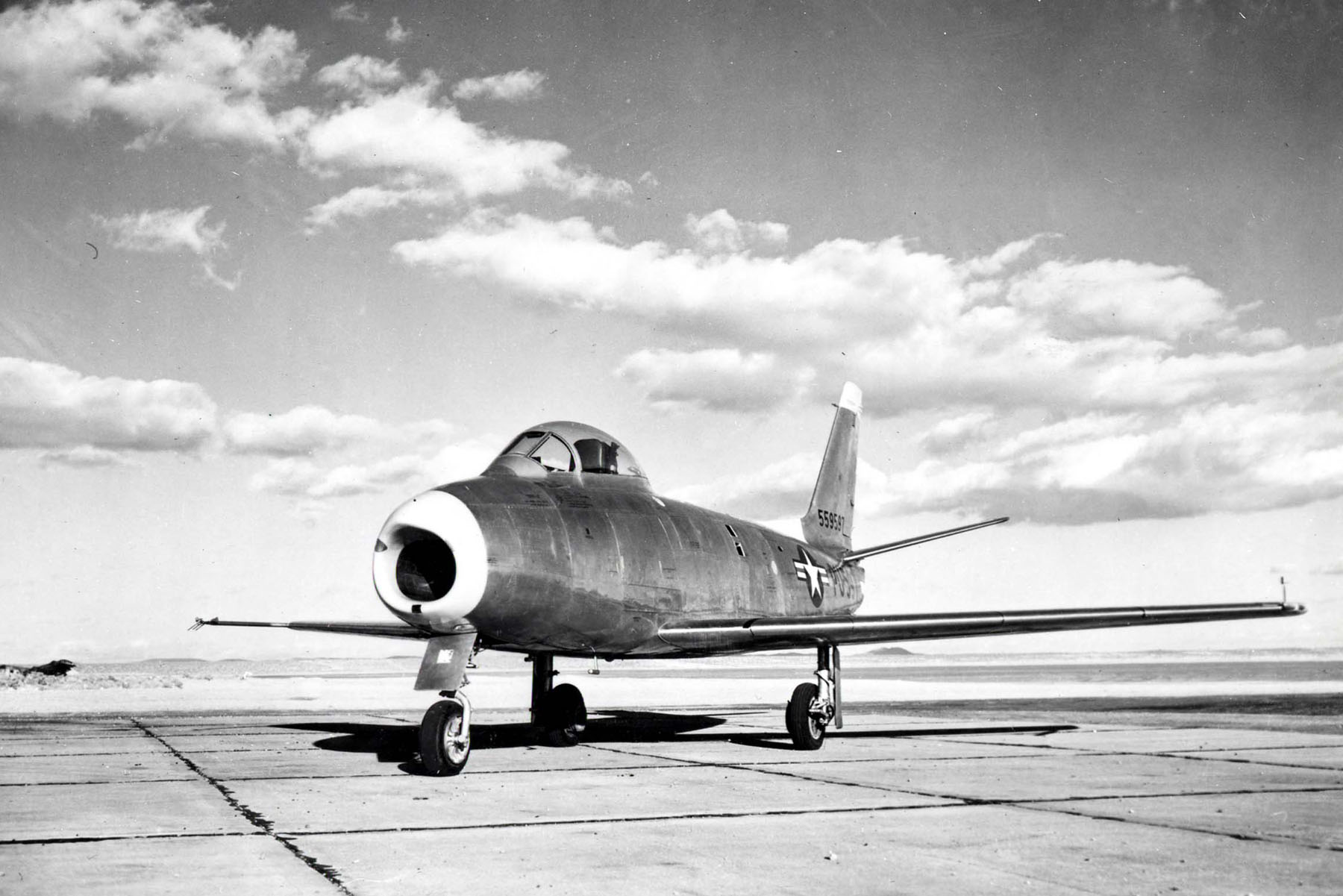
    Yeager wasn’t the American who very likely did that. And rather than the Bell X-1, this was the aircraft that very likely did it:
    . . .

    The American who almost certainly first exceeded the mythical “sound barrier” was a former Army Air Forces war hero. His name? George Welch.

    Those with knowledge of aviation history might recognize the name. Yes, that would be the same George Welch who (along with Ken Taylor) was awarded the Distinguished Service Cross for aerial heroics at Pearl Harbor. Welch went on to become one of America’s premier World War II aces, with 16 confirmed kills by late 1943.

    Unfortunately, Welch was flying in the South Pacific. Malaria nailed him – badly. It was severe enough to send him stateside early from the Pacific. And after serving stateside for a while, with the Army’s blessing he left the service to become a test pilot for North American Aviation.

    Shortly after World War II, North American was developing the F-86. It was capable of high subsonic speed. Had we known about “area rule” design as applied to supersonic aircraft at that time, it would almost certainly have been America’s first supersonic aircraft.

    Now, Welch wasn’t a big fan of Bell Aircraft. They’d designed the P-39 Aircobra which Welch flew early in World War II. When asked what he liked about the Aircobra, Welch said, “Well, it’s got twelve hundred pounds of Allison armor plate.” (Welch was referring to the aircraft’s engine, which was built by Allison and located behind the pilot. Performance-wise the Aircobra itself was a dog; Welch later got himself transferred to a unit flying Lockheed P-38s.)

    Welch knew that Bell Aircraft was preparing to go supersonic with their experimental X-1 in the near future, at Muroc Field (what is today Edwards AFB). Bell had the Air Force’s blessing; the X-1 project was an Air Force favorite, and reputedly President Truman had promised Bell’s board chairman that Bell would be the first to break the “sound barrier”.

    However, Welch was at the time also at Muroc; he was there to test North American’s prototype XF-86, which was capable of high subsonic flight. And the XF-86’s flight testing called for investigating the “high Mach region” – e.g., speeds close to the speed of sound.

    . . .

    So, what happens when you put an aircraft into a dive? It speeds up . . . right?

    You guessed it: on 1 October 1947, Welch took the XF-86 up for a test flight – and investigated the “high Mach region”. And while doing that, Welch dove.

    Welch had previously told one of the regulars at Pancho Barnes’ Rancho Oro Verde Fly Inn Dude Ranch (AKA the “Happy Bottom Riding Club” – yes, both the individual and the place portrayed in the book and movie The Right Stuff did exist) to look for the sound of an explosion. If they heard one, Welch told them to note the exact time and observe the reactions of those who heard it.

    During Welch’s flight, the sound of what appeared to be a detonation was observed at the Fly Inn. Welch later compared notes with the individual he’d previously told to keep an ear out for sounds of an explosion.

    The individual had in fact heard the sound – and noted the time. The time was during Welch’s dive.

    Welch did the same again on 14 October 1947. This time, he did so approximately 20 minutes before Yeager’s more famous flight. And the sonic boom from Welch’s flight that day was also heard at the Fly Inn – and was reportedly far louder than that from Yeager’s flight.

    . . .

    The Air Force never acknowledged Welch’s October 1947 flights. Why? Dunno. But I can hazard a guess.

    The Bell X-1 project was an Air Force favorite, and was expensive; its existence had to be justified. (Secretary of the Air Force Stuart Symington had told North American that they were not to exceed Mach 1 with the XF-86 until after Bell had done so with the X-1.) Welch was a civilian employee of North American Aviation, while Yeager was a serving USAF officer. The optics of having someone in uniform be the first to “break the sound barrier” vice a civilian contractor would obviously have been better for the USAF from a PR standpoint.

    Plus, the head of Bell Aircraft, Lawrence Bell, reputedly knew President Truman. You really think the USAF is gonna chance royally p!ssing-off the POTUS within a few weeks of becoming an independent military service? (smile)

    But reportedly there are not only confirmatory ground reports of a sonic boom associated with of each of Welch’s October 1947 flights. There are supposedly instrumentation readings from the Muroc test range’s radar theodolite from roughly a month later that lend credence to claims on Welch’s behalf. (Welch himself never claimed to have been first to break the “sound barrier”.) Those radar theodolite readings verify that Welch did, in fact, officially exceed Mach 1 twice during testing of the XF-86 in November 1947. (Some accounts imply that radar theodolite readings exist for one or both of Welch’s October 1947 flights as well, but that may not be true.) Plus, Welch accurately described to one of North American’s aircraft designers the “Mach jump” instrumentation anomaly noted in early supersonic flight – and he did so not long after his 1 October 1947 flight, nearly 2 weeks before Yeager supposedly “first” observed that same anomaly.

    Decide for yourself. History gives Yeager the credit – but I don’t think he was actually the first American to “break the sound barrier” during a controlled flight. I’m guessing that was George Welch.

    . . .

    Some might argue that Welch doesn’t deserve any credit for breaking the “sound barrier” because he had to dive in the XF-86 to exceed Mach 1. On the surface, that argument may appear to have merit. But bear with me for a moment. Because one can also make a similar – though somewhat different – argument about Yeager’s 14 October 1947 supersonic flight in the X-1.

    Yeager’s first supersonic Bell X-1 flight is well-chronicled, so there’s no need to discuss it in detail. And it was indeed the first time the “sound barrier” was broken in level flight – technically speaking.

    I say “technically speaking” because the Bell X-1 didn’t make that entire flight under its own power. Though capable of taking off from the ground, Yeager’s X-1 did not do so on Yeager’s 14 October 1947 flight. Rather, on that date it was carried to a high altitude by a B-29. It was then released to fly under its own power.

    Would the Bell X-1 have been able to fly to altitude and then exceed Mach 1 in level flight that day? Who knows? (It certainly didn’t do so on 14 October 1947.) But if diving is a “NO-GO” regarding breaking the “sound barrier”, well, pray tell: why is flying only half of a typical air mission (no powered takeoff, being carried aloft instead by another aircraft and then released at high altitude) acceptable?

    In fact, only one Bell X-1 flight involved a takeoff under the aircraft’s own power. Reputedly that flight indeed exceeded Mach 1, with Yeager at the controls – but it also occurred on 15 January 1949, nearly 15 months after Yeager’s first supersonic flight.

    Personally, I think the credit should be split – with Welch recognized as the first American to break the “sound barrier”, and Yeager as the first to do so in level flight. But nearly 50 years of having the truth about Welch’s October 194 flights apparently withheld – plus Welch’s early death in a 1954 flight test accident – has led to Yeager getting sole credit.

    . . .

    OK, enough history. Enjoy the Weekend Open Thread, everyone – and the weekend.

    References:

    The first part of Welch’s career is is summarized here; the second part is summarized here. Both linked articles are excellent if somewhat biased reading (the author’s obviously a huge fan of Welch). Other claims are discussed in an article linked in the following author’s note.

    Yeager’s career and accomplishments need no discussion. He truly was one of the “larger than life” figures of the early days of jet flight.

    A few other Wikipedia articles were also used as background, mostly for checking dates and/or other specific items.

    —–

    Author’s Note: FWIW: while it’s generally accepted that an American was the first to break the “sound barrier”, there’s a chance that the first person to break the “sound barrier” wasn’t even an American. Several Germans flying jet- or rocket-powered aircraft during the latter stages of the war could conceivably have done so; some claims to this effect have been made. But most of those cases have been investigated in detail and have been reasonably (but not categorically) found to be “NO-GOs”. Most of them are listed here, along with Welch’s flights and a few other debunked claims.

    However, two cases are worth mention as possibilities.

    The first possibility is the case of Luftwaffe test pilot Lothar Sieber. It’s entirely possible that Sieber in fact exceeded Mach 1 on his first – and only – test flight of the Bachem Ba349 “Natter” (IMO a truly YGBSM! manned interceptor design developed and partially tested by Nazi Germany out of desperation late during the war) on 1 March 1945.

    Read the linked article if you’d like more details on the Natter and its design. Suffice it to say that IMO both its design and operational conept would have made Rube Goldberg proud.

    In any case: Sieber’s test flight was the first vertical launch of a manned rocket. He may well have exceeded Mach 1 at some point during this single manned test flight of the Ba349.

    However, Sieber never claimed to have “gone supersonic”. The test was a failure, and Sieber did not survive the flight.

    The second is the case of Luftwaffe pilot Hans Mutke. Like Welch, it’s possible he may have exceeded Mach 1 in a dive with his Me262 late in World War II (9 April 1945). His account, and flight profile (including a high-speed high-power dive), track Welch’s account from a few years later reasonably well. (His aircraft didn’t fare as well, though; it was damaged too badly to ever be flown again from aerodynamic stress.)

    Initial analysis indicated that exceeding Mach 1 was not possible with the Me262 because that aircraft’s design would make the aircraft’s controls useless above Mach 1. This in turn would make the aircraft uncontrollable; it was believed that a safe return to subsonic flight would not be possible.

    However, later analysis has indicated that the Me262 might indeed have been recoverable after exceeding Mach 1. Hans Mutke having exceeded Mach 1 in a dive during his flight on 9 April 1945 thus can’t be definitively ruled out.