Yeah, I know Top Gun was (as far as accuracy goes) pretty much crap. But there’s one scene in the movie I absolutely love – because I’m convinced it’s based, somewhat loosely, on a real event.
My spouse and I saw the movie when it came out 30+ years ago. And I spent a lot of my youth as well as part of my early Army career around Army aviators – so I think I understand the aviator mindset fairly well.
One scene in the movie had me LMAO. Here’s a still:

As soon as I stopped laughing, my first thought was: “That has to be based on a real event.” But at the time I had no idea what that event was, and I wasn’t sure I’d ever find out any details of the real event that inspired it.
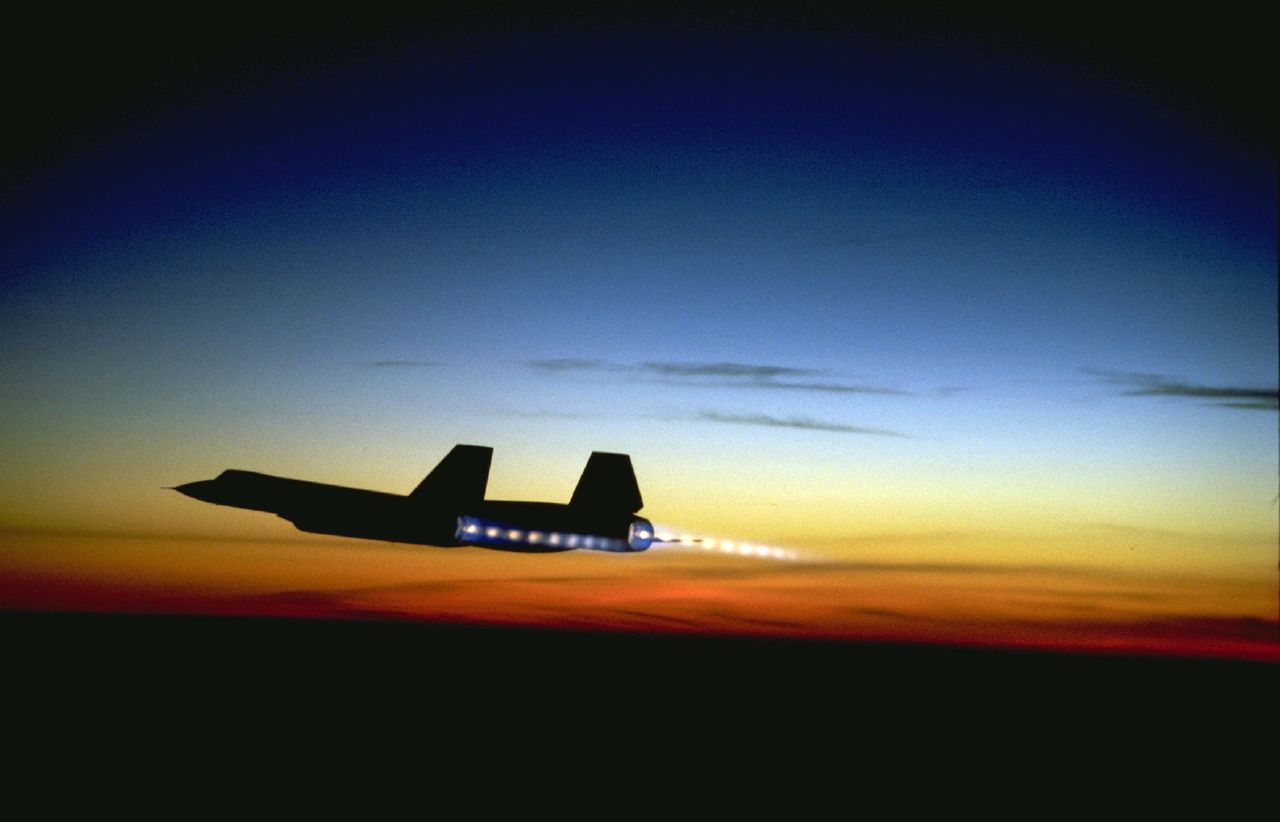
Fast forward 15+ years. I was reading a book; it was Ben Rich’s Skunk Works – his autobiography focusing on his years at Lockheed’s Advanced Development Projects Division (AKA the Lockheed “Skunk Works”). A couple of chapters in the book are devoted to accounts from or about U-2, SR-71, and F-117A pilots and missions (all three aircraft were Skunk Works products – as were the P-38, the P-80, the F-104 and several other aircraft).
One of those firsthand SR-71 accounts was attributed to a Lt. Col. William Burk, Jr., USAF. It recounts a mission over Lebanon in late 1982, after the Beirut Marine Barracks bombing. Burk was the pilot for the mission.
The flight originated at RAF Mildenhall. At the time, the French wouldn’t give the US clearance to overfly France, so the mission’s route was planned to go via the Straits of Gibraltar.
The outbound leg and overflight of Beirut went well, though not without a bit of high APF time (they were tracked by a Syrian SA-5 during the mission). However, while in the Western Mediterranean on the return leg Burk got a low oil pressure indication on one engine.
The engine appeared to be operating properly, but he shut it down anyway. As the pilot, since he was now flying on one engine Burk decided to take the short way home (e.g., to cross France) instead of going home the long way via Gibralter.
He and his Recon Systems Officer had nearly finished crossing France and were nearing the English Channel. At that point, they were intercepted by a French Mirage.
The French pilot came up on the radio and asked them for their diplomatic clearance number. Per Burk, the Mirage was about 10 feet off his left wing at the time.
Burk had no idea what the man was talking about. So he told the French pilot to hold fast, while he checked with his RSO.
He asked his RSO if he knew what the French pilot was talking about. His RSO’s reply: “Don’t worry about it, I just gave it to him.”
Burk’s RSO had given the French pilot the finger out of his side window. At that point, Burk’s account says he “lit the afterburners and left that Mirage standing still” – and was crossing the English Channel a couple of minutes later.
As soon as I read that, my thought was: “Bingo! That’s it!”
Burk’s account can be read here. (Regrettably, I can’t find that particular excerpt of Skunk Works online.) My recollection is that it appears to be a faithful transcript of Burk’s account from Ben Rich’s book. What appears to be same account also exists, in non-verbatim form, on several other websites.
Personally, I’m convinced the account is legit.
. . .
Now, I don’t know with absolute certainty that that is in fact the real-life incident that inspired the cockpit finger scene in Top Gun. But the timing fits; the incident occurred in late 1982, and Top Gun didn’t start filming for at least 2 years. And aviators tend to talk about stuff they did over a drink or two – particularly the outlandish or dangerous stuff they managed to survive. So I’m guessing that story, in sanitized and/or garbled form, had circulated throughout military aviation circles by then. And I’m also guessing the story had come to the attention of the film’s writing team.
The rest, as they say, is cinematic “history”.
Anyway, “That’s my story and I’m sticking to it.” (smile)
OK, enough Blackbird history for today. Enjoy the WOT, everyone – and the weekend.