Author: Hondo

  • Weekend Open Thread

    I’ve been on the road for over two weeks now, and I still have one more longish leg yet to go. I won’t get home until sometime tomorrow afternoon or evening.

    It’s been a good trip. But it’s also been long one – as in 6,000+ miles and still counting.

    Still, it’s been worth it. I got to see some friends and relatives I haven’t seen in a while – as well as take care of some necessary family business and meet a few folks. And today, I’ll be spending some time at the range with an old friend engaging in gunpowder therapy while breaking in one of these:

    Nothing special – it’s just an inexpensive plinking rifle with a synthetic stock. But it’s probably inherently more accurate than I am these days regarding putting lead where I want it to go. And shooting a .22LR semi-auto is, well . . . it’s just plain fun. (smile)

    It’ll also be the first time I’ve had a chance to try out fiber-optic sights. That alone should be interesting.

    Good company, plus some gunpowder therapy. I can certainly think of many worse ways to spend the day.

    OK, intro’s over. Enjoy this week’s WOT, everyone – and have a great weekend.

    —–

    ADDENDUM: the little beastie shoots like a dream – one jam in about 120 rounds (and of a type I’d have had to see to believe anyway, so I’m pretty sure it was a fluke), with perfectly reliable operation before and afterwards. The adjustable sights were easy to get roughly zeroed quickly. Only minor quibble was that getting the last round into the magazines was quite difficult before I figured out the trick to doing that. After that, only mildly so.

    And, unfortunately, I was right: the rifle is inherently far more accurate than my aim these days. (smile)

  • Random Thoughts from the Road

    Getting home after a 2+ week trip this weekend. I think I’m gonna need to have my spouse check my butt for calluses after I get home. (smile)

    While traveling, I saw and/or thought of a few things that made me go, “Hmm?” – or laugh. Or which I otherwise thought were noteworthy enough to share.

    So here ya go. Hey, you get bored and/or mentally fatigued while driving over 6,000 miles; at that point, you’re pretty easily amused. I blame what follows on that.

    . . .

    When going through El Paso going east/west (or west/east), you have two decent choices: I-10 and TX 375 (Purple Heart Freeway and Woodrow Bean Transmountain Drive). The former goes through downtown El Paso and by UTEP; the latter bypasses the city, but does go through the Franklin Mountains (and through the Franklin Mountains State Park). Consequently, there’s quite a climb/descent involved if you take TX 375.

    At the high point, TX 375 goes through a cut/pass in the mountains called Smuggler’s Pass. There’s an elevation sign at the summit; the elevation is 5,280 feet – exactly one mile.

    Which led my boredom/fatigue infused brain to wonder: if a couple were to go parking next to that sign and got amorous (without getting rousted by the police, of course) . . . would they become members of the “Mile High Club/Ground Division”? (smile)

    . . .

    Road trains (a semi pulling 3 or more trailers) are supposedly common in the Australian outback. But I thought they were illegal in the US.

    Apparently, though, they’re not illegal all US locations. Well, either that or there was one bold-ass trucker on one of the highways I traveled this trip – ‘cause he was pulling 3 trailers (looked to be 40-foot trailers, or perhaps a bit shorter).

    First one I’d ever seen.

    . . .

    If you ever get the chance, take US70 between Las Cruces and Roswell, NM. It absolutely has to be one of the most spectacular 3-hour drives in the nation.

    Starting in Las Cruces, you begin in deep desert, eventually end up (after several long climbs) in Ponderosa Pine-covered mountains at nearly 8,000 feet, and then descend to open scrub/grassland plains. Gorgeous.

    En route, you pass through the US Army’s White Sands Missile Range; pass by a NASA facility; pass by the White Sands National Monument; and pass by the Apache-run Inn of the Mountain Gods. You also pass through Ruidoso and several other smaller towns in New Mexico. Many places along the route are worth a look, and the Inn of the Mountain Gods seems to be a damned nice place for a weekend getaway. Hopefully I’ll be able to do that one year.

    Plus, there’s also the International UFO Museum and Research Center in Roswell – if you’re into that kind of kitsch.

    . . .

    A correction to a couple of previous articles I posted here and here. Turns out there are places to eat reasonably near to the Uranus Fudge Factory besides their Party Bar. However, they’re on the opposite side of I-44 and are only easily visible from one direction. I somehow missed them on my previous trips through that area.

    So if you go, you can get something to eat in the vicinity pretty much any time they’re open. You’ll just have to cross over I-44 if it’s before the nearby Party Bar opens and starts serving food.

    . . .

    Finally, the following tale I heard years ago came to mind.

    Three clergymen met at an annual conference. Though of different denominations, they hit it off.

    Each year each was able to return to the conference annually. Over time, they became fast friends, though they lived in different areas.

    At their final attendance, there was a terrible auto accident. The taxi they were taking to dinner together was hit, and crushed, by an 18-wheeler. They all died instantly.

    After the accident, they found themselves on a cobblestone road leading to a Shining City on a Hill. With some trepidation, they approached the gate.

    They were met at the gate by Saint Peter. Rather than smiling or frowning – which would have instantly told the three their eternal fate – Saint Peter had a chagrined look on his face.

    “Men,” said Saint Peter, “I owe you an apology. You became fast friends on earth because you had the same Guardian Angel. He was new, and we thought assigning him to three clergy would be a good first assignment.

    Unfortunately, he misread the Eternal Calendar. The accident sending you here indeed was to have happened – but not until next year. You were supposed to have missed that cab and caught the next one. Consequently, you three are here a bit over a year early.”

    Saint Peter cleared his throat. “That means we have a problem. We can’t bring you back to life as humans; God is adamant that Lazarus was the last miracle of that type. But you can’t enter Heaven until you’re scheduled to do so – which is a year and a day from now.

    So you have a choice. You can either stay here outside the Eternal City for that time, though I fear you’ll be bored to tears for a year. Or we can send you back to earth as anything but a human, with guaranteed return in one year.”

    The three thought about it.

    Shortly one of the three spoke up. “I’ve always wanted to fly,” the first said. “Could I go back to earth as an eagle?”

    Instantly he vanished.

    The second spoke up about a minute later. “I’ve always admired cats, and I love the mountains. Could I go back to earth for my year as a mountain lion in the Rockies?”

    He too vanished.

    The third spoke up. “Could I go back as a stud?”

    The third immediately vanished.

    A year later, God and Saint Peter were conversing in the Eternal City. God turned to Saint Peter and said, “It’s about time for those three to come home forever. How are they doing?”

    Saint Peter said, “Lord, the first is enjoying his last day on earth soaring over the mountains in northern New Mexico. He seems happy, but I sense he’s ready to come home.”

    God then asked: “And the second?”

    “Sir, the second is basking in the sun on a rock outcropping in the Colorado Rockies, purring after having eaten his fill. He too is happy, but I sense he’s also ready to come home.”

    “And the third?” asked God.

    “That one still has me perplexed, Lord,” said Saint Peter. “He’s still holding up that wall in a house in Iowa, as he has been for the past year. And he’s definitely ready to come home.”

    Moral of the story: precision and specificity in language are quite important. Or to phrase it another way: “Be careful of precisely what you ask for – you might get it!” (smile)

    —–

    That’s all for now. Hope everyone is having a great day.

  • Another Four Are Home

    DPAA has identified and accounted for the following formerly-missing US personnel.

    From World War II

    PFC Morris R. Worrell, US Army, assigned to F Company, 2nd Battalion, 31st Infantry Regiment, was lost in the Philippines on 27 September 1942. He was accounted for on 16 August 2018.

    ACOM Otis E. Ingram, US Navy, assigned to Torpedo Squadron Fifty One (VT-51), was lost in the Republic of Palau on 27 July 1944. He was accounted for on 8 August 2018.

    From Korea

    PFC Mathis O. Ball, Jr., US Army, assigned M Company, 3rd Battalion, 21st Infantry Regiment, 24th Infantry Division, was lost in South Korea on 12 July 1950. He was accounted for on 15 August 2018. (See note.)

    PFC George L. Spangenberg, US Army, assigned to E Company, 8th Cavalry Regiment, 1st Cavalry Division, was lost in South Korea on 15 November 1950. He was accounted for on 7 August 2018.

    From Southeast Asia

    None

    Welcome back, elder brothers-in-arms. Our apologies that your return took so long.

    Rest easy. You’re home now.

    . . .

    Over 72,000 US personnel remain unaccounted for from World War II; over 7,600 US personnel remain unaccounted for from the Korean War; over 1,500 remain unaccounted for in Southeast Asia (SEA); 126 remain unaccounted for from the Cold War; 5 remain unaccounted for from the Gulf Wars; and 1 individual remains unaccounted for from Operation Eldorado Canyon. Comparison of DNA from recovered remains against DNA from some (but not all) blood relatives can assist in making a positive ID for unidentified remains that have already been recovered, or which may be recovered in the future.

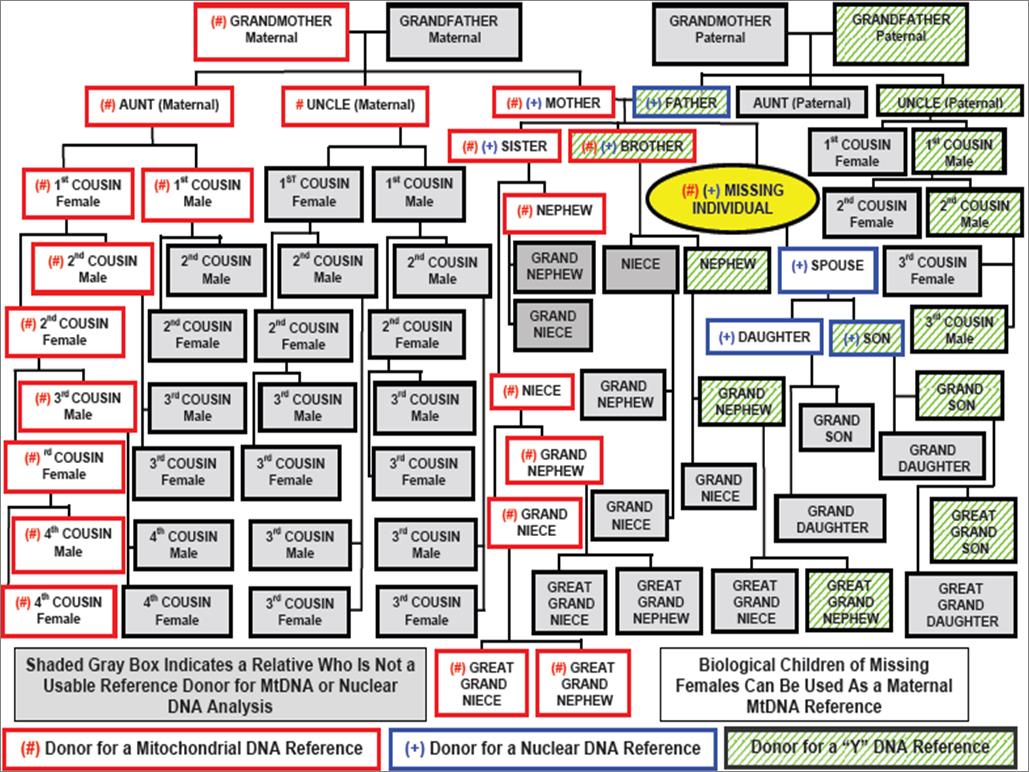
    On their web site’s “Contact Us” page, DPAA now has FAQs. The answer to one of those FAQs describes who can and cannot submit DNA samples useful in identifying recovered remains. The chart giving the answer can be viewed here. The text associated with the chart is short and can be viewed in DPAA’s FAQs.

    If your family lost someone in one of these conflicts and you qualify to submit a DNA sample, please arrange to submit one. By doing that you just might help identify the remains of a US service member who’s been repatriated but not yet been identified – as well as a relative of yours, however distant. Or you may help to identify remains to be recovered in the future.

    Everybody deserves a proper burial. That’s especially true for those who gave their all while serving this nation.

    ———-

    Author’s Note: DPAA’s “Recently Accounted For” page lists an incorrect country of loss for PFC Ball. PFC Ball’s unit, the 24th Infantry Division, was not in North Korea in July of 1950; they were in South Korea. The correct country of loss (South Korea) is used above.

  • Weekend Open Thread

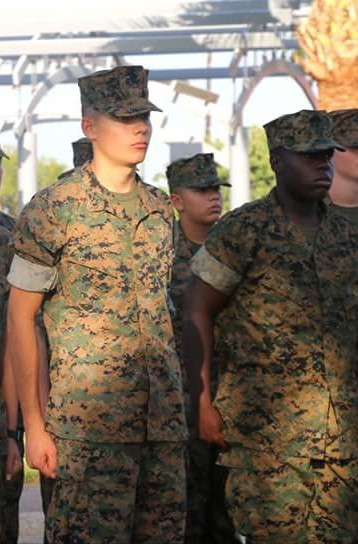
    Frequent commenter GDContractor sends us a photo of his son participating in a Flag Ceremony. The youngster is a high school Junior.

    Your son appears to be a fine young man, amigo. As they might have said where I grew up: “Looks like you raised him right.”

    Enjoy this week’s WOT, everyone.

    Hat-tip to Ex-PH2 for forwarding me the photo used above.

  • Three More Return

    DPAA has identified and accounted for the following formerly-missing US personnel.

    From World War II

    S2c Wilbur C. Barrett, US Navy, assigned to the crew of the USS Oklahoma, was lost at Pearl Harbor, HI, on 7 December 1941. He was accounted for on 2 August 2018.

    From Korea

    PFC Leo J. Duquette, US Army, assigned to L Company, 3rd Battalion, 21st Infantry Regiment, 24th Infantry Division, was lost in South Korea on 11 July 1950. He was accounted for on 8 August 2018.

    PFC John A. Taylor, US Army, assigned to C Company, 2nd Battalion, 24th Infantry Regiment, 25th Infantry Division, was lost in South Korea on 12 August 1950. He was accounted for on 7 August 2018.

    From Southeast Asia

    None

    Welcome back, elder brothers-in-arms. Our apologies that your return took so long.

    Rest easy. You’re home now.

    . . .

    Over 72,000 US personnel remain unaccounted for from World War II; over 7,600 US personnel remain unaccounted for from the Korean War; over 1,500 remain unaccounted for in Southeast Asia (SEA); 126 remain unaccounted for from the Cold War; 5 remain unaccounted for from the Gulf Wars; and 1 individual remains unaccounted for from Operation Eldorado Canyon. Comparison of DNA from recovered remains against DNA from some (but not all) blood relatives can assist in making a positive ID for unidentified remains that have already been recovered, or which may be recovered in the future.

    On their web site’s “Contact Us” page, DPAA now has FAQs. The answer to one of those FAQs describes who can and cannot submit DNA samples useful in identifying recovered remains. The chart giving the answer can be viewed here. The text associated with the chart is short and can be viewed in DPAA’s FAQs.

    If your family lost someone in one of these conflicts and you qualify to submit a DNA sample, please arrange to submit one. By doing that you just might help identify the remains of a US service member who’s been repatriated but not yet been identified – as well as a relative of yours, however distant. Or you may help to identify remains to be recovered in the future.

    Everybody deserves a proper burial. That’s especially true for those who gave their all while serving this nation.

  • Weekend Open Thread

    Friday, 24 April 1959, was just another day. Except, perhaps, at one particular location in Michigan.

    The year 1959 was during the height of the Cold War. The Strategic Air Command existed then, and was flying – a lot.

    On that date, Capt. John S. Lappo was the pilot for one of those SAC aircraft flying. He and his crew were returning to their home base – Lockbourne AFB, OH, which is today Rickenbacker ANGB – from a training mission. They were over Michigan, near the Straits of Mackinac.

    From his cockpit, Capt. Lappo saw this:

    Later, Lappo was asked about what happened next. When asked, he remarked: “. . . . I’ve always wanted to fly under a big bridge. I thought it would be the Golden Gate.”

    That day apparently Lappo decided that Michigan’s Mackinac Bridge would do equally well. So, with a maximum of 155 feet of clearance between the bottom of the bridge and the water . . . he flew his aircraft under the freaking bridge.

    Oh, did I mention he was flying one of these?

    Yep: that day, Lappo was flying a a strategic bomber – a B-47 Stratojet. The aircraft is just over 107 feet long, has a wingspan of 116 feet – and is 28 feet tall at the tail.

    Cojones muy grande. Cerebro? Tal vez no tanto.

    The incident wasn’t widely reported at first. But the word got out, and eventually reached the USAF.

    Predictably, the USAF “was not amused”. Seems Lappo had violated USAF regs by flying under that bridge.

    Capt. Lappo was court-martialed for violating regulations on 10 August 1959. He was found guilty.

    However, in that day and age you still had senior officers who had a sense of humor – and valued risk-taking, at least to a point. So Lappo wasn’t “body slammed” as he might have been today.

    Lappo’s wings were revoked – permanently. He never flew for the USAF again.

    But the USAF didn’t kick Lappo to the curb, either. He was allowed to continue serving. He did – and was promoted twice afterwards, retiring as a Lt. Col. in 1972.

    Lt. Col. John S. Lappo, USAF (Ret), passed away in 2003 at the age of 83. His obituary made prominent mention of his 1959 “underflight” exploit – though it appears to have gotten the date wrong (they seem to have listed his court-martial date as the date he flew under the Mackinac Bridge).

    . . .

    Think I’m kidding about the above? Think again. It’s not a “tall tale” – the above really happened.

    Enough YGBSM! history for today. Enjoy yer WOT, everyone. (smile)

  • Ten More Are Home

    DPAA has identified and accounted for the following formerly-missing US personnel.

    From World War II

    FM1c Millard C. Pace, US Navy, assigned to the crew of the USS Oklahoma, was lost at Pearl Harbor, HI, on 7 December 1941. He was accounted for on 20 July 2018.

    CM3c William L. Kvidera, US Navy, assigned to the crew of the USS Oklahoma, was lost at Pearl Harbor, HI, on 7 December 1941. He was accounted for on 26 July 2018.

    Cpl Claire E. Goldtrap, USMC, assigned to Company A, 2nd Amphibian Tractor Battalion, 2nd Marine Division, Fleet Marine Force, was lost on Tarawa on 20 November 1943. He was accounted for on 23 July 2018.

    Pfc Merton R. Riser, USMC Reserve, assigned to Company K, 3rd Battalion, 8th Marine Regiment, 2nd Marine Division, Fleet Marine Force, was lost on Tarawa on 20 November 1943. He was accounted for on 26 July 2018.

    Pfc Robert L. Zehetner, USMC Reserve, assigned to Company F, 2nd Battalion, 8th Marine Regiment, 2nd Marine Division, Fleet Marine Force, was lost on Tarawa on 20 November 1943. He was accounted for on 23 July 2018.

    1st Lt. Ottaway B. Cornwell, US Army, assigned to 4th Fighter Squadron, 52nd Fighter Group, Twelfth (XII) Air Force, US Army Air Forces, was lost in France on 27 January 1944. He was accounted for on 25 July 2018.

    PFC Leslie E. Shankles, US Army, assigned to C Company, 1st Battalion, 60th Infantry Regiment, 9th Infantry Division, was lost in France on 14 October 1944. He was accounted for on 30 July 2018.

    Capt. Lawrence E. Dickson, US Army, assigned to 100th Fighter Squadron, 332nd Fighter Group, US Army Air Forces, was lost in Austria on 23 December 1944. He was accounted for on 27 July 2018.

    PVT John B. Cummings, US Army, assigned to A Company, 276th Infantry Regiment, 70th Infantry Division, was lost in France on 31 December 1944. He was accounted for on 23 July 2018.

    From Korea

    Sgt Meredith F. Keirn, USMC, assigned to Company F, 2nd Battalion, 7th Marine Regiment, 1st Marine Division, was lost in North Korea on 30 November 1950. He was accounted for on 31 May 2018. (See note.)

    From Southeast Asia

    None

    Welcome back, elder brothers-in-arms. Our apologies that your return took so long.

    Rest easy. You’re home now.

    . . .

    Over 72,000 US personnel remain unaccounted for from World War II; over 7,600 US personnel remain unaccounted for from the Korean War; over 1,500 remain unaccounted for in Southeast Asia (SEA); 126 remain unaccounted for from the Cold War; 5 remain unaccounted for from the Gulf Wars; and 1 individual remains unaccounted for from Operation Eldorado Canyon. Comparison of DNA from recovered remains against DNA from some (but not all) blood relatives can assist in making a positive ID for unidentified remains that have already been recovered, or which may be recovered in the future.

    On their web site’s “Contact Us” page, DPAA now has FAQs. The answer to one of those FAQs describes who can and cannot submit DNA samples useful in identifying recovered remains. The chart giving the answer can be viewed here. The text associated with the chart is short and can be viewed in DPAA’s FAQs.

    If your family lost someone in one of these conflicts and you qualify to submit a DNA sample, please arrange to submit one. By doing that you just might help identify the remains of a US service member who’s been repatriated but not yet been identified – as well as a relative of yours, however distant. Or you may help to identify remains to be recovered in the future.

    Everybody deserves a proper burial. That’s especially true for those who gave their all while serving this nation.

    ————

    Author’s Notes:

    1. An article announcing the recovery, identification, and accounting for of three of these elder brothers-in-arms (FM1c Pace, 1st Lt Cornwell, and PVT Cummings) should have appeared on Sunday, 29 July 2018.

    I drafted an article to that effect. Unfortunately, because of other events ongoing at that time I simply didn’t remember to post it.

    2. Sgt Keirn was accounted for on 31 May, but as best I can tell notice of his accounting was not posted to DPAA’s “Recently Accounted For” page for some time afterwards. I only noted that his name had appeared on DPAA’s list of those recently accounted for this past week.

  • Weekend Open Thread

    No, that’s not a photo of an SR-71 nursing its child after giving birth, nor is it creative work with Photoshop. (smile) It’s a photo of one of the two Lockheed M-21s ever built.

    The M-21 was a 2-seat derivative of Lockheed’s A-12 (the SR-71 was also a 2-seat A-12 derivative) that resulted from the downing of Gary Powers’ U-2 over the Soviet Union on 1 May 1960. It was intended to launch Mach 3+ drones over denied territory having an air defense threat deemed too high to allow manned reconnaissance flights. In the photo above, it’s carrying one such drone.

    The drone it’s carrying is the Lockheed D-21. The D-21 had a range of 3,000 nautical miles, a maximum speed of Mach 3.3+, and an operational altitude of 90,000+ feet. It carried a high-resolution camera, which went active at a specified point or points along its pre-programmed course. The camera, film, and accompanying control unit were contained in a module called a “hatch” (don’t ask me why) which would be ejected post-mission at a predetermined point. The “hatch” was to be recovered; the rest of the drone was designed to self-destruct after ejecting it.

    The launch aircraft and drone were designed under Project Tagboard. Multiple test flights – including four drone launches – were executed as part of the project. The last test flight was a disaster, causing the loss of one M-21 and the death of the aircraft’s “back-seater” Launch Control Officer (the aircraft’s pilot survived). The photo above appears to have been made during one of the early captive test flights.

    After the disastrous final test flight of the M-21/D-21, the project’s operational concept was changed to underwing launch of the drone from a B-52 “mothership” using a rocket booster. (The D-21 was ramjet powered and required acceleration to high speed before its engine would function. Even at top speed, a B-52 simply wasn’t fast enough to do that.) The photo below shows a B-52 “mothership” ship carrying 2 modified drones mounted on their booster rockets.

    The drones modified for underwing launch from a B-52 were designated the D-21B. (There was no D-21A; the original drones were designated D-21 without letter suffix.) A number of these survive today and are on display to the public in various locations – including one on display in the Chinese Museum of Flight in Peking, PRC (more about this below).

    The surviving M-21 “mothership” aircraft is similarly on display at the Seattle Museum of Flight. Though not 100% historically accurate, for display it has a D-21B drone mounted in carry position.

    The B-52 launched version of the drone, the D-21B, was used to overfly China’s nuclear test site at Lop Nor multiple times in the late 1960s and early 1970s under a project codenamed Senior Bowl. Due to various technical problems those overflights were unsuccessful, and the program was terminated. The last of those unsuccessful overflights is believed to have provided the D-21B currently on display in Peking. (smile)

    OK, that’s enough aviation history. Enjoy this week’s open thread, everyone.