Author: Hondo

  • Eight More Are Home

    DPAA has identified and accounted for the following formerly-missing US personnel.

    From World War II

    WT2c Clarence M. Lockwood, US Navy, assigned to the crew of the USS Oklahoma, was lost at Pearl Harbor, HI, on 7 December 1941. He was accounted for on 6 September 2018.

    FM3c Robert J. Bennett, US Navy, assigned to the crew of the USS Oklahoma, was lost at Pearl Harbor, HI, on 7 December 1941. He was accounted for on 6 September 2018.

    RM3c Bruce H. Ellison, US Navy, assigned to the crew of the USS Oklahoma, was lost at Pearl Harbor, HI, on 7 December 1941. He was accounted for on 10 September 2018.

    S1c James W. Holzhauer, US Navy, assigned to the crew of the USS Oklahoma, was lost at Pearl Harbor, HI, on 7 December 1941. He was accounted for on 10 September 2018.

    Pfc Leonard A. Tyma, USMC Reserve, assigned to Company E, 2nd Battalion, 8th Marine Regiment, 2nd Marine Division, Fleet Marine Force, was lost on Tarawa on 20 November 1943. He was accounted for on 4 September 2018.

    TSgt Robert J. Fitzgerrell, US Army, assigned to I Company, 3rd Battalion, 311th Infantry Regiment, 78th Infantry Division, was lost in Germany on 30 January 1945. He was accounted for on 7 September 2018.

    SGT Eugene G. McBride, US Army, assigned to I Company, 3rd Battalion, 311th Infantry Regiment, 78th Infantry Division, was lost in Germany on 30 January 1945. He was accounted for on 12 September 2018.

    PFC Fred W. Ashley, US Army, assigned to C Troop, 2nd Cavalry Reconnaissance Squadron, 2nd Cavalry Group, was lost in Czechoslovakia on 4 May 1945. He was accounted for on 29 August 2018.

    From Korea

    None

    From Southeast Asia

    None

    Welcome back, elder brothers-in-arms. Our apologies that your return took so long.

    Rest easy. You’re home now.

    . . .

    Over 72,000 US personnel remain unaccounted for from World War II; over 7,600 US personnel remain unaccounted for from the Korean War; over 1,500 remain unaccounted for in Southeast Asia (SEA); 126 remain unaccounted for from the Cold War; 5 remain unaccounted for from the Gulf Wars; and 1 individual remains unaccounted for from Operation Eldorado Canyon. Comparison of DNA from recovered remains against DNA from some (but not all) blood relatives can assist in making a positive ID for unidentified remains that have already been recovered, or which may be recovered in the future.

    On their web site’s “Contact Us” page, DPAA now has FAQs. The answer to one of those FAQs describes who can and cannot submit DNA samples useful in identifying recovered remains. The chart giving the answer can be viewed here. The text associated with the chart is short and can be viewed in DPAA’s FAQs.

    If your family lost someone in one of these conflicts and you qualify to submit a DNA sample, please arrange to submit one. By doing that you just might help identify the remains of a US service member who’s been repatriated but not yet been identified – as well as a relative of yours, however distant. Or you may help to identify remains to be recovered in the future.

    Everybody deserves a proper burial. That’s especially true for those who gave their all while serving this nation.

  • Weekend Open Thread

    Hurricane Florence from the ISS, taken OA 12 September 2018

    Hurricane Florence is continuing inland after making landfall this morning on the North Carolina coast. If you’re of a religious bent, please remember all those in the affected area in your prayers.

    If you’re in the affected area, don’t take needless chances. The short-term aftermath of a hurricane is often as dangerous as the storm itself. Post-hurricane flooding IMO is likely to be a serious problem after this storm. Keep yourself informed of local conditions regarding flooding – both current and projected.

    Bottom line: as AW1Ed noted in an earlier article, things can be replaced; people can’t. Make sure your and your loved ones’ safety comes first.

    Weekend open thread time, all. “Be careful out there.”

  • Friday Feel Good Story

    Since DH seems to be AWOL – or perhaps is just on an unannounced vacation with his lovely ex-Soviet spouse – here’s a Friday feel-good story. The linked article is IMO a bit unclear, so I’ll summarize it as best I can.

    Police near Chicago attempted to stop a car at a routine traffic stop. The vehicle took off instead of stopping.

    The police gave chase. Shortly afterwards the police boxed in the vehicle and forced it to stop.

    The perp then got out of the car and started firing a weapon at police, triggering a shootout. During that shootout one officer was shot 4 times.

    A passerby – who had a valid concealed-carry permit – came to the aid of the police during the shootout and fired at the perp with his privately owned weapon. The perp was hit by one round and taken into custody. He’s in serious condition at a local hospital.

    It’s unclear whether the perp was hit by a round fired by the passerby or by police. The President of the City of Cicero commended the passerby for his actions.

    The police officer who was shot was in surgery at the time the original article was written.

    The original article can be found here. Read it if you like.

    . . .

    Remember: gun confiscation control advocates say that the police will “protect everyone”, so no one needs a gun for self-defense. I’d guess the police involved in this incident – as well as the President of the City of Cicero, IL – likely would disagree with that.

  • Ten More Return

    DPAA has identified and accounted for the following formerly-missing US personnel.

    From World War II

    WT2c Edgar D. Gross, US Navy, assigned to the crew of the USS Oklahoma, was lost at Pearl Harbor, HI, on 7 December 1941. He was accounted for on 30 August 2018.

    S1c Earl P. Baum, US Navy, assigned to the crew of the USS Oklahoma, was lost at Pearl Harbor, HI, on 7 December 1941. He was accounted for on 30 August 2018.

    S1c Joseph K. Maule, US Navy, assigned to the crew of the USS Oklahoma, was lost at Pearl Harbor, HI, on 7 December 1941. He was accounted for on 30 August 2018.

    S1c George E. Naegle, US Navy, assigned to the crew of the USS Oklahoma, was lost at Pearl Harbor, HI, on 7 December 1941. He was accounted for on 30 August 2018.

    Pfc Alva J. Cremean, USMC, assigned to the Marine Detachment of the USS Oklahoma, was lost at Pearl Harbor, HI, on 7 December 1941. He was accounted for on 30 August 2018.

    Sgt Millard Odom, USMC, assigned to Company K, 3rd Battalion, 2nd Marines, 2nd Marine Division, Fleet Marine Force, was lost on Tarawa on 20 November 1943. He was accounted for on 30 August 2018.

    1st Lt. John D. Crouchley, Jr., US Army, assigned to 828th Bombardment Squadron, 485th Bombardment Group, 15th Air Force, US Army Air Forces, was lost in Bulgaria on 28 June 1944. He was accounted for on 4 September 2018. (See Note.)

    SSgt. Herbert W. Harms, US Army, assigned to 569th Bombardment Squadron, 390th Bombardment Group, 13th Combat Bombardment Wing, 3rd Air Division, 8th Air Force, US Army Air Forces, was lost in Germany on 16 August 1944. He was accounted for on 4 September 2018.

    From Korea

    SFC James S. Streetman, Jr., US Army, assigned to B Company, 19th Infantry Regiment, 24th Infantry Division, was lost in South Korea on 22 July 1950. He was accounted for on 4 September 2018.

    From Southeast Asia

    Col. Fredric M. Mellor, US Air Force, assigned to 30th Tactical Squadron/ 15th Tactical Recon Forces, was lost in Vietnam on 13 August 1965. He was accounted for on 13 July 2018. (See Note.)

    Welcome back, elder brothers-in-arms. Our apologies that your return took so long.

    Rest easy. You’re home now.

    . . .

    Over 72,000 US personnel remain unaccounted for from World War II; over 7,600 US personnel remain unaccounted for from the Korean War; over 1,500 remain unaccounted for in Southeast Asia (SEA); 126 remain unaccounted for from the Cold War; 5 remain unaccounted for from the Gulf Wars; and 1 individual remains unaccounted for from Operation Eldorado Canyon. Comparison of DNA from recovered remains against DNA from some (but not all) blood relatives can assist in making a positive ID for unidentified remains that have already been recovered, or which may be recovered in the future.

    On their web site’s “Contact Us” page, DPAA now has FAQs. The answer to one of those FAQs describes who can and cannot submit DNA samples useful in identifying recovered remains. The chart giving the answer can be viewed here. The text associated with the chart is short and can be viewed in DPAA’s FAQs.

    If your family lost someone in one of these conflicts and you qualify to submit a DNA sample, please arrange to submit one. By doing that you just might help identify the remains of a US service member who’s been repatriated but not yet been identified – as well as a relative of yours, however distant. Or you may help to identify remains to be recovered in the future.

    Everybody deserves a proper burial. That’s especially true for those who gave their all while serving this nation.
    ———-

    Author’s Note: DPAA apparently “slip-streamed” the entry for Col. Mellor into their “Recently Accounted For” page listing sometime during the past 2 1/2 months. Regrettably, I did not notice that fact until this week.

  • Weekend Open Thread

    Once upon a time, a Zippo lighter saved a piece of aviation history.

    . . .

    During the 1950s, the USAF developed their “Century Series” fighters (F-100 through F-111). They include some of the most famous and iconic US aircraft in history.

    However, as is common in developmental efforts not all of these aircraft saw production. The F-103, F-108, and F-109 never made it past their mockup stages. Three prototypes for a fourth – the F-107A – were built, but the aircraft was not selected for production.


    F-107A Prototype #2, on Display at the
    National Museum of the US Air Force

    Unfortunately, the F-107A was competing against the F-105; it “lost” the competition, and was not produced beyond three prototypes. That decision has been termed one of the USAF’s great mistakes, particularly given the F-105’s record in Vietnam – where over 40% of the entire USAF F-105 inventory (334 of 833) was lost in combat, with another 7.2+% (61 of 833) lost in noncombat incidents. (This propensity for takeoffs without corresponding landings reputedly gave the F-105 its informal nickname “Thud”.)

    One of the three F-107A prototypes was damaged in an aborted takeoff and scrapped. The other two still exist; prototype #1 is currently on display at the Pima Air and Space Museum (Tucson, AZ), while prototype #2 is on display at the National Museum of the Air Force (Wright-Patterson AFB, OH).

    Getting the latter display aircraft to Wright-Patterson AFB would not have been possible without a Zippo lighter.

    . . .

    The F-107A on display at the National Museum of the Air Force was flown there on 25 November 1957. It was at Edwards AFB immediately prior to the flight. It was apparently being prepared for scrapping.

    It was flyable – but had no instrument or cockpit lights. It also had no navigation radios.

    The pilot was Maj. Clyde Good. His plan was to follow an F-100 aircraft also being ferried from Edwards AFB to Wright-Patterson AFB that day (and which presumably was equipped with navigational aids). The F-100 would lead the way; the flight was planned as a one-day trip during daylight hours.

    Unfortunately, that “wonderful individual” Murphy was alive and well – and up to his usual tricks. Maj. Good and his F-107A became separated from the F-100 he was supposed to follow due to issues at a refueling stop.

    He was able to follow roads to the Saint Louis area. However, the issues at the refueling stop had also apparently delayed his flight. So east of Saint Louis . . . Maj. Good lost daylight. He also began to experience undercast conditions, making it impossible for him to follow roads to the vicinity of Dayton.

    Maj. Good was able to determine the correct heading to get him IVO Dayton, OH. But he needed to periodically check his instruments – and he had no instrument or cockpit lights. And since the trip was planned as a day trip, Maj. Good also hadn’t packed a flashlight.

    However, he had packed a Zippo lighter. You guessed it: he periodically “lit it up” to check his instruments.

    Maj. Good’s navigation skills were good enough to get him within radar range of Wright-Patterson AFB. Wright-Patterson air traffic control then vectored him in.

    However, Maj. Good then faced another minor issue: the aircraft had no landing lights.

    No problem. He landed with one hand on the stick and the other holding his Zippo, lit, so he could read the instruments.

    I might fault Maj. Good’s contingency planning somewhat, but the man certainly had nervios de acero – y cojones muy grandes. (smile)

    . . .

    OK, enough oddball aviation history for today. Enjoy the WOT, everyone.

    References:

    https://en.wikipedia.org/wiki/North_American_F-107

    https://www.airspacemag.com/military-aviation/century-series-wannabe-209334/

    https://en.wikipedia.org/wiki/F-105_Thunderchief#Phase-out_and_retirement

    . . .

    Author’s Note: Yes, there was indeed an aircraft designated as the F-110A; it was called the “Spectre”. That was the short-lived USAF designation for the F-4 Phantom II prior to the adoption of the 1962 Tri-Service aircraft designation system.

  • Another Fifteen Are Home

    DPAA was busy this week and has identified and accounted for the following formerly-missing US personnel.

    From World War II

    FM1c Albert U. Kane, US Navy, assigned to the crew of the USS Oklahoma, was lost at Pearl Harbor, HI, on 7 December 1941. He was accounted for on 24 August 2018.

    FM1c Bert E. McKeeman, US Navy, assigned to the crew of the USS Oklahoma, was lost at Pearl Harbor, HI, on 7 December 1941. He was accounted for on 24 August 2018.

    FC1c Edward J. Shelden, US Navy, assigned to the crew of the USS Oklahoma, was lost at Pearl Harbor, HI, on 7 December 1941. He was accounted for on 27 August 2018.

    FM2c Carl D. Dorr, US Navy, assigned to the crew of the USS Oklahoma, was lost at Pearl Harbor, HI, on 7 December 1941. He was accounted for on 27 August 2018.

    MM2c Archie T. Miles, US Navy, assigned to the crew of the USS Oklahoma, was lost at Pearl Harbor, HI, on 7 December 1941. He was accounted for on 24 August 2018.

    RM3c Dante S. Tini, US Navy, assigned to the crew of the USS Oklahoma, was lost at Pearl Harbor, HI, on 7 December 1941. He was accounted for on 29 August 2018.

    S1c Wesley V. Jordan, US Navy, assigned to the crew of the USS Oklahoma, was lost at Pearl Harbor, HI, on 7 December 1941. He was accounted for on 27 August 2018.

    S1c Hale McKissack, US Navy, assigned to the crew of the USS Oklahoma, was lost at Pearl Harbor, HI, on 7 December 1941. He was accounted for on 27 August 2018.

    S1c Richard L. Watson, US Navy, assigned to the crew of the USS Oklahoma, was lost at Pearl Harbor, HI, on 7 December 1941. He was accounted for on 28 August 2018.

    S2c Myron K. Lehman, US Navy, assigned to the crew of the USS Oklahoma, was lost at Pearl Harbor, HI, on 7 December 1941. He was accounted for on 28 August 2018.

    PhM3c William H. Blancheri, US Naval Reserve, assigned to HQ Company, 2nd Battalion, 2nd Marines, 2nd Marine Division, Fleet Marine Force, was lost on Tarawa on 20 November 1943. He was accounted for on 24 August 2018.

    SSgt Richard J. Murphy, USMC Reserve, assigned to 6th Marine Regiment, 2nd Marine Division, was lost on Saipan on 15 June 1944. He was accounted for on 15 August 2018. (See Note.)

    Capt Lester A. Schade, USMC, assigned to Company I, 3rd Battalion, 4th Marine Regiment, was lost on Taiwan on 9 January 1945. He was accounted for on 15 August 2018. (See Note.)

    2nd Lt. Martin F. O’Callaghan, Jr., US Army, assigned to 96th Fighter Squadron, 82nd Fighter Group, US Army Air Forces, was lost in Slovenia on 14 February 1945. He was accounted for on 24 July 2018. (See Note.)

    From Korea

    None

    From Southeast Asia

    CDR James B. Mills, US Navy, assigned to Fighter Squadron Twenty One, USS Coral Sea, was lost in Vietnam on 21 September 1966. He was accounted for on 23 August 2018.

    Welcome back, elder brothers-in-arms. Our apologies that your return took so long.

    Rest easy. You’re home now.

    . . .

    Over 72,000 US personnel remain unaccounted for from World War II; over 7,600 US personnel remain unaccounted for from the Korean War; over 1,500 remain unaccounted for in Southeast Asia (SEA); 126 remain unaccounted for from the Cold War; 5 remain unaccounted for from the Gulf Wars; and 1 individual remains unaccounted for from Operation Eldorado Canyon. Comparison of DNA from recovered remains against DNA from some (but not all) blood relatives can assist in making a positive ID for unidentified remains that have already been recovered, or which may be recovered in the future.

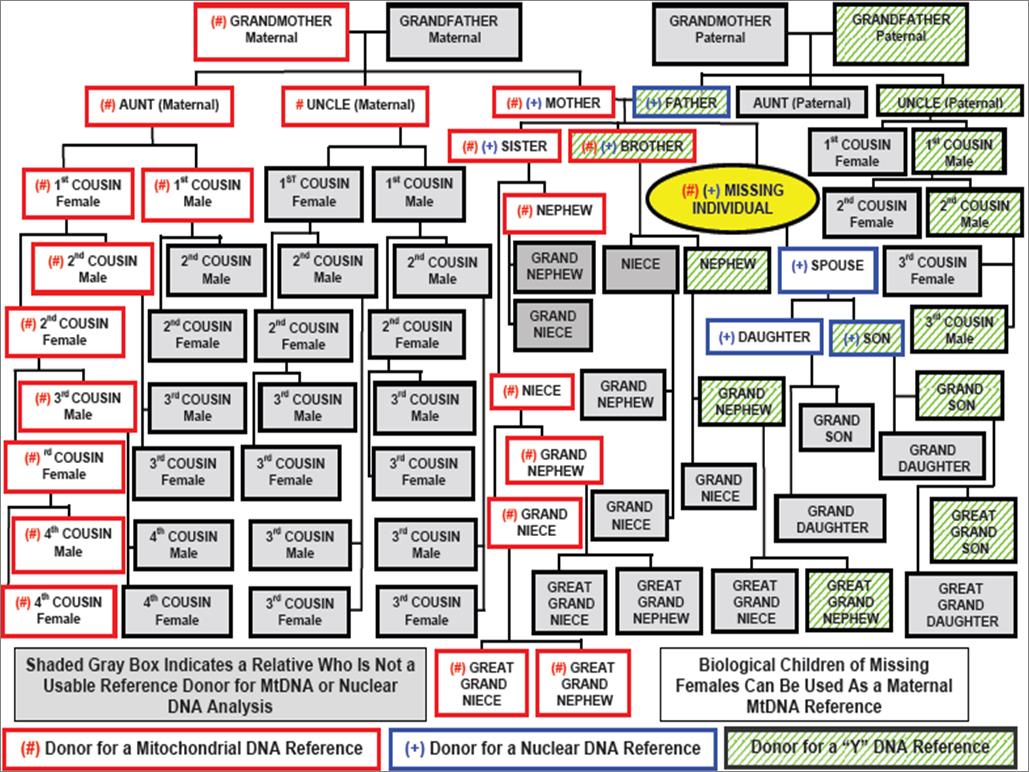
    On their web site’s “Contact Us” page, DPAA now has FAQs. The answer to one of those FAQs describes who can and cannot submit DNA samples useful in identifying recovered remains. The chart giving the answer can be viewed here. The text associated with the chart is short and can be viewed in DPAA’s FAQs.

    If your family lost someone in one of these conflicts and you qualify to submit a DNA sample, please arrange to submit one. By doing that you just might help identify the remains of a US service member who’s been repatriated but not yet been identified – as well as a relative of yours, however distant. Or you may help to identify remains to be recovered in the future.

    Everybody deserves a proper burial. That’s especially true for those who gave their all while serving this nation.
    ———-

    Author’s Note: DPAA apparently “slip-streamed” (e.g., added well after-the-fact) entries for CPT Schade and SSgt Murphy into their “Recently Accounted For” page listing sometime during the past 2 weeks. Similarly, the entry for 2nd Lt. O’Callaghan was apparently added after-the-fact sometime during the past month.

  • Weekend Open Thread

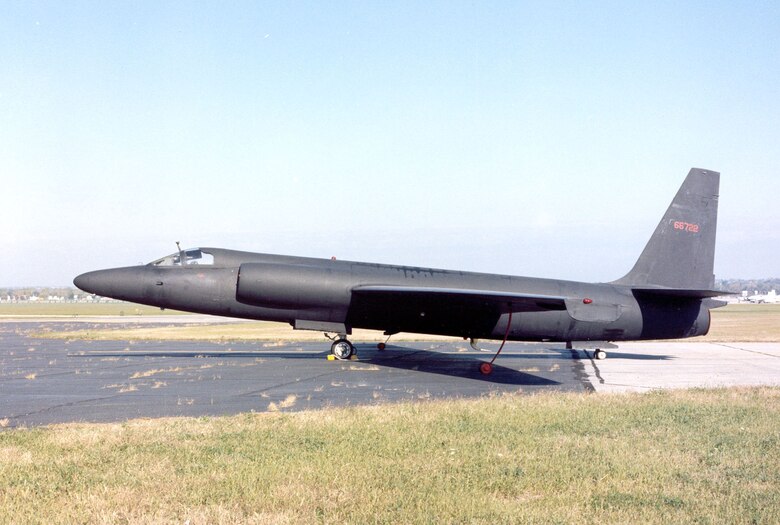
    Most TAH readers know about the May Day 1960 U-2 incident involving Gary Powers. But I’d guess not as many know about a U-2 incident that almost happened roughly 3 1/2 years earlier. It would have been fatal, caused the loss of a U-2, and would have been even more embarrassing to the USA than Powers being shot down had things gone very slightly differently.


    U-2A on display at the National Museum of the US Air Force

    During overflights of the Soviet Union, U-2 pilots for those flights were offered the option of carrying a suicide kit on each mission. (Carrying the kit at all, along with its use if captured, were at the pilot’s option.) By the time Powers’ U-2 was shot down, this kit used a concealed needle and a purified shellfish toxin (saxitoxin).

    However, US overflights of the Soviet Union started in 1956 – nearly 4 years prior to Powers being shot down on May Day 1960. During the earlier years of the program the suicide kit consisted of what was referred to as an “L-pill”. This was a small glass capsule filled with a potassium cyanide solution. Biting down on the pill broke the glass; death due to cyanide poisoning would occur quite shortly afterwards.

    That earlier L-pill reportedly very nearly led to another, earlier U-2 incident over the Soviet Union.

    . . .

    Only one Cold War U-2 flight ever overflew Moscow. That flight occurred on 10 July 1956; it was piloted by Carmine Vito. It wasn’t his only overflight of the Soviet Union.

    Though U-2 pilots were warned that opening their pressure suit’s faceplate while at high altitude was dangerous, many did so anyway – generally in order to eat something small or get a piece of chewing gum during a mission. Vito was one of those who did.

    Vito was reportedly fond of eating lemon drops during U-2 missions. Seems his throat got dry while at altitude, particularly during Soviet overflights. (Ya think!? Hell, during an overflight mission my butt cheeks would have been clenched tight enough to suck half the damn seat cushion up my . . . well, let’s just say I’d have been damned nervous too. [smile]) He found that lemon drops helped, so Vito always put a supply in one of his flight suit pockets.

    This turned out to be a problem on 10 December 1956. On that date, Vito made another overflight of the Soviet Union. And the following reportedly happened (emphasis added):

    About midway through the mission Vito opened his faceplate and popped into his mouth what he thought was another lemon drop. Closing the faceplate, he began sucking on the object and thought it strange that it had no flavor and was much smoother than the previous lemon drops. Although tempted to bite down, he decided instead to reopen his faceplate and see what it was. Spitting the object into his hand, he saw that he had been sucking on the L-pill with its lethal contents of potassium cyanide. Just a thin layer of glass had stood between him and near-instant death. Somewhat shaken, Vito successfully continued the mission and returned safely to base.

    Source: Norman Polman, Spyplane: The U-2 History Declassified, MBI Publishing, 2001, p. 103.

    Yep, you read that correctly. Vito had popped his L-pill into his mouth instead of a lemon drop. Only the fact that Vito refrained from biting down on the L-pill prevented his death – and the U-2 from crashing, very likely over Soviet territory.

    You see, Vito had requested the suicide kit for that mission. And one of the USAF techs involved in mission prep had unknowingly put the L-pill Vito had requested into the same pocket that Vito used for his lemon drops.

    The account is silent regarding whether or not Vito needed new skivvies after the mission. (I certainly would have.) But those early U-2 pilots were masters at “maintaining an even strain” – so maybe not.

    On flights afterwards, the L-pill was reportedly boxed to prevent such a mix-up. And concerns about what might happen if one broke in the cockpit during a mission (with likely fatal results to the pilot) later led to the replacement of the L-pill with the saxitoxin-laced needle carried by Powers on his ill-fated final U-2 flight.

    . . .

    The accuracy of the above account involving lemon drops, an L-pill, and Vito has been disputed. Purportedly Vito himself denied it – but multiple other accounts say it indeed happened, with at least one account indicating Vito was heard after the mission relating the tale to other U-2 pilots.

    Col. Carmine Vito, USAF (Ret), died in Austin, TX, on 27 August 2003. He’s thus no longer around to ask about the story’s accuracy.

    Personally, I believe the incident happened – if not to Vito, then to another U-2 pilot. One thing I’ve learned during my lifetime is that (to paraphrase the late Arthur C. Clarke) not only is reality stranger than fiction – it’s sometimes also stranger than you can possibly imagine.

    OK, enough Cold War history. Enjoy this week’s WOT – and have a great 3-day weekend.

  • Another Four Return

    DPAA has identified and accounted for the following formerly-missing US personnel.

    From World War II

    MM1c Eugene K. Eberhardt, US Navy, assigned to the crew of the USS Oklahoma, was lost at Pearl Harbor, HI, on 7 December 1941. He was accounted for on 20 August 2018.

    PVT WIlliam A. Boegli, US Army, assigned to L Company, 332nd Infantry Regiment, 81st Infantry Division, was lost in the Republic of Palau on 30 September 1944. He was accounted for on 17 August 2018.

    From Korea

    PFC Kenneth B. Williams, US Army, assigned to Heavy Mortar Company, 32nd Infantry Regiment, 7th Infantry Division, was lost in North Korea on 2 December 1950. He was accounted for on 17 August 2018.

    From Southeast Asia

    Col. Richard A. Kibbey, US Air Force, assigned to Detachment 5, 38th Aerospace Rescue and Recovery Squadron, was lost in Vietnam on 6 February 1967. He was accounted for on 13 August 2018.

    Welcome back, elder brothers-in-arms. Our apologies that your return took so long.

    Rest easy. You’re home now.

    . . .

    Over 72,000 US personnel remain unaccounted for from World War II; over 7,600 US personnel remain unaccounted for from the Korean War; over 1,500 remain unaccounted for in Southeast Asia (SEA); 126 remain unaccounted for from the Cold War; 5 remain unaccounted for from the Gulf Wars; and 1 individual remains unaccounted for from Operation Eldorado Canyon. Comparison of DNA from recovered remains against DNA from some (but not all) blood relatives can assist in making a positive ID for unidentified remains that have already been recovered, or which may be recovered in the future.

    On their web site’s “Contact Us” page, DPAA now has FAQs. The answer to one of those FAQs describes who can and cannot submit DNA samples useful in identifying recovered remains. The chart giving the answer can be viewed here. The text associated with the chart is short and can be viewed in DPAA’s FAQs.

    If your family lost someone in one of these conflicts and you qualify to submit a DNA sample, please arrange to submit one. By doing that you just might help identify the remains of a US service member who’s been repatriated but not yet been identified – as well as a relative of yours, however distant. Or you may help to identify remains to be recovered in the future.

    Everybody deserves a proper burial. That’s especially true for those who gave their all while serving this nation.