Category: We Remember

  • 32nd Anniversary of the Beirut bombing

    Republished from 2012;

    Twenty-nine years ago today, 220 Marines, 18 sailors and three soldiers, were killed and sixty Americans were injured when a truck bomb disguised as a water truck penetrated superficial security at the Marine barracks in Beirut with about 12,000 pounds of explosives. Two minutes later, French barracks were struck resulting in in the deaths of 58 paratroopers from the 1st Parachute Chasseur Regiment and 15 others were injured. They were Multinational peacekeeping forces that had been in Beirut since the year before when Israeli forces drove Palestinians from it’s frontier with Lebanon.

    On February 7, 1984, President Reagan ordered the withdrawal of US forces from Lebanon after some light shelling of suspected Shia positions and some brief French air attacks in the Bekkaa Valley. A raid on a camp where Iranian Revolutionary Guards were believed to be training Shia jhadists was called off by President Reagan because little evidence existed at the time that Iran was involved in the bombing.

    The weak responses to the bombing by the US are believed to have emboldened jihadists around the world and contributed to the rise of Hezbollah, the Iranian-backed extremists in Lebanon. Iran has since admitted it’s participation to the attack.

    Michelle Malkin lists the casualties.

    At Together We Served, they’ve posted an online memorial to the casualties that day. Stars & Stripes publishes some of the witnesses’ accounts of that day. In 2004, Iran erected a memorial to the suicide bombers.

  • No Man Left Behind; Gothic Serpent, 22 years

    No Man Left Behind; Gothic Serpent, 22 years

    Editor’s Note: This is republished from 2008, but Operation Gothic Serpent was 22 years ago today. It’s lessons live on and we’re still waging a war that has it’s roots in that battle;

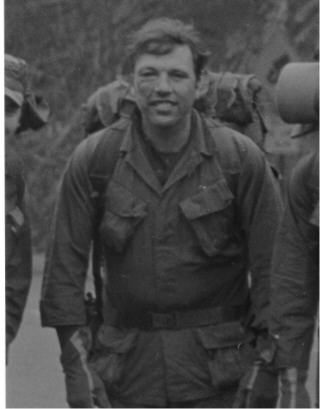
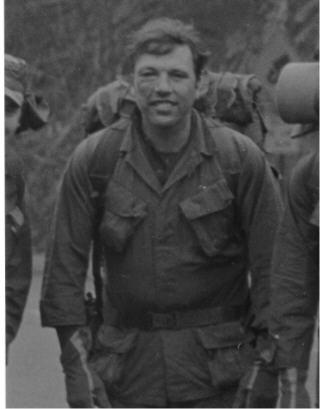
    15 years ago today I lost a dear friend. Tim Martin and I showed up at the Reception Station in Fort Polk Louisiana – I won’t mention the year, the fact that they were still doing Basic and Infantry AIT at Ft Polk should be enough to narrow it down for you. He was a huge, quiet and friendly guy and I felt lucky that we were attached alphabetically through those 16 weeks. I can’t count the times that I’d stumbled and looked up to see his outstretched hand to help me up.

    After those 16 weeks, it four weeks together at the Basic Airborne Course in Georgia then he went to the 2d Ranger Battalion at Lewis and I went to Fort Stewart (yes, the 1st Battalion was actually on Fort Stewart in those days). We went off in our separate directions for four years and we rarely saw each other, but each time we met, the conversation picked up right where it had left off the last time.

    I’ve never met anyone who ever met him that had a bad word for him. He loved the Army, and later I learned he loved his family more.

    I found out his final fate on October 18th, 1993 while I was leaving my last duty station as a retired soldier when I read the casualty list from what is now known as the “Blackhawk Down” fiasco and found his name.

    I spent the next seven years trying to find out what happened to him. I became a member of the fine Paratrooper.net forum, run by my good friend Mark (back when Mark and I were the only participating members). As the forum grew, I put together bits and pieces of the story and some wonderful soul sent his wife Linda my way. She sent me pictures of him which I’ve put on my accompanying website as a memorial to Master Sergeant Tim “Griz” Martin.

    The movie Blackhawk Down did a great job capturing his personality and immortalizing his love for his daughters.

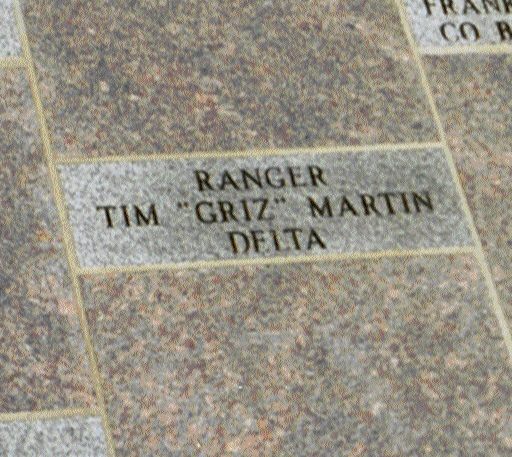
    Another friend at paratrooper.net, 509thTrooper, helped me get Tim a brick at the Ranger Memorial in Fort Benning. Then he went and took a picture of it for me.

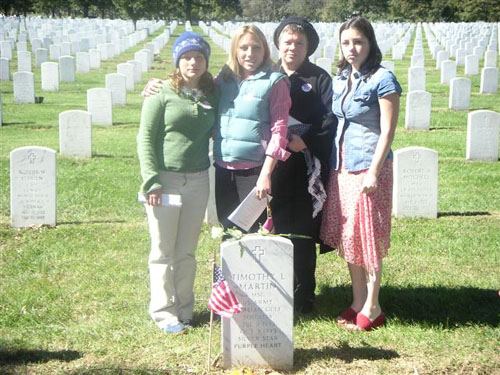
    I stop and visit with Tim at Arlington at least twice every year on Veterans’ Day and Memorial Day and every Christmas when I make my rounds there. And every day I give thanks for men like Tim Martin who are willing to put everything on the line for the rest of us. But today, especially, I save for Tim. And for Linda and their girls who sacrificed everything for us as well.

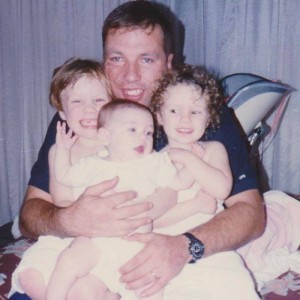
    Tim and his girls

  • Remembering the Past: Follow up.

    About a year or two ago I wrote a article about my Great Uncle who helped out a fellow airman in trouble. I was contacted by the son of the airman that my Great Uncle saved. As I was contacting the family I was thinking about how often the aftermath of a good deed goes unknown. This make only worse when the person that performed the deed is modest. It just seems that all we see today is tragic events and the aftermath that follow. Rarely to we see the results of these good deeds. So when I got this news I was excited to share this news with family, figurative and literally.

  • National POW/MIA Recognition Day, 2015

    National POW/MIA Recognition Day, 2015

    pow_mia_flag

    The President has designated today as National POW/MIA Recognition Day.

    As a grateful Nation, we owe it to all who put on the uniform of the United States to remain unwavering in our promise to them. With hearts full of love, families carry on with an unfillable void, and we stand beside them — one and all — acutely aware of the cost at which our liberty comes. Today and every day, let us renew our pledge to never stop working to bring home the ones they love to the land they risked everything to protect.

    On September 18, 2015, the stark black and white banner symbolizing America’s Missing in Action and Prisoners of War will be flown over the White House; the United States Capitol; the Departments of State, Defense, and Veterans Affairs; the Selective Service System Headquarters; the World War II Memorial; the Korean War Veterans Memorial; the Vietnam Veterans Memorial; United States post offices; national cemeteries; and other locations across our country. We raise this flag as a solemn reminder of our obligation to always remember the sacrifices made to defend our Nation.

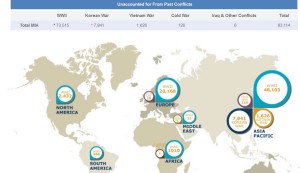
    According to the Defense POW/MIA Accounting Agency (DPAA) there are still more than 83,000 Americans missing;

    Missing Americans

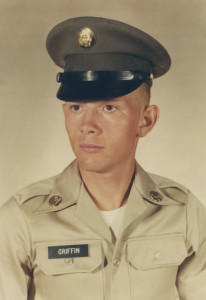
  • Sergeant Rodney Griffin comes home

    Sergeant Rodney Griffin comes home

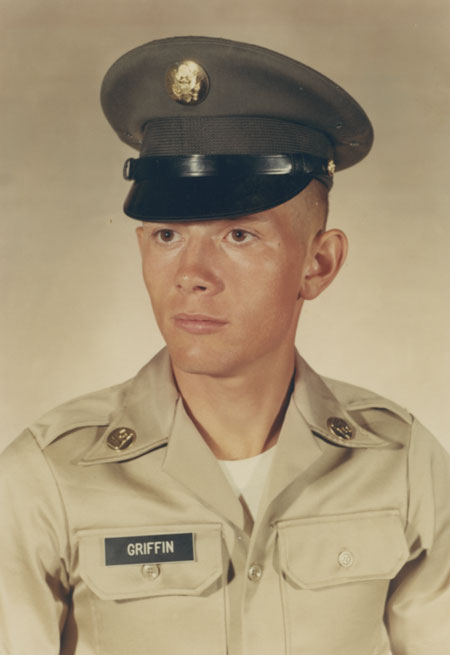
    Sergeant Rodney Griffin

    Hondo told us that he was on his way home, back in February. KOAA reports that his family finally got to lay him to rest after he was missing for 45 years in Vietnam.

    KOAA.com | Continuous News | Colorado Springs and Pueblo

  • Domo Arigato, Mori-sama

    On 6 August 1945, the US dropped the “Little Boy” nuclear bomb on Hirsoshima.  Within days, 140,000 Japanese had died at Hiroshima.

    So had 12 Americans.

    The 12 Americans who died at Hiroshima were POWs. They were all US airmen who had been captured after their aircraft had been shot down.

    They were being held POW in Hirsoshima on the day of the bombing. They’d all arrived there within the previous two weeks.

    Most of the US POWs killed at Hiroshima died immediately.  A few – the number seems to be 2 – initially survived, but died within days of the bombing from radiation sickness.

    The fact that US POWs died at Hiroshima wasn’t publicly acknowledged until the 1970s. Even today it’s not a widely known fact.

    That’s unfortunate. But one individual – an individual who you might not expect – has ensured those POWs end will be properly remembered.

    . . .    

    Shigeaki Mori is a hibakusha – a survivor of the nuclear bombings of Japan. He was a resident of Hiroshima on 6 August 1945. At the time, he was an 8-year-old schoolboy.

    Originally Mori attended a school across the street from the Chugoku Military Police HQ in Hiroshima. The Chugoku Military Police HQ was where the US POWs were held captive; it was approximately 820m from ground zero.

    Less than a week before the bombing, Mori was transferred to another school about 1.5 miles away from ground zero. That chance occurrence almost certainly saved his life.  All US POWs that were not killed outright during the Hiroshima bombing died within a week of radiation sickness.

    When the bomb detonated, Mori was crossing a bridge.  He was blown from the bridge into the water.  He was exposed to radiation then, and afterwards.

    However, unlike many in Hiroshima Mori was not fatally injured.  Mori survived, and grew to adulthood.

    He became a historian.

    During the 1970s, Mori learned that 12 US POWs had died in the Hiroshima bombing. As a hibakusha, one might expect Mori to have muttered something like, “Serves them right” – and gone on with his life.

    He did not. Mori also learned something else: none of those US POWs had been formally recognized as Hiroshima dead.

    Japan maintains a register of those who were killed at Hiroshima and Nagasaki, or who later succumbed to delayed effects from the bombings. This register is managed and maintained by the Mayor of Hiroshima.

    Much like the US Vietnam War Memorial, additional names are added as additional individuals are confirmed to have died in the bombing – and as people continue to die from effects related to the bombings. These names are added to the register on the anniversary of the bombing following either documentation of their death during the bombing or their later death from the bombing’s aftereffcts.  As of 6 August 2011, the register contained 275,230 names.

    Initially, all names on the register were Japanese; the POWs who died at Hiroshima were not listed there.  That was the case in the 1970s.

    Mori decided that the 12 Americans who had died at Hiroshima due to the bombing deserved the same recognition. Over a period of many years, Mori worked to make that a reality.

    The process was a slow one. Today, the registration of persons as Hiroshima dead requires documentation – as well as a request from the family of the deceased. Mori thus had to locate and contact the surviving family of each of the 12 US POWs killed at Hiroshima, then convince them to request their deceased relative be listed on the register.

    In 1998, Mori obtained permission and erected a small copper memorial plaque at the remains of the building at which the US POWs had been housed. In 2002, he completed the registration process for 2 of the US POWs killed at Hiroshima; their names were formally entered in the register of Hiroshima dead.

    By 2009, Mori had completed the registration process for all 12 US POWs killed at Hiroshima. Their names and photographs are now on file at the Hall of Remembrance, located at the Hiroshima National Peace Memorial Hall for the Atomic Bomb Victims.

    This year, Mori achieved another of his aims. At his invitation, Susan Archinski – a niece of Airman 3d Class Normand Brissette, who had been shot down and taken prisoner 10 days before the bombing, and who died at Hiroshima on 6 August 1945 – came to Japan.  This August, she and Mori visited Hiroshima.  I’m certain they each said a prayer for the souls of those US POWs killed at Hiroshima, and for the others who died that day as well.

    . . .

    Any member of the military comes to terms with the possibility of death, and accepts that possibility.  However, each member of the military fears being lost and forgotten. Thanks to Shigeaki Mori – a survivor of the Hiroshima bombing – the 12 US POWs who also died at Hiroshima will never be forgotten.

    Rest in peace, men.

    And though thoroughly inadequate:  Domo arigato, Mori-sama.

    . . .


    Author’s Notes

    1.   The following US POWs died at Hiroshima on 6 August 1945 or died of radiation sickness within days afterwards.

    Captured crew of USAAF B-24 Lonesome Lady:

    • Co-pilot, 2LT Durden W. Looper, 22, of Arkansas
    • Bombardier, 2LT James M. Ryan, 20, of New York
    • Radioman, SGT Hugh H. Atkinson, 26, of Washington State
    • Nose turret, CPL John A. Long, Jr., 27, of Pennsylvania
    • Engineer, SGT Buford J. Ellison, 22, of Texas
    • Ball turret, SSG Ralph J. Neal, 23, of Kentucky

    Captured crew of USAAF B-24 Taloa:

    • Pilot, 1LT Joseph E. Dubinsky, 27, of Pennsylvania
    • Gunner, SSG Julius Molnar, 20, of Michigan
    • Gunner, SSG Charles O. Baumgartner, 30, of Ohio

    Captured crew of USN SB2C Helldiver from the USS Ticonderoga:

    • Pilot, LT Raymond L. Porter, 24, of Pennsylvania
    • Gunner, PO3 Normand R. Brissette, 19, of Massachusetts

    Captured crew of USN F6F Hellcat from the USS Randolph:

    • ENS John J. Hantschel, 23, of Wisconsin

    2.  In 2008, Mori located wreckage from the US B-24 Taloa that had escaped Japanese wartime confiscation as scrap metal.  With assistance from the Asahi Shimbun Mori located and arranged to send portions of that wreckage to a surviving family member of SSG Charles O. Baumgartner, and to a close living friend of SSG Julius Molnar, as tangible keepsakes.   Both of these individuals died at Hiroshima.

    As of last report, Mori was still searching for relatives of the remaining Taloa crew members.

    3.  In addition to the 12 US POW’s killed at Hiroshima, one US soldier was being held POW at Nagasaki on 9 August 1945.  He survived the bombing.

    This individual was Joe Kieyoomia, a member of the 200th Coastal Artillery Unit, US Army – and a Navajo.  It is believed that the concrete walls of his cell provided enough protection to spare him serious injury from both the Nagasaki bomb’s blast and radiation.

    Kieyoomia had been taken prisoner in the Philippines in 1942. Before the Nagasaki bombing, he had survived the Bataan Death March; 3 1/2 years of captivity as a POW, including torture (the Japanese initially thought he was a Japanese-American vice Navajo); survived additional torture when he could not help the Japanese break the Navajo Code Talker codes.  He then survived both the Nagasaki bombing and being abandoned for 3 days afterwards.

    Kieyoomia died in 1997 – at age 77.  He was the only US POW who was also a recognized hibakusha.


    Sources:

    http://www.stripes.com/news/special-reports/world-war-ii-the-final-chapter/wwii-victory-in-japan/after-fight-to-recognize-hiroshima-s-american-victims-historian-meets-one-of-their-relatives-1.360327

    http://www.stripes.com/news/three-u-s-pows-added-to-roster-of-hiroshima-deaths-1.93398

    http://www.stripes.com/news/hiroshima-historian-returns-fragments-of-shot-down-bomber-to-loved-ones-in-u-s-1.85323

    http://www.stripes.com/news/historian-tells-of-americans-pows-killed-at-hiroshima-1.38375

    http://ajw.asahi.com/article/behind_news/social_affairs/AJ201205160089

    https://en.wikipedia.org/wiki/Joe_Kieyoomia
  • Seventy Years Ago . . . .

    . . . shortly after noon, Japanese Standard Time, the Emperor of Japan by radio announced Japan’s acceptance of Allied demands for an unconditional surrender.

    The official acceptance ceremony for the Japanese surrender – which formally ended World War II – occurred 18 days later, on 2 September 1945.

    While today doesn’t mark the formal end of World War II, it does mark the substantive end of most hostilities. So it’s IMO worth remembering.

    Thanks Dad, Uncle Stan, Uncle Joe, Uncle Bill, and Uncle Norb. Though only one of you is still here in body, I’m reasonably sure you’re all here today in spirit.

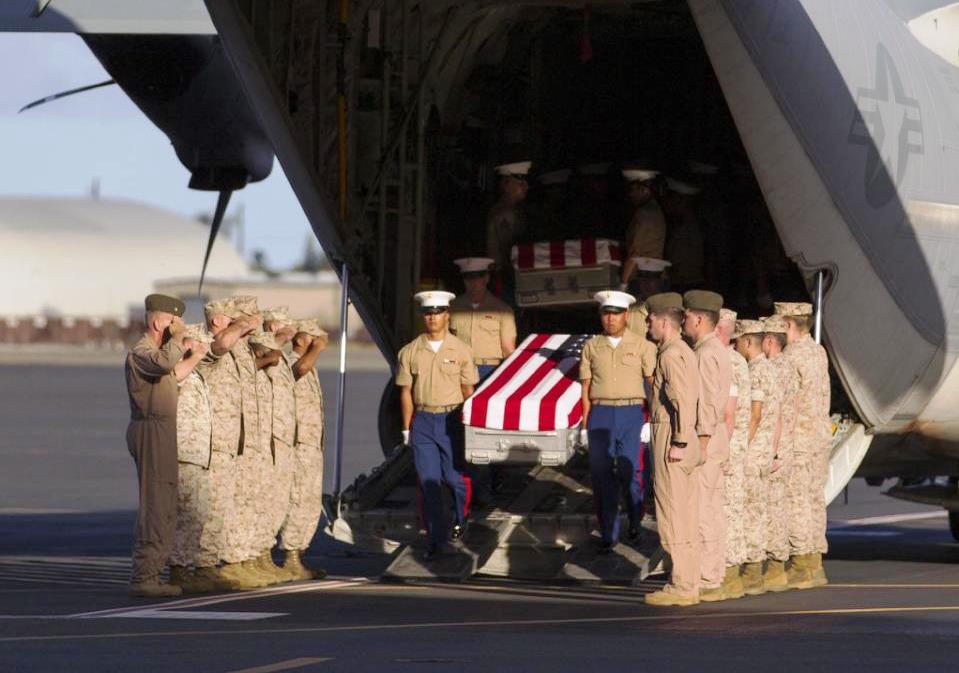
  • 36 heroes recovered from Tarawa battlefield

    36 heroes recovered from Tarawa battlefield

    Remains returned to Pearl

    Last month we talked a little about the discovery of Medal of Honor recipient Alexander Bonnyman’s earthly remains on the island of Tarawa by the private organization Honor Flight. The Associated Press reports that 35 other Marine and Navy heroes of that battle were recovered along with 1LT Bonnyman;

    A ceremony was held Sunday in Pearl Harbor to mark their return.

    History Flight has started identifying the remains, and the Defense POW/MIA Accounting Agency will complete the effort, the Marines said. The Marines plan to return the remains to their families after they’ve been identified.

    The battle began on November 20, 1943 and lasted for 76 hours. About 6400 Americans, Japanese and Koreans died in the battle. When the smoke cleared, only 17 Japanese troops and 129 Korean construction workers had survived the assault of the nearly 4800 troops and laborers that had spent over a year fortifying the island. Almost 1700 Americans died during the attack. About 550 Americans still haven’t been recovered and identified from this single battle.