Category: Historical

  • Twenty-seven years ago tonight

    Twenty-seven years ago tonight

    This is republished from seven years ago;

    February 17, 1991

    Twenty years ago, Task Force 1-41 Infantry attached to the Third Brigade of the 1st Infantry Division (detached from the Third Brigade of the 2d Armored Division (Forward)), was the only US unit in Iraq. We were fifteen clicks from the Saudi border, screening for the sweep west of Schwartzkopf’s “Hail Mary” strategy. For two days we had been watched by Iraqis and had a little contact. with some reconnaissance elements. However on February 17th, my gunner spotted 5 T-55s about 1500 meters in front of our defilade position and I called for indirect fire. The first response came from an Apache unit. The pilot ignored his instruments and fired the wrong grid coordinate, directly to my east, striking two vehicles in our own Scout platoon anchoring our far eastern flank.

    COB6 was the platoon leader of the platoon between my platoon and the Scout elements. Despite the orders of our company commander (a phrase that I use in several other stories involving COB6 and our commander), COB6 pulled his vehicle off the line and rushed to the burning vehicles (An M3 and and an M113 from the GSR unit). COB6 and his crew pulled the broken bodies from the vehicles with burning ammunition exploding around him and shielded the injured Scouts with his own body. Two of those scouts were dead, but three others owe their lives to COB6 and his crew.

    Needless to say we stopped calling for Apaches and after slamming two TOWs into a berm about a hundred meters in front of us, we used artillery fire. My first ever call for indirect fire in total darkness. The following morning, M1s found the T-55s 5000 meters north of the spot my gunner had spotted them.

    These are the names of the members of 1/41 we lost throughout the war;

    Tony R. Applegate
    David R. Crumby
    Manuel M. Davila
    Anthony W. Kidd
    David W. Kramer
    Jeffery T. Middleton
    James C. Murray, Jr.
    Robert D. Talley

    Talley and Middleton were killed that night.

    We had the highest casualty rate of any other infantry unit in the war, I say it’s because both sides were shooting at us.

    And, oh, yeah, my granddaughter celebrates her 27th birthday today, too.

  • 50th anniversary of the Tet Offensive

    For those of you who were there at the time, I’m reposting this from last year.

    The Lunar Festival of Tet in Vietnam begins every year in late January.

    At 02:00 hours local time on the morning of January 30, 1968, the NVA began shelling every ville, town and military base in South Vietnam. It had been planned for months.

    For those who were there and survived it, and those who did not….

    CBS offers the following:

    https://www.cbsnews.com/news/remembering-1968-the-tet-offensive-photographer-john-olson/

    If you were there, please give us your story.

  • Khe Sanh 50th anniversary

    Yesterday marked the 50th anniversary of the beginning of the Battle at Khe Sanh, Vietnam. 45,000 US Army soldiers and Marines were besieged by more than 100,000 North Vietnamese Army troops for nearly five months.

    Veterans in Oroville, California marked the anniversary yesterday, according to the Oroville News in a link sent to us by Rob.

    The luncheon was put on by Khe Sanh veterans Craig Tourte and Tom Horchler. Many of these gatherings have reunited other Vietnam and Khe Sanh veterans. It’s a shared camaraderie that seems to root deeper each year.

    “Even if you’ve never met a guy before, you start talking, and it’s like you’ve known him forever,” Tourte said.

    A booming bagpipe rendition of the “Marine Corps Hymn” kicked off the casual festivities. Many were accompanied by family members and loved ones, and those flying solo to the event were happy to reconnect with old friends. While many in attendance were local, others traveled from Sacramento, Rocklin and the Bay Area to join their brothers.

    Though Sunday’s reflections brought up tough memories of loss and talk of handling post-traumatic stress disorder, not all tales were sad.

    From table to table, one could easily catch snippets of war stories that mirrored something from a movie, mixed with the chatter of buddies catching up and inside jokes that would resonate only with a Marine were shared between each gentleman.

  • Saving the World, Quietly – Part 2

    Over ten months ago, I wrote an article about an incident during the Cuban Missile Crisis. In that article, I discussed how then-Captain Vasili Alexandrovich Arkhipov of the Soviet Navy may have literally saved the world from global thermonuclear war during the height of that crisis.

    History has a way of repeating themes from time to time. And in an incident nearly 21 years later, another relatively senior military officer – again, one from the Soviet Union – may well have prevented global thermonuclear war a second time.

    . . .

    The time: late September 1983. Relations between the US and USSR were strained – probably at their lowest point since the Cuban Missile Crisis.

    Andropov was the Soviet Premier; Reagan was POTUS. The US Reagan-era defense buildup was in high gear. Reagan’s rhetoric towards the Soviet Union was harsh; it was largely taken at face value by Soviet leadership. SDI (AKA “Star Wars”) had been announced. USAF and USN operations near the borders of the Soviet Union were at high levels, and were often intentionally provocative. Deployment of GLCMs and Pershing missiles – each capable of hitting targets in the Western USSR with nuclear warheads – in Europe were scheduled to begin within the next 2 months.

    And roughly 3 weeks previously, a civilian Boeing 747 airliner (KAL 007) had strayed over Sakhalin Island. It had been intentionally shot down by Soviet air defense forces.

    The bottom line: Soviet leadership was seriously tense. They may have in fact believed that the US was preparing for a surprise attack on their nation. Consequently, the Soviet military – including Soviet strategic nuclear forces – was in an enhanced state of readiness; some have termed it being on “hair-trigger alert”.

    It was at this point – on 26 September 1983, to be precise – that the world as we knew it could have ended. One man’s level-headed actions prevented that possibility.

    . . .

    The man in question was Lt Col Stanislav Yevgrafovich Petrov of the Soviet Air Defense Forces. On that date, he was the watch officer at Serpukhov-15 – the Soviet Air Defense Forces command post charged with monitoring the Soviet Union’s then-new ballistic missile warning satellite system, Oko.

    Lt Col Petrov received an Oko alert noting the launch of a US Minuteman missile. The impact was projected to be within the USSR.

    A short time later, he received a second alert. This second alert indicated the launch of up to 5 additional missiles.

    Lt Col Petrov considered the situation. This didn’t make sense to him. A US nuclear first strike would be expected to launch literally hundreds of missiles, not 5 or 6. Launching that few missiles as an initial attack would be nonsensical; it would not destroy the Soviet Union’s land-based missiles and would thus allow full retaliation by the Soviet Union.

    So Lt Col Petrov advised his superiors of the alert, and stressed that in his opinion it was a false alarm. He convinced them. (Some accounts indicate he sat on this information instead of notifying his superiors. I tend to disbelieve this, as Soviet procedures would have required him to advise superiors of a launch indication; he’d have been disciplined for failing to follow those procedures had he intentionally withheld information concerning a launch warning.)

    Why was this critical? Because Soviet strategic doctrine at the time apparently endorsed “launch on warning” in order to prevent destruction of Soviet land-based missiles in the event of a US preemptive strike. The time window between Soviet detection of a US attack and the time retaliation would be ordered by Soviet leadership was thus quite short. And due to the strained relations between the US and USSR, people who knew Andropov well indicated years later that Andropov indeed thought the US was preparing to launch a preemptive attack on the Soviet Union in late 1983 – and was fully prepared to retaliate immediately if he was notified such an attack was inbound.

    . . .

    Lt Col Petrov’s assessment proved correct; the incident was in fact a false alarm. A previously-unknown combination of high clouds (reflecting sunlight) and the exact position of the particular Oko satellite raising the alarm in its high-angle orbit (the Oko constellation used Molniya orbits) combined to mimic a missile launch signature. The Soviets then developed a work-around procedure to screen out this type of false indication.

    . . .

    Lt Col Petrov was not commended for his actions during the incident. Instead, while he was held to have “acted properly”, he also received a minor reprimand for having “insufficienly documented his actions” during the incident in the command center’s duty log. As Petrov put it, this was because he had only two hands – and one was holding a telephone while the other was operating an intercom during the incident. He had no third hand with which to write. (smile)

    Petrov chose to leave the Soviet military the next year, and went to work for the agency that had developed Oko. Some years later, he retired in order to care for his terminally ill wife.

    The incident was not generally known in the West until it was disclosed in a senior Soviet general’s memoirs published in the 1990s. Afterwards, Petrov indeed received many accolades from foreign entities for his actions during the September 1983 incident. And in 2014, a Danish film about the incident was made. The film’s title? Appropriately, it was called, “The Man Who Saved the World”.

    Stanislav Yevgrafovich Petrov passed away on May 19, 2017. His death received little public notice until September of last year.

    Rest in peace, Stanislav Yevgrafovich Petrov. The world owes you much.

    And though you were an adversary, you have my thanks – and my respect.

    . . .

    (Author’s Note: the Wikipedia articles concerning Petrov and the 1983 incident contain some additional information. Both appear to be decent articles; they’re linked above.)

  • The Legacy of the Kaiser’s War

    We’re nearing the end of the 100 years since the start of World War I. The London Telegraph recently ran a fine series of twelve articles by historian Saul David on the subject, with particular attention to the Kaiser’s need and strange desire to acquire control of the European continent by engaging in warfare that would give him control of the Balkans and ports on the Black Sea, with entry into the Mediterranean through the Straits of the Bosporus and the Dardenelles, as well as control of the western seaboard and ports of most of Europe.

    Kaiser Wilhelm II wanted to do empire-building, but he failed. He used the assassinations of the Archduke Franz Ferdinand of Austria-Hungary and his wife as an excuse to start his roll across Europe to acquire control of the European continent and its ports, with assistance from Franz Joseph of Austria-Hungary. Most of what I’ve found was glossed over in my high school history classes as if it didn’t matter. But it did matter. If you want to understand what followed slightly more than a decade after the end of World War I, and why things are the way they are now, you need to pursue this history.

    This is a link to the archives of the London Telegraph’s original articles about World War I, published as the war progressed. http://www.telegraph.co.uk/news/ww1-archive/

    Here’s a link to historian Saul David’s series about the causes of World War I. He takes a closer look at how that war progressed.

    http://www.telegraph.co.uk/history/world-war-one/inside-first-world-war/part-one/10271886/who-started-world-war-one.html

    I’m just glad  that there is access to some of this now, because otherwise, it might sit moldering in drawers and on bookshelves, ignored by everyone but the curious like me.  It’s my impression that the German troops went into the battlefield with no real understanding of why they were there. They were simply ordered to the front to fight a war that had no valid purpose, such as defense, behind it. The call-up for mobilization was done under orders of the Kaiser, who had fired Otto von Bismarck. There is, in that second Telegraph link, an article with a photograph that shows both military and civilian Germans in a crowd, listening to the mobilization orders, some of them looking rather bewildered. They answered the call, but to what purpose?

    I think that the archived photo collections now online at those links, and those in this paragraph, can give you a better view than a single photo posted here. The famous Christmas Eve truce, a spontaneous pause in warfare by troops on both sides of the front lines, did take place on Dec. 24, 1914. The TIME collection at this link includes that brief pause in fighting.  http://time.com/3643889/christmas-truce-1914/

    World War I was a war of aggression by Germany, the same as was WWII, with the assassination of Archduke Franz Ferdinand of Austria-Hungary as the excuse to make war. Germany had earlier signed a secret treaty of alliance with the Ottoman government in Turkey. Franz Joseph of Austria-Hungary had already declared war on Serbia and the Black Hand over the assassination of Franz Ferdinand and his wife by Gavrilo Princip, a Serb and member of the Black Hand, and wanted Germany’s aid in that conflict. The Kaiser gave it willingly.

    Britain, France and Russia had formed the Triple Entente before 1914, and Germany, Austria-Hungary, and Italy had formed the Triple Alliance.

    The rulers of Britain (George V), Russia (Tsar Nicholas) and Germany (Kaiser Wilhelm II) were cousins. They knew each other quite well. The Kaiser, however, despised everything British including his cousin George V, did not really like his cousin Nicholas II, and had a love-hate relationship with his own mother, Queen Victoria’s daughter Vicky. But now, without the previous interference of his British grandmother, the late Queen Victoria, nothing stood in the way of his starting what amounts to a family quarrel, one that cost many millions of lives in the end by warfare and the post-war spread of the Spanish flu, destroyed the legitimate governments of Russia and Germany, and opened the paths to Hitler’s Reich and Lenin’s establishment of the Communist party as the ruling government in Russia.  See the Telegraph link above for the archived 1917 articles for Lenin’s tactic toward his British ‘allies’.  An enlightening Telegraph headline from 1917 says that Lenin barred British citizens from leaving Russia.

    In Germany, Count Ferdinand von Zeppelin made Ludwig Dürr his chief designer at the Zeppelin factory when the Count’s first engineer, Hugo Kübler, who had designed LZ-1, refused to fly in the airship he had created, which was named after Zeppelin.

    The Kaiser saw the airships as more useful than airplanes because of their ability to carry large loads of munitions at low cost, and to go long distances at great heights with no interference. Planes of that time period such as the Sopwith Camel were unable to reach the heights at which the Zeppelins were used for bombing runs – as much as 11,000 feet – which meant that a machine gunner posted on a Zeppelin could easily take out a biplane before it ever got near the airship.

    Franz Shrapnel was the developer of bombs carrying up to 2,000 pounds of shrapnel carried by the Zeppelin fleet. The largest such bomb was a 3,000 pounder. The airships were manned by machine gunners who could shoot down the planes trying to attack them during bombing runs. This worked until the UK’s biplanes were equipped with stronger motors that allowed them to climb high enough to attack the airships. (I thought you all might like to know the source of the term ‘shrapnel’.)

    In Waiting For Daylight, H.M. Tomlinson describes the sight of the nighttime aerial bombardment as almost a distraction from seeing the Pleiades in the London night sky, when everyone had gathered in the streets because shrapnel bombs were falling from the sky, and searchlights were trying to find the airships. He reported that he could see sparks of fire on strings descending to the earth, and knew that they were shrapnel bombs brought across the Channel from Europe. There was a ‘lights out’ policy in effect at that time, to try to hinder the aerial bombing runs from the Germans, but the pilots of the Zeppelins used the ‘glow’ of the Thames as a guide for bombing raids. This was from 1915 to 1916.

    The Battle of Cambria ended 12-4-1917.  It was the successful use of tanks at Cambria by the British Army that brought this to a quick conclusion, much more successfully than the same attempts in the sticky, muddy fields of Flanders in the 1916 Battle of the Somme. They didn’t function at Somme as well as they could have. The tanks, running on treads copied from farm tractors, were far more successful at Cambria.

    This introduction of British-built tanks was the real start of mechanized land warfare. J.R.R. Tolkien’s first sight of them and their destructive firepower partly inspired his descriptions of war losses and battle scenes in Lord Of the Rings.

    While the United States avoided the European War in the beginning, there was a massive pro-war sentiment in the USA, that flared into demands addressed to Woodrow Wilson to enter that War when the Lusitania was sunk by a torpedo from a German U-boat in the Atlantic. H. M. Tomlinson observes that Walt Whitman’s poems in Leaves of Grass somehow indicated that the USA was involved long before we arrived in Europe, and therefore, he could no long refer to Americans as latecomers to the War. Since the poems in the section titled ‘War Poems’ seem to have been written post-Civil War, I’m not sure how Tomlinson derived that connection, but I’ll accept it.

    Essentially, Wilhelm II, who had fired Otto von Bismarck and let his leading Generals von Hindenburg and Ludendorff dictate policy, was an incompetent leader at best and a publicity-seeking attention hound, letting those two run the war while he himself lost the support of the military and the public, and was eventually forced to abdicate. His cousin, Tsar Nicholas II, was the same – out of touch with his own people and the military, making it far too easy for a malignant creature like Lenin to imprison him and his family and execute them by a firing squad. Wilhelm’s sloppy ideas of management resulted in his forced abdication from the German government and opened the door for Hitler’s seizure of power and the rise of the Reich.  Nicholas’s incompetence and complete disconnection from the Russian people led to his overthrow and the slaughter of him and his entire family, while Lenin drove his brutal, murderous path into existence. And we know well the legacy left to us which followed these events.

    I think H.M. Tomlinson describes it quite well:

    “When the crafty but ignorant Russian generals got from the Czar the order for mobilizing the armies, and issued it, they did not know it, but that was when they released Lenin. And who on earth can now inveigle that terrific portent safely under lid and lock again?” – H.M. Tomlinson, Waiting For Daylight, 1922

    Who, indeed?
  • 28 years since Just Cause

    28 years since Just Cause

    Just cause

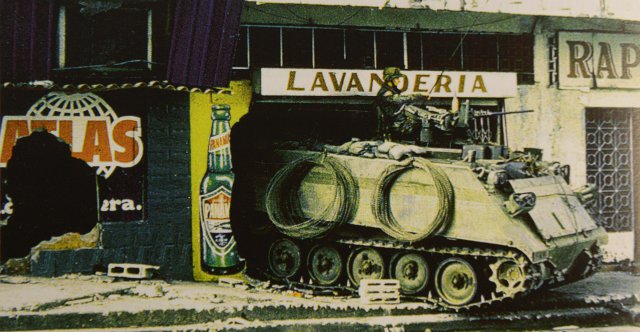
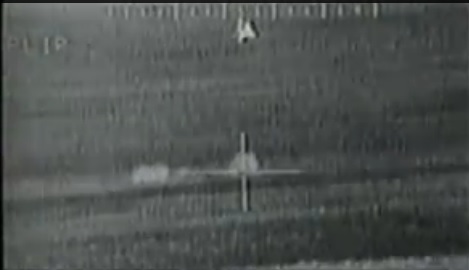
    Yup, it’s been 28 years since we started operations to remove Manuel Noriega from Panama. It’s the first celebration of the anniversary without Manuel Noriega who passed to his reward in May.

    The folks we lost;

    ARMY

    Staff Sgt. Larry Barnard 3/75th Rangers Hallstead, Pa.
    Pfc. Roy D. Brown Jr. 3/75th Rangers Buena Park, Calif.
    Pvt. Vance T. Coats 82nd Airborne Division Great Falls, Mont.
    Spec. Jerry S. Daves 82nd Airborne. Division Hope Mills,N.C.
    Sgt. Michael A. Deblois 82nd Airborne Division Dubach, La.
    Pfc. Martin D. Denson 82nd Airborne Division Abilene,Texas
    Pfc. William D. Gibbs 7th Infantry Division. Marina, Calif.
    Spec. Phillip S. Lear 2/75th Rangers Westminster, S.C.
    Spec. Alejandro Manriquelozano* 82nd Airborne Division Lauderhill, Fla.
    Pfc. James W. Markwell 1/75th Rangers Cincinnati, Ohio
    Cpl. Ivan M. Perez 5th Infantry Division Pawtucket, R.I.
    Pfc. John M. Price 2/75th Rangers Conover, Wis.
    Pfc. Scott L. Roth 89th Military Police Brigade Killeen, Texas
    Pvt. Kenneth D. Scott 5th Infantry Division Princeton, W.Va.
    1st Lt. John R. Hunter 160th Aviation Victor, Montana
    CWO2 Wilson B. Owens 160th Aviation Myrtle Beach,S.C.
    CWO2 Andrew P. Porter 7th Infantry Division Saint Clair, Mich.
    Pvt. James A. Taber Jr. 82nd Airborne Division Montrose, Colo.

    NAVY

    Lt. jg John Connors Special Warfare Group Arlington, Maine
    BM1 Chris Tilghman Special Warfare Group Kailua, Hawaii ENC
    Donald McFaul Special Warfare Group Deschutes,Ore.
    TM2 Issac G. Rodriguez III Special Warfare Group Missouri City,Texas

    MARINE CORPS

    Cpl. Garreth C. Isaak 2nd Marine Division home town unknown.

  • Betio Island 74th Anniversary

    Betio Island 74th Anniversary

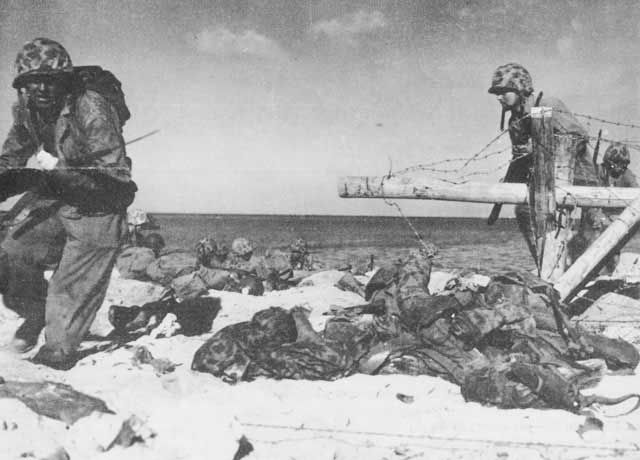
    David reminds us that the battle for the Tarawa Atoll began 74 years ago yesterday on Betio Island. It’s become better known to us because of the efforts of the folks at History Flight to recover the remains of US combatants of the battle. More than 6400 Japanese, Koreans, and Americans died during the 76 hours of combat.

    From Business Insider;

    Betio’s defenders deployed steel tetrahedrons, minefields, and dense thickets of barbed wire. Walls of logs and coral surrounded much of the island. Machine guns, rifle pits, and anti-tank ditches were often integrated into the barricades, and many emplacements, like pillboxes, were built to have converging fields of fire.

    Anti-personnel and anti-vehicle mines were scattered around the island, its lagoon, and its reef. Japanese forces on the island also had naval guns, coastal-defense guns, as well as field artillery and howitzers.

    The 2d Marine Division and the 27th Infantry Division, about 35,000 US troops, assaulted the beach in the first amphibious landing seriously contested by the 4600 Japanese defenders, soldiers and laborers. Only 17 Japanese soldiers and 129 laborers were taken prisoner. 500 “pill boxes” faced the attackers along with about 40 artillery pieces and four large Vickers 8-inch guns that the Japanese had bought from the British during the Russo-Japanese War.

    History Flight and DPAA are still sorting through the remains of more than 2,000 casualties left there after the battle, including those of Alexander Bonnyman, recipient of the Medal of Honor for his actions on Betio Island.

  • Japan’s WMD plans

    From the UK’s Daily Star, Japan’s plan during the last days of World War Two to unleash the Bubonic Plague on the United States with thousands of rats infested with fleas carrying the disease. The operation was codenamed Operation Cherry Blossoms at Night;

    Lead historian Lim Shaobin acquired Japanese war records to discover rats and fleas were transported from the base in Singapore.

    Some of the rats loaded with the plague-carrying fleas were unleashed in China – killing more than 12,000.

    Japan used six different plague attacks on China during the war, with the end game being a strike on the US.

    Bubonic plague is spread by infected fleas and causes fever, the decay of flesh, vomiting blood and seizures.

    So I guess this reveal still won’t justify the use of atomic bombs to some people, but the use of weaponized fleas would have far-reaching effects on the US population, perhaps lasting until present days.

    According to the article, Southern California was the target, specifically the San Diego area.

    I still won’t buy a Japanese car.