Category: Historical

  • Socialism, History – and “An Inconvenient Truth”

    Here are two quotes.  They’re both from the same individual.  Before I tell you who, take a guess.


    Socialism as the final concept of duty, the ethical duty of work, not just for oneself but also for one’s fellow man’s sake, and above all the principle: Common good before own good, a struggle against all parasitism and especially against easy and unearned income.


    We are socialists, we are enemies of today’s capitalistic economic system for the exploitation of the economically weak, with its unfair salaries, with its unseemly evaluation of a human being according to wealth and property instead of responsibility and performance, and we are determined to destroy this system under all conditions


    So, who did you guess?  Lenin?  Marx?  Eugene Debs?  Some other famous Socialist or Communist figure from history?

    Well, they are indeed direct quotations from a Socialist historical figure.  But he’s not one that usually comes to mind.

    The speaker in each of the above was none other than . . . Adolph Hitler.  The quotes above are historically verified, and they show insight into just how Hitler viewed himself:  as a Socialist, with a mission to implement his concept of Socialism in his society.  His views concerning the desirability of Socialism were essentially the same as those of Lenin and Stalin, as were his methods.   Even his economic policies were broadly similar.

    Not convinced?    Here are a few more verified historical quotes from Hitler regarding his views on how his movement (the Nazi party) embraced Socialism.  I’ve added a bit of emphasis here and there.


    We are convinced that socialism in the right sense will only be possible in nations and races that are Aryan, and there in the first place we hope for our own people and are convinced that socialism is inseparable from nationalism.


    After all, that’s exactly why we call ourselves National Socialists! We want to start by implementing socialism in our nation among our Volk! It is not until the individual nations are socialist that they can address themselves to international socialism.


    For we [National Socialists] too are considered ‘upstarts’ and ‘leftists’ by those same reactionaries. They are only too eager to apply such terms as ‘enemies of the fatherland,’ ‘Bolsheviks,’ and ‘inferiors.’”


    Since we are socialists, we must necessarily also be antisemites because we want to fight against the very opposite: materialism and mammonism . . . . How can you not be an antisemite, being a socialist!  (bold emphasis present in source)


    However, Hitler’s version of Socialism was different from that of the Soviets in one key respect.  Hitler viewed the implementation of Socialism as most properly being an internal national matter.  He rejected internationalist ventures (except for conquest, of course; like the Soviet Union, he wanted to expand his empire).  Lenin and Stalin had the opposite viewpoint.  Plus, Hitler appears to have been more extremely racist – as well as closer to being absolutely full-blown bat-sh!t crazy – than either Lenin or Stalin.

    So, whenever someone trots out the claim that Nazis were “not Socialists” or were “a creation of the Right”, show them the above quotations from Hitler and ask them to explain them.  And if their heads don’t immediately explode and they instead begin to splutter incoherently or spout inane leftist apologia, just smile – and walk away.

    The claim that National Socialists were “not Socialists” and “were a creation of the Right”,  in plain language, is bullsh!t.  The Nazis were simply yet another band of authoritarian Socialists who managed to attain political power.  Along with extreme nationalism, the Nazi movement had Socialist (as well as racist) principles as its core beliefs.

    Nazi economic policies were Socialist in nature and were and centrally-directed.  Their police-state methods were effectively the same as those used by the Soviet Union during the Great Terror.  Ditto their suppression of ethnic minorities and political “undesirables”, as well as their use of mass imprisonment and mass murder.  And they created one of the most repressive – and murderous – authoritarian Socialist police states in human history.

    Bottom line:  the Nazis saw themselves as a Socialists.  Their founder openly admitted it.  Their policies. tactics, and methods were similar to – or the same as – those used by other authoritarian Socialist regimes.  Both the Nazis and Soviet Communists sought world domination under Socialist rule.  The only essential difference between them was who would rule the resulting Socialist world each sought to create.


    Author’s Note:  For convenience, the above quotes were taken from WikiQuote.  However, authoritative primary sources for each quotation are cited there and can be used for verification of the quotes.  Feel free to do so if you like.

    And spare me any leftist apologia explanations that “those quotes don’t really mean what they say”.  Hitler’s words above speak for themselves quite clearly.  He was indeed a Socialist – of a particularly evil, authoritarian, and racist bent.
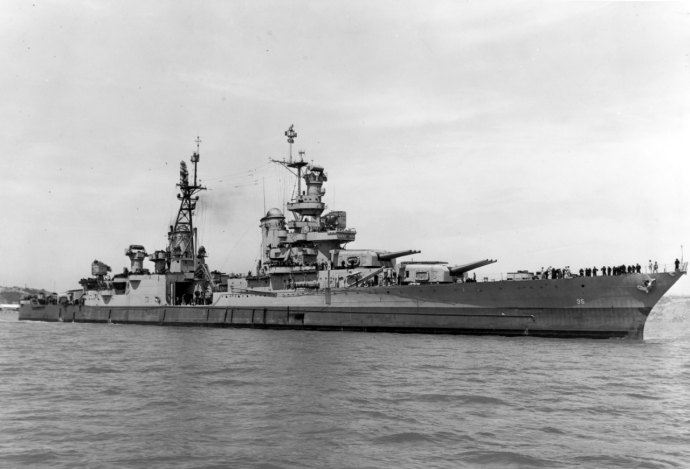
  • INDIANAPOLIS found

    INDIANAPOLIS found

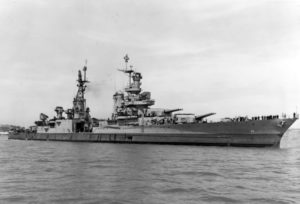
    On July 30, 1945, the Portland-class heavy cruiser USS INDIANAPOLIS (CA-35) was returning from delivering parts for the “Little Boy” atomic bomb when it was struck by two torpedoes fired by the Japanese submarine I-58. The ship sank in about 12 minutes with about 300 crew members aboard. About 900 would survive the initial sinking, but by the time they were rescued, five days later, only 317 of the 1,119 total crew were recovered. The story of their survival was featured in the movie “Jaws”.

    According to MSN, entrepreneur and billionaire Paul Allen claims to have found the wreckage of the INDIANAPOLIS 18,000 feet below the ocean’s surface.

    “To be able to honor the brave men of the USS Indianapolis and their families through the discovery of a ship that played such a significant role in ending World War II is truly humbling,” Allen said in a statement. “As Americans, we all owe a debt of gratitude to the crew for their courage, persistence and sacrifice in the face of horrendous circumstances. While our search for the rest of the wreckage will continue, I hope everyone connected to this historic ship will feel some measure of closure at this discovery so long in coming.”

    Allen’s team is still surveying the site of the wreckage and plans to conduct a live tour of the wreckage in the next few weeks. The crew is working with the Navy and plans to honor the remaining 22 USS Indianapolis crew members and families of crew members.

    From Stars & Stripes;

    While others have searched for Indianapolis in the past, the Navy release said Allen used a 250-foot R/V Petrel with state-of-the-art subsea equipment capable of diving to more than 19,600 feet.

    The Navy said the exact location of the ship will remain confidential and restricted.

  • 77th National Airborne Day

    COB6

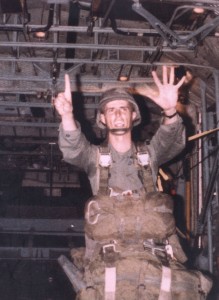
    That’s COB6 giving you the six minute warning above.

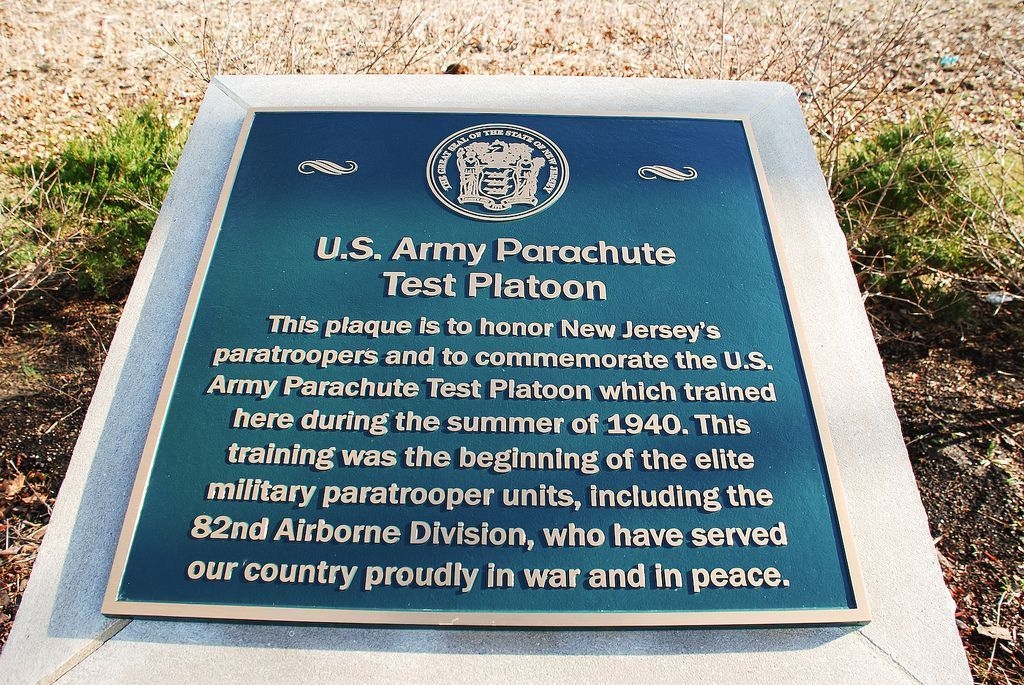
    National Airborne Day is set on the day of the first parachute jump conducted by the Army’s Parachute Test Platoon on August 16th, 1940.

    On the morning of 16 August 1940 the jump began. After the C-33 leveled off at 1500 feet and flew over the jump field, Lt. Ryder was in the door ready to jump. Warrant Officer Wilson knelt in the door waiting to pass the Go Point. When this was reached, he slapped Lt. Ryder on the leg and the first jump was made. Now Number One moved into position. Slap! “Go! Jump!”

    Still no movement.

    It was too late now to jump on this pass. Mr. Wilson motioned Number One to go back to his seat. As the plane circled Mr. Wilson talked to Number One. Number One wanted another chance. Okay, this time we’ll do it. Back into the jumping position and once again, slap!

    Sadly, no movement. Number One returned to his seat.

    Private William N. “Red” King moved into the jumping position in the door. Slap! Out into American military immortality leaped Red King… the first enlisted man of the test platoon to jump out of an airplane. Number One was transferred to another post and anonymity. Now there were forty-seven. Was Number One a coward? I don’t think many experienced jumpers would say so. There are things some men cannot do at a given time. Possibly another time would have been fine. He wanted to. He intended to. He just could not… at least that morning.

    The first US airborne operation was in support of Operation Torch, November 1942, in North Africa when 531 members of the 2nd Battalion 509th Parachute Infantry Regiment flew 1600 miles in 39 C-47s, of which only ten aircraft dropped their pacs, the rest landed because of navigation difficulties and low fuel.

    3rd Battalion, 75th Rangers secured an airfield in Kandahar in support of Operation Enduring Freedom on October 19, 2001. On March 23rd, 2003, A Company, 3/75th conducted an airborne operation to secure an airfield in Northern Iraq a few days before the 173rd Airborne Brigade parachuted into Northern Iraq when the Turks wouldn’t allow the 4th Infantry Division to off-load and invade Iraq from their borders.

    In years past, the 82d Airborne Division Association, mostly the DC Chapter, had to lobby to get recognition for National Airborne Day from the Senate every year, until 2009 when the Senate made it permanent.

    We used to get a Presidential Proclamation every year, but for some reason, we haven’t had any since 2008.

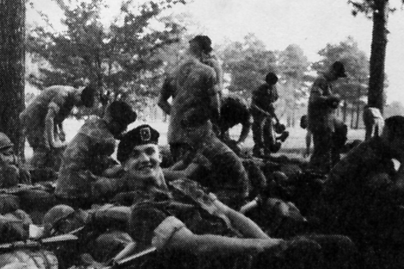
    That’s me, on my ass as usual, in the days before Eric Shinseki;

  • A Delayed Answer to Another Question

    Over 2 months ago, in the comments to this article there was a discussion concerning diplomacy and idiocy.  During that discussion, one of our frequent commenters took the position that “Trump supports Erdogan” because the POTUS recently sent Ergodan a congratulatory telegram.  He also stated this opinion about the current President’s actions:  “At best it was idiotic. At best. But I find it far more troubling than that.”

    After reading that, I posed some follow-up questions to the individual:

    So, do you consider JFK “choosing” to meet with an avowed enemy of the West and dictator (Khrushchev) in 1961 “diplomatic support” for the dictator and enemy? Does that make JFK an enemy of the US?

    Or was JFK merely doing what US Presidents do – meet with foreign leaders, even those who are hostile, if the circumstances require?

    Later during the same discussion, I rephrased the questions more simply:

    Do you consider JFK an “idiot” for meeting with an avowed enemy of the West and dictator (Khrushchev) in Vienna in 1961? Was that “diplomatic support”? If the answer in either case is, “No” – why?

    For some reason, I’ve never gotten an answer to those questions – even though I’ve reminded the individual concerned of them, repeatedly, over the past 2 months.  Possible reasons why I’m not getting an answer are obvious enough to suggest themselves.  But that’s not the point of my article here, so I’m not going to dwell on those possible reasons for sidestepping the questions.

    Back on point:  the fact that I’ve gotten no answer in 2+ months leads me to believe I never will get an answer from the individual.  So I’m going to answer those questions myself.

    . . .

    BLUF:  No, JFK was obviously not an “enemy of the US”.  And no – in general, JFK was not an “idiot”.  But IMO JFK was a fool to meet with Khrushchev at Vienna in June 1961.  However, he was not a fool to send Khrushchev a congratulatory telegram in April 1961 following Yuri Gagarin’s manned spaceflight.  And no, I’m not contradicting myself here; explanation follows.

    Neither of those actions by JFK “showed support” for Khrushchev and his policies.  They were both simply examples of Presidential diplomacy – just like Trump’s congratulatory telegram to Ergodan.  They were simply diplomatic “business as usual”.

    The claim that a POTUS sending a congratulatory telegram or meeting with an adversarial foreign leader “shows support” for that foreign leader and their actions is very obviously unadulterated male bovine organic fertilizer, AKA pure bullsh!t.  Past US Presidents have routinely sent congratulatory telegrams to – and met with – leaders of adversary nations during the past 70+ years when circumstances warranted.

    Want some examples?  OK.  In addition to Kennedy’s April 1961 congratulatory telegram to Khrushchev, we also have Eisenhower’s meeting with Khrushchev at Camp David in 1959; Nixon’s visit to China in 1972; FDRs meetings with Stalin at Tehran and Yalta during World War II; Truman’s meeting with Stalin at Potsdam; and any number of other meetings and telegrams attended or sent by various US Presidents over the years with/to foreign political leaders who  happened to be US adversaries and/or rivals.  All of those are merely examples of the POTUS doing what the POTUS is Constitutionally empowered to do:  diplomatically engage foreign heads of state as a part of setting and directing US foreign policy.  It’s an essential part of his job.

    Very obviously, those other Presidential telegrams and meetings were not designed to be “expressions of support” for US adversaries or rivals either, or for their policies. They were merely routine Presidential diplomacy – in other words, the POTUS acting like the POTUS.

    So, if sending Khrushchev a congratulatory telegram after Gagarin’s flight was merely diplomacy in action, why then was JFK a fool to meet with Khrushchev in Vienna in June, 1961?  Wasn’t that simply Presidential diplomacy as well?

    Yes it was.  And JFK certainly was not “showing support” for Khrushchev or his policies by doing either.  But he was nonetheless a fool to go to Vienna in June 1961 – for very different reasons.

    In meeting with Khrushchev at Vienna in June, 1961, JFK was a fool because he was explicitly warned by leading US Soviet experts that meeting with Khrushchev at that point was a bad idea.  Yet he went ahead and did so anyway.

    When he was elected President, JFK was a young and still-somewhat-inexperienced politician with little experience in foreign relations or high-level diplomacy.  As a legislator he’d become quite proficient at the US “wheel and deal” political process; he was charming, photogenic, a terrific public speaker, and charismatic.  But he didn’t really know much about foreign policy, or how to deal with foreign leaders who were motivated very differently from US politicians – like Khrushchev.

    He assumed he could “wheel and deal” (and charm) foreign leaders like he could US politicians.  At Vienna, he found out the hard way he could not.

    In meeting Khrushchev in Vienna in June, 1961, JFK went against the opinions of two different senior officials at the Department of State.  Noted Soviet expert and US diplomat Charles Bohlen warned JFK that meeting with Khrushchev early in his first term was premature.  Then-US Ambassador to the Soviet Union Llewellen Thompson concurred, believing that JFK had “underrated Khrushchev’s determination to expand world communism.”  Yet JFK felt he was smarter than his Soviet experts – and disregarded their advice.

    The result was predictable.  In one-on-one meetings at the Vienna Summit, Khrushchev diplomatically manhandled JFK.  JFK was completely out of his depth, and was unable to hold his own.  JFK himself later referred to the experience by saying, “He (Khrushchev) beat the hell out of me” – and further described meeting with Khrushchev at Vienna as “. . . the worst thing in my life.  He (Khrushchev) savaged me.”

    Moreover, that meeting in Vienna also damn near had disastrous consequences.  It’s widely believed that Khrushchev came to the conclusion after Vienna that JFK was shallow, weak, and irresolute – and that this perception emboldened Khrushchev to place nuclear missiles in Cuba the following year.  That in turn led to the Cuban Missile Crisis – the closest the world has ever come to global thermonuclear war.

    That is why JFK was a damn fool to meet with Khrushchev in Vienna in 1961.  The reason isn’t because doing so “showed support” for Khrushchev and his policies; it did no such thing.  That meeting was merely an example of  routine Presidential diplomacy – just like the current POTUS sending Ergodan a congratulatory telegram was merely another example of routine Presidential diplomacy.

    Rather, JFK was a fool to meet with Khrushchev in Vienna in June 1961 because he intentionally disregarded warnings from his experts not to go – and in ignoring those warnings, walked directly into an ambush. The fallout from his choosing to ignore expert advice could easily have led to World War III.  In fact, history shows that it damn near did.

  • 22d anniversary of Scott O’Grady rescue

    22d anniversary of Scott O’Grady rescue

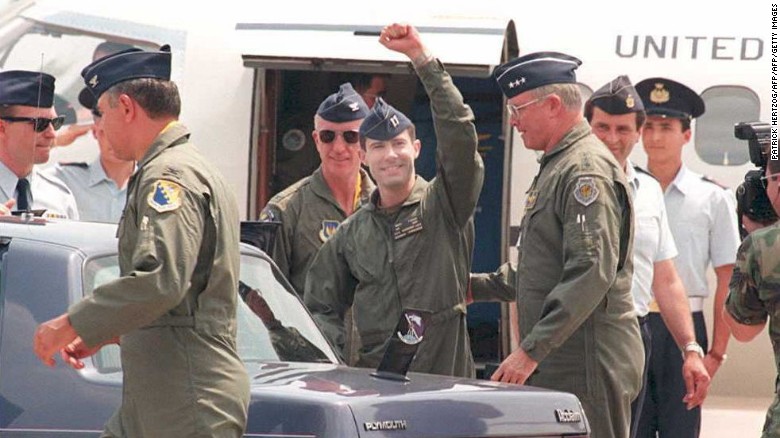
    Mick reminds us that 22 years ago today, Air Force Captain Scott O’Grady was rescued when his F-16 was struck by a Serb SA-6 surface-to-air missile over Bosnia while he was on an “Operation Deny Flight” mission. O’Grady safely ejected from the damaged aircraft and spent nearly six days behind enemy lines successfully evading capture by Serb militias operation in the area around Mrkonji? Grad.

    From a CNN article published two years ago;

    The enemy often was close. During the first two days, a helicopter was so near, he could see the faces of the Serbian pilots. Men on the ground were shooting at things that moved.

    He moved at night, occasionally trying his radio to call for help. He fought the wet conditions, thirst and hunger. He ate ants and plants and drank the water he had in his emergency pack until that ran out on the fourth day. Rain brought more water, but it also soaked him. He developed trench foot from the prolonged exposure to cold water.

    On the sixth night, using the call sign Basher Five-Two, he made contact with one of his squadron mates (who was flying on extremely low fuel) and soon four Marine helicopters were headed more than 80 miles into enemy territory. About 40 other aircraft kept watch nearby in case the Serbs caught on to the rescue attempt.

    On the morning of the sixth day, they found him, sprinting from the woods into a small opening, 9mm pistol in his hand in case there was enemy fire.

    A team of Marines covered him as he got into one of two CH-53E Super Stallions. Two AH-1W Super Cobra helicopter gunships flew nearby in case the enemy fire on the way out became a problem. Those Marines were the heroes, O’Grady said. “I was just doing my job,” he added.

    Those Marines were from the 3rd Battalion, 8th Marines, 2nd Marine Division. I was always upset that the Marines didn’t get as much attention as O’Grady.

  • Pointe du Hoc

    Pointe du Hoc

    Republished almost every year;

    a0139_small.gif

    Rangers Mission for D-Day, 6 June 1944

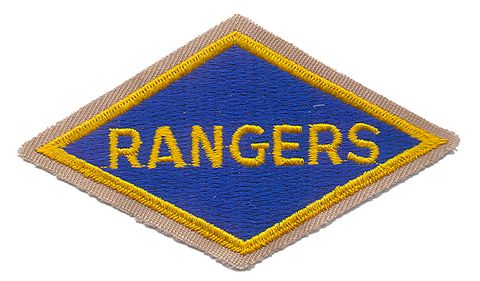
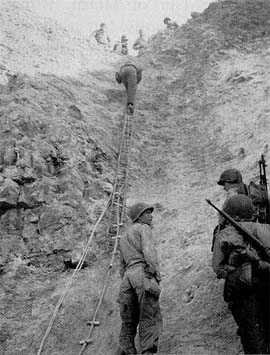
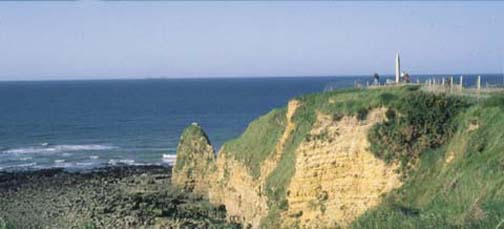
    The Ranger Group, attached to the 116th Infantry and commanded by Lt. Col. James E. Rudder, was given the mission to capture Pointe du Hoc and destroy the guns. The Ranger Group was made up of two battalions: the 2d Rangers, under direct command of Col. Rudder, and the 5th Rangers, under Lt. Col. Max F. Schneider. Three companies (D, E, and F) of the 2d Battalion (Task Force A) were to land from the sea at H-Hour and assault the cliff position at Pointe du Hoc. The main Ranger force (5th Battalion and Companies A and B of the 2d, comprising Task Force B) would wait off shore for a signal of success, then land at the Point. The Ranger Group would then move inland, cut the coastal highway connecting Grandcamp and Vierville, and await the arrival of the 116th Infantry from Vierville before pushing west toward Grandcamp and Maisy.

    dday_pointeduhoc_375.jpg

    One DUKW was hit and sunk by 20-mm fire from a cliff position near the Point. The nine surviving LCAs came in and managed to land in parallel on a 400-yard front on the east side of Point du Hoc, landing about 0705. Allied naval fire had been lifted since H-Hour, giving the Germans above the cliff time to recover. Scattered small-arms fire and automatic fire from a flanking machine-gun position hammered the LCAs, causing about fifteen casualties as the Rangers debarked on the heavily cratered strip of beach. The grapnel rockets were fired immediately on touchdown. Some of the water-soaked ropes failed to carry over the cliff, but only one craft failed to get at least one grapnel to the edge. In one or two cases, the demountable extension ladders were used. The DUKWs came in but could not get across the cratered beach, and from the water’s edge their extension ladders would not reach the top of the cliff.

    Despite all difficulties, the Rangers used the ropes and ladders to scramble up the cliff. The German defenders were shocked by the bombardment and improbable assault, but quickly responded by cutting as many ropes as they could. They rushed to the cliff edge and poured direct rifle and machine gun fire on the Rangers, augmented by grenades tossed down the slope. The Rangers never broke, continuing to climb amidst the fire as Ranger BAR men picked off any exposed Germans. The destroyer USS Satterlee (DD-626) observed the Rangers’ precarious position, closed to 1500 yards and took the cliff top under direct fire from all guns, a considerable assist at a crucial time.

    Within ten minutes of the landing the first Americans reached the top of the cliffs.

    rangers_pointe_du_hoc_700_01.jpg

    I may just watch “The Longest Day” tonight. “What does ‘bitte, bitte’ mean?”

  • For Our “Railhead” Readers

    . . . especially Ex-PH2 and API. The tune is self-explanatory – once you know a bit of baclground.

    The bit of background: like the US, Canada also made major efforts to build a transcontinental railroad. (The term “navvy” is British slang – adopted in Canadian English – for a railway laborer.) Their projects began in earnest with the establishment of Canada as a Confederation in 1867, and accelerated greatly with the entry of British Columbia into Canada in 1871.

    Indeed, one of the conditions of British Columbia’s entry into Canada in 1871 was completion of a transcontinental railroad within a decade. While they didn’t make that deadline, they came reasonably close.

    The Canadian transcontinental railroad was completed with the driving of the Last Spike at Cragellatchie, BC, on 7 November 1885. It’s approximately 1,600 km longer than the US transcontinental railroad.

    Lightfoot’s tune commemorates the building of this railroad, and the men who built it. It was commissioned for Canada’s Centennial in 1967 by the Canadian Broadcast Corporation; it aired in a special broadcast on 1 January 1967.

    Lightfoot has been called “a national treasure” by The Band’s primary songwriter Robbie Robertson (both are Canadian). Bob Dylan has been quoted as saying that whenever he hears a Lightfoot song he “wished it would last forever”.

    The man is indeed good. If you’ve forgotten just how good, you might want to give some of his work another listen.

  • The West Loch incident

    The West Loch incident

    On May 21, 1944, 73 years ago yesterday, sailors in Pearl Harbor were loading ammunition onto several Landing Ship Tankers (LSTs) in preparation for the US invasion to take back the Marianna Islands from the Japanese when tragedy struck;

    At 15:08, LST-353, moored at Tare 8, exploded, sending a large fireball into the sky. The noise was heard miles away at Pearl Harbor Headquarters. More explosions of increasing intensity followed, sparking fears of a Japanese attack or even an earthquake. Fire and debris raining down on the fuel and munitions stored on the decks of other LSTs had caused an explosive chain reaction. Within minutes, 200 men had been blown into the water. Eleven wooden buildings on the shore were destroyed and vehicles blown on their side. In all, 20 buildings were damaged.

    Initial efforts by the crews to fight the fires were impeded by the heat, although some ships further away managed to muster damage control parties. Many of the LSTs tied together at Tare 8 began to sink. Within the hour, Admiral Richmond K. Turner was directing fire-fighting efforts from a launch.

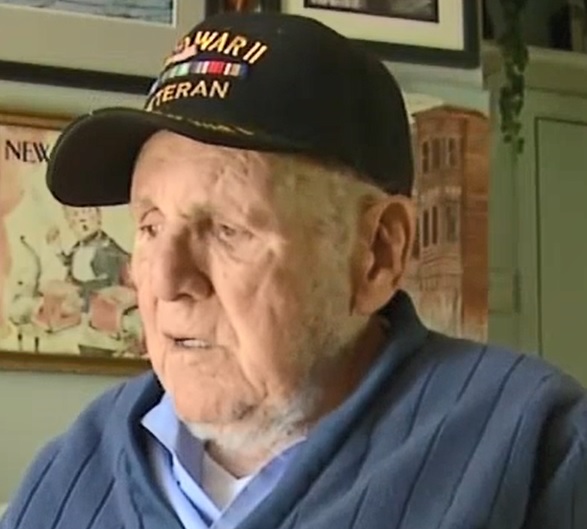
    ABC7 News spoke with a local survivor of the blast, 91-year-old Rod Plaisted;

    Plaisted was an 18-year-old sailor in May of 1944, stationed at Pearl Harbor’s West Loch area, three years after the Japanese attack.

    Plaisted was one of many men moving bullets and bombs amid hundreds of ships getting ready for the invasion of Saipan when he looked up and saw flames on one ship, then a huge explosion launched tons of metal into the air.

    “I looked at it thinking, wow, that is really something to see. That’s something to remember, then it occurred to me what goes up comes down,” said Plaisted.

    That’s when he made a run for it dodging white hot debris the entire way.

    “Finally stuff was starting to hit and I went down and curled up like that.” Said Plaisted, while imitating a fetal position.

    Once Plaisted finally got up he ran to a bomb shelter, just in time to see a fellow sailor killed by white hot metal.

    According to Wiki, 163 sailors lost their lives and another 395 were injured in the explosion that burned for twenty-four hours. The Pentagon issued a press blackout order that lasted until 1960 when details were finally released. Wiki summarizes the conclusions of the resulting investigation.

    A subsequent Naval Board of Inquiry never determined the exact cause of the disaster but concluded that the initial explosion was caused when a mortar round aboard LST-353 detonated during an unloading operation because it was either dropped or went off when gasoline vapors ignited. The incident – together with the Port Chicago disaster two months later – led to major changes in weapon handling practices within the United States Navy.