Category: Historical

  • A Room With a View

    The author of this article, Duke Barrett, is a friend of Pdoggbiker, the owner of the Cherries Writer blog. Very much worth your time to read it.  Pdoggbiker was kind enough to consent to my reposting it here.

    From the article at Cherries Writer….

    Room With a View

    “At approximately 3 PM on yet another hot and humid September day, we, the 2nd squad of Delta Co.’s recon platoon of the 1st airborne brigade/8th Cavalry/1st Air Cavalry Division, left the relative security of our firebase and headed down a steep, heavily forested hillside to set up an ambush. The mission…… I mean there had to be a purpose, right? To kill bad guys I guess. As an army Specialist Fourth Class I wasn’t privy to much inside information. The one thing I did know, it was dead on monsoon season and we’d be sleeping out in the rain again.”

    You can read the rest of the article here:

    https://cherrieswriter.com/2018/09/04/room-with-a-view-guest-post/

    If you go to Pdoggbiker’s blog, he’ll appreciate it a lot.


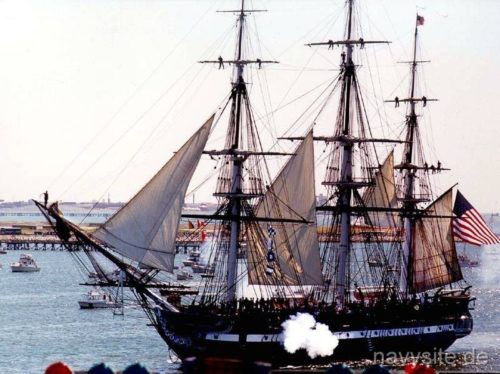
  • USS Constitution to mark 9/11 attacks

    uss constitution
    BOSTON — USS Constitution, known by her crew as “Old Ironsides” will commemorate the Sept. 11, 2001, terrorist attacks with canon fire and solemn music.

    Navy crews with USS Constitution on Tuesday will fire one-gun salutes to mark when airplanes crashed into the World Trade Center in New York City, the Pentagon near Washington, and a field in Somerset County, Pennsylvania.

    Taps will also be played at the times when the two World Trade Center towers and part of the Pentagon collapsed as well as when United Flight 93 crashed in Pennsylvania.

    The attacks killed nearly 3,000 lives and injured more than 6,000 others.

    The world’s oldest commissioned warship still afloat was launched in 1797 and earned its nickname “Old Ironsides” when the Navy frigate defeated the British frigate Guerrière in a furious engagement off the coast of Nova Scotia.

    Witnesses claimed that the British shot merely bounced off Constitution‘s sides, as if the ship were made of iron.

    Its current crew members are all active duty sailors.

    Navy Times Link

  • Weekend Open Thread

    Once upon a time, a Zippo lighter saved a piece of aviation history.

    . . .

    During the 1950s, the USAF developed their “Century Series” fighters (F-100 through F-111). They include some of the most famous and iconic US aircraft in history.

    However, as is common in developmental efforts not all of these aircraft saw production. The F-103, F-108, and F-109 never made it past their mockup stages. Three prototypes for a fourth – the F-107A – were built, but the aircraft was not selected for production.


    F-107A Prototype #2, on Display at the
    National Museum of the US Air Force

    Unfortunately, the F-107A was competing against the F-105; it “lost” the competition, and was not produced beyond three prototypes. That decision has been termed one of the USAF’s great mistakes, particularly given the F-105’s record in Vietnam – where over 40% of the entire USAF F-105 inventory (334 of 833) was lost in combat, with another 7.2+% (61 of 833) lost in noncombat incidents. (This propensity for takeoffs without corresponding landings reputedly gave the F-105 its informal nickname “Thud”.)

    One of the three F-107A prototypes was damaged in an aborted takeoff and scrapped. The other two still exist; prototype #1 is currently on display at the Pima Air and Space Museum (Tucson, AZ), while prototype #2 is on display at the National Museum of the Air Force (Wright-Patterson AFB, OH).

    Getting the latter display aircraft to Wright-Patterson AFB would not have been possible without a Zippo lighter.

    . . .

    The F-107A on display at the National Museum of the Air Force was flown there on 25 November 1957. It was at Edwards AFB immediately prior to the flight. It was apparently being prepared for scrapping.

    It was flyable – but had no instrument or cockpit lights. It also had no navigation radios.

    The pilot was Maj. Clyde Good. His plan was to follow an F-100 aircraft also being ferried from Edwards AFB to Wright-Patterson AFB that day (and which presumably was equipped with navigational aids). The F-100 would lead the way; the flight was planned as a one-day trip during daylight hours.

    Unfortunately, that “wonderful individual” Murphy was alive and well – and up to his usual tricks. Maj. Good and his F-107A became separated from the F-100 he was supposed to follow due to issues at a refueling stop.

    He was able to follow roads to the Saint Louis area. However, the issues at the refueling stop had also apparently delayed his flight. So east of Saint Louis . . . Maj. Good lost daylight. He also began to experience undercast conditions, making it impossible for him to follow roads to the vicinity of Dayton.

    Maj. Good was able to determine the correct heading to get him IVO Dayton, OH. But he needed to periodically check his instruments – and he had no instrument or cockpit lights. And since the trip was planned as a day trip, Maj. Good also hadn’t packed a flashlight.

    However, he had packed a Zippo lighter. You guessed it: he periodically “lit it up” to check his instruments.

    Maj. Good’s navigation skills were good enough to get him within radar range of Wright-Patterson AFB. Wright-Patterson air traffic control then vectored him in.

    However, Maj. Good then faced another minor issue: the aircraft had no landing lights.

    No problem. He landed with one hand on the stick and the other holding his Zippo, lit, so he could read the instruments.

    I might fault Maj. Good’s contingency planning somewhat, but the man certainly had nervios de acero – y cojones muy grandes. (smile)

    . . .

    OK, enough oddball aviation history for today. Enjoy the WOT, everyone.

    References:

    https://en.wikipedia.org/wiki/North_American_F-107

    https://www.airspacemag.com/military-aviation/century-series-wannabe-209334/

    https://en.wikipedia.org/wiki/F-105_Thunderchief#Phase-out_and_retirement

    . . .

    Author’s Note: Yes, there was indeed an aircraft designated as the F-110A; it was called the “Spectre”. That was the short-lived USAF designation for the F-4 Phantom II prior to the adoption of the 1962 Tri-Service aircraft designation system.

  • Weekend Open Thread

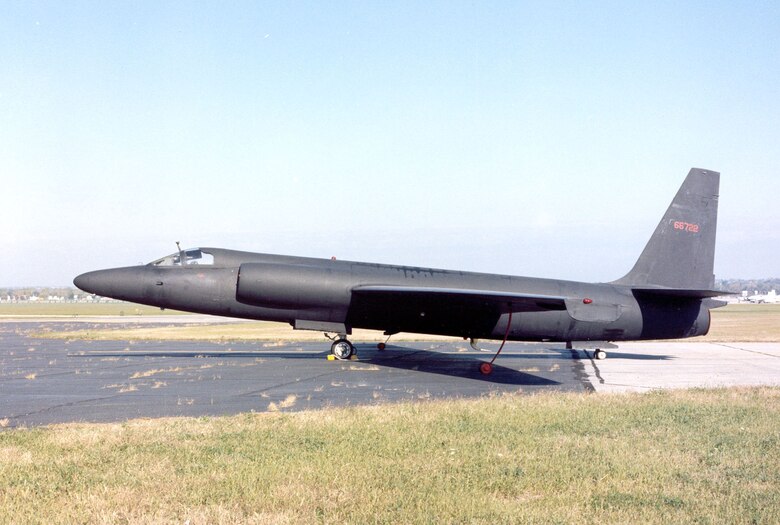
    Most TAH readers know about the May Day 1960 U-2 incident involving Gary Powers. But I’d guess not as many know about a U-2 incident that almost happened roughly 3 1/2 years earlier. It would have been fatal, caused the loss of a U-2, and would have been even more embarrassing to the USA than Powers being shot down had things gone very slightly differently.


    U-2A on display at the National Museum of the US Air Force

    During overflights of the Soviet Union, U-2 pilots for those flights were offered the option of carrying a suicide kit on each mission. (Carrying the kit at all, along with its use if captured, were at the pilot’s option.) By the time Powers’ U-2 was shot down, this kit used a concealed needle and a purified shellfish toxin (saxitoxin).

    However, US overflights of the Soviet Union started in 1956 – nearly 4 years prior to Powers being shot down on May Day 1960. During the earlier years of the program the suicide kit consisted of what was referred to as an “L-pill”. This was a small glass capsule filled with a potassium cyanide solution. Biting down on the pill broke the glass; death due to cyanide poisoning would occur quite shortly afterwards.

    That earlier L-pill reportedly very nearly led to another, earlier U-2 incident over the Soviet Union.

    . . .

    Only one Cold War U-2 flight ever overflew Moscow. That flight occurred on 10 July 1956; it was piloted by Carmine Vito. It wasn’t his only overflight of the Soviet Union.

    Though U-2 pilots were warned that opening their pressure suit’s faceplate while at high altitude was dangerous, many did so anyway – generally in order to eat something small or get a piece of chewing gum during a mission. Vito was one of those who did.

    Vito was reportedly fond of eating lemon drops during U-2 missions. Seems his throat got dry while at altitude, particularly during Soviet overflights. (Ya think!? Hell, during an overflight mission my butt cheeks would have been clenched tight enough to suck half the damn seat cushion up my . . . well, let’s just say I’d have been damned nervous too. [smile]) He found that lemon drops helped, so Vito always put a supply in one of his flight suit pockets.

    This turned out to be a problem on 10 December 1956. On that date, Vito made another overflight of the Soviet Union. And the following reportedly happened (emphasis added):

    About midway through the mission Vito opened his faceplate and popped into his mouth what he thought was another lemon drop. Closing the faceplate, he began sucking on the object and thought it strange that it had no flavor and was much smoother than the previous lemon drops. Although tempted to bite down, he decided instead to reopen his faceplate and see what it was. Spitting the object into his hand, he saw that he had been sucking on the L-pill with its lethal contents of potassium cyanide. Just a thin layer of glass had stood between him and near-instant death. Somewhat shaken, Vito successfully continued the mission and returned safely to base.

    Source: Norman Polman, Spyplane: The U-2 History Declassified, MBI Publishing, 2001, p. 103.

    Yep, you read that correctly. Vito had popped his L-pill into his mouth instead of a lemon drop. Only the fact that Vito refrained from biting down on the L-pill prevented his death – and the U-2 from crashing, very likely over Soviet territory.

    You see, Vito had requested the suicide kit for that mission. And one of the USAF techs involved in mission prep had unknowingly put the L-pill Vito had requested into the same pocket that Vito used for his lemon drops.

    The account is silent regarding whether or not Vito needed new skivvies after the mission. (I certainly would have.) But those early U-2 pilots were masters at “maintaining an even strain” – so maybe not.

    On flights afterwards, the L-pill was reportedly boxed to prevent such a mix-up. And concerns about what might happen if one broke in the cockpit during a mission (with likely fatal results to the pilot) later led to the replacement of the L-pill with the saxitoxin-laced needle carried by Powers on his ill-fated final U-2 flight.

    . . .

    The accuracy of the above account involving lemon drops, an L-pill, and Vito has been disputed. Purportedly Vito himself denied it – but multiple other accounts say it indeed happened, with at least one account indicating Vito was heard after the mission relating the tale to other U-2 pilots.

    Col. Carmine Vito, USAF (Ret), died in Austin, TX, on 27 August 2003. He’s thus no longer around to ask about the story’s accuracy.

    Personally, I believe the incident happened – if not to Vito, then to another U-2 pilot. One thing I’ve learned during my lifetime is that (to paraphrase the late Arthur C. Clarke) not only is reality stranger than fiction – it’s sometimes also stranger than you can possibly imagine.

    OK, enough Cold War history. Enjoy this week’s WOT – and have a great 3-day weekend.

  • Our Homeland Is Not a Sanctuary

    The U.S. “homeland is no longer a sanctuary,” according to the four-star general in charge of both U.S. Northern Command and North American Aerospace Defense Command.

    Peer-level adversaries are probing U.S. defenses in multiple domains, and the continental United States is well within their sights.

    https://www.militarytimes.com/news/your-air-force/2018/08/27/the-homeland-is-no-longer-a-sanctuary-amid-rising-near-peer-threats-northcom-commander-says/

    “We’re in a changing security environment,” O’Shaughnessy said. “We used to think about the sanctuary we had with oceans and friendly countries to our north and south, but that’s changing with adversaries that are actually able to reach out and touch us now.”

    The concern falls in line with Defense Secretary Jim Mattis’ new National Defense Strategy, which prioritizes peer-level adversaries as greater threats than lower-end insurgent forces like those seen in Iraq and Afghanistan over the past decade.

    These peer-level foes are Russia and China, according to O’Shaughnessy and Mattis.

    Anyone surprised by this? Anyone? Bueller?  Nah. Didn’t think so. Nothing new to see here. Move along.

    Frankly, the ‘reach out and touch us’ notion isn’t new, either, since Cuba and Krushchev had that “thing” going on in 1961 with Fidel Castro and there was the very annoying Cuban missile crisis and US Navy blockade in October that year.

    Oh, also, SecDef Mattis says that Russia did sanction the 2016 election meddling and he has outlined proper protections for the upcoming midterm elections here:  https://www.militarytimes.com/news/your-military/2018/08/07/mattis-says-russia-sanctioned-2016-election-meddling-outlines-protections-for-midterms/

    Just thought you’d like to know that Mad Dog has it on his plate.

  • The Last Reunion for Merrill’s Marauders

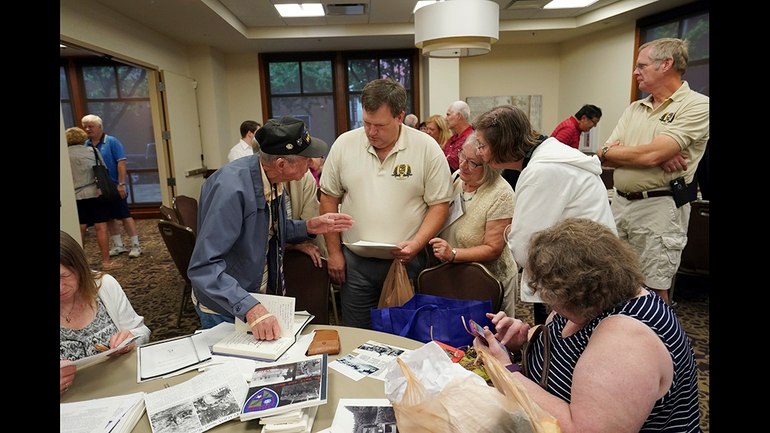
    The Last Reunion for Merrill’s Marauders

    Military Times reports:

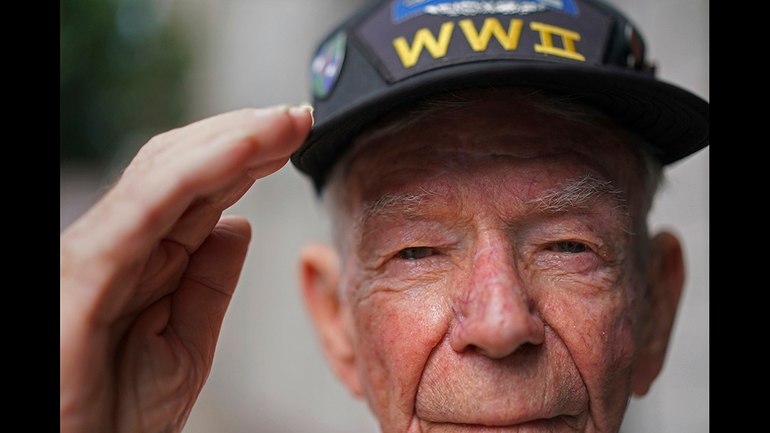
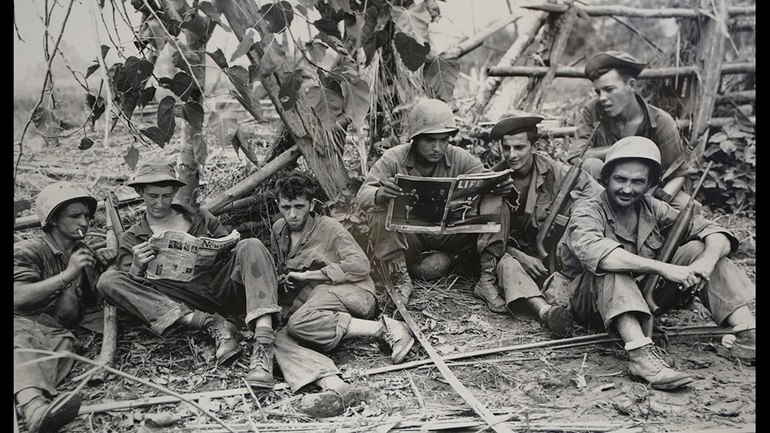
    It’s the last reunion for members of the famed U.S. Army jungle fighters called Merrill’s Marauders. Three thousand volunteered for a dangerous secret mission during World War II — a mission so secret they weren’t told even where they were going.

    They hacked their way through nearly 1,000 miles (1600 kilometers) of jungle behind enemy lines in Myanmar, then called Burma, fighting in five major and 30 minor actions against veteran Japanese troops.

    “This is the last of the outfit,” said David Allen of Rock Hill, South Carolina.

    The unit won a Presidential Unit Citation, six Distinguished Service Crosses, four Legions of Merit, 44 Silver Stars and a Bronze Star for every man in the regiment. Their shoulder patch was adopted by the 1st Battalion of the 75th Infantry Ranger Regiment. And their families are pushing a pair of bills to award the Congressional Gold Medal to Merrill’s Marauders.

    A war correspondent created the nickname, after Brig. Gen. Frank Merrill, because the formal name was a mouthful, according to the 2013 history “Merrill’s Marauders: The Untold Story of Unit Galahad and the Toughest Special Forces Mission of World War II.”

    If you find time, read the whole article HERE. 

    There are several good documentaries about them.

    /

  • Theodore Petry, Jr., Worked on the Manhattan Project

    Theodore Petry, Jr., was the last surviving witness to the first sustained nuclear chain reaction, known as the Manhattan Project, which took place under Alonzo Stagg Stadium at the University of Chicago in 1942. He passed away on August 6, 2018. He was one of 49 people who witnessed that first attempt at nuclear power.

    He considered himself to be  ‘a laborer, a gofer’, someone who runs errands for the tech guys – physicists, in this case, but is listed as a lab assistant by the University of Chicago.

    https://www.uchicago.edu/features/a_witness_to_atomic_history/

    One of 30+ ‘laborers” hired to build the primitive reactor, stacking wood to support it and building it with the 45,000 graphite blocks that formed its lattice structure. In his own words, when he was 17 a job was a job, and he didn’t question what was going on. He took the bus from his parents’ home in Englewood to the University to work on construction the reactor and used a hydraulic press to turn uranium powder into baseball-sized spheres that formed the fuel for the reactor. He also went downtown to pick up those radioactive materials in little canisters, until his red cell count dropped. After that, it was put into a lead container and he picked it up in a station wagon, instead of carrying it back to the University on a city bus.

    An interview with him done in March this year is here:

    https://www.manhattanprojectvoices.org/oral-histories/theodore-petrys-interview

    The Manhattan Project employed over 600,000 people in developing, building and testing nuclear weapons. Some of the leading physicists at the time who worked on it were Enrico Fermi and J. Robert Oppenheimer, among others. Einstein had warned the US government that Germany was developing materials and facilities to build nuclear bombs. The Nazis had seized a heavy water plant in Norway for that purpose. Many of the physicists participating in the Manhattan Project were refugees from Europe.

    Interestingly, Klaus Fuchs, a theoretical physicist, fled the Reich and ended up in Canada, subsequently moving to Los Alamos to work on the Manhattan Project, and was also a spy for the Soviets, passing nuclear secrets to them.

    But the last of that group of people is now gone. Mr. Petry worked as a shop teacher after finishing college. He passed due to complications of esophageal cancer. He had four children and declared that they were all quite healthy, despite his early exposure to raw radioactive materials.

  • Winston Churchill: 10 little-known facts

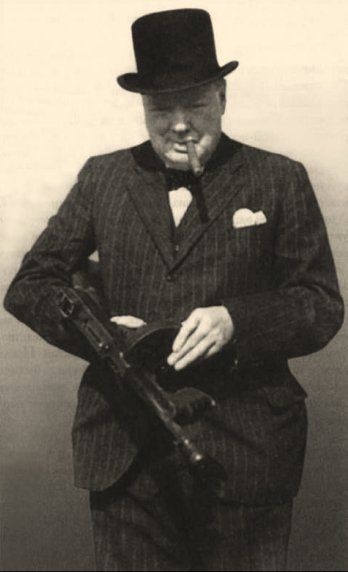
    wc and gun

    Thought I’d join ex-OS2, Hondo, 2/17 AC, and Combat Historian and post up a little history. I’ve been a big fan of Winston, read several of his books, and chuckled at his anecdotes. I mean, who can resist the famous exchange between himself and Nancy Astor,

    “If you were my husband, sir, I’d give you a dose of poison!”
    “If I were your husband,” said he, “I’d take it!”

    Here’s 10 facts about him, brought to us by Military History. Winston Churchill, the emblematic British wartime leader is instantly recognizable by his cigar, bowler hat, trench coat, and imposing scowl.

    Sir Winston Leonard Spencer Churchill was known for his domineering presence, sharp wit, and uncompromising resilience in the face of adversity, when lesser men would falter. His epic speeches, often paraphrased and parodied, rival Shakespeare and Dickens in their cultural resonance in popular perceptions of Britishness exported across the globe. Often a difficult man, his razor-sharp tongue would frequently get him into trouble, particularly amongst political rivals and the opposite sex.

    His role in supporting innovative technological military solutions, including the development of the tank and his recognition of the importance of aerial warfare, are well documented by commentators and historians alike.
    Perhaps less well known are his American ancestry, his animated primate impressions and his prolific artistic output.

    Military History Monthly examines ten obscure Churchill facts, which may shed some light on the twentieth-century figure.

    1. British Bulldog?
    Churchill, the ‘British Bulldog’ – and symbol of all things British – is in fact half-American. Churchill’s English roots are undisputed; indeed, his paternal ancestry, courtesy of his father Lord Randolph Churchill, can be traced back to the illustrious Dukes of Marlborough. However, his American heritage is equally impressive. His mother, Jennie Jerome, was the daughter of the American millionaire Leonard Jerome.

    As The Times has noted, his paternal grandmother was a relative of George Washington.

    According to one source, his family tree can be linked to George Herbert Walker Bush and son. Further cementing his American ties, Churchill was the first individual ever to be acknowledged as an Honorary Citizen of the United States.

    Incidentally, the Churchill family motto is Fiel Pero Desdichado, meaning ‘Faithful but unfortunate’. Whilst seemingly an unusual choice of mantra, Winston appears to have bucked the trend of misfortune.

    2. Impeccable timing – in life and death
    One of Churchill’s most revered traits – at various stages, both a blessing and a curse – was a determination, bordering on stubbornness, to operate on his own terms. Whilst no doubt a coincidence, it would appear this applied to entrances and exits.

    Churchill was born prematurely in a cloakroom at Blenheim Palace, where his expectant mother was attending a party. She was unable to reach a bedroom in time, before labour commenced. He died on the exact same day as his father (only 70 years later) at the age of 90, in January 1965.

    3. Churchill the Artist
    Churchill was a prolific painter, producing nearly 600 works throughout his lifetime. Sarah Thomas of Sotheby’s has commented “Churchill took up painting very late… He found relief from all the pressures of his work in his painting.”

    In December 2006, one piece, ‘View of Tinherir’ from 1951, sold at auction for a record £612,800. According to Thomas, however, it took him a while to master his trade: “His work does vary in quality… A lot of his paintings are pretty poor and amateur and full of splodges.”

    4. Prisoner of War
    In 1899, Churchill escaped a prisoner of war camp whilst a correspondent in South Africa, during the Boer War. The bounty on his head was 25 pounds. He returned home a hero, perhaps a taster of what was to come for the young Churchill.

    5. Churchill the Historian
    Winnie was a gifted writer, novelist and historian; in his lifetime, he published volume upon volume of works on the history of England and Europe, including A History of the English Speaking Peoples and, not least, his six-part epic collection, The Second World War.

    His literary merit was officially recognized when he won the Nobel Prize for Literature in 1953 “for his historical and biographical presentations and for the scintillating oratory in which he has stood forth as a defender of human values.” Incidentally, he is still the only British Prime Minister to have won the prize.

    6. Gorilla Warfare
    According to his nephew, John Spencer Churchill, Winston did a good gorilla impression. In his 1961 book, Crowded Canvas, John writes “Few people can say they have seen the ex-First Lord of the Admiralty, crouching in the branches of an oak, baring his teeth and pounding his chest.”

    7. Man of the Half-Century
    Churchill eclipsed Hitler by being named Time Magazine’s ‘Man of the Year’, not once but twice, in 1940 and again in 1949. The title is granted to men (and also women, since Wallis Simpson in 1936) who have significantly influenced the course of history. On his second time receiving the accolade, he was named ‘Man of the Half-Century’.

    8. Churchill the Statesman
    Churchill served under an impressive six monarchs: Queen Victoria, King Edward VII, King George V, King Edward VIII, King George VI and Queen Elizabeth II. Whilst serving his country, he held at least nine different offices.

    9. School of Thought
    As a schoolboy, Winston Churchill did not shine academically; he would often find himself in the bottom half of classes and examinations; his rebellious streak ending in numerous beatings. Few would have predicted a successful career in politics, least of all his headmaster at Harrow, who punished the young boy for destroying his beloved straw hat.

    Realizing university was not an option, and recognizing Winston’s childhood love for toy soldiers, Churchill’s father decided to send him to Sandhurst Military Academy. It would, however, take three attempts before Winston passed the entrance examination.

    10. Pillow Talk
    Churchill was known to enjoy a siesta, a habit he adopted following his time in Cuba with Spanish forces in 1895. In later life, far from simply aiding his recuperation, Churchill’s bed often acted as his preferred location to discuss matters of great state importance.

    Senior military advisors Sir Hastings Ismay and General Alan Brooke would invariably be summoned bedside, for a private audience with the Prime Minister. Reports claim a bespoke breakfast table to fit his bed was commissioned especially to accommodate his unusual conferences.

    So there we are, 10 facts about Sir Winston not widely known. Hope ya’ll enjoyed this little diversion on a lazy Sunday afternoon. I did posting it.