Author: Hondo

  • Fake News? Could Well Be.

    Recently, AW1Ed posted an article detailing problems with concealed carry permits in Florida. The problem stemmed from a Florida state employee losing access to a database that was required to be checked during the permit process and not performing the required checks. This allowed a number of potentially invalid concealed carry permits to be issued. When discovered, the suspect permits were re-checked; 291 were found to have been issued in error, and were subsequently revoked. The employee responsible for the fiasco was fired.

    In a comment to AW1Ed’s article, a reader posted a comment alleging that the media had greatly exaggerated the issue. While the link posted by that commenter was to an article that I found poorly-written and somewhat confusing, I “pulled the thread” some more. And I think I’ve found, to a relatively high degree of certainty, “ground truth”.

    The initial reports on the issue were somewhat confusing. Those initial reports referred to “tens of thousands” of permits issued over a period of around a year, and also indicated that 291 were ultimately revoked. But other than to say that 291 permits had been revoked, the initial reporting didn’t give much in the way of specific, pertinent details. And the reporting frankly implied the problem was both serious and widespread.

    A subsequent follow-up article, quoting a spokesman for the pertinent Florida cabinet-level official whose department is responsible for issuing concealed carry permits in Florida, subsequently clarified the issue with those pertinent details. It turns out the issue was substantially less serious than originally reported by the media. But I doubt you’ll be seeing much in the way of follow-up from the mainstream media telling you that.

    There’s also substantial circumstantial evidence that this could be a case of deliberately slanted news. Or, alternatively, that it’s a story so inaccurate and/or exaggerated that it indeed qualifies as having been created out of whole cloth, AKA “fake news”.

    ———-

    So, what are the facts? Based on later clarification by a spokesman for Adam Putnam, the Florida Agriculture Commissioner, giving specific numbers and providing significant additional details here’s what appears to have happened:

    1. The Florida concealed carry process requires that three databases be checked before a concealed carry permit is issued. Two of them are criminal history databases: Florida Crime Information Center database (FCIC) and the National Crime Information Center database (NCIC). The third is the Federal firearms disqualification database, the National Instant Criminal Background Check System (NICS).

    2. During the period in question – February 2016 to March 2017 – 349,923 applications for a concealed carry permit were submitted in Florida. The two criminal databases, FCIC and NCIC, were checked in all cases.

    3. In 365 cases, NCIS was not checked. A single Florida employee was responsible for performing these 365 checks, but failed to do so. Permits were issued in these cases which might have been invalid. In the other 349,558 cases, all 3 required databases were indeed checked.

    4. When the matter was discovered, all 365 suspect cases were audited. A total of 291 of those cases were found on investigation to be problematic; the concealed carry permits for those 291 cases were revoked.

    5. The employee who failed to perform their duties in the 365 cases in question no longer works there. Other reporting indicates they were fired, presumably for cause.

    Bottom line: one Florida employee failed to do their job, apparently for a relatively short period of time.

    Specifically, for some undefined but apparently fairly short period of time, a Florida employee lost access to NICS and failed to perform 365 checks in that database associated with the Florida concealed carry permit process – out of a total of 349,923 such checks performed during the overall period of interest. That was later discovered, and the issue was corrected by doing the required checks and revoking 291 permits that apparently were issued in error. The employee is now a former employee.

    ———-

    So, what’s the problem with the initial reporting? I’ll tell you.

    Other than the fact that the reporting was incomplete, it was also so slanted as to be effectively misleading – misleading to the degree that the author’s motive becomes suspect. Here’s how an AP article, apparently carried by (or based on an article in) the Tampa Bay Times, characterized the situation. In the quote below, I’ve redacted the name of the article’s author; follow the link if you want to see it.

    Headline: Florida stopped doing gun permit checks for more than a year
    By (name omitted), Associated Press
    Posted: 8:31 PM, June 08, 2018
    Updated: 10:18 AM, June 09, 2018

    TALLAHASSEE, Fla. – For more than a year, Florida failed to do national background checks that could have disqualified people from gaining a permit to carry a concealed weapon.

    The lapse, revealed in an internal report that was not widely known about until Friday, occurred during a time period when there was a significant surge in the number of people seeking permission to legally carry a concealed weapon. Florida does not allow the open carry of weapons, but more than 1.9 million have permits to carry guns and weapons in public if they are concealed.

    The state ultimately revoked 291 permits and fired an employee blamed for the lapse after an inspector general’s report detailing the problem was sent in June 2017 to top officials in the department who oversee the program. The Tampa Bay Times was the first to publish information about the report, which pointed out that the state failed to check the National Instant Criminal Background Check System from February 2016 to March 2017.

    The article continues for several more paragraphs. Nowhere does it indicate that the problem was in reality restricted to a failure to conduct 365 checks, nor that barely 1 in 1,000 concealed carry permits didn’t have one of three required checks.

    Rather, the average reader of that article would conclude that the problem applied to a far larger number of applications – indeed, that the process of issuing concealed carry permits in Florida was broken entirely. That’s not the case at all. The facts indicate that one employee failed to perform required background checks in roughly 1 application out of a thousand.

    ———-

    So, where’s the evidence that this might be polically-motivated and slanted (or outright fake) news? Well, check the update timestamp of the AP article – then check the time stamp of the clarification article released by the Florida Agricultural Commissioner’s spokesman. The AP article was last updated over 12 hours after the clarification – long after the information in the clarification was available. As of about an hour ago, the AP article still did not include those significant and relevant facts.

    Further, Mr. Putnam is a candidate for Governor in Florida’s next gubernatorial election. He’s not liberal, and has made it a point to streamline Florida’s concealed carry permit process. Do you really think the media wants to see him elected, given the media’s documented leftward tilt since at least the Eisenhower administration? Might a sensationalist article leading people to believe, erroneously, that his office was issuing concealed carry permits without due diligence hurt his chances for election?

    ———-

    I’m not prepared to state, flatly, that this was a political hit job and qualifies as fabricated news. Maybe it’s just abysmally sloppy reporting. But there’s an old saying: “If it looks like a duck, walks like a duck, and quacks like a duck . . . . “

    Consider the facts and decide for yourself.

  • Another From Pearl Harbor Returns

    DPAA has identified and accounted for the following formerly-missing US personnel.

    From World War II

    Mus1c Henri C. Mason, US Navy, assigned to the crew of the USS Oklahoma, was lost at Pearl Harbor, HI, on 7 December 1941. He was accounted for on 4 June 2018.

    From Korea

    None

    From Southeast Asia

    None

    Welcome back, elder brother-in-arms. Our apologies that your return took so long.

    Rest easy. You’re home now.

    . . .

    Over 72,000 US personnel remain unaccounted for from World War II; over 7,700 US personnel remain unaccounted for from the Korean War; and over 1,500 remain unaccounted for in Southeast Asia (SEA). Comparison of DNA from recovered remains against DNA from some (but not all) blood relatives can assist in making a positive ID for unidentified remains that have already been recovered, or which may be recovered in the future.

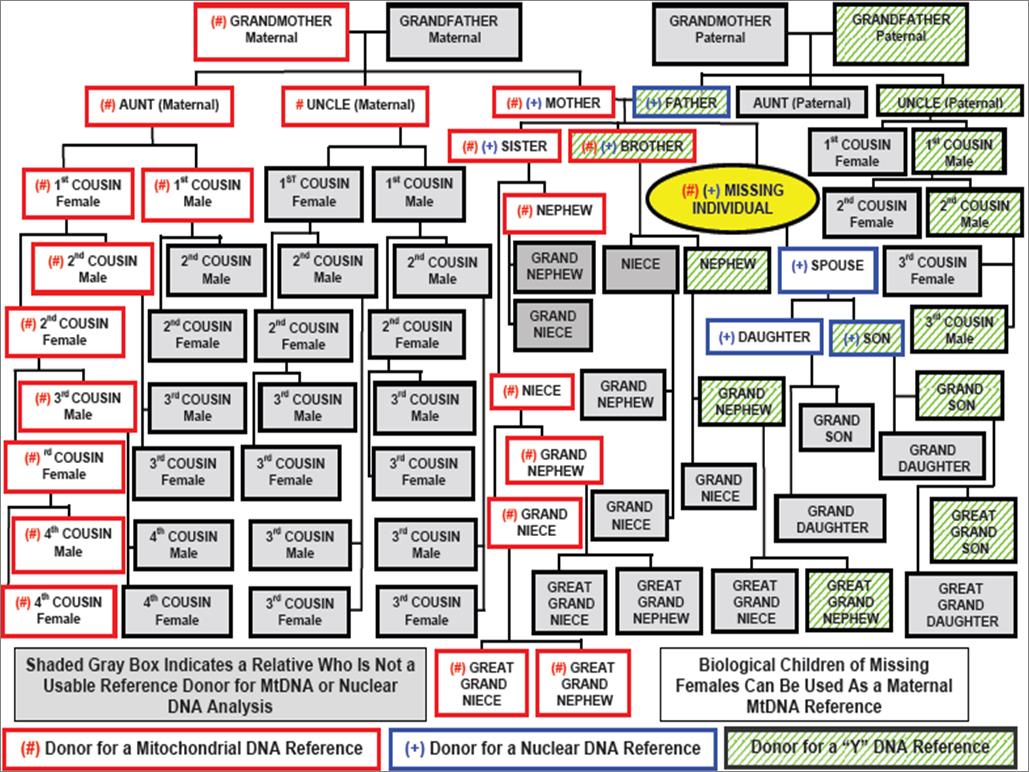
    On their web site’s “Contact Us” page, DPAA now has FAQs. The answer to one of those FAQs describes who can and cannot submit DNA samples useful in identifying recovered remains. The chart giving the answer can be viewed here. The text associated with the chart is short and can be viewed in DPAA’s FAQs.

    If your family lost someone in one of these conflicts and you qualify to submit a DNA sample, please arrange to submit one. By doing that you just might help identify the remains of a US service member who’s been repatriated but not yet been identified – as well as a relative of yours, however distant. Or you may help to identify remains to be recovered in the future.

    Everybody deserves a proper burial. That’s especially true for those who gave their all while serving this nation.

  • Two More Return

    DPAA has identified and accounted for the following formerly-missing US personnel.

    From World War II

    Sgt. Alfonso O. Duran, US Army, assigned to 724th Bombardment Squadron (Heavy), 451st Bombardment Group, 15th Air Force, US Army Air Forces, was lost in Slovenia on 25 February 1944. He was accounted for on 22 May 2018. (See note.)

    From Korea

    None

    From Southeast Asia

    LCDR Larry R. Kilpatrick, US Navy Reserve, assigned to Attack Squadron One Hundred Five (VA-105), was lost in Vietnam on 18 June 1972. He was accounted for on 18 May 2018.

    Welcome back, elder brothers-in-arms. Our apologies that your return took so long.

    Rest easy. You’re home now.

    . . .

    Over 72,000 US personnel remain unaccounted for from World War II; over 7,700 US personnel remain unaccounted for from the Korean War; and over 1,500 remain unaccounted for in Southeast Asia (SEA). Comparison of DNA from recovered remains against DNA from some (but not all) blood relatives can assist in making a positive ID for unidentified remains that have already been recovered, or which may be recovered in the future.

    On their web site’s “Contact Us” page, DPAA now has FAQs. The answer to one of those FAQs describes who can and cannot submit DNA samples useful in identifying recovered remains. The chart giving the answer can be viewed here. The text associated with the chart is short and can be viewed in DPAA’s FAQs.

    If your family lost someone in one of these conflicts and you qualify to submit a DNA sample, please arrange to submit one. By doing that you just might help identify the remains of a US service member who’s been repatriated but not yet been identified – as well as a relative of yours, however distant. Or you may help to identify remains to be recovered in the future.

    Everybody deserves a proper burial. That’s especially true for those who gave their all while serving this nation.

    ———-

    Author’s Note: DPAA’s “Recently Accounted For” page lists an incorrect date of loss and accounting for Sgt. Duran. The DPAA press release associated with his recovery lists the correct dates. The correct dates from the press release are used above.

  • Poking the Bear: Gest Kozakiewicza

    In general, Americans love sports. But Americans didn’t follow the 1980 Summer Olympics particularly closely.

    The reason? The 1980 Summer Olympics were held in Moscow – and the US was boycotting the games due to the Soviet Union’s December 1979 invasion of Afghanistan. With no US Olympic Team competing, most American’s weren’t particularly interested in those games.

    In a way, that’s a pity. Because that means that most Americans, including myself, missed one of the great gestures of defiance of the Cold War.

    Or, more precisely, two of them.

    . . .

    1980 was a rough year in Poland. At the time of the Summer Olympics, Poland – perhaps then the most restless of the Soviet Warsaw Pact nations – was in the midst of serious labor unrest. (Two months later, this labor unrest would give rise to Solidarity.) And Poland’s historical distrust (many would say dislike) of Russia was showing again.

    Still, Poland sent a team to the Moscow Olympics that summer. And one of those on the team was a pole vaulter named Wladyslaw Kozakiewicz.

    Kozakiewicz had had a generally successful – but turbulent – career as a pole vaulter for the Polish national team. He’d competed in the Olympics previously, in 1976; however, he’d injured himself early during that competition and finished 11th. He was a former European champion, and for a time held the world record in the pole vault. But he was somewhat of a free spirit; he’d been suspended repeatedly for insubordination and poor performance.

    Further, 1980 hadn’t started particularly well for Kozakiewicz. However, the month prior to the Olympics Kozakiewicz had briefly held the world record in the pole vault. So he was definitely a threat to medal, if not win the competition in Moscow.

    The pole vault final was held on 30 June 1980 at Moscow’s Central Lenin Stadium. Predictably, the crowd was solidly behind the Soviet favorite, Konstantin Volkov. And the crowd’s sportsmanship left much to be desired; they jeered all non-Soviet competitors in the pole vault.

    The crowd’s behavior irritated Kozakiewicz. And as a Pole, it’s likely he wasn’t all that fond of Russia anyway.

    So he decided he’d give the Soviet crowd his best – along with a piece of his mind.

    Kozakiewicz cleared 5.70 meters – the highest height yet cleared during the competition. He then secured the win by clearing 5.75 meters (the world record in the pole vault, set by Philippe Houvion of France just before the Olympic games began, was only 2 cm higher at 5.77 meters).

    But that’s not what made him famous.

    What made Kozakiewicz famous was his conduct after each of those two vaults. After clearing each of those heights, he turned to the pro-Soviet crowd and summed up his feelings (and those of many if not most of his countrymen towards the Soviet Union) with the following gesture:

    Finally, for good measure Kozakiewicz vaulted again, clearing 5.78 meters – and setting a new world record in the pole vault. That hadn’t happened at the Olympics since 1920.

    Predictably, the Soviets were not amused. After the Games, the Soviet Ambassador to Poland demanded that Kozakiewicz’s Olympic Medal be stripped from him due to his “insult to the Soviet people.”

    The Polish government’s response was perfect – and hinted at Poland’s true feelings towards Russia (and thus the Soviet Union). Poland’s government refused to strip Kozakiewicz of his medal. The official response of the Polish government was that Kozakiewicz’s arm gestures “had been an involuntary muscle spasm caused by his exertion.”

    The crude gesture known elsewhere as the bras d’honneur (as well as by other names) became known in Poland as “gest Kozakiewicz”. It was viewed there as symbolizing resistance to Soviet domination of Poland.

    Poking the bear, indeed. (smile)

  • Repost: “It was the most moving gesture I ever saw.”

    I first posted this article 5 years ago yesterday. I still think it says what I need to say about today.

    May all of you TAH readers have a gentle Memorial Day.

    ———-

    Wednesday, 30 May 1945 dawned as the first Memorial Day after World War II ended in Europe. War still raged in the Pacific; it would continue there for another 3 months. But in the US and Europe it was a day for somber ceremonies and remembrances of lost comrades.

    This was especially true at US cemeteries in Europe, where tens of thousands of US war dead were buried. At some if not all of these ceremonies were held; many political figures and/or senior military officers gave speeches. I’m sure all of them were worthwhile, and paid appropriate tribute to the fallen.

    But one speech in particular that day was unique. It occurred at the Sicily-Rome American Cemetery.

    Sicily-Rome American Cemetery is near the modern Italian town of Nettuno, called Antium in antiquity. It lies within what had been the US sector of the Anzio beachhead – or “bitchhead,” as those who were trapped there for 4+ months came to call it. The cemetery was originally intended a temporary resting place for US dead from the Anzio landings and subsequent combat. It became a permanent resting place for US war dead.

    Today, only 7,861 US fallen remain in eternal rest near Nettuno. However, the cemetery on 30 May 1945 held approximately 20,000 graves. Most were soldiers who were lost before the fall of Rome – in Sicily, at Salerno, or at Anzio. (Some years later, the US government gave families the choice to allow fallen relatives to remain with their comrades or be repatriated. Many of those originally buried near Nettuno – about 60% – were repatriated.)

    A number of VIPs were present at Sicily-Rome American Cemetery that day. Some were senior military officers; some were political figures. Several senators were in attendance.

    One of the speakers at the ceremony was the US 5th Army Commander, LTG Lucian K. Truscott, Jr. (Truscott would later receive a post-retirement honorary promotion and a 4th star, but at the time he still wore 3 stars.) He had returned to Italy from France to command 5th Army earlier that year.

    When it was his turn to speak, Truscott moved to the podium.

    What happened next was truly remarkable.

    (more…)

  • Three More Are Home

    DPAA has identified and accounted for the following formerly-missing US personnel.

    From World War II

    CPL Joseph Akers, US Army, assigned to C Company, 803rd Tank Destroyer Battalion, was lost in Germany on 11 November 1944. He was accounted for on 10 May 2018.

    From Korea

    SGT John W. Hall, US Army, assigned to Headquarters Battery, 503rd Field Artillery Battalion, 2nd Infantry Division, was lost in North Korea on 1 December 1950. He was accounted for on 16 May 2018.

    CPL DeMaret M. Kirtley, US Army, assigned to A Battery, 57th Field Artillery Battalion, 31st Regimental Combat Team, 7th Infantry Division, was lost in North Korea on 6 December 1950. He was accounted for on 11 May 2018.

    From Southeast Asia

    None

    Welcome back, elder brothers-in-arms. Our apologies that your return took so long.

    Rest easy. You’re home now.

    . . .

    Over 73,000 US personnel remain unaccounted for from World War II; over 7,800 US personnel remain unaccounted for from the Korean War; and over 1,600 remain unaccounted for in Southeast Asia (SEA). Comparison of DNA from recovered remains against DNA from some (but not all) blood relatives can assist in making a positive ID for unidentified remains that have already been recovered, or which may be recovered in the future.

    On their web site’s “Contact Us” page, DPAA now has FAQs. The answer to one of those FAQs describes who can and cannot submit DNA samples useful in identifying recovered remains. The chart giving the answer can be viewed here. The text associated with the chart is short and can be viewed in DPAA’s FAQs.

    If your family lost someone in one of these conflicts and you qualify to submit a DNA sample, please arrange to submit one. By doing that you just might help identify the remains of a US service member who’s been repatriated but not yet been identified – as well as a relative of yours, however distant. Or you may help to identify remains to be recovered in the future.

    Everybody deserves a proper burial. That’s especially true for those who gave their all while serving this nation.

  • Another Returns

    DPAA has identified and accounted for the following formerly-missing US personnel.

    From World War II

    ENS Harold P. DeMoss, US Navy Reserve, assigned to Fighting Squadron 100 (VF-100), was lost on Oahu, HI, on 23 June 1945. He was accounted for on 9 May 2018. (see note)

    From Korea

    None

    From Southeast Asia

    None

    Welcome back, elder brother-in-arms. Our apologies that your return took so long.

    Rest easy. You’re home now.

    . . .

    Over 73,000 US personnel remain unaccounted for from World War II; over 7,800 US personnel remain unaccounted for from the Korean War; and over 1,600 remain unaccounted for in Southeast Asia (SEA). Comparison of DNA from recovered remains against DNA from some (but not all) blood relatives can assist in making a positive ID for unidentified remains that have already been recovered, or which may be recovered in the future.

    On their web site’s “Contact Us” page, DPAA now has FAQs. The answer to one of those FAQs describes who can and cannot submit DNA samples useful in identifying recovered remains. The chart giving the answer can be viewed here. The text associated with the chart is short and can be viewed in DPAA’s FAQs.

    If your family lost someone in one of these conflicts and you qualify to submit a DNA sample, please arrange to submit one. By doing that you just might help identify the remains of a US service member who’s been repatriated but not yet been identified – as well as a relative of yours, however distant. Or you may help to identify remains to be recovered in the future.

    Everybody deserves a proper burial. That’s especially true for those who gave their all while serving this nation.

    ———-

    Author’s Note: While DPAA’s listing of personnel Recently Accounted For indicates ENS DeMoss was accounted for on 11 May 2018, the DPAA press release announcing his accounting indicates he was accounted for on 9 May 2018. I have chosen to use the press release date in this article.

  • Four More Are Home

    DPAA has identified and accounted for the following formerly-missing US personnel.

    From World War II

    F1c George C. Ford, US Navy, assigned to the crew of the USS Oklahoma, was lost at Pearl Harbor, HI, on 7 December 1941. He was accounted for on 4 May 2018.

    SF3c John M. Donald, US Navy, assigned to the crew of the USS Oklahoma, was lost at Pearl Harbor, HI, on 7 December 1941. He was accounted for on 8 May 2018.

    S2c William V. Campbell, US Navy, assigned to the crew of the USS Oklahoma, was lost at Pearl Harbor, HI, on 7 December 1941. He was accounted for on 10 May 2018.

    SGT Melvin C. Anderson, US Army, assigned to C Company, 803rd Tank Destroyer Battalion, was lost in Germany on 25 November 1944. He was accounted for on 10 May 2018.

    From Korea

    None

    From Southeast Asia

    None

    Welcome back, elder brothers-in-arms. Our apologies that your return took so long.

    Rest easy. You’re home now.

    . . .

    Over 73,000 US personnel remain unaccounted for from World War II; over 7,800 US personnel remain unaccounted for from the Korean War; and over 1,600 remain unaccounted for in Southeast Asia (SEA). Comparison of DNA from recovered remains against DNA from some (but not all) blood relatives can assist in making a positive ID for unidentified remains that have already been recovered, or which may be recovered in the future.

    On their web site’s “Contact Us” page, DPAA now has FAQs. The answer to one of those FAQs describes who can and cannot submit DNA samples useful in identifying recovered remains. The chart giving the answer can be viewed here. The text associated with the chart is short and can be viewed in DPAA’s FAQs.

    If your family lost someone in one of these conflicts and you qualify to submit a DNA sample, please arrange to submit one. By doing that you just might help identify the remains of a US service member who’s been repatriated but not yet been identified – as well as a relative of yours, however distant. Or you may help to identify remains to be recovered in the future.

    Everybody deserves a proper burial. That’s especially true for those who gave their all while serving this nation.