Category: We Remember

  • March 29 is Vietnam Veterans Day

    March 29 is Vietnam Veterans Day

    Some statistics in regards to those who served;

    Vietnam Vets: 9.7% of their generation.
    9,087,000 military personnel served on active duty during the Vietnam Era (Aug. 5, 1964-May 7, 1975).
    8,744,000 GIs were on active duty during the war (Aug 5, 1964 – March 28, 1973).
    3,403,100 (Including 514,300 offshore) personnel served in the Southeast Asia Theater (Vietnam, Laos, Cambodia, flight crews based in Thailand, and sailors in adjacent South China Sea waters).
    2,594,000 personnel served within the borders of South Vietnam (Jan. 1, 1965 – March 28, 1973)
    Another 50,000 men served in Vietnam between 1960 and 1964.
    Of the 2.6 million, between 1 – 1.6 million (40 – 60%) either fought in combat, provided close support or were at least fairly regularly exposed to enemy attack.
    7,484 women (6,250 or 83.5% were nurses) served in Vietnam.
    Peak troop strength in Vietnam: 543,482 (April 30, 1968)

    25% (648,500) of total forces in country were draftees. (66% of U.S. armed forces members were drafted during WWII.
    Draftees accounted for 30.4% (17,725) of combat deaths in Vietnam.
    Reservists killed: 5,977
    National Guard: 6,140 served: 101 died.
    Total draftees (1965 – 73): 1,728,344.
    Actually served in Vietnam: 38%
    Marine Corps Draft: 42,633.
    Last man drafted: June 30, 1973.

    97% of Vietnam-era veterans were honorably discharged.
    91% of actual Vietnam War veterans and 90% of those who saw heavy combat are proud to have served their country.
    66% of Vietnam vets say they would serve again if called upon.
    87% of the public now holds Vietnam veterans in high esteem!!!!!

    Welcome home.
  • SFC Peter Simon comes home

    SFC Peter Simon comes home

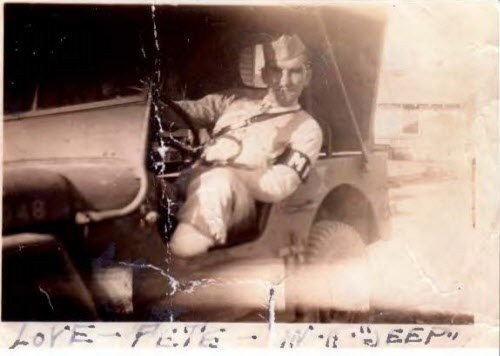
    Hondo told us last January that Sergeant First Class Peter Simon’s earthly remains had been identified by DPAA. Cleveland Plain Dealer reports that he arrived in Ohio today for his final rest on Saturday.

    A veteran of World War II, SFC Peters was killed in Korea as a member of G Company, 8th Cavalry Regiment, 1st Cavalry Division on September 5, 1950 during the defense of the Pusan Perimeter.

    He was born in Grindstone, Pennsylvania, in 1915, the son of John and Elizabeth Simon, with six siblings (all deceased now). The family later moved to Northeast Ohio.

    Simon’s niece, Dolores Soltesz, of Maple Heights, was contacted by the Defense POW/MIA Accounting Agency (DPAA) earlier this year with news that her uncle had been identified.

    “I was oldest living relative,” she said. “It was a big shocker. I couldn’t believe it. After 68 years of him being dead, it was a very big surprise to me.”

    Graves Registration personnel were guided to his initial grave by a Korean peasant and he was marked as Unknown X-1085 until January this year when he was identified while DPAA were trying to identify other remains.

    Ms. Soltesz is laying her uncle near her planned final resting place;

    “I certainly am so happy,” she added. “I’m glad I lived long enough to see him brought back to the country that he served. I never thought they would find him.”

    Soltesz said she chose All-Saints Cemetery for his burial because “I’m putting him where I’m going, so he’ll be where I’m at.”

  • Lt. Frank Fazekas comes home

    Lt. Frank Fazekas comes home

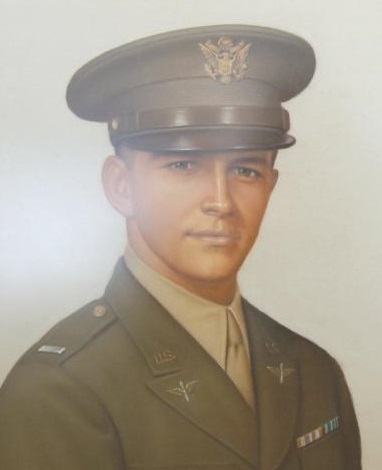
    WTOP reports that Lt. Frank Fazekas will be laid to rest in Arlington National Cemetery this week after years inside his P-47 Thunderbolt in the French field where he came to rest after succumbing to German anti-aircraft fire 74 years ago.

    “When the plane fell, there were still bullets exploding” from the plane’s .50-caliber machines guns, recalls Marc Cooche. He was 12 then; at 86, he’s still haunted by memories of that afternoon.

    In Cooche’s recollection, the plane veered to avoid some electric cables, maneuvering in the air for two or three minutes before plummeting nose first. The crash left a deep crater in a field of beets. Flames fed by the plane’s fuel licked the sky, and the hole burned for days.

    The boys and their father wanted to rescue the pilot. Cooche’s father “came with horses and barrels of water to put out the fire,” he says, but Germans had arrived at the site and turned him away.

    For years, the crater filled with debris and the farmers got back to work until four years ago when a team of British, looking for their own pilots discovered parts from the Lieutenant’s aircraft and notified Americans. After years of fruitless searching, they caught a break;

    Department of Defense officials searching the archives found aerial images of the area taken two days after the crash. Konsitzke took the image and overlaid it with a current aerial photo — and they found the exact location.

    “It really was dumb luck,” says Leslie Eisenberg, a Wisconsin Historical Society archaeologist who also worked on the project.

    Cooche’s memory had been tricked because the road moved years ago to make way for the train, which was only 100 yards from the crash site.

    The searchers included volunteers from the University of Wisconsin-Madison, burning up their personal vacation time, along with students from the University of Wisconsin and University of Hawaii and Defense Department personnel. They ended up going twice to the site, in 2016 and 2017, digging a 10- to 15-foot deep hole in the hard clay.

    They found six machine guns. They found the plane’s engine. And they found some bones of Frank Fazekas Sr., and his dog tags.

    The son who never met his father will welcome him home Wednesday;

    Frank Fazekas Jr. was just six months old at the time, living with his mother in a tight-knit Hungarian community in Trenton, New Jersey.

    Fazekas Jr. would pore over letters written between his mother and father, focusing on his father’s signature. “I would practice signing my name like he did,” he says.

    Because his dad flew, he loved airplanes. He got a degree in aeronautical engineering and became an Air Force pilot, serving in the Vietnam War. He later worked with Department of Defense contractors and now, at 74, he’s in his third career as a tour business owner in New Hartford, New York.

    “For a lot of years I felt like I was trying to complete something for him … the whole aviation thing, the flying, it was all cut short, I mean so abruptly at age 22.”

    Frank, Senior will join his wife Theresa in their shared casket at Arlington.

  • Remembering the Bataan March

    Remembering the Bataan March

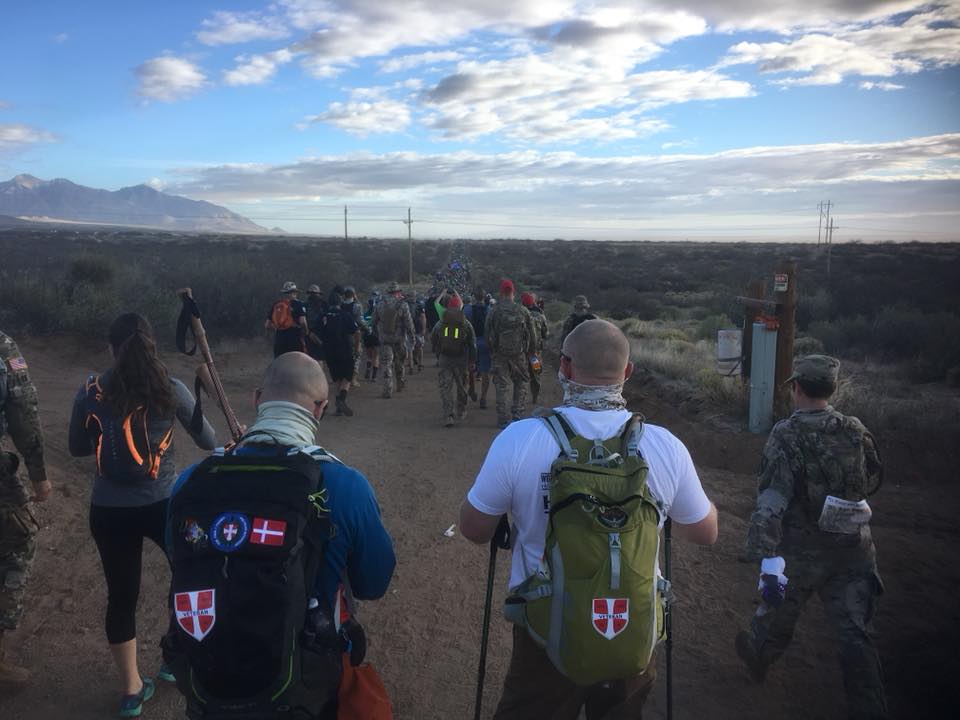
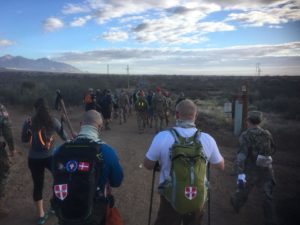
    While many people took to the streets to march for their lives (to make it sound overly-dramatic) across the country, Top Kone and 8500 friends marched at White Sands, New Mexico to remember the folks who were lost in the Bataan Death March 76 years ago.

    I took today to join a march that honored the men and women who have given their lives, limbs, and health to defend all our rights. The 8,500+ of us marched 26 miles, many with 35 pound backpacks, most of us had signs with the names of friends and fellow unit members who died serving this nation and its people, some even sung cadences. We shook the hands of survivors of the Bataan Death March, shared stories of our friends, and honored their willingness to defend your right to be completely wrong.

  • Frank C. Gaylord II passes

    Frank C. Gaylord II passes

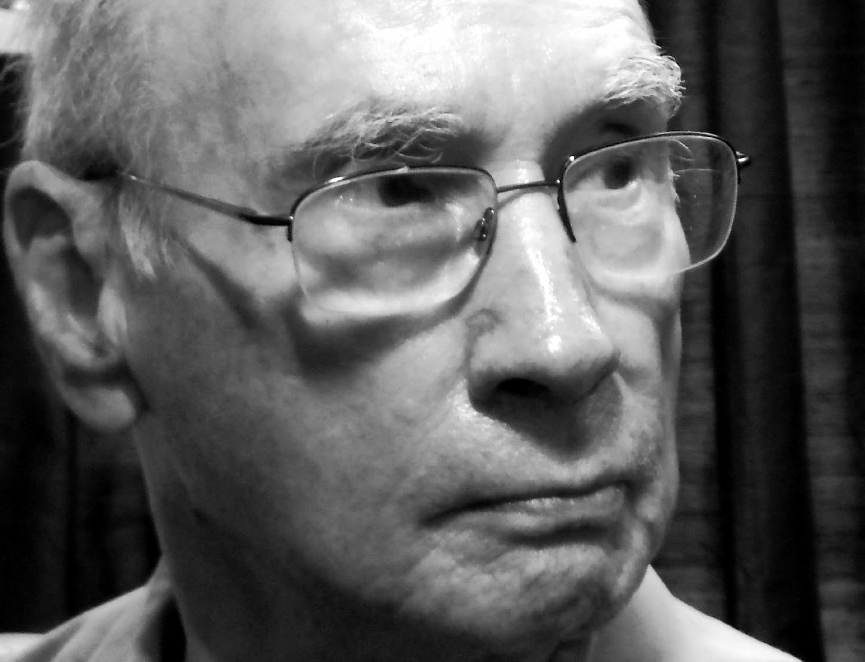
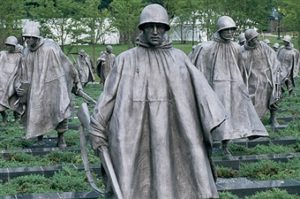
    Bobo sends us the sad news that Frank C. Gaylord II passed at the age of 93. He is best known as the sculptor of the figures at the Korean War Veterans Memorial. Reportedly, the faces of the men were actually taken from Gaylord’s sketches of the people he served with during World War II as a paratrooper with the 17th Airborne Division.

    Born March 9, 1925, in Clarksburg, West Virginia, he was the son of Richard and Thelma (Hamilton) Gaylord.

    Frank graduated from Washington Irving High School in Clarksburg. Next, he enlisted in the U.S. Army and served as a paratrooper in the 17th Airborne Division, Company C, 513th Parachute Infantry based out of Fort Meade, Maryland, before being honorably discharged with the Bronze Star for Valor Combat Infantryman’s Badge and Combat Paratroopers Badge. After his discharge, he went to Temple University on the GI Bill where he graduated in 1950 with a bachelor’s degree in fine arts.

  • Rudolph Johnson comes home

    Rudolph Johnson comes home

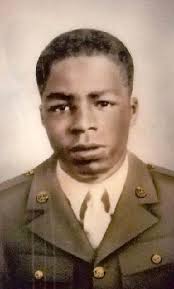
    We get the news today that Private Rudolph Johnson, a member of Company K, 3rd Battalion, 365th Infantry Regiment, 92nd Infantry Division who was killed in Italy on February 1, 1945, has come home to Arkansas. Hondo told us that his earthly remains had been identified in August.

    The Texarkana Gazette tells us that he will be buried on Friday at Arkansas State Veteran’s Cemetery, Little Rock, Ark after a memorial ceremony on Thursday.

    Hicks Funeral Home tells the story of his life and of his service in the all-African-American 92nd Infantry Division.

    Private Johnson’s unit initially reported him Missing in Action (MIA) on 6 February 1945. With no additional information regarding his whereabouts, the U.S. Army changed his status for MIA to Killed in Action (KIA) on 21 February 1945. Private Rudolph Johnson gave his life for his country at the age of 19.

    He has two brothers and three sisters to welcome him home.

  • “Woody” Williams salutes “guardian angel” Charles G. Fischer

    “Woody” Williams salutes “guardian angel” Charles G. Fischer

    We’ve talked a few times about 94-year-old Herschel “Woody” Williams, the last surviving Iwo Jima Medal of Honor recipient – the last of twenty-seven men who were awarded that medal for that battle. Williams has never taken full credit for his actions on February 23, 1945, instead he credits the marksman he calls his “guardian angels”, who provided cover for him while he charged across an airstrip with a flame thrower, eliminating the threats to his fellow Marines from Japanese pillboxes.

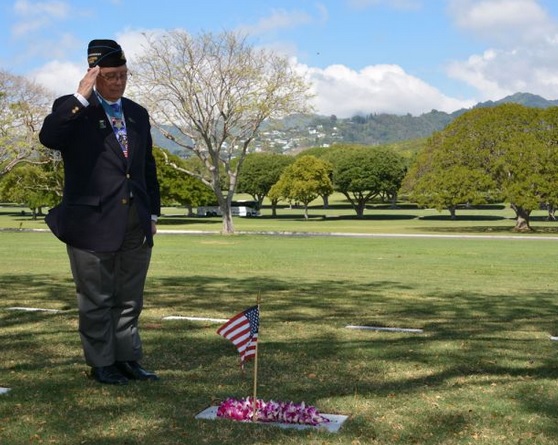
    Stars & Stripes reports that he stopped by the grave of one of his “guardian angels”, Charles G. Fischer when he was in Hawaii last week;

    On Saturday, Williams, with the Medal of Honor hanging around his neck, stood over the Hawaii grave of Charles Fischer, one of those “guardian angels” who helped him survive that day and is buried in the National Memorial Cemetery of the Pacific, nicknamed the Punchbowl.

    He saluted the Marine, who died a private first class that day, and then slowly bent down and placed a purple lei upon his headstone.

    “I have always said I’m just the caretaker of it,” Williams said later of the Medal of Honor. “It belongs to them. They sacrificed for it. I didn’t.”

    Williams is also the last surviving Medal of Honor recipient in West Virginia.

  • Togo West passes

    Togo West passes

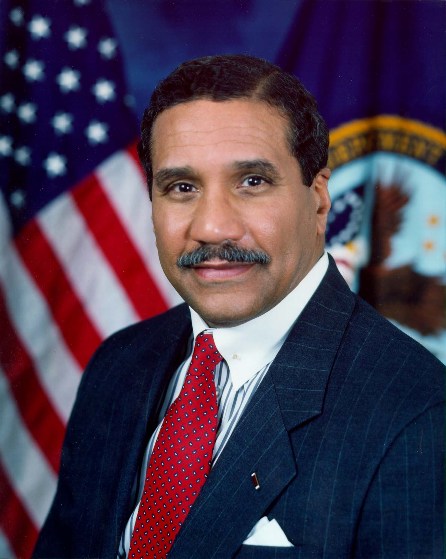
    Bobo sends us the sad news that Togo West has passed at the age of 75 from a heart attack while he was on a cruise in the Caribbean between Barbados and Puerto Rico.

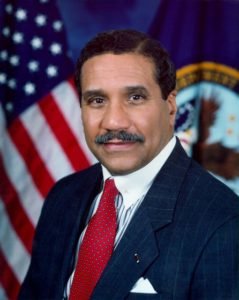
    West served in the Army as an artillery officer and in the JAG Corps from 1965 – 1969. He went on to serve as General Counsel of the Navy and General Counsel of the Department of Defense during the Carter Administration. In the Clinton Administration, he served as Secretary of the Army and the Secretary of Veterans Affairs. West also conducted the investigation into the Fort Hood terrorist attack.