Category: We Remember

  • Happy birthday, Richard Overton

    Happy birthday, Richard Overton

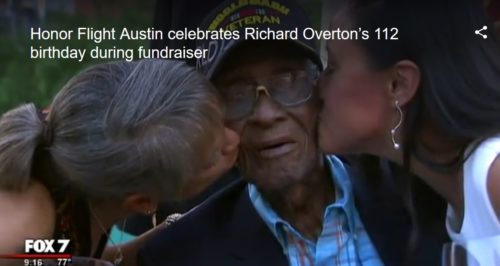
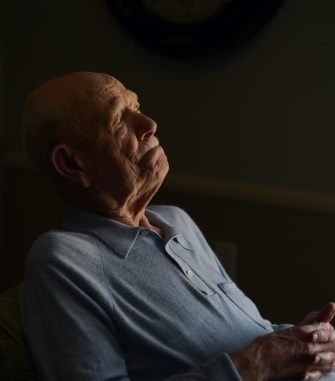
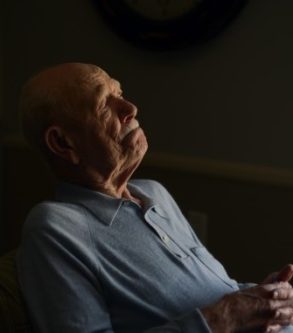
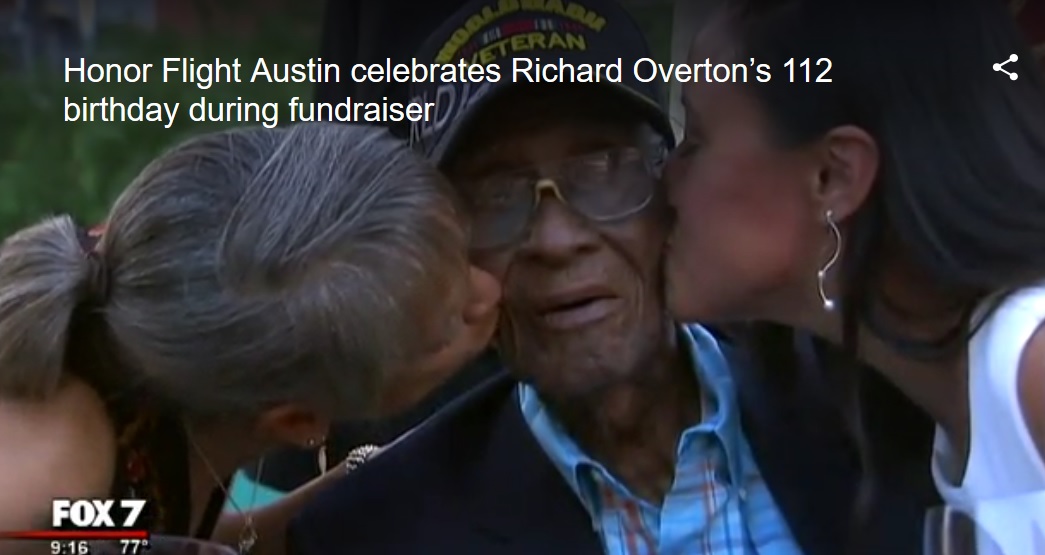
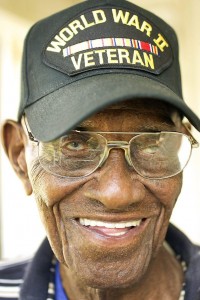
    Richard Overton, the oldest World War II veteran has just completed his 112th orbit of the sun. He seems to be enjoying the attention;

    From Fox News last year;

    Richard Overton was born May 11, 1906 in Bastrop County. When he came of age, he served in the Pacific Theater from 1942 to 1945 as part of the all-black 1887th Engineer Aviation Battalion. After the war, he returned to Austin, and he has lived in the same home ever since.

    While he has been honored by sitting presidents, governors and other global dignitaries for his distinguished service, most days he can be found sitting on his front porch proudly wearing his WWII Veteran baseball hat holding a cigar.

    He gives credit to God for his longevity and continues to attend church, but he’s got a few tricks up his sleeve, too.

    “I’ve been smoking cigars from when I was 18 years old, I’m still a smoking them, 12 a day,” Overton joked in 2014.

  • Army Major Donald G. Carr comes home

    Army Major Donald G. Carr comes home

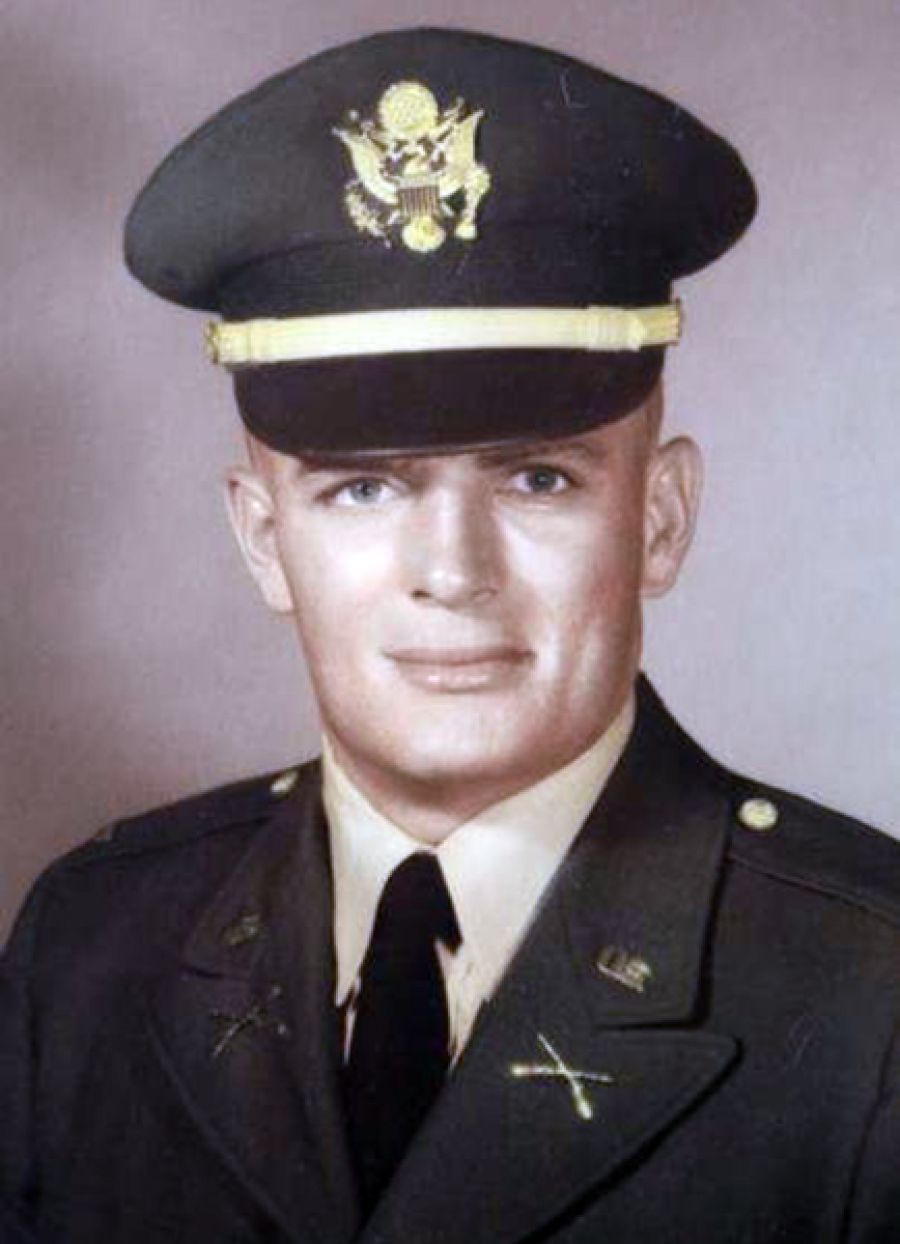
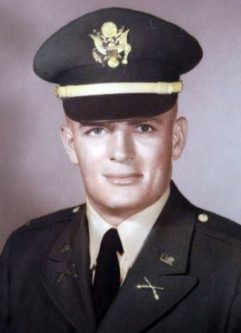
    DPAA reports the earthly remains of Major Donald G. Carr have been identified and that he is being returned to his family;

    Army Maj. Donald G. Carr, 32, of San Antonio, accounted for on Aug. 19, 2015, will be buried May 11, at San Antonio National Cemetery. On July 6, 1971, Carr was assigned to the Mobile Launch Team 3, 5th Special Forces Group, as an observer in an OV-10A aircraft that supported an eight-man Special Forces reconnaissance team. During his mission, his aircraft encountered bad weather. Shortly afterward, the ground team heard an explosion to their northeast, which they believed to be that of an OV-10A. They failed to locate the crash site, however, and Carr was declared missing in action.

    Between September 1991 and March 2014, joint U.S./Lao Peoples’ Democratic Republic teams conducted more than 25 investigations and site surveys, but could not locate his remains.

    In April 2014, a Vietnamese citizen contacted American officials, claiming to know about possible American remains in Kon Tum Province, Vietnam. Wreckage, photos, personal effects, and remains were located and transferred to DPAA, and later identified as Carr’s.

    To identify Carr’s remains, scientists from DPAA and the Armed Forces Medical Examiner System used circumstantial evidence and DNA analysis, including mitochondrial DNA.

    The support from the government and the people of Vietnam was vital to the success of this recovery.

    From NWI Times;

    In March 2014, Owen Bell, a Canadian expat, was giving a motorcycle tour in southern Vietnam. At a sightseeing stop, he encountered a young Vietnamese man dressed in combat fatigues (apparently a local fashion statement) making a hard-to-believe claim. The man said a few of his friends, while on a hunting excursion four years earlier, had come upon the wreckage of an American military plane with a body nearby.

    To prove it, the guy showed Bell a bone fragment he carried around for good luck and a copy of a dog tag, belonging to a Donald G. Carr.

    Later that day, Bell Googled Carr’s name and found an article Cox had written about the search for the solider. This guy might be telling the truth after all, Bell thought.

    Bell later met with the man and his friends, three tribesmen who were nervous about being found out by Vietnamese authorities. Bell, assuring them he would keep their identities confidential, broached the idea that the American government might pay reward money for information about missing soldiers.

    The men went on to tell Bell about how, during that hunting trip in the jungle, they encountered an aircraft that resembled a frog, with a tail and two legs, and a dead body about 10 to 15 feet away. They admitted goofing around and playing with the defunct machine gun for a bit, before selling what they could for scrap. They showed Bell the original dog tags, as well as more pieces of bone.
  • First Sergeant David Quinn comes home

    First Sergeant David Quinn comes home

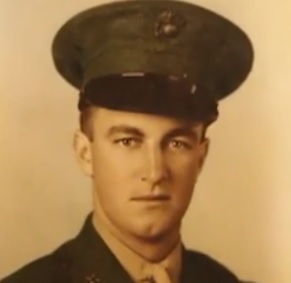
    Back in December, Hondo told us that Marine First Sergeant David Quinn’s remains had been identified by DPAA. He was in Company C, 2nd Amphibian Tractor Battalion, 2nd Marine Division, USMC, when he was lost on Tarawa Atoll on 21 November 1943 – just four months after he was married.

    Bert sends us a link to WMUR which reports that First Sergeant Quinn will be returned to his family in Temple, New Hampshire later this week;

    On Saturday, he will be buried with full military honors in his hometown of Temple, where generations of the Quinn family have lived since 1780.

    Paul Quinn never met his uncle, but always felt a connection to him and always hoped one day his remains would be identified.

    “Elation – that’s about the only way to describe it,” Paul said. “I might have got a little choked up about it.”

    A Quinn family member, a Marine Stationed in Hawaii, will escort First Sergeant Quinn’s earthly remains for the entire journey home.

    Sgt. Quinn will finally be laid to rest in a space in his family’s plot that has been waiting all these years.

    “I think it’s going to be one of the days of my life I will always remember,” Paul said. “I’m looking forward to the time I can go down to the cemetery and I know that his remains are there. It’s going to be wonderful, like the family’s back together again.”

  • Roy Hawthorne, Navajo Code Talker passes

    Roy Hawthorne, Navajo Code Talker passes

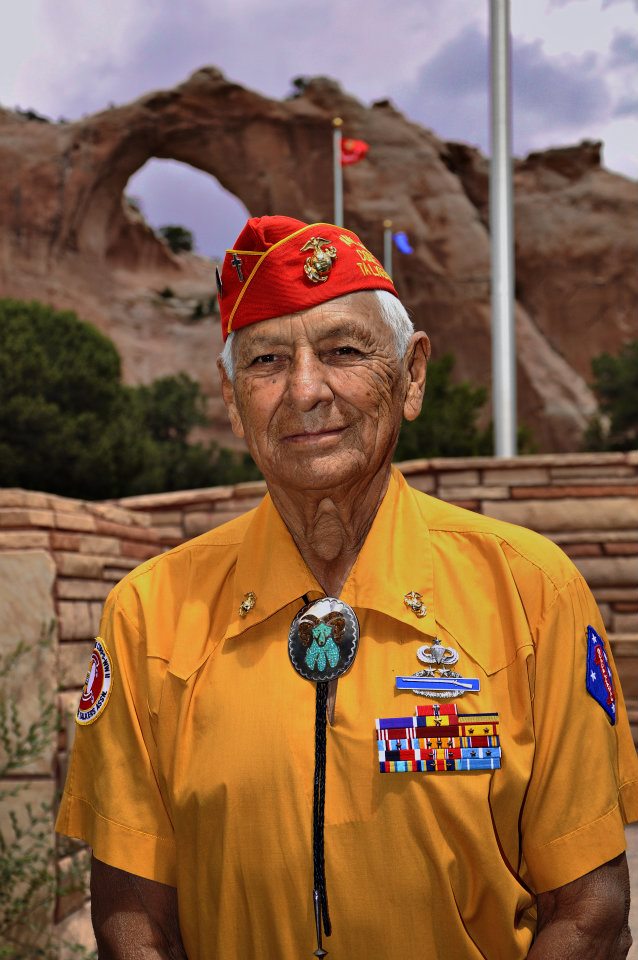
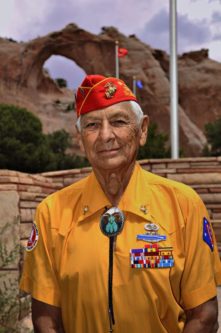
    AZ Central reports that Roy Hawthorne, Sr, a Navajo Code Talker during the war in the Pacific against Japan has passed at the age of 92.

    Hawthorne was 17 when he enlisted in the U.S. Marine Corps and became part of a famed group of Native Americans who encoded hundreds of messages in the Navajo language to keep them safe from the Japanese. Hawthorne served in the 1st Marine Division in the Pacific Theatre and was promoted to corporal.

    The code was never broken.

    “The longer we live, the more we realize the importance of what we did, but we’re still not heroes — not in my mind,” Roy Hawthorne said in 2015.

    But Hawthorne’s son, Regan Hawthorne, said Monday his father leaves a proud legacy.

    “They went in out of a sense of duty and a spirit of responsibility to their country,” Regan Hawthorne said, adding he didn’t know about his father’s military service until he was in his 20s.

    Hawthorne was a “second generation” of code talkers, the last of the original code talkers passed about four years ago.

    During the Korean War, Hawthorne enlisted in the US Army.

  • Memorial for helicopter crews at Arlington

    Memorial for helicopter crews at Arlington

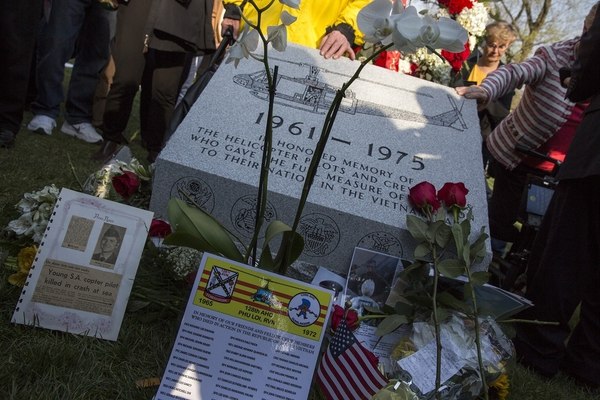
    The Army Times reports that a memorial to helicopter crews of the Vietnam War was dedicated at Arlington National Cemetery last week.

    As the crowd gathered around the monument, “Taps” rang out among the cemetery, and the thudding of distant helicopters caused attendees to wonder out loud if Hueys were about to appear on the horizon.

    Over the tops of the trees in Arlington, four helicopters from Marine Helicopter Squadron One — which transports the president — flew over as the crowd clapped and cheered.

    “This [monument] is something we’ve been waiting for a long, long time,” said Michael Mikulan, who flew helicopters in Vietnam in 1969. “For many of us here who are 70 and above, this is it. We couldn’t ask for anything more.”

    My uncle was a helicopter crew chief in Vietnam 1966 – 1967 and he came home to us safely. 2,197 helicopter pilots and 2,717 crew members were killed

    “Vietnam soldiers were rejected by society when they came back. They were blamed for the war along with the politicians who created policy,” he told Army Times. “All of the [troops] in the modern era, for at least the last 15 years … have benefited because now people are able to see a warrior and know it’s okay to hate war but love the warrior.”

  • Armand Sedgeley awaits his Silver Star

    Armand Sedgeley awaits his Silver Star

    The Denver Post tells the World War II story of Armand Sedgeley and the more contemporary story of John Fine, a diver and photographer who discovered the wreckage of Sedegely’s B-17 bomber in the water off the coast of Corsica. The B17 had been damaged by German fighters and limped towards the British airbase on Corsica, but the pilot had to ditch because the airstrip wouldn’t accommodate the massive bomber. The crew members that survived the attack were rescued by the British soon after the bomber sank where it was discovered by Fine decades later.

    Fine began searching for survivors and was finally able to meet Sedgeley;

    When Fine learned that some others had received the Silver Star for their heroism in combat that day, he broached the subject. Sedgeley said his squadron leader had put him in for the honor, but it didn’t get approved — although two gunners among the crew were recognized. He heard no explanation.

    “All I know is we all did our best and it was recognized by the squadron, but from there on, I have no information, and they can’t seem to locate the Silver Star orders,” Sedgeley said. “So it is a mystery. I don’t understand it.”

    Unbeknown to Sedgeley until recently, Fine has pursued the honor on his behalf. He said that through archives and Sedgeley’s own flight diary, he discovered information that wouldn’t have been part of the original narrative — information that might trigger a reconsideration. “Busy commanders could not have had all the information available now or they surely would have awarded this 22-year-old hero his Silver Star,” he wrote in his appeal to government officials.

    Fine said he sought help from Colorado Sen. Cory Gardner’s office to expedite the process, although Gardner’s spokesman said that policy prohibits commenting on such casework.

    So now, they wait.

    “I think it’s most unusual for a person to go to the expense he’s gone to, to get a medal without even being involved,” Sedgeley said. “I didn’t know he was doing it for a long time.”

    Of course, I left out a lot of the story so I don’t steal from the Denver Post, but you should read the entire article.

  • Sgt. Noel Ramirez and Deputy Sheriff Taylor Lindsey murdered

    Sgt. Noel Ramirez and Deputy Sheriff Taylor Lindsey murdered

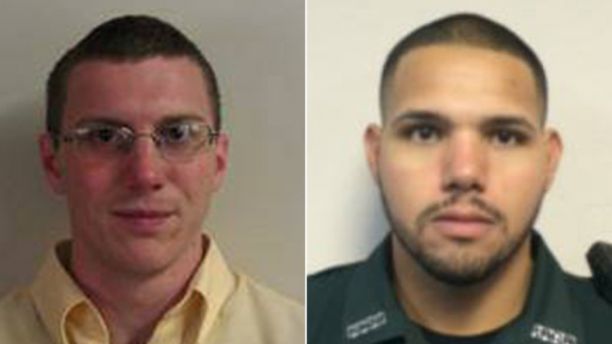
    Mick sends us a link to Fox News which reports that Sgt. Noel Ramirez, 30, and Deputy Sheriff Taylor Lindsey, 25 of the Gilchrist County Sheriff’s Office were murdered while they ate their lunch at the Ace China restaurant. A gunman shot them through the plate glass window.

    “As fellow deputies responded to the scene, they found the shooter deceased outside the business,” the statement read.

    Gilchrist County Sheriff Bobby Schultz said Thursday night it was unclear if the gunman had killed himself. A motive for the shooting wasn’t immediately revealed.

  • Maj. Gen. Michael “Iron Mike” D. Healy passes

    Maj. Gen. Michael “Iron Mike” D. Healy passes

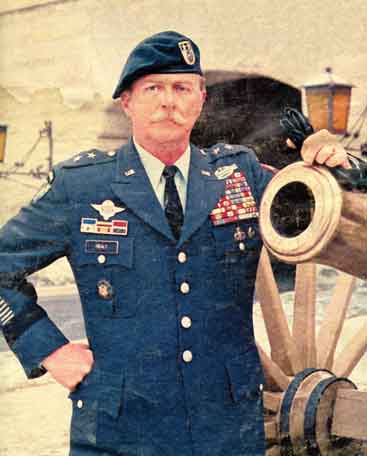
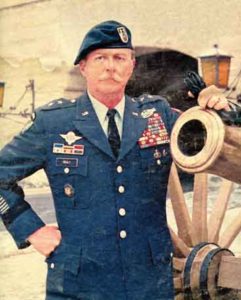
    The Fayetteville Observer reports that Major General Michael D. Healy, known as “Iron Mike” passed this last Saturday in his Jacksonville, Florida home;

    When he retired in 1981, Maj. Gen. Healy was the nation’s most senior Special Forces soldier. He was a veteran of wars in Korea and Vietnam, with his service in the latter spanning a decade and ending with him overseeing the withdrawal of troops from the country. And he was the inspiration for John Wayne’s character, “Col. Iron Mike Kirby,” in the 1968 film “The Green Berets.”

    Maj. Gen. Healy is also a former commander of the U.S. Army John F. Kennedy Special Warfare Center and School at Fort Bragg…By the end of his career, Maj. Gen. Healy had earned numerous awards and decorations, including a Distinguished Service Medal, two Silver Star Medals, a Legion of Merit with three oak-leaf clusters, a Distinguished Flying Cross, a Bronze Star Medal with valor device, an Air Medal with Valor device, a Navy Commendation Medal with valor device and two Purple Heart Medals. He is also a member of the Officer Candidate School Hall of Fame.

    According to SWCS, Maj. Gen. Healy was “known by his men for his loyalty, compassion and love, as much for his tenacity in war.”

    Maj. Gen. Healy was a native of Chicago who enlisted in the Army at the age of 19 at the end of World War II.