Category: We Remember

  • Navy awards two posthumous medals for Peal Harbor

    Navy awards two posthumous medals for Peal Harbor

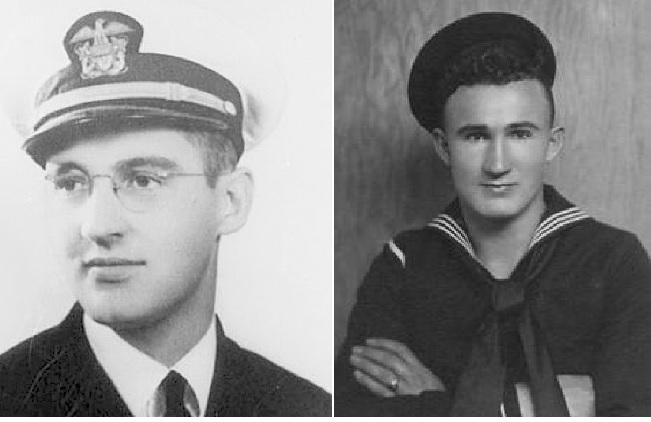
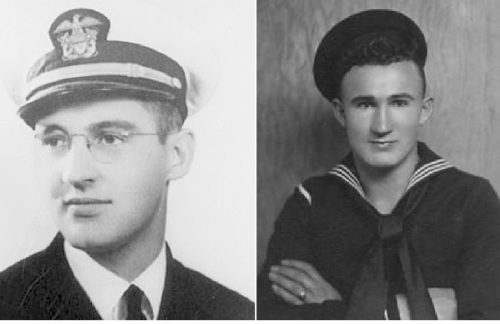
    The Navy writes to tell us that the Navy Secretary Richard V. Spencer has awarded medals to Chaplain Lt. j.g. Aloysious H. Schmitt and Chief Boatswain’s Mate Joseph L. George for their actions during the Japanese attack on US Naval forces on December 7, 1941 at Pearl Harbor, Hawai’i.

    Navy Chief of Chaplains Rear Adm. Margaret Kibben will present the Silver Star Medal to a member of Schmitt’s family during a ceremony on the campus of Loras College in Dubuque, Iowa on Dec. 7. The 8:45 a.m. (Central time) presentation ceremony will be preceded by a special Catholic mass in a campus chapel previously dedicated to Schmitt, and in which his remains are interred.

    The Bronze Star Medal will be presented by Rear Adm. Matthew J. Carter deputy commander of the U.S. Pacific Fleet, to George’s daughter, Joe Ann Taylor, on Dec. 7 during a 4:30 p.m. (Hawaii-Aleutian time) ceremony at the USS Arizona Memorial in Pearl Harbor.

    “The presentation of the medals is not only appropriate but simply the right thing to do,” said Spencer. “One of my highest priorities is to honor the service and sacrifice of our Sailors, Marines, Civilians, and family members and it is clear that Lt. Schmitt and Chief George are heroes whose service and sacrifice will stand as an example for current and future service members.”

    In October 1942 Schmitt was posthumously awarded the Navy and Marine Corps Medal, the Navy’s award for non-combat heroism. The Navy later published a clearer definition of combat for award purposes, making. Schmitt was retroactively eligible for the Silver Star Medal, the military’s third-highest personal decoration for valor in combat. Schmitt’s family petitioned the Navy to upgrade his recognition to a combat valor award.

    Similarly, in 1942 George was officially commended by his commanding officer following the attack, but he was not awarded any medal. Lauren Bruner and Don Stratton, two of the USS Arizona Sailors saved by George’s actions, petitioned for him to be presented a medal.

    Stars & Stripes reported that Chaplain Schmitt’s earthly remains were identified last year.

    The battleship, which had a complement of about 1,300, quickly rolled over in 50 feet of water, trapping hundreds of men below decks.

    Thirty-two were saved by rescue crews who heard them banging for help, cut into the hull and made their way through a maze of darkened, flooded compartments to reach them.

    Others managed to escape by swimming underwater to find their way out. Some trapped sailors tried to stem the rushing water with rags and even the board from a game. One distraught man tried to drown himself.

    A few managed to escape through portholes – saved by brave comrades such as Father Schmitt, who is said to have helped as many as 12 sailors get out of a small compartment.

    He was posthumously given the Navy and Marine Corps Medal for heroism.

    The medal citation states that after helping several shipmates to safety, he got stuck in the porthole as other sailors tried to pull him through.

    “Realizing that other men had come into the compartment looking for a way out, Chaplain Schmitt insisted that he be pushed back into the ship so that they might escape,” the citation says.

    CBS News tells the story of Chief George;

    Donald Stratton and Lauren Bruner survived the inferno, and then beat the actuarial tables to live well into their nineties. They came to Washington to win recognition for the sailor who saved them that day.

    “We got out on the deck, on the hot steel deck, and he throwed us a heaving line,” said Stratton.

    The sailor was on the repair ship USS Vestal tied up next to the Arizona. Stratton, Bruner and four other men were trapped on that platform, badly burned and about to be roasted alive.

    “After about three or four throws, he finally got the line over to us,” Stratton recalled. “We pulled it across and tied it off on the Arizona, and we went hand-over-hand across the line to the Vestal, about 70 or 80 feet. He was probably the only guy that could have got that line to us.”

    For years, neither man knew who that sailor was. But now they do. He was a 26-year-old Boatswain’s Mate named Joe George.

    Before he died, George did an interview with University of North Texas for an oral history of the “day of infamy.” It is the only record that exists of him telling his own story.

    From the Navy press release;

    After securing the line as best he could, George returned to fighting fires and controlling damage aboard Vestal. When it became apparent Arizona was doomed, George assisted with getting Vestal underway and away from the burning and fast-sinking battleship. Arizona lost 1,177 crewmembers during the attack. Vestal lost seven.

    George went on to serve throughout the war and retired in 1955 as a chief petty officer after twenty years in the Navy.

    According to George’s daughter, he was brought back to the ship by military policemen for fighting downtown on Saturday night and that’s why he was on the ship that fateful Sunday morning.

  • DPAA identifies 100 remains from USS Oklahoma

    Stars & Stripes reports that the Defense POW/MIA Accounting Agency (DPAA) has identified 100 sailors and Marines who were lost on the USS Oklahoma when the Japanese attacked Pearl Harbor Hawai’i on December 6, 1941.

    429 crew members were killed on the ship when it was struck by at least five torpedoes fired from Japanese aircraft. Some were killed by the strafing the battleship suffered while it rolling over. Some of the crew escaped to the USS Maryland by clamoring over the moorings.

    Only 35 of the crewmen’s remains have been returned home since the battle.

    Two years ago, DPAA disinterred the remains of 400 folks.

    Officials exhumed the bodies after determining that advances in forensic science and genealogical help from families could make identifications possible. The buried Marines and sailors have been classified as missing since World War II.

    The agency has said it expects to identify about 80 percent of the battleship’s missing crew members by 2020.

    The most recent identification came last week, the agency said in a news release. The family hasn’t been notified yet, however, so his name hasn’t been released.

  • “Concrete” Bob Miller passes

    “Concrete” Bob Miller passes

    We just got the sad news that our buddy “Concrete” Bob Miller has passed. He succumbed to that rotten bitch cancer after a nearly year-long battle.

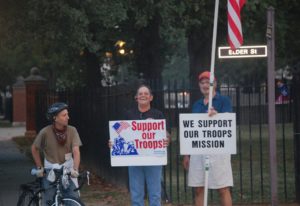
    We’ve known him for more than a decade when Code Pink decided they’d protest against the Iraq War at the Walter Reed main gate where the wounded troops would arrive from their flight back. Bob organized a counter-protest across the street from Code Pink.

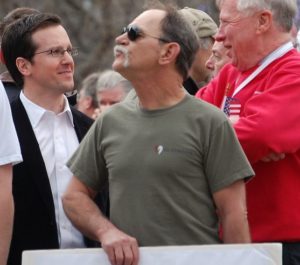
    When Code Pink’s protest permit expired, Bob was at the DC office and got permission for the counter-protest to occupy both sides of the main gate. The Code Pink protest got moved down the block away from the sight of the wounded troops as they arrived on the Friday night bus. Here’s a picture of him standing on that liberated corner;

    Bob was a Marine Corps veteran of the Vietnam Era and his favorite pastime was being with the young troops. He barbecued for them every chance he got, he organized Richmond, Virginia’s welcome home parade for the Iraq troops after the war, and he loved his counter-protests. He facilitated most of the Protest Warriors events in DC.

    Bob leaves behind his wife, his son and two daughters. From the announcement of his passing;

    We plan to celebrate his momentous life on December 16th at Hunton Baptist Church starting at 10:30am.

    Hunton Baptist Church

    11660 Greenwood Rd, Glen Allen, VA 23059

    Thank you for all your thoughts and prayers.

    In lieu of flowers, please donate to a veteran’s cause:

    http://www.herolabradors.org/

    https://www.woundedwarriorproject.org/donate

    Cooking with the Troops

    Home

  • Jim Nabors passes

    Jim Nabors passes

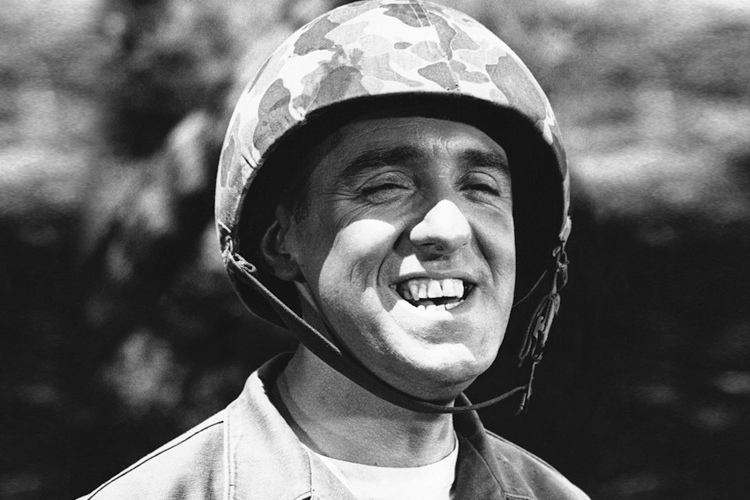
    Chip sends us the sad news that Jim Nabors who portrayed Gomer Pyle in the show of that name for five years – the Marine against whom every real Marine was measured from those days forward – has passed at the age of 87.

    Although Nabors had never served, he was promoted twice as Pyle by the Marine Corps according to Wiki;

    “Gomer Pyle” received an honorary promotion to Lance Corporal from the Commandant of the Marine Corps James L. Jones in 2001, and on September 25, 2007, he was promoted from Lance Corporal to Corporal by Lt. General John F. Goodman.

    He was a big life-long supporter of Marines, even during the Vietnam War days when it wasn’t popular to do so.

  • Promise kept

    Promise kept

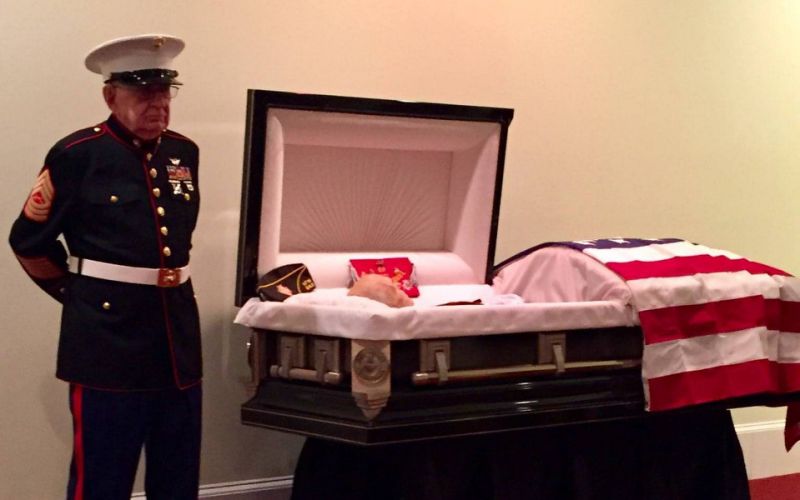
    Master Sergeant William H. Cox and First Sergeant James T. Hollingsworth made a promise to each other one New Year night in 1969 under an enemy mortar barrage in Vietnam, that if they lived through the night, they’d meet up every year afterwards on that day and they did. Up until Hollingsworth succumbed to an illness, but his last mission for Cox was to deliver Hollingsworth’s eulogy, according to The Telegraph.

    “I said, ‘Boy, that’s a rough mission you’re assigning me to there,’” Mr Cox told the Greenvilleonline.com.

    When Mr Hollingsworth, whose nickname was ‘Hollie’, passed away aged 80, Mr Cox honoured his friend’s request by delivering his eulogy.

    The 83-year-old also insisted on standing guard over Mr Hollingsworth’s casket without the aid of the walking stick he usually relies on.

    Mr Cox added: “There’s a bond between Marines that’s different from any other branch of service. We’re like brothers.”

    I’d say that there’s a bond between all veterans, irrespective of their branch of service, but I won’t take anything away from these two Marines. I do know that my uniform won’t fit as well 50 years after I was discharged like Sergeant Cox’ uniform fits him.

  • Thomas J. Hudner passes

    Thomas J. Hudner passes

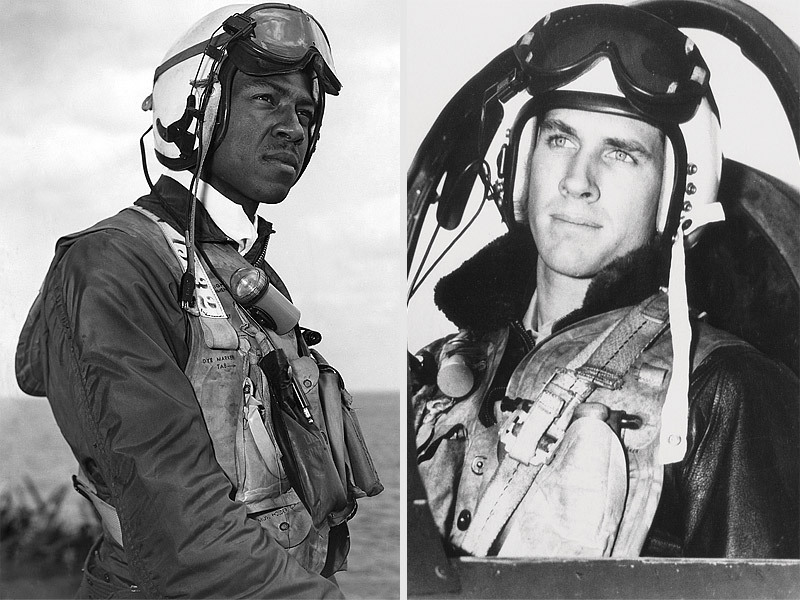
    The sad news has reached us that Thomas J Hudner, Jr has passed at the age of 93. He was awarded the Medal of honor during the Korean War when he tried to rescue a fellow pilot, Ensign Jesse L. Brown, when Brown’s aircraft succumbed to enemy fire while they were covering the withdrawal of troops from the Chosin Reservoir. Hudner’s citation;

    For conspicuous gallantry and intrepidity at the risk of his life above and beyond the call of duty as a pilot in Fighter Squadron 32, while attempting to rescue a squadron mate whose plane struck by antiaircraft fire and trailing smoke, was forced down behind enemy lines. Quickly maneuvering to circle the downed pilot and protect him from enemy troops infesting the area, Lt. (J.G.) Hudner risked his life to save the injured flier who was trapped alive in the burning wreckage. Fully aware of the extreme danger in landing on the rough mountainous terrain and the scant hope of escape or survival in subzero temperature, he put his plane down skillfully in a deliberate wheels-up landing in the presence of enemy troops. With his bare hands, he packed the fuselage with snow to keep the flames away from the pilot and struggled to pull him free. Unsuccessful in this, he returned to his crashed aircraft and radioed other airborne planes, requesting that a helicopter be dispatched with an ax and fire extinguisher. He then remained on the spot despite the continuing danger from enemy action and, with the assistance of the rescue pilot, renewed a desperate but unavailing battle against time, cold, and flames. Lt. (J.G.) Hudner’s exceptionally valiant action and selfless devotion to a shipmate sustain and enhance the highest traditions of the U.S. Naval Service.

    Ensign Brown was the first Black naval aviator and Boston.com fills in some of the details left out of the citation;

    On seeing that Brown was alive after his crash landing, Hudner tightened his harness, jettisoned all excess weight, and landed, wheels up, within 100 yards of the wreck in two feet of snow. He found Brown conscious and calm, bareheaded, his fingers frozen, unable to reach his fallen gloves and helmet.

    “We’ve got to figure out how to get out of here,” Brown told him.

    Hudner removed the woolen watch cap he had carried in his flight suit, placed it over Brown’s head and wrapped Brown’s hands in an extra scarf. Then he looked into the cockpit. The ensign’s right knee was crushed and jammed between the fuselage and the control panel.

    With only one hand available — he needed the other to hold on to the plane — Hudner could not extricate him. He radioed the incoming helicopter to bring an ax and a fire extinguisher. The trapped man, he later recalled, “was very stoic.”

    “He was motionless and slowly dying,” he said.

    Hudner packed snow around the smoking canopy to keep any flames away. But the hatchet the helicopter pilot brought just bounced off the unyielding metal, and amputation was not an option: The rescuers could not get deep enough inside the cockpit.

    “If anything happens, tell Daisy I love her,” Brown told Hudner, referring to his wife. With nightfall rapidly approaching, the helicopter had to leave. Hudner promised Brown that he would return soon with better equipment.

    “It was a baldfaced lie,” he said later; he knew he could never get back in time. By the time Hudner had left him, in fact, Brown might have already died.

    Brown’s squadron mates later returned to the site, drenched the body with napalm and set it ablaze to prevent it from being desecrated.

    Brown posthumously received a Distinguished Flying Cross.

    The New York Times calls the attempted rescue a “civil rights milestone” since the whole thing played out just two years after Truman desegregated the military.

  • CWO2 Lee M. Smith passes

    CWO2 Lee M. Smith passes

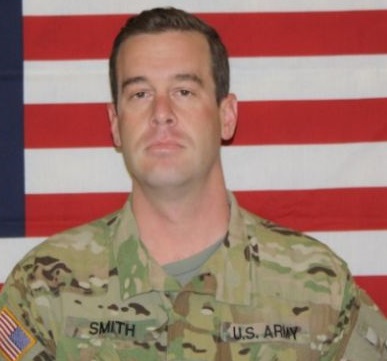
    The Department of Defense reports the death of Chief Warrant Officer 2 Lee M. Smith, 35, of Arlington, Texas due to non-combat-related injuries on Veterans’ Day. The accident, which is being investigated, occurred at Camp Taji, Iraq.

    Mr Smith was assigned to 101st Combat Aviation Brigade, 101st Airborne Division, Fort Campbell, Kentucky.

  • No man left behind

    No man left behind

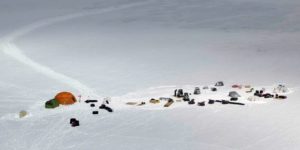
    FuzeVT and jonp send a link to the story on Fox News about Fallen American Veterans Foundation (FAVF) which is attempting to recover the last two missing Coast Guardsmen of the Second World War from their icy grave in Greenland – as much as 350 feet of icy;

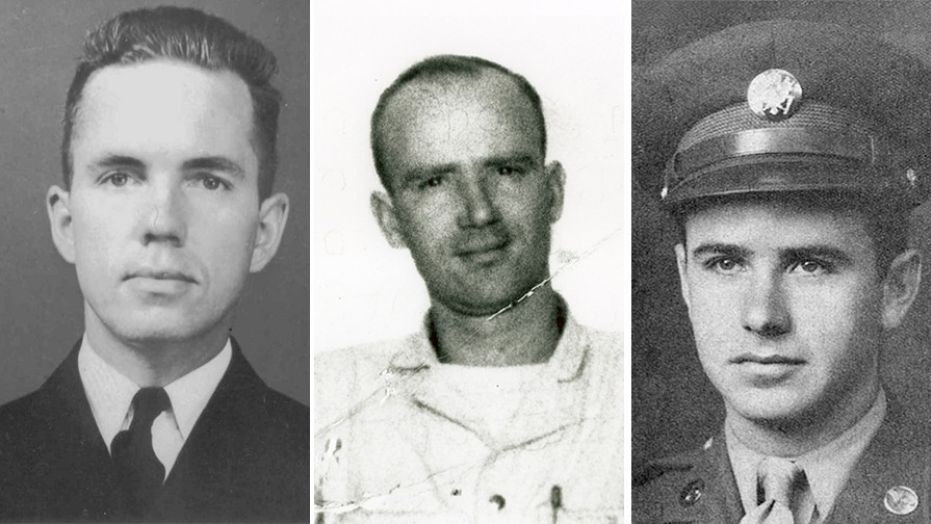
    Co-founded by Sapienza with survivors of three U.S. Navy airmen from 1946’s Operation High Jump, which sought to establish the U.S. Antarctic research base, FAVF’s first mission is focused on a U.S. Coast Guard J2F-4 Grumman Duck amphibious biplane, which went down amid rescue operations during a whiteout in remote terrain near Køge Bugt, Greenland on Nov. 29, 1942. The plane was carrying the Coast Guard’s pilot Lt. John Pritchard and Radioman 1st Class Benjamin Bottoms, as well as the U.S. Army Air Force’s Corporal Loren Howarth.

    Lou Sapienza, Chairman of FAVF – who leads an expert alliance of scientists, engineers and explorers on both government and non-government missions to recover the remains of those who disappeared in the line of duty. (Lou Sapienza)

    For the U.S. Coast Guard – which has been working with the FAVF team on the expedition since 2010 – it is a far away expedition that hits especially close to home.

    “The Coast Guard has offered to provide aircraft and helicopter support for a properly funded and expertly planned search,” Sapienza said.

    The target plane and it’s crew might be covered in up to 350 feet of ice and snow. The recovery mission claims that they should be able to determine the location of them in 5-7 days beginning in April.