Category: We Remember

  • Private First Class Albert E. Atkins comes home

    Private First Class Albert E. Atkins comes home

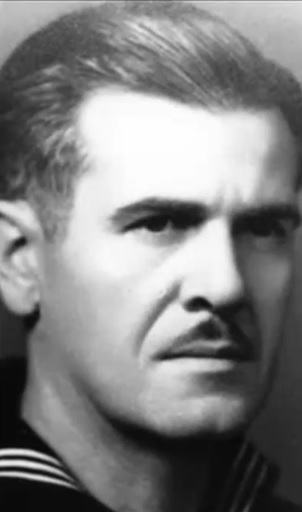
    Gary sends us a link to the news that Private First Class Albert E. Atkins has made it home finally. He was reported to be missing in action along with two other soldiers on May 23, 1951, when his unit, Company E, 2nd Battalion, 187th Airborne Regimental Combat Team assaulted Hill 911 near Mae-Bong, South Korea.

    Hondo told us that his earthly remains were identified in June.

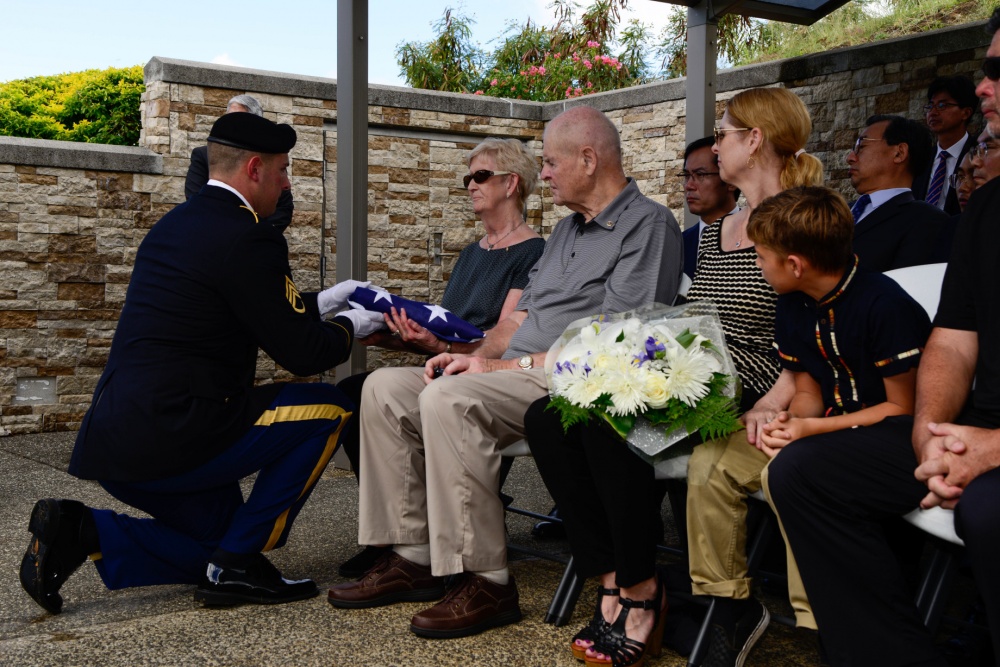
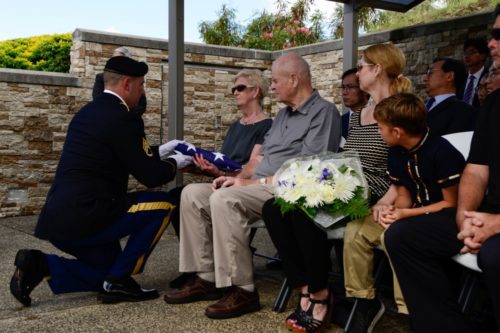
    We learn that he was interred at the National Memorial Cemetery of the Pacific, Honolulu, Hawaii by the 225th Brigade Support Battalion, 2nd Infantry Brigade Combat Team, 25th Infantry Division with PFC Atkins’ family in attendance. According to the VA;

    On Sept. 17, 1966, two South Koreans provided information regarding three side-by-side graves in the vicinity of Kwandra-ri, South Korea. A U.S. Army Graves Registration team recovered the remains and sent them to the Central Identification Unit in Yokohama, Japan for analysis. Two of the remains were individually identified as members of Atkins’ company, but the third set of remains, labeled X-6385, could not be identified and was interred at the National Memorial Cemetery of the Pacific in Honolulu.

    After a thorough historical and scientific analysis of information associated with remains X-6385 it was determined that the remains could likely be identified. After receipt of approval, the remains were disinterred from the NMCP on Nov. 1, 2005 and sent to the laboratory for analysis.

    To identify Atkins’ remains, scientists from the Defense POW/MIA Accounting Agency and the Armed Forces Medical Examiner System used mitochondrial DNA analysis, involving next-generation sequencing, which matched his family, as well as dental and anthropological analysis, which matched his records, and circumstantial evidence.
  • Clarence Beavers passes

    Clarence Beavers passes

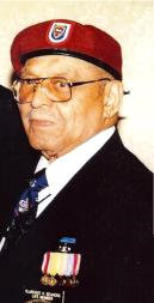
    We got the sad news today that the last of the surviving original volunteers for the “Triple Nickels”, the all-black parachute regiment, Clarence Beavers passed at the age of 96. From Stars & Stripes;

    His unit, which formed the original core of the 555th Parachute Infantry Battalion or Triple Nickles, was never as well known as the Tuskegee Airmen or Buffalo Soldiers. Yet the 17-member group played a seminal role in the integration of the military and the development of smoke jumping, a novel firefighting method in which remote forest fires – sparked by Japanese bombs carried by balloons – were fought by men who protected themselves with modified football helmets and willfully landed in trees.

    […]

    Beavers was the first volunteer of what was known as the test platoon of black paratroopers, a unit that was meant to decide the fate of African Americans in the airborne. In what he later recalled was “extremely rough and extremely personal training,” he and his fellow black soldiers slept two-to-a-bunk in a cramped, unheated hut and ate separately from their white peers in the mess hall. German prisoners of war experienced better conditions at the base, platoon members later said.

    Still, 17 of the unit’s 20 original members, successfully earned their wings, becoming the founding members of the all-black 555th.

    According to the article, the 555th was sent to the Pacific Northwest in 1945 to work with the National Park Service fighting forest fires started by Japan’s balloon bombs on a secret counter-terrorism mission entitled “Operation Firefly”;

    The Triple Nickles responded to about three dozen fire calls and performed more than 1,200 individual jumps, putting out fires started by bombs as well as by lightning or other natural causes. Working with crosscut saws, shovels and a combination digging-cutting tool called a Pulaski, they sought to starve fires using similar methods to those of contemporary smoke jumpers.

    Contrary to their training, when they practiced landing in open fields, they avoided the risk of landing in a rock-strewn meadow or prairie and aimed for the trees themselves – wearing a protective helmet that mixed elements of a football helmet and mesh-faced fencing mask to guard against stray branches.

    The 2d Ranger Company in the Korean War were recruited from the Triple Nickel when they were disbanded after desegregation and the 2d Ranger Company became the only all-black Ranger company in history. But Mr Beavers, a staff sergeant after the war, left the service and worked for the VA and DoD retiring in 1978 and becoming a volunteer firefighter in Upstate NY.

  • Sgt. George Sahlmann’s Purple Heart

    Sgt. George Sahlmann’s Purple Heart

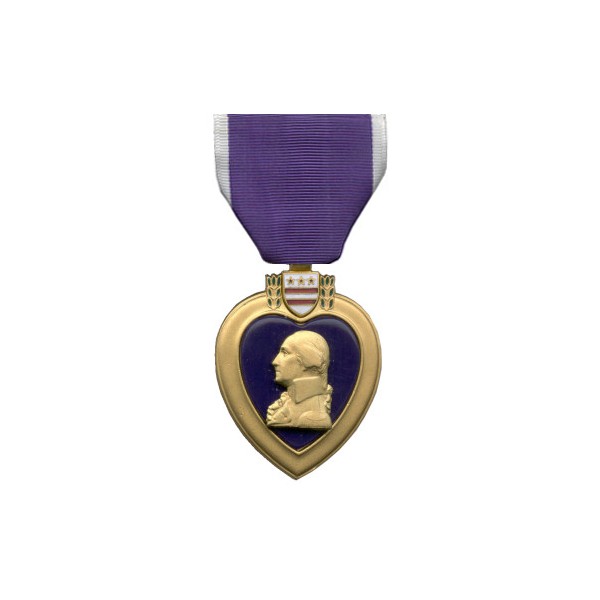
    According to CBS News, Sgt. George Sahlmann’s Purple Heart Medal will have a permanent home in the Museum of Jewish Heritage in Manhattan, New York when his family will present it tomorrow night with the help of our friends at Purple Hearts Reunited.

    According to their Facebook page, in 1937 Sahlmann stowed away on a ship to escape the Nazi noose around the necks of Jews in Europe. After he was arrested, he was allowed to stay in the US where he began a career in barbering, but when war broke out, he enlisted in the Army out of a sense of duty to country;

    [Sgt. George Sahlmann] saw action across Italy, France, and Germany. He was wounded on three separate occasions. Because he spoke fluent German, ironically, he was assigned as camp supervisor of a German POW camp. George had to now care for the very men who attempted to wipe out his race. He did so with respect, compassion, and the utmost professionalism one would expect from a Non-Commissioned Officer. We owe it to George to tell his story and keep his legacy alive!

    According to the CBS article, Sahlmann’s Purple Heart was acquired from a collector along with some other of his medals. Sergeant Sahlmann passed away in 2006 at the age of 95.

    According to Purple Hearts Reunited, a registered 501(c)(3) nonprofit foundation, founded by my buddy Major Zach Fike of the Vermont National Guard and a Purple Heart recipient himself, they have returned 375 Purple Hearts to families in 46 states since their founding in 2012.

  • Samuel Crowder comes home

    Samuel Crowder comes home

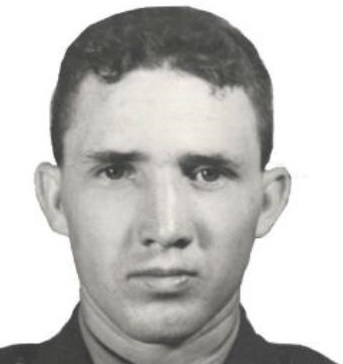
    FM1c Samuel Crowder was a member of the crew of the USS Oklahoma when it was struck by a number of Japanese torpedoes on December 7, 1941. He was lost along with 429 of his shipmates.

    Hondo told us that his earthly remains were identified back in September. Top Kone sends us a link to the news that his family welcomed him home and now he lies in eternal rest near his mother in Kentucky;

    Family members said its amazing how one person’s life, years later, can reunite a family.

    “This has almost been a family reunion. Because we’re meeting family members that we have never met before from Washington, Oregon and some right here in Louisville,” Johnson said.

    “This is the very first time we’ve met our Kentucky family. My brother and I flew out from the west coast and we have never met our cousins out here,” Fred Crowder said.

    And while the day was filled with a fix of emotions, there was peace in knowing a hero who gave up his life for his country is finally home, even if it took 76 years.

    “It’s finally time for closure for our entire family,” Crowder said.

  • Archie Newell comes home

    Archie Newell comes home

    Hondo told us that Archie Newell’s earthly remains were identified from Betio Island in June. The Capitol Journal reports that his trip home ended at Arlington National Cemetery yesterday.

    A burial for Marine Corps Private Archie Newell is to take place Friday. Remains of the serviceman killed in November 1943 were identified after they were disinterred by the Defense POW/MIA Accounting Agency from the National Memorial Cemetery in Honolulu last year.

    The 22-year-old Newell was among the Marines who landed against Japanese resistance on the small island of Bertio in the Tarawa Atoll of the Gilbert Islands. Newell was killed on the first day of the battle that killed about 1,000 Marines and sailors.

    Private Newell was assigned to Company C, 2nd Tank Battalion, 2nd Marine Division when he went to his reward.

  • 76th Anniversary of Pearl Harbor attack

    76th Anniversary of Pearl Harbor attack

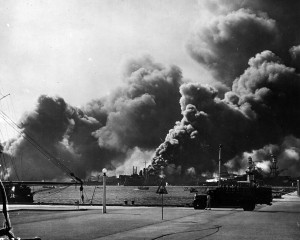
    Pearl Harbor burning

    Seventy-six years ago today we were “suddenly and deliberately attacked by naval and air forces of the Empire of Japan” leading to our ultimate involvement in the war which the rest of the world had been fighting for more than two years. Wiki records our casualties on that day;

    All eight U.S. Navy battleships were damaged, with four being sunk. All but one were later raised, and six of the eight battleships returned to service and fought in the war. The Japanese also sank or damaged three cruisers, three destroyers, an anti-aircraft training ship, and one minelayer. 188 U.S. aircraft were destroyed; 2,402 Americans were killed and 1,282 wounded. Important base installations such as the power station, shipyard, maintenance, and fuel and torpedo storage facilities, as well as the submarine piers and headquarters building (also home of the intelligence section) were not attacked. Japanese losses were light: 29 aircraft and five midget submarines lost, and 65 servicemen killed or wounded. One Japanese sailor was captured.

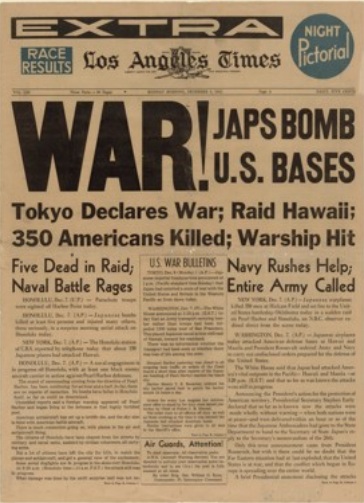
    LA Times Pearl Harbor

    Here is a link to President Roosevelt’s request to Congress for a declaration of war the following day.

    Disregard the title of this video – it is not racist.

  • George B. Willie Sr. Navajo code talker passes

    George B. Willie Sr. Navajo code talker passes

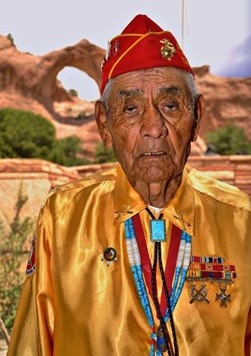
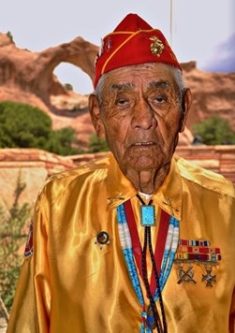
    We hear the sad news this morning that George B. Willie Sr., who was a Navajo Code Talker at the battle for Okinawa with the 2d Marine Division, has passed at the age of 92 according to ABC 15;

    He and other Navajos followed in the footsteps of the original 29 who developed the code and received the Congressional Silver Medal in 2001.

    Willie is survived by his wife Emma, 10 children and several grandchildren.

    A celebration of life is scheduled Dec. 8 at the Presbyterian Church in Leupp.

    From Indianz.com;

    Willie was only 18 years old when he joined the U.S. Marine Corps. He served from 1943 to 1946 but didn’t discuss his war efforts because the military told him and other Code Talkers to keep it a secret.

    “Like many of our Code Talkers, Willie enlisted into the military at a young age and went on to courageously defend our freedom and liberty as the United States of America,” Navajo Nation President Russell Begaye said in a press release on Tuesday.

    The Code Talkers project was eventually declassified in 1968 though it took Willie some time for him to go public with his service, according to his daughter, Annabelle Smallcanyon.

    “He kept to himself but after going to his first meeting with the Navajo Code Talkers, he was able to open up. I was then able to talk with him about it,” Smallcanyon said. “Later on as people would come up to shake his hand, he would stand tall and feel proud about his service as a Code Talker.”

  • Alexander Nininger’s family sues to bring him home

    Alexander Nininger’s family sues to bring him home

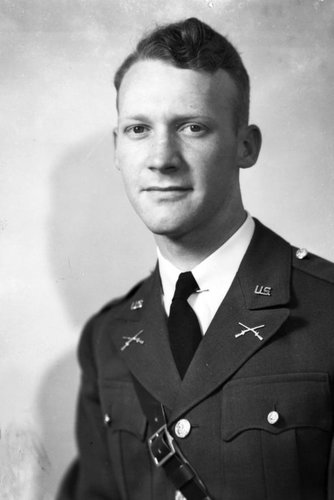
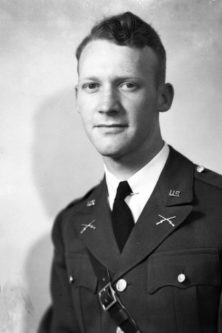
    Lieutenant Alexander Nininger earned the Medal of Honor in the last few moments of his life assigned to the 57th Infantry, Philippine Scouts, near Abucay, Bataan in the Philippines on January 12th, 1942. His citation reads;

    For conspicuous gallantry and intrepidity above and beyond the call of duty in action with the enemy near Abucay, Bataan, Philippine Islands, on 12 January 1942. This officer, though assigned to another company not then engaged in combat, voluntarily attached himself to Company K, same regiment, while that unit was being attacked by enemy force superior in firepower. Enemy snipers in trees and foxholes had stopped a counterattack to regain part of position. In hand-to-hand fighting which followed, 2d Lt. Nininger repeatedly forced his way to and into the hostile position. Though exposed to heavy enemy fire, he continued to attack with rifle and handgrenades and succeeded in destroying several enemy groups in foxholes and enemy snipers. Although wounded 3 times, he continued his attacks until he was killed after pushing alone far within the enemy position. When his body was found after recapture of the position, 1 enemy officer and 2 enemy soldiers lay dead around him.

    He was the first soldier awarded the Medal of Honor in World War Two. His earthly remains were hurriedly deposited in a grave and his family want his remains identified and sent home. The New York Times reported a few months ago that they are willing to sue the government for that to happen. They’ve given DNA samples towards that end, but the government hasn’t budged;

    In the decades since, he has been venerated with a statue, an annual award at West Point and even a Malcolm Gladwell treatise on human potential. But his body has not been found. The Army officially lists him as “nonrecoverable.”

    His family disagrees. It says the lieutenant’s bones rest in grave J-7-20 at the American Cemetery in Manila. For 70 years, the family has been pressing the military to identify the remains and bring the fallen lieutenant home.