Category: War Stories

  • “…but, Mom, if we go to war…”

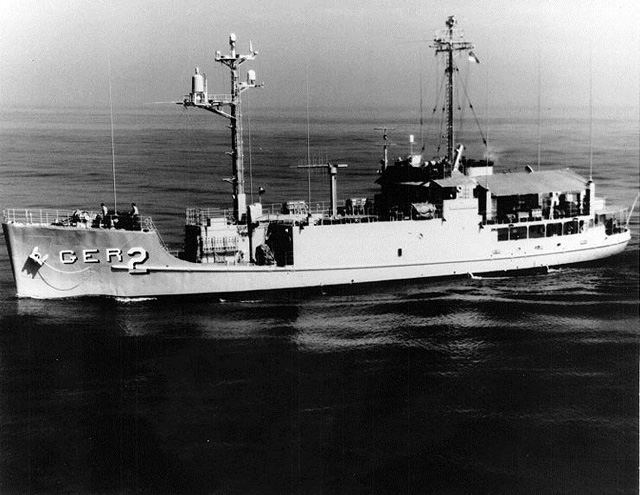
    Image result for photos of uss pueblo

    Photo: NSArchives

    Guess who is upset with the US for dropping a Very Large Bomb on the Afghan-Paki border in a spot where ISIS is known to hold its confabs? Why, none other than the former president of Afghanistan, Karzai himself.  http://www.cnbc.com/2017/04/17/former-afghan-president-massive-us-bomb-was-an-atrocity.html

    He says the GBU-43 (Giant Bomb Until-exploded #43) MOAB is an atrocity. I think that’s really rich coming from him, don’t you? Isn’t he the whiner who talked the US into prying the Taliban out of Afghanistan when he couldn’t get it done? And didn’t he tolerate their bad behavior and their atrocities until they sent that country into the toilet? Or is my memory fading? Is Karzai bored since he left office? He seems to want attention rather badly. So is Karzai longing for a war now?

    It’s been a while since the feeling that something big was going to happen hit me like a brick, but last Friday night, after running errands all afternoon so that I wouldn’t have to do it on Saturday, I went over to the restaurant on the highway to get some supper instead of cooking. There was a lot of stuff on the TVs hung over the food area, the usual chatter and some sports stuff and I paid no attention, because whatever is going to happen, is going to happen. Right?

    Must have been liberty weekend or something. Some E-2 sailor wearing crackerjacks was sitting in a booth with his girlfriend, talking on the  phone with his mother. Or talking to the phone, because you could hear Mom, too. I had eyes and ears on the news. The chatter from the sailor’s phone con, while distracting from the news, wasn’t enough to grab my attention until that noise changed to “but, Mom, if we go to war….”

    Oh, shit.

    For those of you too young to remember, the USS Pueblo was off the coast of North Korea, supposed to be in international waters, when she was hijacked by the Norks under Kim Il-Sung (Grandpa Kim) on January 23, 1968.  I was sorting prints in the print finishing room at NAVPHOTOCEN, Anacostia, which has been replaced by some other building. A PH1 came out of the Chief’s office to let us know what had happened. He said it was ‘an act of war’, which meant we’d be in it for the duration. Yes, there was that sinking feeling that came and went. What did it really mean?  LBJ did consider using nukes over that.

    A bare seven days later in the wee hours of the morning on January 30, 1968, Uncle Ho launched his  attack on every ville, city, and military base in South Vietnam. The Tet Offensive lasted until September that year. I didn’t have a TV or radio at my apartment, and a lot of other things were going on stateside that accompanied the uptick in warfare in Vietnam, and all the discord that went with it. I tried to keep up with it all, based on the chatter at work.

    The Norks still have the Pueblo, as a museum. We need to bomb that sucker into oblivion, first thing. Take away their ‘glory’.  Coordinate something with the Chinese, because this isn’t Norkiland’s 1952 when the Chinese were supporting them.  The Chinese want foreign trade. We’re one of their biggest customers.

    You could put a real conspiracy theory novel together over collusion between Kim Il-Sung and Ho Chi Minh, if you took the time to do it. It would probably be more accurate and more entertaining that Ollie Stone’s conspiracy theory twaddle. Was the hijacking of the Pueblo an attempt to start World War III or maybe revive the Korean War?  And let’s not forget the (not Norks’ – my bad!) Soviets’  shooting down Korean Airlines Flight 007 in September 1983, because the pilots strayed slightly off course.

    So, Mom, Dad, I don’t think we will go to war. Trump is not Lyndon Johnson, not by a long shot.

    But if we do go to war, I hope it’s quickly over. I hope our losses are minimal. And I hope your kids come home intact.
  • Twenty-six years ago tonight

    Twenty-six years ago tonight

    This is republished from six years ago;

    February 17, 1991

    Twenty years ago, Task Force 1-41 Infantry attached to the Third Brigade of the 1st Infantry Division (from the Third Brigade of the 2d Armored Division (Forward)), was the only US unit in Iraq. We were fifteen clicks from the Saudi border, screening for the sweep east of Schwartzkopf’s “Hail Mary” strategy. For two days we had been watched by Iraqis and had a little contact. with some reconnaissance elements. However on February 17th, my gunner spotted 5 T-55s about 1500 meters in front of our defilade position and I called for indirect fire. The first response came from an Apache unit. The pilot ignored his instruments and fired the wrong grid coordinate, directly to my west, striking two vehicles in our own Scout platoon anchoring our far west flank.

    COB6 was the platoon leader of the platoon between my platoon and the Scout elements. Despite the orders of our company commander (a phrase that I use in several other stories involving COB6 and our commander), COB6 pulled his vehicle off the line and rushed to the burning vehicles (An M3 and and an M113 from the GSR unit). COB6 and his crew pulled the broken bodies from the vehicles with burning ammunition exploding around him and shielded the injured Scouts with his own body. Two of those scouts were dead, but three others owe their lives to COB6 and his crew.

    Needless to say we stopped calling for Apaches and after slamming two TOWs into a berm about a hundred meters in front of us, we used artillery fire. My first ever call for indirect fire in total darkness. The following morning, M1s found the T-55s 5000 meters north of the spot my gunner had spotted them.

    These are the names of the members of 1/41 we lost throughout the war;

    Tony R. Applegate
    David R. Crumby
    Manuel M. Davila
    Anthony W. Kidd
    David W. Kramer
    Jeffery T. Middleton
    James C. Murray, Jr.
    Robert D. Talley

    Talley and Middleton were killed that night.

    We had the highest casualty rate of any other infantry unit in the war, I say it’s because both sides were shooting at us.

    And, oh, yeah, my granddaughter celebrates her 26th birthday today, too.

  • War Stories, Sea Stories

    D-Day stuff

    I see that some of you are just hanging around, waiting for me to post the WOT.  It’s coming.

    In the meantime, this spot is some place where you can drop your stories that start with “Back when I was in the shit….” and go from there.

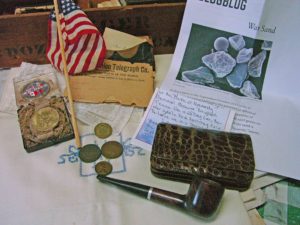
    That D-Day stuff like the box of sand is from a friend, except for the coins and the pipe. The pipe is my uncle’s and the coins were all minted during World War II. The flag on a stick has 48 stars. That should sort of date it because I do remember when Alaska was added as a state.


  • This ain’t your ol’ daddy’s Herky Bird…

    by Poetrooper

    When my unit was calling in gunships for close air support, those birds were usually old C-47’s, hold-over troop transports from WWII, armed and configured for this new mission. Sometime after I left Vietnam, that gunship role was taken over by the C-130 Hercules, an aircraft I knew as the best jumping platform available during the time I served in Airborne units. The venerable “Herc” has continued that role, providing CAS for American troops around the world. During that half-century of service the Herc has undergone many metamorphoses, but never in my wildest dreams did I think it might become a bomber. And yet, that is precisely what has happened in the latest iteration of this incredibly endurable fighting platform. As this official Air Force description sheet shows, the new AC-130J, Ghostrider, which is supposed to go fully operational this year, has, among its fearsome armament, GBU-39, small diameter bombs but also AGM-176 Griffin, air-to-ground missiles. And other articles out there indicate that laser weapons are in the future of the Ghost.

    Back in the early 60’s, I spent many an hour lounging beside airstrips, leaning back on my chute and equipment, closely eyeballing C-130’s as I waited to board them for another jump. To this kid from Oklahoma they were a wondrous thing with that unique turboprop whine that I can hear in my mind as I write this. But never in all those hours of contemplation did I ever imagine that those aircraft would someday be dropping bombs on and firing missiles at enemy targets in the Middle East fifty years later.

    Go figure…

  • The Fog of War


    This article from Cherries takes a look at the battle for the Ia Drang Valley, which was the subject of ‘We Were Soldiers Once and Young’, from the Vietnamese perspective.  The NVA thought they had won, and the US said otherwise.  Originally published in 2001.

    For those of you who were in country, I am glad you made it back.

    And for those who pretend you were there, just stop it.

    Reposted with permission.

    https://cherrieswriter.wordpress.com/2017/01/17/the-fog-of-war-the-vietnamese-view-of-the-ia-drang-battle/


  • “Such is how folk heroes are born.”

    “Eh, p!ss on him!”  I’m sure we’ve all heard a variant of that muttered by someone, directed towards someone in authority – when they’re out of earshot, of course.  (smile)

    But one time, it literally happened.  In that case, the “whizzer” was a relatively junior officer – and the “target”, a GO.

    And the junior guy got away with it with nothing but an ass-chewing.

    . . .

    The date was 21 September 1944.  It happened somewhere in the air over Germany.

    On that date, the 303th Bombardment Group executed a combat mission against rail yards in Maintz, Germany.  Some of the aircraft involved were from the 359th Bombardment Squadron.

    That squadron had some months prior instituted a rule prohibiting pilots from leaving the cockpit during a mission.

    The earlier practice had been for pilots in need of a “nature call” to go to the bomb bay and take care of business.  The new policy was that the pilot and copilot were to relieve themselves out of their respective cockpit windows after cracking them open slightly, allowing the slipstream to carry away the waste fluid.  After landing, the pilot was required to clean the window area personally.

    During the 21 September mission, the copilot of at least one of the 359th planes had to answer the call of nature.  He did so – unaware that the pilot had simultaneously decided to take a “smoke break”, and also had cracked open his cockpit window.

    Unfortunately, the smoker’s window created a cross-draft.  Not all of the waste fluid went out in the slipstream.  Some of it was caught in the cross-draft and struck the smoker dead in the face.

    The smoker was Brigadier General Robert F. Travis  – CG, 41st Combat Wing.  He was flying in that aircraft that day as pilot and mission commander on what was the final mission of his current combat tour.

    The copilot was the 359th Bombardment Squadron’s Operations Officer – who was a Captain.

    After landing, General Travis chewed the Captain’s butt for an extended period of time.  He told the Captain he would award the navigator and bombardier on the crew a DFC, but that the Captain wouldn’t be getting one.  He even threatened to court-martial him, but that threat was never carried out.  (The fact that General Travis’ tour ended and he left a month later might well have had something to do with that. [smile])

    In fact, other than that ass-chewing nothing at all happened to the young Captain.  He left the service after World War II, but returned to the USAF in 1948.  He then served until January 1977, retiring with 32 years active duty – as a Colonel.  One of his last assignments was as the Commander, Rhein-Main Air Base.

    The copilot’s name was William E. Eisehnart.  As far as I know, he’s the only junior officer who ever literally p!ssed in a general’s face and got away with it.  (smile)

    Lest you think this story can’t possibly be legit and should begin with, “No sh!t, there I was . . . ”, you can read this online Google Books excerpt from Stephen Frater’s Hell Above Earth; it documents the incident.  The title of this article was shamelessly lifted from the end of the incident description in that source.

    A second description of the incident can be found here.  A third description can be found here.

    As of earlier this year, Col. (Ret) William E. Eisehnart was still alive and resided in the Hilton Head, SC, area.  May you continue to live long and prosper, Colonel.


    Author’s Notes

    1.  Yes, this was the same Brigadier General Robert F. Travis who died in a B-29 crash at what was then Fairfield-Suisun AFB, California, in August 1950. The base was renamed Travis AFB in his memory the following year.

    2.  Hat-tip to the Military Corruption site for the original article I saw concerning the incident. Further research based on information in that original story allowed me to locate the referenced links in the article above.

  • Another Purple Heart story

    Another Purple Heart story

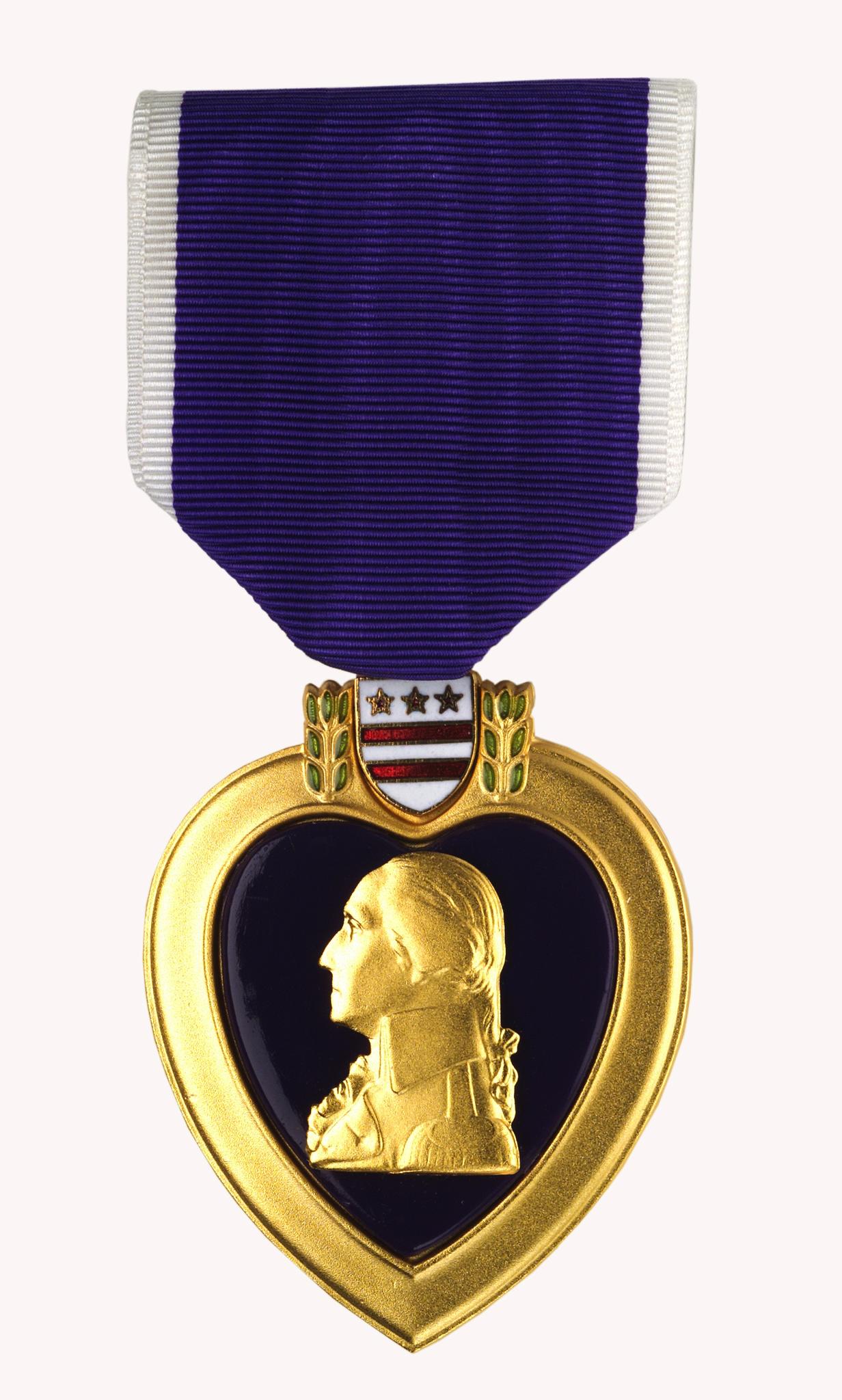
    Purple Heart medal

    Hack Stone sends us a link to the story of Nancy Sasson who was cleaning out a closet in her parents’ house when she discovered a Purple Heart medal on the floor. It was engraved on the back with the name Irvin S. Grindrod, who had been a captain nearly a hundred years ago with service in The Great War. The Purple Heart hadn’t been awarded during that war;

    In 1932, Gen. Douglas MacArthur resurrected the medal – a purple enamel heart showing a profile of Washington.

    Military personnel who had earned a Meritorious Service Citation Certificate in World War I could exchange the document for the Purple Heart. Those who had been wounded could swap their “wound chevrons,” worn on the sleeve, for the new award.

    Thousands of veterans applied to do that.

    Grindrod was one of them. Ms. Sasson tracked the trail from World War I to her parents’ closet and found out things about her own heritage that she hadn’t previously known. You should read the whole story.

  • A soldier’s story in his dog tag

    A soldier’s story in his dog tag

    Pfc. Thomas E. Davis

    Cultural historian Genevieve Cabrera found a soldier’s dog tag in a field where more than 70 years ago, American soldiers fought against the the 43rd Division of the Imperial Japanese Army on the island of Saipan. One of the American infantry divisions doing battle there was the New York National guard’s 27th Division. One of the soldiers in that division was Private First Class Thomas E. Davis. Somehow or another, he lost his dog tag in that farmer’s field where it laid until Ms. Cabrera found it sticking up out of the freshly tilled soil. 13,000 Americans were killed or injured in the 3 weeks and 3 days of that battle. 24,000 Japanese were killed, another 5,000 committed suicide and about a thousand civilians committed suicide plunging to their deaths on “Suicide Cliff” and “Banzai Cliff” because the emperor of Japan offered them special dispensation for a hero’s welcome into the afterlife in exchange for their deaths. PFC Davis wasn’t one of those casualties on Saipan, though. He earned a Silver Star, according to his family, for saving a fellow soldier’s life.

    Davis died about ten months later on Okinawa, along with the other 12,000 Americans who were KIA, but his dog tag remained on Saipan until now when it’s being returned to Davis’ family, according to the Associated Press, the dog tag will go to PFC Davis’ namesake nephew in Victoria, Indiana Texas.