/arc-anglerfish-arc2-prod-mco.s3.amazonaws.com/public/F7TZPLQJTBFNTPCNS3CAF7H3IM.jpg)
From what he knew of his ancestor’s death, it seemed possible. Davis had read letters that said William — a color sergeant in the 2nd Wisconsin Infantry Regiment, part of the Union Army’s famed Iron Brigade — died after being taken by ambulance for treatment.
Unfortunately for Davis, he may never find out.
/arc-anglerfish-arc2-prod-mco.s3.amazonaws.com/public/46FKYNN6SZDKVJCPCY5G4VBKXQ.jpg)
Davis said he finds the Army’s stance insulting.
“Don’t put someone in a box for eternity without their name if you have the ability to identify that person,” said Davis, 64, of Fort Myers, Florida.
Davis noted that the U.S. military has an entire department working to identify remains of service members, but the agency only investigates cases going back to World War II. He said he doesn’t understand why the military’s commitment comes with an apparent expiration date on older conflicts.
“There’s a covenant that exists between our country and our soldiers: If they’re lost, our country will try to find them, and if they’re found, our country will try to identify them,” Davis said. “When a soldier makes the ultimate sacrifice in battle for his country, when does the commitment to bring him home end?”
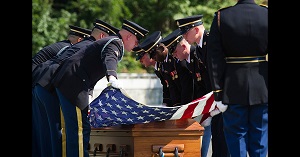
The 3rd Infantry Regiment, also known as the Old Guard, Caisson Platoon carry the remains of two unknown Civil War Union soldiers to their grave at Arlington National Cemetery in Arlington, Va., Thursday, Sept. 6, 2018. The soldiers were discovered at Manassas National Battlefield and will be buried in Section 81. Arlington National Cemetery opened the new section of gravesites with the burial. (Cliff Owen/AP)
This discovery was unusual, and accidental. Countless unidentified soldiers were buried where they fell during the Civil War. National Park Service policy is to leave their remains in place, considering battlefields to be hallowed ground.
The location corresponds with work done by surgeons in the battle’s aftermath, as the Union medical corps sent ambulances to collect the wounded and treat those left lying on the battlefield who could be saved, said Douglas Owsley, an anthropologist with the Smithsonian Institution who examined the remains.
Owsley said he does not dispute the Army’s contention that DNA testing would be unlikely to identify the two individuals, because there could be many potential candidates with plausible claims like those put forward by Davis, given the large number of casualties at Second Bull Run.
The Defense POW/MIA Accounting Agency already has a $144 million budget and 600 staffers working to identify tens of thousands of remains, and typically identifies about 200 service members a year. Making an exception in Davis’ case could open the door to an even larger caseload by violating its firm rule against investigating pre-World War II conflicts.

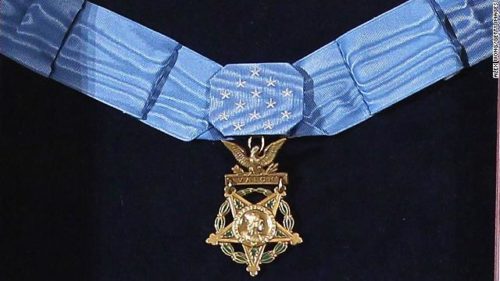
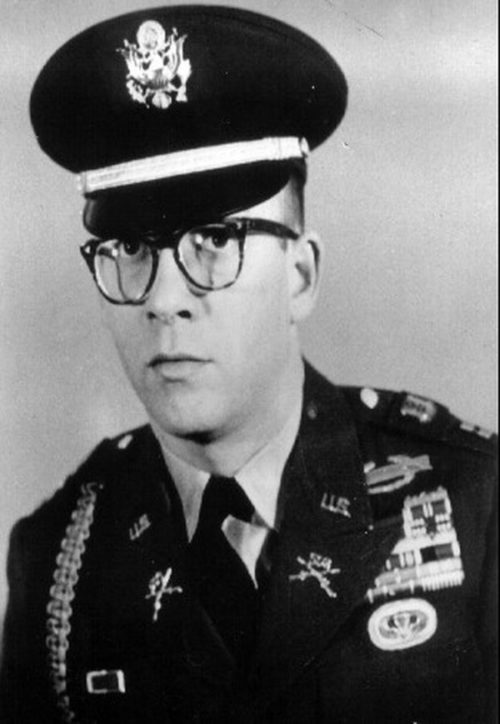 Benjamin Wilson received both the Medal of Honor and Distinguished Service Cross for actions that took place within a week of each other. (Army)