Category: Terror War

  • Join the exciting world of Stolen Valor Investigations

    Join the exciting world of Stolen Valor Investigations

    Some of yuz might be aware of a recent opening in the Circle of Trust.  Our resident Army guru has moved on to better things.  If you would like to join this exciting field of unlimited bullshit and mass confusion, please do not hesitate to contact us.

    All we ask of an investigator is:

    A willingness to put up with my constant haranguing.

    Generally lucid individual that looks forward to being the FNG

    Ability to give good phone.

    Some of those highly trained operator language skills would be a plus.

    Can deliver a compassionate approach to the monthly death threat.

    An abundance of time currently devoid of any purpose.

    Possess an ability to decipher clues.

    Preferably they have been in the Army, knows someone who has been in the Army or at least slept with someone that was in the Army.

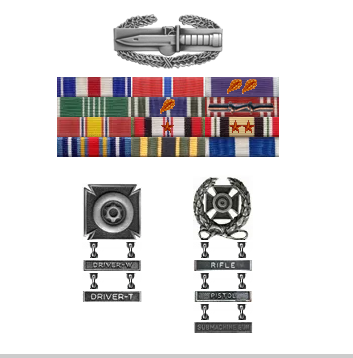
    A good working knowledge of all that Army Bling, patches, pins, and hats would be really helpful.

    They will have to sign an SF-180, pass a background check, complete some home schooling and be willing to attend a formal course that will actually make them a Private Investigator.

    You can complete additional training  if you wish to do Fugitive Recovery and or Personal Protection.

    If you are still living in your mothers basement, have a man bun, are afraid of scary black guns, or spend a significant part of the day playing with yourself…this is probably the career opportunity you have been waiting for.

    The good new is; I am the Stable Genius of the crowd.  The rest of these guys really got some serious issues.   So if you just can’t seem to get that edge back since they made you turn in your Contractor Satellite Phone and they stopped sending checks your way…hit me up.  I can put you knee deep in the shit.

    We try to work with most disabilities.

    Neatness counts, we like to keep things organized.

    Thank you for your time.  Please send inquiries to dave@militaryphony.com


  • Staff Sgt. Justin Gallegos to receive the Distinguished Service Cross

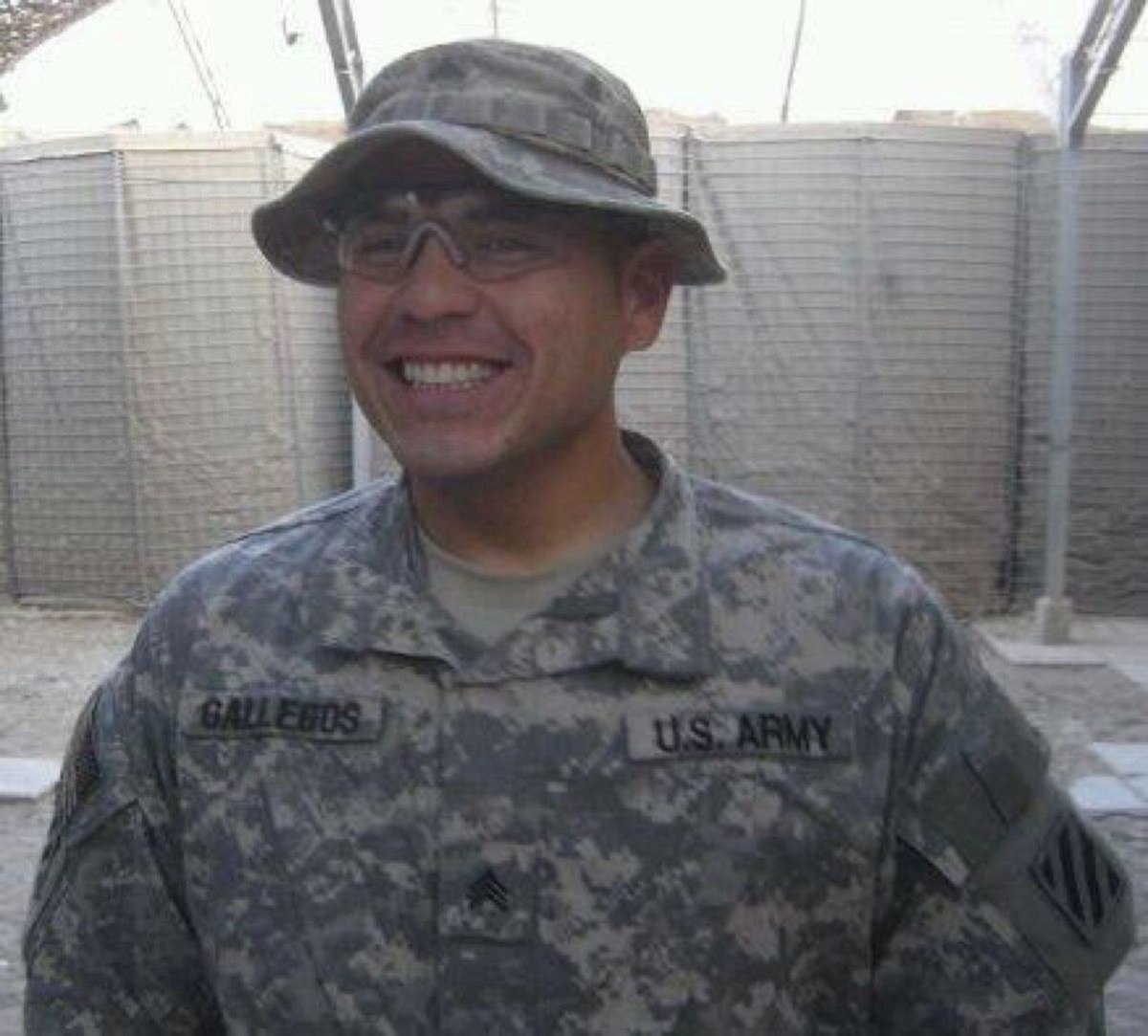
    The 5 year eligibility requirement to be awarded the Distinguished Service Cross had expired in the case of  Army Staff Sergeant Justin Gallegos.   According to military.com both houses of Congress have passed bills that would waive the time restriction in his case.

    Lawmakers have cleared the way for the posthumous awarding of the nation’s second-highest valor medal to a U.S. Army staff sergeant for his bravery during the deadly 2009 battle for Combat Outpost Keating in Afghanistan, according to the fiscal 2019 defense budget.

    The final version of the John S. McCain National Defense Authorization Act for Fiscal 2019 included a provision that would award the Distinguished Service Cross to Justin Gallegos for his heroism. Both the House and Senate versions of the bill contained similar provisions supporting Gallegos, who fought repulse a determined Taliban assault at the COP, located in Afghanistan’s eastern Nuristan province.

    Staff Sergeant Gallegos was initially awarded the Silver Star, it will now be upgraded to the Distinguished Service Cross.

    His profile on togetherweserved

  • USMC considers no first enlistment Grunts.

    USMC considers no first enlistment Grunts.

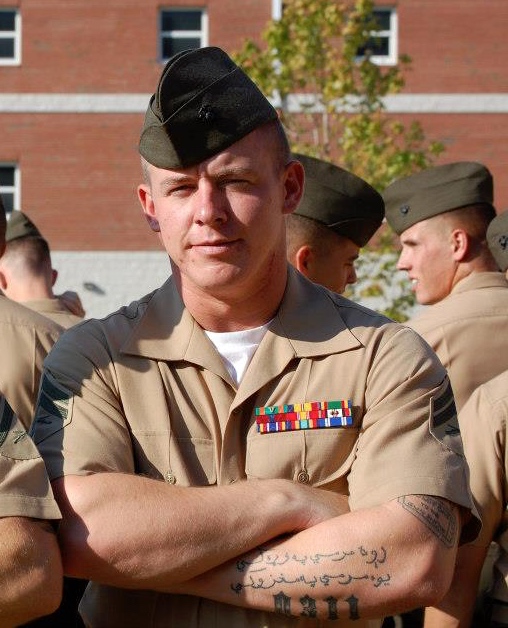
    This kind of thing was toyed with back in the early 80’s.  Some people think Marines that are at least on their second enlistment are better killers.  Marine Corps Times reports:

    Older. Wiser. More seasoned. Deadlier.

    There’s a controversial idea taking root at the ­Pentagon: That Marines should wait an enlistment before joining the infantry, coming into traditional rifle squads only after getting some experience in another career field.  It would be a profound change that would make Marine infantry units older, but potentially stacked with additional skill sets.

    It would also further blur the line between ­conventional infantry Marine and special operator, as they’d be plucked from the same pool.

    I got plucked from the pool…we just worded it a bit different.

    Whether the 18-year-old grunt Marine model can continue to compete on the future battlefield is a question being scrutinized at the top levels of the Defense Department and among top officials close to Defense Secretary Jim Mattis, who is himself a former Marine infantry commander.

    One such man leading the charge is a retired general who chairs Mattis’ Pentagon task force focused on boosting lethality of grunts.

    “The optimal age for a close-combat soldier, the ­balance is … mid to late 20s,” retired Army Maj. Gen. Robert Scales told Marine Corps Times.

    That’s probably about right, I started at 17.  Most are done with their first marriage by their second enlistment, their pay goes out in allotments and the Driftwood has them  on the banned list, death doesn’t scare them anymore.  Some of us even have a stripe or two left.

    Today’s grunts have increasingly taken up the mantle of special operations missions where small detachments of Marines have deployed to advise and train foreign military units in remote and hostile ­environments — missions that require mature ­operators and problem solvers.

    Oh, they mean like Marines have always been doing.  I can tell them from experience, maturity comes on pretty fast when you’re on the chopper flying into a country you can not pronounce in the middle of the night.

    “Significant focus is being placed on the human dimension,” Marine spokeswoman Capt. Karoline Foote told Marine Corps Times. “We are evaluating and implementing improvements in how we recruit, train and retain our infantry Marines.”

    Ahh, I have read that kind of stuff before.  It’s one of those “say nothing in 20 words or more” things.

    “The way JSOC [Joint Special Operations Command] operates is a telling point,” he explained.

    Aaaaaaand there we have it.  People who have no idea what an EGA is, trying to dictate the manner in which Marines are to kill people.

    One option the Corps could consider is saving a large portion of infantry slots for a second enlistment. A benefit to this would be the added ­experience and skill sets carried over by Marines hailing from other support billets and functions into ground combat units.

    Infantry squads could potentially be stacked with Marines with experience in intelligence, electronic warfare, engineering or communications.

    WTF?  Ok, so I have to prance up to a platoon with Sgt (electronic warfare)  and tell every one he is the skulling coach.  Get the F*** outta here with that s***.  The average 19 year old LCpl will break his ass.  All I am trying to say is Combat Arms Marines can be a bit brutal…age got nuttin to do with it.

    “With 16 years of infantry background, I learned 80 percent of my ground pounding in my first four years,” one Marine combat instructor told ­Marine Corps Times. “And as the war has kind of slipped away from us, the majority of the seasoned fighters have moved on because with no war they feel cheated.”

    Bingo, all we are asking is Give War a Chance.   People, we have to keep our heads about us until this peace craze blows over.  They go on and on but you will have to follow the link because they start quoting General Neller and it gives me gas.   I have led Marines into the unknown, never questioned the maturity of a singly one of them.

    FOLLOW LINK HERE


  • “I thought you were bigger”

    A story by  Brendan O’Byrne first published in The War Horse

    This article is well written, I hope you find it worth a read.

    A small line of people formed in front of the stage. Some of them offered a handshake or a thank you, a few wanted to tell me a story about their own experience, and others asked a question or two.

    Light blue specks of splattered paint polka-dotted her faded jeans. She wore a light-colored fleece and thick-framed reading glasses. She had aged kindly. The corners of her eyes and mouth wrinkled to show years of smiles and laughter. It seemed like some of those small lines were damp. Gray streaks highlighted her black hair.

    She carried a copy of “War,” by Sebastian Junger, with my face on the cover staring out at nothing. She’d tucked the book under her arm to keep both her hands free to grasp mine.

    “I just wanted to thank you for your service and your honesty up there on stage today,” she said as she took my hand with both of hers while maintaining direct eye contact. She wore a small, sad smile and didn’t blink. “The fighting you boys did for … us … .” Her voice trailed off as she tried to find words. “Well, no one should have to go through what you and your friends did.”

    It humbled me into awkwardness for my experience to be honored by my elders. I quickly thanked her as I studied my dress shoes. I may have even told her it wasn’t so bad out there, just to make her feel better. I was aware that she was old enough to have possibly said the same words 50 years earlier to an entirely different group of returning veterans, maybe even to the man standing beside her.

    “It would be an honor if you could sign this,” she said, releasing my hands and untucking the copy of Battle Company 2-503rd’s story.

    She made small talk about my speech and said she’d watched the documentary, “Restrepo,” as I signed my name underneath the big block letters of WAR.

    “I have to admit, from the movie, I thought you’d be bigger,” she added.

    I finished signing the book and handed it back while thinking of how to respond. Her kind eyes told me no harm was intended. It was just an observation, yet I wanted to defend myself.

    I wanted to tell her that the bigger the guy, the bigger the target. I wanted to tell her how the men who could walk like goats through the Hindu Kush mountains with 100 pounds on their backs were shorter than her, which I guessed to be just a few inches over five feet. I bit my tongue when I began to tell her that “Restrepo” wasn’t a movie and there were no actors cast for the part.

    My emotions in check, I told her that most of the men I had served with were no bigger than me. I added, politely, that the legendary Spartans averaged five-foot-six.”

    With more people in line behind her, we said our quick goodbyes.

    But her observation bugged me the rest of the day, and I couldn’t understand why. It bugged me so much that I began my next speech by asking the audience, “By a show of hands, who thought I would be bigger?”

    Between the chuckles, dozens of hands raised. I laughed with them.

    Around this time, 2013, I was speaking regularly around the country about my combat deployment and the journey back home to a range of people: veterans, college students, mental health professionals, and anyone else who would listen.

    After the encounter with the woman, I began each speech with that question and received the same response.

    At the end of each speech, the little line formed with the same kind of questions and the same kind of praise, “Your friends and you are our country’s heroes.” Or something very similar.

    The almost universal reactions, observations, and questions from the audiences exposed a misconception in our country about veterans, and more broadly, about how we define “hero.” It wasn’t just the audiences that were confused about veterans and heroes. I was, too.

    I had strong mixed emotions about what service to my country meant to me. I served six years in the Army, and in May 2007, I deployed with the 173rd Airborne Brigade to the Korengal Valley, Afghanistan, for 15 months. I lived those long, hard months with my own well-being and needs second to those of the group. That is the mentality in combat; it is always “we.”

    I was and am proud that I served honorably.

    Yet, at the end of our deployment when a Bronze Star was given to all the men who had served the full 15 months, to all the men I had fought alongside for 15 months, I was given a lesser award. An Army Commendation Medal. There was no explanation why. I have repeatedly asked my former leaders for a reason, but the closest thing to an answer cast blame on Army bureaucracy.

    I didn’t care about the award itself, I cared about what the award represented: the Army recognizing the sacrifices and honoring the job we did. I was there doing the same job and sacrificing the same as everyone else, but when the Army recognized me with a lesser award, it effectively told me that my service wasn’t equal to theirs.

    It shattered my idea of what my service meant to me and to the Army I’d fought for. I felt betrayed, making my last few months of service more miserable than any war could.

    I left the military in December 2008 with an honorable discharge and a lot of questions about what my service meant to me, the Army, and my country. It helped me to see that the crowds I spoke to were filled with a lot of the same kind of questions.

    A couple of years after finding out I was too small to be me, I was living on the eastern edge of the U.S.A. in Provincetown, Cape Cod. The small coastal town, as old as America’s story, was port for the Mayflower before the ship continued west to mainland Plymouth, Massachusetts.

    Nowadays, visitors come to Provincetown by road rather than by sea. Provincetown is at the end of the 60-mile-long island, which draws two distinct types of people to the small town by the sea: ones who are incredibly lost or ones who have made the choice to be at the terminal point of a 60-mile island.

    I was both as I dealt with a failed marriage, coped with the death of my father who’d died a year after my return from war, and tried to get a handle on a crippling alcohol problem, all while trying to find meaning in my now peaceful life. With combat’s constant deadly threat, to be alive and keep each other alive is meaning enough. Without that pressure, meaning became harder to define.

    While living in Provincetown and dealing with those issues, I continued to search how best to honor my military service, which had become harder to do as I struggled to reconcile being called a hero by the public, knowing what the Army thought of my service. I didn’t know who was right or if they were both wrong.

    I was living illegally inside of an old, bare building that had been a ship-refitting wharf until a bunch of returning World War I veterans who wanted to make art and hang out with each other bought it and turned it into an artist club.

    They’d hardly changed the inside of the building, besides adding a huge fireplace, some long dinner tables, and a pool and billiards table. Nearly 100 years later when I lived there, the walls still hadn’t been insulated.

    During the winter, it became so cold in the building that the top layer of the toilet water froze; I kept a stick next to the toilet to break the ice in order to go to the bathroom. I was given a studio with free room and board in return for taking care of the place and cleaning up the weekly dinner that had been eaten every Saturday since 1916.

    I slept in the studio’s loft on a worn mattress. From my window, I had a view of the harbor and the boats moored in it. I tried to create beautiful things from chunks of wood and stone; I sculpted the moored boats, figures of nude women, and primitive wooden clubs. It is the most healing place I have ever lived.

    I also spent a lot of time on my leaky 25-foot fiberglass sailboat, The Irish Mist. When I lay in the boat’s damp cabin bed, rolling on the protected harbor’s swells, I felt so far from the country I had fought for and the questions about my service and honor, and so far from the feeling that my country and I didn’t know what the word hero actually meant.

    My Provincetown P.O. box had a surprise waiting in early 2015, when the town was dead and there was hardly any news at all besides the howling winds of approaching nor’easters.

    The letter was from Cape Cod’s American Red Cross. Eight years separated the last time I had received a Red Cross message. The previous message found me at the tail end of a fighting season in the Korengal in October 2007, informing me that my younger sister was seriously hurt and that I needed to come home to possibly say my goodbye.

    Eight years later, a dread washed over me as I opened the letter in the post office lobby. Luckily, the envelope contained no threat of possible goodbyes; rather, it shocked me to find a note congratulating me that I would be honored by Cape Cod’s Red Cross as a “Local Veteran Hero.”

    I received the news with trepidation.

    Before I could accept it, I needed to know what they were giving me the award for. If it was for my military service, I didn’t want it. Not that it wouldn’t have been an honor; it would’ve been. But it would have come from the wrong people. The Army should have honored and recognized my service to the country. I hadn’t reconciled those mixed feelings when the Red Cross letter came in the mail, but by that point I no longer wanted any award for the violence of war.

    The Red Cross award started unraveling years of confusion for me about why being called a hero for my service hurt instead of feeling good. That woman with the book tucked under her arm, and all the ones who followed her, the audiences, and the country in general had a perception of me and my service. They thought I should be bigger, and they thought what I did overseas had made me a hero. On the other side of the spectrum was the Army, to whom I was just another number.

    But to the local Red Cross, and my community, I was more. Through phone calls and emails with a Red Cross representative, I was relieved to learn they didn’t want to honor my military service directly. Instead, they wanted to honor my honest speeches about war and homecoming, the volunteer work I’d done with returning veterans, and the peace I worked toward in myself and my community.

    The award helped me clarify what a real veteran hero looks like and what it takes to become one. Serving honorably during combat, I’ve come to believe, is only the beginning. The next step starts when you return home, bringing with you the lessons you learned. In war, I learned that the most human thing we can do is put our own needs, wants, and ego second to the community we live in.

    The fallen in war have learned combat’s most profound lesson, and their deathly silence demands that we learn the cost of war. The living have valuable lessons about war’s toll as well, though, and I’ve hardly been asked about mine.

    It finally clicked as I was writing my speech for the award ceremony that I hadn’t served the Army; I had served my country, the United States of America. To honor my own contribution, I’ve started taking my own advice and reminding myself that my service isn’t over yet. What I have learned is that I don’t want to be recognized and honored only for my contribution in war.

    We veterans have so much more to give and teach our country than just what we did overseas.

    To honor our service, civilians who haven’t served need to ask what we’ve learned, and veterans need to speak.

  • Iran threatens US with “Mother of all wars”

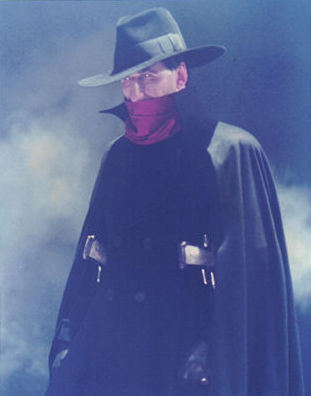
    According to Reuters, Iranian President Hassan Rouhani threatened the US with words, claiming that the US is facing the mother of all wars. Isn’t that the phrase that Saddam Hussein used prior to Desert Storm, just before his army became the third largest in his own country?

    Addressing a gathering of Iranian diplomats, Rouhani said: “Mr Trump, don’t play with the lion’s tail, this would only lead to regret,” the state new agency IRNA reported.

    “America should know that peace with Iran is the mother of all peace, and war with Iran is the mother of all wars,” Rouhani said, leaving open the possibility of peace between the two countries, at odds since the 1979 Islamic Revolution.

    “You are not in a position to incite the Iranian nation against Iran’s security and interests,” Rouhani said, in an apparent reference to reported efforts by Washington to destabilize Iran’s Islamic government.

    I guess “the mother of all peace” is what happened when Iran helped Hezbollah bomb the Marine barracks in Beirut, and held US embassy workers hostages for 444 days. The mother of all peace means that Iran can take US sailors hostage. The mother of all peace means creating IEDs for use against US troops in Iraq. The mother of all peace is a proxy war with Saudi Arabia in Yemen. The mother of all peace means threatening the existence of Israel while manufacturing nuclear weapons.

    The President answered the threats from Iran;

    Iran wants to facilitate terrorism around the world without consequences.

  • Israel rescues 422 “White Helmets”

    Israel rescues 422 “White Helmets”

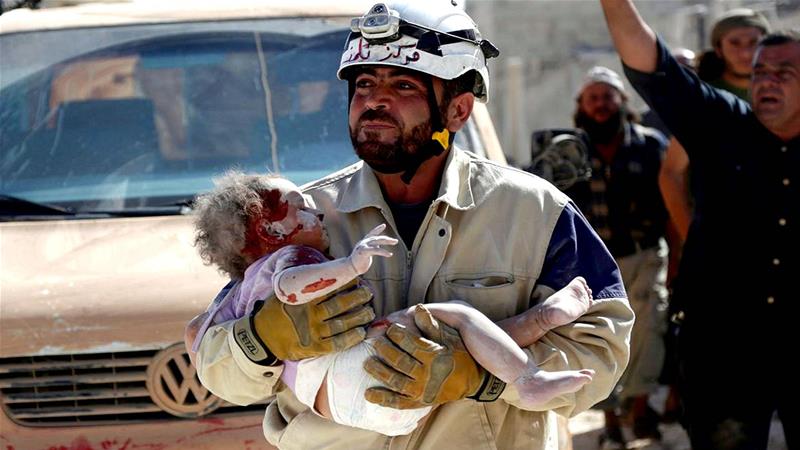
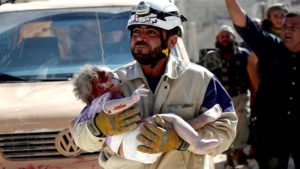
    The Associated Press reports that Israeli Defense Forces rescued 422 Syrian Civil Defense workers known as “White Helmets” when the Syrians were trapped between Syrian government troops and ISIS. The rescue came at the urging of the United States and Canada.

    This was the first such Israeli intervention in Syria’s lengthy civil war, now in its eighth year. Although it has sent aid into Syria and has provided medical treatment to thousands of Syrians who reached the Golan Heights frontier, the Israeli military said its actions did not reflect a change to Israel’s non-intervention policy in Syria’s war, where all the warring parties are considered hostile.

    It was an unprecedented operation to provide protection and asylum to allies of Western nations in Syria’s complex battlefield.

    The White Helmets have enjoyed backing and received finances and training from the United States and other Western nations for years. Because of their work in opposition areas, where they were almost exclusively the only ones to offer rescue services in the face of the government military advances, they were considered public enemy number one by the Syrian government.

    The Syrian government and the Russians have designated the White Helmets as terrorists. The Israeli rescue has been used by the Syrian government media as proof of the White Helmets’ collaboration with Western powers;

    The State News Agency SANA said “the secret” of the group had been revealed and their “role as an agent ended.”

    Syrian lawmaker Khaled Abboud said that “foreign powers are pulling their agents out of the battlefield” because of the Syrian military victories that have quashed the “aggression” against Syria.

  • Amer Sinan Alhaggagi pleads guilty

    Amer Sinan Alhaggagi pleads guilty

    Mick sends us a link from Fox News which reports that Amer Sinan Alhaggagi, a 23-year-old graduate of Berkley High School pleaded guilty this week to planning to lend support to ISIS so they could kill 10,000 Americans in a terrorist attack.

    Alhaggagi allegedly opened several Twitter and Facebook accounts in 2016 for ISIS supporters. He then allegedly told an undercover FBI agent that he wanted to kill 10,000 people in the Bay Area with bombs and rat-poison-laced cocaine, the Chronicle reported, citing court documents.

    He met with the undercover agent, pointed out locations for terrorist attacks and brought three backpacks to be used in a future attack to a storage locker, the paper reported. But Alhaggagi broke off talks with the agent after their last meeting.

  • UK commits to increase troops in Afghanistan after Trump request

    According to Stars & Stripes, the British Prime Minister Theresa May, promised to add 440 troops to the UK’s mission in Afghanistan after President Trump urged allies to shoulder some of the US commitments overseas. The additional troops will bring the UK’s total to 1100;

    “NATO is as vital today as it ever has been and our commitment to it remains steadfast,” May said Tuesday, according to Reuters. “The alliance can rely on the U.K. to lead by example.”

    NATO ended combat operations in Afghanistan in 2014 but a separate U.S. counterterrorism mission continues.

    The announcement of more British troops came as Reuters reported that the U.S. is preparing to review its Afghanistan strategy after Trump expressed frustration over a lack of progress.