Category: Terror War

  • Iran demands ransom for hostages

    Yeah, no one saw this coming, right? Iran wants “many billions of dollars” in exchange for the release of Americans held in Iranian prisons, according to Fox News;

    Senior Iranian officials, including the country’s president, have been floating the possibility of further payments from the United States for months. Since the White House agreed to pay Tehran $1.7 billion in cash earlier this year as part of a deal bound up in the release of American hostages, Iran has captured several more U.S. citizens.

    Future payments to Iran could reach as much as $2 billion, according to sources familiar with the matter, who said that Iran is detaining U.S. citizens in Iran’s notorious Evin prison where inmates are routinely tortured and abused.

    Once paying ransoms is part of your foreign policy, it’s hard to stop. But no one ever thought of that, huh? Except every US president since Jefferson.

  • Noose tightens on ISIS in Mosul

    Noose tightens on ISIS in Mosul

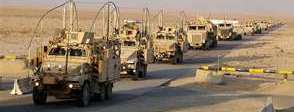
    last convoy out of Iraq

    Despite what we heard yesterday, the battle for Mosul is progressing nicely, according to CBS News. The Kurds are taking smaller towns north of the Iraqi city which will put them within shouting distance of Mosul soon;

    two ISIS drones approached in the air. They were small, and it’s not clear whether they were armed, but the Kurdish troops shot them down quickly. Earlier this month, two Kurdish fighters were killed by an ISIS drone loaded with explosives.

    Meanwhile, elite Iraqi special forces troops moved into position Thursday to the east of Mosul. They’re fighting to recapture several Christian towns and villages along the main road into the city. The special forces managed to enter the ancient Christian enclave of Bartella after a clashes with militants and several suicide truck bombs.

    On Wednesday, an Iraqi officer bragged to CBS News that they would be inside Mosul within a matter of hours – a much faster approach to the city where there are thought to be less than 5,000 ISIS militants still holding out.

    According to BBC, Iraqi Prime Minister Haider al-Abadi is “upbeat” about the operation;

    The Iraqi prime minister made his comments via video-link to an international meeting in Paris on the future of Mosul.

    “The forces are pushing towards the town more quickly than we thought and more quickly than we had programmed in our campaign plan,” he said.

    He hailed co-operation between the army and Kurdish troops, saying they were “fighting harmoniously together” to free Iraqi territory from IS.

    The Army Times reports that Apache gunships have entered the fray;

    [Major General Gary Volesky, commander of U.S. and coalition land forces in Iraq], speaking to reporters at the Pentagon via video link from his headquarters in Baghdad, also disclosed that U.S. Army Apache helicopters have entered the battle for Mosul. He declined to provide specifics, citing the need to preserve operational security, but said they have been striking Islamic State targets at night. The mere presence of the Apaches on the battlefield has been a confidence booster for Iraqi soldiers, he said.

    The Apaches, he said, can “see a long range at night” and strike targets from a great distance. “That’s what they’re doing,” he said.

    Volesky said some Islamic State forces already are giving up their positions in the outskirts of Mosul and pulling back into the city. He said he expects this trend to continue. They are then likely to attempt to block the entry of Iraqi forces into the city, using a “full-fledged conventional defense.”

  • ISIS resists incursion into Mosul

    ISIS resists incursion into Mosul

    last convoy out of Iraq

    According to the Washington Post, ISIS resistance has stalled the Iraqis’ advance into Mosul.

    The intense fight for hamlets some 30 miles from the city suggested that the militants could fight for every inch outside the city, but also that they are unlikely to be able to hold on in the face of a coordinated advance and close air support from a U.S.-led coalition.

    Residents who have recently fled the area and Iraqi officials with contacts inside Mosul say the Islamic State has been digging in for a fight, erecting concrete barricades and filling trenches full of oil that can be set on fire to slow advancing forces. The Islamic State claimed to have carried out 12 suicide attacks on the first day of the offensive, according to its affiliated news agency, Amaq. Jabbar Yawar, a spokesman for Kurdish peshmerga forces, said eight Kurdish soldiers were killed Monday and 16 injured.

    The struggle for Mosul — which involves U.S. air power and an array of Iraqi ground forces — is the largest and most complex so far in the battle against Islamic State militants. It has brought an unprecedented level of military cooperation between Baghdad and the Kurdistan regional government in northern city of Irbil, which have long feuded over oil and land. But some small cracks in that alliance appeared Tuesday, as Kurdish and Iraqi commanders traded blame for delays in some operations in the east.

    Of course, the coalition has been telegraphing the assault every day for the past month, so it’s not like the attack is unexpected. When ISIS starts losing in Syria and Iraq, they start attacks elsewhere. Turkish police killed a suicide bomber in Ankara yesterday;

    Police tracked the Islamic State suspect to the ninth floor of a building on Ankara’s outskirts, where he was killed in a gunfight around 3 a.m. after opening fire in response to a call to surrender, the state-run Anadolu Agency said.

    Diplomats are meeting in Paris to count the chickens before they’re hatched;

    Foreign ministers from several Western and Middle Eastern countries will meet on Thursday to discuss how to restore peace and stability to Mosul after Islamic State has been routed from its Iraqi stronghold.

    As the battle for Mosul entered its second day on Tuesday, French Foreign Minister Jean-Marc Ayrault, who will host the meeting in Paris, said: “We cannot wait. What happens after Mosul is liberated from Islamic State? We need an administration that establishes long-term stability.”

  • Brits in burkas smoke ISIS

    Brits in burkas smoke ISIS

    women-440504

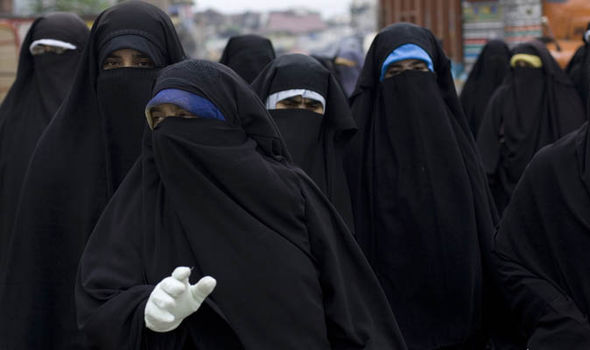
    AW1Ed sends us a link from the UK’s Express which tells the story of a group of British Special Air Services troops who donned burkas to take out some pretty bad dudes in downtown Raqqa, the headquarters and capital of ISIS. They pretended to be the wives of ISIS chiefs to infiltrate the stronghold;

    The elite troopers even managed to hide assault weapons, grenades and ammo beneath their roomy ankle-length gowns in case they encountered armed resistance from Islamist militants.

    After making their way through the town they located the house of a senior terrorist chief and used a transmitted to relay its location and coordinates to a US Air Force AWAC mission control aircraft circling thousands of feet above.

    The American spy plane then passed the information onto a US Reaper drone, which seconds later fired a Hellfire missile into the building, vaporising the ISIS commander and several of his henchmen.

    When jihadi militants heard the explosion they rushed onto the streets and discovered the burka-clad troopers, who took down several jihadis during a fierce gun battle as they fought their way to safety.

    I guess it happened ten months ago at about the time it was announced that British citizen Jihadi Johnny got smoked.

  • The expanding US role in Somalia

    The New York Times writes about the role US troops have been fulfilling in Somalia during the Obama years;

    The Somalia campaign is a blueprint for warfare that President Obama has embraced and will pass along to his successor. It is a model the United States now employs across the Middle East and North Africa — from Syria to Libya — despite the president’s stated aversion to American “boots on the ground” in the world’s war zones. This year alone, the United States has carried out airstrikes in seven countries and conducted Special Operations missions in many more.

    […]

    In its public announcements, the Pentagon sometimes characterizes the operations as “self-defense strikes,” though some analysts have said this rationale has become a self-fulfilling prophecy. It is only because American forces are now being deployed on the front lines in Somalia that they face imminent threats from the Shabab.

    Ya know, for a Nobel Peace Prize winner, this president sure does use US military forces a lot. I guess that’s probably because, like the rest of America, he’s finally realized that they’re the only government workers who do what they’re expected. However, there’s not one thing in Somalia worth the life of one American.

    About 200 to 300 American Special Operations troops work with soldiers from Somalia and other African nations like Kenya and Uganda to carry out more than a half-dozen raids per month, according to senior American military officials. The operations are a combination of ground raids and drone strikes.

    […]

    The strikes have had a mixed record. In March, an American airstrike killed more than 150 Shabab fighters at what military officials called a “graduation ceremony,” one of the single deadliest American airstrikes in any country in recent years. But an airstrike last month killed more than a dozen Somali government soldiers, who were American allies against the Shabab.

    It’s tough to kill bad guys when you’re pretending that you’re not at war.

  • Mosul; the battle for Obama’s legacy

    Mosul; the battle for Obama’s legacy

    Chief Tango sends us a link to the Washington Post which is wringing it’s collective hands over the upcoming battle for Mosul, worried because “The stakes are high not just for Iraqi Prime Minister Haider al-Abadi, looking for a win that would shore up his political standing, but also for President Obama, who is seeking to deliver a battlefield win in the waning days of his presidency.” (Emphasis mine)

    The previous administration handed over a fairly peaceful Iraq, but Secretary of State Clinton, Barack Obama and Joe Biden screwed that up by not being able to convince the Iraqis that they needed a continued US presence. How did the Obama Adminstration screw up the status of forces agreement (SOFA) with Iraq? Well, according to the Wikileaks Podesta emails, it was just because they didn’t want to put their names on a Bush Administration agreement;

    The Iraqis are keenly interested in understanding President-Elect Obama’s position on the SOFA. Indeed, a number of senior Iraqi officials – including a number of Prime Minister’s most senior advisors — are claiming that Mr. Obama will not support a SOFA signed by President Bush and interpreting the few messages publicly available as a pretext to reject the agreement on the table. After you have had time to review the SOFA text, we ask that the Obama transition team express support for the SOFA, lest the Iraqis use previous positions or the absence of comment to scuttle the deal.

    The Iraqis then lost Mosul, the second largest city in Iraq to ISIS, now they have to take it back. They have to take it back so that Obama can have a win to cap off his presidency – once again they’re depending on the troops to make them look good;

    Military leaders have sought to stress that the U.S. advisory role in the Mosul offensive will be far different than it was prior to the 2011 withdrawal, when American troops nominally operated in support of local forces but in practice led much of the combat operations themselves.

    In the latest deployment, the Pentagon last month again increased the number of U.S. troops, bringing it to well above 5,000. One key task for those troops will be helping Iraqi leaders orchestrate the movements of a large, fractious force that will include up to 12 Iraqi army brigades and tribal fighters aided in the broader Mosul operation by Kurdish peshmerga and powerful Shiite militia factions.

    “The U.S. strategy of by, with, and through [local forces] will culminate in Mosul, and hopefully in Raqqa not too long thereafter,” a defense official said, like other officials speaking on condition of anonymity to speak freely.

    Other American troops will advise Iraqi units in the field. Under current battle rules, U.S. advisers can accompany local forces at the battalion level, which would place them closer to direct combat, with authorization.

    “It’s risky advising at that level, we know that,” an administration official said. “But again, it’s one decision that we think will help provide more effective coordination.”

    U.S. advisers will also accompany troops from Iraq’s elite Counterterrorism Service, who as in previous battles are expected to spearhead the assault into the city.

    Other measures the White House approved in the lead-up to Mosul, including Apache attack helicopters and HIMARS long-range artillery systems, are expected to play a key role in the final dash toward Mosul.

    There are now more than 5,000 US troops in Iraq – an infantry brigade-sized element. Previous restrictions on participation of US troops in combat (boots on the ground) have been lifted and the message is clear; Obama needs you to win this one.

    At the same time, American commanders will be anxious to minimize U.S. casualties in a conflict that has received only reluctant support in Washington. Since U.S. forces returned in 2014, three American service members have died in combat operations.

    They ought to put Obama, Clinton and Biden in the vanguard to insure it all goes well for their careers.

    ADDED: The Washington Post reports that the battle for Mosul has begun.
  • Jason Michael Ludke and Yosvany Padilla-Conde; ISIS recruits captured

    Jason Michael Ludke and Yosvany Padilla-Conde; ISIS recruits captured

    isisthreat-640x480

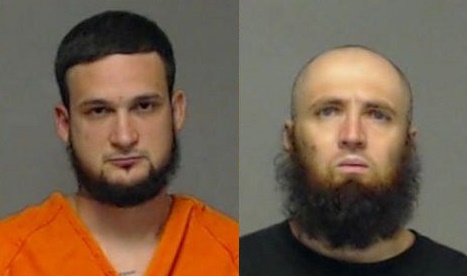
    AW1Ed sends a link to the story of Jason Michael Ludke and Yosvany Padilla-Conde, Jason being a recent convert to Islam who wanted to travel to Syria and Yosvany, an illegal alien who tried unsuccessfully to make it back across the Mexican border.

    Arrested were Jason Michael Ludke, 35, of Milwaukee. He was charged in a criminal complaint with attempting to provide material support or resources to a foreign terrorist organization, ISIS. His running partner was Yosvany Padilla-Conde, 30, an illegal alien living in Milwaukee. He was charged with aiding and abetting Ludke. Both face 20 years in prison and a fine up to $250,000 each.

    According to the criminal complaint obtained by San Angelo LIVE!, Padilla-Conde is also known as Saadiq Ibn Abbas and Saadiq Padilla. Ludke is also known as Muhammad Nassir, Muhammad Abdun Naasir Al-Hannafi and Abuz Sayyaf.

    Both Padilla-Conde and Ludke were known to the JTTF as having stated their intent to travel overseas to join ISIS. An undercover FBI agent operating in the circles where ISIS was recruiting Americans on social media received a friend request over Facebook from Ludke. Thereafter, the two engaged in an Instant Messenger conversation. Ludke told the undercover agent that he is from the U.S. and wants to make “hijra” (or migration) away from “darul kufr” (Land of the Infidel).

    The pair were introduced for their trip by an FBI informant. Breitbart reports that Ludke is a felon who was jailed in 2010 for sending threatening letters to a judge – that proves he’s a rocket surgeon. Padilla claims that his intention was to ditch Ludke once they arrived in Mexico.

  • Iran sends ships to Gulf of Aden

    Iran sends ships to Gulf of Aden

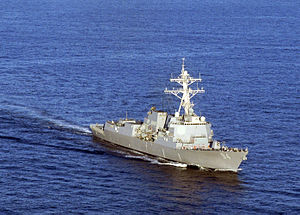
    Foreign Policy reports that Iran has deployed two ships to the Gulf of Aden, off the coast of Yemen, where US vessels have been the target of shore batteries in recent days.

    According to the Iranian Tasnim news site, which has links to the Iranian Revolutionary Guards Corps, the frigate Alvand and logistics ship Bushehr are heading to the Yemeni coast “to protect the country’s trade vessels against piracy.”

    […]

    The Iranian warship heading to the Gulf of Aden — the 45 year-old Alvand, which carries anti-ship missiles, a Mark 8 gun as well as various machine guns — already has a checkered history with the U.S. Navy. In July 2015, the ship trained its guns on a U.S. Navy helicopter and an allied supply ship operating with the USS Farragut in the waterway, but the incident was contained before any violence broke out.

    Of course, Iran’s announcement of the deployment comes after the news that USS Nitze took out some radar emplacements with cruise missiles – an act that the Pentagon characterizes as self-defense. Foreign Policy says the deployment of Iranian warships to the area is contributing to an “increasingly complex situation”. It’s not complex at all – Iranian-backed Houthi rebels fired anti-ship missiles at US ships in international waters and now Iranians are deploying war ships to confront US ships. Iran has been at war with the US since 1979, whether we want to admit it or not.

    It’s time to take out the trash – not complex at all.