Forty-six years ago today – just before midnight EDT on 14 April 1969 – Deep Sea 129 was shot down by North Korea.
Burn in hell, Kim Il-Sung. Burn in hell.
Forty-six years ago today – just before midnight EDT on 14 April 1969 – Deep Sea 129 was shot down by North Korea.
Burn in hell, Kim Il-Sung. Burn in hell.
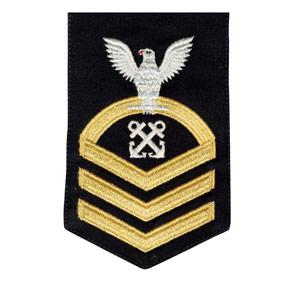
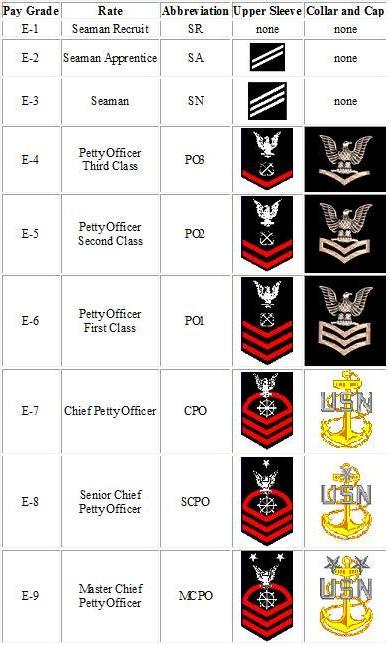
Navy ranks and rates seem to confuse everyone who was not in the Navy. It’s not as complicated as it seems.
Rate’s or Rating is the job you do. They are broken into four main groups, Sea, Engineering, Air and Construction.
Ranks are the Pay Grade
E-2 through E-3 ranks wear different colored diagonal stripes on the Dress Uniforms to indicate what group they belong to. E-1 wears no stripes, E-2 wears 2 stripes, E-3 wears 3 stripes.
White Stripes on Dress Blues or Dark Blue Stripes on Dress Whites indicate the Sea or Seaman group. They would be addressed as Seaman Recruit (SR) for an E-1, Seaman Apprentice (SA) for an E-2, or Seaman (SN) for an E-3
Red Stripes on both Dress Uniforms indicate the engineering or Fireman Group. They would be addressed as Fireman Recruit (FR) for an E-1, Fireman Apprentice (FA) for an E-2, or Fireman (FN) for an E-3.
Green Stripes on both Dress Uniforms indicate the Air or Airman Group. They would be addressed as Airman Recruit (AR) for an E-1, Airman Apprentice (AA) for an E-2, or Airman (AN) for an E-3.
Light Blue Stripes on both Dress Uniforms indicate the Construction or Constructionman Group. They would be addressed as Constructionman Recruit (CR) for an E-1, Constructionman Apprentice (CA) for an E-2, or Constructionman (CN) for an E-3. This Group is also known as the SeaBee’s.
If a person in paygrade E-1 through E-3 has completed an A school they are allowed to wear a rating badge with their stripes and add their rating before their rank. For example an E-2 that completed Machinist Mate A School would be Machinist Mate Fireman Apprentice (MMFA) Because the rating of Machinist Mate is in the Engineering Group.
Pay Grades E-4 through E-9 are Non-Commissioned Officers.
Pay Grades E-4 through E-6 are Petty Officers and would be addressed as Petty Officer with their last name or with their Rate and rank such as AD3 Wilson.
An E-4 is a Petty Officer Third Class and would wear one chevron with an eagle centered above it.
An E-5 is a Petty Officer Second Class and would wear two chevrons with an eagle centered above them.
An E-6 is a Petty Officer First Class and would wear three chevrons with an eagle centered above them.
The Dress Uniforms are the same for E-1 through E-6. They are the traditional Cracker Jack Blues in the winter or Whites in the summer. The Rating Badges are only worn with the Dress Uniforms, for a Petty Officer the Rating would be between the eagle and the chevrons, on the left sleeve on the uniform.
The Dress Blue Uniform will have red chevrons with a Silver Eagle and Rating Mark. A red hash mark is added to the left sleeve at the cuff for every 4 years of service. When the service member has achieved 12 years of service with good conduct, Gold chevrons and hash marks are worn. If the service member does not maintain a record of good conduct they must be removed and changed back to red.
The Dress White Uniform will have all blue rating mark, eagle, chevrons and hash marks. The colors do not change with good conduct.
E-7 through E-9 are Chiefs Ranks.
An E-7 is a Chief Petty Officer They wear 3 chevrons with an eagle centered above and a rocker that encloses the eagle. This would only be seen on the on the Dress Blue uniform. All other Uniforms would be represented by a fouled anchor pin.
An E-8 is a Senior Chief Petty Officer. They would wear the same Chevrons as an E-7 with the addition on a Nautical Star centered above the top Rocker, Again the only time this would be seen is in the Dress Blue Uniform. All other Uniforms would have a fouled anchor pin with a Star centered above the anchor.
An E-9 is a Master Chief Petty Officer. They are a rare and tenacious breed known for their quick mood changes and foul tempers. Upon sighting one many junior officers and enlisted often stop. turn the other direction and run. They tend to form packs with the other chiefs in a place called the goat locker, where they are fed well and often. They wear whatever they want to. Most often it is a wash kakis uniform with a fouled anchor pin with two stars on the collar. Their Chevrons are similar to the E-7 except they have two stars on the outside of the rocker.
By the time one attains the rank of Master Chief they have very little real blood left. It has been replaces by a mixture of salt water, and paint for those that started as a seaman, Black oil and Distilled Water for those that started out as a Fireman, JP5 and Hydraulic fluid for those that started as Airman, and Diesel Fuel and saw Dust for those that started as SeaBees.
No ship they are on is as good as the last ship they were on. None of them even come close to the first one. Never look directly at one wearing full dress whites, it has caused temporary blindness and awkward stammering.
As Jonn posted earlier this week it is the 122 Birthday of the establishment of the Chief Petty Officer. Happy Birthday to all of the Chiefs of TAH.
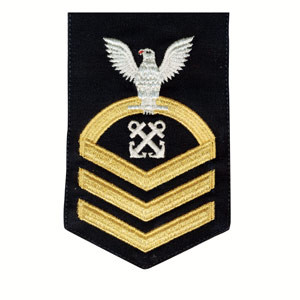
Several folks sent us links to Navy Live which announces that the rank of Chief Petty Officer was officially created on April 1st, 1893, so we’re a day late;
Armed with official recognition, chiefs of the past went on to lay the foundation for their modern day counterparts. As servant-leaders, they acted as the unique lynchpin between officers and enlisted personnel who executed daily operations, and also took a leading role in the career development of junior petty officers.
Additionally, chiefs were celebrated not only for their technical expertise, but their administrative abilities as well. Knowledge in the intricacies of the ship’s daily operations and ability to coordinate with various departments gave chiefs unique abilities that were unrivaled by even the most senior officers.
With this newly recognized position of authority and expertise they were bestowed with uniform devices to recognize their merit. At first, the only distinction was the advent of a rocker to their rating badge. According to Juergens, borrowing the master-at-arms rating that used three stripes, a single rocker was added and became official in 1894. The fouled anchor as a cap device was introduced in 1905; collar devices did not become an official part of the uniform until 1959.
Additionally, chiefs were given their own space on ships. Referred to as the “Chief’s Mess,” it is off-limits to anyone else (officer or enlisted) without invitation and is affectionately called the “Goat Locker.”
Not everyone can be a CPO, although we’ve seen one or two try. Many will never be a CPO, no matter how refined are their photoshop skills.
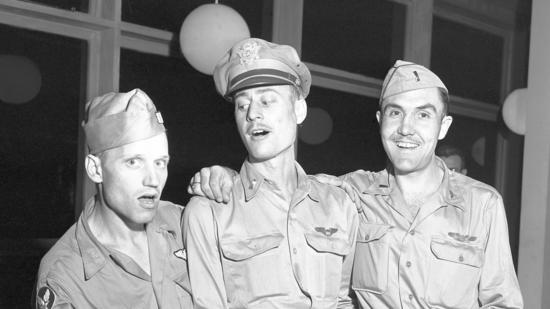
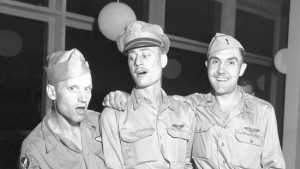
Lt. Col. Robert Hite passed away on Sunday, 29 March 2015, in Nashville, TN. He was 95.
Hite was one of the 80 men who participated in the Doolittle Raid on Tokyo on 18 April 1942. That raid was launched from the USS Hornet using specially-trained Army Air Corps crews flying B-25 medium bombers.
It was also a true “one-way” mission. While the B-25 could take off from a carrier under favorable conditions, it could not land on one. The mission plan was to fly on to China after bombing Tokyo, and land there afterwards in airfields controlled by friendly Chinese forces.
However, the task force was spotted by a Japanese patrol boat approximately 200 miles farther east than the planned launch point; the raid was executed immediately afterwards. This meant the originally planned landing fields in China would almost certainly be unreachable before the aircraft ran out of fuel.
They went anyway.
Three US personnel were KIA during the raid; eight US personnel were captured and became a POWs afterwards. Hite was one of these unfortunate eight. He was held in captivity by the Japanese for 40 months.
Of those eight individuals captured by the Japanese, 4 died while POWs – three were executed, and one died of other causes. Hite was the last remaining living POW from the Doolittle Raid.
Hite left the service after World War II. However, during the Korean War Hite returned to duty from 1951 to 1955.
Hite was awarded the Distinguished Flying Cross for his participation in the Doolittle Raid. He also earned the Purple Heart during his captivity. Last year, Congress authorized a Congressional Gold Medal in honor of the Doolittle Raiders. Unfortunately, it is not scheduled to be formally presented until the raid’s 73rd anniversary – less than 3 weeks from now.
Hite’s death leaves alive only two of the Doolittle Raiders – Lt. Col. Richard “Dick” Cole and SSgt. David Thatcher.
Rest in peace, my elder brother-in-arms. You’ve certainly earned that.
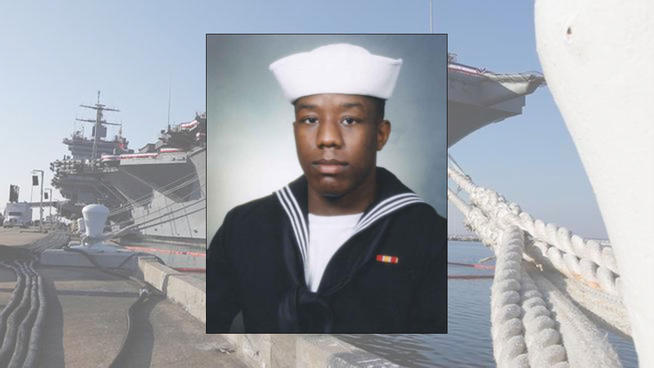
The Navy’s report of investigation (ROI) concerning of the shooting at the USS Mahan – is now public. The incident occurred 1 year ago today.
For those that may have forgotten, in that incident an unauthorized individual managed to get on base at Norfolk Naval Station. That individual then went to the USS Mahan and wrestled a gun away from a petty officer on watch at the ship. MA2 Mark A. Mayo then struggled with the intruder in an attempt to disarm them. Unfortunately, Mayo was killed during the attempt. The shooter was then killed by other security personnel.
MA2 Mayo was afterwards posthumously awarded the Navy and Marine Corps Medal for his actions that day.
The ROI indicates that the investigation could not determine the shooter’s motive and intent. But while the ROI doesn’t tell us the “why”, the ROI documents a slew of improper and/or negligent actions on the part of base security personnel. Specifically, it notes that the civilian guards manning Norfolk Naval Station’s Gate 5 (the gate thru which the shooter entered) during the incident:
• did not verify the shooter’s authorization to enter the base;
• did not ensure the shooter made a U-turn at the gate and departed;
• did not activate barriers that would have kept the shooter from entering;
• did not chase after the shooter quickly enough when he got through the gate;
• did not notify Naval Station security of the intruder; and
• did not follow any of the base’s standard procedures for an unauthorized entry onto Naval Station Norfolk.
It also turns out it was the senior individual on duty at Gate 5 who waved the shooter onto the base. So you have to wonder about the supervision for that group, too.
So, what punishment did these folks get? Are they at least “on the street and looking for work”?
Hardly. They all got “red tagged” (put on administrative duty) – though it’s also possible they might face “future disciplinary action”. According to the article linked above:
There were five sentries on duty at the gate at the time of the shooting and all were put on administrative duty, which the Navy calls being red-tagged. According to a Navy spokesperson, one of those sentries was red-tagged for a week, two were red-tagged for two months, and a fourth was red-tagged for four months.
The fifth sentry was the Officer-in-Charge and was the one who knowingly waved Savage through Gate 5 without proper identification, according to the Navy. He remains red-tagged and is not allowed to carry a weapon.
The list of corrective actions taken after the incident is available here; the full ROI can be found here. While I haven’t read the ROI in detail yet (it’s over 100 pages), what I’ve skimmed so far looks bad. Seriously bad.
RIP, MA2 Mayo. You did your duty that day after others had botched theirs. You protected your brothers- and sisters-in-arms.
Still . . . it’s a shame you had to pay with your life because others screwed up. A damn shame.
Another bit of America’s past is gone.
Al Rosen – MLB star of the 1950s, and later team executive with the Yankees, Astros, and Giants – passed away last Friday. He was 91.
Rosen was no slouch as a player. He played for 10 years, all with the Cleveland Indians organization. He had a career batting average of .285, drove in 100 runs 5 times, and was an AL All-Star 4 times. Rosen was his league’s unanimous MVP in 1953, leading the AL in RBI and home runs. He missed the triple crown that year when he finished second in batting average – by slightly more than .001 – in spite of finishing with a batting average of .336.
During his rookie season, Rosen hit 37 home runs; this stood as the rookie-season record until Mark McGwire hit 49 as a rookie in 1987. He was also regarded as an exceptional defensive third baseman. Unfortunately, back and leg injuries forced him from the game after the 1956 season at age 32.
After his playing career, for 22 years Rosen was a stockbroker. Then in 1978 he returned to baseball, becoming a successful baseball executive. He had front-office roles with the Yankees (President/CEO, 1978-1979), Astros (President/CEO, 1980-1985), and Giants (President and General Manager, 1985-1992). During his time with the Giants Rosen’s efforts were credited with helping improve them from a last-place team in 1985 to a World Series team in 1989.
In 1989 Rosen was selected as the NL Executive of the Year. He is the only individual in MLB history to be selected both his league MVP as a player and Executive of the Year.
Rosen retired from baseball a second time in 1992. However, he still afterwards on occasion acted as a consultant for various baseball teams; this included a role as a Special Assistant to the General Manager for the Yankees in 2001-2002.
In case you’re wondering why this article is here . . . as you might expect for someone of his age, Rosen was also a vet. He enlisted in the US Navy in 1942 and served until 1946, mostly in the Pacific. He participated in the invasion of Okinawa, serving as navigator for an assault boat during the initial landings. He left the Navy as a Lieutenant.
Rosen was Jewish, and was proud (and very protective) of his religious heritage. Though more famous for doing so, Koufax was not the first prominent Jewish MLB player to refuse to play during Judaism’s high holy days; Rosen did the same a decade earlier. His nicknames during his playing days were “the Hebrew Hammer” and “Flip”. The latter is the source of this article’s title.
RIP, my elder brother-in-arms. There are far too few of your generation left today.
Still . . . you certainly had a wonderful, All-American life. I can’t help but be a bit envious.
I guess the Iranians are trying to make John Kerry flinch at the talks aimed at taking away Iran’s nuclear potential by making this completely useless video which is supposed to demonstrate the danger that Iran’s navy poses to our aircraft carriers in the region.
Yeah, they should do it just like that when they try it for real. I’m sure the US Navy would love the shooting gallery. Knowing Kerry, he probably flinched anyway.
Thanks to MCPO for the link.
It looks like another Navy Captain recently decided to sh!tcan his career.
The commander of Naval Base Guantanamo Bay was recently relieved. His relief had nothing to do with detainee operations. Rather, the Navy announced that he was relieved because of the proverbial “loss of confidence in his ability to command” for other reasons.
Why? It turns out that the guy was apparently playing around with a DoN civilian employee on base. That fact came to light when NCIS investigated the recent drowning of the lady’s husband in waters west of the base.
This Fox News story has a few more details – though they’re rather sparse at present. I’d guess more info will likely become public in the future.
Um, yeah. Hey, I can understand physical attraction. Sometimes it makes people do truly stupid things. But this case just looks awful – even if no criminal activity was involved.
Hope she was worth it, Captain. And I hope for your sake your resume is already written and looks really good.