Jonn’s earlier article concerning the scarcity of Medal of Honor (MoH) recipients during the GWOT piqued my curiosity. So I decided to do a little digging and number crunching – and see just where the numbers led.
Here’s the data I was able to find quickly, from various internet sources, for 5 major US conflicts since 1900. These conflicts were World War I, World War II, Korea, Vietnam, and the post-9/11 GWOT. I didn’t look up data for the first Gulf War; no MoHs were awarded during that conflict. I also excluded Somalia; that conflict, while arguably the real opening shots of the GWOT, is generally not considered a part of the GWOT. But even including the 2 MoHs awarded in Somalia doesn’t change what follows substantially. .
Here are the numbers.
World War I: Number serving in-theater: approx 2.2M Number of MoHs: 119 Rate: 0.00541% (5.41 per 100,000) World War II: Number serving overseas: approx 12M Number of MoHs: 472 Rate: 0.00393% (3.93 per 100,000) Korea: Number serving in-theater: approx 1.789M Number of MoHs: 146 Rate: 0.00816% (8.16 per 100,000) Vietnam: Number serving in-country: 2.6 M Number of MoHs: 258 Rate: 0.00992% (9.92 per 100,000) GWOT: Number serving in-country: approx 1.3M Number of MoHs: 16 Rate: 0.00123% (1.23 per 100,000). . .
I think the numbers rather speak for themselves. But I’ll give my 2 cents worth about them anyway.
Yeah, the current conflict got the short end of the stick with respect to the number of MoHs awarded so far. The numbers make that pretty damn clear.
A few further thoughts:
1. Prior to the GWOT, the historical modern rate of award for the MoH during major conflicts ranged between 0.00393% and 0.00992%. That’s a rough range of somewhere around 4 to 10 out of every 100,000 military personnel deployed in harm’s way.
2. World War I was primarily an infantry war, but at that time the concept of handing out medals was still relatively new; processes for doing so in a modern large war were developed on the fly. Still: with only a year or so of real combat, the rate of award for the MoH seems reasonable to perhaps a bit low, historically, for a largely infantry war like World War I.
3. Prior to the GWOT, World War II saw the lowest MoH rate. It is also the US war where Naval and Air Corps service in harm’s way was most extensive. No slight to our nautical or aeronautical sister services – but service at sea or in the air in general offers far fewer opportunities for the level of heroism required for award of the MOH than does land combat, so a lower rate of MoHs for this World War II should be expected. Fewer opportunities means fewer awards. Also, during World War II there were multiple theaters; multiple theaters means more of those deployed overseas were likely in relatively “safe” rear areas providing support. I couldn’t find or derive a good number for those serving where shooting was actually happening in World War II; the best I could find was that 75% of the military served “overseas”.
4. Korea and Vietnam were, in essence, infantry wars in Asia against foes that didn’t “play nice” with respect to the Geneva Convention. Their rates of MoH award are, as might be expected, higher than in other conflicts.
5. That said, the Vietnam War MoH rate numbers give me pause. Many units did acquire a reputation for being “easy” regarding awards during Vietnam. A man I once knew (an artillery officer who served in Vietnam) once told me that it was a running joke when he served there that officers inprocessing to Vietnam should have just signed for their award “packet” (BSM, VSM, VCM, and possibly Air Medal) during in processing in order to streamline things when they left. Award inflation reputedly included many awards for valor. Stories of undeserved Silver Stars being relatively commonplace exist; I can’t assess whether such stories are accurate or not – but where there’s smoke, there’s often fire. While I believe the services all avoided MoH inflation during Vietnam, I guess it’s possible some might have occurred. And the rate of MoH award in Vietnam is unusually high when compared to other US major conflicts – nearly 1 in 10,000. Dunno.
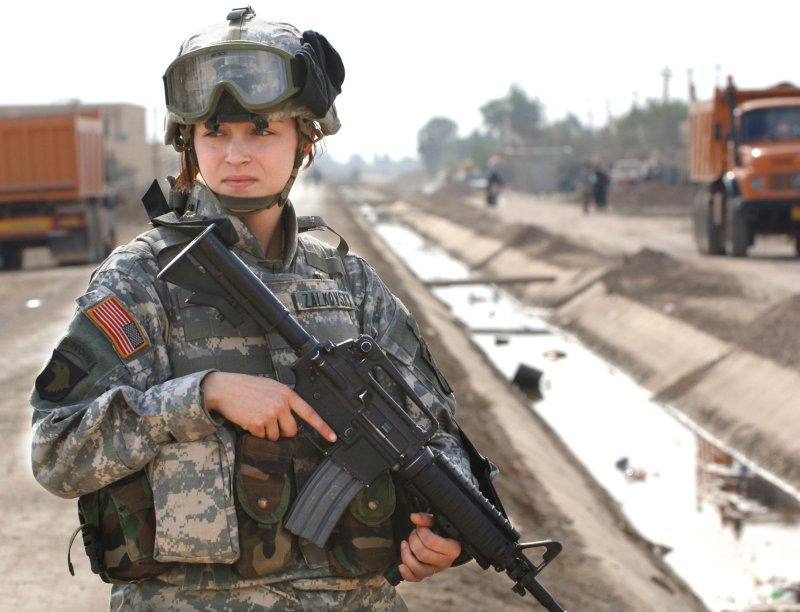
6. During the GWOT, the MoH has been awarded at a rate of nut much more than 1 out of every 100,000 troops serving in harm’s way. That’s barely 1/4 as often as during World War II, and about 1/8 as often as during Vietnam. And the GWOT – like World War I, Korea, and Vietnam – has been primarily a single-theater, “up-close-and-personal” infantry war. Something just doesn’t seem right.
. . .
Why? Well, I personally think it’s probably one last institutional legacy of Vietnam. Specifically, I think this is an over-reaction to the perception of awards abuse and inflation in Vietnam – which was, to some degree, IMO accurate. (How much is another question entirely.) But the correction has been far too severe. American troops haven’t become less brave today than they were in previous conflicts, and during the GWOT substantial opportunities for battlefield heroism have existed. The reluctance to award the MoH seems to me to be due to an excessive and misplaced fear of “cheapening” the MoH as is perceived happened to some awards in Vietnam. That’s a valid concern – but if anything, the effect appears to have been to slight many deserving heroes.
This has an unintended consequence: it sends an unintended message to the military itself, and to America. Few or no MoHs implies almost no one was no one worthy, that the fighting wasn’t severe and protracted, and that there simply wasn’t much battlefield heroim. But that’s decidedly not the case for either Iraq or Afghanistan.
Bottom line: the process appears effectively broken. IMO, it needs fixing. “Poor is the nation that has no heroes; but beggared is the nation that has and forgets them.”
Just my thoughts, and I might well be out to lunch. But my gut tells me I’m not.
_________________
Postscript: I’m still not personally convinced no one in the 1991 Gulf War was worthy of the MoH. However, ground operations during that war were short enough and the enemy so clueless that maybe that was the case.
Dunno. I wasn’t on active duty during the Gulf War; and I wasn’t mobilized during that conflict. So I don’t really have any personal experiences on which to form an opinion about the matter.
But I still have trouble believing it.