Category: Military issues

  • Rescuing the Warthog

    Rescuing the Warthog

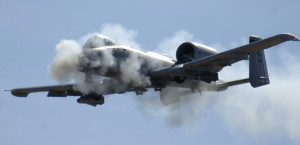
    A10 Thunderbolt

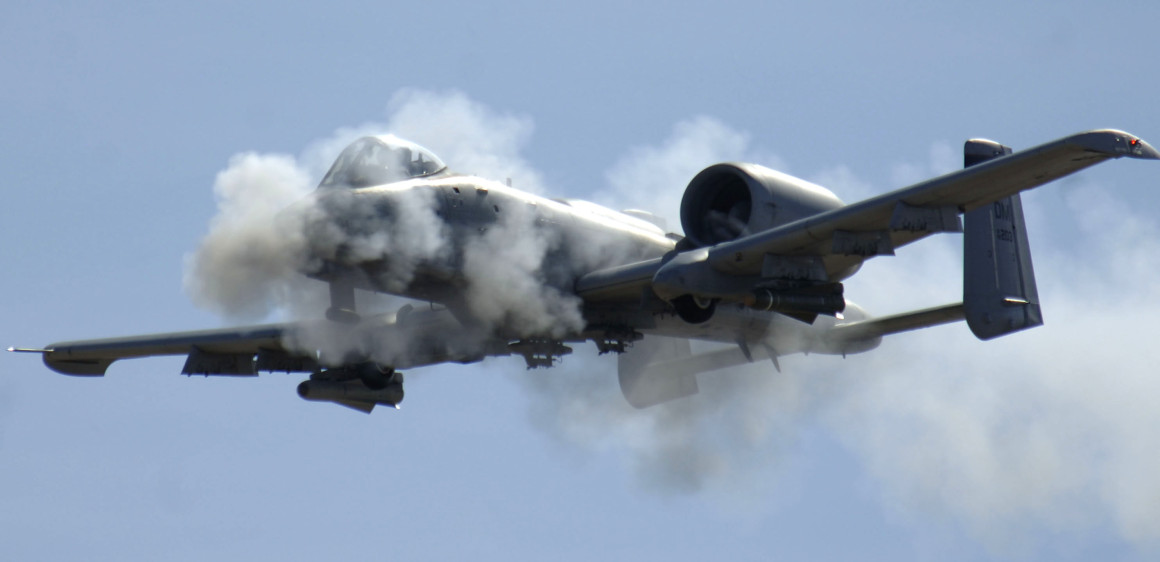
    Senator Kelly Ayotte, a New Hampshire Republican who has no political dog in the fight is trying to save the A-10 Thunderbolt also known as the “Warthog” close air support weapons platform from the Air Force and the White House budget axe. Ayotte’s only connection to the aircraft is the fact that her husband was an A-10 pilot. Well, that and how the aircraft is credited with saving countless American lives. From the Boston Globe;

    Pentagon officials, including Hagel, have testified that if they can’t retire the A-10, the Air Force will have to make cuts elsewhere, including weapons and military training. The Obama administration maintains that retiring the planes will save an estimated $4.2 billion and has told Congress it “strongly objects” to the efforts to keep the planes, insisting that the military will retain several types of aircraft that can do the same job as the Warthog.

    The White House has also indicated that President Obama may veto any defense bill that forces the Air Force to retain the A-10 fleet.

    None of this has deterred Ayotte. She is pressing her campaign to save the aircraft on grounds that lives could be lost if the A-10 is retired before there is an adequate replacement.

    One of the first aircraft sent to fight ISIS was the A-10, because there really is nothing else in the inventory that can do the job of close air support for folks on the ground like the Thunderbolt. I can’t adequately explain the feeling, as an infantryman, of seeing the Warthog over the battle space. But it’s a comfort, just trust me on that.

    The Warthog has been declared dead no less than three times since it entered the service and every time the program gets resurrected because of the realities of war. If Hagel wasn’t such a political hack, he’d admit that.

  • Increased security at Arlington

    Increased security at Arlington

    TUS SOG

    The Associated Press reports that the US has strengthened security at the Arlington National Cemetery in the aftermath of the jihadist attack on a military guard in Ottawa.

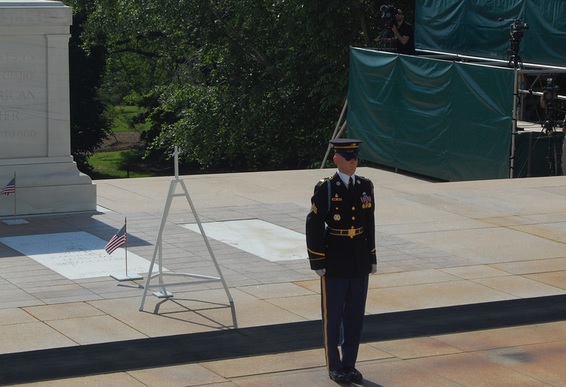
    Authorities increased security at the Tomb of the Unknowns, which draws 4 million tourists a year. The Military District of Washington, which oversees the 3rd U.S. Infantry Regiment, known as The Old Guard, that protects the tomb, said the added security was a “precautionary measure.”

    The U.S. Embassy in Ottawa was also placed on lockdown as a precaution.

    It was unclear whether Wednesday’s shootings were terrorism-related.

    Yeah, it’s clear to everyone except the Associated Press apparently, since the Canadian Prime Minister has called it a terrorist attack;

    [Stephen] Harper called it the country’s second terrorist attack in three days. A man Harper described as an “ISIL-inspired terrorist” on Monday ran over two soldiers in a parking lot in Quebec, killing one and injuring another before being shot to death by police.

    I don’t think that there is a risk to soldiers guarding the Tomb of the Unknown Soldiers since it’s quite a hike from the gate to the Tomb and there are already several layers of security a potential assassin would need to navigate. It would be easier to attack the White House, which by the way, had another fence-jumper yesterday while the drama in Ottawa unfolded.

    Our Canadian buddy, Aunty Brat has more information on Corporal Nathan Cirillo, the reservist who was killed in Ottawa yesterday.

  • COLA Wars

    COLA Wars

    The Washington Post reports that federal retirees will be getting a 1.7% cost of living allowance (COLA) on January 1st;

    According to the latest Office of Personnel Management data, as of last Oct. 1, there were just under 2 million federal retirees, about three-fourths of them drawing benefits from the Civil Service Retirement System and the rest having retired under the Federal Employees Retirement System.

    Doesn’t sound like much, does it? Well, it really isn’t. Between $20 and $50 per month increase. But it’s still better than what the troops will be getting, according to the Army Times;

    But the 1.7 percent COLA increase is still likely to be a bigger bump than active-duty troops will see in their paychecks on Jan. 1. The White House and Pentagon have pushed for a 1 percent raise for service members in 2015.

    Military leaders have argued that move will save $3.8 billion over five years, money that can be reinvested into readiness and modernization accounts already squeezed by budget constraints. House lawmakers have voiced opposition to the plan, but so far have not finalized any legislation that would provide for a bigger raise.

    Isn’t it strange that the feds can squeeze out a COLA almost double for retirees than they can for the active duty troops, who, by the way are still fighting a war or two and saving Africa from their Ebola epidemic? And still they’re talking about cuts to the defense budget. I guess we know who is more valuable in the eyes of this administration.

    Thanks to Chief Tango for the links.

  • Pulling their fat from the fire…again

    Pulling their fat from the fire…again

    So while the country is going into melt down over the whole Ebola thing, the Pentagon is doing what they do best – sending the troops in to pull the administration’s fat from the fire, according to the Associated Press;

    Defense Secretary Chuck Hagel has ordered the military to prepare and train a 30-member medical support team that could provide short-term help to civilian health professionals if there are more Ebola cases in the United States.

    His spokesman, Rear Adm. John Kirby, says the team drawn from across the military services will include 20 critical care nurses, five doctors trained in infectious diseases and five trainers in infectious disease protocols.

    Apparently, this government can’t do anything without using the military, probably ebcause they’re the only government entity that the public trusts. All the while, military folks are the only government employees whose bosses are cutting their pay raises, raising their health care costs, slicing up their retirement package, sending them pink slips while someone is shooting at them.

    The article continues to say that these 30 folks are not going to West Africa;

    Kirby…says members will be called up for service in the U.S. only if needed by public health officials.

    F*** you very much.

  • Fort Benning addresses Ebola infection case rumors. UPDATEDx2.

    It seems that a initial entry soldier was placed under isolation precautions at Martin Army Hospital at Fort Benning for suspicion of symptomatic Ebola. The person who has not been identified was reported to have recent travel to Nigeria and presented a high grade fever. As of this post, it is believed that the fever was caused by a reaction to one of the immunization shots given during inprocessing. The base commander Major General Scott Miller, spoke on record to address the rumors that there was a active Ebola case, about a possible ebola case on Fort Benning.

    During standard screening procedures, we identified a newly arrived Soldier with a recent travel history to Nigeria. The Soldier displayed an elevated temperature, and while he is not likely to have the Ebola virus, we have initiated necessary protocols out of an abundance of caution.

    The Soldier has been isolated and is being monitored, even though it’s likely that his fever can be attributed to immunizations he received during in-processing.

    We are currently in coordination with medical and CDC professionals to ensure testing is accurate and complete.

    Representatives from Fort Benning also made a statement to address the rumors that the base and hospital were placed on lockdown.

    “None of that’s true,” said Gary Jones, the Maneuver Center’s public affairs officer. “The gates were never closed. The hospital is not closed and will not be closed.”

    “The post itself is open for business, and it’s business as usual,” said Col. Patrick Donahoe, Chief of Staff at the Maneuver Center of Excellence.

    UPDATE: October 18th 2014.

    Just a few minutes ago Fort Benning gave a status update on how the Solider is doing and more information about his background. The person in question was assigned to the 30th Reception Battalion.

    “Today, the Soldier’s temperature has returned to within normal range, which is completely inconsistent with the disease process associated with Ebola,” MACH Commander Col. Scott Avery said in the statement.

    Avery also said the soldier “does not pose a risk to others.”

    UPDATE x2: October 18th 2014.

    The Solider in question’s test came back negative for Ebola. Fort Benning Representatives gave this statement.

    “While we are relieved this Soldier does not have Ebola, this was an opportunity for Fort Benning to not only test our systems, but exceed protocols to better ensure the safety and well-being of our Soldiers and those in the workforce who support them,” Maneuver Center of Excellence Chief of Staff Col. Patrick Donahoe said.

  • Bergdahl investigation complete

    Bergdahl investigation complete

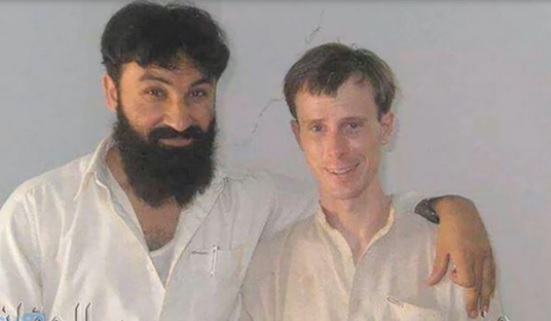
    Bergdahl and pal

    From Andy, a link to Reuters reports the the investigation of the circumstances around Bowe Bergdahl’s disappearance from his post and reappearance among the enemy has been completed. But we’re not going to hear about the results before the election;

    “The investigating officer has done his work but now that work is moving through the Army system, and at each stop … there will … be questions, requirements for clarification,” [Pentagon spokesman Army Colonel Steve Warren] told reporters. “So it’s working its way through the system as would any other investigation.”

    Warren rejected news reports suggesting that results of the investigation were being delayed until after the November elections to avoid re-igniting the controversy surrounding the prisoner swap that led to Bergdahl’s release.

    Yeah, if there was a way they could blame Bush, it would already be old news.

  • “Previews of Coming Attractions”

    People wonder just how bad the Ebola outbreak could get. Well, with a bit of understanding of the relevant mechanisms, knowledge of the math involved, and a spreadsheet, putting together a “quick and dirty” approximate model for the spread of that disease is relatively easy.

    What it shows may be somewhat hard to swallow. And it is a simplified model; reality will be somewhat more complex. But for the early stages of an epidemic – and we’re still in the relatively early stages of this one – I think this should be relatively close.

    First, a few known facts and/or best estimates for the current outbreak and about Ebola itself.

    1. Although the first case was reported 6 months ago, the current outbreak has actually been ongoing since Dec 2013. The index case infection(s) occurred in Guinea, in late Dec 2013. It simply wasn’t recognized as Ebola for around 3 months.
    2. The mortality rate (percentage of those infected with the disease who die) for a disease outbreak cannot be calculated until after the outbreak has run its course. However, an estimate – the current case fatality rate (CFR) – can be calculated. The CFR is a snapshot in time, and tends to rise during the course of an outbreak as more complete information becomes available and some of the patients sick at the time of last calculation die. For the current outbreak, data indicates that the CFR for the current outbreak is approximately 53%.
    3. The total number of reported Ebola cases during the current outbreak is believed to be only approximately 40% of the actual number of cases.   Roughly 60% of the cases (and deaths)in the current outbreak are believed to have never been reported – or in other words, multiply the current reported totals for cases and deaths by 2.5 to get the best guess at the true number.
    4. Facts and best estimates concerning Ebola virus disease.
    • The average Ebola incubation period seems to be about 10 days (min observed is 2 days; max observed is 21).
    • During incubation, patients are asymptomatic (without symptoms). Individuals are not in general contagious prior to becoming symptomatic.
    • At the onset of symptoms, patients begin shedding the virus in bodily fluids and become contagious.
    • Transmission of Ebola appears to be via human-to-human transmission through close contact and/or contact with contaminated fomites/surfaces. Contact with an symptomatic Ebola sufferer’s bodily fluids (sweat, urine, feces, vomit, semen, vaginal secretions, mucous, saliva, or blood) is believed to be the mechanism by which Ebola is transmitted from person to person. For that reason, shaking hands with or standing within 1 meter of an Ebola patient without PPE is considered close contact.
    • The virus appears to enter the human body through mucous membranes or open wounds.
    • Aerial transmission of Ebola does not appear to be a normal means of transmission from human-to-human. However, the possibility cannot be ruled out. Ebola Reston is believed to have spread between primates in different rooms of the famous Hazelton “monkey house” in Reston, VA, through the facility’s ventilation system. After analysis, aerial transmission through the facility’s ventilation system was determined to have been the most likely mechanism by which that Ebola variant spread.

    How epidemics work.

    An epidemic in an immunologically naïve population (e.g., one that has no previous exposure, and thus no natural resistance to the disease) works and can be modeled at a somewhat simplistic level as follows.

    1. A first case – termed the index case – becomes infected. This begins the first generation of the outbreak.
    2. The index case proceeds through the disease’s incubation period. For Ebola, this is on average 10 days. For Ebola, the individual is not contagious during the incubation period.
    3. The individual becomes contagious. For Ebola, this occurs with the onset of symptoms. Also for Ebola, the period during which a sufferer is contagious lasts until they either recover (average is approximately 16 days) or die (usually around day 10 after onset of symptoms). (One caveat here: the Ebola virus persists in certain organs of recovered Ebola patients for up to 90 days after clinical recovery. Though the recovered patient’s body does eventually rid itself of the virus, transmission to others after recovery can occur. In particular, sexual transmission of Ebola by a “recovered” Ebola patient several weeks after clinical recovery has been recorded.)
    4. Transmission to others occurs during the period while an infected person is contagious. During this period, the individual transmits the disease to some number of other individuals. The average number of persons to whom each sufferer transmits the disease is a critically important parameter, called the “reproduction number”. So long as this number is greater than 1, the number of people infected will continue to increase. It’s just a question of how fast.  For the current Ebola outbreak, the reproduction number is estimated to be somewhere between 1.5 and 2.
    5. The transmission to others referenced in step 4 begins the next generation of the virus. Steps 1 through 4 then repeat.

    That’s it. Until the numbers of persons with some type of immunity to the disease (either through survival or vaccination) in the affected population becomes significant, the above is a reasonably accurate – though somewhat crude – description of how an infectious disease propagates through a susceptible population.  It will hold until something (deaths, developed immunity, behavioral changes, whatever) changes the transmission cycle of the disease – usually by changing the reproduction number.

    Those familiar with calculus might be wondering if this is a process exhibiting exponential growth. The answer, unfortunately, is yes. Epidemics in fully susceptible populations are indeed exponential growth scenarios until “herd immunity” (the fraction of the population immune due to prior exposure or vaccination) becomes significant – or until the population dies out, or something else intervenes to reduce the reproduction number below 1.

    The Model.

    Here is a simplified spreadsheet model I’ve come up with for the current West Africa Ebola outbreak. As noted, it’s a rather crude, “quick and dirty” model. But it gives a reasonable idea of what may be in store; I don’t think it’s grossly in error.  Format is Excel 97-2003.  If anyone with more knowledge of the subject or the parameters in question has criticism or comment, I’m all ears. Getting it right is what’s important.

    Fair warning:  I would suggest you (a) sit down, and (b) get a cup of coffee (or something stronger) before you look at the model.  And I wouldn’t recommend do so immediately after or while eating.

    Assumptions used were the following.

    • Single index case in late Dec 2013.
    • 53% mortality rate.
    • Reproduction number of 1.57
    • Average incubation period of 10 days.
    • Transmission on average occurs (and thus begins the next generation of the epidemic) on day 5 after each infected individual’s symptoms begin.
    • Reported cases and deaths are each 40% of actual.
    • Estimates based on averages are reasonably representative of physical reality and will not be grossly in error.

    For 9 October – the start date of the model’s generation 20 of the outbreak – this model predicted a reported number of cases of 7,724 and a reported number of deaths of 4,090.

    Per the CDC website, on 8 October 2014, the reported number of cases was 8,011; the reported number of deaths was 3,857.

    On the “bright side” – if you can call it that – the model I developed doesn’t predict 1.4 million cases until late Feb/early Mar 2015. Without changes in the outbreak, CDC predicts that number of cases by late January.

    I guess I could say “Happy Halloween” at this point; the above is certainly scary enough. But I don’t see much to be happy about above.

    THIS is why we need to do everything possible to keep this sh!t out of the United States. Period.

    Are you listening, Mr. President?
  • Pentagon: some troops deployed to Africa “will have to handle infected blood samples”

    Remember that       Administration feelgood exercise     military deployment to Africa to combat the Ebola outbreak? The one where the Administration first insisted that no troops would treat Ebola patients – even though uniformed USPHS Commissioned Corps personnel, who may be militarized by Presidential order, and who are also by law uniformed service personnel who qualify for VA benefits, PX/commissary privileges, and TRICARE, will be staffing one of the hospitals being built by US forces?

    Well, other than that part about PHS Commissioned Corps, I guess that’s technically true. But as is often the case with this      DC clown krewe     Administration, it’s not the full story.  Here, that initial statement was misleading as hell – IMO by design.

    It turns out that a number of uniformed military personnel deployed to West Africa will in fact be handling blood samples taken from Ebola patients in mobile testing labs.  A Pentagon spokesman, RADM John Kirby, has acknowledged that the risk involved is high, “if not more risk” than direct contact with Ebola patients.

    DoD has already set up 3 such mobile testing labs in West Africa. Four more have been requested.

    Of course, GEN David Rodriguez, US AFRICOM Commander, recently stated that containing the spread of Ebola “is a national security priority for President Obama”.  Presumably, that’s why we’re deploying forces to his AO.

    That statement is . . . interesting.

    I say that, because we currently haven’t imposed any quarantine requirements for people entering this country who’ve been in the area of the outbreak within Ebola’s known incubation period – and who may be asymptomatic carriers for up to 21 days after exposure. And we still haven’t imposed a ban on nonessential travel to the area by US citizens and legal residents.

    What’s it going to take for us to do that – someone bringing the virus here before they show symptoms? Oh, wait: that’s already happened in Dallas. I guess it will take substantially more than that to convince us to take this sh!t seriously.

    So pardon me for not exactly taking that “national security priority” statement at face value. If containing Ebola were truly a “priority”, we’d be imposing substantially stricter entry controls on travelers from the outbreak region than we do today.