Category: Historical

  • “Houston, uh . . . Tranquility Base here. The Eagle has landed.”

    I heard those words forty-four years ago today.  The memory of hearing them still gives me chills – and brings a tear to my eye.

    They were spoken by Neil Armstrong, Mission Commander of Apollo 11, as his response to a query from “Mission Control” at NASA’s Manned Spacecraft Center in Houston, TX (it was not renamed the Johnson Space Center until 1973).   They were spoken shortly after the Lunar Excursion Module Eagle had landed on the surface of moon in the Sea of Tranquility – becoming Tranquility Base.

    They were among the first words spoken by a human while on the surface of another world – Luna, our moon. They were, however, not the first words uttered by a human while on the surface of the moon.  That historical honor goes either to the announcement by Eagle’s Pilot Edwin Aldrin of “Contact light!” on receiving an indication that one of Eagle’s footpad probes had touched the lunar surface, or to one of several statements made by either Aldrin or Armstrong while executing the post-landing checklist a few seconds later as Eagle was settling onto the surface of the moon.

    The Apollo 11 crew consisted of one civilian NASA employee – Neil Armstrong – and two USAF officers assigned to NASA, Edward Aldrin and Michael Collins.  All three had a military aviation background, and all had served as test pilots before being selected for NASA’s astronaut program.  All three had been NASA astronauts for several years prior to the Apollo 11 mission; each had previously orbited the earth.

    Armstrong and Aldrin landed on the moon in Eagle.  The third member of the Apollo 11 crew, Michael Collins, remained with the Apollo 11 command module Columbia in orbit during the landing.

    The story of the Apollo 11 mission is well-known; I won’t re-hash the details.  The same is true of the crew’s post-astronaut lives.

    However, that day – and their accomplishment – are indeed worth remembering.

    As a related diversion, this article details a number of fascinating and little-known facts concerning the Apollo 11 mission; it’s worthwhile reading.  But IMO, it missed one of the more interesting little-known facts about the mission:  all three Apollo 11 crew members were born the same year (1930).

    Two of the crew of Apollo 11 are today still living:  Aldrin and Collins.  Sadly, Armstrong passed away last year.

    Rest in peace, Mr. Armstrong.  Best wishes for continued good health to each of you, Col. Aldrin and Maj. Gen. Collins.

    Thank you, gentlemen.  You won’t be forgotten.


    For those of you who’d like to relive the landing – or who were weren’t yet born or were too young at the time to remember it – here’s capsule video from the latter part of the LEM’s descent.  Enjoy.


    Author’s Postscript: in an ironic quirk of fate, Ted Kennedy likely owes his political career to the Apollo program begun under his late brother John, and particularly to the Apollo 11 mission. Eagle landed somewhat over 36 hours after Kennedy’s car had gone off a bridge at a place called Chappaquiddick.  That “little mishap” – which otherwise doubtless would have been front page news nationwide – was pretty much pushed out of the public’s consciousness by news of the moon landing.

    I wonder if the account Teddy gave to the Deity in 2009 concerning his actions that night bears much resemblance to the story he told to the US public – and in court – in 1969?

    Rest in peace, Mary Joe Kopechne.
  • Bastille Day

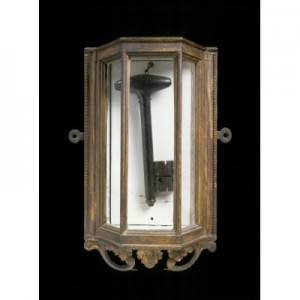
    Key to the Bastille

    Yes, this is the day that those people in France celebrate the fall of the infamous prison that was near the center of Paris in 1789. Ex-PH2 wrote to remind us. But there is a connection to our own history that you might not know. Because of his own experience in the American Revolution, the Marquis de Lafayette was given a prominent role in the French Revolution. The people of Paris presented him with the key to the Bastille.

    To recognize the influence that the American Revolution had on the French version, the Marquis de Lafayette shipped the key to George Washington. The first leg of the journey for the key started in December 1789 in the possession of Thomas Paine, appropriately enough, finally arriving at Mount Vernon during the summer of 1790. Washington put that key in the entrance-way to his residence where it remains today.

    It’s easy to forget that the American Republic was unique in the 18th century, that throwing off the shackles of the King of England inspired people around the world to demand their own freedom. That the Key to the Bastille resides in Mount Vernon today is a reminder of that uniqueness. That’s why I have a copy of the Key next to the bust of George Washington on my bookshelf – to remind me.

  • Perhaps “The Greatest Hero America Never Knew”

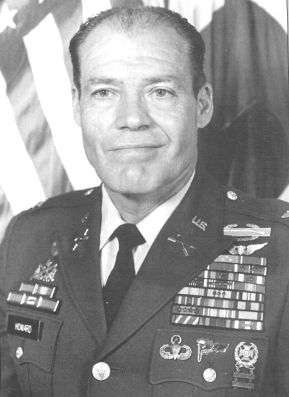
    COL Robert L. Howard, US Army
    July 11, 1939 – December 23, 2009
     

    Ask many Americans who Audie Murphy or Sergeant York or George Patton – or many other famous American military figures are – and you’ll likely get at least a fair number who know who you’re talking about. But ask them if they know who Robert Howard was, and I’d guess 95% or more would give you a blank look – or would say “He was some soldier, right?”.

    That’s a damn shame. The man deserves far better than that.

    (more…)

  • TSO in the 1st Virginia Cav

    CV the Reb

    As you probably know, TSO joined up with the 1st Virginia Cav last week and fought Gettysburg a couple of times last week. Well, he was on assignment at his paying job and wrote about it at The Burn Pit. He has a couple of videos up over there, too. If you’ve got access to Facebook, his wife (the world’s last sweetheart) has pictures up at her place.

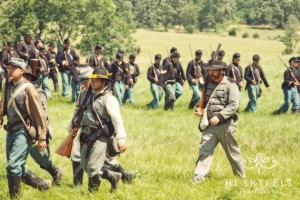
    By the way, that’s TSO straggling behind his men in the picture above after he cut a notch in his beard and turned them into huge sideburns.

  • Gettysburg 2013

    Gettysburg3

    So, I went to Gettysburg yesterday to spend the day with The Beard, which apparently is in it’s last days on the planet. Here The Beard quenches itself with frosty cold and Civil War era-authentic cans of Guinness. I’ll leave it for him to tell you about how his horse decided to attack the damn Yankees in a one man saber assault.

    But here are some photos I took with my phone. It was supposed to be a reenactment of the Battle for Culp’s Hill, but I didn’t recognize it;

    Gettysburg2

    Gettysburg1

    Gettysburg

    In this picture, you can see the infantry battle on the hill across from the Confederate artillery battery;

    Gettysburg4

    And a video of an infantry company returning from the battle to their camp;

    I guess The Beard is staying one more day to participate on the wrong side of Pickett’s Charge so he can get “some trigger time”. I was impressed by these re-enactors, they kept up a pretty good rate of fire and temperature-wise it was in the 90s. Overall it was a good show.

    ADDED: A video of the 21-gun salute to the re-enactors who took to the field in 1963. I think they said there were 50 of them in attendance yesterday;

  • July 4th, 1953, The Bridge to Pork Chop Hill

    MCPO NYC USN (Ret.) sends us a story written by Capt. James A. Brettell, the commander of Company A 13th Engineer Bn. of his experiences on the 4th of July 60 years ago;

    On July 6, the Chinese, launched their last attack of the Korean War at Pork Chop Hill under the cover of darkness and the rains. It was ferocious and unrelenting. The 17th infantry suffered heavy casualties in the initial onslaught.

    Pre-arranged counter attack plans were implemented immediately. Each of these plans included use of “A” Company supporting engineers. A squad of engineers were assigned to each company of the 17th and regularly practiced counter attack procedures. The engineer troops had pre-arranged basic loads of ammunition, satchel charges, bangalore torpedoes. mines, radios and rations that each individual carried with him for use in the counter attack.

    You should read the rest.

  • One Hundred Fifty Years Ago Today: Hell and High Water

    Note:  this is a republication of an article from several months ago.  Today, it’s apropos. Although actions continued at Culp’s Hill and Cemetery Hill on 3 July, this was indeed the main action of the day.

    ___________

    Gettysburg.

    To any American with even a rudimentary knowledge of military history, that word speaks volumes. The battle itself, its historical impact, the heroism, the second-guessing . . . . all of these are legendary. Literally hundreds of books have been written concerning various aspects of the battle and its aftermath.

    Yet certain parts of the battle remain under-appreciated today. That’s true even of some that are well-known.

    In fact, that’s true for one of the great acts of heroism which occurred at Gettysburg. IMO, it’s one of the greatest acts of collective heroism in military history – ranking with Gideon’s Band, the Spartans at Themopylae, and the Charge of the Light Brigade. Yet it is an action for which none of the participants received any substantial personal recognition other than after-the-fact praise. The human cost was extreme. And it remains controversial even today.

    But that’s to be expected. Any military operation involving 52+% casualties should be expected to have both heroic and controversial aspects. That’s especially true when it involves roughly 12,500 men.

    I’m referring to Pickett’s Charge.

    (more…)

  • One Hundred Fifty Years Ago Today: Gettysburg, Day 2

    The Battle of Gettysburg continued today in 1863.  Union and Confederate forces continued to arrive overnight and during the morning of 2 July.  Forces were positioned for and prepared for battle during that time.  For many reasons, Lee’s second day attacks did not begin until relatively late in the afternoon.

    Many of the engagements today and their locations are well-known:  the Devil’s Den, the Wheatfield, the Peach Orchard, Little Round Top, Culp’s Hill, and Cemetery Hill (significant fighting at the latter two would continue into day 3).  Other sources describe these actions well.  Suffice it to say that the valor displayed during all engagements was extraordinary.

    One point of comparison is worth noting.  Antietam is often referred to as the bloodiest single day in US military history.  In terms of casualties, that is correct; close to 23,000 Americans were killed or wounded in one day at Antietam.  But Gettysburg’s second day appears to have seen more intense combat, albeit for a shorter duration.

    Action at Antietam lasted roughly 12 hours.  In contrast, the Gettysburg battlefield was largely quiet until approximately 4 PM – and fighting had ended by 10 PM.  In that six-hour period, it is estimated that roughly 16,800 Americans were killed or wounded.

    Take a moment today to remember the heroism, the sacrifice – and those lost – one hundred fifty years ago today at Gettysburg.  That’s worth remembering.