F1c Jarvis G. Outland, US Navy, assigned to the crew of the USS Oklahoma, was lost at Pearl Harbor, HI, on 7 December 1941. He was accounted for on 16 March 2018.
Capt. George Van Vleet, assigned to the 38th Bombardment Squadron (Heavy), 30th Bombardment Group, US Army Air Forces, US Army, was lost on Tarawa on 21 January 1944. He was accounted for on 22 March 2018.
From Korea
• None
From Southeast Asia
• None
Welcome back, elder brothers-in-arms. Our apologies that your return took so long.
Rest easy. You’re home now.
. . .
Over 73,000 US personnel remain unaccounted for from World War II; over 7,800 US personnel remain unaccounted for from the Korean War; and over 1,600 remain unaccounted for in Southeast Asia (SEA). Comparison of DNA from recovered remains against DNA from some (but not all) blood relatives can assist in making a positive ID for unidentified remains that have already been recovered, or which may be recovered in the future.
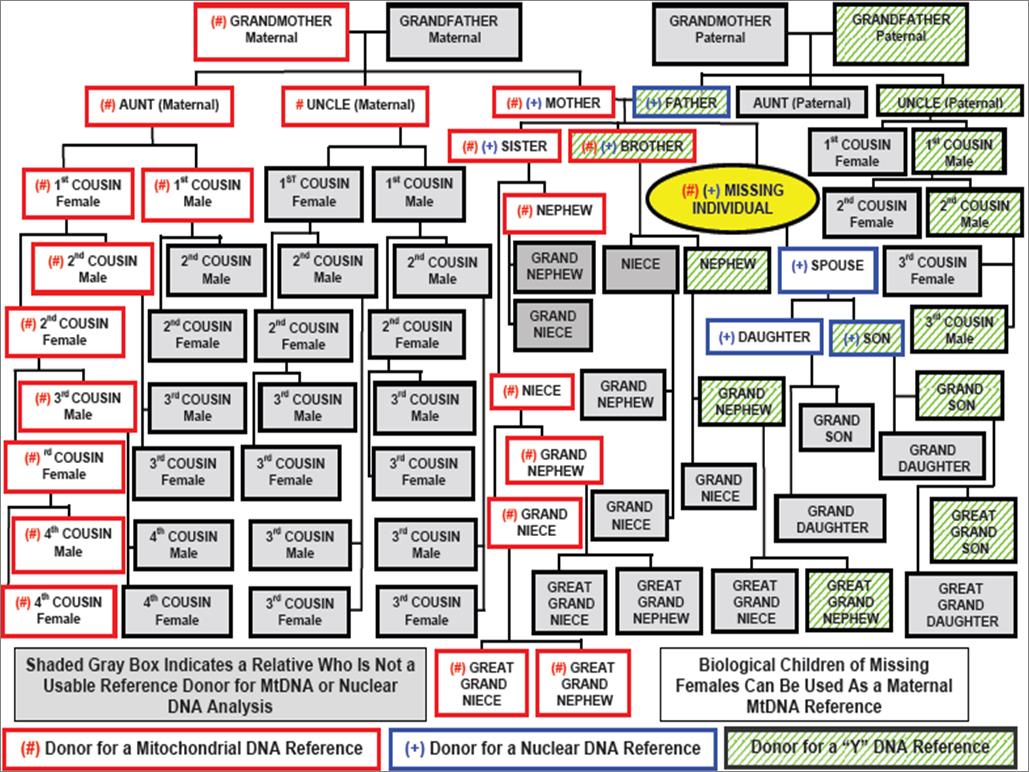
On their web site’s “Contact Us” page, DPAA now has FAQs. The answer to one of those FAQs describes who can and cannot submit DNA samples useful in identifying recovered remains. The chart giving the answer can be viewed here. The text associated with the chart is short and can be viewed in DPAA’s FAQs.
If your family lost someone in one of these conflicts and you qualify to submit a DNA sample, please arrange to submit one. By doing that you just might help identify the remains of a US service member who’s been repatriated but not yet been identified – as well as a relative of yours, however distant. Or you may help to identify remains to be recovered in the future.
Everybody deserves a proper burial. That’s especially true for those who gave their all while serving this nation.
Well, I’m back home and off the road again. And as usual, while traveling I took the opportunity to listen to some music.
Hey, I was behind the wheel for a bunch of hours. What the hell else was I supposed to do while driving to help pass the time?
And yeah, that means you’re about to get another musical walkabout. Consider yourself forewarned. (smile)
. . .
It’s no secret that our tastes change over the years. I think that’s largely due to the fact that we ourselves change over time.
As we change, so do our druthers. Our experiences in life give us new perspectives, and that modifies what we like.
Why? Well, for starters we change physically. But that’s only part of the reason – the smaller part, IMO.
My theory is that the main reason is that when we’re young, we haven’t yet had the experiences necessary to understand certain things fully. We haven’t yet been hurt – physically or emotionally – to the degree, or in the particular way, necessary to always “get it”. Or we haven’t had some other experience that’s a prerequisite to understanding a particular idea, or concept.
When we’re older, we’ve generally had those necessary experiences. So it seems to me that as we age, we develop the framework to interpret and appreciate things we couldn’t before. I can’t speak for others, but I’ve seen that in myself. I’ve become far more introspective and reflective over the years.
Hell, I could well be wrong about all of that; I’m no shrink. But it makes sense to me. So: “That’s my story and I’m sticking to it.” (smile)
“So . . . what’s yer point?” you ask? Well, sometimes that means revisiting old favorites yields a completely different experience. In fact, it can mean you discover treasures you’d formerly overlooked for whatever reason.
And since Jonn lets me “play in his sandbox” here, well, here ya go.
. . .
During a recent move, a number of CDs “went into hiding”. One of those AWOL CDs was my copy of The Who’s Who’s Next.
I recently acquired a replacement copy which was a later version (the first copy was the original version). And the new version contained a number of tracks absent from the original.
The Who are known as a rock band; they’re best known for their uptempo numbers. However, they’re English – and England has a long tradition of ballads. Pete Townsend on occasion would write slower tempo ballads; “Behind Blue Eyes” from Who’s Next is an example.
This tune is another example; it’s one you might not have previously heard. It’s titled “Too Much of Anything.”
Like Who’s Next, it was recorded in the early 1970s. But it wasn’t released until some years later, on the collection Odds and Sods. It was included on later releases of Who’s Next as well.
I think anyone past their 30s (or maybe their 40s) can probably relate to it. And I don’t really think further explanation is necessary.
. . .
Another CD that went “in hiding” during the move was U2’s The Joshua Tree. I also recently acquired a replacement copy of that one as well. And here, it’s strictly a case of changed perspective due to age. The two tunes I’m about to discuss were there all along; I just wasn’t ready to appreciate them properly when the original was released 30 years ago.
Like The Who, U2 is known as a rock band; they’re best known for their uptempo songs. But like England, Ireland also has long turned out ballads – and U2 has as well. These are two slower ballads from U2. They’re both IMO beautiful; and they both hit home.
The first of the two is titled “Running to Stand Still”. While the song’s subject matter is quite dark, the underlying metaphor (e.g., being caught in a bad situation requiring extreme acts that merely gain temporary respite while not knowing how to cope over the long term) is universal. I daresay that anyone who’s ever served in uniform has felt at times like they were indeed executing the song’s title – albeit not in the same manner as the song’s subject.
(For what it’s worth: if you are close to someone who’s engaged in self-destructive behavior (or have ever lost someone close to such behavior and haven’t fully come to grips with that loss), maybe you should pass on viewing the vid.)
The second tune is titled “Red Hill Mining Town”. The song was based on the closure of many British coal mines in the mid-1980s and the effect that closure had on the towns’ inhabitants.
This one especially hits home for me. As I’ve written previously, my father was a first-generation American; his parents were both immigrants.
After coming to America, my immigrant grandfather was a coal miner.
The mines and steel mills in and near his adopted hometown closed; as a result, the town damn near died. Today, it’s recovered somewhat – but you can tell it’s still just a shell of its former self.
Medical issues associated with coal mining shortened the man’s life substantially; because of that, I never met that grandfather. I don’t think he lived long enough to see his adopted hometown slowly fade and nearly dieas , the namesake town for this song did. But I think he lived long enough to see the decline begin, and to perceive what was coming.
I wasn’t as concerned 30 years ago about family history as I am today – so 30 years ago, the song didn’t really register. But today it connects.
Given all of that, let’s just say that listening to this tune while driving through an old, now partially (but not totally) defunct industrial area in different city was . . . a rather intense experience.
. . .
Well, anyway, that’s all for today. Walkabout’s over now; hopefully it wasn’t too boring.
. . .
Postscript: The two U2 tunes are intense and powerful live, too. The first can be viewed here (from Rattle and Hum) or here (Chicago, 2005, from the Vertigo tour). The latter can be viewed here. This was first public live performance by U2 of “Red Hill Mining Town”; it happened on the opening night of the Joshua Tree 30th Anniversary Tour in Vancouver, BC, on 12 May 2017. The audio was taken from the concert’s mixing board – complete with what appears to be some timing chatter for the accompanying brass band. (smile)
• SSG David Rosenkrantz, US Army, assigned to H Company, 504th Parachute Infantry Regiment, 82nd Airborne Division, was lost in the Netherlands on 28 September 1944. He was accounted for on 14 March 2018.
From Korea
• CPL James I. Jubb, US Army, assigned to E Company, 19th Infantry Regiment, 2nd Battalion, 24th Infantry Division, was lost in South Korea on 10 August 1950. He was accounted for on 14 March 2018.
• SGT Julius E. McKinney, US Army, assigned to Heavy Mortar Company, 32nd Infantry Regiment, 7th Infantry Division, was lost in North Korea on 2 December 1950. He was accounted for on 14 March 2018.
From Southeast Asia
• None
Welcome back, elder brothers-in-arms. Our apologies that your return took so long.
Rest easy. You’re home now.
. . .
Over 73,000 US personnel remain unaccounted for from World War II; over 7,800 US personnel remain unaccounted for from the Korean War; and over 1,600 remain unaccounted for in Southeast Asia (SEA). Comparison of DNA from recovered remains against DNA from some (but not all) blood relatives can assist in making a positive ID for unidentified remains that have already been recovered, or which may be recovered in the future.
On their web site’s “Contact Us” page, DPAA now has FAQs. The answer to one of those FAQs describes who can and cannot submit DNA samples useful in identifying recovered remains. The chart giving the answer can be viewed here. The text associated with the chart is short and can be viewed in DPAA’s FAQs.
If your family lost someone in one of these conflicts and you qualify to submit a DNA sample, please arrange to submit one. By doing that you just might help identify the remains of a US service member who’s been repatriated but not yet been identified – as well as a relative of yours, however distant. Or you may help to identify remains to be recovered in the future.
Everybody deserves a proper burial. That’s especially true for those who gave their all while serving this nation.
• RM3c Howard V. Keffer, US Navy, assigned to the crew of the USS Oklahoma, was lost at Pearl Harbor, HI, on 7 December 1941. He was accounted for on 6 March 2018.
• 1st Lt. William W. Shank, 338th Fighter Squadron 55th Fighter Group, 66th Fighter Wing, 8th Fighter Command, 8th Air Force, US Army Air Forces, US Army, was lost in Germany on 13 November 1943. He was accounted for on 6 March 2018.
• Pfc Herman W. Mulligan, Jr., Company L, 3rd Battalion, 22nd Marine Regiment, 6th Marine Division, USMC Reserve, was lost in Japan on 30 May 1945. He was accounted for on 28 February 2018.
From Korea
• None
From Southeast Asia
• None
Welcome back, elder brothers-in-arms. Our apologies that your return took so long.
Rest easy. You’re home now.
. . .
Over 73,000 US personnel remain unaccounted for from World War II; over 7,800 US personnel remain unaccounted for from the Korean War; and over 1,600 remain unaccounted for in Southeast Asia (SEA). Comparison of DNA from recovered remains against DNA from some (but not all) blood relatives can assist in making a positive ID for unidentified remains that have already been recovered, or which may be recovered in the future.
On their web site’s “Contact Us” page, DPAA now has FAQs. The answer to one of those FAQs describes who can and cannot submit DNA samples useful in identifying recovered remains. The chart giving the answer can be viewed here. The text associated with the chart is short and can be viewed in DPAA’s FAQs.
If your family lost someone in one of these conflicts and you qualify to submit a DNA sample, please arrange to submit one. By doing that you just might help identify the remains of a US service member who’s been repatriated but not yet been identified – as well as a relative of yours, however distant. Or you may help to identify remains to be recovered in the future.
Everybody deserves a proper burial. That’s especially true for those who gave their all while serving this nation.
• EM3c George H. Gibson, US Navy, assigned to the crew of the USS Oklahoma, was lost at Pearl Harbor, HI, on 7 December 1941. He was accounted for on 23 February 2018.
From Korea
• None
From Southeast Asia
• None
Welcome back, elder brother-in-arms. Our apologies that your return took so long.
You’re home now. Rest easy.
. . .
Over 73,000 US personnel remain unaccounted for from World War II; over 7,800 US personnel remain unaccounted for from the Korean War; and over 1,600 remain unaccounted for in Southeast Asia (SEA). Comparison of DNA from recovered remains against DNA from some (but not all) blood relatives can assist in making a positive ID for unidentified remains that have already been recovered, or which may be recovered in the future.
On their web site’s “Contact Us” page, DPAA now has FAQs. The answer to one of those FAQs describes who can and cannot submit DNA samples useful in identifying recovered remains. The chart giving the answer can be viewed here. The text associated with the chart is short and can be viewed in DPAA’s FAQs.
If your family lost someone in one of these conflicts and you qualify to submit a DNA sample, please arrange to submit one. By doing that you just might help identify the remains of a US service member who’s been repatriated but not yet been identified – as well as a relative of yours, however distant. Or you may help to identify remains to be recovered in the future.
Everybody deserves a proper burial. That’s especially true for those who gave their all while serving this nation.
• GM2c William F. Hellstern, US Navy, assigned to the crew of the USS Oklahoma, was lost at Pearl Harbor, HI, on 7 December 1941. He was accounted for on 20 February 2018.
• MM2c Lorentz E. Hultgren, US Navy, assigned to the crew of the USS Oklahoma, was lost at Pearl Harbor, HI, on 7 December 1941. He was accounted for on 21 February 2018.
• S1c Henry G. Tipton, US Navy, assigned to the crew of the USS Oklahoma, was lost at Pearl Harbor, HI, on 7 December 1941. He was accounted for on 20 February 2018.
• Pfc Joe Lukie, Company K, 3rd Battalion, 2nd Marine Regiment, 2nd Marine Division, USMC, was lost on Tarawa on 20 November 1943. He was accounted for on 16 February 2018.
• 2nd Lt Harvel L. Moore, Company E, 2nd Battalion, 8th Marine Regiment, 2nd Marine Division, Fleet Marine Force, USMC, was lost on Tarawa on 22 November 1941. He was accounted for on 20 February 2018.
• SSG Leo J. Husak, Company A, 1st Battalion, 309th Infantry Regiment, 78th Infantry Division, US Army, was lost in Germany on 30 January 1945. He was accounted for on 14 February 2018.
From Korea
• CPL Leonard V. Purkapile, E Company, 2nd Battalion, 35th Infantry Regiment, US Army, was lost in North Korea, on 28 November 1950. He was accounted for on 20 February 2018.
From Southeast Asia
• None
Welcome back, elder brothers-in-arms. Our apologies that your return took so long.
You’re home now. Rest easy.
. . .
Over 73,000 US personnel remain unaccounted for from World War II; over 7,800 US personnel remain unaccounted for from the Korean War; and over 1,600 remain unaccounted for in Southeast Asia (SEA). Comparison of DNA from recovered remains against DNA from some (but not all) blood relatives can assist in making a positive ID for unidentified remains that have already been recovered, or which may be recovered in the future.
On their web site’s “Contact Us” page, DPAA now has FAQs. The answer to one of those FAQs describes who can and cannot submit DNA samples useful in identifying recovered remains. The chart giving the answer can be viewed here. The text associated with the chart is short and can be viewed in DPAA’s FAQs.
If your family lost someone in one of these conflicts and you qualify to submit a DNA sample, please arrange to submit one. By doing that you just might help identify the remains of a US service member who’s been repatriated but not yet been identified – as well as a relative of yours, however distant. Or you may help to identify remains to be recovered in the future.
Everybody deserves a proper burial. That’s especially true for those who gave their all while serving this nation.
Sometimes travel takes me near or through parts of the Appalachians. Recently it did again – though not near enough to Jonn’s part of WV to drop by.
While driving, I saw something that made me do a double take. Then I had a damn good laugh.
I saw an ambulance. It was from a firm that called itself “Delta Response Team”.
Seeing the name made me think, “Yeah, OK. Whatever.” But when I saw what I presume was their logo on the door, well . . . I nearly lost it.
You see, the logo was an acronym – in about 8” block-stencil letters, canted at a 45-degree angle to the horizontal – of their name.
That’s right: the ambulances were emblazoned with a huge “DRT” on the doors and sides. Given the use of that acronym here at TAH to mean something a bit different, I thought it was ironic that an ambulance company would use the same acronym for their logo.
And funny as hell, too. (smile)
But don’t take my word for it. Follow this link for a photo.
• MM1c Arthur Glenn, US Navy, assigned to the crew of the USS Oklahoma, was lost at Pearl Harbor, HI, on 7 December 1941. He was accounted for on 13 February 2018.
From Korea
• None
From Southeast Asia
• None
Welcome back, elder brother-in-arms. Our apologies that your return took so long.
You’re home now. Rest easy.
. . .
Over 73,000 US personnel remain unaccounted for from World War II; over 7,800 US personnel remain unaccounted for from the Korean War; and over 1,600 remain unaccounted for in Southeast Asia (SEA). Comparison of DNA from recovered remains against DNA from some (but not all) blood relatives can assist in making a positive ID for unidentified remains that have already been recovered, or which may be recovered in the future.
On their web site’s “Contact Us” page, DPAA now has FAQs. The answer to one of those FAQs describes who can and cannot submit DNA samples useful in identifying recovered remains. The chart giving the answer can be viewed here. The text associated with the chart is short and can be viewed in DPAA’s FAQs.
If your family lost someone in one of these conflicts and you qualify to submit a DNA sample, please arrange to submit one. By doing that you just might help identify the remains of a US service member who’s been repatriated but not yet been identified – as well as a relative of yours, however distant. Or you may help to identify remains to be recovered in the future.
Everybody deserves a proper burial. That’s especially true for those who gave their all while serving this nation.