Author: AW1Ed

  • Valor Friday

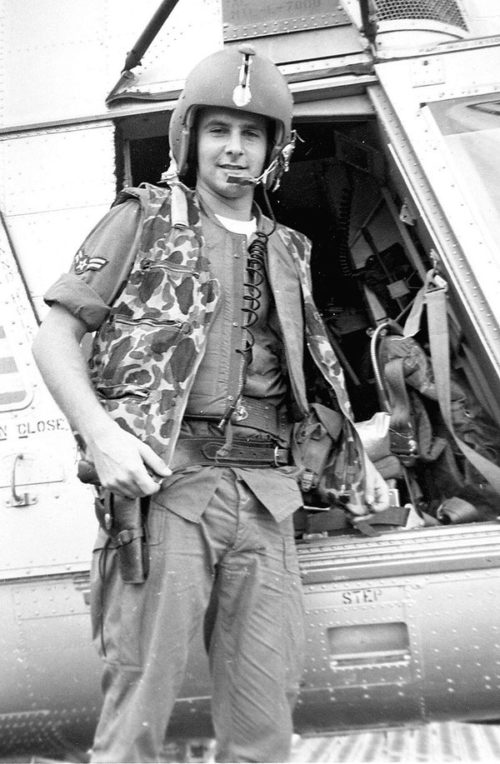
    Airman First Class William Airman First Class William “Pits” Pitsenbarger was awarded the Medal of Honor posthumously after he sacrificed himself to save numerous wounded soldiers. (Air Force)

    Yes, I know late again. Seems this thing called “work” interfered with my schedule. But better late than never, especially for “Pits.”

    Pararescue airman received Medal of Honor for saving soldiers, refusing to leave firefight

    A call for a medevac went out on April 11, 1966, after soldiers from the Army’s 1st Infantry Division positioned near Cam My, Republic of Vietnam, began taking extreme casualties during a lengthy firefight.

    Airman First Class William H. Pitsenbarger, a Pararescue crew member assigned to the 38th Aerospace Rescue and Recovery Squadron, was dispatched with a team to evacuate the wounded soldiers.

    As the helo approached the combat zone, Pitsenbarger, sensing the urgency of the situation, volunteered to ride the rescue hoist from over 100 feet in the air to the jungle floor, where he immediately began rendering aid to the wounded and preparing casualties for evacuation.

    Despite recovering nine casualties, ”Pits,” as his friends called him, repeatedly refused to leave the ground, insisting on trying to get even more wounded to safety.

    Another helo eventually arrived on scene to take more wounded, but as it approached, the assault by the Viet Cong intensified, forcing the helicopter to evacuate. Instead of leaving with the helicopter, Pits waved the pilots off to tend to the beat-up Americans on the ground who were being battered by sniper and mortar fire.

    On the ground with the other men, Pitsenbarger took up arms and fought back the Viet Cong for an hour and a half while repeatedly exposing himself to heavy enemy fire to make improvised splints and stretchers out of surrounding vegetation.

    With ammunition running low, Pits ran to the positions of mortally wounded soldiers to collect ammunition and distribute it to those still in the fight. He was wounded three times in the process.

    Ignoring his wounds, he continued to repel the attack and treat wounded soldiers up until the point the American perimeter was finally breached.

    He was mortally wounded by a sniper when the line was overrun. In the end, the Americans on the ground suffered 80 percent casualties.

    Pits was clutching a med kit in one hand and a rifle in the other when his body was recovered.

    For ignoring his own safety and remaining behind to treat and evacuate as many wounded as possible, Pitsenbarger was posthumously awarded the Air Force Cross, which was later upgraded to the Medal of Honor.

    The Piqua, Ohio, native was 21 years old when he was killed.

    Medal of Honor
    AWARDED FOR ACTIONS
    DURING Vietnam War
    Service: Air Force
    Battalion: 38th Aerospace Rescue and Recovery Squadron
    Division: DaNang Air Base, Vietnam
    GENERAL ORDERS:

    CITATION:

    The President of the United States of America, in the name of Congress, takes pride in presenting the Medal of Honor (Posthumously) to Airman First Class William H. Pitsenbarger (AFSN: 15680744), United States Air Force, for conspicuous gallantry and intrepidity at the risk of his life above and beyond the call of duty. Airman First Class Pitsenbarger distinguished himself by extreme valor on 11 April 1966 near Cam My, Republic of Vietnam, while assigned as a Pararescue Crew Member, Detachment 6, 38th Aerospace Rescue and Recovery Squadron. On that date, Airman Pitsenbarger was aboard a rescue helicopter responding to a call for evacuation of casualties incurred in an on-going firefight between elements of the United States Army’s 1st Infantry Division and a sizable enemy force approximately 35 miles east of Saigon. With complete disregard for personal safety, Airman Pitsenbarger volunteered to ride a hoist more than one hundred feet through the jungle, to the ground. On the ground, he organized and coordinated rescue efforts, cared for the wounded, prepared casualties for evacuation, and insured that the recovery operation continued in a smooth and orderly fashion. Through his personal efforts, the evacuation of the wounded was greatly expedited. As each of the nine casualties evacuated that day were recovered, Pitsenbarger refused evacuation in order to get one more wounded soldier to safety. After several pick-ups, one of the two rescue helicopters involved in the evacuation was struck by heavy enemy ground fire and was forced to leave the scene for an emergency landing. Airman Pitsenbarger stayed behind, on the ground, to perform medical duties. Shortly thereafter, the area came under sniper and mortar fire. During a subsequent attempt to evacuate the site, American forces came under heavy assault by a large Viet Cong force. When the enemy launched the assault, the evacuation was called off and Airman Pitsenbarger took up arms with the besieged infantrymen. He courageously resisted the enemy, braving intense gunfire to gather and distribute vital ammunition to American defenders. As the battle raged on, he repeatedly exposed himself to enemy fire to care for the wounded, pull them out of the line of fire, and return fire whenever he could, during which time, he was wounded three times. Despite his wounds, he valiantly fought on, simultaneously treating as many wounded as possible. In the vicious fighting which followed, the American forces suffered 80 percent casualties as their perimeter was breached, and airman Pitsenbarger was finally fatally wounded. Airman Pitsenbarger exposed himself to almost certain death by staying on the ground, and perished while saving the lives of wounded infantrymen. His bravery and determination exemplify the highest professional standards and traditions of military service and reflect great credit upon himself, his unit, and the United States Air Force.

    No greater love…

    Perhaps a bit late as well, but still deeply felt- Fair winds and following seas, Airman First Class Pitsenbarger.
    Military Times Link

  • Fat Leonard Strikes Again

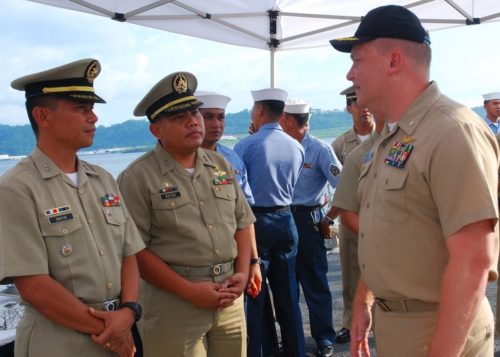
    Troy AmundsonThen-Cmdr. Troy Amundson, right, speaks with members of the Philippine navy before a closing ceremony for Cooperation Afloat Readiness and Training aboard the guided-missile destroyer Halsey in 2010. (Navy)

    Ex-Navy commander pleads guilty in ‘Fat Leonard’ bribery case

    A former U.S. Navy commander has pleaded guilty to bribery and conspiracy in the latest fallout from a corruption case that spanned a decade and involved dozens of Navy officials.
    By: The Associated Press

    SAN DIEGO — A former Navy commander has been sentenced to more than two years in prison after pleading guilty to accepting lavish dinners, drinks and the services of prostitutes in exchange for providing ship schedules to a Malaysian defense contractor at the center of one of the military’s worst corruption scandals.

    A federal judge in San Diego on Friday also ordered Troy Amundson, 51, of Ramsey, Minnesota, to pay a $10,000 fine.

    His lawyers argued that Amundson was not aware the ship schedules were classified, though their client acknowledged that from 2012 to 2013, he took the bribes from Leonard Glenn Francis, nicknamed “Fat Leonard.”

    Authorities say Francis’ company used the information to beat competitors and inflate bills sent to the Navy for services in Asian ports.

    Twenty-one people have pleaded guilty so far.

    Not aware? Every boot at Great Mistakes knows a ship’s movement is classified. It’s drilled in day one, and enthusiastically emphasized throughout boot training. This excuse is ludicrous, and the lawyers should have been laughed out of the courtroom.

    The article may be found here at The Navy Times

  • Pelosi Unhinged

    granny mcbotoxWords fail me.

    1 minute 42 seconds, fellow deplorables. We will all become ‘collateral damage’ for not blindly following San Fran Nan.

  • Reach out and touch someone.

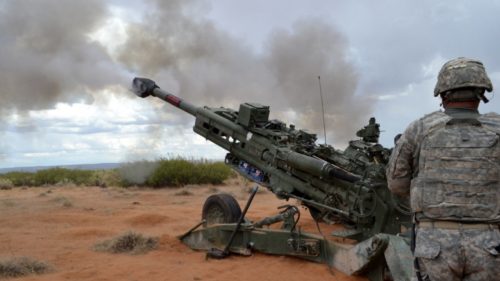
    artyA M777A2 howitzer fires a 155 mm round equipped with a M1156 Precision Guidance Kit fuze during a live-fire exercise at Orogrande Range Complex, New Mexico, Aug. 7, 2016. (Photo by Wendy Brown, Fort Bliss Bugle)
    “Artillery adds dignity to what would otherwise be an ugly brawl.”

    Major breakthrough: Army artillery hits target at 38 miles, doubling range

    The Army has successfully fired a 155mm artillery round 62 kilometers (38.5 miles) – marking a technical breakthrough in the realm of land-based weapons and progressing toward its stated goal of being able to outrange and outgun Russian and Chinese weapons.

    “We just doubled the range of our artillery at Yuma Proving Ground,” Gen. John Murray, Commanding General of Army Futures Command, told reporters at the recent Association of the United States Army Annual Symposium.

    Currently, most land-fired artillery shot from an M777 Towed Howitzer or Self-Propelled Howitzer are able to pinpoint targets out to 30km (18.6 miles) – so hitting 62km marks a substantial leap forward in offensive attack capability.

    Murray was clear that the intent of the effort, described as Extended Range Cannon Artillery, is specifically aimed at regaining tactical overmatch against Russian and Chinese weapons.

    “The Russian and Chinese have been able to outrange most of our systems,” Murray said.

    Citing the Russian invasion of Ukraine as a “wake-up call,” Murray explained that Russian weaponry, tactics and warfare integration caused a particular concern among Army leaders.

    “In Ukraine, we saw the pairing of drones with artillery, using drones as spotters. Their organizational structure and tactics were a wake-up call for us to start looking at a more serious strategy,” Murray explained.

    I’m way out of my swim lane here- the only friendly “artillery” I was exposed to was Naval Gun Fire Support (NGFS) missions flown in conjunction with USS New Jersey during A Very Bad Time in the Med. They were not a lot of fun to fly. So more power to you Gun Bunnies and Cannon Cockers, 2x the range is a good start, and I am 100% behind using UAVs to spot.

    Peruse the entire article at your leisure Here.

  • Navy Carrier Sailors to Get More Rest Under New Policy

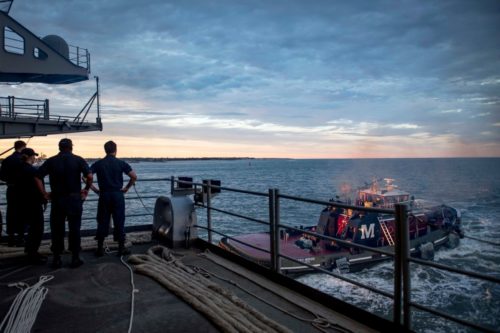
    carrier tugSailors aboard the aircraft carrier George H.W. Bush watch as a tugboat approaches the fantail to assist in a return to homeport earlier this year. (Navy)

    Sailors assigned to aircraft carriers will now get mandated amounts of rest time each day thanks to a policy change by Naval Air Forces.

    Recent reforms to the NATOPS General Flight and Operating Instructions Manual mean that non-aviation personnel will be guaranteed eight hours of uninterrupted sleep daily.

    They also will no longer be regularly scheduled for more than 18 hours of continuous duty, according to the command.

    If a mission or job requires such a long stint, sailors will be afforded at least 15 hours of off time before resuming their duties.

    While sleep regulations already exist for the aviation crews, the new policy reflects fears about fatigue dogging the surface force. Concerns about the lack of rest for those sailors were highlighted by official probes in the wake of the deadly collisions last year involving the guided-missile destroyers Fitzgerald and John S. McCain.

    Military investigators noted that crew fatigue hikes the risk of accidents.

    Thank you Captain Obvious. Naval Aircrew have had similar crew rest requirements for exactly that reason, for a very long time. It’s long overdue for embarked ship’s company as well. The entire article may be viewed at The Navy Times

  • Confronting Iran: The Trump Administration’s Strategy

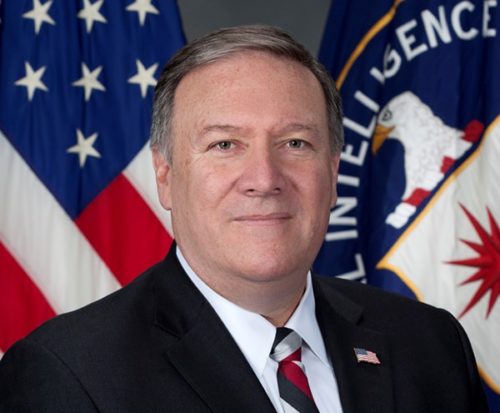
    sec state pompeo

    A very open and telling article by SecState Pompeo on the Trump doctrine, it’s objectives and differences from the previous administration’s policy of “leading from behind.”

    The end of the Cold War forced new thinking among policymakers and analysts about the greatest challenges to U.S. national security. The emergence of al Qaeda, cybercriminals, and other dangerous entities affirmed the threat of nonstate actors. But equally daunting has been the resurgence of outlaw regimes—rogue states that defy international norms, fail to respect human rights and fundamental freedoms, and act against the security of the American people, U.S. allies and partners, and the rest of the world.
    Chief among these outlaw regimes are North Korea and Iran. Their transgressions against international peace are many, but both nations are most notorious for having spent decades pursuing nuclear weapons programs in violation of international prohibitions. Despite Washington’s best efforts at diplomacy, Pyongyang hoodwinked U.S. policymakers with a string of broken arms control agreements going back to the George H. W. Bush administration. North Korea’s nuclear weapons and ballistic missile programs continued apace, to the point where after Donald Trump was elected, President Barack Obama told him that this would be his greatest national security challenge. With Iran, likewise, the deal that the Obama administration struck in 2015—the Joint Comprehensive Plan of Action, or JCPOA—failed to end the country’s nuclear ambitions. In fact, because Iran knew that the Obama administration would prioritize preserving the deal over everything else, the JCPOA created a sense of impunity on the part of the regime, allowing it to increase its support for malign activity. The deal has also given Tehran piles of money, which the supreme leader has used to sponsor all types of terrorism throughout the Middle East (with few consequences in response) and which have boosted the economic fortunes of a regime that remains bent on exporting its revolution abroad and imposing it at home.
    That the threats from North Korea and Iran grew in the post–Iraq war era has further complicated the question of how best to counteract them; Americans are rightly skeptical of the costs of a protracted military commitment in the name of protection from weapons of mass destruction. With the difficulties of Iraq fresh in mind, and with previous agreements to restrain the threats from North Korea and Iran having proved impotent, stopping these recalcitrant regimes from doing harm demands new diplomatic paradigms.
    Enter President Trump. For all of the Washington establishment’s fretting over his style of international engagement, his diplomacy is anchored in a deliberate approach that gives the United States an advantage in confronting outlaw regimes.

    There is considerably more to the article- highly recommended reading at Foreign Affairs

  • President Trump is The Strongest and Most Determined Political Force in Our Lifetime…

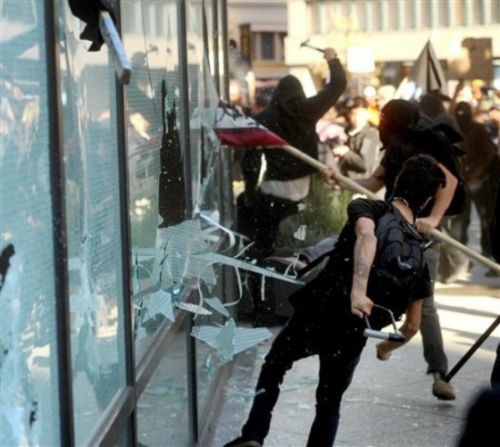
    antifa

    An interesting article Jim H forwarded to me.

    They’ve gone too far. “Donald Trump’s supporters are angry“, or “uneducated”, or “unenlightened”, or (fill_In_The_Blank). This hate-filled sentiment is clear within the latest vile,… nay,… evil and horrific smears directed toward Kanye West and anyone who dare defy the Marxist ideology of the political left.

    Now the media narrative controllers are fully engaged along with their political brethren. Do not look away. The vulgar lies and filth are extreme as ideological entities utilize their microphones in a brutal attempt to advance their position in the mid-term election…

    It’s a bit lengthy to post in it’s entirety, so click on the link to read the whole thing. Thanks, Jim.

    The Conservative Treehouse Link

  • Army moves to Hollow Point Ammo

    kel tec 2k

    Poetrooper joins us this morning with some thoughts.

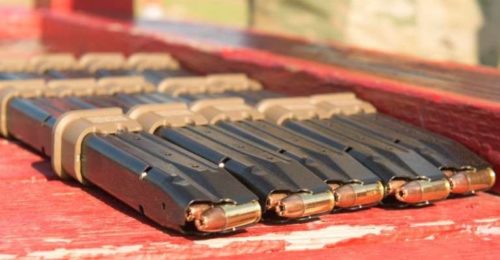
    I missed this back in February when I was engaged in that damned radiation and chemo therapy to kill the devil tumor in my throat. I suppose I shouldn’t say “damned” because together they kept me alive enough to still pound this keyboard although I could still be classified as WIA from friendly fire. Anyhow, I just ran across this article while surfing for accessories for the Kel-Tec Sub-2000 9mm carbine I bought a few weeks ago. It’s a sweet little piece that takes the same mags as my Beretta 92. And already having a bunch of those and a ton of stored 9mm, both ball and jacketed hollow point, it was a no-brainer addition to ol’ Poe’s armamentarium that lets me reach out beyond pistol range with a 9mm hollow point and touch bad guys with more muzzle velocity and more foot pounds of energy on impact, making it a more memorable experience for them; which is also the point of this move by the Army, making a close encounter with our bold warriors a more memorable experience for these unlawful combatants we face around the globe.
    9mm mags
    This is a very informative article, with lots of links on the legal issues surrounding the Army’s decision to begin issuing hollow point rounds for use in combat. Like most folks, I’d always thought any type of hollow point ammunition was banned by the Geneva Conventions although I’d also heard that proscription applied only to use against signatories of that treaty. As it turns out, the military legal eagles have finally stifled their reluctance to ratify that exception and the Army, and I assume the other services as well, will finally have pistol ammunition that affords a greater chance of killing or disabling an enemy contender. All I can say is, “It’s about frickin’ time.” Here’s the article from earlier this year:

    US Army Adopts hollow-point ammo M-17 M-18

    If Jonn covered this while I was MIA, please forgive an old man’s duplication.

    Thanks PT, nothing to forgive and it’s great to have you back.