DPAA has identified and accounted for the following formerly-missing US personnel.
From World War II
F1c George C. Ford, US Navy, assigned to the crew of the USS Oklahoma, was lost at Pearl Harbor, HI, on 7 December 1941. He was accounted for on 4 May 2018.
SF3c John M. Donald, US Navy, assigned to the crew of the USS Oklahoma, was lost at Pearl Harbor, HI, on 7 December 1941. He was accounted for on 8 May 2018.
S2c William V. Campbell, US Navy, assigned to the crew of the USS Oklahoma, was lost at Pearl Harbor, HI, on 7 December 1941. He was accounted for on 10 May 2018.
SGT Melvin C. Anderson, US Army, assigned to C Company, 803rd Tank Destroyer Battalion, was lost in Germany on 25 November 1944. He was accounted for on 10 May 2018.
From Korea
None
From Southeast Asia
None
Welcome back, elder brothers-in-arms. Our apologies that your return took so long.
Rest easy. You’re home now.
. . .
Over 73,000 US personnel remain unaccounted for from World War II; over 7,800 US personnel remain unaccounted for from the Korean War; and over 1,600 remain unaccounted for in Southeast Asia (SEA). Comparison of DNA from recovered remains against DNA from some (but not all) blood relatives can assist in making a positive ID for unidentified remains that have already been recovered, or which may be recovered in the future.
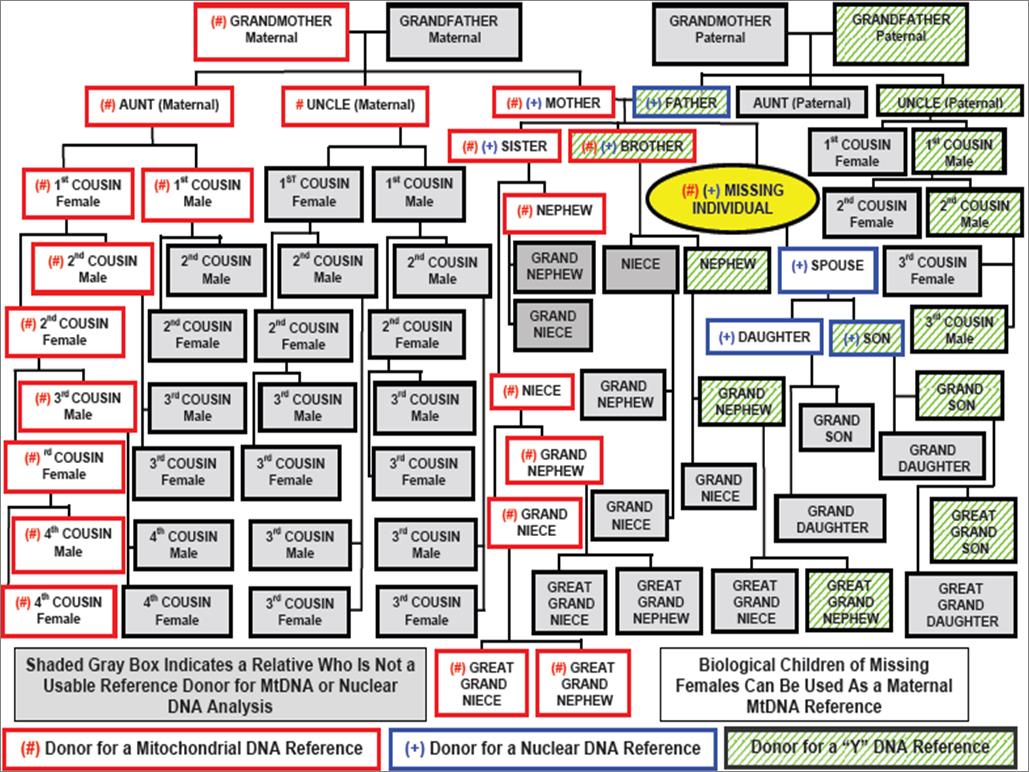
On their web site’s “Contact Us” page, DPAA now has FAQs. The answer to one of those FAQs describes who can and cannot submit DNA samples useful in identifying recovered remains. The chart giving the answer can be viewed here. The text associated with the chart is short and can be viewed in DPAA’s FAQs.
If your family lost someone in one of these conflicts and you qualify to submit a DNA sample, please arrange to submit one. By doing that you just might help identify the remains of a US service member who’s been repatriated but not yet been identified – as well as a relative of yours, however distant. Or you may help to identify remains to be recovered in the future.
Everybody deserves a proper burial. That’s especially true for those who gave their all while serving this nation.

Welcome home, men.
Rest well.
Welcome home Brothers. Rest in peace in your home soil.
Welcome Home.
Welcome home.
For those interested, Fireman First Class (F1c) was an engine room rating, Petty Officer Third Class (PO3) equivalent. Shipfitter Third Class (SF3c)- again a PO3, and Seaman Second Class (S2c) would be today’s Seaman Apprentice.
25 November 1944 was a Saturday, two days after Thanksgiving. For the men of the 803rd Tank Destroyer Battalion, for many days leading up to Thanksgiving and for many days following it, it was combat, combat, and more combat. The after-action reports I read were incredible for the number of fights that relatively small unit was in as the march into Germany commenced. For SGT Melvin C. Anderson, that Saturday after Thanksgiving was his last fight. He and four other men in his company were killed when their tank destroyers were hit by “dug-in anti-tank guns.” Six tanks were also taken out in that fight and many more ferocious battles lay ahead of the battalion as it surged into Germany and helped bring that nation to its knees.
More information about Melvin Carl Anderson and the battle in which he fought and died. From https://www.geni.com/people/Melvin-Anderson/6000000000705152393 ————– Melvin worked in the dry cleaning business prior to joining the Army in 1942. Melvin is currently listed as Missing in Action from WWII. He was a Sergeant in the US Army attached to the 803rd Tank Destroyer Unit. He was initially injured in the arm during D-Day Operations when his unit landed at Utah beach. He was sent to London to recuperate and rejoined his unit in October of 1944. His unit was involved in the Battle for the Hurtgen Forest when he rejoined the unit. His tank destroyed took a direct hit on 25 Nov 1945. There were 5 men in the tank destroyer. Three were killed and two escaped. Melvin is listed as Missing in Action because no remains were recovered. However, eyewitness accounts by the survivors of the hit said that Mel was hit, but was trying to escape the burning tank destroyer. In the confusion, the two survivors lost track of Mel. When the unit returned to the site 2 days after the attack, they found the burned out shell of the tank destroyer, but there were no bodies inside or out. The eyewitnesses also stated that the tank destroyer had broken thru the forest and they were located on the outside edge of the forest when they were hit. There is a memorial to Melvin at the US Cemetery in Margraten Holland. He is listed on the Tablets of the Missing. Netherlands American Cemetery lies in the village of Margraten, 6 miles east of Maastricht. Maastricht can be reached by train from Paris (Gare du Nord) via Liège, any city in Holland, or from Germany via Aachen. DESCRIPTION OF THE BATTLE OF THE HURTGEN FORREST . . . Just south of Aachen lay the Hurtgen Forest. Roughly fifty square miles, it sat along the German-Belgian border, within a triangle outlined by Aachen, Monschau, and Duren. It was densely wooded, with fir trees twenty to thirty meters tall. They blocked the sun, so the forest floor was… Read more »
Grosshau! Thanks for that. The after-action report was tough to read and Grosshau was impossible to make out. I tried googling all sorts of combos of G***sha* in Germany and, although I got returns, I knew none was correct.
Along with Sgt Melvin Anderson, Cpl Joseph Akers remains have also been accounted for. Akers was the driver of the Tank Destroyer while Anderson was the commander. Mel is my Uncle. We are very happy to have finally recovered his and Joe’s remains.