DPAA’s “Recently Accounted For” webpage announced recently that the following formerly-missing US personnel have been accounted for.
From World War II
FC1c Hubert P. Clement, US Navy, assigned to the crew of the USS Oklahoma, was lost at Pearl Harbor, HI, on 7 December 1941. His accounting was announced on 15 December 2021.
EM1c Edward L. Conway, US Navy, assigned to the crew of the USS Oklahoma, was lost at Pearl Harbor, HI, on 7 December 1941. His accounting was announced on 15 December 2021.
S1c Wilbur F. Newton, US Navy, assigned to the crew of the USS Oklahoma, was lost at Pearl Harbor, HI, on 7 December 1941. His accounting was announced on 16 December 2021.
S2c Tceollyar Simmons, US Navy, assigned to the crew of the USS California, was lost at Pearl Harbor, HI, on 7 December 1941. His accounting was announced on 15 December 2021.
From Korea
None
From Southeast Asia
None
Welcome back, elder brother-in-arms. Our apologies that your return took so long.
Rest easy. You’re home now.
. . .
Over 72,000 US personnel remain unaccounted for from World War II; over 7,500 US personnel remain unaccounted for from the Korean War; and over 1,500 remain unaccounted for in Southeast Asia (SEA). Additionally, 126 US personnel remain unaccounted for from the Cold War; 5 remain unaccounted for from the Gulf Wars; and 1 individual remains unaccounted for from Operation Eldorado Canyon.
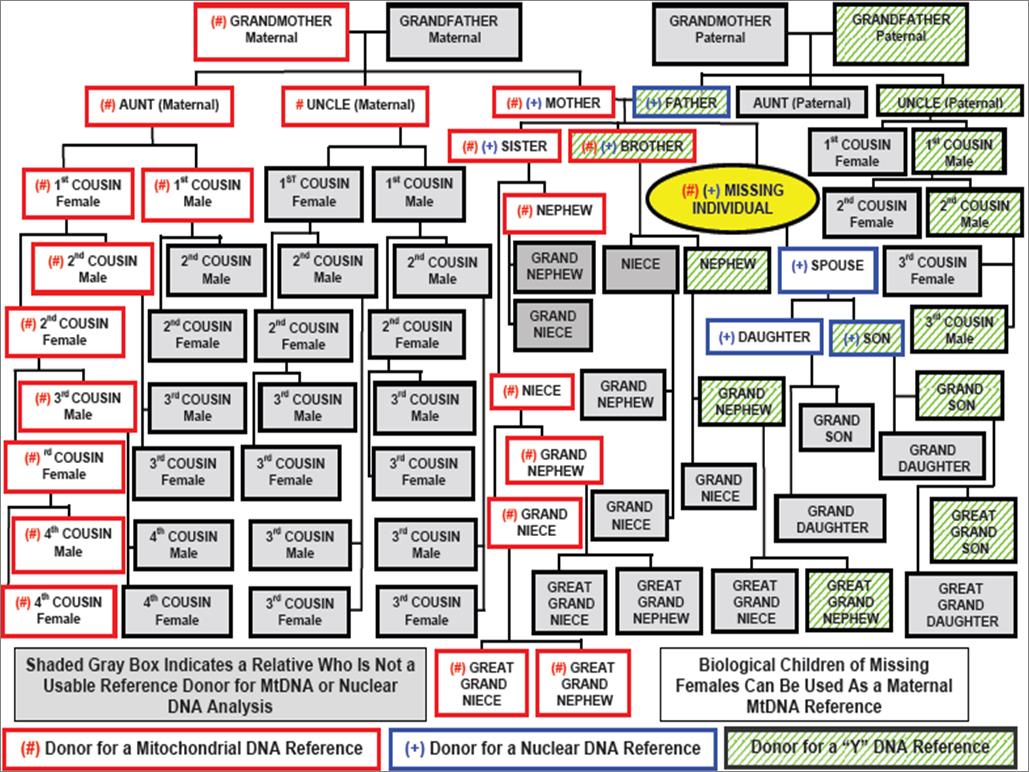
Comparison of DNA from recovered remains against DNA from some (but not all) blood relatives can assist in making a positive ID for unidentified remains that have already been recovered. The same is true for remains which may be recovered in the future.
On their web site’s Contact Us page DPAA now has FAQs. The answer to one of those FAQs describes who can and cannot submit DNA samples useful in identifying recovered remains. The chart giving the answer can be viewed here. The text associated with the chart is short and is found in one of the FAQs.
If your family lost someone in one of these conflicts who has not yet been accounted for and you qualify to submit a DNA sample, please arrange to submit one. By doing that you just might help identify the remains of a US service member who’s been repatriated but not yet been identified – as well as a relative of yours, however distant. Or you may help to identify remains to be recovered in the future.
Everybody deserves a proper burial. That’s especially true for those who gave their all while serving this nation.

Slow Salute*
Rest In Peace, Dear Sailors.
Welcome Home.
Hondo, thanks again for your diligence & efforts in reporting about these great heros.
In the past, I would post here on TAH some more personal information (including photos if possible) about these elder heros. Unfortunately, life got in the way and I stopped. Will try to do a better job this time around. (smile)
FC1c Hubert P. Clement (USS Oklahoma) https://www.honorstates.org/index.php?id=80140 EM1c Edward L. Conway (USS Oklahoma) https://dpaa-mil.sites.crmforce.mil/dpaaProfile?id=a0Jt0000000Xg7ZEAS S1c Wilbur F. Newton (USS Oklahoma) https://dpaa-mil.sites.crmforce.mil/dpaaProfile?id=a0Jt0000000XeK9EAK At 6:00 a.m. Reveille was sounded aboard Oklahoma. As sailors and marines prepared for their daily duties or liberty at 6:30 a.m. the boatswain of the watch piped sweepers and announced “Sweepers, man your brooms, clean sweep down fore and aft. Empty all trash cans. Clamp down all weather decks.” By 7:00a.m. breakfast was being served, with Sunday’s fare of hotcakes, syrup, bacon and coffee. The attacking Japanese forces found Oklahoma in an extremely vulnerable state. The annual inspection by Battleship Division 1 commander, Admiral Kidd, was scheduled for Monday. The ship had been cleaned, painted and opened-up to help dry the fresh paint as well as to dissipate the paint smell. Hatches were undogged and normally closed off areas, such as the torpedo blisters, were wide open to the Hawaiian breezes. The firing mechanisms and ammunition for the ships antiaircraft guns and been removed and stored below decks. Finally, most of her senior officers had spent Saturday night ashore. None of these conditions were due to negligence, but all ultimately sealed the fate of Oklahoma. The Japanese aircraft quickly targeted the American battleships. Aboard the Oklahoma there was an air raid announcement, followed by two calls to general quarters. As sailors raced to their battle stations, three Japanese torpedoes rapidly tore into the hull. Within minutes, she developed a dangerous list. The speed of the attack prevented counter flooding to right her. Several more torpedoes struck the injured ship, with at least one striking above the armored belt due to listing. Within a mere eleven minutes, the crippled Oklahoma capsized, rolling 151 degrees until her tripod masts and superstructure jammed into the mud on the bottom of Pearl Harbor. Less than two-thirds of her crew had escaped; the rest of the crew was trapped within the overturned hull. Navy and civilian personnel quickly gathered on the overturned hull of the USS Oklahoma. Tools and ships plans were obtained and the search for survivors began. Two trapped crewmembers were… Read more »
Welcome Home Warriors. A Salute to your Service and Honors paid to your Sacrifice.
Thanks Hondo.
And a special Thanks to our Skyjumper for his added linkys on these Heros. Damn good find on that dpaa site. A story on each Hero. Say their names, be their witness.
Welcome home Brothers. Rest in peace now.
Welcome home, men.
Rest well.