Category: Who knows

  • Kalashnikov statue features German rifle

    Kalashnikov statue features German rifle

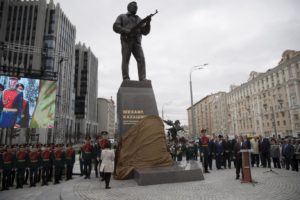
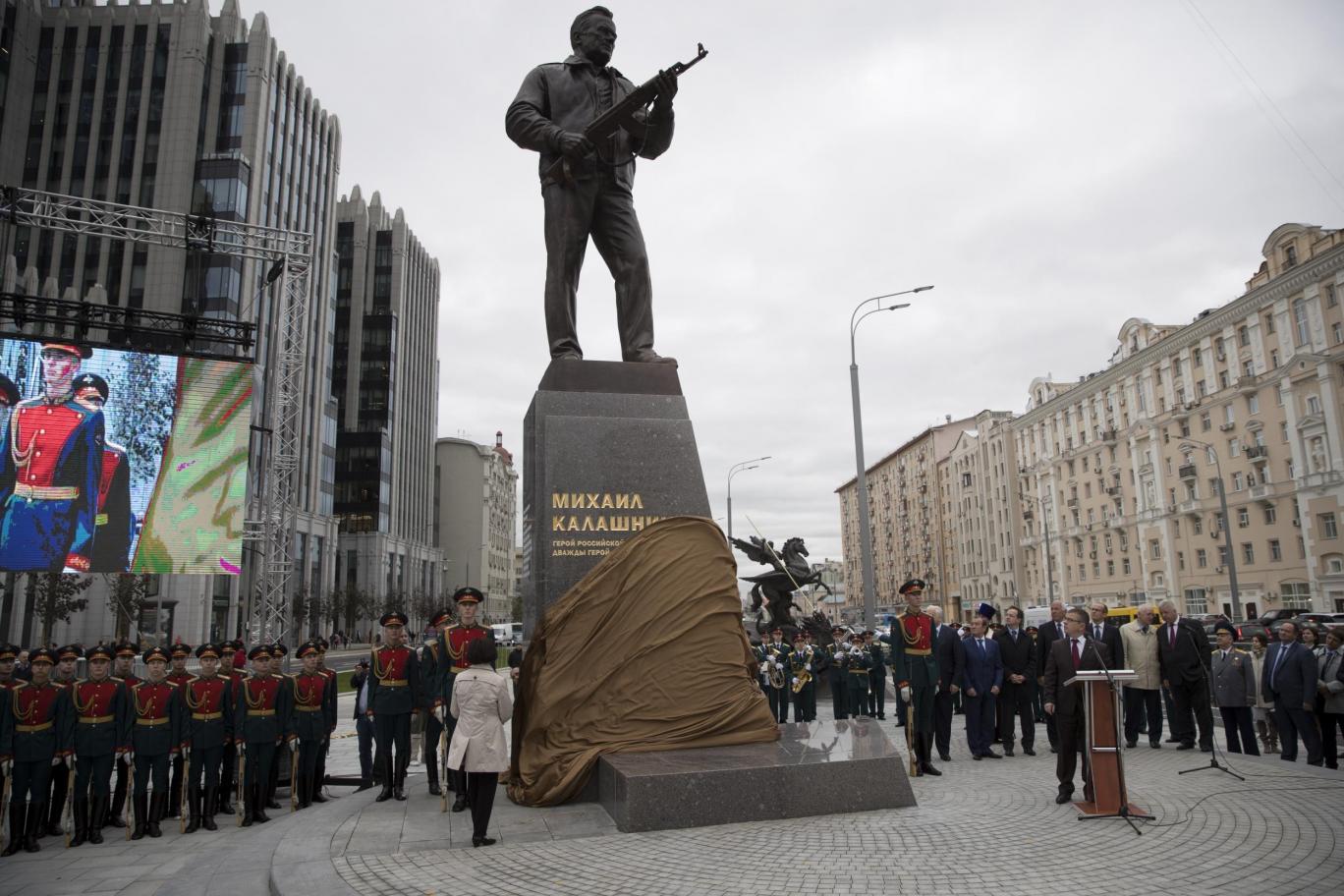
    Earlier this week, there was a bit of fanfare over the opening of a statue of Mikhail Kalashnikov in Moscow to commemorate the recently passed firearm inventor. It was soon after it’s unveiling that someone discovered that the wrong rifle, a German StG 44, was depicted on the base, according to BBC;

    A series of modified AK rifles were etched on a metallic plate on the base of the statue, including the wrong drawing.

    Russian arms historian Yuri Pasholok was the first to point out the error, and several experts later confirmed this was the case.

    Sculptor Salavat Shcherbakov said earlier on Friday that “this is something we’re correcting”, adding that “we’re trying to avoid mistakes”, Russia’s Rossiya-24 TV channel reported.

    The erroneous depiction was cut out out of the statue. From the UK’s Independent;

    The sculptor, Salavat Shcherbakov, was forced to apologise on state-run Rossiya 24 channel. He said: “It looks like this [mistake] sneaked in from the internet.”

    And the error caused additional controversy because of the accusations, made during Kalashnikov’s lifetime, that his most famous weapon copied the StG 44 design.

    Thanks to Thomas Huxton for the tip.

  • “Helden”

    The late David Bowie was a musical icon.  He wrote some of the most creative and lasting popular music of the last several decades.

    This is about one of his works – one that I believe resonates particularly strongly with veterans of a certain part of the Cold War.  I know it certainly does with me.

    And I think I may have finally figured out why.

    Yep, you’re right – this is yet another verbal “walkabout” off the normal TAH “res”.   Better hit yer browser’s back button before it’s too late to escape yet another trip down the proverbial rabbit hole.  (smile)

    . . .

    The four years from 1972 to 1976 were hugely commercially and artistically successful period for Bowie.  But the personal cost was substantial.

    As a young man, Bowie had been advised to stay away from drugs – he was later to call this the best advice he’d ever received.  Yet like many of that era in the music business he ignored the advice.

    Ignoring that advice nearly killed him.

    Reputedly, his longtime assistant convinced him to leave the LA music and cocaine scene in the mid-1970s and get clean.  He did so – first moving to Paris, then to Switzerland, and finally settling in a small, shabby apartment in a working-class (and at the time, mostly Turkish) neighborhood near the Berlin Wall.  Doing this probably saved his life – though not his marriage.  He and his first wife divorced a few years later, in 1980.

    Here, Bowie regained control of his life and recovered.  And working with some of the musical luminaries of the day (e.g., Tom Visconti, Brian Eno, David Fripp, and others) he recorded three of his most critically acclaimed albums – Low, “Heroes”, and Lodger, collectively termed his “Berlin Trilogy”.  The album “Heroes” was the only one of these that was written and recorded entirely in Berlin.

    This background is IMO significant, because it affected the music Bowie produced during the period.  And that ties directly into why I think one of those songs resonates with those who served during that part of the Cold War.

    . . .

    OK, that’s the background about Bowie.  Now, some about the tune.

    The song in question is “Heroes” (the quotes are part of the title).  The music seems upbeat, with perhaps a bit of wistfulness added.  Though initially not particularly well-received, it’s become recognized as one of Bowie’s signature works – perhaps his finest.

    Live, it’s anthemic and stirring.  It appears to be a triumphant and joyful song – a musical reminder that one can “be all that you can be” if one seizes the day.

    That interpretation is IMO absolutely wrong.  The song isn’t about improving oneself or one’s state in life.  Rather, it’s about being caught in a no-win situation.

    And that – plus the timing – is why I believe the song resonates with those who served during and for a few years after the period in which the song was written.

    . . .

    On the surface, the song is about 2 lovers, told from the man’s perspective.  That much is obvious.  But the reality of the circumstances inspiring the song is hardly triumphant or inspiring.

    In truth, the surface impression is fairly on the mark.  An illicit love affair was the inspiration for the song.  Bowie wrote it after seeing, from his apartment’s window, the album’s producer embrace his mistress near the Berlin Wall.  (Bowie for years claimed it was an anonymous couple, until the man involved – Tom Visconti – publicly acknowledged the truth years later.  Bowie then confirmed Visconti’s account in 2003.)

    Bowie had been around the block enough by then to know how unlikely such a relationship was to last – he’d gone through many himself by that point.  So the song’s inspiration was something Bowie knew was almost certainly doomed to fail.

    Those two factors influence the original song’s lyrics, flow, and tone.  They’re also essential in understanding it.

    Bluntly put, IMO the song is about being in a relationship that’s doomed to fail.  And it captures that feeling, both musically and lyrically, exquisitely well.

    The original English-language version of the tune can be found here; an English-German version, released a few weeks afterwards, can be found here .  (The historical images accompanying the latter version are worth the time it takes to watch, though a few misguided Photoshopped images also appear in the mix.  Be forewarned:  the images will likely provoke various emotional reactions – among them nostalgia, sadness, anger, disgust, euphoria, and pride.)  Many live versions of the tune are also excellent (here is a representative sample).

    But for those who served in the US military during the mid/late 1970s and early 1980s, I believe there’s another reason behind the tune’s appeal.

    . . .

    IMO, in “Heroes” Bowie unintentionally captured something bigger than the song’s obvious storyline.  By accident or design Bowie captured the  mood of a short period of time – a time where Western civilization as we know it today could well have ended.

    The song was recorded at the depth of the Cold War.  It was recorded at the West’s Cold War nadir:  during the post-Vietnam period.

    That was a time, frankly, when it seemed the West might lose the Cold War.

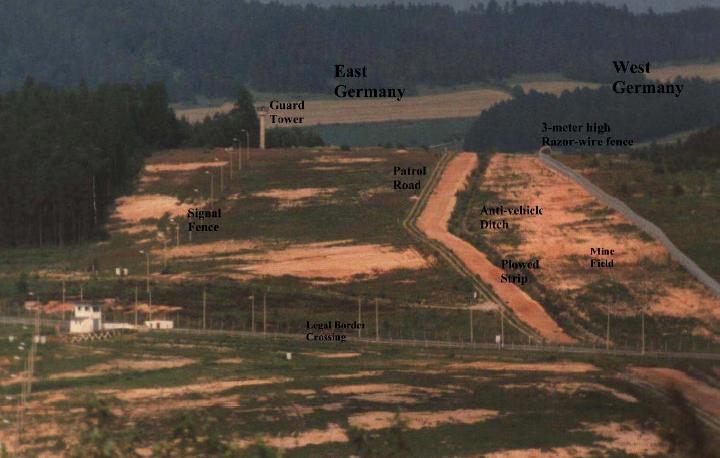
    It was written and recorded in West Berlin – an enclave of the West 100 miles inside Communist East Germany.  A city that knew it was lost if the organic fertilizer ever indeed hit the rotary air movement device.  (smile)

    It was written while the Berlin Wall still existed as a de facto international border.

    The historical accounts do not exaggerate.  The Berlin Wall (and the rest of the IGB) was indeed monitored by  Grenztruppen der DDR (East German Border Troops, often inaccurately called “Volkspolezei” or “VoPo”) guards with orders to shoot those attempting escape.  Nearly 140 individuals died at the Berlin Wall between 1961 and 1989.

    So those “shots above our heads” Bowie was talking about . . . weren’t just figures of speech.  They were all too real.

    Korea along the DMZ wasn’t much different.  The APF there was damned high, too.  And there were periodic incidents there as well.

    Bottom line:  during the mid/late 1970s and early 1980s, that Soviet bear and its allies at the time seemed 10 feet tall.

    . . . 

    So here’s my theory about why the song affects me, and I’d guess many who served during the late 1970s and early 1980s.   Anyone who served in Europe then, or in Korea – or, well, pretty much anywhere  during the same period – at times felt much ­­like the song’s hypothetical “hero”.

    Why?  Simple.  Those of us anywhere near the IGB or Korean DMZ knew that if the balloon went up . . . we probably weren’t coming home.  We knew that many, and probably most if not all, of us were going to die in place doing what we could to stop the enemy.

    And we weren’t sure we could.

    So, yeah:  we understood what Bowie was saying, albeit maybe subconsciously.  Like the song’s protagonist we were putting on a brave face – most of the time.  We were whistling as we walked past the graveyard.

    But we knew the score, even if we didn’t often speak the truth plainly. We couldn’t deceive ourselves all of the time.

    We knew, deep down, if push came to shove . . . we were toast.  We just hoped we could buy enough time to preserve something worth saving before we bought the farm.

    None of us really wanted to end up in a position to be “heroes” – not even just for one day.  (smile)  We knew that often those in such a situation often didn’t come home.  But we also knew full well exactly that might happen.

    And as strange as it might seem . . . for the most part, we were OK with that.

    Thank God those days are past.

    . . .

    David Bowie passed away over a year ago.  And it’s a bit ironic to me that he was the one to so nearly perfectly capture the US military’s mood of that time frame.   His public persona was anything but military.

    Still  . . . he IMO he did capture that era and that feeling damn near perfectly.  So, wherever you are today, Mr. B:  an old Cold Warrior sends his thanks.

    IMO you certainly “got it right” with that one.
  • Apache Warrior

    Apache Warrior

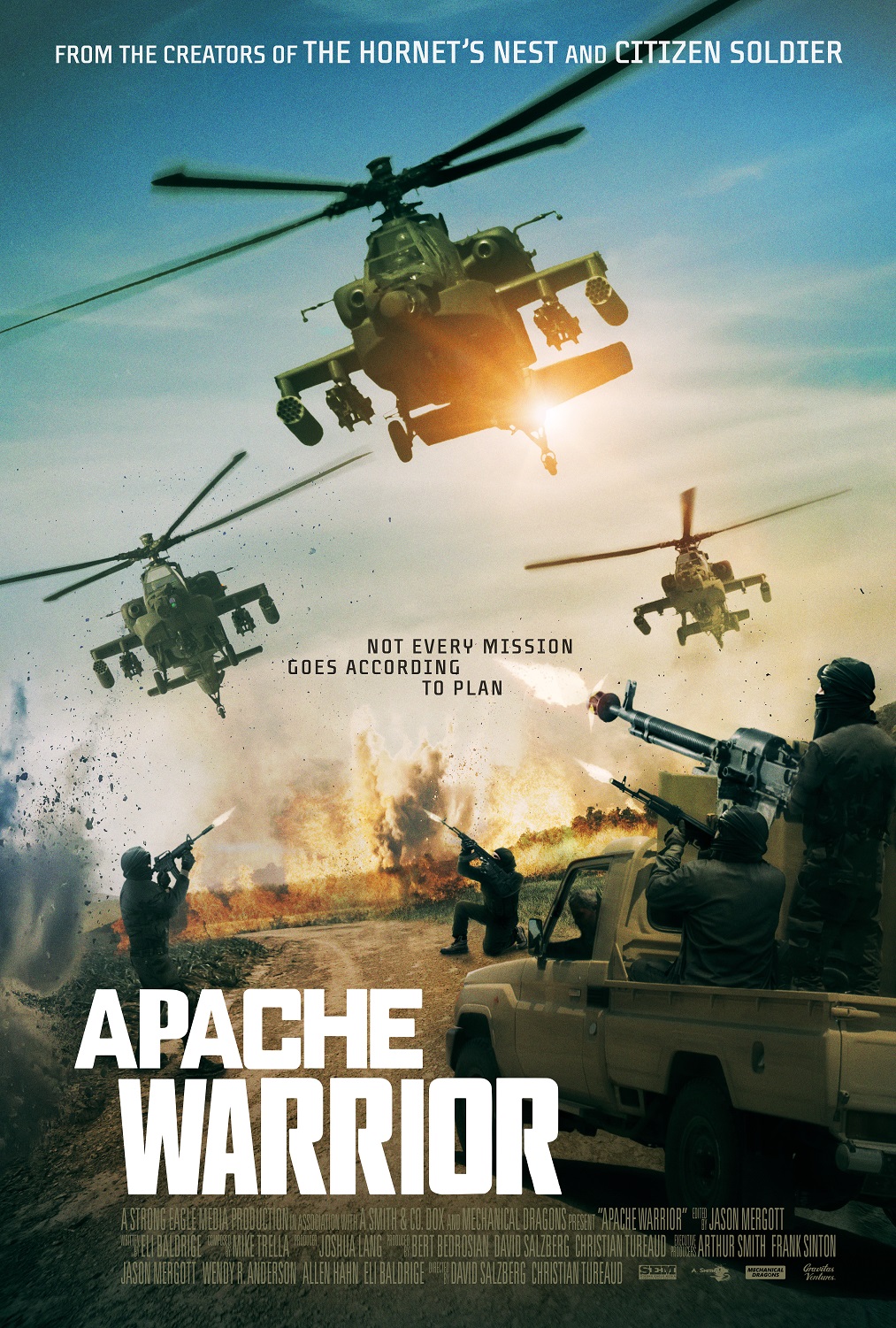
    The folks at Gravitas Ventures wanted me to tell you about their movie “Apache Warrior” which will be out in limited release November 3rd and on demand on December 12th;

    Not every mission goes according to plan.

    Apache Warrior is a feature-length documentary that puts the viewer in the cockpit of an Apache helicopter during one of the most intense missions in aviation history. Telling the story of an elite U.S. Army Aviation Squadron, this film highlights the adaptability, courage and selflessness of Apache pilots and their crews as they launch an attack during the initial surge into Iraq in March, 2003. The mission unfolds in near real time as these heroic soldiers fight to stay alive.

  • Old Forester hosts Kingsman screening at Ft Knox

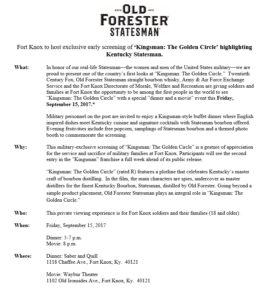
    For those of you who might be in the Fort Knox area and find yourselves without plans for Friday night, the folks at the Old Forester distillery invite you to an exclusive screening of the movie “Kingsman; The Golden Circle”;

    ABOUT THE FILM: In “Kingsman: The Golden Circle,” our heroes face a new challenge when their headquarters are destroyed and the world is held hostage. Their journey leads them to the discovery of an allied spy organization in the U.S. called Statesman, dating back to the day they were both founded. The Statesman, based in Louisville, Kentucky, act as master distillers to hide their true identity. In a new adventure that tests their agents’ strength and wits to the limit, these two elite secret organizations band together to defeat a ruthless common enemy, in order to save the world, something that’s becoming a bit of a habit for Eggsy. The sequel to “Kingsman: The Secret Service,” “Kingsman: The Golden Circle” is directed by Matthew Vaughn and stars original cast members Colin Firth, Taron Egerton, and Mark Strong, and introduces new cast members Jeff Bridges, Channing Tatum, Pedro Pascal, Halle Berry, and Julianne Moore. The film premieres to global audiences September 22.

    ABOUT OLD FORESTER: Old Forester is Brown-Forman’s founding brand, founded in 1870 by George Garvin Brown. Brown believed Old Forester was so pure and consistent that he sealed it, signed it, and pledged “There is nothing better in the market.” The Old Forester Distillery will celebrate Brown’s innovative spirit and his commitment to making the highest quality bourbon.

    Old Forester Statesman Whiskey is produced at the Brown-Forman Distillery in Louisville, Kentucky with the same mash bill as Old Forester.

    Suggested retail price: $54.99

    In case you missed it in the flyer, there will be free popcorn and Bourbon samples.

  • Last Flag Flying

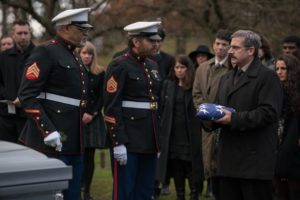
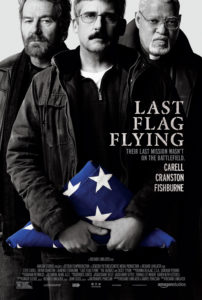
    The publicists for Amazon Studios and Lionsgate want me to tell you about their film “Last Flag Flying” which will be released nationwide on November 17th;

    In 2003, 30 years after they served together in the Vietnam War, former Navy Corps medic Richard “Doc” Shepherd (Steve Carell) re-unites with Former Marines Sal (Bryan Cranston) and Richard Mueller (Laurence Fishburne) on a different type of mission: to bury Doc’s son, a young Marine killed in the Iraq War. Doc decides to forgo a burial at Arlington Cemetery and, with the help of his old buddies, takes the casket on a bittersweet trip up the East Coast to his home in suburban New Hampshire. Along the way, Doc, Sal and Mueller reminisce and come to terms with shared memories of the war that continues to shape their lives.

    Director Richard Linklater and author Darryl Ponicsan collaborated on the screenplay which follows the trio as they wrestle with the pangs of war both past and present.

  • Cold War Museum in Fulda Gap

    Stars & Stripes reports that a new museum is opening near Rasdorf, Germany that commemorates the Cold War;

    Opening on Sunday at the memorial near Rasdorf, the event celebrates the everyday life of U.S. and German soldiers and civilians. It focuses on the role U.S. soldiers played in bringing American culture to Germany after World War II and the improbable relationships that bloomed here.

    “The partnership was based on friendships of the people involved — it was a security partnership, sure, but it was mainly a partnership between people,” said Danny Chahbouni, a German researcher at the Point Alpha memorial.

    I spent seven years in Germany during the 80s, at the height of the Cold War. I didn’t bring much culture with me since I was mostly training in the field or at Graff and Hohenfels. I did bring back some German culture, though. Every day I wake up to a fresh-ground pot of German coffee.

  • Troy Yocum and Active Heroes

    Troy Yocum and Active Heroes

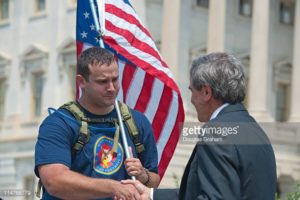
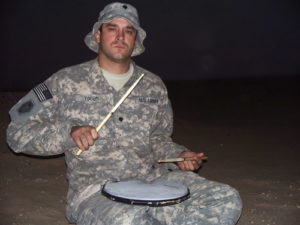
    Folks have been asking us about Troy Yocum, an Iraq veteran who claims that he walked more than seven thousand miles across the country to raise money for veterans issues. From his Wiki page;

    Inspired by his World War II grandfather, who took his own life, and a close military friend, who lost his home after returning from deployment, Yocum decided to make it his personal mission to help struggling veterans.

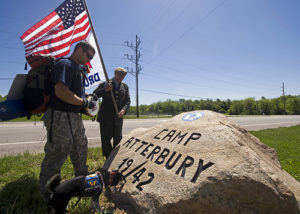
    Yocum began a 16-month journey, dubbed “The Drum Hike” on April 17, 2010 at the Kentucky Derby Festival’s Thunder Over Louisville celebration. Yocum bangs his drum when entering towns and cities to bring attention to his cause and carries a bat for mayors and governors to sign. Averaging 20 miles per day, the hike would take him, his wife, and two dogs over more than seven thousand miles and 37 major U.S. cities by the time they make it home.

    Yocum’s goal is to raise five million dollars and was sponsored by nonprofit Soldiers’ Angels.

    Due to the extreme physical activity, Yocum has suffered several different medical complications. While in Colorado, he suffered an attack of kidney stones, which required hospitalization and in January 2011, his foot became infected and hence slowed the hike.

    In January 2011, Soldier’s Angels pulled their support for Yocum due to concern for his health and well being.

    According to unnamed sources, Soldiers’ Angels provided him with a support vehicle which he would ride from town-to-town, get out at the city limits and start beating his drum through town, as if he had been walking the whole time. I’m told that he gained 40 pounds while walking across the country. That’s pretty hard to do when you’re walking twenty miles/day. When someone ambushed him and walked with him for 2-3 miles, Yocum got shin splints – an injury from being out of shape.

    I’m told that Soldiers’ Angels lost about $140,000 supporting Yocum and they only got about $11,000 in donations from him. That’s probably the reason they pulled support from him, not concerns about his health.

    Yocum is a veteran of OIF, but according to his mates, he was in Kuwait. He was injured and evacuated, but they claim that he slipped in the shower. They also tell me that the only casualties they suffered during their time there, were from traffic accidents.

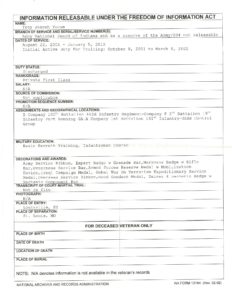
    Yocum was a trained infantryman, assigned to the 1/151st Infantry, but he was awarded no Combat Infantryman Badge for his time there, probably because he wasn’t engaged in any combat. According to his FOIA, Yocum spent about eleven years in service, in the Guard, and left as a Private First Class, although he claims that he was a specialist. His mates claim that he was suspected of malingering and that influenced his decision to leave the Guard.

    He is currently at Active Heroes, an organization that claims that it’s main mission in life is to eliminate veterans’ suicide. A worthy endeavor, indeed. Out of the seventeen people on Board, according to the their website, only six (including Troy) are veterans – I would think that number is low considering their stated mission.

    Some other organizations that he’s worked with are claiming that Yocum isn’t delivering what he promised them and that seems to be his Modus Operandi. But there’s also evidence that he is involved with unsavory elements – for example, here’s a picture of him cavorting with Dallas Wittgenfeld;

    Folks warn me that he’s very vindictive and that’s why there’s so little negative information out there about him. I know for a fact that he tried to spread lies about POW Network when they investigated Yocum. Luckily, I have just the right number of friends, so I don’t need to make more.

    I’m not calling this stolen valor, because nothing he has said really rises to the level that you’ve come to expect from us here at TAH, but it is warning for folks to do their homework before they enter into business with Troy Yocum, who according to Guidestar, is the president of Active Heroes and his wife is Vice President of Programs.

    This story is what influenced me to write about Yocum after sitting on all of this for years.

  • U2: Coming of Age

    Most longtime readers know Jonn tolerates my occasional verbal “walkabouts” on music and other topics. Many have also picked up on the fact that I’m a fan of U2. The reasons for the latter are varied, and personal; I’m not going to share those here.

    This walkabout is about their coming of age as a band. My opinion, of course; YMMV.

    Read on, or not, as you like.

    . . .

    U2 formed in Dublin in 1976. By the early 1980s, they were moderately successful – and had developed a hugely loyal following.

    With their third album, they’d even achieved some degree of chart success. That album – War – could be considered their commercial breakthrough, giving them mainstream visibility with their first US Hot 100 hit “New Year’s Day”.

    Yet at the time, they were still in danger of being pegged as nothing more than “yet another post-punk rock band”. It was their next release that announced they were indeed different – and special.

    That release was The Unforgettable Fire. And while it features one of their best-known tunes, it also features two you may never have heard which IMO are even better.

    . . .

    The Unforgettable Fire was an intentional departure by U2 from their previous work. They changed production teams (Steve Lillywhite had produced their first 3 albums; for The Unforgettable Fire, they began working with Daniel Lanois and Brian Eno). They explored different musical ideas.

    The result was a different musical sound and style – and one that simply worked as intended. It announced to the world that these guys just might indeed be truly special.

    The best-known track on the album, “Pride (In the Name of Love)” is indeed good. But it’s IMO the third-best track on the album. Two others are better.

    And as often seems the case, all three of those songs have a somewhat tragic and dark inspiration. “Pride” was inspired by the assassination of Martin Luther King. I’ll discuss briefly the inspiration for the others below.

    . . .

    Here are what I consider the two best tunes from The Unforgettable Fire. The first was reputedly inspired by U2’s lead singer knowing someone who was addicted to heroin. (Bono’s description of precisely who inspired him to write the tune has varied over the years, so perhaps take his accounts as metaphoric vice literal.) The tune is one that works better live; I’ve included the version from Wide Awake in America below.

    The second was inspired by U2 visiting a traveling memorial for Hiroshima in Chicago in the early 1980s. The studio version of that tune is featured below.


    Both tunes pass the test of time. More than 30 years after they were first written, they remain powerful, moving . . . and beautiful. IMO, of course.

    . . .

    That’s all for today. Time to wander back on track.