Category: We Remember

  • 2nd Lt. Charles E. Carlson comes home

    2nd Lt. Charles E. Carlson comes home

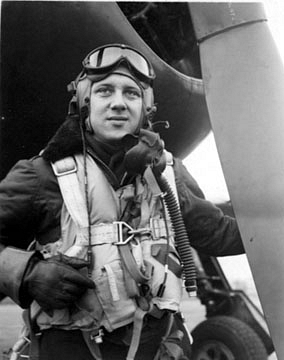
    According to the Defense POW/MIA Accounting Agency (DPAA) they recently identified the earthly remains of 2nd Lt. Charles E. Carlson of the US Army Air Corps;

    On Dec. 23, 1944, Carlson was a P-47 pilot with the 62nd Fighter Squadron, 56th Fighter Group, Eighth Air Force, and was shot down south of Bonn, Germany, during an air battle between American and German pilots. His wingman believed that Carlson had bailed from the plane. German officials reported finding and burying Carlson’s remains at the crash site near Buschhoven, Germany.

    An investigation after the war by the American Graves Registration Command in 1948 found material evidence and eyewitness testimony linking a crash site near Buschhoven to Carlson’s plane. However, efforts to find his remains at the site were unsuccessful.

    In March 2008, an independent German researcher contacted the Joint POW/MIA Accounting Command (now DPAA) with information regarding a plane crash near Buschhoven. He informed analysts that a local German resident had found parts of an aircraft and other material evidence consistent with a P-47 aircraft.

    Between May 2008 and September 2009, JPAC historians conducted more interviews of potential eyewitnesses and research on the site of the crash. Based on information gathered during this work, JPAC investigators recommended excavation of the Buschhoven site for possible remains.

    So the folks at History Flight began their search February through May last year and turned over the remains to DPAA for identification.

    According to DPAA, 73,000 Americans remain unaccounted for from WWII.
  • Marine Corporal Walter G. Critchley comes home

    Marine Corporal Walter G. Critchley comes home

    History Flight

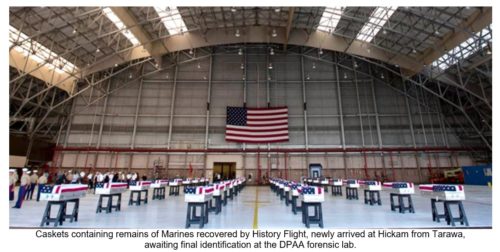
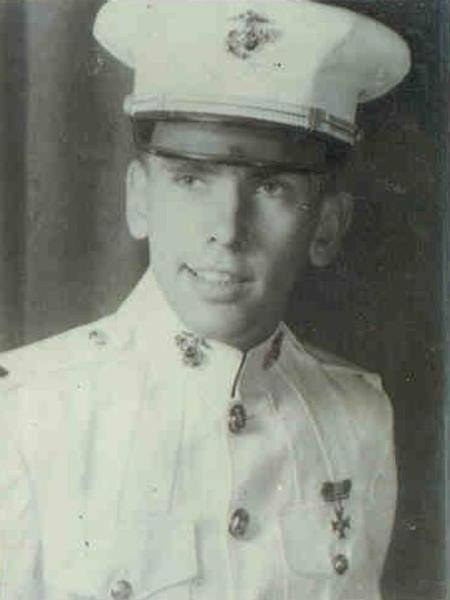
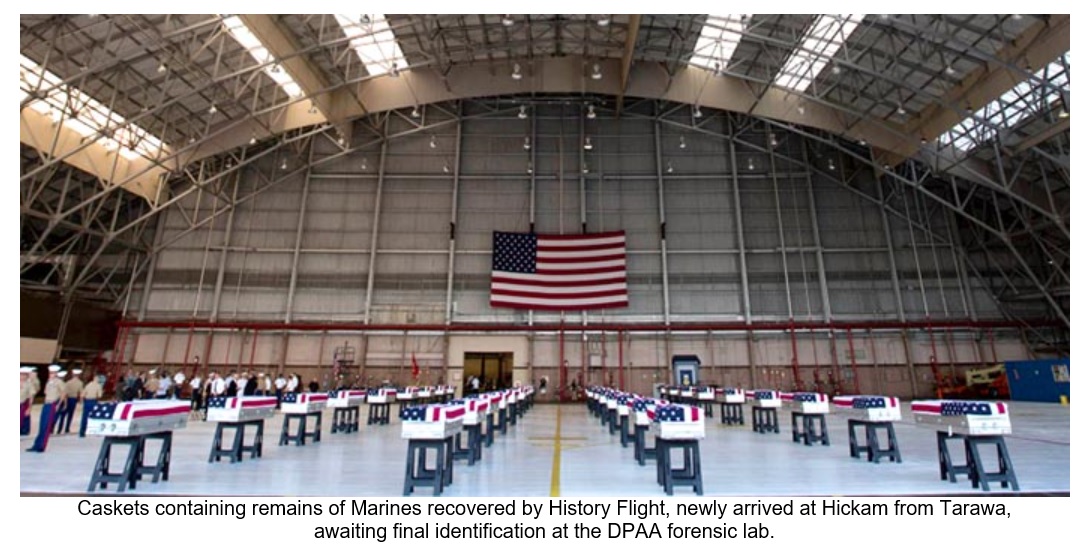
    Interment services are pending for Marine Corporal Walter G. Critchley. Despite the fact that a military review board declared Critchley’s remains non-recoverable in February, 1949, the folks at History Flight recovered his earthly remains according to DPAA;

    In November 1943, Critchley was assigned to Company F, 2nd Battalion, 8th Marines, 2nd Marine Division, which landed against stiff Japanese resistance on the small island of Betio in the Tarawa Atoll of the Gilbert Islands, in an attempt to secure the island. Over several days of intense fighting at Tarawa, approximately 1,000 Marines and Sailors were killed and more than 2,000 were wounded, but the Japanese were virtually annihilated. Critchley died on the first day of the battle, Nov. 20, 1943.

  • 1st Lt. William C. Ryan comes home

    1st Lt. William C. Ryan comes home

    1st Lt. William C. Ryan

    Interment services are pending for Marine Corps 1st Lt. William C. Ryan whose earthly remains were recently identified by DPAA. He was killed over Laos on May 11, 1969;

    On May 11, 1969, Ryan was the radar intercept officer of an F-4B aircraft, for the Marine Fighter Attack Force 115, Marine Aircraft Group 13, 1st Marine Aircraft Wing, Fleet Marine Force Pacific, on a combat mission over Savannakhet Province, Laos. While pulling out of a bombing pass, the aircraft was hit by enemy fire. The pilot lost control and called several times for his radar officer to eject, but received no response. The pilot ejected before the aircraft crashed, and other members of the flight only witnessed one parachute leave the aircraft. The location of the crash site precluded a search and recovery effort, but the pilot was rescued. Ryan was declared deceased as of May 11, 1969.

    From January 1990 until May 2012, joint teams with the U.S., Lao People’s Democratic Republic and Vietnamese Office for Research and Investigative Teams interviewed numerous witnesses to the crash, gathering information regarding where Ryan may have died.

    From May 2012 until January 2016, joint teams conducted six excavations of a crash site near Ban Alang Noi, recovering life support items, aircraft wreckage and possible human remains. On Feb. 17, 2016, the remains were sent to the DPAA laboratory for analysis.

  • Army Corporal Luis P. Torres comes home

    Army Corporal Luis P. Torres comes home

    Torres photo

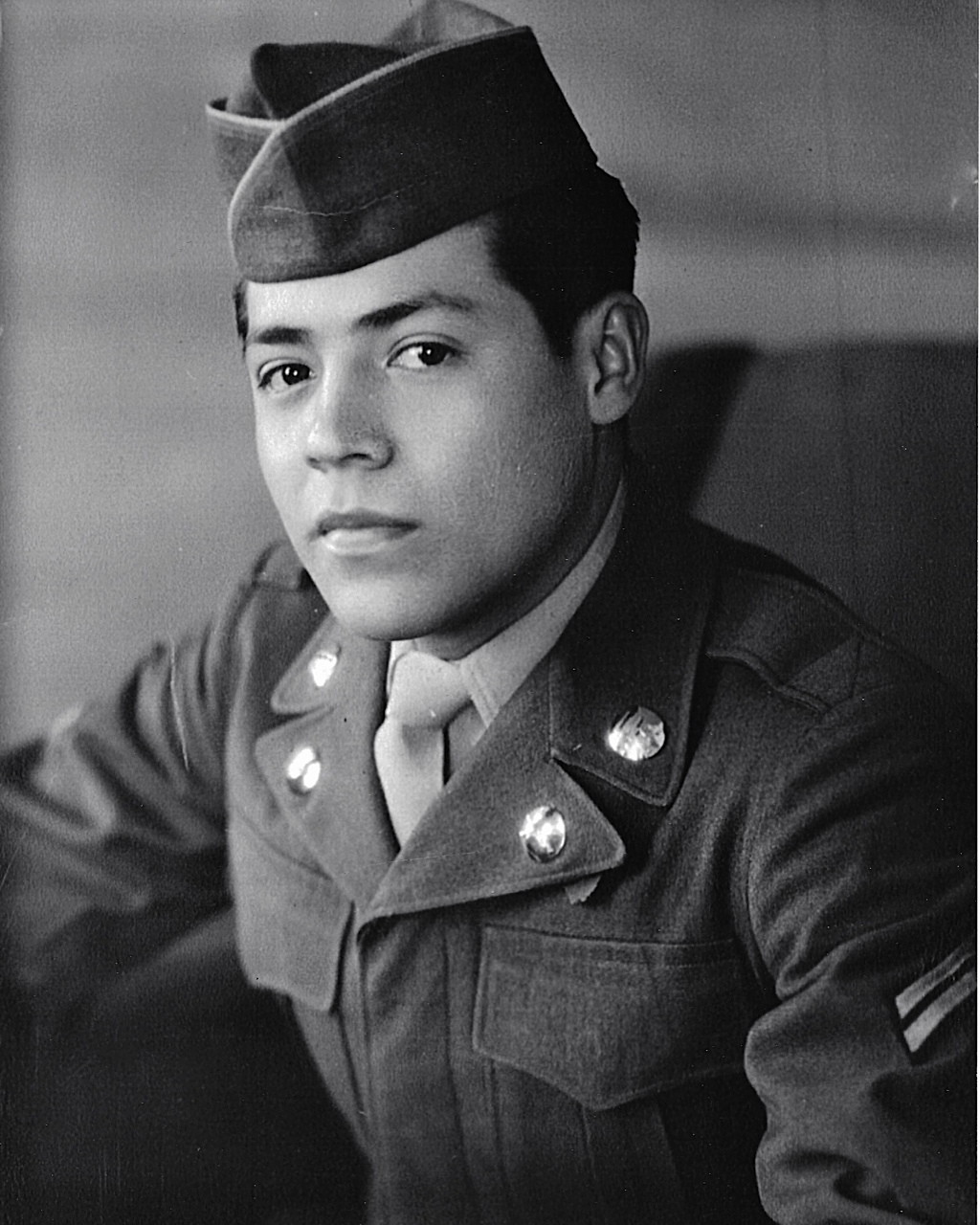
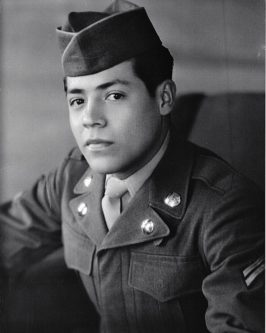
    Last month, Hondo told us that Army Corporal Luis P. Torres’ earthly remains had been positively identified by the DPAA. Today we read that he will join his family briefly while he’s lowered to his final rest on January 13th in San Antonio, Texas at the Fort Sam Houston National Cemetery;

    “On Sept. 1, 1950, Torres was member of Company C, 1st Battalion, 23rd Infantry Regiment, 2nd Infantry Division, when his battalion had its position overrun by enemy forces along the east bank of the Naktong River, South Korea,”?the release noted. “During this attack, Torres was reported missing in action near Changyong, South Korea. Torres’ name did not appear on any prisoner of war list, but one returning American prisoner of war reported that he believed Torres was held captive by the enemy and was executed. Due to the prolonged lack of evidence, the U.S. Army declared him deceased as of March 3, 1954.”

    And the recovery efforts for soldiers in that time were extremely complicated, the DPAA release continued.

    “Although the U.S. Army Graves Registration Service planned to recover American remains that remained north of the Korean Demilitarized Zone after the war, administrative details between the United Nations Command and North Korea complicated recovery efforts,”?the DPAA release noted. “An agreement was made and in September and October 1954, in what was known as Operation Glory, remains were returned. However, Torres’ remains were not included and he was declared non-recoverable.”

    Mendoza’s uncle Greg, who had not forgotten his brother and would himself eventually serve during the Vietnam War, had been researching the case for many years, and then Mendoza’s brother Carlos, began helping with the search around 2005. After eight years of searching and looking through available DPAA files, the family received a call in July 2013 with a possible location for Torres based on witness statements and other records found. The remains, which were found in an unmarked grave in a cemetery near Changyong marked as “Unknown X-331,” were then tested in May 2016, and the tests conclusively proved the remains were those of Army Cpl. Luis Torres.

  • Walter Henry Sollie comes home

    Walter Henry Sollie comes home

    Walter Henry Sollie

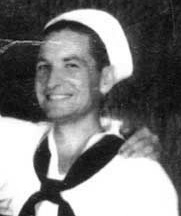
    Twist sends us the news that Walter Henry Sollie is coming home after a 75 year absence. He was in an unmarked grave in The Punchbowl in Hawaii after losing his life aboard USS Oklahoma on December 7th, 1941. Hondo told us that DPAA had identified Walter’s earthly remains in August.

    The Demopolis Times reports that Walter’s brother, Fred, also a sailor at Pearl Harbor that fateful day watched from his own station aboard USS Schley as his brother’s ship was struck by enemy Japanese fire. Walter had been in the Navy since 1923.

    Acording to the Oak Lawn Funeral Home, a service will be held for Walter tomorrow at the Pensacola Naval Air Station at 11:00 am at the Pensacola Aviation Chapel

  • Pallbearers for Jerry Wayne Pino

    Pallbearers for Jerry Wayne Pino

    1483468295868

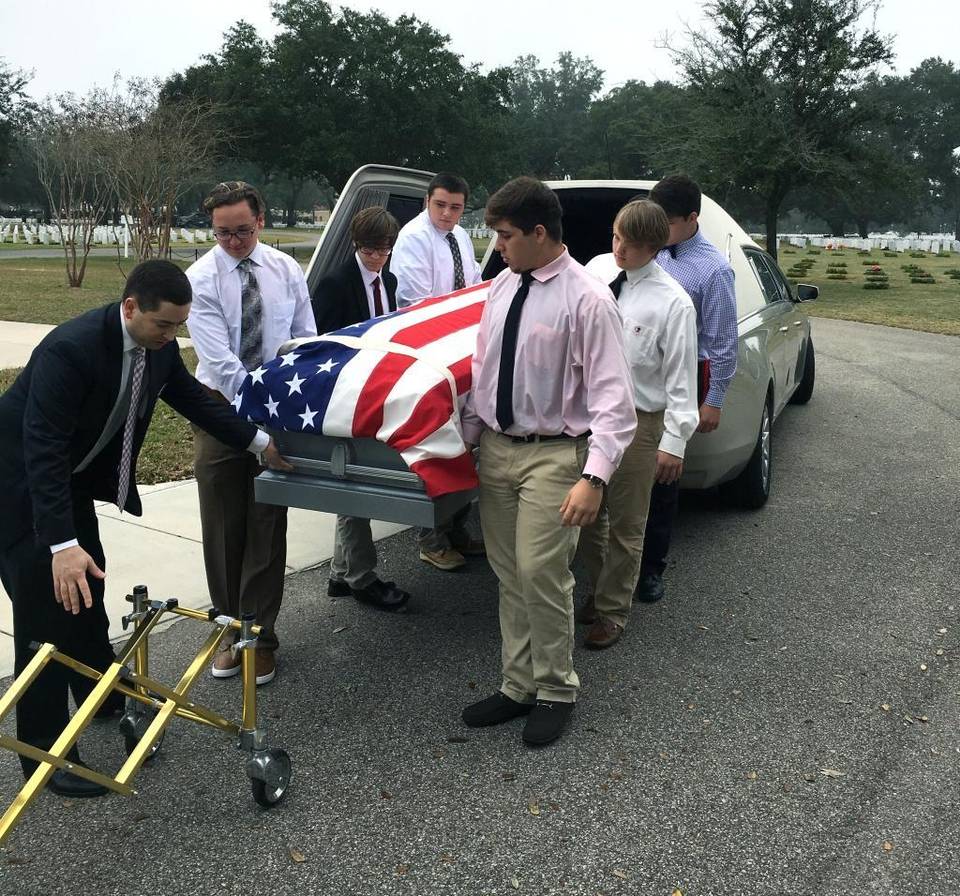
    Jerry Wayne Pino was a petty officer third class during Vietnam but he died alone on Dec. 12th in Long Beach, Mississippi. No one claimed his earthly remains so funeral home worker Cathy Warden and her colleague Eva Boomer decided something should be done for him. Eva texted her son, Bryce who volunteered himself and some friends, according to Fox News;

    “It was the right thing to do,” 17-year-old Bailey Griffin told me. “He served our country. He fought for our rights. For him to be buried with nobody there was just sad. I told myself I was going to do it and I did it.”

    They buried Petty Officer Third Class Jerry Pino on a Tuesday. The sun was shining and there was a cool, gulf coast breeze meandering through the Biloxi National Cemetery. An honor guard stood at attention.

    The boys were smartly dressed in khaki pants and Sunday shirts and neck ties. They solemnly took their places on either side of the flag-draped coffin and escorted a man they did not know to his final resting place.

    Thanks to all of you who sent the link.

  • Joe England passes

    Joe England passes

    Joe England

    Jilly sends us the sad news of the passing of Joe England last Friday at the tender age of 84. Mr England spent nearly three years as a POW during the Korean War. He doesn’t appear on the DPAA list, but I verified it with Mary who says that he was POW from Nov. 28, 1950 – Aug. 24, 1953. DPAA’s records for the Korean War are notoriously inaccurate only because of personnel accounting during the war.

    England received a Purple Heart early when his tank’s 50-caliber machine gun blew up while being fired, he said during the interview.

    After leaving the hospital, England was assigned to a new company.

    The night he was captured by North Koreans, England said his company had five tanks located in a valley. During the attack, England said his tank was “hit” three times and finally blown up, but he escaped from vehicle.

    After the war, he opened a bait and tackle shop.

    The funeral is scheduled for three o’clock today in Dickson, Tennessee.

  • General Seth McKee passes

    General Seth McKee passes

    XXXXXX-F-RN654-XXX

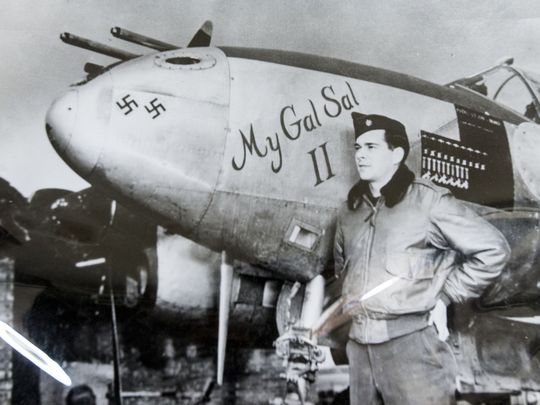
    The Air Force Times reports that 100-year-old General Seth McKee has passed. He was the highest-ranking survivor of the D-Day invasion, according to The Times;

    Just two months ago, McKee was awarded the National Order of the Legion of Honor in the rank of Chevalier 5, according to the Air Force. That’s the highest honor France bestows on its citizens and foreign nationals.

    McKee, who began his military career in 1935, logged more than 190 hours in 69 combat missions in the P-38 Lightning?, and is credited with downing two enemy aircraft. He flew cover for the D-Day invasion and was involved in bombing missions at Saint-Lo, the Falaise Gap and the Battle of the Bulge.

    […]

    After the war, McKee served in Florida, California, Alabama, Italy, Georgia, Nebraska, South Dakota and the Pentagon. He also served as commander of U.S. Forces Japan and Fifth Air Force before being appointed assistant vice chief of staff of the Air Force in 1968.

    McKee’s career culminated at NORAD, where he served from 1969 to 1973.