Category: Veterans Issues

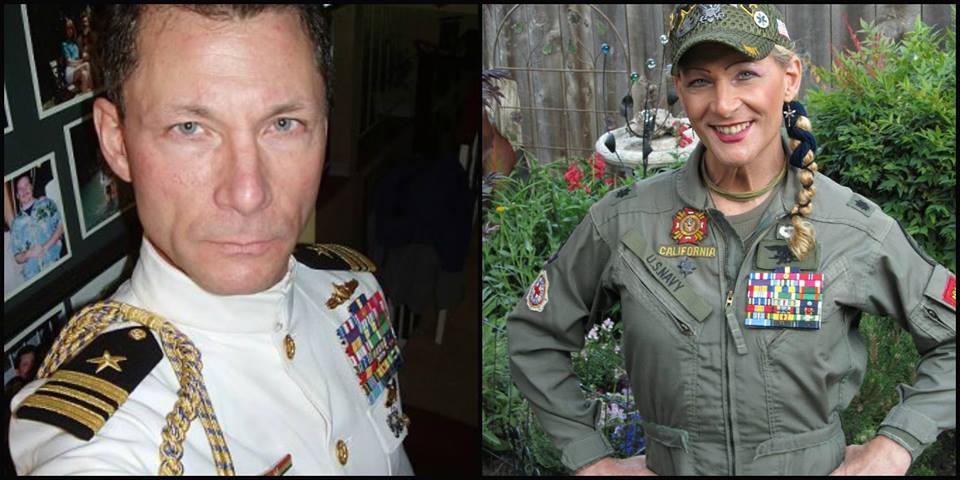
  • LA Times examines high rate of transgendered veterans

    LA Times examines high rate of transgendered veterans

    TV SEAL

    Paul sends us a link to the LA Times in which they examine why researchers think the military seems to be jam-packed with transgender folks.

    Transgender people are present in the armed services at a higher rate than in the general population.

    The latest analysis, published last year by UCLA researchers, estimated that nearly 150,000 transgender people have served in the military, or about 21% of all transgender adults in the U.S. By comparison, 10% of the general population has served.

    Yeah, this all based on an estimate made by pointy-headed microscope starers.

    [Dr. George Brown]’s transgender patients told him that they had signed up for service when they were still in denial about their true selves and were trying to prove they were “real men.”

    “I just kept hearing the same story over and over again,” said Brown, 58, now a professor at East Tennessee State University and a specialist in gender identity issues at the Veterans Affairs Medical Center in Mountain Home, Tenn.

    Yeah, well, ya know, if you call in some ghost hunters to check out your house, they’re going to find ghosts in your house. If you call in a “specialist in gender identity issues”, he’s going to see a lot of folks with gender identity issues. That doesn’t mean that the military is rife with transgender people.

    The U.S. Census Bureau does not collect data to determine [the occurrence of gender identity confusion], so researchers must extrapolate from other, smaller surveys.

    In other words, they guess a lot because they can’t be sure.

    In 2011, nearly 23 out of every 100,000 patients in the VA system had a diagnosis of gender identity disorder, which is used to describe gender identity issues that lead to significant levels of psychological distress and has been associated with high suicide risk.

    That’s five times the rate in the general population.

    The comparison comes with a caveat. In 2011, the VA began providing hormone therapy and other nonsurgical treatment for transgender patients, a strong motivation for some people to seek out a diagnosis.

    Naw, that can’t have much to do with it. The opportunity to get expensive elective medical treatment, normally an out-of-pocket expense, for free couldn’t be much of a draw, could it?
  • Veterans work for the government in record numbers

    According to the Washington Post at least half of new hires for the Federal government are veterans, but even though they work for the government in record numbers, they also leave those jobs in record numbers.

    The bad news is that once veterans get into government, they don’t stay long. They’re more likely to leave their jobs within two years than non-veterans, the Office of Personnel Management reports, even if they’ve transferred from other federal agencies.

    The Small Business Administration had the most trouble keeping veterans in fiscal 2014, with just 62 percent staying two years or more, compared to 88 percent of non-veterans. Former service members left the Commerce Department at similar rates, with 68 percent staying two years or more compared to 82 percent for non-veterans.

    Even the Department of Veterans Affairs, traditionally a draw for former troops, lost a little more than a quarter of its veterans within two years, compared to 20 percent of its non-veterans.

    The only agencies that kept more veterans than non-veterans on board were the Defense and State Departments, the report released last month shows.

    I’m not surprised. Having been a veteran who worked for the Federal government, I have a unique perspective – if a veteran has trouble adapting to being surrounded by civilians, that problem is even worse among the bureaucrats. When I brought up new and improved common sense way to do things in the office, it was usually shot down, because “we’ve always done it this way” or, “that’s not the way we did it last year”.

    I was told by my workmates that “all veterans are crazy” because we had a Vietnam veteran who had worked in the office since that war who pulled the PTSD card out when he was criticized. You know, the PTSD that he caught working in an Okinawa supply room.

    I stayed because they threw buckets of money at me, so I just tried to get along because I like money. Some people don’t. I also got a job about 150 miles from the office (with two other veterans) and I worked from home everyday. Some people aren’t patient enough to wait out the BS for the perks. Some of my workmates wouldn’t even take the free laptops and work from home because it meant that they would have to work from home on snow days.

    Yeah, veterans who have always been innovative and looking for ways to improve how they spent their time at work won’t find the government very responsive and they’ll get the feeling that they’re wasting their time and their talents.

    Of course, your experience working in government may differ from mine.

    Thanks to Chief Tango for the link.

  • Garcetti; LA’s homeless vet problem bigger than he expected

    From the Los Angeles Daily News comes an article which reports that Los Angeles Mayor Eric Garcetti is backing away from his claim that he will solve the homeless veteran problem in Los Angeles by the end of this year. It seems that the more veterans that they house, the more veterans they find. Funny how that works, huh?

    Speaking with the Los Angeles News Group editorial board, Garcetti said Thursday the effort might take an additional six months, and that not all homeless veterans will actually be housed.

    His recalibration underscores the enormity of the problem in Los Angeles and the challenges facing homeless service providers. L.A. organizations have housed more than 3,700 homeless veterans since January 2014, according to a recent city tally, but have more than 2,600 remaining.

    I wonder what verification process they’re using to weed out phony veterans who see an opportunity to get housing.

    Garcetti appealed to the Senate Veterans’ Affairs Committee in July for more funding to meet the goal by the end of 2015. He said the city needed an additional $5.1 million. In March, the VA announced $30 million in grants to support homeless services in the L.A. area.

    I guess it’s more attractive to just house anyone with federal money without going through a verification process. Just meet the numbers, and collect the checks.

  • VA’s stunning conclusion; bad soldiers become homeless civilians

    VA’s stunning conclusion; bad soldiers become homeless civilians

    Reuters reports that Dr. Adi V. Gundlapalli of the Salt Lake City VA authored a report which revealed that bad soldiers make bad civilians and become homeless more often than good soldiers;

    The researchers used data on 448,290 U.S. active-duty military service members who were separated from the military between 2001 and 2011, deployed in Afghanistan or Iraq, and who subsequently used Veterans Health Administration services.

    Service members who separate from the military have Department of Defense codes attributing the separation to misconduct including drugs, alcoholism, offenses and infraction, disability, early release, disqualified, normal, or unknown.

    Almost 25,000 of the people in the database had been separated for misconduct, less than six percent of the total group.

    According to the report 26% of folks discharged for misconduct are homeless when they first show up at the VA. Of course, in my opinion, they get it all exactly backwards. The military gives bad conduct discharges to people who exhibit anti-social behavior, so yeah, they’re probably going to exhibit anti-social behavior when they hit the streets, too. It’s not the type of discharge that causes the behavior, it’s the type of person that gets those discharges.

    The study goes on to blame PTSD and combat experiences for the anti-social behavior, but they don’t mention how many of the separated service members actually participated in a PTSD-producing event. Additionally, as we’ve seen several times, the VA has done a piss-poor job of separating pretend veterans from the actual veterans, so what safe guards did the good doctor use in this study? Some of our friends have jobs in the private sector for helping veterans and they’ve lost their jobs for scrutinizing these pretend veterans too closely.

    I could have told Doctor Gundlapalli how his study would end before it started. Rather than focus on the 10% of his sampling who are still homeless after 10 years, he should be looking at how the other 90% are beating those odds.

  • 22 More Are Properly Buried

    I’ve written before about the Missing In America Project (MIAP). (So had Jonn, but I apparently had forgotten his earlier article when I wrote mine.)

    MIAP IMO certainly seems to be an organization doing good things. And I apparently missed the fact that they recently “done good” once again.

    This time, MIAP’s good work occurred in Utah.  They were instrumental in arranging the interment of 22 unclaimed veterans’ cremains at Utah Veterans Memorial Park.  The oldest remains in that group had been unclaimed since 1996.

    The number of unclaimed veterans for which MIAP has arranged a dignified burial is now approaching 2,500. Unfortunately, MIAP also estimates that there are roughly 400,000 unclaimed veterans’ cremains nationwide – so their work is far from done.

    My previous article gives links a bit more information about MIAP, including a link to last year’s IRS 990 and what Guidestar has to say about them. FWIW: my impression from looking at those is that they’re actually using their limited resources well. CFC also allows them to participate.

    Kudos to the group, and may they keep on finding – and arranging internment of – unclaimed veterans ‘ remains.

    Everyone deserves a proper burial. Kudos to MIAP for seeing that these 22 vets received exactly that.

  • Another Group Doing Good Things

    In 2011, a lady died in Washington state.  Her name was Shirley McNaughton.  She was 57.

    Shirley McNaughton was a veteran.  She’d served in the USAF for two years during the Vietnam War (1971-1973), and in the ANG for an additional two years thereafter.  She was honorably discharged from the ANG as a Sergeant.

    Unfortunately, at the time of death her surviving daughter had lost her job and did not have the money for a proper funeral.  So Sgt. McNaughton’s remains were cremated (a local program funded that), then were placed in storage for a protracted period at the county coroner’s office.

    Enter the Missing In America Project.

    Per its website, the MIAP is organized to “to locate, identify and inter the unclaimed cremated remains of American veterans through the joint efforts of private, state and federal organizations.”  They learned of Sgt. McNaughton’s yet-to-be-interred cremains, and arranged for them to receive a proper military funeral.

    However, the MIAP this year selected a limited number of cremains to be interred in Arlington vice local state or national cemeteries.  (It’s unclear if this is a one-time event or something that MIAP does periodically.)  Sgt. McNaughton’s remains were among the 6 sets of such cremains selected for that honor – one from each of the 5 military services, plus the cremains of a US Army “Buffalo Soldier” who’d served during World War I.

    Sgt. McNaughton’s cremains will be interred at Arlington National Cemetery on 1 September 2015.  Her surviving family is currently attempting to raise the funds to allow them to attend her funeral via a GoFundMe site.

    I don’t know much about MIAP, so I can’t recommend or endorse them.  But FWIW:  MIAP does post their financials on their website (2014 IRS Form 990).  A quick look at that document leads me to believe they don’t seem to pay their corporate officers or waste a lot of money on fluff, either.  And Guidestar seems to think well of them also.

    So if you have a few spare dollars that you plan to donate to charity anyway, it might be worth your while to investigate them further.  They do appear to be approved to receive donations under the Combined Federal Campaign – though that in and of itself is no guarantee they’re particularly well-run (caveat emptor).  And what they’re doing is certainly IMO worth supporting.

    Everyone deserves a proper burial.  It’s great to see an organization dedicated to trying to make that happen for the unclaimed cremains of veterans.

    . . .

    (Material for this article was obtained from published reports – specifically, this article and this article.)

  • Quietly Doing the Right Thing

    Most regular TAH readers know I’m a baseball fan.  Indeed, one of many things that p!ssed me off at the now-4-years-deceased Usama bin Laden is that my post-9/11 mobilization required me to travel on 4 November 2001 – the night of game 7 of the 2001 World Series.

    At the time, I was an Arizona resident. And yes: if you lived in Arizona and were a baseball fan, that was indeed a magical year.

    I’d have given much to have been in Bank One Ballpark (now Chase Field) that night. I’ve talked to someone who was there; when a certain very tall guy walked out of the bullpen to pitch in relief with 2 outs in the top of the 8th, it was truly an electric moment – followed by an equally electric moment about 15 minutes or so later when Luis Gonzalez choked up and hit a soft single off a guy named Mariano Rivera into center field in the bottom of the 9th to end the game.

    That very tall guy was, of course, Randy Johnson. This Sunday he’ll be inducted into the Baseball Hall of Fame.

    But that’s not what this article’s about.

    . . .

    Most regular readers know I’m a fan of Johnson the pitcher.  I personally think he’s got a great case for being the best lefty ever, bar none.  IMO his career is what Koufax’s career might have been absent arthritis and injury.

    But I’m an even bigger fan now. Because Johnson has quietly done something that you may not have heard much about if you live outside Arizona – and he appears to have done it simply because it was the right thing to do.

    Johnson today remains hugely popular in Arizona; he’s still employed by the Diamondbacks today as a special assistant. In honor of Johnson’s induction into the Baseball Hall of Fame, at the request of the Diamondbacks the state of Arizona was planning to temporarily rename State Highway 51 in his honor.

    There’s just one issue. The highway – a freeway in the Phoenix metro area – already has a name. It’s the “Piestewa Freeway.”

    As in SPC Lori Piestewa, US Army – a Native American resident of Arizona who was KIA in Iraq on 23 March 2003.

    It turns out no one had asked the Piestewa family their opinion on the temporary renaming. And to put it mildly, they weren’t exactly thrilled with the idea.

    After hearing of the family’s objection, neither was Johnson. You see, Johnson is also a rather large (no pun intended) backer of the US military. He’s made 3 different USO tours to Afghanistan in support of US troops. He’s trying to arrange bringing two Wounded Warriors to his Hall of Fame Induction.

    So a few days ago, after hearing of the Piestewa family’s objections, Johnson apparently asked that the plan to temporarily rename the road be scrapped. It was. The highway will remain named the Piestewa Freeway. It won’t be temporarily renamed in his honor.

    Would it have been better had someone approached the Piestewa family earlier? Certainly. That should have happened well before it did.  IMO, someone should have asked that family’s permission for the proposed temporary renaming long ago – and abided by their wishes either way.  That would have avoided the problem.

    Still:  here, the right thing happened.  And it apparently happened because of one man saying, “No – that’s not the right thing to do.  I’d prefer you didn’t do that for me.”

    I always respected Johnson as a fierce competitor and an athlete. But now, I respect him even more as a man with his head “screwed on straight”.

    Well done, Mr. J.  Damn well done.

  • Certified troops can carry weapons

    Certified troops can carry weapons

    Our buddy, Jeff Schogol, sends us a link from the Military Times’ Oriana Pawlyk who tells us that some folks in the military are authorized to carry concealed weapons on and off duty with certain permissions;

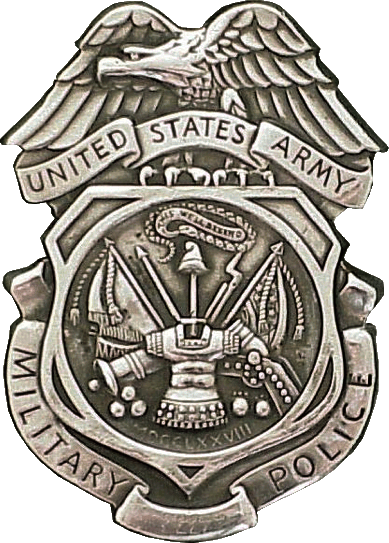
    The Law Enforcement Officers Safety Act of 2004, a little-known federal law that was extended to apply to military personnel in 2013, already gives credentialed troops — in addition to military police — authority to carry weapons while off duty in all 50 states and the District of Columbia, according to a U.S. military official.

    […]

    A key requirement to qualify for concealed carry under the law is 10 or more years of experience as a law enforcement official.

    When it comes to determining threats, LEOSA-credentialed individuals are considered to have skill sets that go “beyond the average citizen,” the military official told Military Times on the condition of anonymity.

    So, it’s not for grunts, but, if it applies to anyone out there, the article goes into detail on how to get certified.