Category: Veterans Issues

  • Veterans’ Day Welcome Home

    Republished from last year;

    This year, like every year, I posted my portrait as a young platoon sergeant to my Facebook avatar, not as a way to attract the inevitable “thanks for your service” comments or even the flirts that I get (obviously from blind women). No, I posted it because I’m proud that I had an opportunity to serve my country. I never did anything heroic, nor do I claim that service in itself makes me a hero. But, those two decades of service has had a huge impact on my life and the lives of my family.

    Another reason I do it is because my military antecedents of the Vietnam generation weren’t encouraged to discuss or advertise their service. When they came home from their war, they took off their uniforms and their service remained in the duffel bags in a dark corner of their basements. Even the soldiers who fought in wars before them didn’t respect their service. The Korean War veterans experienced the same treatment from the World War II generation when that war was fought to a draw.

    Somehow, that black scar across the landscape on the National Mall etched with 58,000 names changed that. I won’t try to explain the phenomenon, I’ll just recognize that was the turning point for Americans’ appreciation for military service. Now, I can be publicly proud of my service because of the sacrifice that Vietnam veterans made, the sacrifice that came after they returned from war.

    The pendulum has swung all the way back to the other extreme, now people who never served want to strap on a uniform and tell wild tales about wars in which they never really served. Our Stolen Valor page is chocked full of them. I guess we should feel better that everyone wants to be like us, but trust me, we don’t.

    The appreciation that Americans have for their military has even prompted the people who haven’t served to denigrate our service in an attempt to elevate their own station in life by attempting to drag our reputations down to their level. They even make it attractive for veterans to come out this time of year and write articles about how they don’t think they should be thanked for their service. We have a word for that, now – it’s called being a Blue Falcon.

    I’ll admit that I’m a little embarrassed every time someone thanks me for my service, because being in the military was the best times of my life, and I’m embarrassed that someone thinks that I need to be thanked for the privilege of getting paid for being the best asshole I could be.

    But, I know the feeling that I got the first time I went to downtown DC on Veterans’ Day and, encountering a lone Vietnam veteran hanging out on the periphery of the activities, I reached out my hand and said “Welcome Home”, he shook my hand and then quickly brushed away a tear, embarrassed by his own emotional reaction to those two simple words.

    Maybe that’s what we all want – instead of the thanks, the martial pageantry, the placards, the cheers – maybe we just want to feel welcomed back here in our home.

    My special thanks to all of the Vietnam veterans who made sure that we didn’t have to wait two decades to feel welcomed.

  • Veterans’ Day from Mike Royko

    Veterans’ Day from Mike Royko

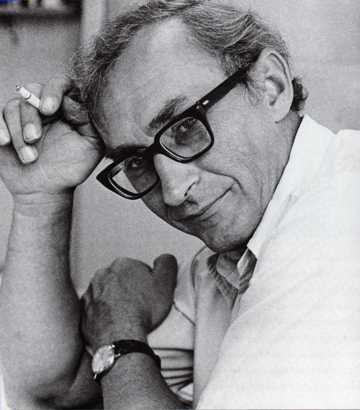
    My first Veterans’ Day after I left the military, in 1993, (I was actually on terminal leave at the time) was spent working as a security guard on a construction site…I was working full time while I attended college full time. I happened to pick up a newspaper on the way to work and it contained a column by the late Mike Royko (1932 – 1997) on veterans and I always remembered his sage words.

    Royko was a Chicago columnist and another famous Chicagoan, Matt Burden (Blackfive) remembers Royko’s column.

    I just phoned six friends and asked them what they will be doing on Monday.

    They all said the same thing: working.

    Me, too.

    There is something else we share. We are all military veterans.

    And there is a third thing we have in common. We are not employees of the federal government, state government, county government, municipal government, the Postal Service, the courts, banks, or S & Ls, and we don’t teach school.

    If we did, we would be among the many millions of people who will spend Monday goofing off.

    Which is why it is about time Congress revised the ridiculous terms of Veterans Day as a national holiday.

    The purpose of Veterans Day is to honor all veterans.

    So how does this country honor them?

    By letting the veterans, the majority of whom work in the private sector, spend the day at their jobs so they can pay taxes that permit millions of non-veterans to get paid for doing nothing.

    As my friend Harry put it:

    “First I went through basic training. Then infantry school. Then I got on a crowded, stinking troop ship that took 23 days to get from San Francisco to Japan. We went through a storm that had 90 percent of the guys on the ship throwing up for a week.

    “Then I rode a beat-up transport plane from Japan to Korea, and it almost went down in the drink. I think the pilot was drunk.

    “When I got to Korea, I was lucky. The war ended seven months after I got there, and I didn’t kill anybody and nobody killed me.

    “But it was still a miserable experience. Then when my tour was over, I got on another troop ship and it took 21 stinking days to cross the Pacific.

    “When I got home on leave, one of the older guys at the neighborhood bar — he was a World War II vet — told me I was a —-head because we didn’t win, we only got a tie.

    “So now on Veterans Day I get up in the morning and go down to the office and work.

    “You know what my nephew does? He sleeps in. That’s because he works for the state.

    “And do you know what he did during the Vietnam War? He ducked the draft by getting a job teaching at an inner-city school.

    “Now, is that a raw deal or what?”

    Of course that’s a raw deal. So I propose that the members of Congress revise Veterans Day to provide the following:

    – All veterans — and only veterans — should have the day off from work. It doesn’t matter if they were combat heroes or stateside clerk-typists.

    Anybody who went through basic training and was awakened before dawn by a red-neck drill sergeant who bellowed: “Drop your whatsis and grab your socks and fall out on the road,” is entitled.

    – Those veterans who wish to march in parades, make speeches or listen to speeches can do so. But for those who don’t, all local gambling laws should be suspended for the day to permit vets to gather in taverns, pull a couple of tables together and spend the day playing poker, blackjack, craps, drinking and telling lewd lies about lewd experiences with lewd women. All bar prices should be rolled back to enlisted men’s club prices, Officers can pay the going rate, the stiffs.

    – All anti-smoking laws will be suspended for Veterans Day. The same hold for all misdemeanor laws pertaining to disorderly conduct, non-felonious brawling, leering, gawking and any other gross and disgusting public behavior that does not harm another individual.

    – It will be a treasonable offense for any spouse or live-in girlfriend (or boyfriend, if it applies) to utter the dreaded words: “What time will you be home tonight?”

    – Anyone caught posing as a veteran will be required to eat a triple portion of chipped beef on toast, with Spam on the side, and spend the day watching a chaplain present a color-slide presentation on the horrors of VD.

    – Regardless of how high his office, no politician who had the opportunity to serve in the military, but didn’t, will be allowed to make a patriotic speech, appear on TV, or poke his nose out of his office for the entire day.

    Any politician who defies this ban will be required to spend 12 hours wearing headphones and listening to tapes of President Clinton explaining his deferments.

    Now, deal the cards and pass the tequila.

    – Mike Royko

  • Hasan’s victims struggle with benefits

    Fort Hood shooting victim Staff Sergeant Shawn Manning tells Fox News of his trials and tribulations with the military healthcare system to get treatment for his injuries resulting from the six bullet wounds that happened when Nidal Hasan blasted away at Fort Hood, six years ago;

    “I think part of the pushback is there’s still people that are reluctant to label the shooting as a terrorist attack,” Manning added. “Both within the Department of the Army, Defense Department and the government itself.”

    Meanwhile, Hasan, waiting for his fate on the Army’s death row has penned a 100-page Bernathian-style treatise on his crime, “justifying his extreme religious views and claiming his faith is inconsistent with American democracy”. I guess the significance of his oath to “protect and defend the Constitution of the United States” escapes the jihadist. But, I guess the point of the article is to juxtapose the irony of the victims trying to get recognition from a government for the wounds they endured in the war against terror while Hasan is making their case for them.

    Still using the acronym SOA, or soldier of Allah, Hasan wrote: “My Jihad on November 5, 2009 was in the defense of the Taliban in Afghanistan, who I viewed as imperfect Muslims trying to establish the perfect religion of All-Might God as supreme on the land against Americas attempt to impose a western type of democracy.”

    […]

    In his writings, Hasan has left no doubt that the first American targeted for death by the CIA in 2011, Anwar al-Awlaki, was a mentor and spiritual guide.

    In August, Hasan pledged his loyalty to ISIS leader Abu Bakr al-Baghdadi while asking to be “made a citizen of the Islamic State.”

    I guess the Obama Administration is loath to admit that the war followed our soldiers home from the war in the middle east because the BDS crowd was so staunchly opposed to a war waged by a Republican president. For that reason, the war continues and the troops are the ones who suffer, because a Nobel Prize winning President can’t unilaterally declare the end to a war and simply ignore it’s continuing effects.

    Thanks to Hondo for the link.

  • FedEx is hiring vets in Indianapolis area

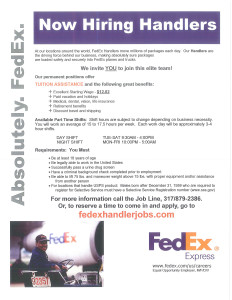
    Our friends at Blackfive wanted us to let you know that FedEx is looking for a large number of veterans to hire for “handlers” at their hub in Indianapolis;

    Indy Hub Handler Flyer

    I don’t know any of the specifics except what is on the flyer. So, even if you don’t need a job, someone you know might, so blast this out.

  • A Word of Caution Regarding DPAA’s Korean War “POW/MIA Lists”

    The Defense POW/MIA Accounting Agency (DPAA) has the mission of accounting for those who never came home. And they do a credibly good job IMO of doing so.

    However, here’s a caution regarding some of the information on their website.

    DPAA maintains publicly-accessible lists of those US personnel still missing from past conflicts going back to World War II. These lists are excellent sources, and seem to be kept reasonably well up-to-date as additional personnel from those conflicts are identified.

    These lists are differently structured for World War II, Korea, and Vietnam. A bit of background about each of those lists is essential to understand what the lists are actually telling you. I decided to write this article to give that background.

    World War II.

    The DPAA World War II lists (they don’t provide a consolidated one) are simple to understand, if perhaps not so easy to use. The DPAA World War II lists (found here) list only those who have not yet been formally accounted for – e.g., whose remains were never recovered.  These lists are clearly identified as what they are – lists of those still missing.  DPAA does not provide a list of POWs who returned alive, escaped, etc . . . , from World War II, and none of their lists would lead one to believe that’s its subject.

    The DPAA World War II lists are broken out alphabetically and by service, so there are a relatively large number of individual lists; as a result, they’re not necessarily too easy to use. But if you know an individual’s name, finding out whether they’re still missing is fairly straightforward (if perhaps a bit tedious).

    Vietnam.

    DPAA provides numerous lists for Vietnam  (by service, by state, etc . . . ) as well. However, for Vietnam DPAA also provides consolidated lists.  Four are IMO the most useful: the consolidated lists of Escapees, Returned, Accounted-For, and Unaccounted-For personnel. The lists’ names are self-explanatory: the Escapee list lists all personnel who escaped from their captors in SEA and returned alive to US control; the Returned list, those who returned alive from captivity at the end of the war; the Accounted-For list, all whose fate is definitively known (including escapees, returnees, and the turncoat bastard Garwood); and the Unaccounted-For list includes those who are still missing. The lists are comprehensive; thus, they’re quite useful for ferreting out fake Vietnam POW claims.  If the individual isn’t on the Escapee or Returned lists, DoD doesn’t recognize them as a Vietnam POW. Period.

    Korean War.

    DPAA also maintains a page it calls “Korean War POW/MIA Lists”.  Unfortunately, some of these Korean War lists are problematic. Bluntly:  taken at face value some of them can be hugely misleading.

    The Korean War lists are structured exactly as are the Vietnam lists; one would thus expect them to contain the same information.  One group of them does.  One does not.

    There are two types of Korean War “POW/MIA” lists: the “Accounted-For ” lists and the “Unaccounted-For”
    lists. The latter are good sources of data regarding those still missing, and appear to be both comprehensive and accurate.  However, there is a huge issue with the former group – the “Accounted-For” lists.

    On the DPAA Vietnam “Accounted-For” lists, those who escaped captivity and who returned alive from same are included in those lists; they are explicitly identified by their status code as having returned at the end of the war or to have escaped.  (They’re also broken out on separate lists for ease of review.)  In contrast, the Korean lists do not appear to include those US POWs who returned alive during/after the war, or who may have escaped from captivity during the war itself and returned to US control.

    What first tipped me off (some time ago) regarding this issue was when I looked at the consolidated Korea “Accounted For” list and found it had around 300 names (even today it only shows 322 names). This is far less than 10% of the number of US POWs documented to have returned alive during or at the end of the Korean War.

    I haven’t been able to find data on how many US personnel (if any) escaped from NK/Red Chinese captivity and returned to US control during the Korean War, or who might have been rescued by Allied forces.  However, near and after the end of the Korean War the US and NK/Red China conducted two major prisoner exchanges:  Operation Little Switch and Operation Big Switch.  Over 3,700  US personnel returned alive from POW status during these operations.

    Operation Little Switch occurred during April and May, 1953. During this exchange, 149 ill and/or wounded US POWs were returned to US control. Operation Big Switch occurred between the armistice ending the Korean War and the end of 1953; during multiple exchanges, 3,576 US personnel were repatriated. The total number of former US POWs known to have returned alive to US control in 1953 is thus at least 3,725.*

    None of the US personnel who returned in either “Switch” operation appear to be included on the Korean War “Accounted-For” lists.  Rather, those lists only appear to include the names of those whose remains were returned and/or definitively identified after the end of Operation Big Switch..  So the fact that someone (1) claims he/his dad/ his uncle/whoever is or was a Korean War POW s, when (2) their name doesn’t appear on any of the Korean War “Accounted-For” lists tells you . . . nada.  US POWs who returned alive at the end of the Korean War simply aren’t listed there.

    Why?  Dunno.  Seems to me that DoD must have a by-name list of who came back alive from POW status in Korea in its archives.  For whatever reason, apparently they’ve chosen not to make that list readily available through DPAA.  I wish they would, if for no other reason than to complete the historical record.


    * Historical Note:  per the armistice agreement ending the Korean War all POWs from both sides were given the opportunity to remain with the enemy if they so chose. A total of 3,597 US personnel were offered the opportunity to return from captivity during Operation Big Switch. Shockingly, 23 US personnel initially refused repatriation. Two later changed their minds (the Armistice agreement provided for a 90-day window during which a POW  initially declining repatriation could change their mind and opt to return home instead) and returned to US control in 1953. However, a total of 21 disloyal bastards ultimately declined repatriation to the US and opted to remain in Communist custody.  Most later decided that had been a mistake and returned to the US after several years. However, at least 4 (and possibly 5) never did. One died not long after the end of the Korean War.  The other 3 or 4 lived out the rest of their  turncoat lives under Communism.

    A well-meaning error by the military allowed those who later returned to the US to do so without facing severe legal consequences.  All of the US personnel opting to remain with the Communists were given a dishonorable discharge from the military in absentia.  When they later returned to the US, the result was that they could not be prosecuted for misconduct under the UCMJ – because due to their dishonorable discharges they were no longer in the military.  I  strongly suspect that’s why policy today is to keep the individual “on the rolls” in deserter status in such a case:  to ensure they can receive the appropriate UCMJ “tender mercies” on return.


    (A link to this article has been added to the “Military Records” button on the TAH site banner.)
  • Veterans’ homeless shelter in York, PA

    Veterans’ homeless shelter in York, PA

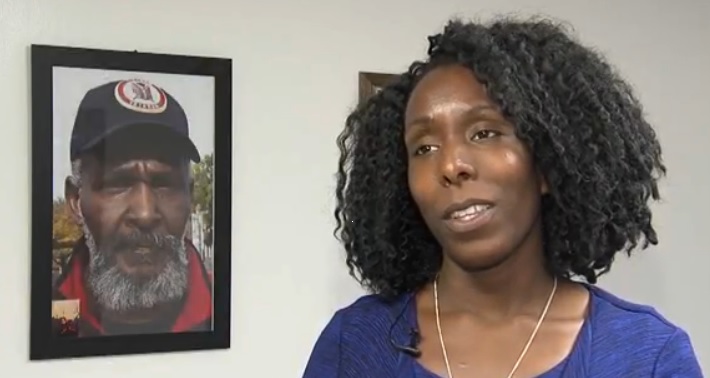
    Sandie Walker

    A few years ago, a homless veteran froze to death under a bridge in York, Pennsylvania. Vietnam veteran Sandy Walker felt ashamed for his community that it was allowed to happen, so he decided to establish a shelter for veterans in his hometown. He set to work on the project, but he died last March. His daughter, Sandie, picked up his banner and they finally completed the project. Yesterday, they had a grand opening according to ABC27;

    The shelter has enough space to take in 22 people.

    The facility will provide food, clothing and a place to sleep, along with services that include, mental health counseling, bus fare, prescription medicine and dental assistance.

    Walker says they will also help veterans who need outside assistance.

    “A lot of veterans are not aware of the services that are out there,” said Walker, “We offer immediate assistance, and we connect them to the VA in York County or the medical center in York County.”

    The link was sent to us by John Ott, whose son, Matthew, you might remember, was the victim of valor thief Nate Fornwalt. John was also a driving force behind the project, although he might contest that description.

  • About Those “I Escaped from the VC/NVA” Claims

    One of the common – and immensely frustrating – claims by military fakes is falsely claiming to have been held as a POW in Vietnam or elsewhere in Southeast Asia.  It’s also one of the easier false military claims to disprove quickly.  DPAA maintains a public list of POWs who returned from captivity during or at the end of the Vietnam War.

    However, many individuals making a “Vietnam POW” aren’t content to merely claim they were a POW.  Many have to claim to have been in a “tiger cage” temporarily, or to have later somehow escaped from enemy custody – or both.  Hell, Jonn posted an article about one such fake claim earlier today.

    Well, it turns out this kind of claim is also laughably easy to disprove. Turns out that DPAA maintains a second list – specifically, a list of those who successfully escaped enemy captivity during the Vietnam War.

    This latter claim (to have escaped from being held as a POW in Southeast Asia during the Vietnam Conflict) is not only laughably easy to verify or disprove, it’s also is one that’s virtually guaranteed to be bullsh!t.  Here’s why:  Only a total of 37 individuals were captured in SEA and later escaped and returned alive to US control.

    That’s right – thirty-freaking-seven.  Total.

    I haven’t counted.  But I’m pretty sure Jonn’s busted more than that many here at TAH alone for falsely claiming to have been “Vietnam POWs” who “escaped from Charlie”.

    The point?  Such individuals are incredibly rare.  They amount to a bit over 5% of all Vietnam POWs who returned alive – and according to DPAA, there were only a total 721 total POWs that returned alive, including civilians held captive.  (37 who escaped plus 684 who were released during or after the war).  Since approximately 3.1 million people served in the military in SEA during the war and only 32 of the escapees were military personnel, that means you’re literally talking about one Vietnam vet in about 97,000.

    Rare?  You betcha.  Especially since a number of those bona fide escapees are no longer alive.

    A few other interesting points about the successful escapees.

    1. Five of these individuals were civilians.
    2. Two were women (both were civilians).  They were both captured and escaped during the somewhat chaotic partial collapse of South Vietnam during March, 1975.
    3. Among the 32 military personnel who were taken prisoner in SEA and who later successfully escaped captivity, 19 were Army; 10 were Marines; 2 were Navy; and 1 was Air Force.
    4. With two exceptions, all successful escapees appear to have been taken prisoner and held in South Vietnam. The two exceptions were the two Navy personnel who later escaped; they were captured and held in Laos.
    5. No Navy SEALs were taken POW in Vietnam and later escaped.
    6. The vast majority (27, or 75%) of escapees escaped within a month of being captured. Only 4 were held longer than 2 months.  Only two escaped after being held longer than 6 months:  SFC Isaac Camacho, 5th Special Forces Group, US Army – captured on 24 November 1963 and escaped/returned to US custody almost 19 months later, on 13 July 1965; and 1LT James Nicholas Rowe, captured on 29 October 1963 and escaped/returned to US custody over 5 years later, on 31 December 1968.
    7. Three of the individuals who escaped captivity were both captured and escaped captivity the same day; another three were captured one day and escaped the next. If someone’s claiming they aren’t on the POW list because “they weren’t held long enough”, that’s bullsh!t.  There is NO “minimum time required” before DoD considers someone a POW.

    Still, we keep seeing this kind of bogus claim.  So, in the interest of being a ready reference, here is the complete list of those individuals who DPAA recognizes as being successful escapees from enemy captivity during the Vietnam War.


    Branch of Service  Location of Incident  Name  Rank Date Captured  Date of Return
    USA S. Vietnam AIKEN, Larry Delarnard E4 1969/05/13 1969/07/10
    USA S. Vietnam ANDERSON, Roger Dale E2 1968/01/03 1968/01/12
    USA S. Vietnam BABCOCK, William H. Jr. O2* 1968/01/31 1968/01/31*
    USA S. Vietnam BRASWELL, Donald Robert E4 1967/08/23 1967/08/24
    USA S. Vietnam BREWER, Lee E5 1968/01/07 1968/01/08
    USA S. Vietnam CAMACHO, Issac E7 1963/11/24 1965/07/13
    USN Laos DENGLER, Dieter O2 1966/02/01 1966/07/20
    USA S. Vietnam DIERLING, Edward A. E5 1968/02/01 1968/02/23
    CIVILIAN S. Vietnam DODD, Joe Lee Civ 1965/10/10 1965/10/25
    USMC S. Vietnam DODSON, James E5 1966/05/06 1966/06/20
    USMC S. Vietnam ECKES, Walter W. E3 1966/05/10 1966/06/20
    USA S. Vietnam FANN, Jerry L. E3 1967/03/21 1967/03/21
    USA S. Vietnam GRAENING, Bruce A. E3 1967/03/09 1967/03/18
    USA S. Vietnam GUFFEY, Jerry E4 1969/03/04 1969/03/04
    USMC S. Vietnam HAMILTON, Walter D. E2 1965/10/18 1965/10/29
    USA S. Vietnam HATCH, Paul G. E3 1969/08/24 1969/08/25
    USA S. Vietnam HAYHURST, Robert A. E5 1968/02/01 1968/02/23
    USA S. Vietnam HOLT, Dewey Thomas E4 1967/08/23 1967/08/24
    CIVILIAN S. Vietnam HUDSON, Henry M, Civ 1965/12/20 1965/12/21
    USMC S. Vietnam IODICE, Frank C. E4 1968/05/30 1968/06/01
    CIVILIAN S. Vietnam JONES, Edwin D. Civ 1965/12/20 1965/12/21
    USA S. Vietnam KING, Everett Melbourne Jr. E4 1968/02/01 1968/02/08
    USN Laos KLUSMANN, Charles F. O3 1964/06/06 1964/08/31
    USA S. Vietnam MARTIN, Donald Eugene E5 1968/03/02 1968/04/14
    USMC S. Vietnam NELSON, Steven N. E3 1968/01/07 1968/01/21
    USMC S. Vietnam NORTH, Joseph Jr. E2 1965/10/18 1965/10/29
    USAF S. Vietnam PAGE, Jasper N. E6 1965/10/30 1965/11/04
    USMC S. Vietnam POTTER, Albert J. E5 1968/05/30 1968/06/01
    USMC S. Vietnam RISNER, Richard F. O4 1968/08/20 1968/08/22
    USMC S. Vietnam ROHA, Michael R. E1 1968/01/07 1968/01/21
    USA S. Vietnam ROWE, James Nicholas O2 1963/10/29 1968/12/31
    CIVILIAN S. Vietnam SMITH, Linda Civ 1975/03/10 1975/03/27
    CIVILIAN S. Vietnam SMITH, Michelle L. Civ 1975/03/10 1975/03/27
    USMC S. Vietnam TALLAFERRO, William P. E4 1968/02/06 1968/02/13
    USA S. Vietnam TAYLOR, William B. E5 1968/03/20 1968/05/06
    USA S. Vietnam VANPUTTEN, Thomas E4 1968/02/11 1969/04/17
    USA S. Vietnam WRIGHT, Buddy E5 1968/09/22 1968/10/06

    Note:  for unknown reasons, the DPAA list does not give a rank or date of escape for Babcock.  However, the Military Times Hall of Valor database lists his rank when captured as 1LT, and indicates he escaped from enemy custody/was rescued the same day.  Other Internet sources also give Babcock’s  rank as 1LT at time of capture; those sources further indicate he was captured and escaped/was rescued the same day.  I have thus entered this data in the table above.


    That’s the entire DoD-recognized escapee list.  It may be verified directly from DPAA by following this link.  All other Vietnam War POWs who returned alive did so after being released during or after the end of the war.

    If someone’s making a “Vietnam POW” claim and isn’t on that list, well, personally I’d not believe a word they said.  And I’d probably also leave the area immediately – before I lost my temper and did something stupid.


    (A link to this article has been added to the “Military Records” button on the TAH site banner.)
  • Military suicide

    Chief Tango sends us a link to the New York Times which discusses what one group of Marines did in reaction to a number of suicides among their mates when they came back from war.

    “Real talk, guys, let’s make a pact, right here,” Travis Wilkerson said. “I don’t want to go to any more funerals. Let’s promise to reach out and talk. Get your phones out, put my number in. Call me day or night. I’m not doing this again.”

    I’ve been saying for years that the answer to the scourge of suicides among veterans is inside each of us, there are no silver bullets, so to speak. No amount of lectures in our units for quarterly sensitivity training check marks on your company records, the VA is going to try to counsel veterans and they’ll pump you full of drugs that may or may not help. But the real answer is in our hearts.

    He sat down with a therapist, a young woman. After listening for a few minutes, she told him that she knew he was hurting, but that he would just have to get over the deaths of his friends. He should treat it, he recalled her saying, “like a bad breakup with a girl.”

    The comment caught him like a hook. Guys he knew had been blown to pieces and burned to death. One came home with shrapnel in his face from a friend’s skull. Now they were killing themselves at an alarming rate. And the therapist wanted him to get over it like a breakup?

    Mr. Bojorquez shot out of his seat and began yelling. “What are you talking about?” he said. “This isn’t something you just get over.”

    He had tried getting help at the V.A. once before, right after Mr. Markel’s funeral, and had walked out when he realized the counselor had not read his file. Now he was angry that he had returned. With each visit, it appeared to him that the professionals trained to make sense of what he was feeling understood it less than he did.

    No one understands what we’ve experienced as well as another veteran, irrespective of the war that they served in. That’s why in our little community here at TAH, we have veterans of the Korean War, the Vietnam War, veterans of the Beirut bombing, Grenada, Panama, Desert Storm, and the current wars in Afghanistan and Iraq. Being a combat veteran is always the same.

    I learned that after my service when I read every first-person account I could find about the Civil War. I get in email exchanges with some of you folks when you reach out for a chat. I can’t tell you how many emails I get from lurkers who thank me for the blog because we’ve talked them back from the ledge without even realizing that’s what we were doing. I guess understanding that veterans aren’t alone in their experiences is the One Big Thing That Counts;

    After swearing off the V.A., Manny Bojorquez turned increasingly to friends for support. Late-night calls and texts with guys from the battalion seemed to help more than therapy ever did.

    I guess that’s why these Medal of Honor recipients got together to make this video, because they understand that;