Category: Veterans Issues

  • All Stolen Valor Is Equal. But Some Stolen Valor Is More Equal Than Others.

    We all know the SCOTUS recently invalidated the Stolen Valor Act of 2005, forcing Congress to revise and reenact it.  That happened last year.

    So, merely making false claims about one’s military career isn’t in general unlawful today.  You have to do so for the purpose of fraud to break the law.

    But it seems that’s not the case for all similar acts.

    Maybe I’m misreading this article.  But if I’m reading it correctly, it leads me to believe that falsely claiming to be a retired cop in Oregon Washington state is illegal.

    “It’s quite appalling, it’s upsetting,”said Oak Harbor Police Chief Edgar Green.  . . . “We’re very proud of what we do and work very hard at what we do, so to find someone who comes along and just takes that for granted and pretends to be one of us, that’s upsetting.”

    No sh!t, Chief Green.  Those who are veterans – and particularly those who are military retirees – feel exactly the same way about false military claims. We find that crap kinda “appalling” and “upsetting”, too. Those false claims about military service bother a vet for precisely the same reasons that false claims of being a police officer (or a retired police officer) bothers you.

    Hmm.  Falsely claim to have the Medal of Honor?  That’s OK.  Falsely claim to be a retired cop, and tell someone “Call 911”?  Oh, no – can’t do that.  Apparently, that’s illegal.

    Someone’s gonna have to ‘splain that to me.  I just don’t “get it”.

  • Some Thoughts Regarding MoH Awards

    Jonn’s earlier article concerning the scarcity of Medal of Honor (MoH) recipients during the GWOT piqued my curiosity. So I decided to do a little digging  and number crunching – and see just where the numbers led.

    Here’s the data I was able to find quickly, from various internet sources, for 5 major US conflicts since 1900. These conflicts were World War I, World War II, Korea, Vietnam, and the post-9/11 GWOT. I didn’t look up data for the first Gulf War; no MoHs were awarded during that conflict. I also excluded Somalia; that conflict, while arguably the real opening shots of the GWOT, is generally not considered a part of the GWOT. But even including the 2 MoHs awarded in Somalia doesn’t change what follows substantially. .

    Here are the numbers.

    World War I:
    Number serving in-theater:  approx 2.2M
    Number of MoHs: 119
    Rate: 0.00541% (5.41 per 100,000)
     
    World War II:
    Number serving overseas:  approx 12M
    Number of MoHs: 472
    Rate: 0.00393% (3.93 per 100,000)
     
    Korea:
    Number serving in-theater:  approx 1.789M
    Number of MoHs: 146
    Rate: 0.00816% (8.16 per 100,000)
     
    Vietnam:
    Number serving in-country:  2.6 M
    Number of MoHs: 258
    Rate: 0.00992% (9.92 per 100,000)
     
    GWOT:
    Number serving in-country:  approx 1.3M
    Number of MoHs: 16
    Rate: 0.00123% (1.23 per 100,000)

    . . .

    I think the numbers rather speak for themselves. But I’ll give my 2 cents worth about them anyway.

    Yeah, the current conflict got the short end of the stick with respect to the number of MoHs awarded so far.  The numbers make that pretty damn clear.

    A few further thoughts:

    1. Prior to the GWOT, the historical modern rate of award for the MoH during major conflicts ranged between 0.00393% and 0.00992%. That’s a rough range of somewhere around 4 to 10 out of every 100,000 military personnel deployed in harm’s way.

    2. World War I was primarily an infantry war, but at that time the concept of handing out medals was still relatively new; processes for doing so in a modern large war were developed on the fly. Still: with only a year or so of real combat, the rate of award for the MoH seems reasonable to perhaps a bit low, historically, for a largely infantry war like World War I.

    3. Prior to the GWOT, World War II saw the lowest MoH rate. It is also the US war where Naval and Air Corps service in harm’s way was most extensive. No slight to our nautical or aeronautical sister services – but service at sea or in the air in general offers far fewer opportunities for the level of heroism required for award of the MOH than does land combat, so a lower rate of MoHs for this World War II should be expected. Fewer opportunities means fewer awards. Also, during World War II there were multiple theaters; multiple theaters means more of those deployed overseas were likely in relatively “safe” rear areas providing support. I couldn’t find or derive a good number for those serving where shooting was actually happening in World War II; the best I could find was that 75% of the military served “overseas”.

    4. Korea and Vietnam were, in essence, infantry wars in Asia against foes that didn’t “play nice” with respect to the Geneva Convention. Their rates of MoH award are, as might be expected, higher than in other conflicts.

    5. That said, the Vietnam War MoH rate numbers give me pause. Many units did acquire a reputation for being “easy” regarding awards during Vietnam. A man I once knew (an artillery officer who served in Vietnam) once told me that it was a running joke when he served there that officers inprocessing to Vietnam should have just signed for their award “packet” (BSM, VSM, VCM, and possibly Air Medal) during in processing in order to streamline things when they left. Award inflation reputedly included many awards for valor. Stories of undeserved Silver Stars being relatively commonplace exist; I can’t assess whether such stories are accurate or not – but where there’s smoke, there’s often fire. While I believe the services all avoided MoH inflation during Vietnam, I guess it’s possible some might have occurred. And the rate of MoH award in Vietnam is unusually high when compared to other US major conflicts – nearly 1 in 10,000. Dunno.

    6. During the GWOT, the MoH has been awarded at a rate of nut much more than 1 out of every 100,000 troops serving in harm’s way.  That’s barely 1/4 as often as during World War II, and about 1/8 as often as during Vietnam.  And the GWOT – like World War I, Korea, and Vietnam – has been primarily a single-theater, “up-close-and-personal” infantry war.  Something just doesn’t seem right.

    . . .

    Why? Well, I personally think it’s probably one last institutional legacy of Vietnam. Specifically, I think this is an over-reaction to the perception of awards abuse and inflation in Vietnam – which was, to some degree, IMO  accurate. (How much is another question entirely.)  But the correction has been far too severe. American troops haven’t become less brave today than they were in previous conflicts, and during the GWOT substantial opportunities for battlefield heroism have existed. The reluctance to award the MoH seems to me to be due to an excessive and misplaced fear of “cheapening” the MoH as is perceived happened to some awards in Vietnam. That’s a valid concern – but if anything, the effect appears to have been to slight many deserving heroes.

    This has an unintended consequence: it sends an unintended message to the military itself, and to America. Few or no MoHs implies almost no one was no one worthy, that the fighting wasn’t severe and protracted, and that there simply wasn’t much battlefield heroim. But that’s decidedly not the case for either Iraq or Afghanistan.

    Bottom line: the process appears effectively broken. IMO, it needs fixing.  “Poor is the nation that has no heroes; but beggared is the nation that has and forgets them.”

    Just my thoughts, and I might well be out to lunch. But my gut tells me I’m not.

    _________________

    Postscript:  I’m still not personally convinced no one in the 1991 Gulf War was worthy of the MoH. However, ground operations during that war were short enough and the enemy so clueless that maybe that was the case. 

    Dunno.  I wasn’t on active duty during the Gulf War; and I wasn’t mobilized during that conflict.  So I don’t really have any personal experiences on which to form an opinion about the matter. 

    But I still have trouble believing it.
  • Feds resent vets’ hiring preferences

    Feds resent vets’ hiring preferences

    soldiers_veterans_jobs

    Chief Tango sends us a link to a Washington Post article about how federal employees are beginning to resent the President’s hiring preferences for veterans;

    With veterans moving to the head of the hiring queue in the biggest numbers in a generation, there’s growing bitterness on both sides, according to dozens of interviews with federal employees.

    Those who did not serve in the military bristle at times at the preferential hiring of veterans and accuse them of a blind deference to authority. The veterans chafe at what they say is a condescending view of their skills and experience and accuse many non-veterans of lacking a work ethic and sense of mission.

    This might be news to some, but not for anyone who has been in the Federal workforce. As you probably know, I just retired from a Federal job earlier this year, and nearly every day I experienced that sort of resentment. I was told that I was crazy just because I was a veteran. Other employees didn’t mind telling me that they resented the 15-point hiring preference for vets because they had lost opportunities to vets. Even though we had more management experience than our peers, we were prevented from advancement to positions of supervision. Why? Well this paragraph in the Post article might explain it;

    “You’re getting a very conservative worker that’s very narrow-minded,” said Bob O’Brien, a technology specialist for the Office of Personnel Management. About 90 of the 100 computer experts in his office in suburban Maryland are veterans, he said.

    “In meetings, you can’t question anything,” O’Brien complained. The veterans’ attitude to their supervisors, he said, is: “You’re my boss. You could be a complete lunatic, but I won’t question you.”

    Yeah, well, for anyone with military experience, sitting through those painful meetings would make you pull your hair out. Employees without military experience question everything – even the use of “and” and “is”. If my supervisor told me to do something I thought was stupid, instead of arguing in meetings for hours, I’d find a way around the stupid parts, quietly, at my desk, using my brain thingie. But non-veterans seem to like wasting their time complaining about stuff. Everything. Every. Single. Thing.

    I remember endless meetings about the color of the new carpet in the office. I remember the complaints when we got new chairs. There was nearly a revolt when we were told that we were going to have to use the online version of our own publication instead of the paper copies that cost the taxpayers millions of dollars every year. The Old Schoolers were even resistant to a liberal telework schedule – when I left there were still three people in my section (of eight) who refused to draw a laptop computer and get on the telework pony. I guess they liked their morning commute through downtown DC every day.

    But Laura Barmby was pleasantly surprised when she ran a training session this summer for the Commerce Department that included veterans. In a role-playing exercise, the eight veterans banded together in reaction to a natural disaster, devising a novel response to offer emergency services to the public.

    I moved to West Virginia to be part of the Contingency of Operations Program that was created after 9-11-01. Our job at the remote location was, of course, to continue operations in the event that DC was blowed up. All three members of that team here had been veterans, because we had no problem being on a call-list and being available always to the office, whereas the non-veterans were much more resistant to the concept. And we had little problem getting the Top Secret Clearances required for the job.

    I feel better that much of the Federal work force is veterans, I feel better about the country.

  • Guest Post; September 11, 2001 – Timeline

    The following was written by MCPO USN NYC (Ret) and posted at his request;

    Lest we forget 13 years ago today . . .


    7:59 am – American Airlines Flight 11, a Boeing 767 with 92 people aboard, takes off from Boston’s Logan International Airport en route to Los Angeles.

    8:14 am – United Airlines Flight 175, a Boeing 767 with 65 people aboard, takes off from Boston; it is also headed to Los Angeles.

    8:19 am – Flight attendants aboard Flight 11 alert ground personnel that the plane has been hijacked; American Airlines notifies the FBI.

    8:20 am – American Airlines Flight 77 takes off from Dulles International Airport outside of Washington, D.C. The Boeing 757 is headed to Los Angeles with 64 people aboard.

    8:24 am – Hijacker Mohammed Atta makes the first of two accidental transmissions from Flight 11 to ground control (apparently in an attempt to communicate with the plane’s cabin).

    8:41 am – United Airlines Flight 93, a Boeing 757 with 44 people aboard, takes off from Newark International Airport en route to San Francisco. It had been scheduled to depart at 8:00 am, around the time of the other hijacked flights.

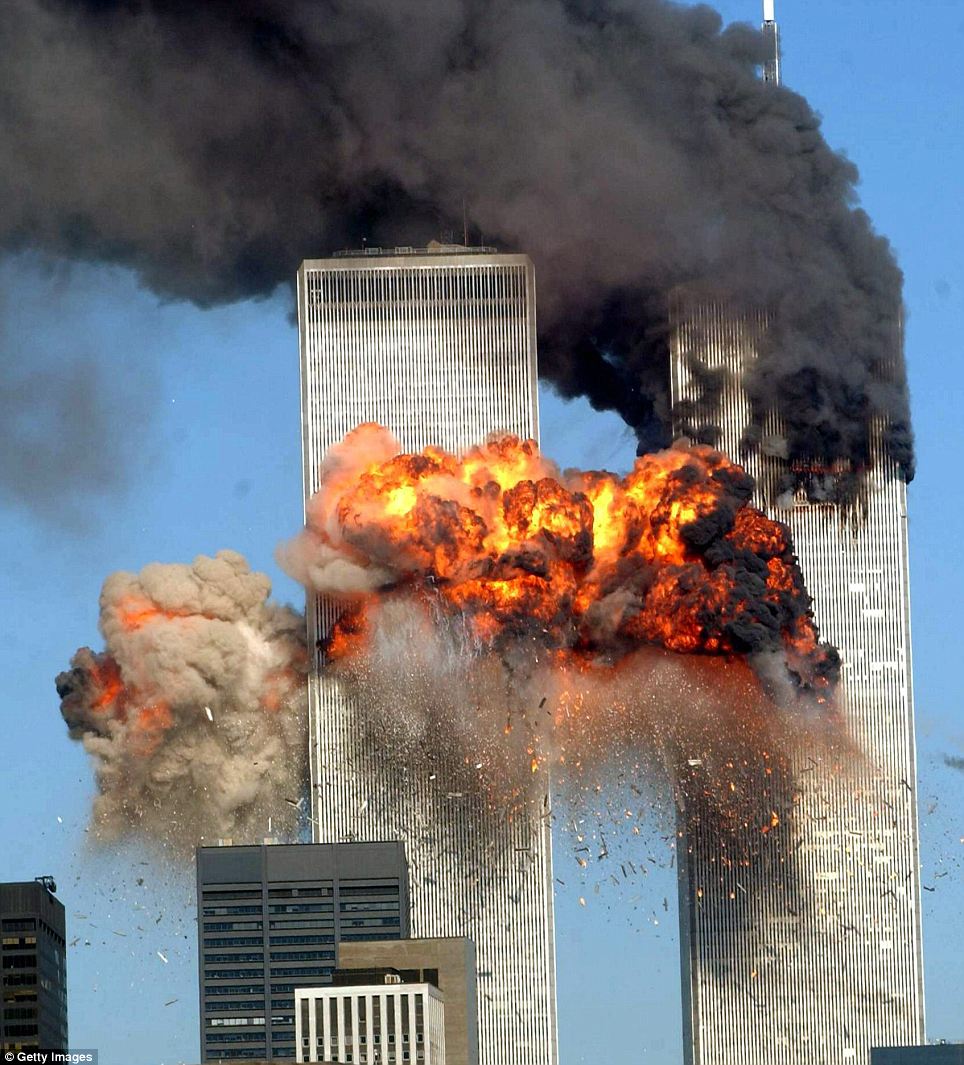
    8:46 am – Mohammed Atta and the other hijackers aboard American Airlines Flight 11 crash the plane into floors 93-99 of the North Tower of the World Trade Center, killing everyone on board and hundreds inside the building.

    8:47 am – Within seconds, NYPD and FDNY forces dispatch units to the World Trade Center, while Port Authority Police Department officers on site begin immediate evacuation of the North Tower.

    9:03 am – Hijackers crash United Airlines Flight 175 into floors 75-85 of the WTC’s South Tower, killing everyone on board and hundreds inside the building

    9:08 am – The FAA bans all takeoffs of flights going to New York City or through the airspace around the city.

    9:21 am – The Port Authority closes all bridges and tunnels in the New York City area.

    9:24 am – The FAA notified NEADS of the suspected hijacking of Flight 77 after some passengers and crew aboard are able to alert family members on the ground.

    9:37 am – Hijackers aboard Flight 77 crash the plane into the western façade of the Pentagon in Washington, D.C., killing 59 aboard the plane and 125 military and civilian personnel inside the building.

    9:59 am – The South Tower of the World Trade Center collapses.

    10:07 am – After passengers and crew members aboard the hijacked Flight 93 contact friends and family and learn about the attacks in New York and Washington, they mount an attempt to retake the plane. In response, hijackers deliberately crash the plane into a field in Somerset County, Pennsylvania, killing all 40 passengers and crew aboard.

    10:28 am – The World Trade Center’s North Tower collapses, 102 minutes after being struck by Flight 11.

    5:20 pm – The 47-story Seven World Trade Center collapses after burning for hours; the building had been evacuated in the morning, and there are no casualties, though the collapse forces rescue workers to flee for their lives.

    8:30 pm – President Bush addresses the nation, calling the attacks “evil, despicable acts of terror” and declaring that America, its friends and allies would “stand together to win the war against terrorism.”

    . . .

    Editorial Note: At approximately 0100 on May 2, 2011, a 79 member joint team, including MWD Cairo, delivered by the Night Stalkers and operating with Naval Special Warfare Development Group (DEVGRU aka SEAL Team SIX) RED Squadron raided a compound in Abbottabad, Pakistan and killed Osama bin Laden with one shot to the head followed by another shot to the chest. Mission Commander of OPERATION NEPTUNE SPEAR and DEVGRU RED Squadron OIC on scene reported, “for God and country … Geronimo, Geronimo, Geronimo”, and then, after being prompted for confirmation, “Geronimo E.K.I.A.” (enemy killed in action). Within 24 hours of his death, the lifeless and soulless body of bin Laden was unceremoniously dumped in to the Indian Ocean by a lone junior Sailor from the USS Carl Vincent for the sharks and sea snakes to feed upon.

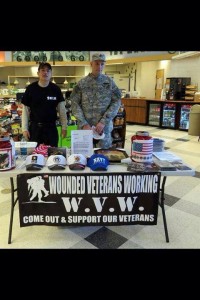
  • Wounded Veterans Working

    Wounded Veterans Working

    Wounded Veterans Working Westbay

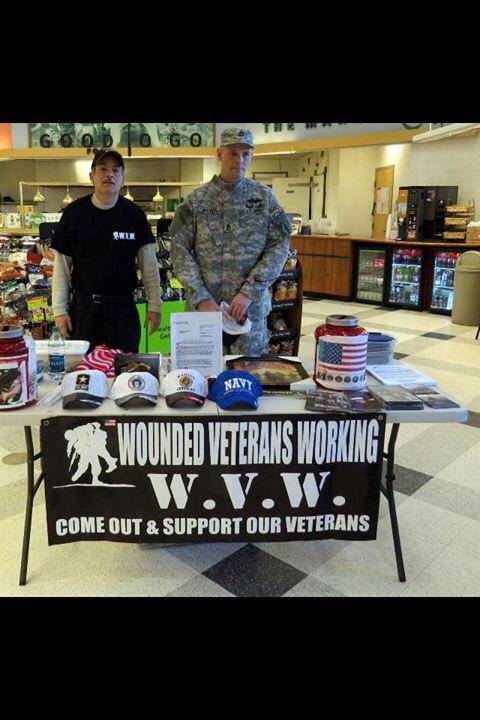
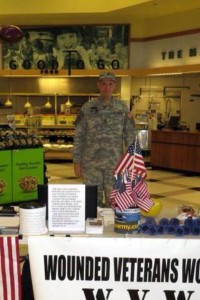
    Someone dropped off this link to Grunt Stuff’s Facebook Page of this fellow William Westbay who is the founder of Wounded Veterans Working and he seems to be collecting money;

    Wounded Warriors Working

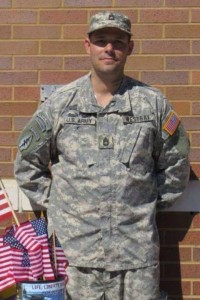
    Here’s another one with his badges and stuff on the wrong side;

    Michael Westbay wrong

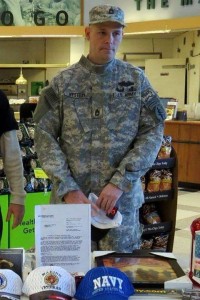
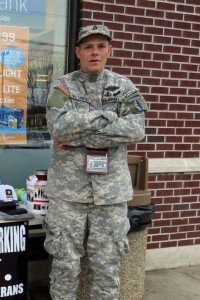
    Here’s a close up;

    Michael Westbay wrong again

    If I couldn’t read the name tags, I’d think it was taken in a mirror. But someone must’ve straightened him out;

    Wounded Veterans Working Westbay (2)

    So, I looked the organization up and found a phone number, but it went to vmail without identifying the organization. Mine does the same, but I’m not in a customer service business. Anyway, I left my number, after identifying myself and haven’t had a call back yet. So I mapped the address at the link above on Google Earth and it took me to a very nice residential neighborhood on Long Island, but it doesn’t look like corporate offices. And their Facebook page hasn’t been updated since last year. [Editor’s Note: Their Facebook Page just fell off the face of the Earth]

    Wounded Veterans Working

    I looked up Westbay on AKO, but there was no result on that search, not that it means anything. But I don’t see anything in the company bio that says that he was a veteran, and as badly as his uniform is set up above, I have to wonder.

  • John Walker Dies in Prison

    The     traitorous bastard     convicted Soviet spy named John Walker has died.  Though scheduled for release next year after serving 30 years of a life sentence, he did not live long enough to see another day as a free man.

    For those of you who are unfamiliar with Walker’s treachery – and the results of same – a short version can be found here.

    Rot in hell, Walker.  Hopefully this means Zarkman now has a 2nd roomate.


    (Hat tip to TAH reader ohio for posting the link regarding Walker’s demise in comments.)


  • So, What Does the POTUS Really Think of Vets?

    Yesterday, the POTUS signed that “landmark” VA bill – throwing more money at a problem that isn’t financial.  That means he really cares about vets and their problems, right?

    Yeah, right.  Remember the VA scandal that caused that bill to be drafted and fast-tracked?  You know, the one that finally got former VA Secretary Shinseki    kicked to the curb    to resign?

    Wanna guess how many times the POTUS met one-on-one with Shinseki to discuss the scandal this year while it was ongoing?  Remember, the POTUS made it clear when speaking publicly that he regarded the crisis as “urgent”.

    Try once – on the day Shinseki resigned, May 30.   (He also saw Shinseki at two cabinet meetings Shinseki attended in January – but that’s hardly the same.)

    That’s it.

    Words, actions. One’s for show; the other is reality.

    You do the math.

  • So, What Are They Saying in Montana?

    Wonder what they’re saying in Montana about Senator Walsh and his “unintentional mistake” of copying virtually verbatim around 25% of his War College final paper – including his conclusions – from other sources? As well as citing, but then lifting nearly word-for-word without indicating a direct quote, other sections? Well, let’s look:

    And even though it’s from Joliet, Illinois (Times Weekly) vice Montana, this editorial “gets it”:

     . . .

    So:  was cribbing that material instead of writing the paper yourself really worth it, Senator? “Oh, what a tangled web . . . . “