Category: The Warrior Code

  • Valor Friday

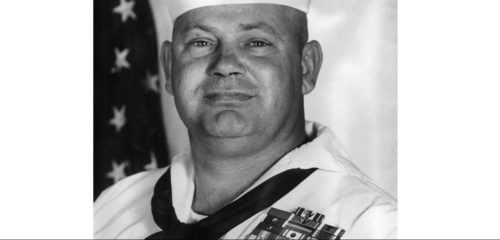
    Willy WilliamsWilly Williams, the most decorated enlisted sailor in Navy history

    In the history of the U.S. Navy only seven men have earned all of the “Big Three” valor awards: Medal of Honor, Navy Cross and Silver Star Medal. Six were World War II officers, including one aviator and four submarine commanders. The seventh was enlisted sailor James Elliott “Willy” Williams in Vietnam.

    In 1947, Williams, a 16-year-old from Fort Mill, South Carolina, enlisted in the Navy with a fraudulent birth certificate. His first 19 years in the Navy included service aboard the destroyer USS Douglas H. Fox during the Korean War and tours on a variety of naval vessels from 1953 to 1965.

    In May 1966 Boatswain’s Mate 1st Class Williams was assigned to River Squadron 5 in South Vietnam to command Patrol Boat, River 105. The approximately 30-foot fiberglass boat usually carried a four-man crew who patrolled inland waterways to prevent the Viet Cong from using them to transport troops and supplies.

    On July 1 Williams led a patrol that came under fire from a Viet Cong sampan. His deft maneuvers and accurate fire killed five VC and resulted in capture of the enemy boat, earning Williams a Bronze Star Medal with a “V” for valor. Twenty-two days later the capture of another sampan brought Williams a second Bronze Star for valor. Less than a month later, he received a Silver Star and his first Purple Heart.

    On Halloween, Oct. 31, 1966, Williams was commanding a two-boat patrol on the Mekong River when he was fired on by two sampans. He and his crew killed the occupants of one and then went after the other. That pursuit put the Navy boats into a VC staging area containing two junks and eight sampans, supported by machine guns on the river banks. Williams called for helicopter gunship support while holding the enemy at bay. During this movement he discovered an even larger force. Not waiting for the armed helicopters, Williams attacked. Maneuvering through devastating fire from enemy boats and the shore, his two-boat patrol fought a three-hour battle that destroyed or damaged 65 VC boats and eliminated some 1,200 Communist troops. For his actions, Williams was nominated for the Medal of Honor.

    On Jan. 9, 1967, the Navy dredge Jamaica Bay was blown up by mines in the Mekong Delta, and PBR-105 arrived to pick up seven of the survivors. Another man was trapped in the rapidly sinking dredge. Williams dove into the water and, with a rope attached to a nearby tug, pulled clear an obstruction, then swam through a hatch to recover the sailor.

    Six days later Williams was wounded while leading a three-boat patrol that interdicted a crossing attempt by three VC heavy-weapons companies of 400 fighters. He and his boats accounted for 16 VC killed, 20 wounded and the destruction of nine sampans and junks. Williams was awarded the Navy Cross.

    When Williams returned home in spring 1967, he had a list of awards unmatched by any enlisted man in Navy history. He retired after 20 years of service and began a career in the U.S. Marshals Service.

    During his last seven months in the Navy, Williams received every sea-service award for heroism including the Legion of Merit with “V,” two Navy Commendation Medals for valor and three Purple Hearts.

    Williams died on Oct. 13, 1999, and in 2003 his widow, Elaine, watched the launching of the Arleigh Burke class destroyer, USS James E. Williams.

    MEDAL OF HONOR CITATION:

    For conspicuous gallantry and intrepidity at the risk of his life above and beyond the call of duty. BM1 Williams was serving as Boat Captain and Patrol Officer aboard River Patrol Boat (PBR) 105 accompanied by another patrol boat when the patrol was suddenly taken under fire by 2 enemy sampans. BM1 Williams immediately ordered the fire returned, killing the crew of 1 enemy boat and causing the other sampan to take refuge in a nearby river inlet. Pursuing the fleeing sampan, the U.S. patrol encountered a heavy volume of small-arms fire from enemy forces, at close range, occupying well-concealed positions along the river bank. Maneuvering through this fire, the patrol confronted a numerically superior enemy force aboard 2 enemy junks and 8 sampans augmented by heavy automatic weapons fire from ashore. In the savage battle that ensued, BM1 Williams, with utter disregard for his safety exposed himself to the withering hail of enemy fire to direct counter-fire and inspire the actions of his patrol. Recognizing the over whelming strength of the enemy force, BM1 Williams deployed his patrol to await the arrival of armed helicopters. In the course of his movement he discovered an even larger concentration of enemy boats. Not waiting for the arrival of the armed helicopters, he displayed great initiative and boldly led the patrol through the intense enemy fire and damaged or destroyed 50 enemy sampans and 7 junks. This phase of the action completed, and with the arrival of the armed helicopters, BM1 Williams directed the attack on the remaining enemy force. Now virtually dark, and although BM1 Williams was aware that his boats would become even better targets, he ordered the patrol boats’ search lights turned on to better illuminate the area and moved the patrol perilously close to shore to press the attack. Despite a waning supply of ammunition the patrol successfully engaged the enemy ashore and completed the rout of the enemy force. Under the leadership of BM1 Williams, who demonstrated unusual professional skill and indomitable courage throughout the 3 hour battle, the patrol accounted for the destruction or loss of 65 enemy boats and inflicted numerous casualties on the enemy personnel. His extraordinary heroism and exemplary fighting spirit in the face of grave risks inspired the efforts of his men to defeat a larger enemy force, and are in keeping with the finest traditions of the U.S. Naval Service.
    Navy Times Link

    Navy Memorial Link

  • Valor Friday- Harlem Hellfighter

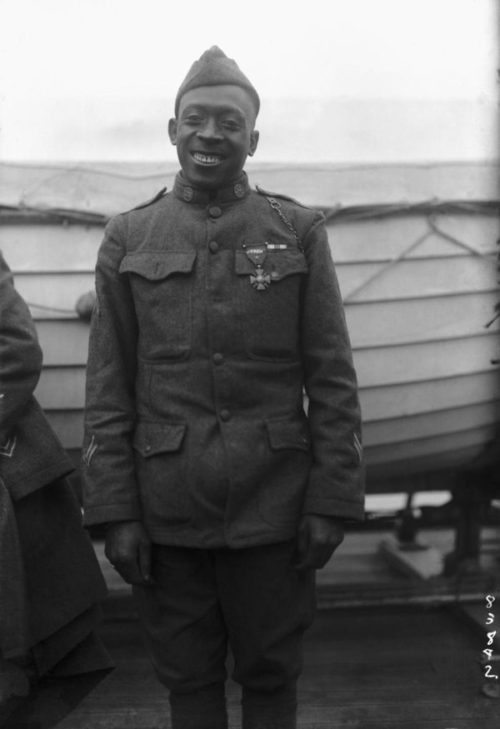
    Henry Johnson MOHHenry Johnson, who only stood 5-foot-4 and weighed 130 pounds, was the first American to receive the French Croix du Guerre with a Gold Palm for extraordinary valor. (New York Public Library)
    Today’s Valor Friday goes to Private Henry Johnson, 5 foot 4 and 130 pounds of American kick-ass. Johnson’s ferocity earned him the nickname, “Black Death,” and France awarded him with the Croix de Guerre with a Gold Palm for extraordinary valor, making him the first American to receive France’s highest award for bravery. Roberts also received the Groix de Guerre. But there’s more.

    Henry Lincoln Johnson was in his mid?20s when he left his job as a railway porter in Albany, New York, in June 1917 and joined the Army, eager to do his part in the First World War only two months after America declared war on Germany.

    Shortly after enlisting in Brooklyn, New York, Johnson, who stood only 5-foot?4 and weighed 130 pounds, was assigned to C Company of the 15th New York Infantry Regiment, an all-black National Guard outfit that would later become the 369th Infantry Regiment — also known as the Harlem Hellfighters.

    The 369th became the first African American regiment to serve with American Expeditionary Forces. Prior to the unit’s formation, African Americans who wanted to serve in combat typically had to enlist in the French or Canadian armies.

    The 369th became the first African American regiment to serve with American Expeditionary Forces. Prior to the unit’s formation, African Americans who wanted to serve in combat typically had to enlist in the French or Canadian armies.

    Racism encountered by African American soldiers at the time — from white Americans — was incredibly severe. American Expeditionary Forces even went as far as distributing a pamphlet, called the “Secret Information Concerning Black American Troops,” to French civilian authorities, a publication that declared African Americans were inferior and displayed rapist tendencies.

    With such a misguided reputation, Johnson’s unit was initially relegated to labor-intensive duties like unloading ships or digging latrines. That was until being ordered into battle in 1918 and assigned to the French Army for the remainder of the war. The French were far less concerned with race than their white American allies.

    While serving with French forces during the early morning hours of May 15, 1918, Johnson and 17-year-old Needham Roberts stood watch on the front lines of the Western Front, near France’s Argonne Forest.

    At about 1 a.m., the two men began taking fire from a German sniper. Johnson opened a box of 30 grenades and lined them up for quick use. Shortly after, he began hearing “snippin’ and clippin’” cutting sounds as at least 12 Germans made their way through the wire that protected the post. The rest is history.

    Henry Johnson
    DATE OF BIRTH: July 15, 1892
    PLACE OF BIRTH:
    Winston-Salem, North Carolina
    HOME OF RECORD:
    New York, New York

    Henry Johnson and William Shemin were initially awarded the Distinguished Service Cross. Both men were members of the African-American “Hell Fighters” of World War I, and in 2015, after review of their actions and decades after their deaths, they were both awarded the Medal of Honor.

    Medal of Honor
    AWARDED FOR ACTIONS
    DURING World War I
    Service: Army
    Division: 93d Division, American Expeditionary Forces
    GENERAL ORDERS:

    CITATION:

    The President of the United States of America, in the name of Congress, takes pride in presenting the Medal of Honor (Posthumously) to Private Henry Johnson (ASN: 1316046), United States Army. Private Henry Johnson distinguished himself by extraordinary acts of heroism at the risk of his life above and beyond the call of duty while serving as a member of Company C, 369th Infantry Regiment, 93rd Infantry Division, American Expeditionary Forces, on May 15, 1918, during combat operations against the enemy on the front lines of the Western Front in France. In the early morning hours, Private Johnson and another soldier were on sentry duty at a forward outpost when they received a surprise attack from the German raiding party consisting of at least 12 soldiers. While under intense enemy fire and despite receiving significant wounds, Private Johnson mounted a brave retaliation, resulting in several enemy casualties. When his fellow soldier was badly wounded and being carried away by the enemy, Private Johnson exposed himself to great danger by advancing from his position to engage the two enemy captors in hand-to-hand combat. Wielding only a knife and gravely wounded himself, Private Johnson continued fighting, defeating the two captors and rescuing the wounded soldier. Displaying great courage, he continued to hold back the larger enemy force until the defeated enemy retreated, leaving behind a large cache of weapons and equipment and providing valuable intelligence. Without Private Johnson’s quick actions and continued fighting, even in the face of almost certain death, the enemy might have succeeded in capturing prisoners in the outpost and abandoning valuable intelligence. Private Johnson’s extraordinary heroism and selflessness above and beyond the call of duty are in keeping with the highest traditions of the military service and reflect great credit upon himself, Company C, 369th Infantry Regiment, 93rd Infantry Division, and the United States Army.

    Different times, change comes albeit slowly. It was my privilege to serve with my brothers and sisters; the only color was Navy Blue.

    Henry Johnson MOH

  • Valor Friday

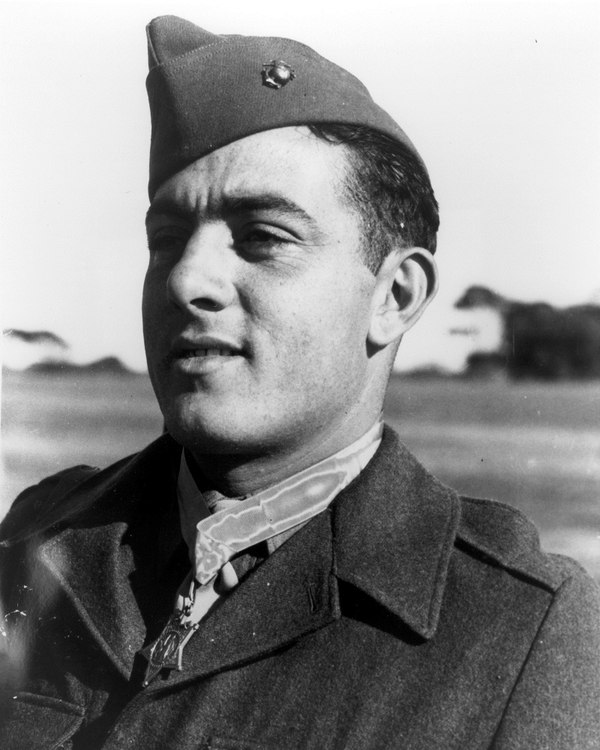
    Gunnery Sergeant John BasiloneGunnery Sergeant John Basilone became a Marine Corps legend for his actions on Guadalcanal.
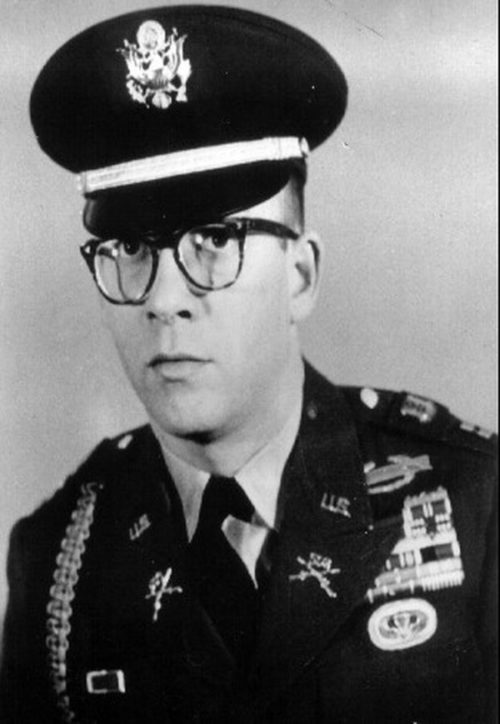
    The Navy Times has recently started a weekly “Valor Friday” article to highlight the exceptional bravery demonstrated by our armed forces in conflicts around the globe.

    Today’s VF is dedicated to Gunnery Sergeant John Basilone, and his activities during the night of October 24, 1942, in the jungles of Guadalcanal.

    Then-Sgt. Basilone was commanding two heavy .30-caliber machine gun sections from First Battalion, Seventh Marines, that were tasked with holding a narrow pass at the Tenaru River.

    As the small crews of Marines dug in for the night, a Japanese regiment numbering 3,000 men attacked the line, hammering the Marines with grenades and mortar fire. Wave after wave were kept at bay by the small teams of Marines, until one of the gun crews was disabled by enemy fire.

    AWARDS BY DATE OF ACTION:
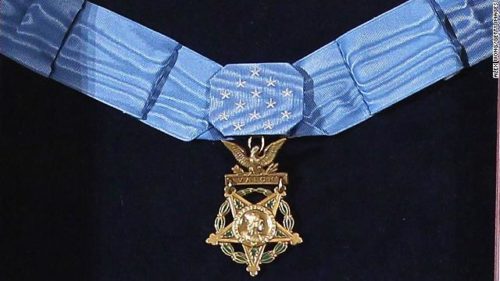
    Medal of Honor
    AWARDED FOR ACTIONS
    DURING World War II
    Service: Marine Corps
    Battalion: 1st Battalion
    Division: 1st Marine Division
    GENERAL ORDERS:

    CITATION:

    The President of the United States of America, in the name of Congress, takes pleasure in presenting the Medal of Honor to Sergeant John Manila John” Basilone (MCSN: 287506), United States Marine Corps, for extraordinary heroism and conspicuous gallantry in action against enemy Japanese forces, above and beyond the call of duty, while serving with the First Battalion, Seventh Marines, FIRST Marine Division in the Lunga Area. Guadalcanal, Solomon Islands, on the night of 24 – 25 October 1942. While the enemy was hammering at the Marines’ defensive positions, Sergeant Basilone, in charge of two sections of heavy machineguns, fought valiantly to check the savage and determined assault. In a fierce frontal attack with the Japanese blasting his guns with grenades and mortar fire, one of Sergeant Basilone’s sections, with its guncrews, was put out of action, leaving only two men able to carry on. Moving an extra gun into position, he placed it in action, then, under continual fire, repaired another and personally manned it, gallantly holding his line until replacements arrived. A little later, with ammunition critically low and the supply lines cut off, Sergeant Basilone, at great risk of his life and in the face of continued enemy attack, battled his way through hostile lines with urgently needed shells for his gunners, thereby contributing in large measure to the virtual annihilation of a Japanese regiment. His great personal valor and courageous initiative were in keeping with the highest traditions of the U.S. Naval Service.

    On February 19, 1945, Basilone stormed Red Beach on Iwo Jima. Pinned down by enemy machine gun fire, he led his gunners up the steep black sand, kicking his inexperienced Marines to get off the beach as they hugged the ground for cover.

    Minutes after destroying a Japanese blockhouse, Basilone and four members of his platoon were killed when an enemy artillery shell exploded. He was 28 years old.

    Gunnery Sgt. Basilone would be posthumously awarded the the Purple Heart and the Navy Cross for his actions on Iwo.

    Amazing. The only words I can add are, fair winds an following seas, Gunny.

  • No rifle, no problem — soldier single-handedly killed dozens of enemies

    moh
    Military Times brings us this week’s Valor Friday

    Benjamin Wilson was in Hawaii when the Japanese unleashed their infamous attack on Pearl Harbor during the morning hours of Dec. 7, 1941.

    The Washington state native had enlisted in the Army as an infantryman only a year before the attack and found himself stationed at Oahu’s Schofield Barracks, watching as Japanese planes devastated the unsuspecting naval base.

    Despite the timing of his enlistment, however, Wilson would miss combat entirely during World War II, attending Officer Candidate School in 1942 and getting subsequently assigned to stateside training roles despite multiple requests by the young officer to lead men into combat.

    Ben WilsonBenjamin Wilson received both the Medal of Honor and Distinguished Service Cross for actions that took place within a week of each other. (Army)
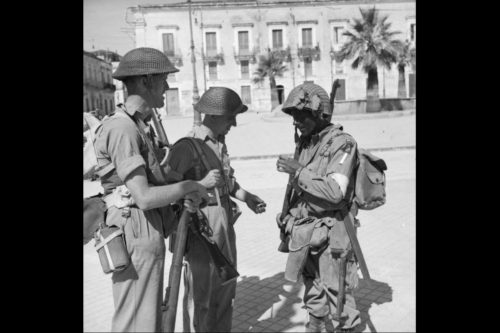
    At the war’s conclusion, Wilson would go back to Washington to work in a lumbar mill, but the life didn’t agree with him, and the desire to serve called Wilson back to the Army.

    Because the service was drawing down its officer ranks, Wilson signed back up as a private, but quickly rose through the ranks due to his previous experience.

    It didn’t take long before he found himself as a first sergeant on the front lines of the Korean War, where he would become a legend among his men.

    In June 1951, the men from I Company, 3rd Battalion, 31st Infantry Regiment were tasked with taking the largest hill overlooking the Hwachon Reservoir in what is now the northeastern region of South Korea. The hill would later become known as “Hell Hill.”

    A higher ranking soldier, Wilson could have easily directed the charge up the hill from a safer position, but after missing combat in WWII, he was practically salivating for battle.

    Wilson’s men quickly became pinned down by heavy machine gun fire as they made their way up the hill. Seemingly unfazed, the incensed first sergeant charged one of the machine gun bunkers and killed all four of its occupants with his rifle and grenades.

    He then rallied his men for a bayonet charge of the entrenched Chinese soldiers, an assault that killed 27. But as more men caught up and rejoined the forward line following the charge, the enemy launched a counterattack to retake the position.

    Sensing his men could be overrun, Wilson left cover and took off on a one-man charge across open ground against the oncoming enemy, killing seven and wounding two more as the rest scattered.

    With his men now organized, Wilson led another assault that reached within 15 yards of the objective before a wave of enemy fire stonewalled the advance.

    Wilson was wounded in the advance, but remained to provide cover fire after ordering his men to withdraw from the vulnerable position.

    When the company’s commanding officer and another platoon leader were hit by enemy fire, Wilson charged — alone once again — on the enemy trenches, killing three with his rifle before it was wrested from his hands in fierce hand-to-hand combat.

    Without hesitation, Wilson grabbed his entrenching tool and beat four more Chinese soldiers to death.

    His mad scramble provided the time necessary for his unit to arrange an orderly withdrawal, during which time Wilson was wounded once again. Despite his mounting injuries, he continued to provide cover fire as his men moved down the hill.

    Wilson would go on to receive the Medal of Honor for his herculean feats that day, but his story doesn’t end there.

    With his men safely evacuated, the injured Wilson finally vacated his forward position when he was carried down the hill on a stretcher by two soldiers. Half way down the hill, the soldiers set Wilson down so he could get patched up and rest.

    Rest evidently didn’t go over well with Wilson.

    Without saying a word, he ditched the stretcher and quietly made his way back up the hill to rejoin the most forward detachment, where only days later, he’d once again engage in ferocious combat.

    With his men pinned down once more while trying to take a separate hill, Wilson, with fresh wounds, again charged the enemy emplacements alone and personally repelled a counterattack over open terrain, killing a total of nine enemies and sending the rest into retreat.

    Only when his days-old wounds reopened did Wilson finally acquiesce to requests by his men to leave the battlefield and receive medical care.

    Once again, he was recommended for the Medal of Honor, but having already been put in for one for actions just days before, he received the Distinguished Service Cross instead.

    In the end, the man who regretted missing combat in World War II despite being present for the conflict’s opening shots retired from the Army a combat-hardened major in 1960 — he was commissioned once again upon returning to the U.S. from Korea.

    He passed away in 1988 at the age of 66.

    Where do we get such men? Fair winds and following seas, Major Wilson.

    (a little late this week, apologies)

  • One of the last legendary WWII soldiers to make four combat jumps into Europe has died

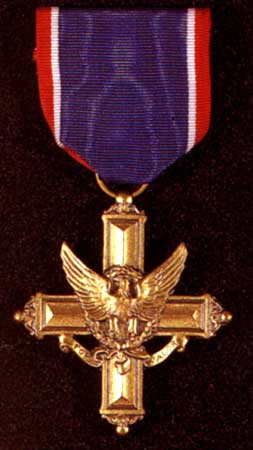
    505British troops of the 6th Battalion, Durham Light Infantry chat with an American paratrooper of the 505th PIR in Avola, Sicily, July 11, 1943. (Wikimedia)
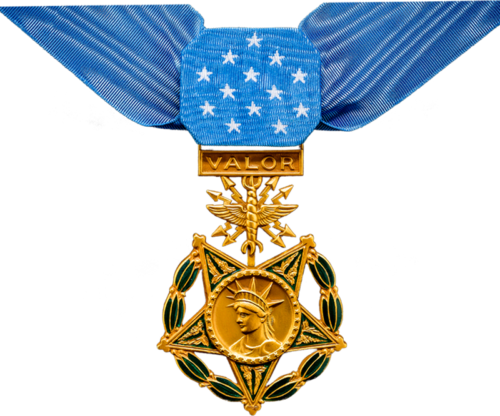
    Sad news about one of America’s Greatest Generation, who has passed.

    Former Staff Sgt. Russell Brown was one of the legendary paratroopers who made every combat jump during World War II, forever cementing his place in the history of the 82nd Airborne Division.

    Brown passed away Aug. 31 at the age of 96 in Georgetown, Kentucky, according to an obituary. A spokesman for the 82nd Airborne confirmed the Purple Heart recipient had been one of the lauded soldiers who parachuted into Salerno and Sicily, Italy, as well as Normandy, France, and Njimegen, Holland.

    His story was featured in “Four Stars of Valor: The Combat History of the 505th Parachute Infantry” and “All American, All the Way: The Combat History of the 82nd Airborne Division,” non-fiction accounts by Phil Nordyke, where he told the story of his time as a mortar squad leader with Brown, who had been a mortar squad leader with F Company.

    After the Army, Brown went to work as an explosives technician at DuPont and Co. He is survived by two daughters, 10 grandchildren and six great-grandchildren, according to his obituary.

    Fair winds and following seas, SSgt. Brown

    Army Times Link

  • Eight soldiers nominated for DSCs, Silver Stars for actions during deadly Niger attack

    DSC
    Army Times
    Seems Dave is unavailable, doubtless doing the Soviet’s bidding, so I’ll back him up.

    Posted at the request of AnotherPat.

    The team leader at the center of the investigation into a deadly ambush of a special operations unit in Niger last year has been recommended for an award for his valor in combat, the New York Times reported Thursday.

    Capt. Michael Perozeni, the Green Beret in charge of the mission, could receive a Silver Star for his actions, despite bearing some responsibility, according to the military’s investigation, for the botched mission. Seven more soldiers from that mission are also up for awards, according to the New York Times.

    “There will be awards for valor,” Marine Gen. Thomas Waldhauser. commander of U.S. Africa Command, told reporters when the Pentagon released the investigation in May.

    A Defense Department spokeswoman would not confirm Thursday whether Perozeni was on that list.

    “Individual members of the U.S. Special Operations team performed numerous acts of bravery while under fire on Oct. 4, 2017, and their actions are being reviewed for appropriate recognition,” Air Force Maj. Sheryll Klinkel said in a statement.

    Perozeni, according to the New York Times, was called out in the 8,000-page incident investigation for filing a misleading mission plan, taking 11 U.S. soldiers and 30 Nigeriens into a dangerous area without a back-up plan.

    According to the official report, the team was going after a key member of the local Islamic State cell, but did not obtain the higher-level approval required to step outside of their train-advise-assist mission with Nigerien counter-terrorism forces.

    The New York Times also reported that Perozeni had pushed back against the part of the mission that would turn deadly, but he was ordered by a lieutenant colonel based in Chad to continue the mission.

    When the soldiers came under attack, each of their eight vehicles — three U.S. vehicles and five Nigerien vehicles ? became separated from each other within minutes, in a kill zone that was thousands of yards long. Under heavy enemy fire, the vehicles had stopped, and U.S. and Nigerien forces exited to return fire.

    As enemy forces closed in, Perozeni made a string of split-second decisions to have the U.S. and Nigerien troops get back in their vehicles and pull back to avoid being flanked. But the vehicles ultimately lost contact with each other and did not immediately have visibility on the forces left behind.

    Four more soldiers are up for Silver Stars, the third-highest award for valor, the Times reported, and three are recommended for the Distinguished Service Cross ? the award second only to the Medal of Honor.

    All four soldiers killed in the ambush are under consideration: Staff Sgt. Dustin Wright and Sgt. La David Johnson for the Distinguished Service Cross, and Sgt. 1st Class Jeremiah Johnson and Staff Sgt. Bryan Black for the Silver Star.

    During the ambush, La David Johnson and two Nigeriens had been returning fire from outside his vehicle. He fired the vehicle’s M240 mounted machine gun until it ran out of bullets, then picked up an M2010 sniper rifle.

    When the call came to pull back, the three were trapped. Intense incoming fire kept La David Johnson from being able to reach the driver’s seat.

    So, they ran. The Nigeriens were shot; La David Johnson was the only one left. He ran the length of five football fields to reach the only cover in the area: a single thorny tree. He took his position and returned fire as an enemy truck with its own mounted machine gun closed in.

    His body was found two days later.

    Meanwhile, Black, Jeremiah Johnson and Wright were returning fire from outside the second U.S. vehicle.

    Jeremiah Johnson acknowledged the order to move out with a “thumbs up,” and another team member threw a smoke grenade to give them cover to move.

    Wright began driving their vehicle slowly forward, while Black and Johnson remained outside, using the vehicle as cover to continue firing.

    As Black moved slightly ahead of the vehicle, he was shot and killed by enemy fire.

    Jeremiah Johnson would fall next. Badly wounded by enemy fire, he could not continue on. Wright stayed beside him, returning fire until both were killed.

  • ‘Extraordinary Sacrifice:’ Trump Awards Medal of Honor to Fallen Airman

    af moh

    Posted at the request of AnotherPat.

    President Donald Trump posthumously awarded the Medal of Honor to Tech Sgt. John Chapman at a ceremony at the White House Wednesday, marking the first time a U.S. airman has received the military’s highest award for valor for operations in America’s longest war.

    It’s also the first time an airman has received the award in nearly 50 years.

    “We’re gathered together this afternoon to pay tribute to a fallen warrior, a great warrior, Technical Sergeant John Chapman, and to award him the nation’s highest and most revered military honor,” Trump said during the ceremony. “Now, John will become the first special tactics airman to receive the congressional Medal of Honor.”

    The president presented the award to Valerie Nessel, Chapman’s widow, in front of their two daughters Madison and Brianna, Chapman’s mother Terry and sister Lori. In the audience was Air Force Secretary Heather Wilson and Chief of Staff Gen David Goldfein, as well as other service leaders and members of Congress. Former Air Force secretary Deborah Lee James, who aided in pushing Chapman’s medal elevation through, was also among airmen.

    Special tactics airmen lined the seats of the East Room for their fellow fallen airman. The official Air Force band played “I’ll Be There” as guests arrived before the ceremony.

    Sitting among five past Medal of Honor recipients was Britt K. Slabinski, who led the SEAL Team 6 unit up Takur Ghar mountain during the mission on March 4, 2002.

    Slabinski, now a retired master chief special warfare operator, was awarded the Medal of Honor in May for his own heroism during the costly battle.

    Chapman “was a very brave man, right from the beginning.” Trump said. “Today it is our great honor to share his incredible story with the world.”

    Trump summarized the account of how Chapman had led a charge up Takur Ghar to find Petty Officer 1st Class Neil Roberts, a SEAL who was flung out of his helicopter when it crash-landed on the mountain. He fell wounded in his first assault on the enemy, but would regain consciousness and fight on. Air Force officials would determine he fought for more than an hour after his team had presumed him dead.

    “Even though he was mortally wounded John regained consciousness and continued to fight on, and he really fought on. We have proof of that fight. He really fought. Good genes,” Trump said. “Through his extraordinary sacrifice, John helped save more than 20 American service members, some of whom are here today.”

    Army Sergeant Major Raymond DePouli and special tactics Air Force Maj. Gabriel Brown were also acknowledged in the audience.

    “I know that if John were here, he would attest that all the men on the mountaintop that day were heroes,” Nessel said on Tuesday.

    Nessel and Terry Chapman spoke to reporters outside Washington, D.C., a day ahead of her late husband’s ceremony at the White House. They were accompanied by Chapman’s former squadron commander, retired Col. Kenneth Rodriguez.

    “It’s team before self,” Nessel said.

    Read the article in it’s entirety here:

    Military Daily Link

  • Daesh Commander in Fallujah Is . . . Gone

    Score one for civilization.

    The former Daesh commander in Fallujah, Maher al-Bilawi, has ceased sstealing oxygen from Mother Earth.  He was killed in a US airstrike last Wednesday.

    The airstrike was the result of locally-developed intelligence. While al-Bilawi wasn’t considered a “big fish” in the Daesh world, any terrorist bastard beginning the long dirtnap is IMO a good thing.

    The linked article from Fox has more details.  Well done, guys.