Category: The Warrior Code

  • Valor Friday

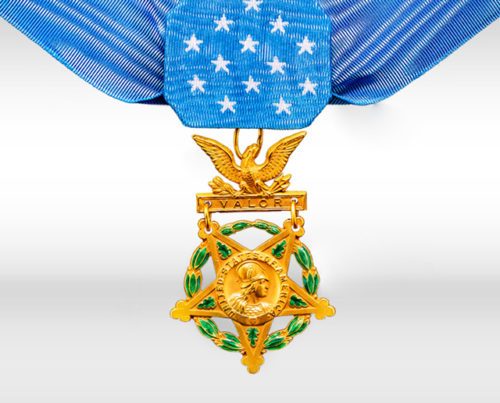
    army moh

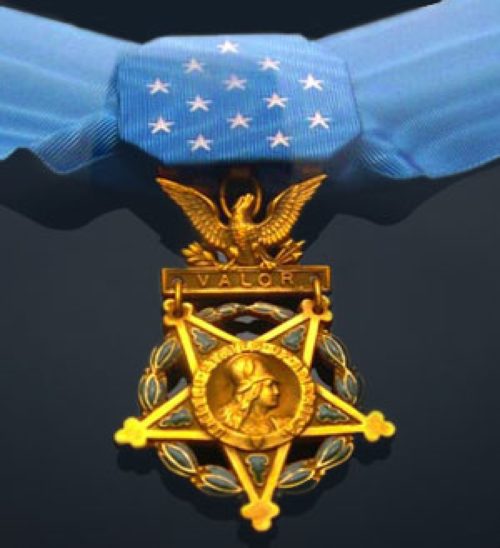
    Today’s Valor Friday honors Maurice “Footsie” Britt, USA, and chronicles his acts of heroism in WWII, from North Africa, to Sicily and finally Italy. Footsie survived the war, and like many quiet heroes, he continued to serve through elected office and Presidential appointment. Here’s his story, as sent to me by one who wishes to remain anonymous.

    Maurice is not a name one associates with fierceness, and the nickname “Footsie” conjures a soft, playful image, not a rugged one. But Maurice “Footsie” Britt was both fierce and rugged, a man the enemy repeatedly tried to kill but who denied them again and again.

    “Footsie” Britt was a handsome man who stood 6’4” and weighed more than 200 lbs. In high school, he was a gifted student and a gifted athlete who excelled at basketball and football. He was valedictorian of his class and attended the University of Arkansas on a dual scholarship. Despite the demands of studies and sports, he joined the ROTC. He was commissioned an officer upon graduation and was drafted by the Detroit Lions to play football. The Army granted him a temporary deferment to play ball and in 1941, at age 22, he started in nine of the Lions’ 11 games. Then came Pearl Harbor and the abrupt end to Britt’s deferment and football career.

    Britt was an infantry officer whose first combat experience came in North Africa in late 1942, followed by action in Italy at Sicily and Salerno in 1943. In a place called Acerno, he was wounded the first of four times during the war. He also prevailed against an enemy machine gun and, for that action, was awarded the Silver Star. At Sicily, his company was stopped by a well concealed enemy machine gun. The infantrymen knew it was there but could not see it. Britt devised a simple plan. He rose and began doing jumping jacks to draw enemy fire. It worked. The enemy fired, revealing itself, and was destroyed, but not before a round tore a chunk from Britt’s arm. For that, Britt received the Distinguished Service Cross but lost the possibility of returning to pro football after the war. The place where Britt did his famous cals was immediately renamed “Britt’s Junction” and one can easily imagine the account of Britt’s impromptu PT being told and retold among the grunts! Such is the stuff of legend.

    In Italy, Britt also received a Bronze Star w/ V Device and was promoted to captain in the field. Then came 10 November 1943, the account of which follows below in his Medal of Honor citation.

    After the war, “Footsie” returned to the University of Arkansas where he studied law but withdrew to pursue a business career. In 1966, he was elected lieutenant governor of Arkansas and was later appointed by President Nixon to the Small Business Administration. He died in 1995 at the age of 76.

    War Department, General Orders No. 23 (March 24, 1944)
    CITATION:
    The President of the United States of America, in the name of Congress, takes pleasure in presenting the Medal of Honor to Captain (Infantry) Maurice Lee “Footsie” Britt, United States Army, for conspicuous gallantry and intrepidity at the risk of his life above and beyond the call of duty while serving with Company L, 3d Battalion, 30th Infantry Regiment, 3d Infantry Division. Disdaining enemy hand grenades and close-range machine pistol, machinegun, and rifle fire, Lieutenant Britt inspired and led a handful of his men in repelling a bitter counterattack by approximately 100 Germans against his company positions north of Mignano, Italy, the morning of 10 November 1943. During the intense fire fight, Lieutenant Britt’s canteen and field glasses were shattered; a bullet pierced his side; his chest, face, and hands were covered with grenade wounds. Despite his wounds, for which he refused to accept medical attention until ordered to do so by his battalion commander following the battle, he personally killed five and wounded an unknown number of Germans, wiped out one enemy machinegun crew, fired five clips of carbine and an undetermined amount of Ml rifle ammunition, and threw 32 fragmentation grenades. His bold, aggressive actions, utterly disregarding superior enemy numbers, resulted in capture of four Germans, two of them wounded, and enabled several captured Americans to escape. Lieutenant Britt’s undaunted courage and prowess in arms were largely responsible for repulsing a German counterattack which, if successful, would have isolated his battalion and destroyed his company.

    Hand Salute. Ready, Two! Fair wind and following seas, Captain.
  • Valor Friday

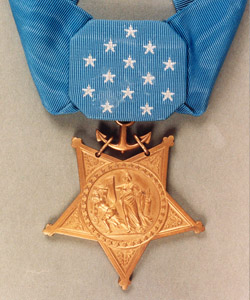
    usn moh
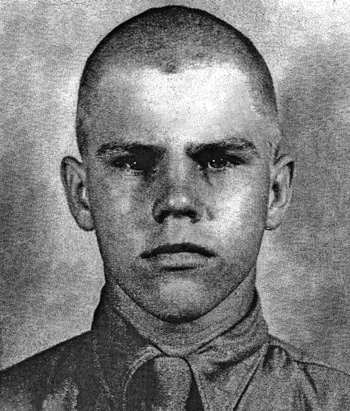
    Today’s Valor Friday honors Robert Charles Burke, USMC, who served with distinction in Viet Nam. Unfortunately, he did not survive the conflict. This is his story, as forwarded to me by one who wishes to remain anonymous.

    Some 18-year olds are seniors in high school. Others are college freshmen. Still others work a job or do nothing of value at all. When Robert Charles Burke was 17 and still in high school, he joined the USMC Reserve. A couple of months later, he enlisted in the Marines. He was trained as a mechanic but when he was sent to Vietnam in February 1968, he dropped his wrenches and picked up an M60 with I Company, 3rd Battalion, 27th Marines, 1st Marine Division (Reinforced). After three months in country, Burke’s company was leading a column of the 3/27 when it was ambushed by a strongly entrenched PAVN force near the hamlet of Le Nam on Go Noi Island. The furious and accurate enemy fire resulted in 88 casualties for I Company, including 20 KIA. Burke’s response to the ambush was to aggressively attack, using his M60 first and, when that jammed, a rifle and grenades taken from a casualty, and then back to his M60, now cleared. The bold, aggressive, and selfless action saved many of his fellow Marines and, in exchange, cost him his life.

    Robert C. Burke of Monticello, Illinois was the youngest recipient of the Medal of Honor during the Vietnam war. A six-acre park bears his name in his home town. Forever 18. Forever a Marine. Here is the official account of his valor, memorialized on the citation and immortalized in the valorous history of the US military and the United States Marine Corps:

    Citation:
    The President of the United States of America, in the name of Congress, takes pride in presenting the Medal of Honor (Posthumously) to Private First Class Robert Charles Burke (MCSN: 2359360), United States Marine Corps, for conspicuous gallantry and intrepidity at the risk of his life above and beyond the call of duty as a machine gunner with Company I, Third Battalion, Twenty-Seventh Marines, FIRST Marine Division (Reinforced), Fleet Marine Force, in action at Le Nam (1), Go Nai Island, southern Quang Nam Province, Republic of Vietnam on 17 May 1968. While on Operation ALLEN BROOK, Company I was approaching a dry river bed with a heavily wooded tree line that borders the hamlet of Le Nam (1), when they suddenly came under intense mortar, rocket propelled grenades, automatic weapons and small-arms fire from a large, well concealed enemy force which halted the company’s advance and wounded several Marines. Realizing that key points of resistance had to be eliminated to allow the units to advance and casualties to be evacuated, Private First Class Burke, without hesitation, seized his machinegun and launched a series of one man assaults against the fortified emplacements. As he aggressively maneuvered to the edge of the steep river bank, he delivered accurate suppressive fire upon several enemy bunkers, which enabled his comrades to advance and move the wounded Marines to positions of relative safety. As he continued his combative actions, he located an opposing automatic weapons emplacement and poured intense fire into the position, killing three North Vietnamese soldiers as they attempted to flee. Private First Class Burke then fearlessly moved from one position to another, quelling the hostile fire until his weapon malfunctioned. Obtaining a casualty’s rifle and hand grenades, he advanced further into the midst of the enemy fire in an assault against another pocket of resistance, killing two more of the enemy. Observing that a fellow Marine had cleared his malfunctioning machinegun he grasped his weapon and moved into a dangerously exposed area and saturated the hostile tree line until he fell mortally wounded. Private First Class Burke’s gallant actions upheld the highest traditions of the Marine Corps and the United States Naval Service. He gallantly gave his life for his country.

    Hand Salute. Ready, Two! Fair winds and following seas, Marine.

  • Valor Friday

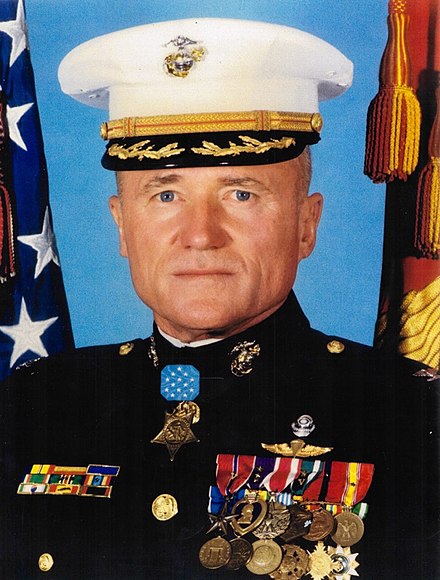
    Col. Fox

    Wesley Lee Fox (September 30, 1931 – November 24, 2017) was a United States Marine Corps Colonel with 43 years of service. Fox received the Medal of Honor for his heroic actions during the Vietnam War, and is considered to be one of the Marine Corps’ legendary heroes. During his career, he held every enlisted rank except sergeant major and every officer rank except the general officer ranks. After retiring from the Marines Corps, he wrote a book about his career — Marine Rifleman: Forty-Three Years in the Corps; and, he served for 8 years as Deputy Commandant for the Virginia Tech Corps of Cadets.

    Citation
    For conspicuous gallantry and intrepidity at the risk of his life above and beyond the call of duty while serving as commanding officer of Company A, in action against the enemy in the northern A Shau Valley. Capt. (then 1st Lt.) Fox’s company came under intense fire from a large well concealed enemy force. Capt. Fox maneuvered to a position from which he could assess the situation and confer with his platoon leaders. As they departed to execute the plan he had devised, the enemy attacked and Capt. Fox was wounded along with all of the other members of the command group, except the executive officer. Capt. Fox continued to direct the activity of his company. Advancing through heavy enemy fire, he personally neutralized 1 enemy position and calmly ordered an assault against the hostile emplacements. He then moved through the hazardous area coordinating aircraft support with the activities of his men. When his executive officer was mortally wounded, Capt. Fox reorganized the company and directed the fire of his men as they hurled grenades against the enemy and drove the hostile forces into retreat. Wounded again in the final assault, Capt. Fox refused medical attention, established a defensive posture, and supervised the preparation of casualties for medical evacuation. His indomitable courage, inspiring initiative, and unwavering devotion to duty in the face of grave personal danger inspired his marines to such aggressive action that they overcame all enemy resistance and destroyed a large bunker complex. Capt. Fox’s heroic actions reflect great credit upon himself and the Marine Corps, and uphold the highest traditions of the U.S. Naval Service.

    His awards include, besides the CMOH:
    Bronze Star w/ Combat “V”
    Purple Heart w/ three Gold Stars
    Meritorious Service Medal
    Joint Service Commendation Medal
    Navy and Marine Corps Commendation Medal w/ Combat “V”
    Combat Action Ribbon w/ one Gold Star
    Navy Presidential Unit Citation
    Army Presidential Unit Citation
    Navy Unit Commendation
    Navy Meritorious Unit Commendation w/ four Bronze Stars
    Marine Corps Good Conduct Medal w/ four Bronze Stars
    National Defense Service Medal w/ two Bronze Stars
    Korean Service Medal w/ three Bronze Stars
    Vietnam Service Medal w/ one Silver Star and one ?Bronze Star
    Navy Sea Service Deployment Ribbon w/ three Bronze Stars
    Navy Arctic Service Ribbon
    Republic of Vietnam Gallantry Cross w/ two Silver Stars
    Armed Forces Honor Medal, 1st class (Vietnam)
    Republic of Korea Presidential Unit Citation
    Republic of Vietnam Meritorious Unit Citation (Gallantry Cross) w/ Palm and Frame
    United Nations Korea Medal
    Republic of Vietnam Campaign Medal w/ 1960- Device
    Republic of Korea War Service Medal

    Fair winds and following seas, Col. Fox.

  • Valor Friday

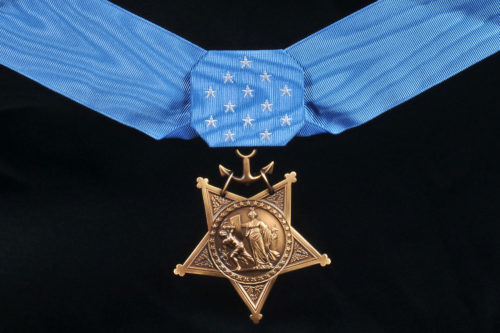
    moh
    A Short Time with Charley
    By Poetrooper

    Staff Sergeant Morris was my roommate for a brief time when we were both assigned to the 82d Airborne Division upon returning from Vietnam. Charley was waiting for quarters to come available so he could move his wife and son down from Virginia, while I was a bachelor and along with Charley, one of two E-6’s living in the barracks, a privilege fraught with unwanted responsibilities such as helping the Charge of Quarters in breaking up late night fights in the platoon bays far too frequently.

    Charley and I weren’t buddies, likely because he was a decade older, married, and a far more experienced infantry NCO than me, the brigade CBR NCO, a mere technical staff wienie to a hard-charging grunt like him, so he maintained his distance. We were only together a few weeks until his quarters cleared. We all knew he had been selected for the MoH but Charley absolutely would not talk about it, freezing out any person, even superiors, who asked about his experiences, with a steely stare and a mumbled excuse about having something else to do. However, at night he frequently re-fought his battles in his sleep, groaning, yelling, punching and kicking his blankets, shouting orders to his squad, all without ever waking. I soon learned not to wake him because it seemed to upset him that I was witnessing his nightmares. He may have seen it as weakness; remember, PTSD had yet to be recognized at that time although many of us who fought in Vietnam certainly felt its effects.

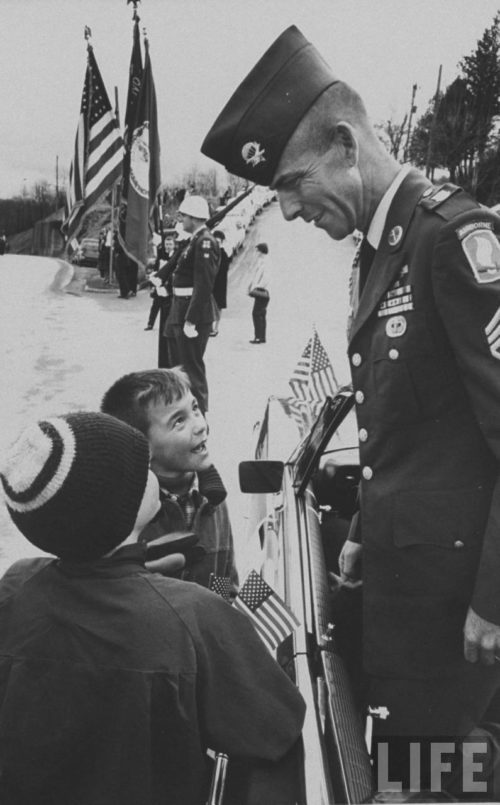
    charley“Yes kids, this is what a real hero looks like!”
    Charley went on to become a Command Sergeant Major and I’ll bet he was a tough but good one. He died too young as the good ones often do. He didn’t start out to be a career soldier as I learned from a recently discovered hometown website, the Galax Scrapbook, but rather was drafted in 1952 and after training at Fort Leonard Wood was sent to Korea where he apparently earned a Purple Heart. Discharged in 1954, Charley returned to Virginia and worked in the hometown glass plant for seven years before returning to the Army in 1961, only to exit again after his three year enlistment ended. That second civilian hiatus lasted but three months after which Charley made the Army his career, retiring in 1981.

    Searching for information on CSM Morris to include with Ed’s Valor Friday piece, I was surprised to learn Charley also was awarded the Distinguished Service Cross. The Galax website has a picture of LBJ pinning it on him in Vietnam in 1966. I was also unaware of his many wounds or how many troopers’ lives he saved until I found some first person accounts on an old 173rd Airborne unit website, pages 7-10. It is a much more revealing portrayal of this man’s heroism than the dry formal language of the military citation. Read it and tell me this wasn’t one bad-ass paratrooper. Hell, if I’d known that when he was my roomie, I would likely have been spit-shining his jump boots and polishing his brass. I truly had no idea.

    At the Galax Scrapbook website there’s also a picture of LBJ awarding SSGT Morris his Medal of Honor. But of all the pictures of Charley at his Galax homecoming parade following the award, the LIFE magazine photo above is my favorite with that caption, “Yes kids, this is what a real hero looks like!” How very true.
    Rest in a well-earned peace, Sergeant Major. It is a high honor to have known you, however briefly.

    CSM Morris Find a Grave site: https://www.findagrave.com/memorial/8080642/charles-bedford-morris
    CSM Morris Wikipedia page: https://en.wikipedia.org/wiki/Charles_B._Morris

    Staff Sergeant Morris’ Medal of Honor citation:

    For conspicuous gallantry and intrepidity at the risk of his life above and beyond the call of duty. Seeing indications of the enemy’s presence in the area, S/Sgt. Morris deployed his squad and continued forward alone to make a reconnaissance. He unknowingly crawled within 20 meters of an enemy machinegun, whereupon the gunner fired, wounding him in the chest. S/Sgt. Morris instantly returned the fire and killed the gunner. Continuing to crawl within a few feet of the gun, he hurled a grenade and killed the remainder of the enemy crew. Although in pain and bleeding profusely, S/Sgt. Morris continued his reconnaissance. Returning to the platoon area, he reported the results of his reconnaissance to the platoon leader. As he spoke, the platoon came under heavy fire. Refusing medical attention for himself, he deployed his men in better firing positions confronting the entrenched enemy to his front. Then for 8 hours the platoon engaged the numerically superior enemy force. Withdrawal was impossible without abandoning many wounded and dead. Finding the platoon medic dead, S/Sgt. Morris administered first aid to himself and was returning to treat the wounded members of his squad with the medic’s first aid kit when he was again wounded. Knocked down and stunned, he regained consciousness and continued to treat the wounded, reposition his men, and inspire and encourage their efforts. Wounded again when an enemy grenade shattered his left hand, nonetheless he personally took up the fight and armed and threw several grenades which killed a number of enemy soldiers. Seeing that an enemy machinegun had maneuvered behind his platoon and was delivering the fire upon his men, S/Sgt. Morris and another man crawled toward the gun to knock it out. His comrade was killed and S/Sgt. Morris sustained another wound, but, firing his rifle with 1 hand, he silenced the enemy machinegun. Returning to the platoon, he courageously exposed himself to the devastating enemy fire to drag the wounded to a protected area, and with utter disregard for his personal safety and the pain he suffered, he continued to lead and direct the efforts of his men until relief arrived. Upon termination of the battle, important documents were found among the enemy dead revealing a planned ambush of a Republic of Vietnam battalion. Use of this information prevented the ambush and saved many lives. S/Sgt. Morris’ gallantry was instrumental in the successful defeat of the enemy, saved many lives, and was in the highest traditions of the U.S. Army.

  • Valor Friday

    moh army

    Highlighting MAJ Charles Q. Williams at the request of rgr769.

    In a battle for the district capital of Phuc Long Province in the III Corps area about 60 miles northeast of Saigon in the country of Viet Nam, Special Forces 2LT Charles Q. Williams would distinguish himself in the battle of the Dong Xoai CIDG camp and later be awarded the Medal of Honor.

    In the same action, CM3 Marvin Shields, Navy Seabee would posthumously be awarded the Medal of Honor for his actions.

    Dong Xoai was home to 400 Montagnard CIDG strikers and 24 US troops including Special Forces and Navy Seabees. On the dates of 9-10 June, the Viet Cong, with North Vietnamese Support attacked the base with 1500 guerrillas armed with AK-47s, grenades, rocket-propelled grenades, rocket launchers and flamethrowers.

    The 14-hour battle would leave 20 of the Americans either killed or wounded along with 200 Vietnamese strikers and civilians. Vietcong dead numbered between 500-700.

    Williams was the XO (Executive Officer) of the Special Forces A-Camp when the Vietcong began massing for an attack on the camp late on June 9. The Americans were aware of the buildup outside the camp and placed their troops on full alert.

    This caused the Vietcong to begin their attack over an hour early, and at 2330 they began to mortar the camp, hitting both Vietnamese and US positions before an infantry assault by the 272nd Regiment

    Many thanks to Special Operations.com and Steve Balestrieri for the background.

    First Lieutenant Williams’ official Medal of Honor citation reads:

    1st Lt. Williams distinguished himself by conspicuous gallantry and intrepidity at the risk of his life above and beyond the call of duty while defending the Special Forces Camp against a violent attack by hostile forces that lasted for 14 hours. 1st Lt. Williams was serving as executive officer of a Special Forces Detachment when an estimated Vietcong reinforced regiment struck the camp and threatened to overrun it and the adjacent district headquarters. He awoke personnel, organized them, determined the source of the insurgents’ main effort and led the troops to their defensive positions on the south and west walls. Then, after running to the District Headquarters to establish communications, he found that there was no radio operational with which to communicate with his commanding officer in another compound. To reach the other compound, he traveled through darkness but was halted in this effort by a combination of shrapnel in his right leg and the increase of the Vietcong gunfire. Ignoring his wound, he returned to the district headquarters and directed the defense against the first assault. As the insurgents attempted to scale the walls and as some of the Vietnamese defenders began to retreat, he dashed through a barrage of gunfire, succeeded in rallying these defenders, and led them back to their positions. Although wounded in the thigh and left leg during this gallant action, he returned to his position and, upon being told that communications were reestablished and that his commanding officer was seriously wounded, 1st Lt. Williams took charge of actions in both compounds. Then, in an attempt to reach the communications bunker, he sustained wounds in the stomach and right arm from grenade fragments. As the defensive positions on the walls had been held for hours and casualties were mounting, he ordered the consolidation of the American personnel from both compounds to establish a defense in the district building. After radio contact was made with a friendly air controller, he disregarded his wounds and directed the defense from the District building, using descending flares as reference points to adjust air strikes. By his courage, he inspired his team to hold out against the insurgent force that was closing in on them and throwing grenades into the windows of the building. As daylight arrived and the Vietcong continued to besiege the stronghold, firing a machinegun directly south of the district building, he was determined to eliminate this menace that threatened the lives of his men. Taking a 3.5 rocket launcher and a volunteer to load it, he worked his way across open terrain, reached the berm south of the district headquarters, and took aim at the Vietcong machinegun 150 meters away. Although the sight was faulty, he succeeded in hitting the machinegun. While he and the loader were trying to return to the district headquarters, they were both wounded. With a fourth wound, this time in the right arm and leg, and realizing he was unable to carry his wounded comrade back to the district building, 1st Lt. Williams pulled him to a covered position and then made his way back to the district building where he sought the help of others who went out and evacuated the injured soldier. Although seriously wounded and tired, he continued to direct the air strikes closer to the defensive position. As morning turned to afternoon and the Vietcong pressed their effort with direct recoilless rifle fire into the building, he ordered the evacuation of the seriously wounded to the safety of the communications bunker. When informed that helicopters would attempt to land as the hostile gunfire had abated, he led his team from the building to the artillery position, making certain of the timely evacuation of the wounded from the communications area, and then on to the pickup point. Despite resurgent Vietcong gunfire, he directed the rapid evacuation of all personnel. Throughout the long battle, he was undaunted by the vicious Vietcong assault and inspired the defenders in decimating the determined insurgents. 1st Lt. Williams’ extraordinary heroism, are in the highest traditions of the U.S. Army and reflect great credit upon himself and the Armed Forces of his country.

  • Valor Friday

    moh navy

    Corporal Abrell
    Corporal Abrell

    Today’s Valor Friday’s honors go to Corporal Charles G. Abrell, USMC. He was born on August 12, 1931 in Terre Haute, Indiana, and grew up in Las Vegas, Nevada. He enlisted in the United States Marine Corps just five days after his 17th birthday in 1948. Following recruit training at Marine Corps Recruit Depot Parris Island, South Carolina, he was assigned to Marine Corps Base Camp Lejeune, North Carolina, and also served aboard the USS Noble before going to Korea with the 1st Marine Division. He was in combat at Inchon, Seoul, Wonsan, Chosin Reservoir, and Hanghum.

    Medal of Honor Citation
    For conspicuous gallantry and intrepidity at the risk of his life above and beyond the call of duty while serving as a fire team leader in Company E, in action against enemy aggressor forces. While advancing with his platoon in an attack against well-concealed and heavily fortified enemy hill positions, Cpl. Abrell voluntarily rushed forward through the assaulting squad which was pinned down by a hail of intense and accurate automatic-weapons fire from a hostile bunker situated on commanding ground. Although previously wounded by enemy hand grenade fragments, he proceeded to carry out a bold, single-handed attack against the bunker, exhorting his comrades to follow him. Sustaining 2 additional wounds as he stormed toward the emplacement, he resolutely pulled the pin from a grenade clutched in his hand and hurled himself bodily into the bunker with the live missile still in his grasp. Fatally wounded in the resulting explosion which killed the entire enemy guncrew within the stronghold, Cpl. Abrell, by his valiant spirit of self-sacrifice in the face of certain death, served to inspire all his comrades and contributed directly to the success of his platoon in attaining its objective. His superb courage and heroic initiative sustain and enhance the highest traditions of the U.S. Naval Service. He gallantly gave his life for his country.

    No greater love…

    Thanks to The Congressional Medal of Honor Society

  • Valor Friday

    army moh
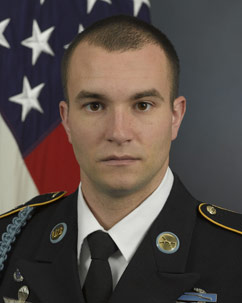
    Today’s Valor Friday is dedicated to Staff Sergeant Salvatore A. Giunta, of B Company, 2nd Battalion, 503rd Airborne Infantry Regiment, 173rd Airborne Brigade Combat Team, V Corps, Vicenza, Italy.

    He participated in two combat deployments to Afghanistan. His first combat deployment was during Operation Enduring Freedom VI, March 2005 to March 2006. His second combat deployment to Afghanistan was during Operation Enduring Freedom VIII, May 2007 to July 2008. During this second deployment, on October 25, 2007, Staff Sgt. Giunta’s platoon (in which he was then a specialist serving as a rifle team leader) was ambushed in the rugged Korengal Valley of eastern Afghanistan.

    mohStaff Sgt. Giunta

    Citation
    The President of the United States of America, authorized by Act of Congress, March 3, 1863, has awarded, in the name of Congress, the Medal of Honor to
    Specialist Salvatore A. Giunta

    United States Army

    For conspicuous gallantry and intrepidity at the risk of his life above and beyond the call of duty:

    Specialist Salvatore A. Giunta distinguished himself conspicuously by gallantry and intrepidity at the risk of his life above and beyond the call of duty in action with an armed enemy in the Korengal Valley, Afghanistan, on October 25, 2007. While conducting a patrol as team leader with Company B, 2d Battalion (Airborne), 503d Infantry Regiment, Specialist Giunta and his team were navigating through harsh terrain when they were ambushed by a well-armed and well-coordinated insurgent force. While under heavy enemy fire, Specialist Giunta immediately sprinted towards cover and engaged the enemy. Seeing that his squad leader had fallen and believing that he had been injured, Specialist Giunta exposed himself to withering enemy fire and raced towards his squad leader, helped him to cover, and administered medical aid. While administering first aid, enemy fire struck Specialist Giunta’s body armor and his secondary weapon. Without regard to the ongoing fire, Specialist Giunta engaged the enemy before prepping and throwing grenades, using the explosions for cover in order to conceal his position. Attempting to reach additional wounded fellow soldiers who were separated from the squad, Specialist Giunta and his team encountered a barrage of enemy fire that forced them to the ground. The team continued forward and upon reaching the wounded soldiers, Specialist Giunta realized that another soldier was still separated from the element. Specialist Giunta then advanced forward on his own initiative. As he crested the top of a hill, he observed two insurgents carrying away an American soldier. He immediately engaged the enemy, killing one and wounding the other. Upon reaching the wounded soldier, he began to provide medical aid, as his squad caught up and provided security. Specialist Giunta’s unwavering courage, selflessness, and decisive leadership while under extreme enemy fire were integral to his platoon’s ability to defeat an enemy ambush and recover a fellow American soldier from the enemy. Specialist Salvatore A. Giunta’s extraordinary heroism and selflessness above and beyond the call of duty are in keeping with the highest traditions of military service and reflect great credit upon himself, Company B, 2d Battalion (Airborne), 503d Infantry Regiment, and the United States Army.

    Thanks to US Army Center of Military History

  • …so that others might live.

    This is John Williams’ “Hymn to the Fallen” with an accompanying video of World War I and II cemeteries.

    And for as long as I breathe air,

    You shall be bright, and good, and fair….