Category: Terror War

  • Boston terrorists sought to behead officers

    Boston terrorists sought to behead officers

    Usaama Rahim

    Fox News reports that two terrorists, Usaama Rahim and David Wright, were plotting to behead a police officer, any police officer, in Boston. Rahim is only plotting to push up daisies today;

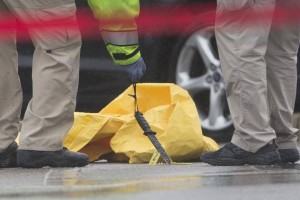
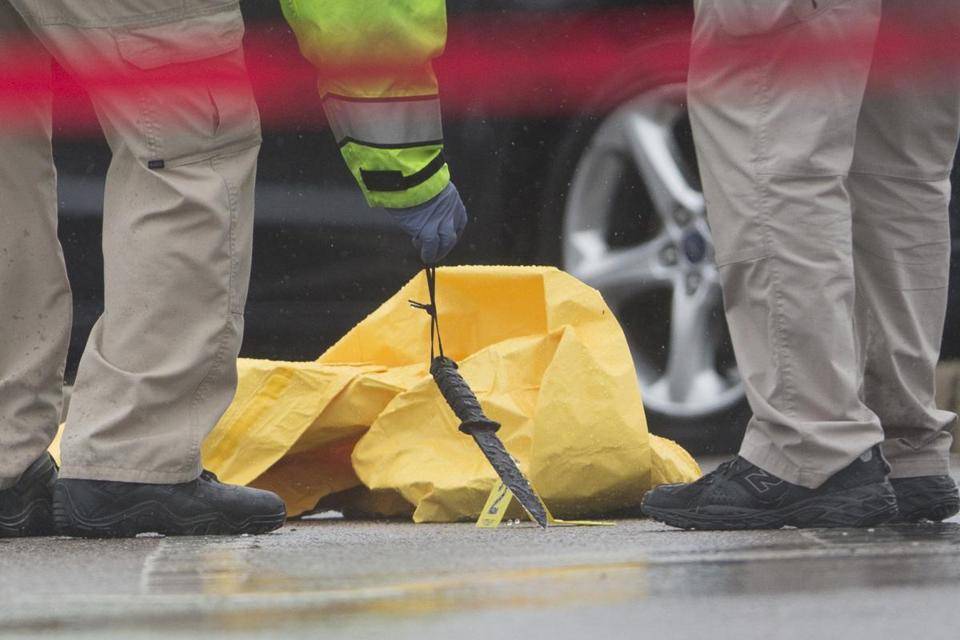
    Rahim, was under surveillance by the Joint Terrorism Task Force when he was shot at about 7 a.m. near a CVS in the city’s Roslindale neighborhood, when he brandished the blade at police. Later Tuesday, authorities arrested another suspect, David Wright, in connection with the case, police said.

    “We believe the intent was to behead a police officer,” one official told The Boston Globe. “We knew the plot had to be stopped. They were planning to take action Tuesday.”

    Rahim was shot outside a CVS Pharmacy in Roslindale, Mass. at approximately 7 a.m. Tuesday.

    Rahim was confronted by police and he continued to menace them with his knife until police got tired of playing nice with him and then ventilated him. The article says that he came to the attention of the Joint Terrorism Task Force because of his activities, whatever that means. Of course, the knife-wielding terrorist isn’t without his defenders;

    Rahim’s brother Ibrahim Rahim…said in a Facebook posting that his youngest brother was killed while waiting at a bus stop to go to his job.

    “He was confronted by three Boston Police officers and subsequently shot in the back three times,” he wrote. “He was on his cellphone with my dear father during the confrontation needing a witness.”

    Poor fella.

    The police also won’t say if Usaama Rahim was influenced by ISIS in some way, but that really doesn’t matter, I suppose. His intentions are all that is important.

  • Tajiks’ Gulmurod Khalimov defects to ISIS

    Tajiks’ Gulmurod Khalimov defects to ISIS

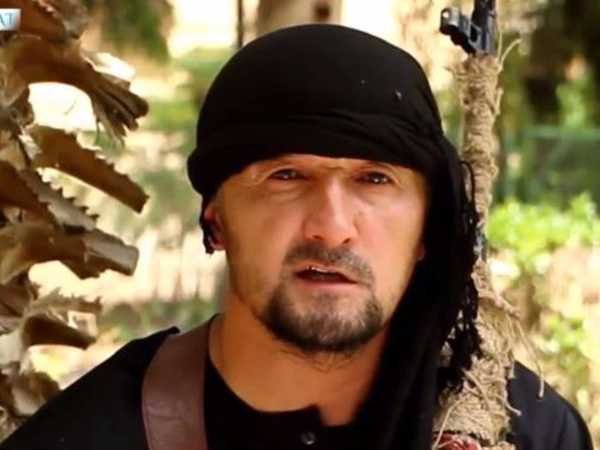
    Gulmurod Khalimov

    John S sends us a link to the Washington Post which reports that Colonel Gulmurod Khalimov, the commander of Tajikistan’s special forces defected to ISIS in Syria while everyone wondered where he went. According to multiple news sources, Khalimov was trained by US special forces as well as the Russian Spetznatz. He had a special message for Americans in the video that he made, speaking Russian;

    “Listen, you American pigs, I’ve been three times to America, and I saw how you train fighters to kill Muslims,” he said. “God willing, I will come with this weapon to your cities, your homes, and we will kill you.”

    God willing, yes you will. “A rifle behind each blade of grass”. Sound familiar, Gullie?

    Cometh1

    How’s that whole “smart diplomacy” thing working out for us?

  • A new Iraq “surge”?

    A new Iraq “surge”?

    Michael Crowley at Politico speculates on what a new Iraq “surge” would look like. He says that Republicans, like Graham, Perry, Walker and Pataki, are warming up to the idea of sending tens of thousand of US troops back into the country. Yeah, well they’ll do it without me;

    And even though President Barack Obama has ruled out the idea of a ground combat force — which is also a nonstarter for congressional Democrats — polls show growing public support for the idea.

    Leading voices for more U.S. troops say they’re not proposing combat units that would directly engage in firefights like those of the Iraq War. The Bush surge deployed 30,000 troops, many to the front lines. Advocates of a new surge speak mainly of more trainers and advisers embedded with Iraqi army units, spotters to guide precision airstrikes, and U.S. Special Forces to conduct night raids.

    Such a strategy would dramatically amplify Obama’s policy to fight the Islamic State, which has drawn fresh criticism since militants captured Ramadi, the capital of Iraq’s Anbar province, nearly two weeks ago.

    I find it difficult to believe that there’s that much public support for sending ten or twenty thousand troops back to Iraq. More importantly, I don’t see the value of sending that many US troops into that mess as “trainers and advisers embedded with Iraqi army units”. Putting that many people into the country only guarantees that sooner or later they’ll end up in direct combat, either intentionally or accidentally.

    Former Army vice chief of staff, Jack Keane, thinks that somehow putting that many US soldiers into Iraq would “speed” training of Iraqi units. I disagree. For one thing, you can’t do speedy training. You train to a standard, and it takes time. Secondly, with that many US troops on the ground, the Iraqi Army will have a crutch to lean on, insuring that we’ll never get out of that country.

    Look, the only way to beat ISIS is to kill them all. There won’t be any strategic victory over maneuver elements – there will only be killing and blood shed on a scale not seen in the last few centuries. Let the Iranians and the Shi’ite militias do it. They don’t need training for that. Just turn them loose and give them some air cover. That’s all we can do. While they’re out there on the killing fields doing the dirty business in their own dirty way, we can train the Iraqi Army to manage the clean up and the relative peace that will follow when all of ISIS are dead.

  • Washington Post; The U.S. must do more to help Iraq fight the Islamic State

    Washington Post; The U.S. must do more to help Iraq fight the Islamic State

    I hate to say this out loud and in public, but the Washington Post’s editorial staff and I agree on something finally. In today’s edition, they take the Obama Administration to task on their handling of the war against ISIS.

    The Administration merely reacts to ISIS gains in Iraq and Syria, like their latest shipment of arms to Iraq in response to the recent loss of Ramadi, instead of being proactive. The administration knew for a month before the fall of the Iraqi city that it was in danger, but they did little to nothing to prevent it.

    The Administration has been unable to influence the al-Abadi government to ship weapons to the Kurds, probably one of the most effective fighting forces on the ground there, if properly armed.

    While the Iraqi Army and their inability to actually face an enemy is largely at fault for the losses of Fallujah, Mosul and Ramadi, they aren’t getting the support that they need from US forces there, mostly because the politicians are largely in control of each action there;

    The administration boasts of 3,000 strikes carried out by U.S. planes since last summer. But as the New York Times recently reported, the pace of air operations is far below that of the 2001 Afghan campaign, when there were nearly six times as many daily strikes on average, or even the more recent NATO air operation in Libya, which recorded more than three times as many daily attacks. Military analysts say Islamic State military convoys have been able to move unimpeded across the desert from Syria to Iraq, while Iraqi officers say U.S. planes failed to hit key targets in Ramadi.

    It seems that the administration’s sole strategy in Iraq is to limit the participation of US force, much like the sole strategy in Afghanistan last year was withdrawal of US troops there. The administration is fond of telling us that the war against ISIS will take time, but at this point, it seems that it’s only taking more time than necessary to run out the clock on this presidency and pass the hard decisions on to the next President and preserve this President’s legacy as a Nobel Peace Prize winner.

    The Post concludes;

    Rather than blame Iraqi troops, Mr. Obama should bolster them with more U.S. advisers, including forward air controllers, and more air support. He should insist that Mr. Abadi open a weapons pipeline to Sunni and Kurdish units. Perhaps most important, Mr. Obama should make his priority eliminating the Islamic State — as opposed to limiting U.S. engagement in Iraq.

    I disagree with the “more US advisers” aspect of their conclusion, but only because that would provide more targets in an unconventional war. I fully support the administration’s decision to allow the Iranians and Iraqis to bleed in the war rather than US troops. But the planning for the war against ISIS should reside completely with the US commanders in Iraq and taken from the White House and State Department acting generals and their lawyers.

  • Pilots complain about rules of engagement against ISIS

    Pilots complain about rules of engagement against ISIS

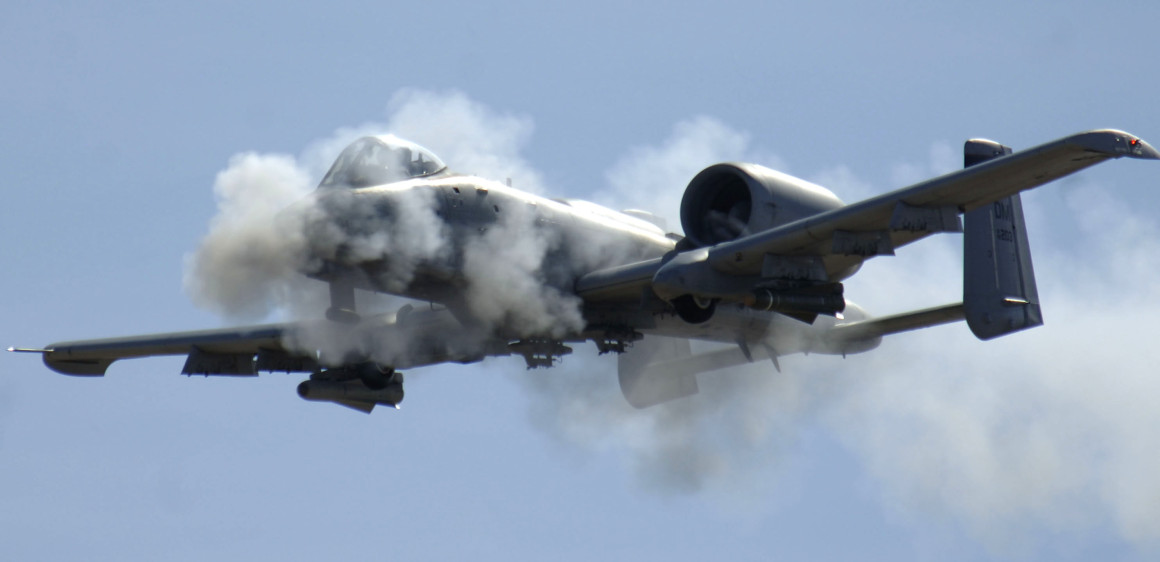
    Fox News reports that some pilots are complaining to them that the rules of engagement (ROE) under which they operate in the skies over Iraq and Syria are way too restrictive, sometimes taking as much as an hour for clearance to pull the trigger. This is not my shocked face;

    A former U.S. Air Force general who led air campaigns over Iraq and Afghanistan also said today’s pilots are being “micromanaged,” and the process for ordering strikes is slow — squandering valuable minutes and making it possible for the enemy to escape.

    “You’re talking about hours in some cases, which by that time the particular tactical target left the area and or the aircraft has run out of fuel. These are excessive procedures that are handing our adversary an advantage,” said retired Lt. Gen. David Deptula, a former director of the Combined Air Operations Center in Afghanistan in 2001.

    Of course, the Pentagon is quick to dispute the charge;

    A spokesman for the U.S. Air Force’s Central Command pushed back: “We refute the idea that close air support strikes take ‘an hour on average’. Depending on the how complex the target environment is, a strike could take place in less than 10 minutes or it could take much longer.

    “As our leaders have said, this is a long-term fight, and we will not alienate civilians, the Iraqi government or our coalition partners by striking targets indiscriminately.”

    The enemy takes advantage of the ROE by hiding behind civilian targets and using them for cover from air power, which seems to be an effective counter-measure. However, ISIS doesn’t seem to be restrained by the same arbitrary rules, and they don’t seem to be concerned at all about public relations.

  • Dempsey was not prepared for fall of Mosul

    Dempsey was not prepared for fall of Mosul

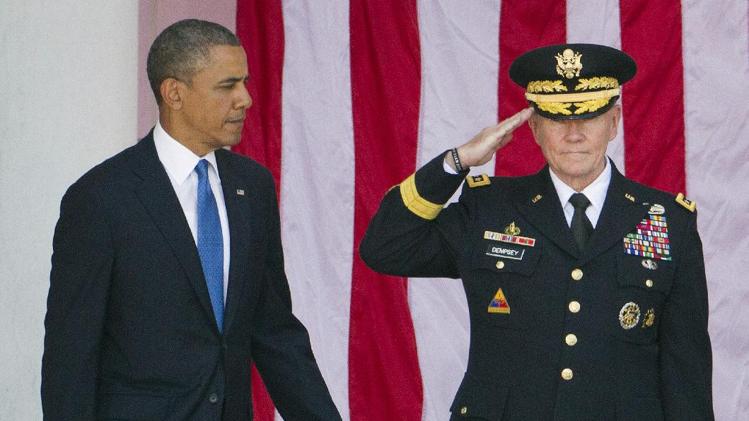
    Martin Dempsey

    Andy11M sends us a link to the Yahoo News report that Chairman of Joint Chiefs of Staff, General Martin Dempsey admits that he and his staff had done no contingency planning which resulted in fall of the Iraqi city of Mosul to ISIS last June;

    “So, look, there were several things that surprised us about ISIL,” Dempsey adds. “The degree to which they were able to form their own coalition, both inside of Syria — and inside of northwestern Iraq; the military capability that they exhibited — the collapse of the Iraq Security Forces. Yeah, in those initial days, there were a few surprises.”

    Dempsey’s frank comments would appear to raise fresh questions about the performance of U.S. intelligence agencies in tracking the rise of IS as well the state of planning inside the Obama administration as it continues to grapple with a war against the Islamic State terrorists.

    That is a pretty stunning admission, especially if you remember that just four months before the fall of Mosul, we witnessed the fall of Fallujah. The Obama Pentagon promised weapons and training in February that still hadn’t arrived by the time ISIS overran Iraq troops in Mosul. So, it really wasn’t a lack of planning as much as it was a lack of a sense of urgency. They weren’t prepared for the fall of Ramadi nearly a year after the fall of Mosul, either.

    In a link that Chief Tango sent us from the Washington Post, they say that Dempsey is just being cautious in regards to the war against ISIS;

    “Dempsey had been a strong voice for the limits that should be placed on U.S. military power,” said a senior administration official, speaking on the condition of anonymity to discuss a senior officer.

    For the general, the caution is hard-won, derived from his own history in Iraq and across the Middle East.

    Unlike in the last war in Iraq, when U.S. troops bore the brunt of the battle against insurgents, Americans would remain in the background this time. Against the Islamic State, Dempsey believed that “the only way there’s a sustainable defeat is if the Iraqis feel the real weight of the problem,” the official said.

    While I would agree that the Iraqis need to make the hard choices and they must commit to the war, they also need to know that they can depend on the application of US firepower to the conflict. I’m certainly not recommending sending US ground forces to the country again, but we have the firepower and the technology to defeat this enemy in a force-on-force conflict, without our own ground forces, as opposed to the insurgency that we were forced to fight in the last Iraq War.

    George B. McClellan was a cautious commander, too, and probably the worst general in the Union Army because of it. George G. Meade’s caution allowed Robert E. Lee and his army to escape across the Potomac from Gettysburg and sentenced the country to two more years of the Civil War. I’m not sure that ISIS is willing to wait while Dempsey prepares to retire. Dempsey should be replaced immediately and in the dark of night.

    We’ll probably need a Chairman who can tell the President that there’s a war against terror going on, though. From the Associated Press;

    President Barack Obama on Monday saluted Americans who died in battle, saying the country must “never stop trying to fully repay them” for their sacrifices. He noted it was the first Memorial Day in 14 years without U.S. forces engaged in a major ground war.

    The Pentagon and Dempsey aren’t the whole problem, apparently.
  • All Because of a Film, Eh?

    Remember Benghazi? Remember those initial announcements from the Department of State characterizing it as a “spontaneous reaction” to an independent film no one had ever heard of?  Remember the US Ambassador to the UN telling everyone five days afterwards that it was a reaction to an anti-Islamic film?

    Well, would you like to know what the Secretary of State was told by a confidante two days after the attack? Here it is, courtesy of the New York Times:

    Second Memo Provides Detailed Account of Benghazi

    The next day [note: this memo was sent on 13 September 2011], Mr. Blumenthal sent Mrs. Clinton a more thorough account of what had occurred. Citing “sensitive sources” in Libya, the memo provided extensive detail about the episode, saying that the siege had been set off by members of Ansar al-Shariah, the Libyan terrorist group. Those militants had ties to Al Qaeda, had planned the attacks for a month and had used a nearby protest as cover for the siege, the memo said. “We should get this around asap” Mrs. Clinton said in an email to Mr. Sullivan. “Will do,” he responded.

    Yeah, those suspicions we had were correct. Pretty much any time after 13 September 2011 they were shamelessly lying through their teeth when they blamed Benghazi on an anti-Muslim film.

    That’s why “it matters”.

  • Dempsey; Iraqis weren’t driven out of Ramadi, they drove themselves

    Dempsey; Iraqis weren’t driven out of Ramadi, they drove themselves

    Hardy-Har-Har. According to Stars & Stripes, General Martin Dempsey makes light of the loss of the Iraqi city of Ramadi claiming that the Iraqis weren’t driven out of Ramadi, they drove themselves;

    Gen. Martin Dempsey, chairman of the Joint Chiefs of Staff, told reporters Wednesday on a trip to Brussels that Iraqi security forces commanders made a tactical decision to withdraw from Ramadi last weekend because sandstorms prevented U.S. coalition aircraft from mounting airstrikes against Islamic State fighters who swarmed into the city, capital of Anbar province.

    It was the most significant setback in the war against the Islamic State since the militants seized Mosul during last summer’s offensive that overran about a third of Iraqi territory.

    Yeah, there was sand involved, I’m sure. The problem with Dempsey’s analysis is that we’ve been expecting Ramadi to crumble to ISIS for a month now. While sandstorm may have used for cover the last couple of days, where were the aircraft, the ass-kickings, for the 28 days prior to this last weekend? Yeah, it was the worst loss since Mosul, which was the worse since Fallujah, six months before that. The problem with this administration and the way it’s managing this war is that they aren’t pro-active enough.

    It’s almost as if they aren’t paying any attention to the enemy at all – they have a strategy and they won’t allow changes in the battlefield to detract them from that, no matter how dire the circumstances. It’s not so much that they’re slow to act, they just don’t act.

    I’m sure that Dempsey doesn’t envy his successor having to take back Ramadi.