Category: Terror War

  • Russian missiles miss Syria, hit Iran

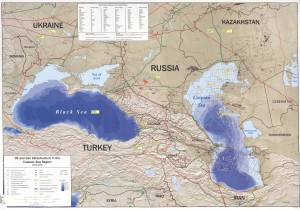
    Caspian_sea

    The Washington Post reports that some of the missiles that Russia was shooting at Syrian rebels from their ships in the Caspian Sea fell short and hit Iran instead;

    Reports on Iranian TV indicated that an “unidentified flying object” had crashed and exploded in a village near near the Iranian city of Takab. A number of cows were killed in the ensuing blast.

    While it is unclear what made the missiles crash, videos posted on social media showed them flying overhead at low altitude. While it is common for cruise missiles to fly low (to avoid radar detection), it can make traversing mountainous terrain perilous.

    Funny though, I don’t expect to hear any apology coming from the Russians, nor do i expect them to cease their use of missiles. If I’m not mistaken, this is the first time they’ve employed cruise missiles in actual warfare.

    The Russian Defense Ministry in Wednesday’s statement however, said that the new Kalibr-NK cruise missiles all hit within nine feet of their intended targets. The strikes landed in Raqqa, Idlib and Aleppo provinces, and Russian officials said they destroyed Islamic State positions, including training camps and ammunition depots.

    Well, at least their intentions were good. The New York Times says that 4 of the 26 missiles fired didn’t make it out of Iranian air space.

  • Russia fires cruise missiles at Syrian rebels

    Russia fires cruise missiles at Syrian rebels

    According to Fox broadcast news, the Russians have employed cruise missiles in their current strike against Syrian rebels. They’ve also begun shadowing US drone operations with their MIGs. AFP reports that the Russians claim that they have weakened ISIS forces, but the US defense officials report that 90% of the Russian airstrikes have been against non-ISIS forces (US-supported rebels).

    Tensions between Russia and NATO member Turkey shot up this week after Russian aircraft infringed on Turkish airspace at least twice.

    The Russian air war has provided cover for Assad’s ground troops, who have previously lost swathes of the country to IS and other fighters seeking to topple him.

    Meanwhile, according to Fox News, Congress is investigating whether US intelligence agencies dropped the ball predicting Russian intentions in the area.

    The officials told Reuters that intelligence analysts were specifically caught off guard at the speed and aggression of Russia’s use of air power, as well as the Moscow’s targeting of Western-backed rebel groups as opposed to the Islamic State terror organization (ISIS).

    “They saw some of this going on but didn’t appreciate the magnitude,” one official told Reuters. One source suggested that U.S. experts initially thought that Russian military buildup near the Syrian port of Latakia was for a snap military exercise as opposed to a prolonged show of force. Another source told Reuters that there had been a lag time of “about a week” before spy agencies began voicing alarm about Russian military operations.

    I don’t what they could have missed. There were news reports weeks before the first airstrike was launched by the Russians of the arrival of fighters to SYria. Even the President, who gets his news from the media,, not from his intelligence services, according to him, should have seen the Russian intervention coming. Russia is not in the habit of deploying troops they don’t plan on using. That seems to be a strictly American trait.

    Now Fox is reporting that the Iranians lobbied Russia for their engagement in Syria months ago. The situation certainly needed some leadership, it only stands to reason that Russia would step into the breach left by Americans.

  • C-130 goes down in Afghanistan

    C-130 goes down in Afghanistan

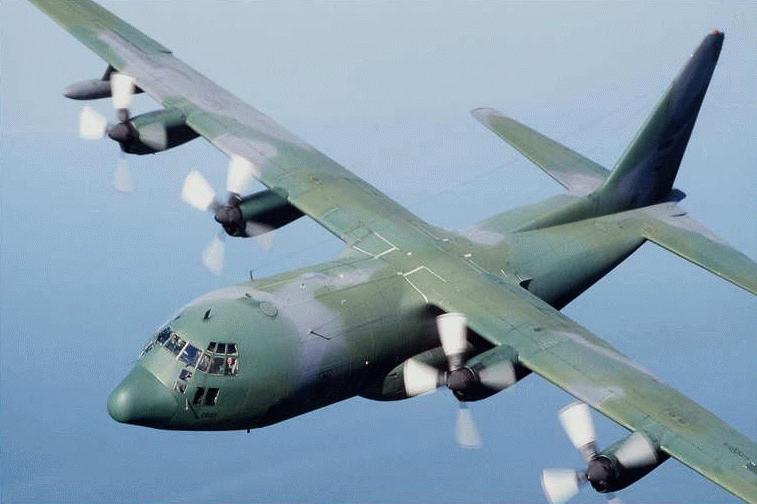
    c130_4

    The Associated Press reports that a C-130 crashed in eastern Afghanistan overnight. It looks like all 11 onboard, including 6 Air Force crew members, have died in the crash;

    The six U.S. service members who died comprised the plane’s crew. The passengers were civilian contractors working with NATO’s Resolute Support mission and were the only passengers on board, he said.

    The airmen were assigned to the 774th Expeditionary Air Lift Squadron, part of the 455th, Wickman said.

    The New York Times says that there were 14 aboard. NBC News says 13.

    The Taliban claim that they shot the aircraft down, but that’s not very likely and “a U.S. official, who spoke on condition of anonymity” denies that that there were any reports of hostile gunfire.

  • ANA takes back Kunduz

    ANA takes back Kunduz

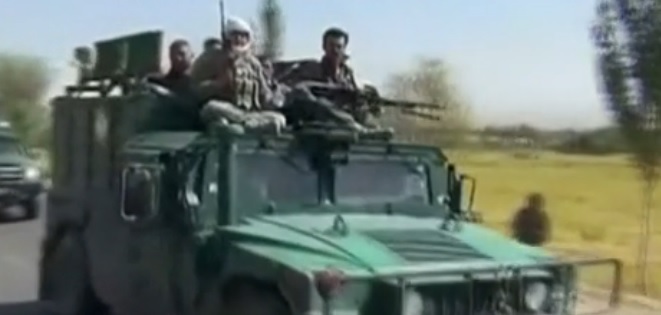
    According to Stars & Stripes (by way of Military.com) reports that US Special Forces joined with the Afghanistan National Army to take back the city of Kunduz on Wednesday and Thursday;

    The Reuters news agency quoted a senior Afghan security official as saying about 100 U.S. special operations troops fought off Taliban attackers threatening to breach the airport early Wednesday.

    The American troops, wearing night-vision goggles, left the airport and killed the assailants before returning, the official said on condition of anonymity because he was not authorized to brief media about the fighting.

    Fighting around Kunduz, a city of about 300,000, has centered around the airport, where Afghan forces are trying to launch a counteroffensive to recapture the city. Reports from the scene said the counteroffensive faltered Tuesday because of stiff Taliban resistance including improvised explosive devices along the road into the town about 6.5 miles to the north of the airport.

    CNN reports that some US commanders are using the situation to justify breaking the President’s promise to pull US troops out of Afghanistan next year;

    “We’ve seen U.S. aircraft supporting the Afghan government and the Afghan security forces because they can’t do it alone just yet,” said Mark Hertling, a retired U.S. Army general. “You’re also going to see U.S. special forces — special operating forces — supporting the commandos in Afghanistan as they attempt to reinforce Kunduz.”

    U.S. and German forces regularly operate in the area, advising Afghan forces.

    While government forces were battling the Taliban in Kunduz, the Taliban was moving in parts of the country, says CNN;

    The Taliban have taken over the Warduj district of Badakhshan, east of Kunduz province…The Taliban takeover in Warduj province represents a new setback for the Afghan government, after the group reclaimed parts of the city of Kunduz earlier this week. That was the biggest victory the Taliban has had in 15 years. Kunduz is a strategic hub on the main highway between Kabul and Tajikistan.

    Whack-a-mole.

  • Russians deny striking US-trained Syrian rebels

    Russians deny striking US-trained Syrian rebels

    The internet is alive with rumors that the Russian airstrikes yesterday targeted the Syrian rebels that the US trained to fight against the Assad government. The Russians, of course, deny that’s what happened, according to the Washington Post;

    One monitoring group, the Britain-based Syrian Observatory for Human Rights, said Russian airstrikes again struck strongholds for an American-backed rebel group, Tajamu Alezzah, in the central Hama province.

    The account could not be independently assessed, but the main focus of the Russian attacks appear in areas not known to have strong Islamic State footholds.

    U.S. officials also dispute Moscow’s portrayal of its missions. Washington says the air attacks have hit U.S.-backed units that were trained and armed by the CIA, officials said.

    In Moscow, the reply was blunt.

    “Total rubbish” was how Gennady Zyuganov, a member of parliament and leader of Russia’s Communist party, called the U.S. accusations.

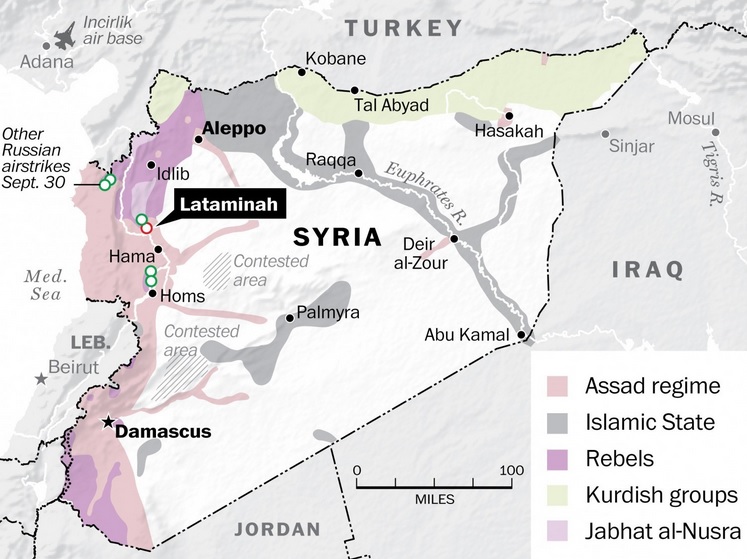
    Maps at the Post show that the nearest ISIS group to the targeted areas was 40 miles away.

    Russian airstrikes

    The US has largely been frittering away our time in the conflict, not having any real impact on the ground war and the Russians seemed to have seized the day with their airstrikes and in another Post article, John Kerry and the White House are downplaying the Russian effect on the battle space, while they try to take the lead back.

    Administration officials countered that the airstrikes showed only Russian weakness and what White House press secretary Josh Earnest said was growing concern “about losing influence in the one client state they have in the Middle East.”

    Beyond debates about motives and the meaning of the strikes, conducted as world leaders are gathered here this week for the U.N. General Assembly, Kerry worked to marshal a common front among leading members of the U.S.-led coalition. The surprise of European leaders at the timing of the Russian actions — before promised military talks with the United States and with only an hour’s notice — appeared to have trumped any lingering doubts about U.S. strategy.

    The Obama Administration shouldn’t act so surprised. The whole world noticed that the Russians were moving aircraft and Marines into Syria weeks ago. The Russians were ready to seize the initiative…they’re not like this administration which only wants to APPEAR to be fighting in Syria. When the US isn’t really leading efforts anywhere in the world, they have to expect that one of our rivals will do so in our stead.

  • Afghanistan. What’s the point, anyway?

    Afghanistan. What’s the point, anyway?

    Kunduz

    The other day, we read about how the Taliban had taken back the Afghan city of Kunduz for the first time since they lost it in 2001. That the Afghan forces had withdrawn to a nearby airfield to reconsolidate. The New York Times reports that it’s probably not going to be anytime soon that the Afghan government gets control of the city. The Taliban seem to think that they have the ANA surrounded in their conclave and the US airstrikes are mostly to protect the ANA troops from the Taliban.

    “The Taliban are strolling around freely like this is their home,” said Ghulam Rabbani Rabbani, a member of the Kunduz provincial council, who like many Kunduz officials had retreated to the airport but was in touch with residents. “They took a lot of weapons from the intelligence agency’s office, weapons that were stocked for arming pro-government militias. We fear that there was cash and vehicles also.”

    […]

    The Kunduz police spokesman, Sayed Sarwar Hussaini, said some American Special Forces soldiers had arrived at the airport Tuesday evening — although whether they were there to call in airstrikes or to otherwise join Afghan commandos in an attack on the city was not clear.

    So, now we’re dropping our troops into the middle of the action to rescue the Afghans, pretty much, from themselves. I’m sure our troops don’t mind it, but still.

    From the Washington Post;

    The increased support from the U.S.-led coalition comes amid growing signs that Afghan forces are struggling to repel the Taliban fighters, who were able to seize Kunduz in a lightning strike Monday, dealing a major blow to Afghanistan’s Western-backed government.

    An Afghan security official in Kabul said a military fort fell to the Taliban in Wednesday’s fighting in Kunduz and that an estimated 50 security forces based at the fort had either surrendered or were captured.

    In the meantime, the Associated Press reports that the generals are talking a drawdown from Afghanistan to meet the President’s timetable withdrawal for next year.

    About 9,800 U.S. troops are in Afghanistan. But the top U.S. commander in Afghanistan, Army Gen. John F. Campbell, has given the administration several options for gradually reducing that number over the next 15-months. The options all call for keeping a higher-than-planned troop presence based on his judgment of what it would take to sustain the Afghan army and minimize the chances of losing more ground gained over more than a decade of costly U.S. combat.

    Now, the Taliban are making some late summer advances through out the country, and we’re right back where we were in 2012 discussing US withdrawal…again. the only reason that there are US troops in Afghanistan is so the president can prove that he’s serious about fight the war that he said was “worth fighting” during the 2008 campaign. But you know, what? He’s been half-assing the war through his whole term as President – he should just pull the troops out now. Tomorrow. No. Yesterday. For all the good this jerking around about withdrawal is doing for those people and that country.

    The Afghans don’t want to fight for their own country and the US government doesn’t want to prosecute the war the way it should be fought, so really, what’s the point?

  • “Death to America” chants in Iran parliament

    According to AFP, a chance meeting in the halls of the UN the other day between President Obama and Iranian Foreign Minister Mohammad Javad Zarif which ended with a handshake triggered a “death to America” chant in the Iranian legislature;

    “With whose permission have they met Obama?” deputy Bahram Biranvand asked angrily. “Last time they talked to Obama on the phone and this time, with whose permission” did Iran’s minister shake hands with the US leader?

    Biranvand was referring to President Hassan Rouhani’s historic telephone call with his American counterpart in 2013.

    Zarif also came under indirect attack from Iran’s ultraconservative judiciary spokesman, Gholamhossein Mohseni Ejeie, Fars news agency reported.

    So, I totally trust the Iranians in their deal to prevent the development of nuclear weapons, you know, because they’re reliable actors who want peace. Elections have consequences. This president’s only strategy has been to be the “anti-Bush” – make decisions based on the opposite of what Bush would do. Consequently, we get the world that is completely the opposite of what we had in 2009.

  • Most “Hardline and Effective” Regime In History

    I saw this gem from one of our frequent commenters.

    Fucking nonsense. Obama has been much more hardline and effective in the fight against Islamic extremists and terrorists than any president in history, including Reagan.

    I have to agree, at least in part. I must admit that the current Occupant, 1600 PA Ave, Wash DC, and his krewe have indeed been uniquely effective regarding engaging Islamic extremists and terrorists. Let’s discuss his and his regime’s amazing record of success here.

    1. Inherited a stable situation in Iraq, with functioning government, a low-level of insurgency, and relative peace. And just look at Iraq today!

    2. Took over a manageable conflict in Afghanistan. Initially ignored good advice (Afghan surge recommended by McChrystal), then implemented a variant later. Things have only gotten better there in the last 6 1/2 years, right?

    3. For political reasons (or possibly out of pure spite), failed to obtain an Iraq SOFA allowing a residual US presence in that nation.

    4. Ignored warnings concerning possibility of rise of ISIS/ISIL/whatever the hell they’re calling themselves today during Iraq SOFA negotiations. Coupled with #3 above, this led to the rise of ISIS. ISIS now controls about half of Syria and around a third of Iraq; the Iraqi Army and government are now barely credible.

    5. Appears to have based US strategy on countering Islamic extremism on “support for local populations” and clandestine armed RPA strikes. Yes, the latter has been of minor military value – but it’s been at least as counterproductive, if not more, in terms of creating hostility to US efforts due to occasional erroneous strikes. It’s also handed a major propaganda weapon to Islamic extremists for only marginal military gain. And it’s almost certainly undermining the Pakistani government in the eyes of the Pakistani public, since each uninvited strike in Pakistan is a demonstration that the Pakistani government cannot control its own territory and airspace.

    6. And that “support for local populations” thing, AKA the “Arab Spring”? It’s led to a chaotic Libya with at best a marginally effective central government and parts dominated by al Qaeda allies; the ouster of stable, pro-Western governments in Tunisia and Yemen; and nearly resulted in the Muslim Brotherhood taking over freaking Egypt. It also led to protests/unrest short of regime change in numerous other countries friendly to the US: Bahrain, Morrocco, Jordan, Kuwait, and Oman.

    7. Dithering over Syria – e.g., being at first afraid to do squat, then drawing meaningless “red lines”, providing support to feckless “moderate” Syrian opposition that was in turn largely handed over to Islamic hardliners (al Nursa), and wasting $500M with the net result of training 50 troops.  But no fear; all will turn out well.

    8. And don’t get me started on the 5-for-1 trade with the Taliban for the knowing return of an apparent deserter – followed by feting said apparent deserter and his family at the White House.

    Yeah, all of that simply screams “hardline, effective countering of Islamic extremism”, doesn’t it?

    The author of the comment above is correct. The current    gang of feckless fools and tone-deaf tools running things in DC since January 2009    Administration has indeed been singularly effective while engaging Islamic extremism.

    Problem is, it’s been almost uniformly successful from the perspective of the Islamic extremists. From the US perspective, it’s been a nearly-uniform series of failures.

    My reaction on reading that comment? “Son, I want some of whatever it is you’re smoking. That must indeed be some ‘really good sh!t’.”