Category: Politics

  • The Legacy of the Kaiser’s War

    We’re nearing the end of the 100 years since the start of World War I. The London Telegraph recently ran a fine series of twelve articles by historian Saul David on the subject, with particular attention to the Kaiser’s need and strange desire to acquire control of the European continent by engaging in warfare that would give him control of the Balkans and ports on the Black Sea, with entry into the Mediterranean through the Straits of the Bosporus and the Dardenelles, as well as control of the western seaboard and ports of most of Europe.

    Kaiser Wilhelm II wanted to do empire-building, but he failed. He used the assassinations of the Archduke Franz Ferdinand of Austria-Hungary and his wife as an excuse to start his roll across Europe to acquire control of the European continent and its ports, with assistance from Franz Joseph of Austria-Hungary. Most of what I’ve found was glossed over in my high school history classes as if it didn’t matter. But it did matter. If you want to understand what followed slightly more than a decade after the end of World War I, and why things are the way they are now, you need to pursue this history.

    This is a link to the archives of the London Telegraph’s original articles about World War I, published as the war progressed. http://www.telegraph.co.uk/news/ww1-archive/

    Here’s a link to historian Saul David’s series about the causes of World War I. He takes a closer look at how that war progressed.

    http://www.telegraph.co.uk/history/world-war-one/inside-first-world-war/part-one/10271886/who-started-world-war-one.html

    I’m just glad  that there is access to some of this now, because otherwise, it might sit moldering in drawers and on bookshelves, ignored by everyone but the curious like me.  It’s my impression that the German troops went into the battlefield with no real understanding of why they were there. They were simply ordered to the front to fight a war that had no valid purpose, such as defense, behind it. The call-up for mobilization was done under orders of the Kaiser, who had fired Otto von Bismarck. There is, in that second Telegraph link, an article with a photograph that shows both military and civilian Germans in a crowd, listening to the mobilization orders, some of them looking rather bewildered. They answered the call, but to what purpose?

    I think that the archived photo collections now online at those links, and those in this paragraph, can give you a better view than a single photo posted here. The famous Christmas Eve truce, a spontaneous pause in warfare by troops on both sides of the front lines, did take place on Dec. 24, 1914. The TIME collection at this link includes that brief pause in fighting.  http://time.com/3643889/christmas-truce-1914/

    World War I was a war of aggression by Germany, the same as was WWII, with the assassination of Archduke Franz Ferdinand of Austria-Hungary as the excuse to make war. Germany had earlier signed a secret treaty of alliance with the Ottoman government in Turkey. Franz Joseph of Austria-Hungary had already declared war on Serbia and the Black Hand over the assassination of Franz Ferdinand and his wife by Gavrilo Princip, a Serb and member of the Black Hand, and wanted Germany’s aid in that conflict. The Kaiser gave it willingly.

    Britain, France and Russia had formed the Triple Entente before 1914, and Germany, Austria-Hungary, and Italy had formed the Triple Alliance.

    The rulers of Britain (George V), Russia (Tsar Nicholas) and Germany (Kaiser Wilhelm II) were cousins. They knew each other quite well. The Kaiser, however, despised everything British including his cousin George V, did not really like his cousin Nicholas II, and had a love-hate relationship with his own mother, Queen Victoria’s daughter Vicky. But now, without the previous interference of his British grandmother, the late Queen Victoria, nothing stood in the way of his starting what amounts to a family quarrel, one that cost many millions of lives in the end by warfare and the post-war spread of the Spanish flu, destroyed the legitimate governments of Russia and Germany, and opened the paths to Hitler’s Reich and Lenin’s establishment of the Communist party as the ruling government in Russia.  See the Telegraph link above for the archived 1917 articles for Lenin’s tactic toward his British ‘allies’.  An enlightening Telegraph headline from 1917 says that Lenin barred British citizens from leaving Russia.

    In Germany, Count Ferdinand von Zeppelin made Ludwig Dürr his chief designer at the Zeppelin factory when the Count’s first engineer, Hugo Kübler, who had designed LZ-1, refused to fly in the airship he had created, which was named after Zeppelin.

    The Kaiser saw the airships as more useful than airplanes because of their ability to carry large loads of munitions at low cost, and to go long distances at great heights with no interference. Planes of that time period such as the Sopwith Camel were unable to reach the heights at which the Zeppelins were used for bombing runs – as much as 11,000 feet – which meant that a machine gunner posted on a Zeppelin could easily take out a biplane before it ever got near the airship.

    Franz Shrapnel was the developer of bombs carrying up to 2,000 pounds of shrapnel carried by the Zeppelin fleet. The largest such bomb was a 3,000 pounder. The airships were manned by machine gunners who could shoot down the planes trying to attack them during bombing runs. This worked until the UK’s biplanes were equipped with stronger motors that allowed them to climb high enough to attack the airships. (I thought you all might like to know the source of the term ‘shrapnel’.)

    In Waiting For Daylight, H.M. Tomlinson describes the sight of the nighttime aerial bombardment as almost a distraction from seeing the Pleiades in the London night sky, when everyone had gathered in the streets because shrapnel bombs were falling from the sky, and searchlights were trying to find the airships. He reported that he could see sparks of fire on strings descending to the earth, and knew that they were shrapnel bombs brought across the Channel from Europe. There was a ‘lights out’ policy in effect at that time, to try to hinder the aerial bombing runs from the Germans, but the pilots of the Zeppelins used the ‘glow’ of the Thames as a guide for bombing raids. This was from 1915 to 1916.

    The Battle of Cambria ended 12-4-1917.  It was the successful use of tanks at Cambria by the British Army that brought this to a quick conclusion, much more successfully than the same attempts in the sticky, muddy fields of Flanders in the 1916 Battle of the Somme. They didn’t function at Somme as well as they could have. The tanks, running on treads copied from farm tractors, were far more successful at Cambria.

    This introduction of British-built tanks was the real start of mechanized land warfare. J.R.R. Tolkien’s first sight of them and their destructive firepower partly inspired his descriptions of war losses and battle scenes in Lord Of the Rings.

    While the United States avoided the European War in the beginning, there was a massive pro-war sentiment in the USA, that flared into demands addressed to Woodrow Wilson to enter that War when the Lusitania was sunk by a torpedo from a German U-boat in the Atlantic. H. M. Tomlinson observes that Walt Whitman’s poems in Leaves of Grass somehow indicated that the USA was involved long before we arrived in Europe, and therefore, he could no long refer to Americans as latecomers to the War. Since the poems in the section titled ‘War Poems’ seem to have been written post-Civil War, I’m not sure how Tomlinson derived that connection, but I’ll accept it.

    Essentially, Wilhelm II, who had fired Otto von Bismarck and let his leading Generals von Hindenburg and Ludendorff dictate policy, was an incompetent leader at best and a publicity-seeking attention hound, letting those two run the war while he himself lost the support of the military and the public, and was eventually forced to abdicate. His cousin, Tsar Nicholas II, was the same – out of touch with his own people and the military, making it far too easy for a malignant creature like Lenin to imprison him and his family and execute them by a firing squad. Wilhelm’s sloppy ideas of management resulted in his forced abdication from the German government and opened the door for Hitler’s seizure of power and the rise of the Reich.  Nicholas’s incompetence and complete disconnection from the Russian people led to his overthrow and the slaughter of him and his entire family, while Lenin drove his brutal, murderous path into existence. And we know well the legacy left to us which followed these events.

    I think H.M. Tomlinson describes it quite well:

    “When the crafty but ignorant Russian generals got from the Czar the order for mobilizing the armies, and issued it, they did not know it, but that was when they released Lenin. And who on earth can now inveigle that terrific portent safely under lid and lock again?” – H.M. Tomlinson, Waiting For Daylight, 1922

    Who, indeed?
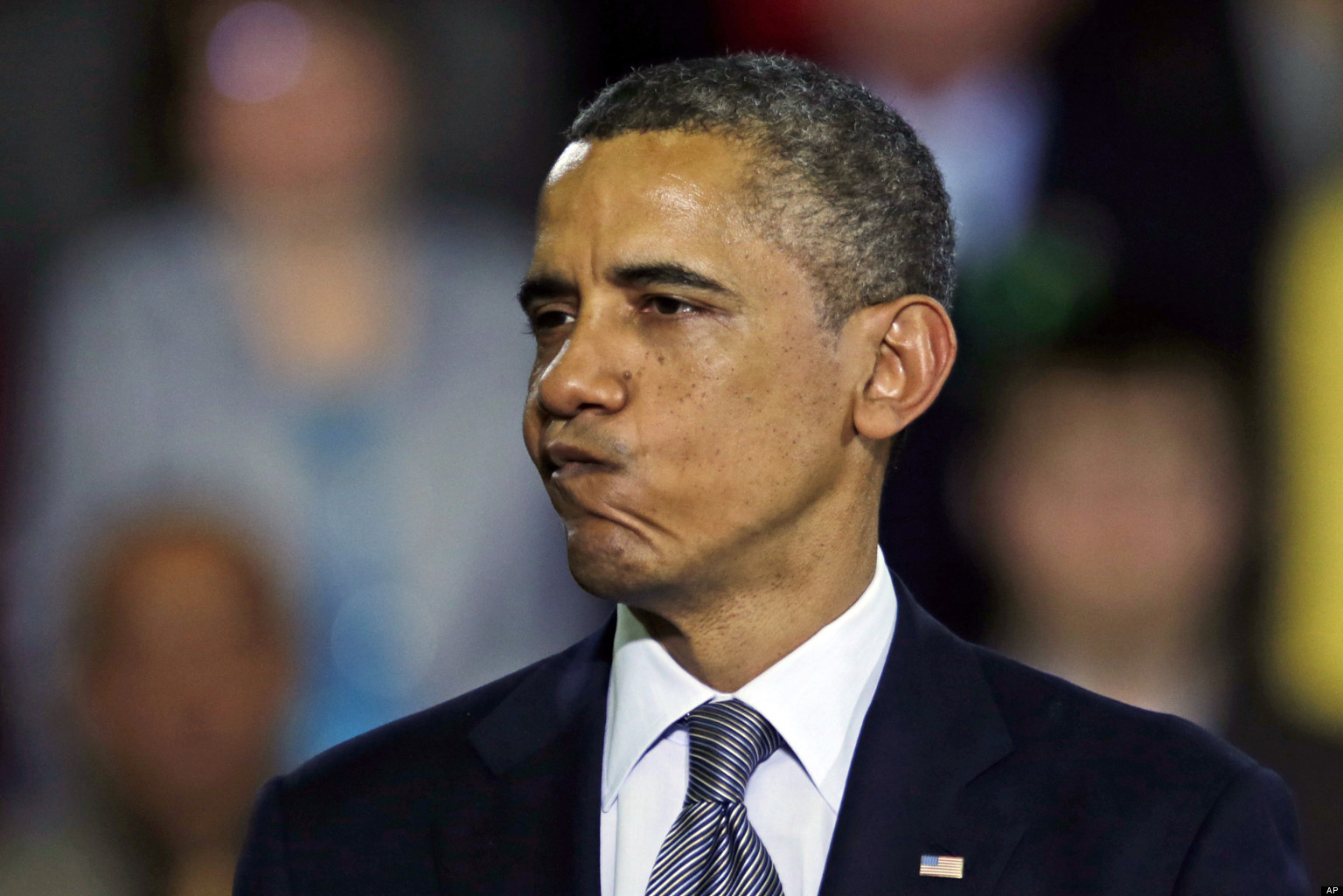
  • Obama Justice Department helped Hezbollah smuggle Coke into US

    Obama Justice Department helped Hezbollah smuggle Coke into US

    According to Politico, the Drug Enforcement Agency built a case against Iran’s client Hezbollah in regards to their efforts to smuggle cocaine into the United States and smuggle the resulting profits back to Iran. The Operation named Project Cassandra was met with roadblocks from the Department of Justice;

    Over the next eight years, agents working out of a top-secret DEA facility in Chantilly, Virginia, used wiretaps, undercover operations and informants to map Hezbollah’s illicit networks, with the help of 30 U.S. and foreign security agencies.

    They followed cocaine shipments, some from Latin America to West Africa and on to Europe and the Middle East, and others through Venezuela and Mexico to the United States. They tracked the river of dirty cash as it was laundered by, among other tactics, buying American used cars and shipping them to Africa. And with the help of some key cooperating witnesses, the agents traced the conspiracy, they believed, to the innermost circle of Hezbollah and its state sponsors in Iran.

    But as Project Cassandra reached higher into the hierarchy of the conspiracy, Obama administration officials threw an increasingly insurmountable series of roadblocks in its way, according to interviews with dozens of participants who in many cases spoke for the first time about events shrouded in secrecy, and a review of government documents and court records. When Project Cassandra leaders sought approval for some significant investigations, prosecutions, arrests and financial sanctions, officials at the Justice and Treasury departments delayed, hindered or rejected their requests.

    The Justice Department declined requests by Project Cassandra and other authorities to file criminal charges against major players such as Hezbollah’s high-profile envoy to Iran, a Lebanese bank that allegedly laundered billions in alleged drug profits, and a central player in a U.S.-based cell of the Iranian paramilitary Quds force. And the State Department rejected requests to lure high-value targets to countries where they could be arrested.

    The Obama administration didn’t want to upset their nuclear deal with Iran. That was coupled with a desire to integrate the terrorist organization Hezbollah into the political structure of Lebanon.

    From the UK’s Daily Mail;

    DEA agents claim the Obama administration stopped them arresting key figures linked to Hezbollah as an agreement on the Iran nuclear deal approached – and scrapped Project Cassandra entirely once the terms were agreed in 2015.

    Arming Mexican drug cartels, funding the Iranian nuclear program and protection for drug kingpins in Hezbollah. At what point do we admit that the Obama Administration was a criminal enterprise?

  • SFPD takes a “Bazooka” off the streets

    SFPD takes a “Bazooka” off the streets

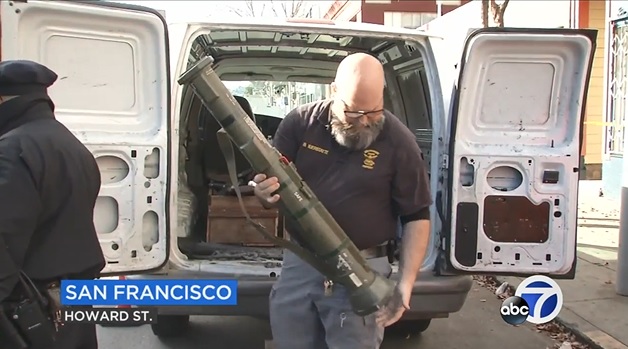
    Apparently, the San Francisco Police Department didn’t learn anything from their brothers in Los Angeles when they paid good taxpayer money for another fiberglass inert rocket launcher tube this weekend;

    A community leader believes San Francisco took a big step toward being less violent with the event.

    “We got a bazooka off the street. We got a cannon ball off the street. We got assault rifles. We got everything that you can name that could destroy a whole universe and we get rid of them within hours,” Rudy Corpuz Jr. with United Playaz said.

    Buyback organizers also told us that it succeeded because of its “no questions asked” policy for the people who surrendered guns.

    The inert fiberglass tube is an expended AT-4 anti-tank weapon, but once the weapon has been fired, as this one has been fired, it’s nothing more than trash. It can’t be reloaded – you know, like a stolen law enforcement officer’s handgun can be reloaded and used to kill a young girl on a pier in San Francisco. So, SFPD was successful in getting trash off the street, but no one is safer.

    I’d like to see the cannonball they say they bought, too.

  • Foxhole Sean Carrigan

    Foxhole Sean Carrigan

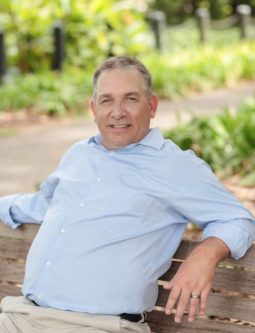
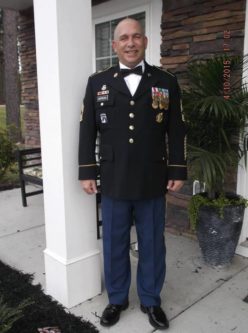
    This fellow, Sean Carrigan is running for Congress in South Carolina as a Democrat. The main part of his campaign focuses on his 28 year career in the Army. He uses foxhole imagery and his time in Desert Storm to convince his potential constituency that he’s the man for the job.

    “When I was in a foxhole in the Middle East it mattered that [the people] were trained to cover me and protect me and that I was trained to covered them,” Carrigan says, “but it didn’t matter who they loved. … These people need to be treated with dignity and respect.”

    That foxhole-dwelling background is a piece of Carrigan’s life that he’ll put front and center. While his platform reflects many of the typical Democratic values also held by Robertson, his military experience distinguishes him from his primary foe, in Carrigan’s assessment.

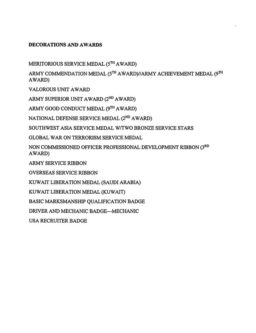
    He likes to talk about his “uniform covered with combat and service medals and ribbons” and how he’s “highly decorated“;

    For nearly three decades, I proudly served my nation in the United State Army—eight years beyond retirement eligibility. If a uniform covered with combat and service medals and ribbons means anything, it’s the knowledge and wisdom that soldiers—the men and women who dedicate their lives to keeping America safe—value family and predictability.

    In October 2015, Sean Carrigan retired as a First Sergeant after 28 years of highly-decorated service in the United States Army. He served eight years past retirement because of his commitment to the welfare of his soldier community.

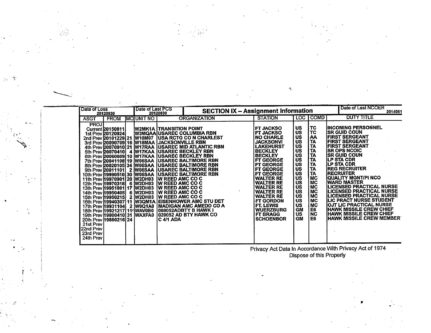
    Now, I’ll agree that we need more veterans in Congress and Sean, here, would probably be fine addition to that tradition, but, I’m not much enamored with people who proclaim themselves to be highly decorated. I’m not sure how many foxholes he occupied as Hawk missile crew chief in Saudi Arabia.

    Carrigan was assigned to 2-52nd Air Defense Artillery, which converted to a Patriot missile unit assigned to the XVIIIth Airborne Corps for Desert Storm. He went on to be an LPN nurse at Walter Reed and found his niche as an Army recruiter during the War Against Terror, during which he had no deployments.

    I guess you could call him “highly decorated” with his FIVE Meritorious Service Medals, FIVE Army Commendation Medals and NINE Army Achievement Medals. Other than the medals that everyone got for Desert Shield/Desert Storm, he has no valor or merit awards for his time there unless he was awarded one of his numerous ARCOMs or Achievement Medals for DS/DS.

    The 2-52d earned a Valorous Unit Citation for their participation, but I don’t see an award that Carrigan earned during his only deployment to combat like a reasonable person would expect from a self-proclaimed “highly decorated” combat veteran.

    I don’t know how much combat he “saw” – he might have seen the results of combat long after the gunfights ended, but there wasn’t much combat going on around Riyadh or Bahrain where 2-52 was deployed.

    Mr Carrigan should focus on his leadership during his Army service and give up the gritty combat veteran imagery. He comes off like the governor-elect of Virginia Ralph Northam who tried to make the electorate think he was the Hawkeye Pierce combat doctor of Desert Storm.

    This is NOT a stolen valor post – Carrigan isn’t exactly lying about his military service, his remarks just need clarification that he is not providing to the electorate.

  • Judd Legum is obviously not a veteran

    Judd Legum is obviously not a veteran

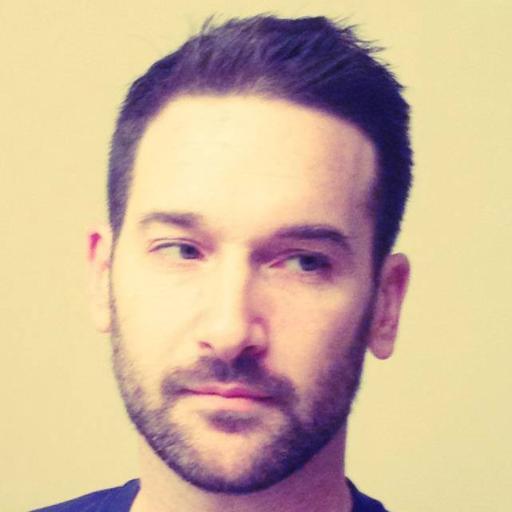
    I haven’t weighed in on the discussion of Roy Moore one way or the other, well, until this obvious piece of shit from Judd Legum in Think Progress. It’s a story told by one of Moore’s wartime buddies, Bill Staehle, the other night. Staehle and Moore went to a “private club” with another soldier who was leaving Vietnam the next day and had invited them along.

    Staehle said that, when he and Moore arrived, they soon realized the man had taken them to a brothel. The third man, Staehle suggested, essentially tricked them. “I could tell you what I saw but I don’t want to,” Staehle said mischievously.

    “There were certainly pretty girls. And they were girls. They were young. Some were very young,” Staehle acknowledged. But according to Staehle, Moore was shocked by what he saw. “We shouldn’t be here, I’m leaving,” Moore said, according to Staehle.

    They asked the third man to leave with them but he didn’t want to. So Staehle and Moore took his Jeep and left him there all night with sex workers, who they agreed were underage. The man returned to base the next morning on the back of a motorcycle, Staehle said with a grin.

    Staehle viewed this story as a triumphant example of Moore’s sterling moral character. Although Staehle hasn’t seen Moore in 45 years, he said, “He’s the same guy… He’s honorable. He’s disciplined. Morally straight. Highly principled.”

    Yeah, well, since this is Think Progress, you know that Legum didn’t see the story the same way that Staehle editorialized.

    In other words, he’s the kind of guy who might end up at a brothel with underage sex trafficking victims, but only by accident.

    Yeah, well, I guess Legum has never been overseas and blindly followed friends into the darkness to finally arrive at a distasteful destination. It happened to me more than once. If Moore hadn’t un-assed the AyOh, Legum might have a point, but he did, so STFU, weasel-dick. Go find a real story.

  • Supreme Court supports Trump travel ban

    According to CNBC only two members of the Supreme Court, Ruth Bader Ginsburg and Sonia Sotomayor, dissented yesterday on the case of the President’s travel ban on people coming from Chad, Iran, Libya, Somalia, Syria and Yemen.

    This is not a final ruling on the travel ban: Challenges to the policy are winding through the federal courts, and the justices themselves ultimately are expected to rule on its legality.

    But the action indicates that the high court might eventually approve the latest version of the ban, announced by President Donald Trump in September. Lower courts have continued to find problems with the policy.

    […]

    In lawsuits filed in Hawaii and Maryland, federal courts said the updated travel ban violated federal immigration law. The travel policy also applies to travelers from North Korea and to some Venezuelan government officials and their families, but the lawsuits did not challenge those restrictions. Also unaffected are refugees.

    So, it’s anti-Muslim, well, except for North Koreans and some commies from Venezuela – none of whom are Muslims. Just people who might be a threat to our national security – you know, like people from these six countries might be a threat.

  • Have That Removed

    BUFF

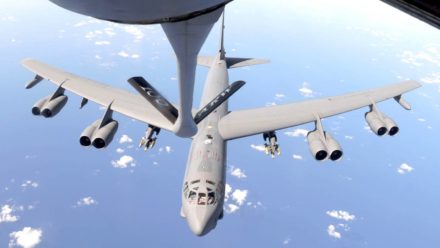
    The Drive is reporting that while recently reported strikes against Taliban drug labs in A-Stan (what a great idea, Barry!) intended to defeat and defund terrorists in country, the Air Force has been using B-52’s, among other aircraft, to redecorate the place. Literally reshaping the terrain via loads of dumb bombs to blast away mountain passes, areas that may provide concealment and cover, and to channel militant forces into specific areas.

    “Area denial missions can range from shaping enemy force maneuvers to denying key terrain to the enemy,” the public affairs officer said. “These terrain denial strikes are useful in enabling freedom of maneuver for our forces, elimination of cover and concealment by enemy forces, an [sic; and] affecting enemy pattern of life in such a way that allows us to gain invaluable intelligence on their networks.”

    In short, the sorties are a deliberate and coordinated effort to strip away actual terrain features – narrow mountainous paths, rock-topped ridgelines, and even buildings and other man-made structures – that militants might use to move without being seen or ambush friendly troops on the ground in the future. It also attempts to funnel the insurgents and terrorists into particular areas or operating habits, which might make them easier to observe, isolate, and neutralize.

    F-16s, B-52s, and even MQ-9 drones have been used, with the Mk-82 the weapon of choice. The BUFFs have the advantage with their enormous payload capability, and have flown in excess of 225 strike missions over A-Stan since July 2016, dropping over 1,000 munitions of various types.

    These missions are not indiscriminate “carpet bombing” as the objective is area denial, where collateral damage and civilian casualties are avoided as much as possible. “Factoring in release angle, aircraft speed, winds and other variables, our aircrew are expertly trained to deliver unguided munitions in such a manner that they often hit a target with nearly the same degree of accuracy as a guided munition.”

    Say what you may about the Air Force, with them it’s Go Big or Go Home.

  • Navy Commander Bobby Pitts sentenced

    Mick sends us a link to the Virginian-Pilot which reports that Navy Commander Bobby Pitts was sentenced this week for his part in the “Fat Leonard” case. The bribery case involves scores of Navy officers and cost the Navy about $35 million. Commander Pitts was sentenced to 18 months in prison and to pay $25,000 in restitution.

    Pitts pleaded guilty in 2015 to charges that alleged he tried to obstruct a federal investigation while in charge of the Navy’s Fleet Industrial Supply Command in Singapore.

    In handing down the sentence against Pitts, U.S. District Judge Janis Sammartino told him that he had “betrayed the Navy and betrayed the country,” prosecutors said in a news release.

    “Pitts deliberately and methodically undermined government operations and in doing so, diverted his allegiance from his country and colleagues to a foreign defense contractor, and for that, he is paying a high price,” said Adam Braverman, the U.S. Attorney in San Diego.

    The judge and I would disagree on what is a “high price”. 18 months is a cakewalk. Of course, he’s giving up his military pension, too, so that’s pretty expensive.