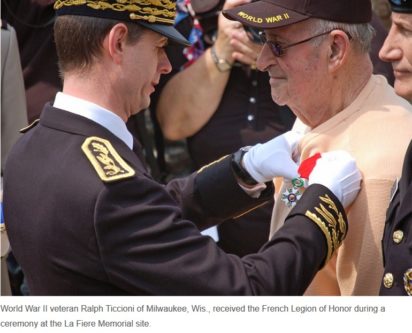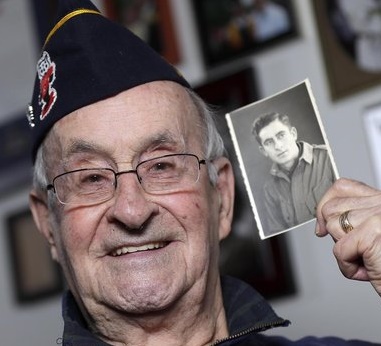
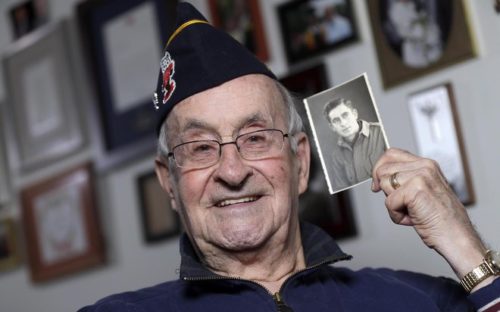
Ralph Ticcioni a Wisconsin World War II veteran has been telling folks for years about his parachute drop into Normandy on D-Day with the 82d Airborne Division. His memories are pretty vivid like they were when he told the story to Milwaukee Journal Sentinel reporters earlier this year;
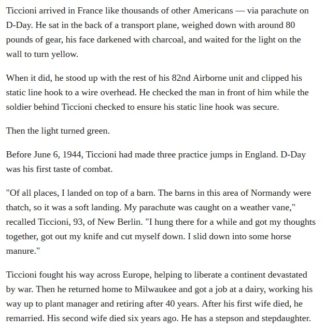
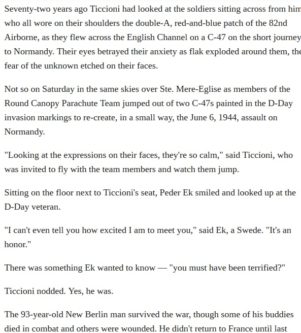
He even had folks convinced at Defense.Gov when they interviewed him.
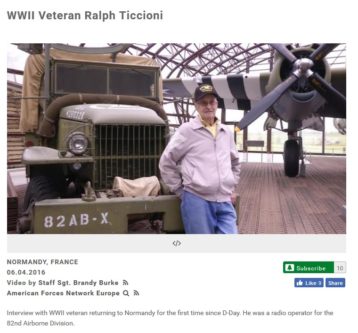
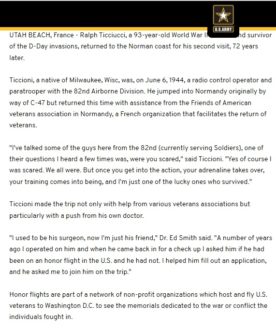
He fooled the Army.mil people, too, as well as the French and his surgeon;
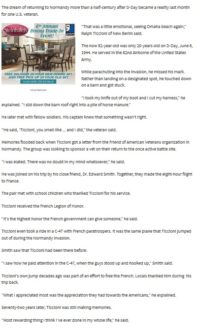
And the local news station;
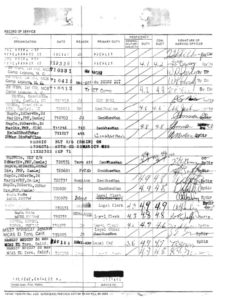
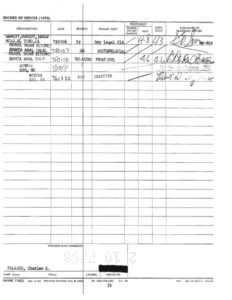
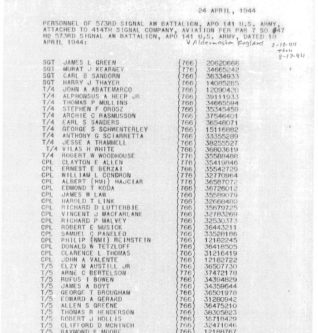
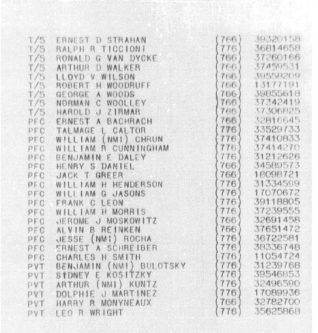
Well, the truth is that Ralph was assigned to the 414th Signal Advanced Warning Battalion on D-Day – they ran LW (light warning) radars for small installations like hospitals, ammunition dumps and airfields. Here is their roster for April 1944. Ralph is near the top of the second page;
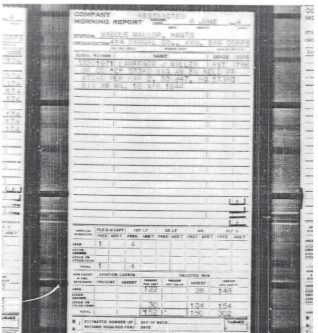
On June 6th, 1944, D-Day, their Morning Report says that they were still in England;
On July 9th, 1944, Ticcioni transferred to the 573rd Signal Air Warning Battalion.
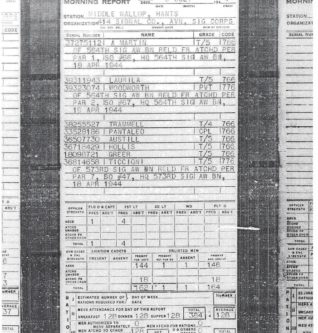
Ticcioni didn’t land with the amphibious assault and he certainly didn’t parachute into France. He didn’t get to France until much later, according to the 573rd’s helpful unit history (Word Document download) posted on line;
The concentration area for the move to the Continent was an airfield in Southern England near Chilbolton, where the 573rd arrived on 15 July 1944, which was D-Day plus 39. The mission of the battalion at Chilbolton was primarily that of completing its preparation for movement to the Continent, originally scheduled for D plus 48, some 12 days after the first echelon of the battalion arrived at Chilbolten. Due to changes in the shipping schedule the battalion was staged back until the 27th of August, which was D plus 82.
So, Ol’ Ralph got to Normandy 82 days after his imagined jump into France.
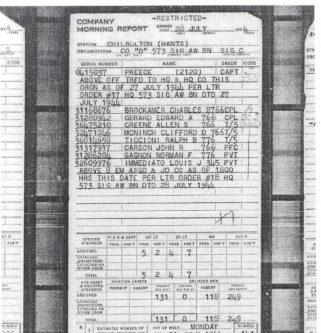
He was still with D Company of the 573rd on July 28th according to the Morning Report;
At one point, some of the members of the 573rd were trained in glider operations in anticipation of their support of the 82d Airborne Division, but that never came to pass because of Patton.
Later it was learned that these units were to have provided air control in an airborne and sea landing on the South side of the Brittany Peninsula. However, General Patton’s Third Army started its drive from the bridgehead the latter part of July, cutting off the Brittany Peninsula ahead of schedule, this terminating the need for such radar units.
When the need for the task force and airborne operation was canceled, most of the personnel reverted to their normal duties within the battalion. One LW Platoon (Lt. Mecklenburg’s ½ U Team), however, with some control personnel was placed on detached service to the 82nd Airborne Division. Here they made practice flights and continued their Airborne training, qualifying for the Airborne Glider Badge.
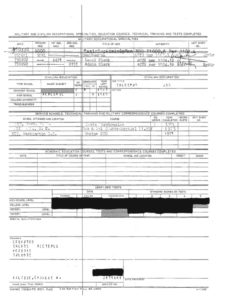
Ol’ Ralph did complete that training and his Report of Separation reflects that he was awarded a glider badge;
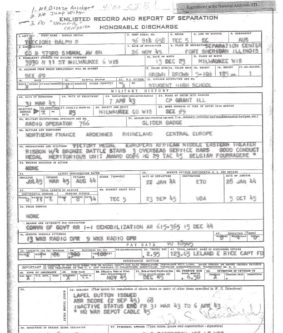
However, he didn’t parachute into France, and a quick reading of the unit history of the 573rd doesn’t indicate that he ever participated in any combat Airborne Operations while he was in Europe. His Report of Separation doesn’t reflect any participation in the D-Day Invasion. No Arrowhead device that would indicate that he was in the assault on the Normandy beaches.
The unit history does mention that some of their units were targets of the German Luftwaffe because their mission hampered air attacks. So it wasn’t all cheese and crackers in the radar units.
I’d much rather be a parachutist than a Gliderman – intentionally crash landing an aircraft ain’t much better than doing it by accident, but, I guess it wasn’t sexy enough for Ol’ Ralph here.