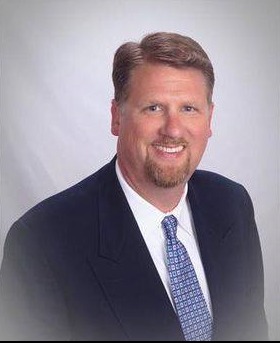
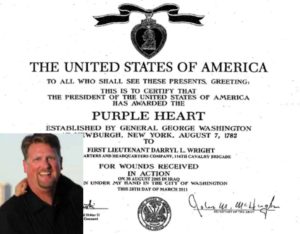
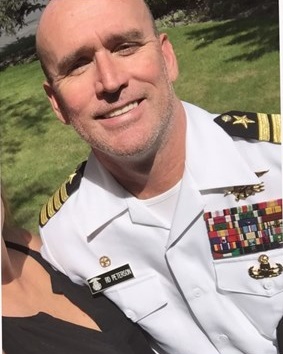
We last wrote about Darryl Wright almost a year ago when the Idaho Guardsman bullied his way into being awarded a Combat Action Badge and a Purple Heart for the time he heard an explosion while he was in Iraq, then he used those awards to fleece the government of about $751,400 worth of benefits – including money paid to his sister as his caregiver. He pleaded guilty last year and he was sentenced yesterday in Federal court according to Military Times;
[Judge] Settle…did order Wright to serve three years, followed by three years of supervised release, and to repay $646,300 in benefits.
Wright’s attorney, Christopher Black, called it “the right sentence.”
“He acknowledged responsibility for the bad decisions that he’s made and apologized for them,” Black said.
He described the defendant as a “complicated man” with psychological issues, but said he has been doing well in therapy.
Assistant U.S. Attorneys David Reese Jennings and Gregory Gruber said Wright parlayed the medals he received to obtain “every possible benefit that might be available to a wounded veteran,” including a wide range of disability benefits and the forgiveness of more than $40,000 in student loans. Prosecutors said he defrauded 16 state, federal, local and private agencies, programs and organizations.
“This guy was a master at weaponizing his phony status as a Purple Heart Veteran,” Jennings said.
The case was investigated by multiple agencies led by the Social Security Office of Inspector General (SSA-OIG). The Office of Inspector General of these agencies were involved in the investigation: Veterans Affairs (VA-OIG), Department of Commerce (DOC-OIG), Office of Personnel Management (OPM-OIG), and General Services Administration (GSA-OIG). Also contributing to the investigation was the FBI, U.S. Army Criminal Investigation Division, the Washington National Guard, the Washington Employment Security Department and the Washington State Department of Social and Health Services.
There’s no word on the fate of CJ Jackson, the low level federal clerk who lost her job bringing this case to her employer, the Commerce Department.
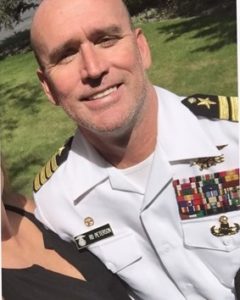
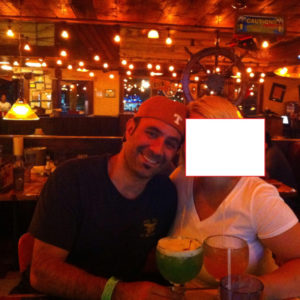
We’ve written about phony SEAL/conman Derek Alldred since last year when some of his victims came out in the media. Well, according to the Dallas Morning News, he was arrested yesterday in Tarrant County, Texas where he was pulling the same romance scam on a woman there;
Alldred was arrested Thursday in Tarrant County on a credit or debit card abuse warrant from The Colony. The charge is connected to yet another relationship he struck up with a woman he met online, Koiner said.
Details about the arrest were not immediately available.
Alldred had been on the run since December, WFAA-TV (Channel 8) reported.
Police urge any of his victims to call them with information they may have. I know folks are watching the blog because I get emails about every week from some who had contact with him.
John Thomas Burch, a veteran who worked as an attorney for the Department of Veteran Affairs, is accused of skimming money from the charity between 2012 and 2016, according to a recently filed lawsuit.
He was able to easily access the funds as he had “unilateral control over the distribution of smaller grants,” typically between $100 and $300, for the foundation’s “Emergency Assistance Program.”
According to its tax filing, the Vietnam Veterans Foundation pulled in nearly $30 million in donations between 2010 and 2014 — but less than 2% was actually put toward veterans in need, CNN reported.
Yeah, I’m thinking that when it’s all said and done, they’re going to find that the Rolls-driving lawyer skimmed a lot more than that from his charity. The corporation claimed that they spent most of their donations on telemarketers – I think they laundered their donations through the telemarketers.
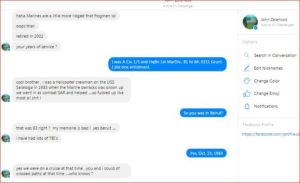
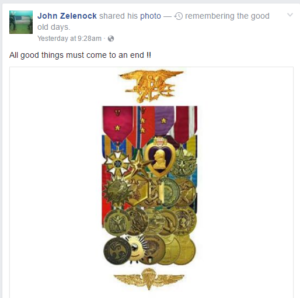
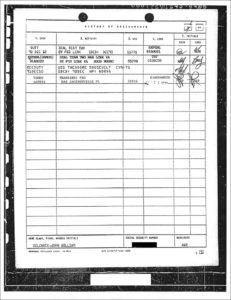
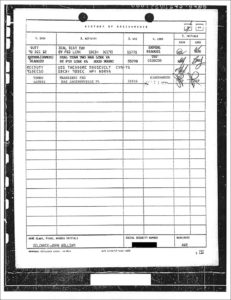
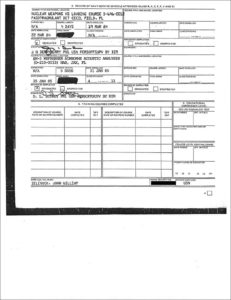
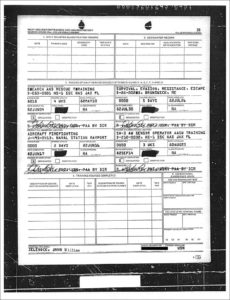
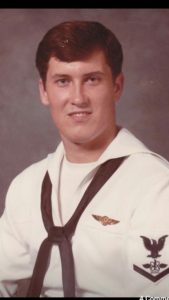
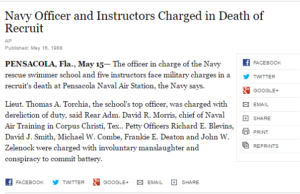
Our partners at Military Phonies share their work on John William Zelenock with us. He claims that he was a Navy SEAL and that he was also part of the search and rescue (SAR) effort at the Beirut bombing on October 23, 1983;
According to Military Phonies, the USS Saratoga was going through sea trials in October 1983 and the ship didn’t deploy until 1984.
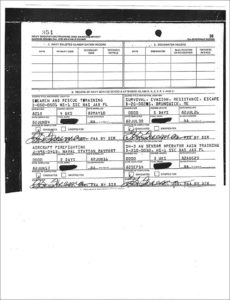
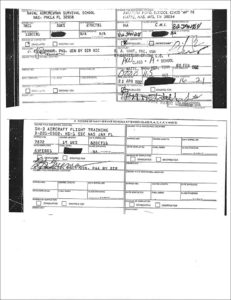
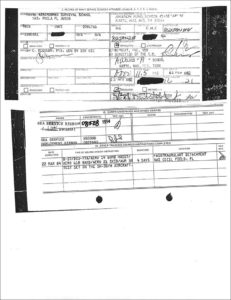
Here’s what he claims that he earned;
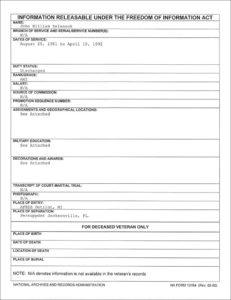
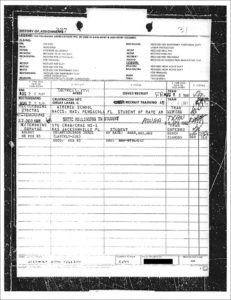
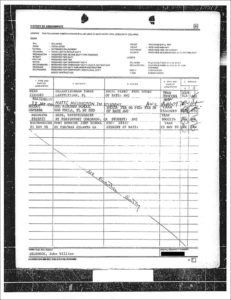
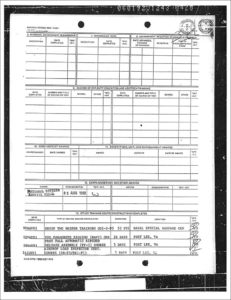
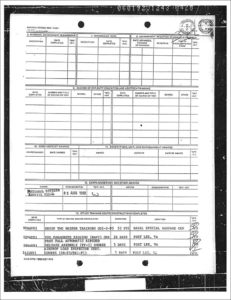
According to his records, he did graduate from BUD/S but he didn’t complete the training to be a SEAL. His only awards, as far as I can tell are two sea service ribbons and the NDSM;
Military Phonies also found some evidence that he was a bad boy after he left the Navy, but I don’t do that stuff, you’ll need to go over there to read about his arrests.
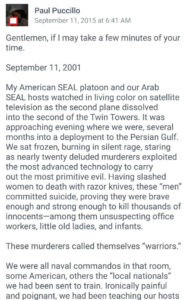
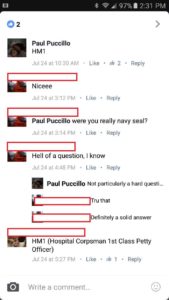
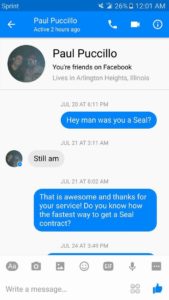
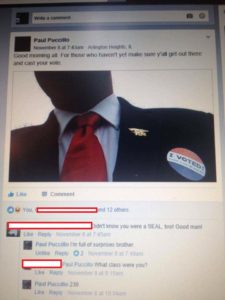
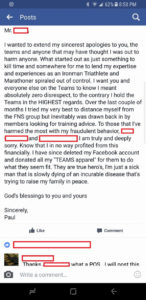
Our partners at Military Phonies share their work on this fellow, Paul Puccillo, who claims to be a Navy SEAL (what else?). He likes to lecture folks on how we should all be SEALs like him;
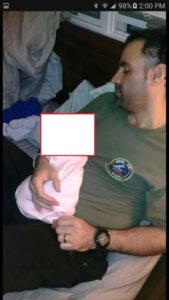
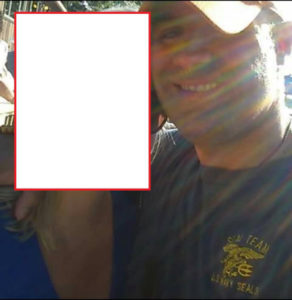
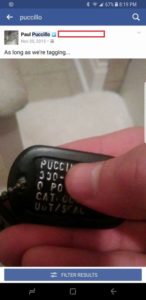
Do you need proof that he’s a SEAL? Well, who would buy SEAL hats, shirts and Tridents if they weren’t a SEAL?
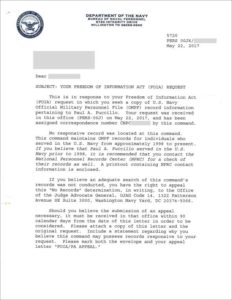
Well, it turns out that we’re all SEALs like Paul, except for actual SEALs;
So he comes clean, sort of. He blames some “incurable disease” that is killing him and he only wanted to help people;
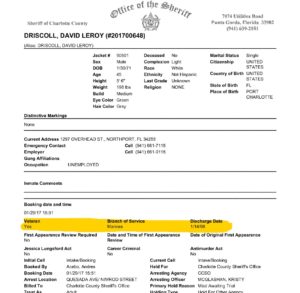
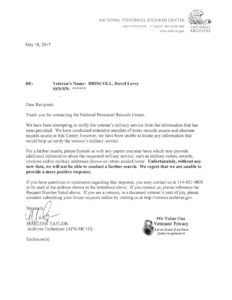
Someone sent us their research on this fellow, David Leroy Driscoll from Port Charlotte, Florida who earlier this year told Charlotte County Sheriff Deputies there that he is a former Marine, probably to help him extricate himself from some out-of-county warrants and a petty larceny beef;
The National Personnel Records Center says “Who?”
Rumor has it that sometimes he claims to be a Navy SEAL “medic”, whatever that is, but I have no proof of that.
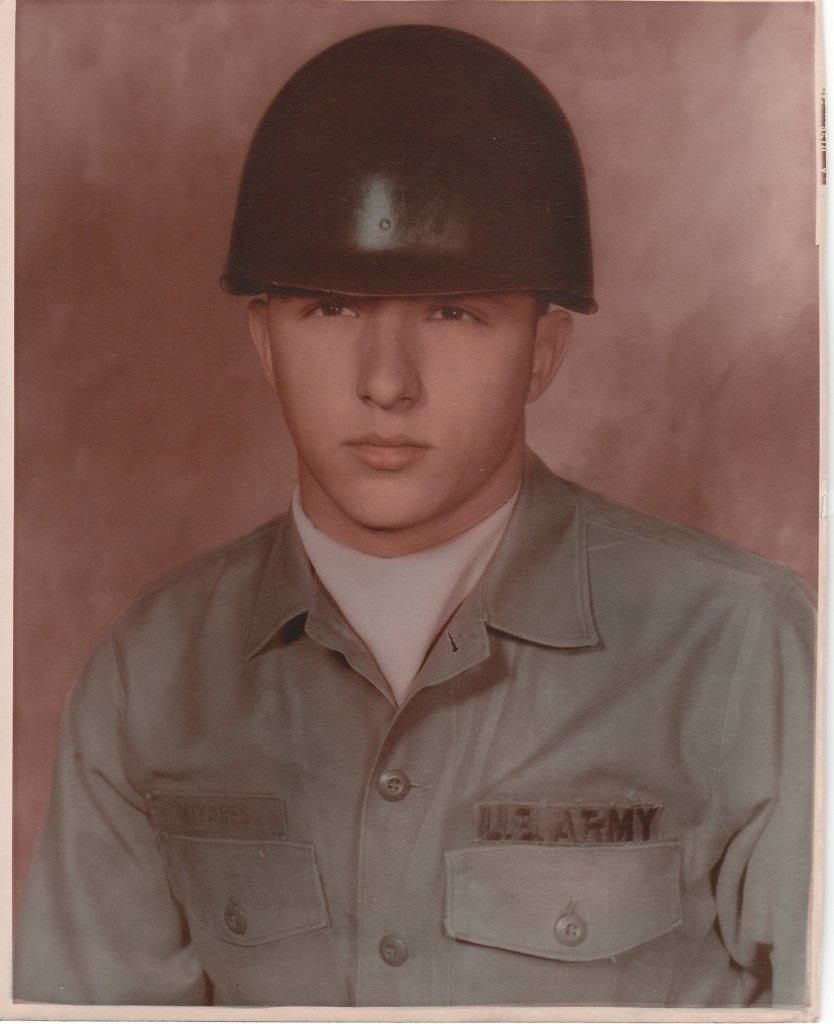
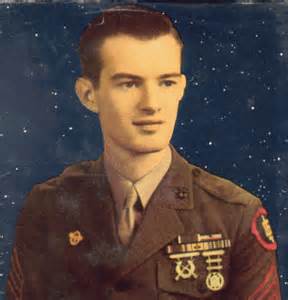
The folks at a Facebook group of veterans who served with 6/31st Infantry of the 9th Division in Vietnam asked us to help them sort through the stories of Urban Miyares, a soldier who served with them briefly in 1968. Miyares tells the story that when he arrived in Vietnam, he felt ill, but his leadership thought that he was malingering. They sent him out on a combat operation, during which he collapsed. While he was passed out, his whole unit was wiped out. He claims that he was put in a body bag and he was discovered by an alert medic in Lai Khe two days later. He regained consciousness two days after that. He was diagnosed with diabetes and subsequently medevaced to the United States where he was discharged.
That’s the story that you can find all of the internet, here, for example.
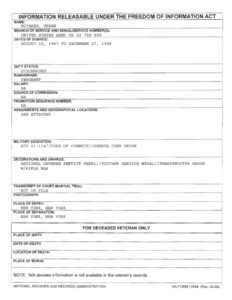
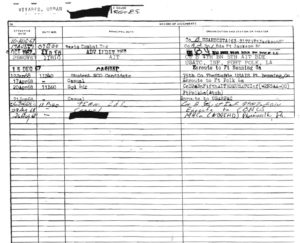
His records support much of the story. He was a “shake and bake 90-day-wonder” NCO and sent to Vietnam, assigned to 6/31st after orientation. This is what the fellows of that unit had to say about his records;
We were successful in obtaining the portion of your military records that is available via the Freedom of Information Act. The information provided is as follows:
Aug 1967: Service Date
6 Oct 1967: Graduated Basic Training, Ft Jackson, SC
15 Dec 1967: Graduated AIT, Ft Polk, LA
17 April 1968: Graduated NCOC, Ft Benning, GA
20 April 1968: Assigned as Sqd Leader (OJT), Ft Polk, LA
26 July 1968: Assigned as Team Leader, Alpha Company, 6/31st, 9th Infantry Division.
23 Aug 1968: Enroute to CONUS, VA Hospital, Phoenixville, PA.
27 Dec 1968: Discharge Date
The group checked with the leadership of the unit on his story;
You mentioned that when you were first assigned to Alpha Company, you were ill and that the company commander thought that you were malingering. [Note: In talking to the Alpha Company Commander, he stated that he does not remember ever having an NCO with this problem, and, that if he had, he would not have forgotten it.] After you were finally assigned to your platoon, you stated that on your 2nd day in the field you experienced a diabetic coma as you were inserted into a firefight in which your entire platoon was wiped out. You were then found by medics, thought dead, and placed in a body bag, only to be later found alive by a medic at Lai Khe. Note: In your email to me, you stated that no one ever actually told you that you had been placed in a body bag, and that this incident was arrived at in 2004 when you heard of a medic (Brian) in Lai Khe who had found a person alive in a body bag, and, after talking to the medic, this seemed to explain the 2 days that you could not account for between when you were inserted into the firefight and when you awoke in the Saigon hospital. While in the hospital, you were told that you were the only survivor from your platoon. In one account you say that the Alpha Company Clerk told you, while you were in the hospital in Saigon, but in another you say that you were told by a 9th Division soldier while in the hospital in Japan. In your email to me, you stated that it was an unknown 9th Division soldier who told you, while you were in the hospital in Japan.
Over a period of several weeks, we were finally able to contact and talk to the following men who were in Alpha during the ~17 days that you were assigned to Alpha Company: the Commanding Officer, the 1st Sergeant, the Company Clerk, the Company Supply Clerk, the Ranking Company Medic, as well as 3 men who were inserted on Aug 7, 1968 when the only Alpha men (3) were KIA’ed during the month of August 1968. Unfortunately none of these men remember you, or the incident that you describe as occurring on Aug 12. These men not remembering you, as well as you not remembering anyone from Alpha Company should not be considered unusual as it appears that you were assigned to Alpha Company for such a short time, and assigned to a platoon for only 2 days before being medevac’d out of the field; however, a surprising thing that our phone calls did uncover is that, per the 1st Sergeant, your name does “not” appear on any of the Alpha Company rosters, that he still has in his possession, for the entirety of 1968. The omission of your name on all of these rosters could only be explained by one of the following two conditions: (1) The 1st Sergeant has somehow misplaced a roster, which he says is not the case, or (2) You were assigned to Alpha Company after completion of your two week in-country training at The Reliable Academy; however, you were medevac’d to Saigon with your diabetic condition prior to actually reporting in to Alpha Company. Note: Since no one in Alpha Company remembers you, and since your name is not on any of the Alpha Company rosters, this seems to be a strong possibility. This would also align to what you were saying about you not being assigned to a unit for several weeks, due to your health problems. In other words, while you were ill, instead of reporting into Alpha Company, you may have remained at The Reliable Academy. Once your health condition permitted, you may have gone out on an in-country field training exercise with The Reliable Academy personnel, and during this training operation, you fell into a diabetic coma and were medevac’d to Saigon for treatment.
Please understand that in no way do I believe that you intended to intentionally mislead anyone. I realize that you were ill and that the entire ~6 weeks that you spent in Vietnam is very unclear in your mind. You do need to understand, however, that many 6/31st combat vets, especially your fellow “Shake and Bake” sergeants (me being one) see many “red flags” as they read your comments and/or listen to your speaking engagements. In addition, your story changes slightly from speaking engagement to speaking engagement. I will detail, below, some concerns with several of your statements:
(1) That you served as a Drill Sergeant while at Fort Polk. As an NCOC graduate, while at Fort Polk, per your military records, you were actually serving as an OJT Squad Leader, and not as a Drill Sergeant.
(2) That prior to being assigned to your permanent platoon, you served as a squad leader, platoon sergeant, and/or platoon leader, in a number of different units, to cover for men who were temporarily out of the field for various reasons. Note: I served in the field, for 9 months, as the platoon sergeant of Delta Company, 6/31st, 3rd platoon and what you have stated would never have occurred in a combat unit, especially with a raw E5 straight from NCOC. Replacements were covered by temporarily moving men up from within the platoon. A “stranger “would not be acquainted with the men in the platoon as to their duty assignments, weaknesses and strengths, nor would they understand the standard operating procedures within the platoon.
(3) Your platoon was wiped out on Aug 12, 1968: During the Vietnam War, the 6/31st “never” lost an entire platoon. The most being 6 men from 1st platoon, Delta Company, on January 12 – 13, 1969. Alpha Company lost no men on Aug 12, 1968. Their only loss in August was 3 men KIA’ed on Aug 7, 1968.
(4) You were placed into a body bag and found alive 2 days later in Lai Khe. As stated earlier, you said that you “arrived” at this incident in order to explain 2 missing days from when you were inserted into the firefight and when you awoke in the hospital in Saigon.
Several concerns here:
• You mentioned that both you and the medic (Brian) wondered how you could have ended up at Lai Khe, and the answer is “You could not have”. Lai Khe was part of the 1st Division area of operation (AO) and well outside the 6/31st_9th Division AO. You would never have been taken to Lai Khe. Depending upon your condition, you would have been taken to either Tan An, Dong Tam or Saigon.
• Per our 6/31st medics, with the heat and humidity in our AO, there is no way that a person in a diabetic coma could have survived 2 days in a body bag. In addition, as soon as a body bag arrived at the morgue, the body was placed in refrigeration to prevent decomposition. Thus, the Lai Khe medic probably did find a live person just prior to placing the body into refrigeration, but that person could not have been you.
• Additionally, if by some miracle this incident had occurred, Alpha Company would have been notified in order for them to modify their casualty list. Per the Alpha chain of command, this never happened, and, if it had, they would never have forgotten about it.
(5) Alpha Company Clerk telling you, while you were in the hospital in Saigon, that you were the only survivor from your platoon. The Company Clerk said that he never traveled to Saigon to tell anyone that his platoon had been wiped out. Again, in an email to me, you stated that an unknown 9th Division soldier told you this while you were in the hospital in Japan.
(6) Your health issues possibly resulting from exposure to Agent Orange. This is very doubtful since you were in the field only 2 days.
(7) You routinely delayed mail call until your platoon’s operations were over in order to not have a man going to the field after possibly receiving a distressing letter from home. Again, you were assigned to your platoon for only ~ 2 days, most likely serving as a Team Leader within a squad. You would, therefore, not have had the authority to delay anyone’s mail call. In fact, only the Platoon Leader would have been authorized to delay mail call.
Based upon the information above, we believe that:
1. You were not placed in a body bag. Our guess is that you were probably medevac’d from the field due to what the medic initially thought to be either a heat stroke or heat exhaustion. This was not an uncommon occurrence with new men who had not yet adjusted to the heat and humidity of the Delta.
2. Upon arrival at the Saigon hospital, it was finally determined that you were suffering from a severe diabetic condition, and treated accordingly. Note: The two days that you state were “missing” were probably due to a combination of your body recovering from the initial shock of the diabetic incident and the medication that you had been given upon your arrival at the hospital.
3. After it was determined that you were severely diabetic, you were shipped from Saigon to Japan and later to a medical hospital in the USA where you stayed until you were discharged from the service.
Urban, I understand that this may or may not be the information that you were hoping for in order to be able to expand upon your Vietnam experience for your biography; however, I am afraid that this is what we have arrived at after many, many hours of reading, listening, calling, emailing, etc. Based on these findings, in your future speaking engagements and interviews, we would think that you would want to discontinue speaking about your platoon being wiped out, and of you being placed into a body bag, because it is clear that these incidents did not occur.
Miyares’ response to their research;
I want to thank you and all the others so much for filling in many pieces to what happened and may have happened. This is just great, and it addresses quite a bit.
There are a couple of items I truly question, but they are really incidental…I only had hoped that someone, from the last platoon I was with, was around to just talk to them/him about what he had remembered of my time with them.
Guaranteed my public speaking and telling about Vietnam will not include what others had told me, as I’ve always felt most uncomfortable in telling this story (which first began publicly in 1995), as I had no proof of what actually happened with me being sick prior to passing out in the field.
Hopefully the dreams will subside with this information as this is the first validation of what probably happened, and I can sure live with it. So sad I didn’t know this years ago, as it’s been baggage I’ve been carrying for a long time.
Again…cant’ thank you enough for all your work and persistence with this matter; it now makes drafting my autobiography so miuch easier.
,
Urban
So, why are we concerned with this story since it seems to be resolved? The story just seems too good to be corrected. Here’s a video of an interview that Urban did earlier this month and he’s still telling it to supplement his business plan three years after he was made aware of the facts of his story;
A number of people have been sending links to The Spectator‘s article exposing historian and author William Manchester’s embellishment of his career in the Marine Corps, especially his participation in the battle for Okinawa. It’s a very long article and compares his own published writings to the letters he sent his mother during the battle and official Marine Corps records.
It seems that he claimed the Navy Cross, the Silver Star, and two Purple Hearts, one Purple Heart for some minor injuries being the only verifiable award. He also boasted about the size of his maleness, while complaining about his overall size, which might explain the reason that he felt a need to embellish his exploits as a cartographer on the commander’s staff, far from the action. Apparently, the Marine Corps disapproved his application to be an officer because of his size (overall).
Manchester wrote such blockbusters as The Death of a President, The Glory and the Dream, and a trilogy on Winston Churchill. He did not serve as valedictorian at the University of Massachusetts. He did not win the Navy Cross. He did not rate a Silver Star. He did not receive two Purple Hearts.
The lists of Silver Star and Navy Cross recipients maintained by the Department of Defense omit Manchester’s name. His 199-page service record, obtained by The American Spectator, contains no mention of the Marine-turned-historian receiving two of the most prestigious awards given for combat valor. In the decades immediately following the war, Manchester not only never made such claims about his wartime heroism, but when noting the honors he did receive excluded any mention of a second Purple Heart, a Silver Star, and a Navy Cross.
According to Wiki, this isn’t brand new information;
Manchester…served in Pacific War’s final campaign on the island of Okinawa, was severely wounded on June 5, 1945, and was promoted to sergeant in July and awarded the Purple Heart. (Note: Various obituaries and other biographical articles on Manchester claim that he was also awarded the Navy Cross, the Silver Star Medal, and a second Purple Heart. These are incorrect, as reference to the authoritative 1955 publication “Heroes: U.S. Marine Corps 1861-1955” by Jane Blakeney will definitively confirm.)
He was able to pull the wool over people’s eyes for decades. But you should read the whole article when you have the time.