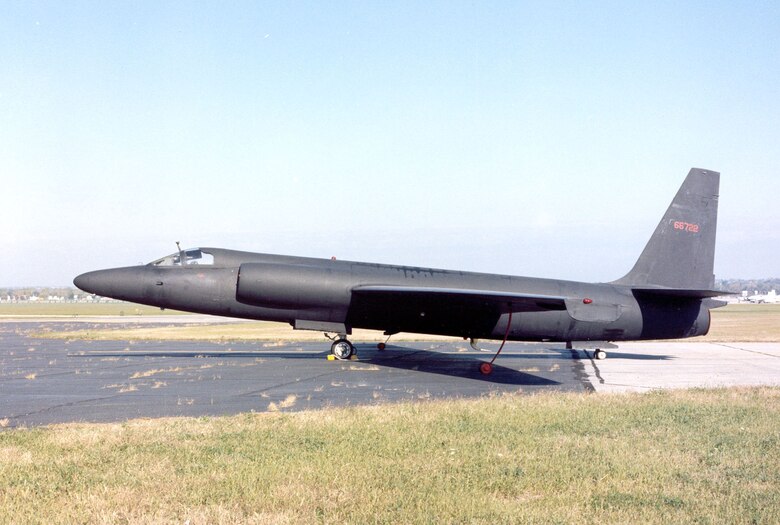
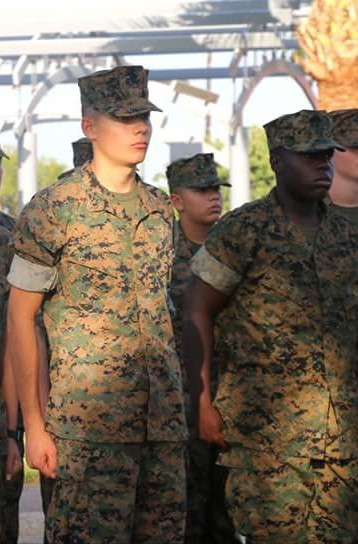
Category: Open thread

  • Weekend Open Thread

    Quick question: who was the first American to break the “sound barrier”? Chuck Yeager, right?

    Most people would say that. Might want to guess again.

    Persuasive evidence – apparently suppressed for roughly 50 years – indicates that an American quite likely if not almost certainly had broken the mythical “sound barrier” prior to Chuck Yeager doing so on 14 October 1947. Twice.

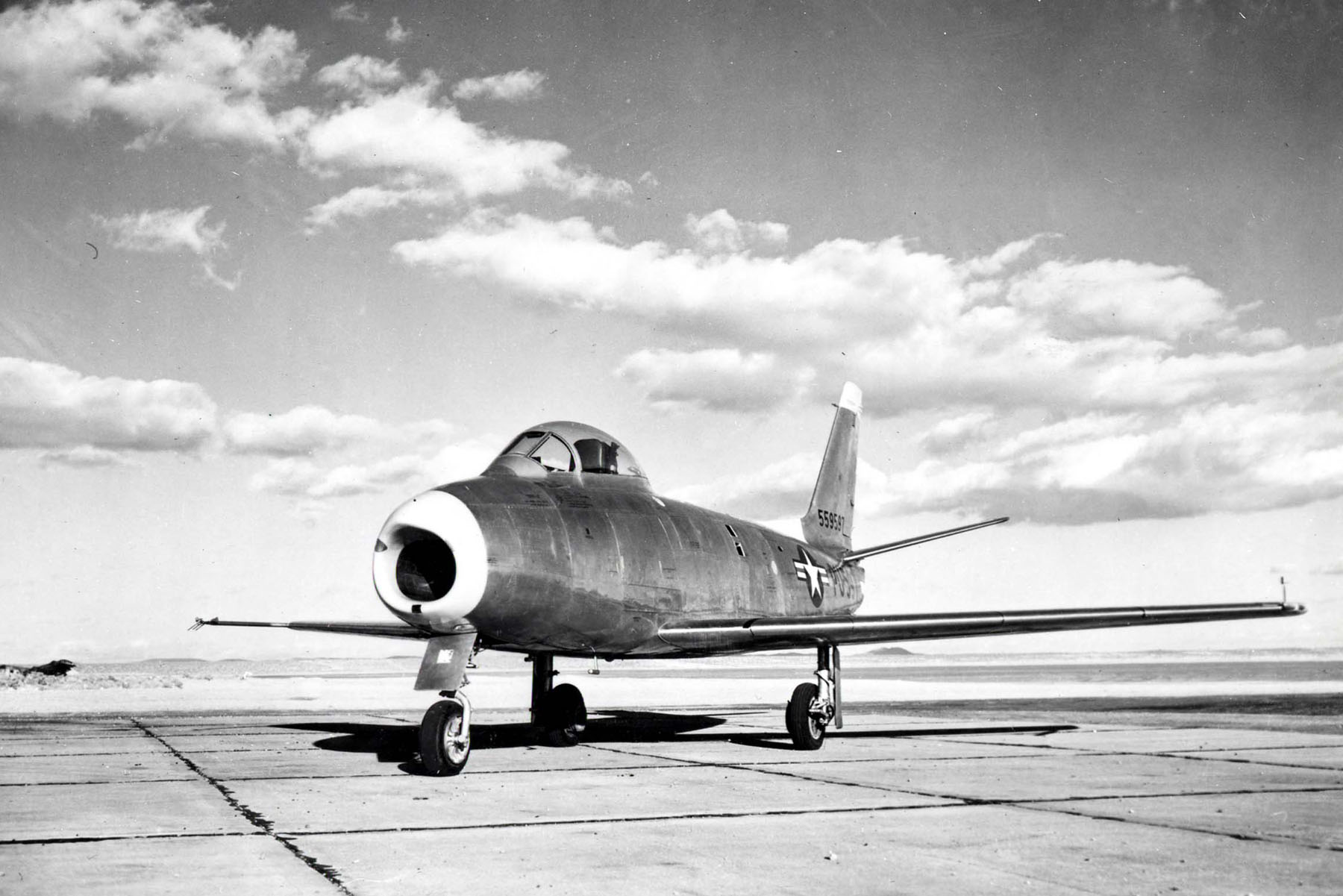
    Yeager wasn’t the American who very likely did that. And rather than the Bell X-1, this was the aircraft that very likely did it:
    . . .

    The American who almost certainly first exceeded the mythical “sound barrier” was a former Army Air Forces war hero. His name? George Welch.

    Those with knowledge of aviation history might recognize the name. Yes, that would be the same George Welch who (along with Ken Taylor) was awarded the Distinguished Service Cross for aerial heroics at Pearl Harbor. Welch went on to become one of America’s premier World War II aces, with 16 confirmed kills by late 1943.

    Unfortunately, Welch was flying in the South Pacific. Malaria nailed him – badly. It was severe enough to send him stateside early from the Pacific. And after serving stateside for a while, with the Army’s blessing he left the service to become a test pilot for North American Aviation.

    Shortly after World War II, North American was developing the F-86. It was capable of high subsonic speed. Had we known about “area rule” design as applied to supersonic aircraft at that time, it would almost certainly have been America’s first supersonic aircraft.

    Now, Welch wasn’t a big fan of Bell Aircraft. They’d designed the P-39 Aircobra which Welch flew early in World War II. When asked what he liked about the Aircobra, Welch said, “Well, it’s got twelve hundred pounds of Allison armor plate.” (Welch was referring to the aircraft’s engine, which was built by Allison and located behind the pilot. Performance-wise the Aircobra itself was a dog; Welch later got himself transferred to a unit flying Lockheed P-38s.)

    Welch knew that Bell Aircraft was preparing to go supersonic with their experimental X-1 in the near future, at Muroc Field (what is today Edwards AFB). Bell had the Air Force’s blessing; the X-1 project was an Air Force favorite, and reputedly President Truman had promised Bell’s board chairman that Bell would be the first to break the “sound barrier”.

    However, Welch was at the time also at Muroc; he was there to test North American’s prototype XF-86, which was capable of high subsonic flight. And the XF-86’s flight testing called for investigating the “high Mach region” – e.g., speeds close to the speed of sound.

    . . .

    So, what happens when you put an aircraft into a dive? It speeds up . . . right?

    You guessed it: on 1 October 1947, Welch took the XF-86 up for a test flight – and investigated the “high Mach region”. And while doing that, Welch dove.

    Welch had previously told one of the regulars at Pancho Barnes’ Rancho Oro Verde Fly Inn Dude Ranch (AKA the “Happy Bottom Riding Club” – yes, both the individual and the place portrayed in the book and movie The Right Stuff did exist) to look for the sound of an explosion. If they heard one, Welch told them to note the exact time and observe the reactions of those who heard it.

    During Welch’s flight, the sound of what appeared to be a detonation was observed at the Fly Inn. Welch later compared notes with the individual he’d previously told to keep an ear out for sounds of an explosion.

    The individual had in fact heard the sound – and noted the time. The time was during Welch’s dive.

    Welch did the same again on 14 October 1947. This time, he did so approximately 20 minutes before Yeager’s more famous flight. And the sonic boom from Welch’s flight that day was also heard at the Fly Inn – and was reportedly far louder than that from Yeager’s flight.

    . . .

    The Air Force never acknowledged Welch’s October 1947 flights. Why? Dunno. But I can hazard a guess.

    The Bell X-1 project was an Air Force favorite, and was expensive; its existence had to be justified. (Secretary of the Air Force Stuart Symington had told North American that they were not to exceed Mach 1 with the XF-86 until after Bell had done so with the X-1.) Welch was a civilian employee of North American Aviation, while Yeager was a serving USAF officer. The optics of having someone in uniform be the first to “break the sound barrier” vice a civilian contractor would obviously have been better for the USAF from a PR standpoint.

    Plus, the head of Bell Aircraft, Lawrence Bell, reputedly knew President Truman. You really think the USAF is gonna chance royally p!ssing-off the POTUS within a few weeks of becoming an independent military service? (smile)

    But reportedly there are not only confirmatory ground reports of a sonic boom associated with of each of Welch’s October 1947 flights. There are supposedly instrumentation readings from the Muroc test range’s radar theodolite from roughly a month later that lend credence to claims on Welch’s behalf. (Welch himself never claimed to have been first to break the “sound barrier”.) Those radar theodolite readings verify that Welch did, in fact, officially exceed Mach 1 twice during testing of the XF-86 in November 1947. (Some accounts imply that radar theodolite readings exist for one or both of Welch’s October 1947 flights as well, but that may not be true.) Plus, Welch accurately described to one of North American’s aircraft designers the “Mach jump” instrumentation anomaly noted in early supersonic flight – and he did so not long after his 1 October 1947 flight, nearly 2 weeks before Yeager supposedly “first” observed that same anomaly.

    Decide for yourself. History gives Yeager the credit – but I don’t think he was actually the first American to “break the sound barrier” during a controlled flight. I’m guessing that was George Welch.

    . . .

    Some might argue that Welch doesn’t deserve any credit for breaking the “sound barrier” because he had to dive in the XF-86 to exceed Mach 1. On the surface, that argument may appear to have merit. But bear with me for a moment. Because one can also make a similar – though somewhat different – argument about Yeager’s 14 October 1947 supersonic flight in the X-1.

    Yeager’s first supersonic Bell X-1 flight is well-chronicled, so there’s no need to discuss it in detail. And it was indeed the first time the “sound barrier” was broken in level flight – technically speaking.

    I say “technically speaking” because the Bell X-1 didn’t make that entire flight under its own power. Though capable of taking off from the ground, Yeager’s X-1 did not do so on Yeager’s 14 October 1947 flight. Rather, on that date it was carried to a high altitude by a B-29. It was then released to fly under its own power.

    Would the Bell X-1 have been able to fly to altitude and then exceed Mach 1 in level flight that day? Who knows? (It certainly didn’t do so on 14 October 1947.) But if diving is a “NO-GO” regarding breaking the “sound barrier”, well, pray tell: why is flying only half of a typical air mission (no powered takeoff, being carried aloft instead by another aircraft and then released at high altitude) acceptable?

    In fact, only one Bell X-1 flight involved a takeoff under the aircraft’s own power. Reputedly that flight indeed exceeded Mach 1, with Yeager at the controls – but it also occurred on 15 January 1949, nearly 15 months after Yeager’s first supersonic flight.

    Personally, I think the credit should be split – with Welch recognized as the first American to break the “sound barrier”, and Yeager as the first to do so in level flight. But nearly 50 years of having the truth about Welch’s October 194 flights apparently withheld – plus Welch’s early death in a 1954 flight test accident – has led to Yeager getting sole credit.

    . . .

    OK, enough history. Enjoy the Weekend Open Thread, everyone – and the weekend.

    References:

    The first part of Welch’s career is is summarized here; the second part is summarized here. Both linked articles are excellent if somewhat biased reading (the author’s obviously a huge fan of Welch). Other claims are discussed in an article linked in the following author’s note.

    Yeager’s career and accomplishments need no discussion. He truly was one of the “larger than life” figures of the early days of jet flight.

    A few other Wikipedia articles were also used as background, mostly for checking dates and/or other specific items.

    —–

    Author’s Note: FWIW: while it’s generally accepted that an American was the first to break the “sound barrier”, there’s a chance that the first person to break the “sound barrier” wasn’t even an American. Several Germans flying jet- or rocket-powered aircraft during the latter stages of the war could conceivably have done so; some claims to this effect have been made. But most of those cases have been investigated in detail and have been reasonably (but not categorically) found to be “NO-GOs”. Most of them are listed here, along with Welch’s flights and a few other debunked claims.

    However, two cases are worth mention as possibilities.

    The first possibility is the case of Luftwaffe test pilot Lothar Sieber. It’s entirely possible that Sieber in fact exceeded Mach 1 on his first – and only – test flight of the Bachem Ba349 “Natter” (IMO a truly YGBSM! manned interceptor design developed and partially tested by Nazi Germany out of desperation late during the war) on 1 March 1945.

    Read the linked article if you’d like more details on the Natter and its design. Suffice it to say that IMO both its design and operational conept would have made Rube Goldberg proud.

    In any case: Sieber’s test flight was the first vertical launch of a manned rocket. He may well have exceeded Mach 1 at some point during this single manned test flight of the Ba349.

    However, Sieber never claimed to have “gone supersonic”. The test was a failure, and Sieber did not survive the flight.

    The second is the case of Luftwaffe pilot Hans Mutke. Like Welch, it’s possible he may have exceeded Mach 1 in a dive with his Me262 late in World War II (9 April 1945). His account, and flight profile (including a high-speed high-power dive), track Welch’s account from a few years later reasonably well. (His aircraft didn’t fare as well, though; it was damaged too badly to ever be flown again from aerodynamic stress.)

    Initial analysis indicated that exceeding Mach 1 was not possible with the Me262 because that aircraft’s design would make the aircraft’s controls useless above Mach 1. This in turn would make the aircraft uncontrollable; it was believed that a safe return to subsonic flight would not be possible.

    However, later analysis has indicated that the Me262 might indeed have been recoverable after exceeding Mach 1. Hans Mutke having exceeded Mach 1 in a dive during his flight on 9 April 1945 thus can’t be definitively ruled out.

  • Weekend Open Thread

    Hurricane Florence from the ISS, taken OA 12 September 2018

    Hurricane Florence is continuing inland after making landfall this morning on the North Carolina coast. If you’re of a religious bent, please remember all those in the affected area in your prayers.

    If you’re in the affected area, don’t take needless chances. The short-term aftermath of a hurricane is often as dangerous as the storm itself. Post-hurricane flooding IMO is likely to be a serious problem after this storm. Keep yourself informed of local conditions regarding flooding – both current and projected.

    Bottom line: as AW1Ed noted in an earlier article, things can be replaced; people can’t. Make sure your and your loved ones’ safety comes first.

    Weekend open thread time, all. “Be careful out there.”

  • Weekend Open Thread

    Once upon a time, a Zippo lighter saved a piece of aviation history.

    . . .

    During the 1950s, the USAF developed their “Century Series” fighters (F-100 through F-111). They include some of the most famous and iconic US aircraft in history.

    However, as is common in developmental efforts not all of these aircraft saw production. The F-103, F-108, and F-109 never made it past their mockup stages. Three prototypes for a fourth – the F-107A – were built, but the aircraft was not selected for production.


    F-107A Prototype #2, on Display at the
    National Museum of the US Air Force

    Unfortunately, the F-107A was competing against the F-105; it “lost” the competition, and was not produced beyond three prototypes. That decision has been termed one of the USAF’s great mistakes, particularly given the F-105’s record in Vietnam – where over 40% of the entire USAF F-105 inventory (334 of 833) was lost in combat, with another 7.2+% (61 of 833) lost in noncombat incidents. (This propensity for takeoffs without corresponding landings reputedly gave the F-105 its informal nickname “Thud”.)

    One of the three F-107A prototypes was damaged in an aborted takeoff and scrapped. The other two still exist; prototype #1 is currently on display at the Pima Air and Space Museum (Tucson, AZ), while prototype #2 is on display at the National Museum of the Air Force (Wright-Patterson AFB, OH).

    Getting the latter display aircraft to Wright-Patterson AFB would not have been possible without a Zippo lighter.

    . . .

    The F-107A on display at the National Museum of the Air Force was flown there on 25 November 1957. It was at Edwards AFB immediately prior to the flight. It was apparently being prepared for scrapping.

    It was flyable – but had no instrument or cockpit lights. It also had no navigation radios.

    The pilot was Maj. Clyde Good. His plan was to follow an F-100 aircraft also being ferried from Edwards AFB to Wright-Patterson AFB that day (and which presumably was equipped with navigational aids). The F-100 would lead the way; the flight was planned as a one-day trip during daylight hours.

    Unfortunately, that “wonderful individual” Murphy was alive and well – and up to his usual tricks. Maj. Good and his F-107A became separated from the F-100 he was supposed to follow due to issues at a refueling stop.

    He was able to follow roads to the Saint Louis area. However, the issues at the refueling stop had also apparently delayed his flight. So east of Saint Louis . . . Maj. Good lost daylight. He also began to experience undercast conditions, making it impossible for him to follow roads to the vicinity of Dayton.

    Maj. Good was able to determine the correct heading to get him IVO Dayton, OH. But he needed to periodically check his instruments – and he had no instrument or cockpit lights. And since the trip was planned as a day trip, Maj. Good also hadn’t packed a flashlight.

    However, he had packed a Zippo lighter. You guessed it: he periodically “lit it up” to check his instruments.

    Maj. Good’s navigation skills were good enough to get him within radar range of Wright-Patterson AFB. Wright-Patterson air traffic control then vectored him in.

    However, Maj. Good then faced another minor issue: the aircraft had no landing lights.

    No problem. He landed with one hand on the stick and the other holding his Zippo, lit, so he could read the instruments.

    I might fault Maj. Good’s contingency planning somewhat, but the man certainly had nervios de acero – y cojones muy grandes. (smile)

    . . .

    OK, enough oddball aviation history for today. Enjoy the WOT, everyone.

    References:

    https://en.wikipedia.org/wiki/North_American_F-107

    https://www.airspacemag.com/military-aviation/century-series-wannabe-209334/

    https://en.wikipedia.org/wiki/F-105_Thunderchief#Phase-out_and_retirement

    . . .

    Author’s Note: Yes, there was indeed an aircraft designated as the F-110A; it was called the “Spectre”. That was the short-lived USAF designation for the F-4 Phantom II prior to the adoption of the 1962 Tri-Service aircraft designation system.

  • Weekend Open Thread

    Most TAH readers know about the May Day 1960 U-2 incident involving Gary Powers. But I’d guess not as many know about a U-2 incident that almost happened roughly 3 1/2 years earlier. It would have been fatal, caused the loss of a U-2, and would have been even more embarrassing to the USA than Powers being shot down had things gone very slightly differently.


    U-2A on display at the National Museum of the US Air Force

    During overflights of the Soviet Union, U-2 pilots for those flights were offered the option of carrying a suicide kit on each mission. (Carrying the kit at all, along with its use if captured, were at the pilot’s option.) By the time Powers’ U-2 was shot down, this kit used a concealed needle and a purified shellfish toxin (saxitoxin).

    However, US overflights of the Soviet Union started in 1956 – nearly 4 years prior to Powers being shot down on May Day 1960. During the earlier years of the program the suicide kit consisted of what was referred to as an “L-pill”. This was a small glass capsule filled with a potassium cyanide solution. Biting down on the pill broke the glass; death due to cyanide poisoning would occur quite shortly afterwards.

    That earlier L-pill reportedly very nearly led to another, earlier U-2 incident over the Soviet Union.

    . . .

    Only one Cold War U-2 flight ever overflew Moscow. That flight occurred on 10 July 1956; it was piloted by Carmine Vito. It wasn’t his only overflight of the Soviet Union.

    Though U-2 pilots were warned that opening their pressure suit’s faceplate while at high altitude was dangerous, many did so anyway – generally in order to eat something small or get a piece of chewing gum during a mission. Vito was one of those who did.

    Vito was reportedly fond of eating lemon drops during U-2 missions. Seems his throat got dry while at altitude, particularly during Soviet overflights. (Ya think!? Hell, during an overflight mission my butt cheeks would have been clenched tight enough to suck half the damn seat cushion up my . . . well, let’s just say I’d have been damned nervous too. [smile]) He found that lemon drops helped, so Vito always put a supply in one of his flight suit pockets.

    This turned out to be a problem on 10 December 1956. On that date, Vito made another overflight of the Soviet Union. And the following reportedly happened (emphasis added):

    About midway through the mission Vito opened his faceplate and popped into his mouth what he thought was another lemon drop. Closing the faceplate, he began sucking on the object and thought it strange that it had no flavor and was much smoother than the previous lemon drops. Although tempted to bite down, he decided instead to reopen his faceplate and see what it was. Spitting the object into his hand, he saw that he had been sucking on the L-pill with its lethal contents of potassium cyanide. Just a thin layer of glass had stood between him and near-instant death. Somewhat shaken, Vito successfully continued the mission and returned safely to base.

    Source: Norman Polman, Spyplane: The U-2 History Declassified, MBI Publishing, 2001, p. 103.

    Yep, you read that correctly. Vito had popped his L-pill into his mouth instead of a lemon drop. Only the fact that Vito refrained from biting down on the L-pill prevented his death – and the U-2 from crashing, very likely over Soviet territory.

    You see, Vito had requested the suicide kit for that mission. And one of the USAF techs involved in mission prep had unknowingly put the L-pill Vito had requested into the same pocket that Vito used for his lemon drops.

    The account is silent regarding whether or not Vito needed new skivvies after the mission. (I certainly would have.) But those early U-2 pilots were masters at “maintaining an even strain” – so maybe not.

    On flights afterwards, the L-pill was reportedly boxed to prevent such a mix-up. And concerns about what might happen if one broke in the cockpit during a mission (with likely fatal results to the pilot) later led to the replacement of the L-pill with the saxitoxin-laced needle carried by Powers on his ill-fated final U-2 flight.

    . . .

    The accuracy of the above account involving lemon drops, an L-pill, and Vito has been disputed. Purportedly Vito himself denied it – but multiple other accounts say it indeed happened, with at least one account indicating Vito was heard after the mission relating the tale to other U-2 pilots.

    Col. Carmine Vito, USAF (Ret), died in Austin, TX, on 27 August 2003. He’s thus no longer around to ask about the story’s accuracy.

    Personally, I believe the incident happened – if not to Vito, then to another U-2 pilot. One thing I’ve learned during my lifetime is that (to paraphrase the late Arthur C. Clarke) not only is reality stranger than fiction – it’s sometimes also stranger than you can possibly imagine.

    OK, enough Cold War history. Enjoy this week’s WOT – and have a great 3-day weekend.

  • Weekend Open Thread

    I’ve been on the road for over two weeks now, and I still have one more longish leg yet to go. I won’t get home until sometime tomorrow afternoon or evening.

    It’s been a good trip. But it’s also been long one – as in 6,000+ miles and still counting.

    Still, it’s been worth it. I got to see some friends and relatives I haven’t seen in a while – as well as take care of some necessary family business and meet a few folks. And today, I’ll be spending some time at the range with an old friend engaging in gunpowder therapy while breaking in one of these:

    Nothing special – it’s just an inexpensive plinking rifle with a synthetic stock. But it’s probably inherently more accurate than I am these days regarding putting lead where I want it to go. And shooting a .22LR semi-auto is, well . . . it’s just plain fun. (smile)

    It’ll also be the first time I’ve had a chance to try out fiber-optic sights. That alone should be interesting.

    Good company, plus some gunpowder therapy. I can certainly think of many worse ways to spend the day.

    OK, intro’s over. Enjoy this week’s WOT, everyone – and have a great weekend.

    —–

    ADDENDUM: the little beastie shoots like a dream – one jam in about 120 rounds (and of a type I’d have had to see to believe anyway, so I’m pretty sure it was a fluke), with perfectly reliable operation before and afterwards. The adjustable sights were easy to get roughly zeroed quickly. Only minor quibble was that getting the last round into the magazines was quite difficult before I figured out the trick to doing that. After that, only mildly so.

    And, unfortunately, I was right: the rifle is inherently far more accurate than my aim these days. (smile)

  • Weekend Open Thread

    Frequent commenter GDContractor sends us a photo of his son participating in a Flag Ceremony. The youngster is a high school Junior.

    Your son appears to be a fine young man, amigo. As they might have said where I grew up: “Looks like you raised him right.”

    Enjoy this week’s WOT, everyone.

    Hat-tip to Ex-PH2 for forwarding me the photo used above.

  • Weekend Open Thread

    Friday, 24 April 1959, was just another day. Except, perhaps, at one particular location in Michigan.

    The year 1959 was during the height of the Cold War. The Strategic Air Command existed then, and was flying – a lot.

    On that date, Capt. John S. Lappo was the pilot for one of those SAC aircraft flying. He and his crew were returning to their home base – Lockbourne AFB, OH, which is today Rickenbacker ANGB – from a training mission. They were over Michigan, near the Straits of Mackinac.

    From his cockpit, Capt. Lappo saw this:

    Later, Lappo was asked about what happened next. When asked, he remarked: “. . . . I’ve always wanted to fly under a big bridge. I thought it would be the Golden Gate.”

    That day apparently Lappo decided that Michigan’s Mackinac Bridge would do equally well. So, with a maximum of 155 feet of clearance between the bottom of the bridge and the water . . . he flew his aircraft under the freaking bridge.

    Oh, did I mention he was flying one of these?

    Yep: that day, Lappo was flying a a strategic bomber – a B-47 Stratojet. The aircraft is just over 107 feet long, has a wingspan of 116 feet – and is 28 feet tall at the tail.

    Cojones muy grande. Cerebro? Tal vez no tanto.

    The incident wasn’t widely reported at first. But the word got out, and eventually reached the USAF.

    Predictably, the USAF “was not amused”. Seems Lappo had violated USAF regs by flying under that bridge.

    Capt. Lappo was court-martialed for violating regulations on 10 August 1959. He was found guilty.

    However, in that day and age you still had senior officers who had a sense of humor – and valued risk-taking, at least to a point. So Lappo wasn’t “body slammed” as he might have been today.

    Lappo’s wings were revoked – permanently. He never flew for the USAF again.

    But the USAF didn’t kick Lappo to the curb, either. He was allowed to continue serving. He did – and was promoted twice afterwards, retiring as a Lt. Col. in 1972.

    Lt. Col. John S. Lappo, USAF (Ret), passed away in 2003 at the age of 83. His obituary made prominent mention of his 1959 “underflight” exploit – though it appears to have gotten the date wrong (they seem to have listed his court-martial date as the date he flew under the Mackinac Bridge).

    . . .

    Think I’m kidding about the above? Think again. It’s not a “tall tale” – the above really happened.

    Enough YGBSM! history for today. Enjoy yer WOT, everyone. (smile)

  • Weekend Open Thread

    No, that’s not a photo of an SR-71 nursing its child after giving birth, nor is it creative work with Photoshop. (smile) It’s a photo of one of the two Lockheed M-21s ever built.

    The M-21 was a 2-seat derivative of Lockheed’s A-12 (the SR-71 was also a 2-seat A-12 derivative) that resulted from the downing of Gary Powers’ U-2 over the Soviet Union on 1 May 1960. It was intended to launch Mach 3+ drones over denied territory having an air defense threat deemed too high to allow manned reconnaissance flights. In the photo above, it’s carrying one such drone.

    The drone it’s carrying is the Lockheed D-21. The D-21 had a range of 3,000 nautical miles, a maximum speed of Mach 3.3+, and an operational altitude of 90,000+ feet. It carried a high-resolution camera, which went active at a specified point or points along its pre-programmed course. The camera, film, and accompanying control unit were contained in a module called a “hatch” (don’t ask me why) which would be ejected post-mission at a predetermined point. The “hatch” was to be recovered; the rest of the drone was designed to self-destruct after ejecting it.

    The launch aircraft and drone were designed under Project Tagboard. Multiple test flights – including four drone launches – were executed as part of the project. The last test flight was a disaster, causing the loss of one M-21 and the death of the aircraft’s “back-seater” Launch Control Officer (the aircraft’s pilot survived). The photo above appears to have been made during one of the early captive test flights.

    After the disastrous final test flight of the M-21/D-21, the project’s operational concept was changed to underwing launch of the drone from a B-52 “mothership” using a rocket booster. (The D-21 was ramjet powered and required acceleration to high speed before its engine would function. Even at top speed, a B-52 simply wasn’t fast enough to do that.) The photo below shows a B-52 “mothership” ship carrying 2 modified drones mounted on their booster rockets.

    The drones modified for underwing launch from a B-52 were designated the D-21B. (There was no D-21A; the original drones were designated D-21 without letter suffix.) A number of these survive today and are on display to the public in various locations – including one on display in the Chinese Museum of Flight in Peking, PRC (more about this below).

    The surviving M-21 “mothership” aircraft is similarly on display at the Seattle Museum of Flight. Though not 100% historically accurate, for display it has a D-21B drone mounted in carry position.

    The B-52 launched version of the drone, the D-21B, was used to overfly China’s nuclear test site at Lop Nor multiple times in the late 1960s and early 1970s under a project codenamed Senior Bowl. Due to various technical problems those overflights were unsuccessful, and the program was terminated. The last of those unsuccessful overflights is believed to have provided the D-21B currently on display in Peking. (smile)

    OK, that’s enough aviation history. Enjoy this week’s open thread, everyone.