Category: No Longer Missing

  • 36 heroes recovered from Tarawa battlefield

    36 heroes recovered from Tarawa battlefield

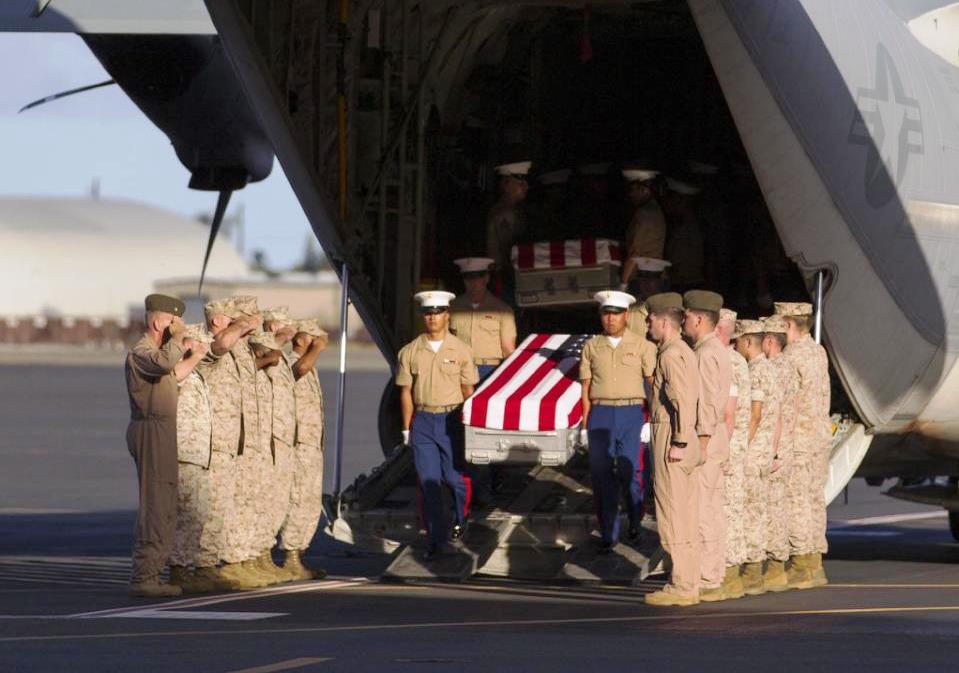
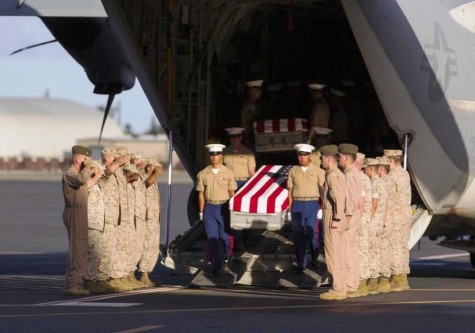
    Remains returned to Pearl

    Last month we talked a little about the discovery of Medal of Honor recipient Alexander Bonnyman’s earthly remains on the island of Tarawa by the private organization Honor Flight. The Associated Press reports that 35 other Marine and Navy heroes of that battle were recovered along with 1LT Bonnyman;

    A ceremony was held Sunday in Pearl Harbor to mark their return.

    History Flight has started identifying the remains, and the Defense POW/MIA Accounting Agency will complete the effort, the Marines said. The Marines plan to return the remains to their families after they’ve been identified.

    The battle began on November 20, 1943 and lasted for 76 hours. About 6400 Americans, Japanese and Koreans died in the battle. When the smoke cleared, only 17 Japanese troops and 129 Korean construction workers had survived the assault of the nearly 4800 troops and laborers that had spent over a year fortifying the island. Almost 1700 Americans died during the attack. About 550 Americans still haven’t been recovered and identified from this single battle.
  • Alexander Bonnyman; MOH recipient’s remains found

    Alexander Bonnyman; MOH recipient’s remains found

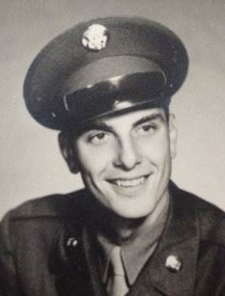
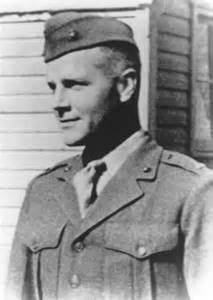
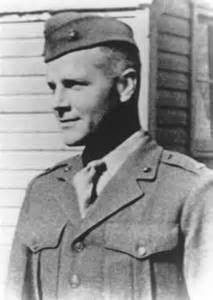
    Alexander Bonnyman

    Mary sends us the news that the remains of Marine 1st Lieutenant Alexander Bonnyman, a Medal of Honor recipient have been found on the island of Tarawa where he was killed along with scores of his Marines, which made the task of locating his remains so difficult. His grandson, Clay Evans, led a team of researchers to the island to search for the hero.

    “It just blew me away,” said Evans. He and the team managed to identify Bonnyman through dental records, including gold fillings. They also found a cigarette lighter and what appears to be a portion of his dog tag. DNA records will help erase any remaining doubts but Evans says he is certain the remains belong to his grandfather. A plan is now in the works to return Bonnyman’s remains to East Tennessee where he will be buried in a family plot perhaps sometime in late September.

    His Medal of Honor citation tells the story of his actions preceding his death better than i could tell it all;

    “For conspicuous gallantry and intrepidity at the risk of his life above and beyond the call of duty as Executive Officer of the 2d Battalion Shore Party, 8th Marines, 2d Marine Division, during the assault against enemy Japanese-held Tarawa in the Gilbert Islands, 20–22 November 1943. Acting on his own initiative when assault troops were pinned down at the far end of Betio Pier by the overwhelming fire of Japanese shore batteries, 1st Lt. Bonnyman repeatedly defied the blasting fury of the enemy bombardment to organize and lead the besieged men over the long, open pier to the beach and then, voluntarily obtaining flame throwers and demolitions, organized his pioneer shore party into assault demolitionists and directed the blowing of several hostile installations before the close of D-day. Determined to effect an opening in the enemy’s strongly organized defense line the following day, he voluntarily crawled approximately 40 yards forward of our lines and placed demolitions in the entrance of a large Japanese emplacement as the initial move in his planned attack against the heavily garrisoned, bombproof installation which was stubbornly resisting despite the destruction early in the action of a large number of Japanese who had been inflicting heavy casualties on our forces and holding up our advance. Withdrawing only to replenish his ammunition, he led his men in a renewed assault, fearlessly exposing himself to the merciless slash of hostile fire as he stormed the formidable bastion, directed the placement of demolition charges in both entrances and seized the top of the bombproof position, flushing more than 100 of the enemy who were instantly cut down, and effecting the annihilation of approximately 150 troops inside the emplacement. Assailed by additional Japanese after he had gained his objective, he made a heroic stand on the edge of the structure, defending his strategic position with indomitable determination in the face of the desperate charge and killing 3 of the enemy before he fell, mortally wounded. By his dauntless fighting spirit, unrelenting aggressiveness and forceful leadership throughout 3 days of unremitting, violent battle, 1st Lt. Bonnyman had inspired his men to heroic effort, enabling them to beat off the counterattack and break the back of hostile resistance in that sector for an immediate gain of 400 yards with no further casualties to our forces in this zone. He gallantly gave his life for his country.”

  • Captain Richard W. Vincent coming home

    The folks at the American Legion Post 124 in Westfield, Massachusetts write to tell us that they have the honor of laying Captain Richard W. Vincent, D Company, 2nd Battalion, 18th Marines, 2nd Marine Division, United States Marine Corps to his final rest.

    Captain Vincent has been missing on the island of Tarawa since November 20, 1943. He was listed as KIA the following January and promoted posthumously from 1st Lieutenant.

    Back in December, Hondo reported that his earthly remains were finally identified on October 21st, 2014. The Adjutant of Post 124 writes to tell us that he’ll be laid to rest in his home town of Westfield MA on July 2, 2015 at the family plot in Pine Hill Cemetery with the Legion providing full military honors.

    If you’re in the neighborhood, you might want to stop by and pay your (our) respects.

  • Three Return Home

    DPAA has identified and accounted for the following three formerly-missing US military personnel.

    From World War II

    PVT Arthur H. Kelder, Medical Corps, 2nd General Hospital, US Army, was lost on 7 May 1942 in the Philippines. He was accounted for on 26 May 2015.

    2nd Lt. Robert W. Ward, 387th Bombardment Group, 9th Air Force, US Army Air Forces, was lost on 23 December 1944 in Germany. He was accounted for on 7 May 2015.

    From Korea

    PFC Charlie Wilcher Jr., Company A, 9th Infantry Regiment, 2nd Infantry Division, US Army, was lost on 30 November 1950 in North Korea. He was accounted for on 7 May 2015.

    You’re no longer missing, my elder brothers-in-arms. Our apologies that it took so long.

    You’re home now. Rest in peace.

    . . .

    Over 73,000 US personnel remain unaccounted for from World War II; over 7,800 US personnel remain unaccounted for from the Korean War; and over 1,600 remain unaccounted for in Southeast Asia (SEA). Comparison of mitochondrial DNA (mtDNA) from recovered remains against mtDNA from a matrilineal descendant can assist in making a positive ID for unidentified remains that have already been recovered, or which may be recovered in the future.

    TAH reader HMCS(FMF) noted in comments elsewhere that DPAA’s web site now has what appears to be a decent “Contact Us” page. The page doesn’t have instructions concerning who can and cannot submit a mtDNA sample or how to submit one, but the POCs listed there may be able to point you in the correct direction if you’re interested.  If you think you might possibly qualify, please contact those POCs for further information.

    If it turns out you qualify to submit a mtDNA sample, please arrange to submit one. By doing that you just might help identify the remains of a US service member who’s been repatriated but not yet been identified – as well as a relative of yours, however distant. Or you may help to identify remains to be recovered in the future.

    Everybody deserves a proper burial. That’s especially true for those who gave their all while serving this nation.


  • No Longer Missing – A Rather Special Case

    A soldier’s remains will be interred with full military honors during July. They will be interred long after his demise.

    That, unfortunately, is not terribly uncommon. But this case is, for two reasons.

    First: the individual – SGT Charles Schroeter, US Army – was a recipient of the Medal of Honor. It’s relatively rare to see a MoH recipient interred long after his demise.

    Second: the man received his MoH in 1870 – for gallantry in action the previous year. His heroism occurred during an engagement with the Apaches in Arizona during the Indian Wars.

    That engagement occurred during SGT Schroeter’s second enlistment. He had previously served in the Union Army during the Civil War, which began shortly after he immigrated to this nation from Germany.

    SGT Schroeter’s remains were unclaimed after his death. His remains were cremated; the ashes were stored for a long period in a basement at Greenwood Cemetery in San Diego. Some years ago, they were interred in a communal crypt in that cemetery’s mausoleum.

    Enter CAPT Bill Heard, USN (Ret).

    CAPT Heard learned of SGT Schroeter’s remains being buried in that communal crypt. He researched the man’s history.

    With substantial assistance from both the Congressional Medal of Honor Society and the San Diego History Center, CAPT Heard was able to determine that this was the same SGT Charles Schroeter who had been awarded the MoH. After additional effort, CAPT Heard was able to convince the National Cemetery Administration of that fact.

    SGT Schroeter’s remains were removed from the communal crypt containing them. They will be properly re-interred will full military honors at Mirimar National Cemetery on 9 July 2015. (The article gives more of his history, and is IMO well worth the time to read.) He will be the first MoH recipient interred at that cemetery.

    Rest now in peace, my elder brother-in-arms.

    And thank you, CAPT Heard.

  • Another Is Home

    In January, DPAA identified and formally accounted for the following US soldier from World War II. Regrettably, I appear to have missed the original announcement of his change in status – hence this delayed article. My apologies.

    Flight Officer Arthur J. LeFavre, 599th Bombardment Squadron, 397th Bombardment Group, US Army Air Forces, was lost on 23 December 1944 in Germany. He was accounted for on 22 January 2015.

    Welcome home, my elder brother-in-arms. Our apologies that it took so long.

    Rest in peace.

    . . .

    Over 73,000 US personnel remain unaccounted for from World War II; over 7,800 US personnel remain unaccounted for from the Korean War; and over 1,600 remain unaccounted for in Southeast Asia (SEA). Comparison of mitochondrial DNA (mtDNA) from recovered remains against mtDNA from a matrilineal descendant can assist in making a positive ID for unidentified remains that have already been recovered, or which may be recovered in the future.

    While I’ve not yet found instructions for submitting a mtDNA sample on DPAA’s web site, their site now has what appears to be a decent “Contact Us” page. The page doesn’t have guidance concerning who may submit a mtDNA sample or how to submit one, but the POCs listed there may be able to point you in the correct direction if you’re interested.

    If you have a missing relative from World War II, Korea, or SEA, please consider contacting DPAA and see if you qualify to submit a mtDNA sample. If you qualify, please consider submitting such a sample. By doing so you just might help identify the remains of a US service member who’s been repatriated but not yet been identified. Or you may help to identify remains yet to be recovered in the future.

    Everybody deserves a proper burial. That’s especially true for those who gave their all while serving this nation.

    Again: my apologies for the belated notice.


    (Author’s Note: the rank above is indeed correct. From 1942-1945, the US Army Air Forces had warrant officer pilots, navigators, flight engineers, and bombardiers. “Flight Officer” was the proper title for that rank; it was equivalent to today’s W1.)

  • Eugene Erickson; Korean War POW comes home to NM

    Eugene Erickson; Korean War POW comes home to NM

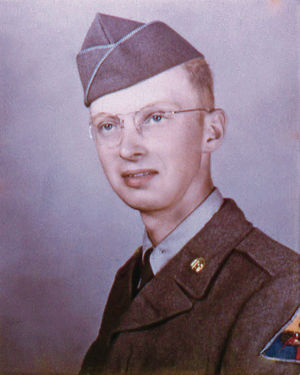
    Eugene Erickson

    The other day, Hondo wrote about Private Eugene Erickson coming home after being Missing in Action as a Prisoner of War since August 1951. His family will inter his remains in Santa Fe National Cemetery on Wednesday afternoon according to the Santa Fe New Mexican.

    Pvt. Eugene Erickson enlisted in the Army in September 1950, three months after the Korean War began. He was 20 years old.

    Following 14 weeks of basic training at Fort Knox, Ky., Eugene Erickson was sent to Fort Lawton in Seattle for additional training as an infantryman before being shipped overseas in February 1951.

    By springtime, he was in the thick of combat in South Korea. In mid-May, he and his Company B mates from the 1st Battalion, 38th Infantry Regiment of the 2nd Infantry Division became engaged in a two-day battle with Chinese forces.

    The odds weren’t good: 10,000 Americans against 180,000 Chinese.

    “They were not going to make it out,” said Army Sgt. 1st Class Michael Ramsey, a Korean War analyst with the Defense POW/MIA Accounting Agency.

    “It was a straight-up Chinese wave of attack. It didn’t matter how much barbed wire we had out there. It didn’t matter how deep the mine fields were. It didn’t matter how much firepower we had. The Chinese were not going to be denied by the weight of human capital they were willing to expend in that battle.

    Private Erickson died of starvation according to witnesses, one of whom was a hometown friend, Sergeant Herbert Floyd. who told of his death to his family and reportedly was with Erickson when he died. Eugene’s 87-year-old brother, Clayton, will also receive the nine awards that Eugene earned posthumously.

  • Sergeant Wallace Dawson comes home

    Sergeant Wallace Dawson comes home

    Sgt. Wallace Dawson

    Someone sent us a link to an article about Sergeant Wallace Dawson and his long-overdue homecoming – sixty-four years after his capture by enemy troops. Sergeant Dawson died of malnutrition in June of 1951, only a few months after his capture when Company L, 3rd Battalion, 9th Infantry Regiment, 2nd Infantry Division was over run by Chinese forces at Sang-sok, South Korea;

    The community filed the streets to honor the fallen soldier. The Patriot Guard Riders led the procession along with members of the military. Students from San Marcos High School stood along a fence saluting the fallen soldier.

    Wallace’s twin brother Warren said it was a homecoming to remember.

    “Driving over here the roads were full of people and I was like holy cow! And then driving by the school all the students were there waving their flags. That was amazing. The turnout and the people that really care it was just tremendous to me.,” said Dawson.

    video platformvideo managementvideo solutionsvideo player

    Hondo mentioned last month that Dawson’s remains had been identified and now the 64-year-old story comes to an end.