Category: Navy

  • Fleet Master Chief Petty Officer Russell Smith is NOT a Navy SEAL

    Fleet Master Chief Petty Officer Russell Smith is NOT a Navy SEAL

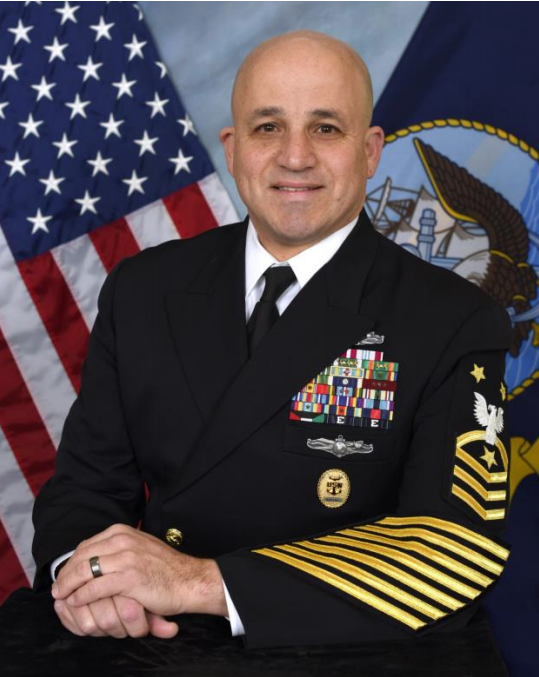
    The Navy has named their new senior enlisted man, Fleet Master Chief Petty Officer Russell Smith.  There are many reports about his career and military experience.  Almost all of them make some reference to him being with SEAL Team 4.

    military.com  – He was a weapons technician for three years before converting to be an intelligence specialist in 1993. From there, Smith served with Navy SEALTeam 4 and with the U.S. defense attaché office in Russia


    stripes.com – He joined the Navy in 1988 and began his career as an airman, later becoming a weapons technician and an intelligence specialist. His sea duty assignments have included SEAL Team 4 and the aircraft carriers USS Enterprise, USS Carl Vinson and USS Abraham Lincoln.


    navytimes.com – That career choice put Smith to work with SEAL commandos and duty at the U.S. Embassy in Moscow, but he returned to sea aboard the carrier Carl Vinson and did another tour on the Lincoln, too.

    I think you get the picture now.  He is without a doubt a very accomplished Sailor.  I can find nothing anywhere that quotes him saying or insinuating that he was a SEAL.  Not one picture have I seen with him wearing a Trident.  The man has served honorably and with distinction.  Serving with many land-based duty assignments are considered “Sea Duty” by the Navy.   I am guessing that he was an Intel guy with the Support folks assigned to Team 4.   They man a desk, think up intelligent stuff, complain if they have to stay after 5 and generally stay pretty dry most of the time.  Even little ole me manned a desk part my career.  I cried when they took it away.  Drawer Gunners kick…back.

    It seems if anyone has been near a real Navy SEAL its big news for some reason.  I put up with a couple of them every day, believe me…they are just as phucked up as the rest of us.  Anyway, cut my inbox and Fleet Master Chief Petty Officer Russell Smith some slack, I am sure we both have better things to do.


  • Iran says it has control of Gulf, Strait of Hormuz

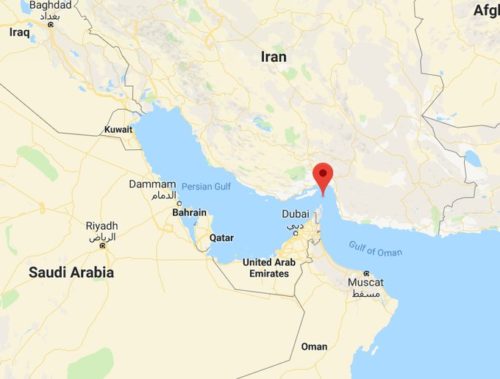
    SoH

    The Mad Mullahs and their lackeys in the Revolutionary Guard’s Navy are rattling their sabers again, followong a large scale naval exercise in the Straights of Hormuz (SoH). The strategic waterway provides the only access to the Indian Ocean, and nearly 1/3 of the world’s sea-borne oil passes through.

    Fox News reports the head of the navy of Iran’s Revolutionary Guards, General Alireza Tangsiri, said on Monday that Iran had full control of the Gulf and the U.S. Navy did not belong there, according to the Tasnim news agency.

    “It’s a very contentious area,” retired Lt. Col. Bob Maginnis told Fox News’ “Your World with Neil Cavuto” earlier this month.

    “The blockage of the Strait of Hormuz, even temporarily, could lead to substantial increases in total energy costs,” the agency said in a 2012 report.

    At the beginning of August, Iran began a large-scale exercise in the Strait of Hormuz involving more than 50 small boats, practicing “swarming” operations that could potentially shut down the vital waterway if ever deployed for real. The drill came after President Trump pulled the U.S. out of a landmark nuclear accord with Iran and leaders of both countries exchanged fiery rhetoric.

    “They’re causing problems once again, as predicted, in the Strait of Hormuz,” Maginnis said. “This is something we’ve grown accustomed too.”

    But if Iran were to follow through with any bluster to close down the vital shipping channel, a potential U.S. response would be swift.

    Gen. Joseph Votel, head of U.S. Central Command, said earlier this month that Iran was showcasing its military capabilities and has the ability to plant mines and explosive boats in the waterway, as well as use missiles and radar along the coast. He stressed the U.S. and allies routinely train for that possibility and are prepared to insure that freedom of navigation and commerce continues in those waters.

    President Obama’s former National Security Adviser Jim Jones, a four-star general, said in an interview earlier this month the Iranian Navy should be “wiped out” if any action is taken to block maritime traffic.

    “I personally would like to see, if they ever did something in the Strait of Hormuz, I would like to see their navy disappear,” Jones told The National.

    Color me impressed- an Obama advisor with some stones. As for the Iranian regime, this bluster is a result of Trump’s disengaging from the ludicrous nuclear deal. and slapping the sanctions back on. They need a refresher in Operation Praying Mantis.

    Operation Praying Mantis

  • Jack Henry Duncan – Fake SEAL

    Jack Henry Duncan – Fake SEAL


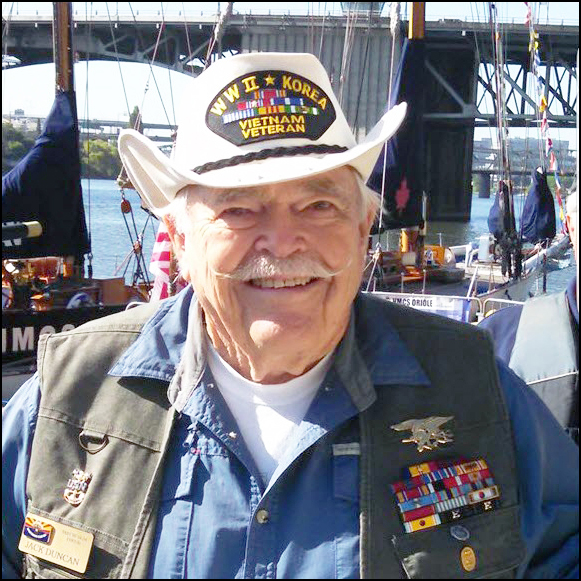
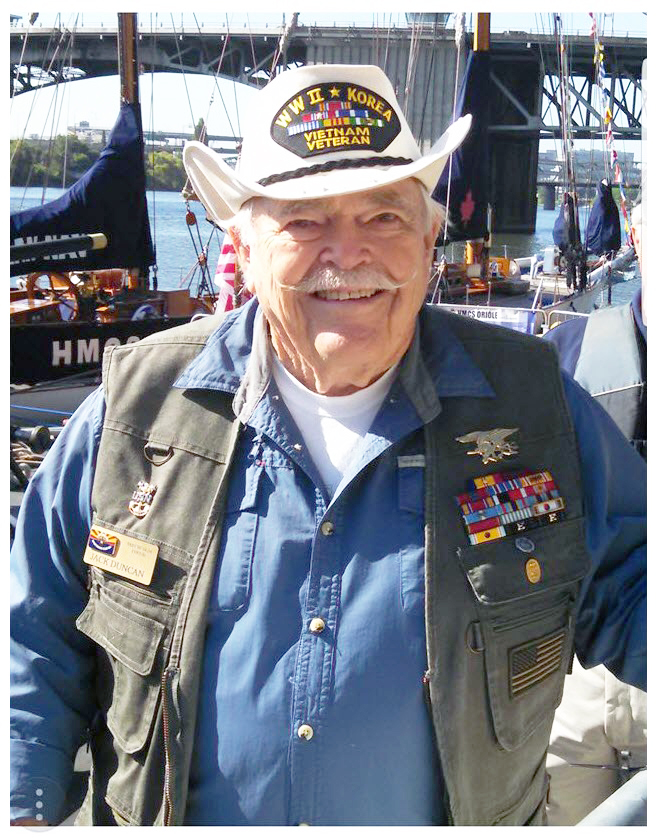
    The folks at Military Phony send us their work on Jack Henry Duncan, a retired Master Chief (E-9). This is a bit of an odd case.  Jack had an amazing Naval career and he received various decorations and awards.

    This article highlighted Jack’s accomplishments on Veteran’s Day.

    Jack Duncan enlisted in the Navy at age 18 out of Bakersfield, California.  he became an under water explosives technician, similar to what we would call a Navy Seal Today.  He also served in the Korean War and in the Vietnam War, a total of 43 years.

    Jack will be 89 on June 26, 2014.   He says before he knew it he was on a PT boat and told to go “Kill Guys”.   He says he’s kind of a kill them all and let God sort ’em out kind of guy.

    Jack wrote an article for the PT103 website about his exploits – a claim of attending UDT Training and a claim of being a Combat Demolition Swimmer.

    http://www.pt103.com/PT_Boat_Veteran_Stories.html

    So, off to Fort Pierce and the Amphibious Base I went for a brief school before returning post haste to the Western Pacific (WestPac) as an Underwater Demolition Team (UDT) Swimmer – a Navy frogman. There are no torpedoes in UDT, subsequently named SEALs, so I changed my rating to Gunner’s Mate. The end of the conflict found me assigned to the Philippine Sea Frontier as a Navy policeman in war-ravaged Manila until 1946.

    [LINES DELETED]

    Remember the term “fruit salad?” They also hung on my chest the Trident or Budweiser or Flying Pickle Fork gold pin of a Navy SEAL in addition to the Combat Craft device and the large badge of a Command Master Chief. Cripes, I looked like a Russian General with a port list!

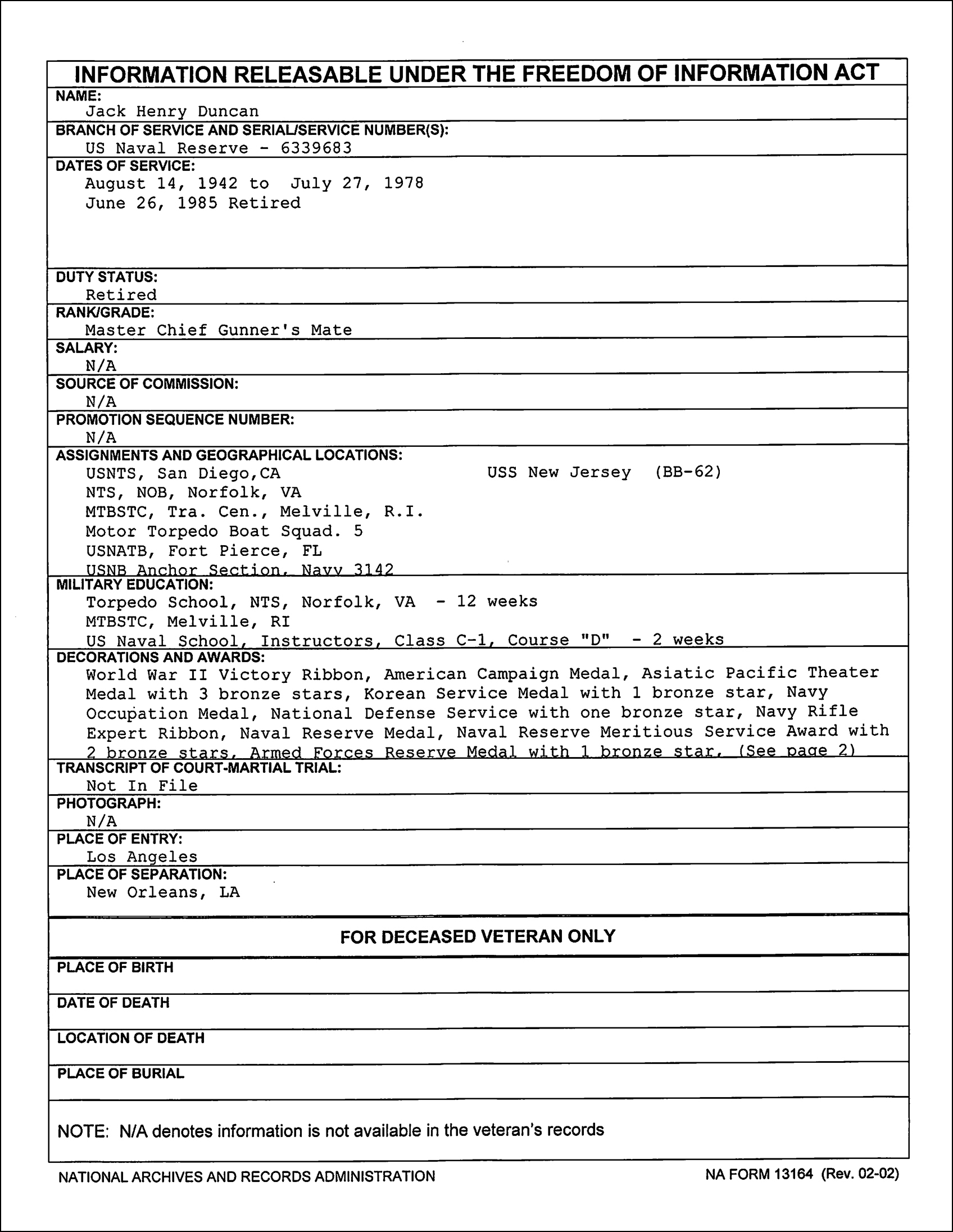
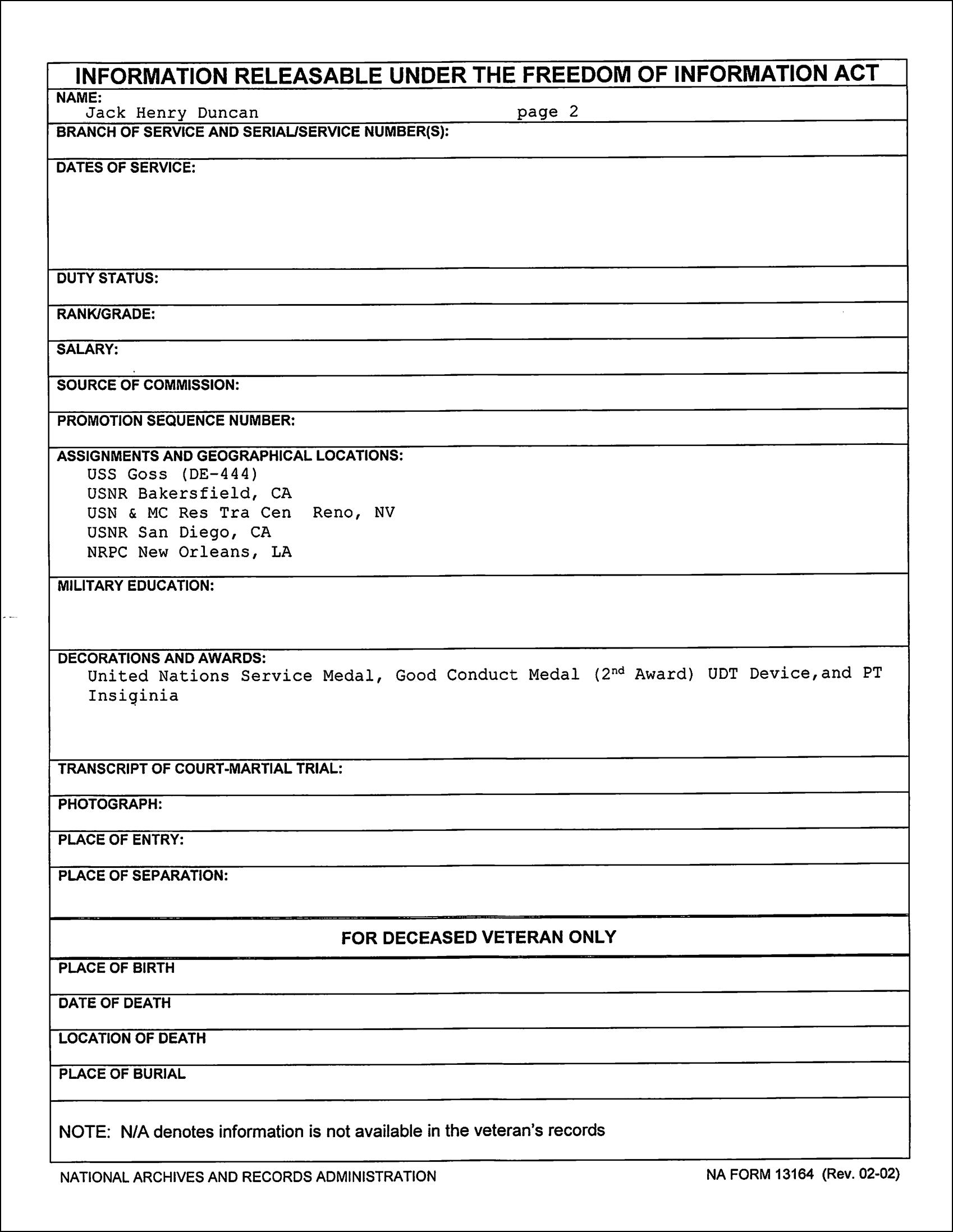
    As we previously stated Jack was a Master Chief, earned numerous awards, served in numerous commands and served for over 4 decades in the Naval Reserves.  Jack was in USNATB Fort Pierce, FL but did NOT complete UDT Training.  We checked all sources within the UDT/SEAL database/archives.  Fort Pierce at the time had numerous Naval schools.  The odd part is that on Jack’s Summary Sheet it shows UDT Device which in the 70’s they were shoulder tabs.  There is NO listing of UDT Training or any UDT/SEAL Commands.  In 1983 all UDT Teams converted to SEAL Teams so if he was UDT it would show in his record that he earned the SEAL Insignia (Trident).  Jack was part of the PT community and most likely attended Anti-Aircraft Training in Fort Pierce.  In conclusion, Jack was NOT UDT or a SEAL.

    The distinction may be a challenge for people outside the UDT/SEAL community to follow but it is important nonetheless.  There is more supportive evidence over at Military Phony.

  • Fernando O Fundora – Phony SEAL

    Fernando O Fundora – Phony SEAL

    The folks at Military Phony send us their work on this Fernando O. Fundora fellow.  Fernando raised a few eyebrows with several retired Navy SEALs and they alerted Military Phony.

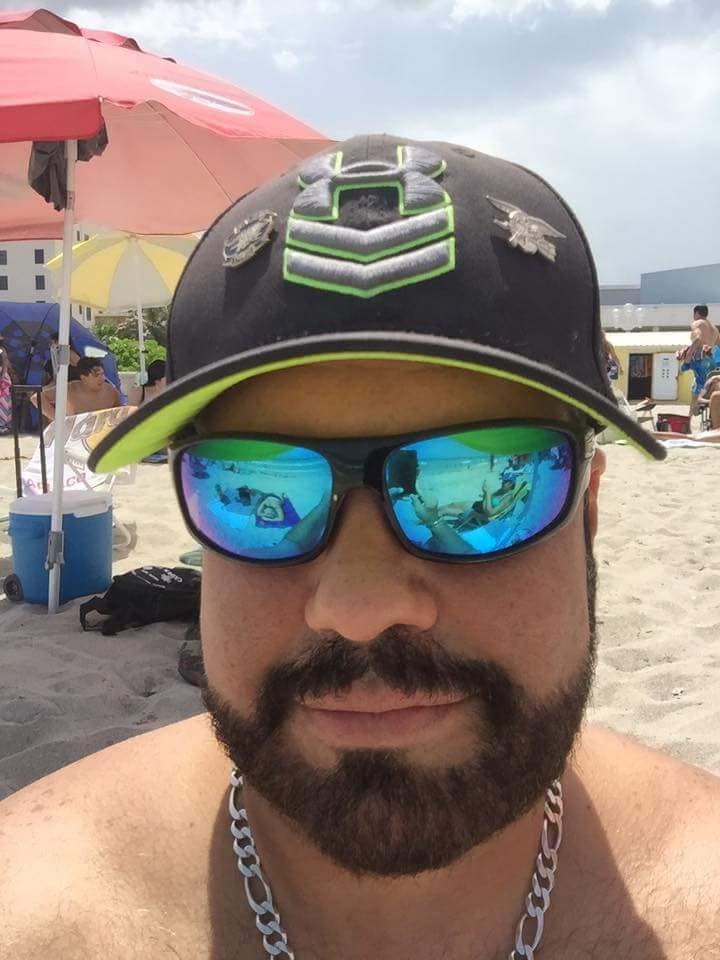
    In this photo, he wears both a Trident pin and a SEAL Team Three insignia.

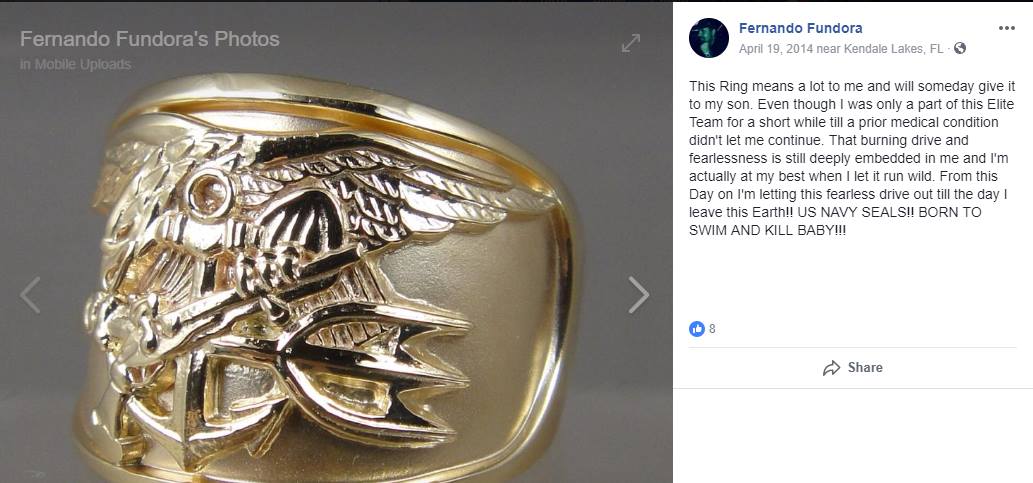
    Fundora claimed he was a SEAL and spoke about how much it meant to him.

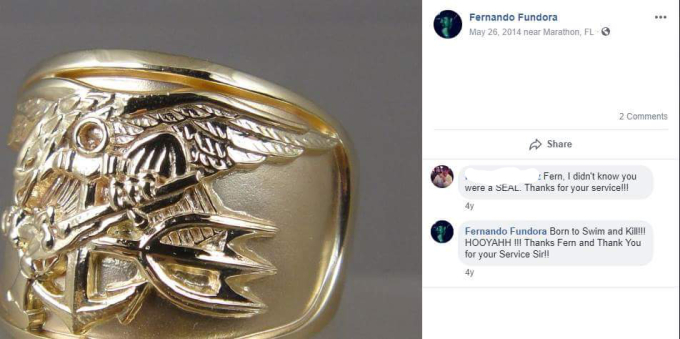
    Him being a SEAL even came as a surprise to people that knew him.

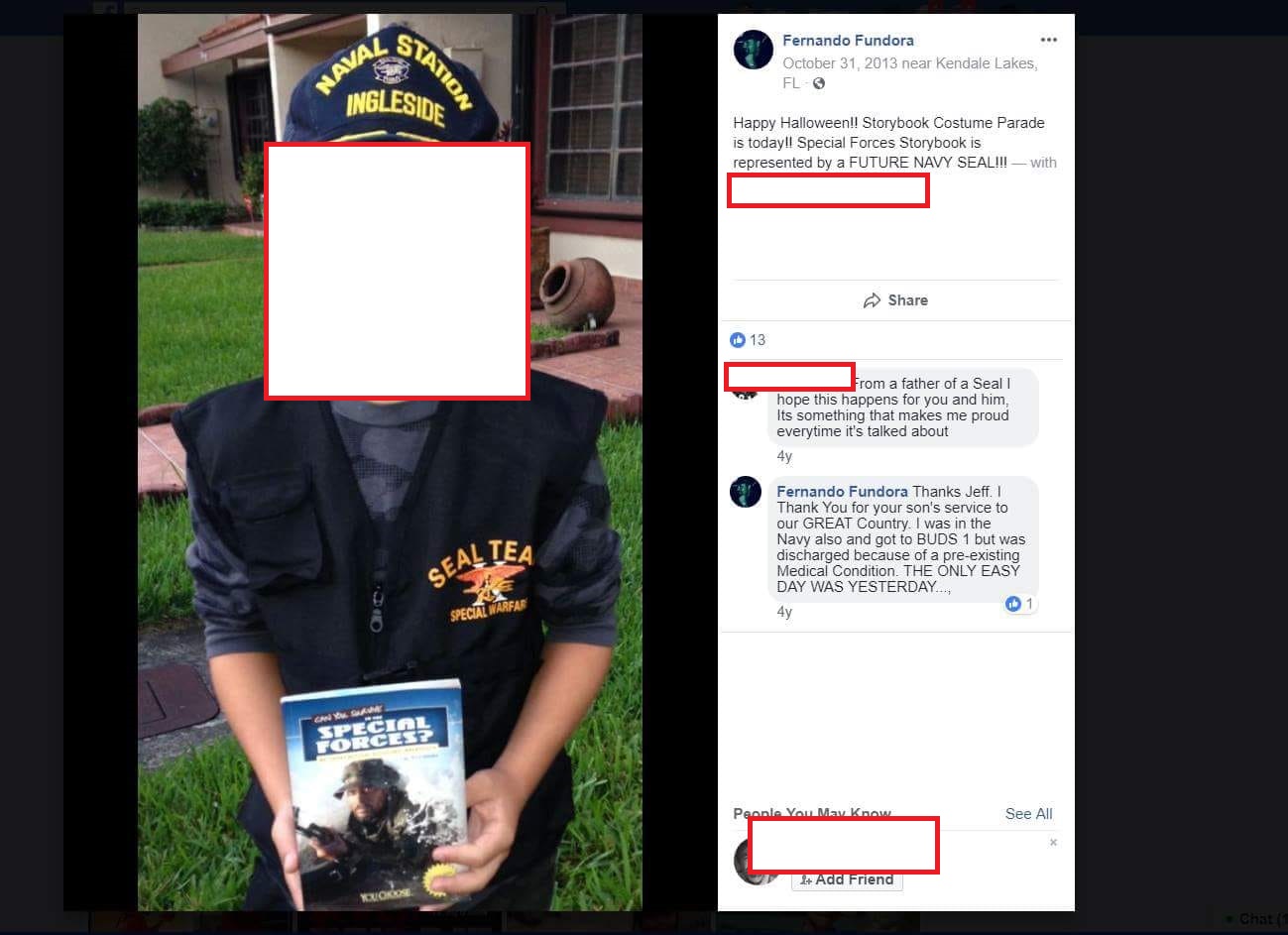
    He even dresses his son up with SEAL bling.

    However, the U.S. Navy remembers Fundora’s service a little differently.

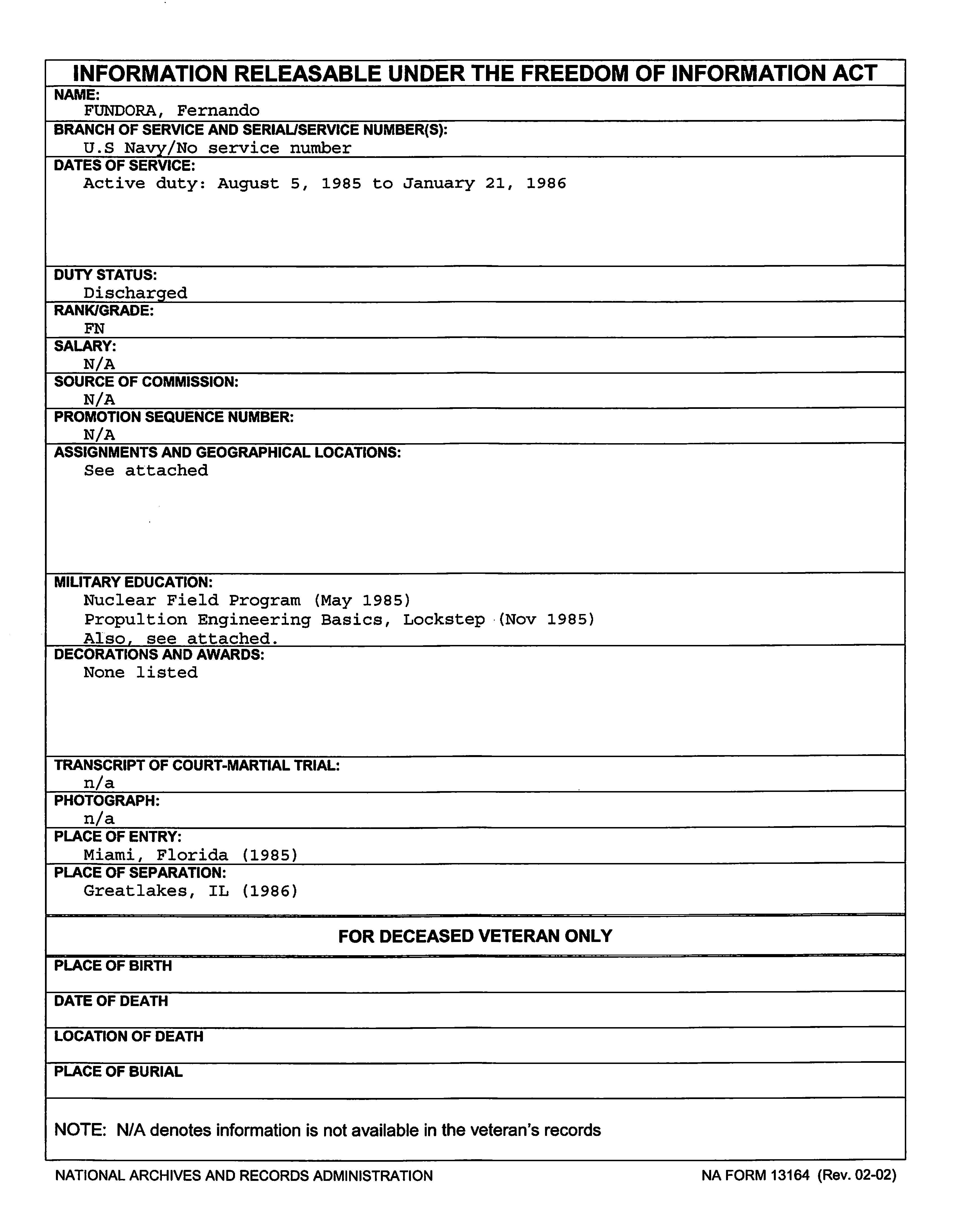
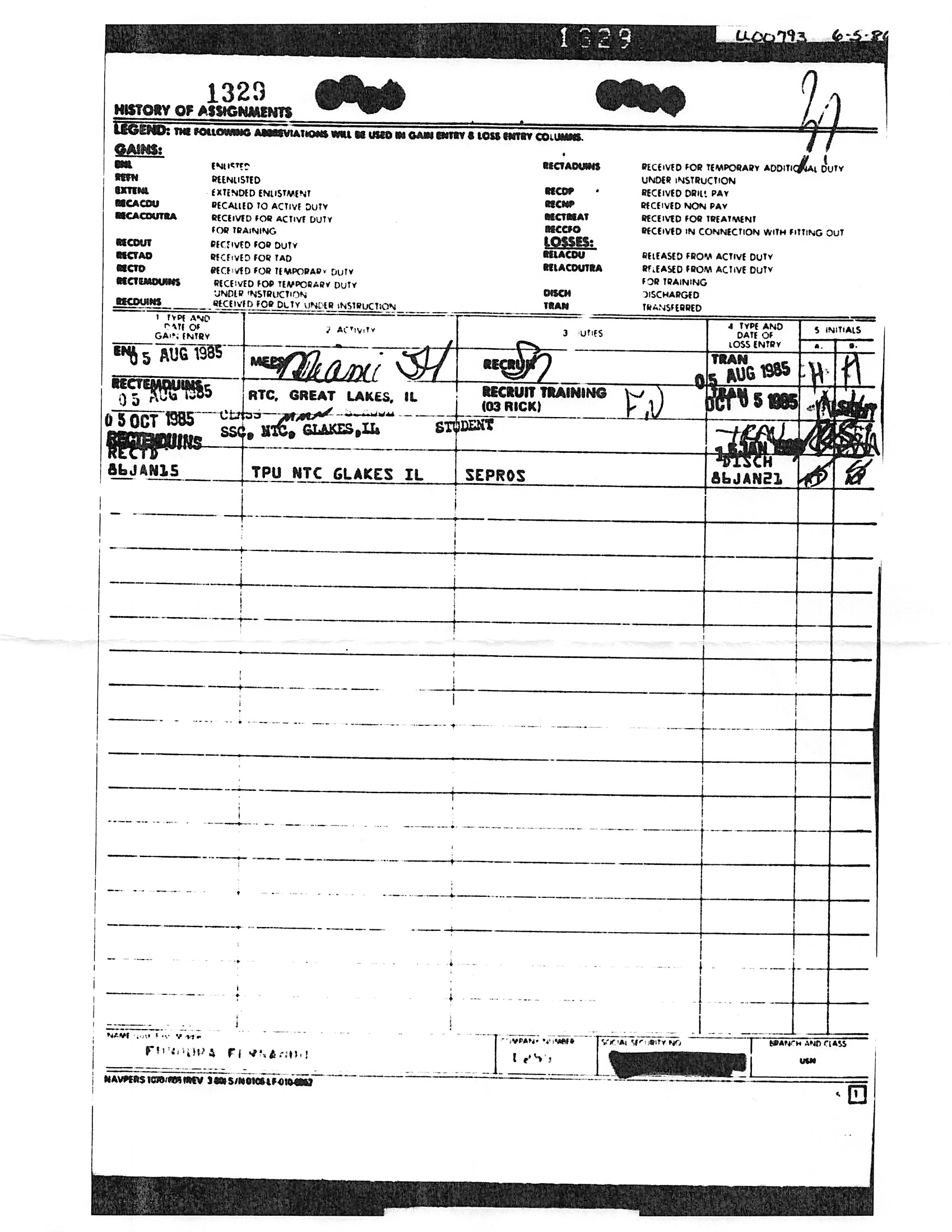
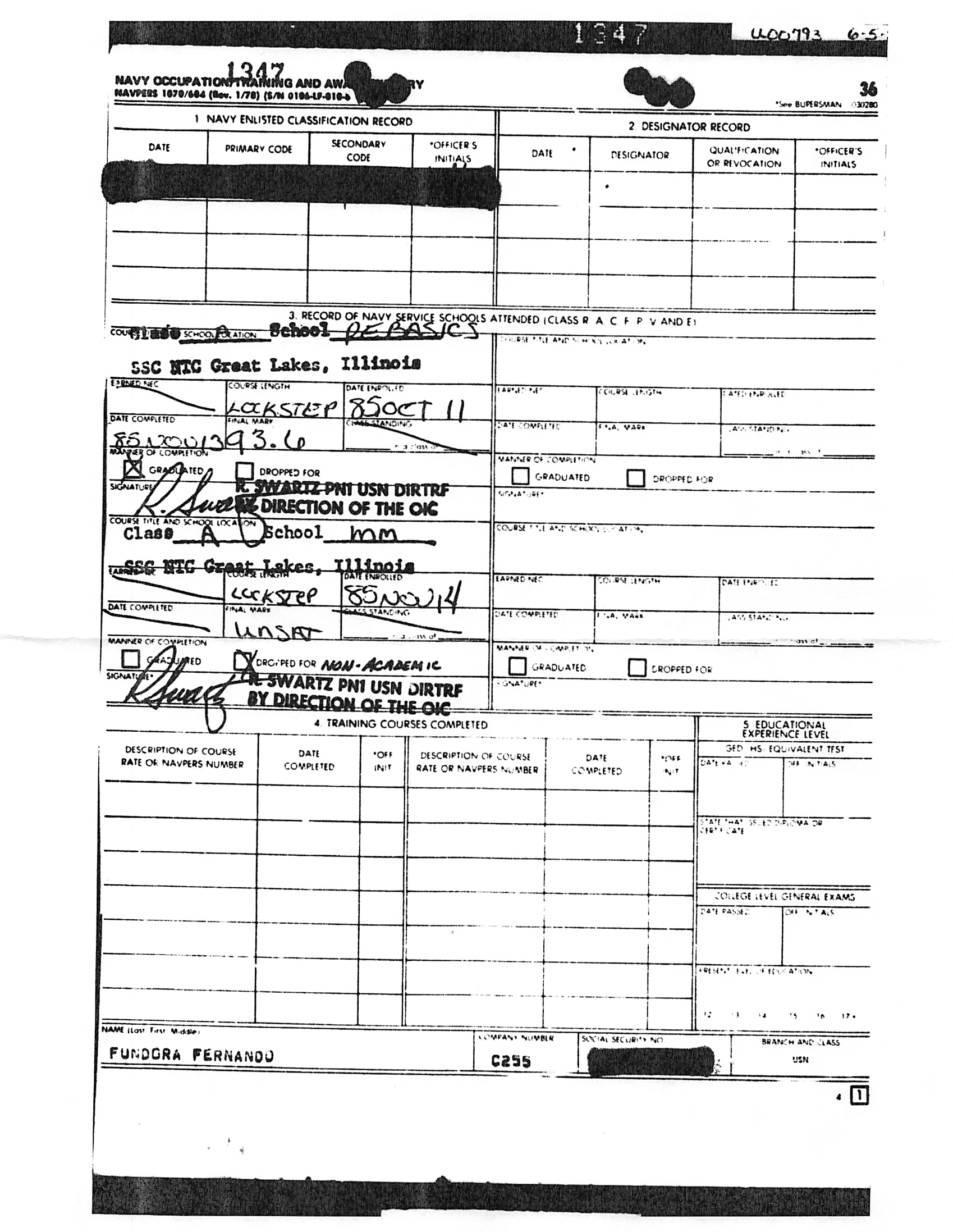
    Fernando’s summary sheet shows he was in the Navy for approximately 5.5 months and was discharged as a Fireman (E-3).  He did not complete Machinist Mate “A” school. His entire time was just in Great Lakes, so NO BUD/S, NO SEAL Command. 

  • The Royal Navy’s prized new carrier

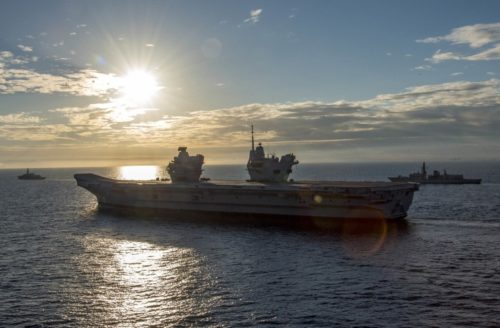
    hms qeMilitary Times reports that while the future flagship of the Royal Navy, aircraft carrier HMS Queen Elizabeth, isn’t scheduled to complete its first real deployment until 2021, that hasn’t kept the Brits from ensuring one morale-boosting element is installed and standing by for duty.

    A new pub, known as the Queen’s Head, was christened last week aboard the Queen Elizabeth and will be available to officers and senior enlisted during the ship’s maiden transit of the Atlantic, a journey that began Aug. 18 and one that features two embarked U.S. F-35B Lightning II aircraft from Naval Air Station Patuxent River, Maryland.

    The Wiltshire-based Wadworth brewery, which created an ale specifically for the ship’s December 2017 commissioning — a beverage appropriately named “Carrier Ale” — was instrumental in bringing the pub to life.

    “It has been a long time in the planning, well before the carrier was commissioned last year,” brewery CEO Chris Welham said in a Wadworth press release. “The Mess looks really great and will provide a relaxing environment along with some fine beer for the team on board when they have some downtime.”

    If only our Navy was so civilized.

  • Navy fires XO of San Diego-based destroyer

    decatur
    Navy Times Link

    Another one falls to the sin of “Loss of Confidence” to lead. The article does not mention a specific event, so perhaps he was in over his head as XO. At any rate, now is a good time for him to update his resume.

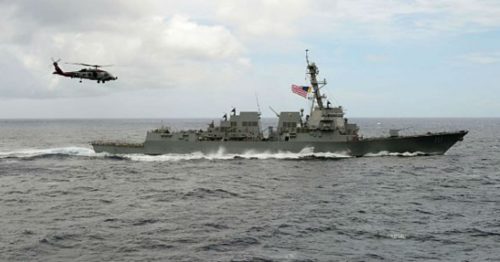
    The executive officer of the warship Decatur was fired last week, Navy officials confirmed.

    Cmdr. Blandino A. Villanueva was relieved Wednesday “due to a loss of confidence in ability to lead,” according to U.S. Surface Force Pacific spokesman Cmdr. Patrick Evans.

    Evans declined to provide details about why the officer was relieved but indicated it was not tied to any specific event.

    Villanueva had been the second-in-command aboard the San Diego-based destroyer since February, Evans said.

    He has been temporarily reassigned to the Coronado-based SURFPAC staff.

    Villanueva did not respond to a phone message or requests for comment submitted through official channels by Navy Times.

    Originally from Honolulu, Villanueva is the son of Navy mess specialist from the Philippines. He was commissioned through Officer Candidate School in 1998, two years after graduating from San Diego State University.

    Villanueva served as executive officer of the guided-missile destroyer Gridley and in SURFPAC’s aviation department in recent years, according to Navy personnel records and his command bio website.

    Villanueva has received two Meritorious Service Medals, three Navy and Marine Corps Commendation Medals, two Navy and Marine Corps Achievement Medals and an Army Achievement Medal during his career, according to military records.

    Lt. Cmdr. Molly Lawton, a Decatur department head, has assumed temporary XO duties until a permanent relief arrives, Evans said.

    The San Diego Union-Tribune first reported Villanueva’s firing.

  • U.S. Navy Wreckage from WWII Discovered Off Coast of Alaska

    Abner Read

    Popular Mechanics reports wreckage from a U.S. Navy destroyer badly damaged by a sea mine was discovered last month by a government-funded scientific team.

    USS Abner Read nearly sank during the Aleutians campaign in World War II, as US and Allied forces fought to eject Japanese troops occupying the remote islands of Attu and Kiska.

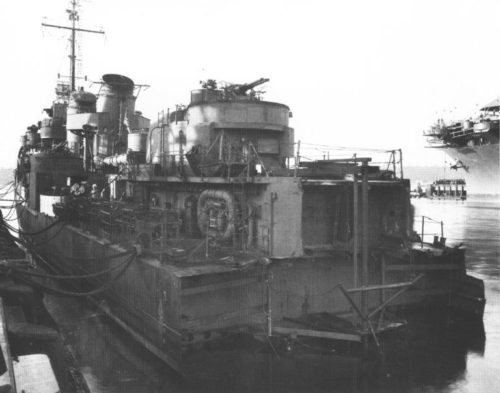
    The destroyer was towed, repaired and continued to serve in the Pacific for the remainder of the war, but the stern and those who were berthed or stationed there were lost to the sea.

    In the early months of America’s participation in World War II, Imperial Japanese forces occupied the islands of Attu and Kiska in the Aleutian islands chain. The operation was meant to distract the Americans from the central and south Pacific theaters but was not part of a larger invasion of Alaska.

    Built in the naval shipyards of San Francisco, the USS Abner Read joined the Pacific Fleet and was sent to participate in the Aleutians campaign.

    On the night of August 8th, 1943 while participating in an anti-submarine operation off Kiska, Read struck a sea mine at the stern of the ship.

    The rear 75 feet of the 376 foot long ship was blown off, including rudder and propellers. The section quickly sank, and only herculean damage control efforts saved the rest of the ship and crew.

    Seventy one men were killed in the mine attack.

    read damage
    Damaged stern USS Abner Read

    On July 17th, 2018 a team funded by the National Ocean and Atmospheric Administration rediscovered the stern section in 290 feet of water, still off the coast of Kiska. The team consisted of scientists from the Scripps Institution of Oceanography at the University of California San Diego and the University of Delaware.

    The team discovered the wreckage after a multibeam sonar on the research ship Norseman II identified a “promising target.” A remotely operated vehicle (ROV) was sent to the target location to investigate.

    The team was quickly convinced they had found the stern of the Abner Read. Expedition leader Eric Terrill later said, “We could clearly see the broken stern, the gun and rudder control, all consistent with the historical documents.”

    The wreckage qualifies for U.S. government protection per the Federal government’s Sunken Military Act. The act states that the “Navy’s sunken military craft remain property of the U.S. regardless of their location or the passage of time and may not be disturbed without the permission from the U.S. Navy.”

    This is in order to protect the graves, unexploded ordnance, or hazardous materials within the wreckage.

    As for USS Abner Read, it was towed back to Bremerton, Washington where a new stern was attached. The ship rejoined the fleet but was sunk in 1944 off the island of Samar, the victim of a Japanese bomber attack.

    The ship’s stern section is now a final resting place, a tomb for the 71.

  • One of the greatest Coast Guard rescues to be celebrated

    Coast Guard

    The Navy Times reports that, beginning Aug. 13, the historical association is planning five days of events to commemorate the 100th anniversary of the Mirlo rescue — one of the most daring in Coast Guard history.

    Mirlo, a British tanker loaded with gasoline was torpedoed seven miles off the shore from Chicamacomico, North Carolina. The badly needed fuel was headed for England in support of it’s forces in Europe during WW-1.

    The six-man U.S. Coast Guard lifesaving crew in Rodanthe led by Capt. John Allen Midgette Jr. pulled the surf boat from its shed to begin what would be a seven-hour rescue.

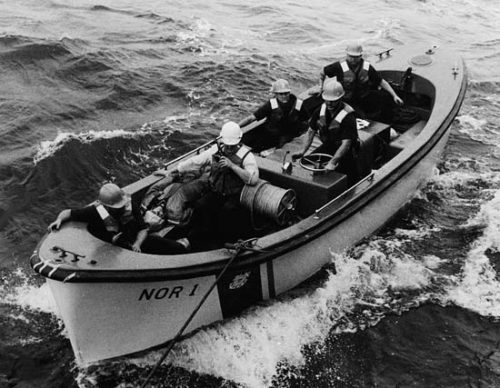
    “We call that boat the seventh hero,” said Ralph Buxton, a board member with the Chicamacomico Historical Association, pointing to the 26-foot wooden vessel that still sits at the Chicamacomico Life-Saving Station. “It performed perfectly that day.”

    Beginning Aug. 13, the historical association is planning five days of events to commemorate the 100th anniversary of the Mirlo rescue — one of the most daring in Coast Guard history.

    In earlier years, the crew had to row to foundering ships. But on that day in 1918, they turned to a boat with the latest 12-horsepower motor, Buxton said.

    “That made a huge difference,” he said. “The motorized surf boats were state-of-the-art technology then.”

    surf boat

    The crew launched it into 15-foot waves coming one set after another. It took four tries to get past the massive breakers.

    “That was like a semitruck coming at you at 30 miles an hour and another one coming just eight seconds after that,” said Carl Smith, retired Coast Guard officer and a board member of the historical association.

    The crew motored toward the tanker, now split in two from multiple explosions. The water was on fire with burning fuel. Midgette and his men maneuvered through flames as the heat charred the paint on the boat and singed the men’s hair.

    One lifeboat and the captain’s gig were launched with several tanker crew members aboard. A second lifeboat overturned, leaving men hanging on in the burning waters.

    Midgette first brought those men aboard his boat and then helped bring the other boats closer to shore. The surf boat safely unloaded its cargo of survivors, then made three more trips to get the others in the boats beyond the breakers. The crew rescued 42 of 51 aboard the Mirlo.

    Midgette later recorded in the log, “Crew very tired.”

    Always Prepared- Semper Paratus is the official motto of the US Coast Guard. The unofficial motto is, “You have to go out, but you don’t have to come back.” It’s as true today as it was in 1918.