Category: Historical

  • “Children of Pearl”

    Some folks are putting together a documentary about the Japanese attack on Pearl Harbor from a completely different perspective than you’ve ever seen. The producers of “Children of Pearl” have sent us a preview of their interviews with the remaining 150 people who were kids on December 7, 1941 at the base in Hawaii;

    The preview is pretty good. I can only imagine what it’s like to wake up on Sunday morning to the news that you’re under attack and say good bye to your soldier- or sailor-father for the last time as he rushes to war in your front yard. It was instructive enough for me to just watch the video and hear the story told in the language of the day by the people who were there at the scene.

    Of course this project is privately funded, so if you’ve got a coupla bucks to spare, throw it their way at their Kickstarter page.

  • 100th Anniversary of first parachute jump from an airplane

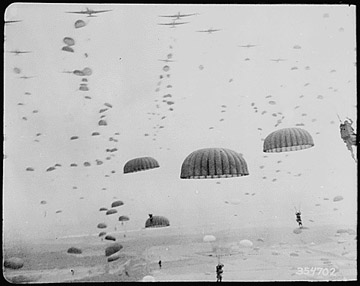
    We missed it by a day, but COB6 sent us a text message to remind us that yesterday was the 100th Anniversary of the first parachute jump from an airplane at Jefferson Barracks, MO on March 1st 1912. You know the dude was Army;

    Army Captain Albert Berry, the son of a balloonist, did what was thought to be impossible or crazy back then. He jumped from a “pusher” biplane designed Thomas Benoist.

    The first actual parachute jump, though, happened in 1783, and by a Frenchman;

    …the first successful parachute jump was made in France in 1783 when the French physicist Louis Sebastien Lenormand (1757-1839) made the leap from a tower.About this time France’s Montgolfier brothers were experimenting with their first balloon flights. In 1797, another Frenchman, Andre Jacques Garnerin, dropped 6,500 feet from a balloon over Monceau Park in Paris in a 23-foot white canvas parachute with a basket attached.

    In 1922, Lt. Harold Harris bailed out of a crippled plane near Dayton, Ohio, and became the first member of the Caterpillar Club, those whose lives have been saved by parachute.

    Yeah, my life was saved by a parachute every time I tested gravity’s resolve.

  • The Way it Was – A Perspective

    Gonna abuse my posting privilege just a bit… This is a cause for Doc Bailey as I’ve noted.

    I was NOT there, neither was WOTN.

    However he puts it together well.

    Incident in Baghdad.

    On 12 July 2007, an Bravo Company, 2nd Battalion, 16th Infantry Regiment embarked on a mission to clear Al-Amin District of New Baghdad of Anti-Iraqi Forces, aka Mehdi Militia, aka Jayish al-Mahdi in order to provide freedom of maneuver to Coalition Forces.  By 10:20 AM, Baghdad time, they had taken significant amounts of SAF (small arms fire) and RPG (rocket propelled grenade) fire, sporadically.  Two AH-64D’s were in the area and responded.  What would happen next would inspire a movie, that would be nominated for an Oscar, but not win one.

    “Now the war is over and in a lot of ways we’re still fighting it. It is my accretion that despite what many leaders of this very government said publicly or otherwise, we won. We won through the blood sweat and tears of the troops on the ground, that refused to give up.”  Doc Bailey

  • 21 years ago tonight

    February 26, 1991 was the date of what has been called “the last great tank battle of the twentieth century”. It’s been known as the Battle of 73 Easting, for us in the 1st Battalion/41st Infantry it was Objective Norfolk. The actual battle began in the late afternoon by the 2d Armored Cavalry Regiment when they made contact with elements of Iraqi Republican Guard and and an Armored Division and systematically reduced the units to scrap heaps before we arrived on the scene at about 2 am when we passed through their forward lines and picked up the battle.

    There was a bit of confusion at our entrance into the battle which resulted in B Co. 1/41 losing a platoon (3 of their 4 Bradleys) to M1A1 fire. Like I said earlier in the month, 1/41st had the highest casualty rate of any infantry unit in the war because both sides were shooting at us, the price we paid for being in the lead.

    Many Iraqi tank crews had turned their engines off to let their vehicles cool down in the night air which confounded our thermal optics and led to a 360 degree battle as we passed tanks we thought had been defeated by the 2nd ACR. The battle lasted until sun up.

    The last shot was fired by COB6 when he launched a TOW missile into a T55 Iraqi tank. In the end, US 1st infantry Division had destroyed the 18th Mechanized Brigade and 37th Armored Brigade of the Tawakalna Division.

    The Iraqis stood their ground at Norfolk which gave other Iraqi units time to escape from Kuwait, but at a terrible cost to the Iraqi army which lost hundreds of tanks and thousands of soldiers in the twelve hour engagement.

  • 67 years ago today

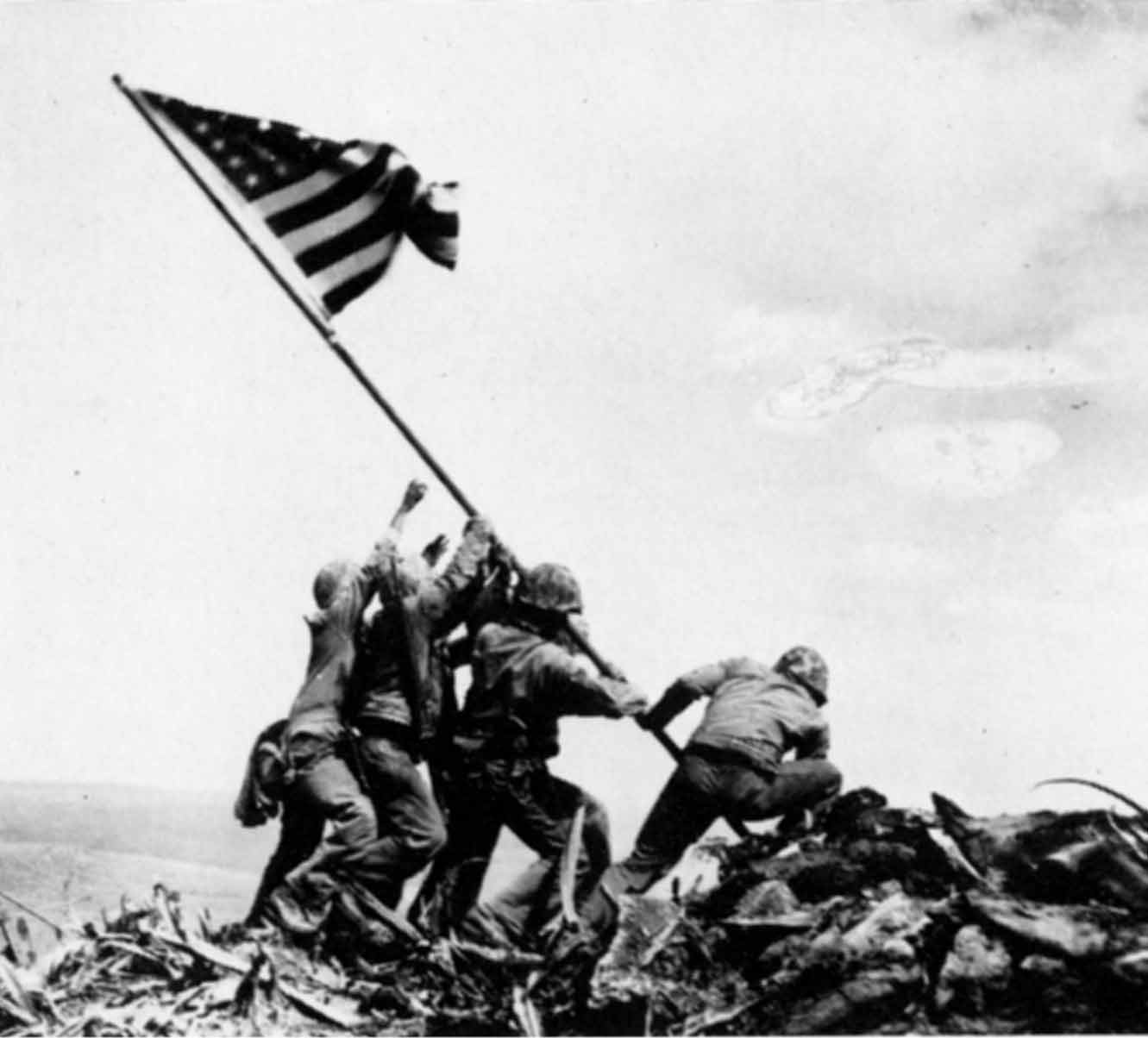
    It was 67 years ago today that the iconic photo was forever etched into our collective cultural mind and came to represent everything we accomplished in the Second World War, and our struggle to free the world from militaristic dictatorships. It was on Iwo Jima, on February 23, 1945, four days after the battle for the small island began and more than month before the battle would end. US forces suffered more than 26,000 casualties, more than 6,000 killed, while Japanese defenders lost over 20,000 killed and only a thousand were captured alive. Two last Japanese soldiers surrendered after hiding out on the island in January 1951.

    Joe Rosenthal photographed six Marines: Ira Hayes, Mike Strank, Rene Gagnon, Harlon Block, Franklin Sousley, and U.S. Navy corpsman John Bradley raising the U.S. flag. Within days, three of the Marines raising the flag were killed: Strank, Block and Sousley.

    Thanks to Sparky for reminding us.

  • Twenty-one years ago tonight

    This is republished from a year ago;

    Twenty years ago, 1st Battalion, 41st Infantry attached to the Third Brigade of the 1st Infantry Division (from the Third Brigade of the 2d Armored Division (Forward)), was the only US unit in Iraq. We were fifteen clicks from the Saudi border, screening for the sweep east of Schwartzkopf’s “Hail Mary” strategy. For two days we had been watched by Iraqis and had a little contact. with some reconnaissance elements. However on February 17th, my gunner spotted 5 T-55s about 1500 meters in front of our defilade position and I called for indirect fire. The first response came from an Apache unit. The pilot ignored his instruments and fired the wrong grid coordinate, directly to my west, striking two vehicles in our own Scout platoon anchoring our far west flank.

    COB6 was the platoon leader of the platoon between my platoon and the Scout elements. Despite the orders of our company commander (a phrase that I use in several other stories involving COB6 and our commander), COB6 pulled his vehicle off the line and rushed to the burning vehicles (An M3 and and an M113 from the GSR unit). COB6 and his crew pulled the broken bodies from the vehicles with burning ammunition exploding around him and shielded the injured Scouts with his own body. Two of those scouts were dead, but three others owe their lives to COB6 and his crew.

    Needless to say we stopped calling for Apaches and after slamming two TOWs into a berm about a hundred meters in front of us, we used artillery fire. My first ever call for indirect fire in total darkness. The following morning, M1s found the T-55s 5000 meters north of the spot my gunner had spotted them.

    And, oh, yeah, my granddaughter celebrates her 20th birthday today, too.

  • Nazis at Fort Sam Houston


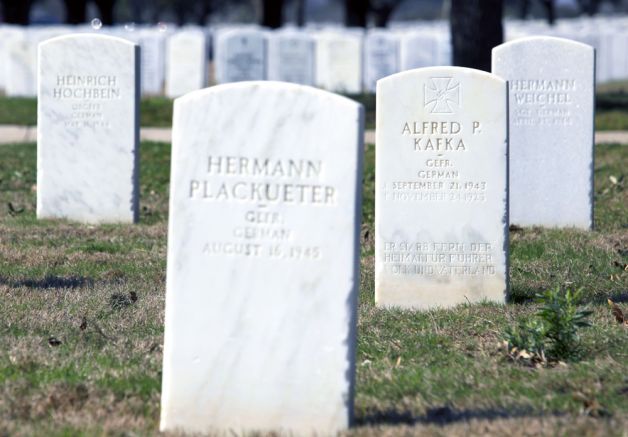
    There’s an article at My San Antonio which tells part of the story of POWs buried at the national cemetery at Fort Sam Houston. I just thought it was interesting;

    POWs were buried at their prisons, among them Camp Polk, La., and reinterred at Fort Sam after the prison camps were closed. Many of their fallen comrades went home, as did survivors like Karl-Heinz Blumenthal, a paratrooper who was captured in 1943 in Africa. Those buried in the United States went unclaimed.

    Blumenthal, 88, who returned to the U.S. decades ago and lives in Asheville, N.C., recalled one soldier’s funeral.

    “We were standing at attention, and we had a band that played some music and I remember one song, ‘Hatt Einen Kameraden.’ I had a good fellow pass away. We all sing that song,” he said. “I felt, I hope I don’t have to die here.”

    The prisoners were enlistees like Karl Waldera, an obergefreiter or German lance corporal, and Guiseppe Slaviero, an Italian sergeant major. Most of the POW headstones are similar to those of the Americans here, listing their names, ranks and dates of death.

    Defiance, pride and sadness, though, echo from the graves of Alfred Kafka and Georg Forst.

    “He died far from his home for the Führer, people and fatherland,” headstones for both say, swastikas etched in an Iron Cross.

    I remember in the small agricultural community where I grew up, the old timers (who were about my current age at the time) would tell stories about the POW camp that was where our community center is now and how the prisoners would work on the surrounding farms during the day and then be returned at night to their camp. Many of them enjoyed their time in Upstate New York so much that they’ve returned after the war to visit the farmers for whom they worked during their incarceration.

    It’s odd considering that we’ll probably never fight a civilized enemy again which recognizes that a war is over.
  • Chosin

    I may be late to this, but I just watched the 2010 documentary “Chosin” which is completely narrated by veterans of the battle, both Marines and Army. This is easily the best documentary I’ve ever watched.

    They describe how they weren’t ready for war, many were Reservists who hadn’t even been to boot camp when they climbed aboard ships to cross the Pacific. Their boot camp training was done on the ships. Each veteran graphically describes the battle at Chosin Reservoir from their particular perspective. They don’t hold back with their language or descriptions.

    But I think their stories have value for today’s veterans returning from the current wars. They tell about their difficulties relating to the civilian world when they come back from their war – the same difficulty we all have. It may ring some familiar bells. The veterans also relate what they think of their service and express pride in South Korea and the place it holds in the world today.

    The documentary is on Netflix, and I urge everyone to give it a look, especially the newest veterans among us. You won’t be disappointed, I promise.